Freiburg Bike Rental: A Practical Guide To Cycling The City
Freiburg is one of Germany's genuine cycling cities, and renting a bike there is often the fastest way to see the old town, the Vauban district and the river paths. Here is what the city's own numbers say, what rental options exist, and how to plan around them.
Short answer
Freiburg's bike-share system Frelo runs about 1,200 bikes across roughly 162 stations, and the city's walking, cycling and transit share rose from 67% of trips in 2017 to 76% in 2023. A day of cycling pairs well with the RVF Welcomekarte at €27.00 for 3 days including the Schauinslandbahn cable car.
Freiburg earned its cycling reputation the slow way, over decades of tram lines, river paths and a university population that never really took to the car. The city's own monitoring now puts walking, cycling and public transport at 76% of all trips in 2023, up from 67% in 2017, a shift few German cities of its size can match. For a visitor that means one thing: the bike is not a novelty here, it is the native way to move.
This guide covers the practical side of freiburg bike rental: what the city's share system offers, what infrastructure you are actually riding on, which sights repay a saddle, and how the seasons change the calculation. Everything below is drawn from the city's published figures, the transport authority's own fare pages and the tour listings this site carries, so you can plan without guessing. When a figure is only supported by recent reporting rather than an official page, that is flagged rather than smoothed over.
How Freiburg Bike Rental Actually Works
The city runs a public bike-share called Frelo, renewed in January 2026 with roughly 1,200 bikes including 206 e-bikes, spread over about 162 stations by March 2026, and beyond it Freiburg has a set of conventional rental shops whose terms and prices you check on the spot. No single official price list for private shops exists, so treat any figure a third party quotes you as indicative until the shop confirms it.
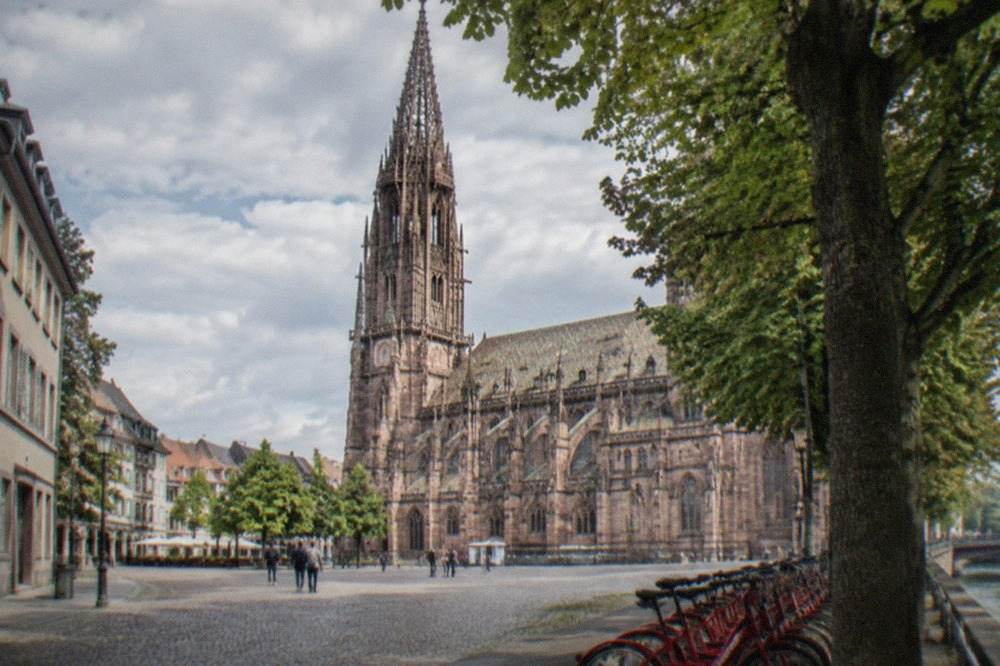
The Frelo system is the closest thing to a public utility for bikes. Recent reporting puts the fleet renewal from January 2026 at about 1,200 bikes, 206 of them e-bikes, with the station network expanded to 162 from March 2026, of which around 100 sit in Freiburg proper and the rest across the region. Those station and fleet numbers come from press coverage of the rollout rather than a page the site has re-read line by line, so hold them loosely. Classic bike prices were reported unchanged at the renewal, but no verified tariff sheet is on file here, so check the operator's own app for the current rate before you ride.
What Frelo does better than most share systems is coverage. Because the regional stations reach into the surrounding communities, a Frelo bike can plausibly serve a loop that starts in the old town, runs along the Dreisam river and ends well outside the tram network. That is unusual. In most mid-size German cities a share bike is strictly an inner-city device, useful for a mile and pointless beyond it. Here the distinction between city bike and regional bike is blurred by design.
Private rental shops fill the gaps a share system leaves: child seats, tandems, cargo bikes for families, and multi-day hires that a per-ride share tariff handles badly. This site does not carry verified price lists for those shops, and inventing a band would be exactly the kind of guesswork this guide refuses. What can be said honestly is that shops cluster near the main station and in the old town, that most rent by the half-day, day or week, and that during big festivals such as the Zelt-Musik-Festival period in July, early booking matters.
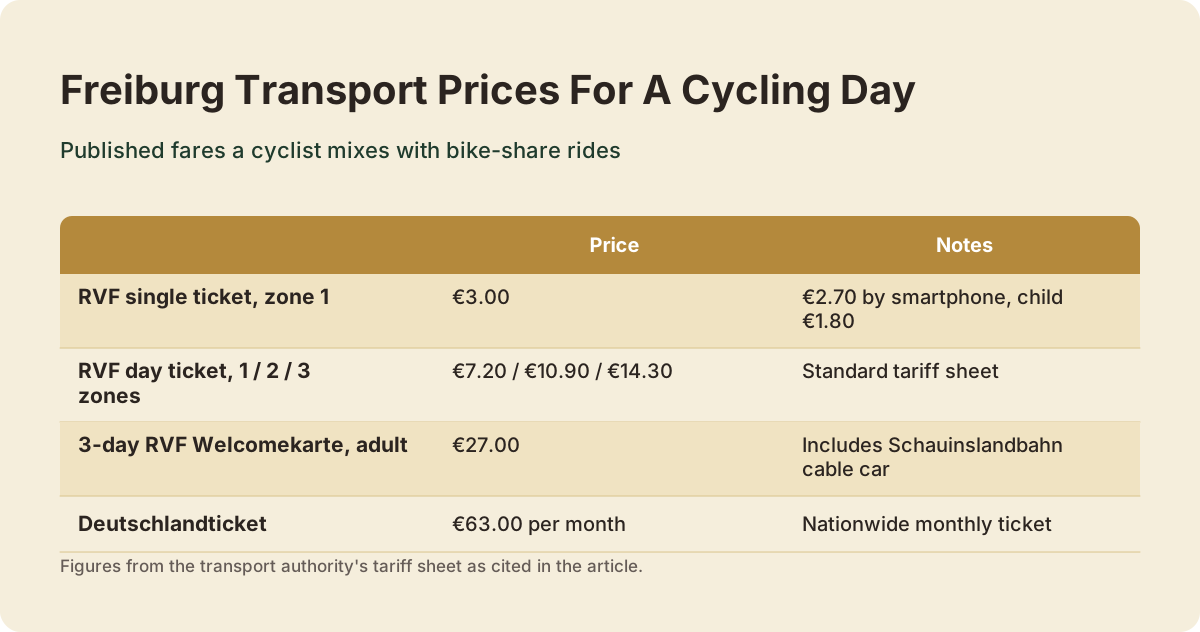
One planning note that pairs with cycling: if your day mixes riding with tram trips or a cable car, the transport products are priced in euros at the till. A single zone 1 ticket is €3.00 (€2.70 by smartphone), a day ticket for one zone is €7.20, and the Deutschlandticket costs €63.00 per month. Those figures come from the transport authority's own tariff sheet, not from an aggregator's estimate, which matters when a travel article quotes you a fare that no operator actually charges.
Where To Rent And What The Infrastructure Looks Like
Frelo stations are spread across the city center, the outer districts and the region, and the cycling network they plug into keeps growing: 66 new bike parking spots were added at the main station in December 2025 and construction began on the first section of the RS6 cycle fast-way in November 2025. The city is actively building for bikes rather than merely tolerating them, and a first-time rider feels that within a few minutes of leaving the station.
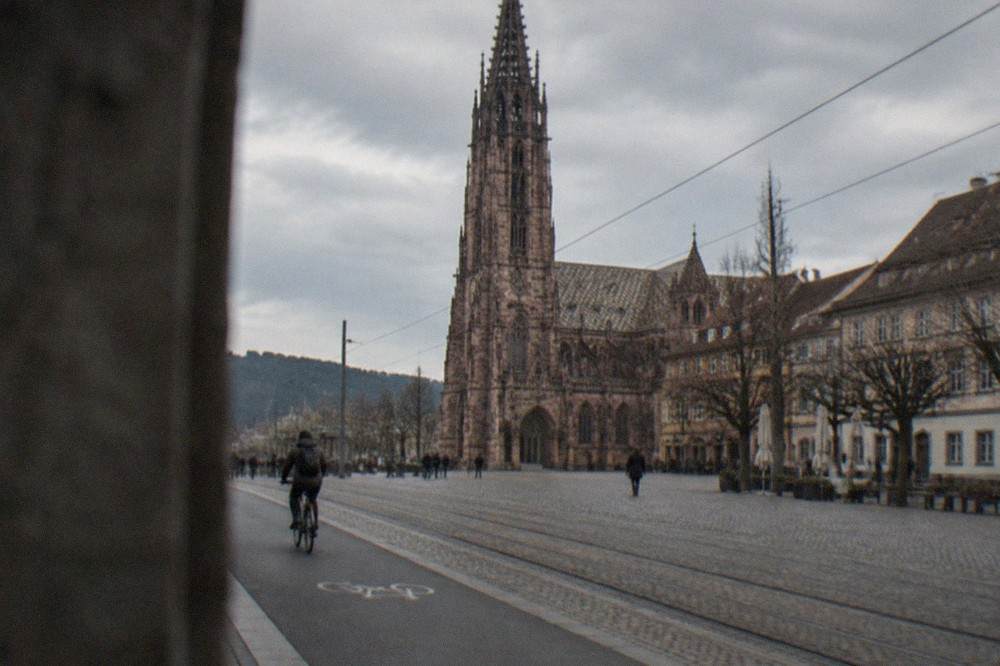
Start from the Hauptbahnhof. The December 2025 addition of 66 bike parking spots on the station's eastern side is a small number with a big meaning: the station area is where every mode of transport in the city converges, and the operators chose to spend it on bikes. The city's own announcement of the new parking spots is the source for that figure, and the same corridor is where you will find the densest Frelo station coverage, which is not a coincidence.
The bigger structural story is the RS6, a Radschnellweg, literally a cycle fast-way, on which the groundbreaking for the first northern section took place in November 2025. A fast-way is a long, direct, largely separated cycle route built for commuters rather than sightseers, and it signals that the 76% modal share is a target the city intends to keep climbing toward. The transport authority's cycling pages track the construction, though as with any multi-year build, expect sections to open in stages rather than all at once.
For a visitor, the practical geometry is simple. The old town is compact, partly pedestrian, and crossed by tram tracks that demand attention rather than fear; the river paths along the Dreisam are flat and continuous; and the climbs start the moment you head toward Schlossberg or the western vineyards. Riding quality is generally high, and the city's Green City credentials are not marketing: the Gold label of the StadtGrün naturnah program was renewed in September 2025, valid to 2028, and in March 2026 the council unanimously approved a green network plan for the inner city.
If you want the fuller picture of how the tram, bus and bike systems interlock, the site's guide to getting around Freiburg covers the transit side in detail, including where cycling and tram routes overlap and where they do not.
Two cautions are worth stating plainly, because both are local realities. Tram tracks in the old town are rideable but demand a crossed-wheel vigilance, particularly on the Bertoldsbrunnen junction where several lines meet. And construction is constant in a growing city: tram Line 3 has had replacement service between May and mid-October 2026 for track works in Zähringen, which affects shared-road cycling in the north more than the river paths.
A Quick Comparison Of Bike-Share Basics
| Frelo detail | Figure | How firm is it |
|---|---|---|
| Fleet after January 2026 renewal | About 1,200 bikes | Reported in press coverage, not re-verified on an operator page |
| E-bikes in the fleet | 206 | Same sourcing, treat as approximate |
| Stations from March 2026 | About 162 (roughly 100 in Freiburg) | Same sourcing |
| Classic bike prices at renewal | Reported unchanged | No verified tariff sheet on file, confirm in the app |
| Bike parking added at Hauptbahnhof, Dec 2025 | 66 spots, eastern side | City announcement, confirmed figure |
| RS6 cycle fast-way | First section construction began Nov 2025 | City documents, ongoing build |
The honest reading of that table: the direction and rough scale of Freiburg cycling infrastructure are solid fact, but the precise Frelo numbers are the softest figures in this guide, and a money decision should rest on the app's live prices rather than on any number above.
What A Day Of Cycling In Freiburg Costs
A cycling day in Freiburg is cheap by design: bike-share and rental prices are set by the operators and best checked live, but the things you will certainly pay for in euros are fixed and published, from €3.00 for a single tram ticket to €27.00 for the 3-day RVF Welcomekarte that includes the Schauinslandbahn cable car. Nobody needs a car inside the city, and the fare table below shows why.
The Welcomekarte deserves a specific mention for cyclists, because it is the rare transport product that includes a cable car. Three days, €27.00 for an adult, covering buses and trains across the region, with the Schauinslandbahn included and a Kulturbonus thrown in. A day that starts with a Frelo ride along the Dreisam, continues up the cable car to the Schauinsland summit and ends on a regional train back to the center is entirely buyable with one card. The site's full Welcomekarte guide breaks down the zones and the bonus, and the transport authority's own Welcomekarte page is the primary source for the €27.00 figure.
| Item | Price | Notes |
|---|---|---|
| RVF single ticket, zone 1 | €3.00 | €2.70 by smartphone, child €1.80 |
| RVF day ticket, 1 / 2 / 3 zones | €7.20 / €10.90 / €14.30 | Standard tariff sheet |
| RVF Welcomekarte | €27.00 | 3 days, includes Schauinslandbahn and Kulturbonus |
| Deutschlandticket | €63.00 per month | Unlimited regional transit nationwide |
| Schauinslandbahn cable car | €15.00 adult return | €12.00 single; open 09:00-17:00 |
| Schlossbergbahn | €3.70 one way | €6.50 up and down, adult |
The Schlossbergbahn figure matters to cyclists more than it first appears. The Schlossberg is the hill that looms over the old town, and its paths are steep enough that many riders walk the last stretch. The funicular at €3.70 one way is the honest alternative to pushing a bike uphill, and the tower on top, at 33.27 m, is free to climb once you are there. The cable car figures above are from the operators' own tariff pages, and the winter closure schedule of the Schauinslandbahn, closed 16 November to 4 December 2026 for its autumn overhaul, is on its operating-hours page, so a shoulder-season visit should check dates before promising anyone a summit view.
One cost that is easy to miss is the overnight tax. Freiburg levies an Übernachtungsteuer of 5% of the net room price, not a Kurtaxe, and it applies to private stays since 2014 and business stays since 1 July 2023, with under-18s exempt. It is added to your accommodation bill rather than your bike bill, but a multi-day cycling trip budget should know it is there.
Which Freiburg Sights Are Best Reached By Bike
The old town itself is compact enough to walk, so the bike earns its keep on the routes just outside it: the Dreisam river paths, the Schlossberg and Lorettoberg hills, the Vauban and Rieselfeld districts in the south, and the Seepark to the west. Freiburg's cycling strength is not showpiece sights but the speed with which the residential fabric changes from one valley to the next.
Ride south first. Vauban is the district that made Freiburg's international reputation: a car-reduced neighborhood of low-energy houses, where the street design assumes children before it assumes cars. Rieselfeld beside it is the sibling district, newer and denser. Neither has a single must-see monument, which is exactly the point; you go to see what a city looks like when it is planned around people on foot and on bikes. The site's Vauban guide covers the district's history and the solar settlement in detail.
Then ride west to the Seepark. It gained heritage protection in 2026 for its 1980s garden-art design, which is an unusual thing for a park of that age and worth knowing before you dismiss it as a suburban lake. One practical note from summer 2026: the Steg am Rhododendron-Tal bridge at the eastern shore of Flückiger See was fully replaced between 8 and 25 June 2026, with the nearby Pontonsteg as the alternative while works ran. The works window has passed, but it is a reminder that lake-circuit paths occasionally close for a few weeks at a time.
The hills are the third ride. Lorettoberg to the south and the Schlossberg in the center both reward a climb, and the Schlossberg has the funicular escape hatch described above if the legs object. For a longer challenge, the Schauinsland road climb is a genuine cycling test; the cable car return at €15.00 means you can ride up, drink in the view, and descend or float back down. The Eugen-Keidel-Turm on the summit, at the top of the Schauinsland, reopened in April 2025 per recent reporting after roughly three years closed for sanitation work.
A note on the famous water gutters, the Bächle, that run along many old-town streets: they are charming and they are a hazard to an inattentive cyclist. The site's dedicated Bächle guide explains their history; the practical takeaway for a rider is simply to keep your wheel out of them, because the channel will grab a narrow tire.
Saddle-Friendly Routes At A Glance
| Route | Character | Who it suits |
|---|---|---|
| Dreisam river paths | Flat, continuous, shaded in parts | Families, beginners, everyday riders |
| Old town loop | Compact, tram tracks, cobbles | Confident riders, short distances |
| Vauban and Rieselfeld | Flat district streets, car-reduced design | Anyone curious about Green City Freiburg |
| Seepark circuit | Flat lakeside, occasionally closed sections | Casual riders, picnic plans |
| Schlossberg climb | Steep, short, funicular backup available | Fit riders, view seekers |
| Schauinsland road climb | Long, serious ascent, cable car return | Trained cyclists only |
That table is deliberately free of invented distances. Route lengths vary with the starting point and the loop you choose, and any precise figure without a source would be a guess dressed as data.
When To Cycle In Freiburg
The city's own climate normals, station 1443, 1991 to 2020, show why the summer months dominate cycling plans: July averages 20.1°C with 252.2 hours of sunshine, while January averages 2.5°C with 64.7 hours. But note the 18.5 days per year at 30°C or above, almost all packed into June to August, which makes May, June and September the sweet spot for long rides.
| Month | Mean °C | Sun hours | Rain mm | Days at 30°C or above |
|---|---|---|---|---|
| April | 10.8 | 182.2 | 63.8 | 0 |
| May | 14.9 | 206.8 | 103.4 | 0.8 |
| June | 18.3 | 232.7 | 89.8 | 4 |
| July | 20.1 | 252.2 | 92.2 | 7.3 |
| August | 19.7 | 234.4 | 83.3 | 7 |
| September | 15.4 | 176.2 | 77.4 | 0.6 |
| October | 10.9 | 116.2 | 78.5 | 0 |
Two readings of that table are worth pausing on. The first is that May is the wettest of the seven months listed, at 103.4 mm, yet also one of the warmest shoulder months, so a May visit should plan indoor fallbacks alongside the rides rather than assuming dry weather. The second is that September is arguably the best cycling month in Freiburg: 15.4°C on average, 176.2 hours of sun, under a millimetre per day of rain spread across the month, and effectively zero extreme-heat days. The summer crowds of the old town are also thinner.
Freiburg is one of Germany's warmest and sunniest cities, and that phrasing is chosen carefully. The national weather service's 1991-2020 normals put the city 34th of 1,093 stations for annual mean temperature, at 11.0°C, and 20th of 1,091 for sunshine, at 1,815.1 hours. It is not, and must not be described as, the warmest or sunniest city in the country, a claim that circulates widely and is simply not supported by the data. For a cyclist the distinction is academic on a July afternoon, but a planning guide should carry the honest number.
Winter riding exists, but the calculus changes. Frost days average 64 per year, concentrated from November through February, and the Münster tower's top gallery closes in winter, a reminder that exposed heights in the region are treated as seasonal. The Bächle freeze, the Christmas market runs from 19 November to 23 December 2026 across Rathausplatz and the surrounding old-town squares, and a bike becomes a cold-weather tool rather than a pleasure in that period. The site's winter in Freiburg guide covers that season properly.
Day Trips By Bike And Rail From Freiburg
The regional Frelo stations and the rail network together open the Black Forest without a car: a direct regional train reaches the Titisee area, the Schauinslandbahn climbs to the summit from the valley, and bike-and-ride is a designed part of the system rather than an afterthought. The Welcomekarte's inclusion of the cable car makes combining modes the cheapest way to see real altitude.
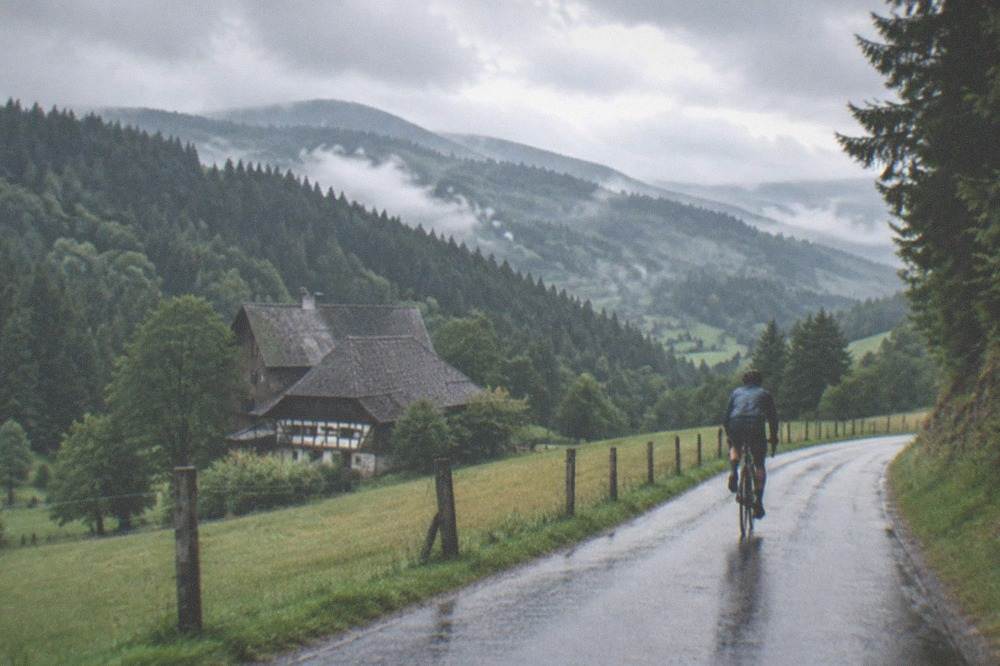
The pattern to understand is that Freiburg sits at the point where the flat Rhine plain meets the Black Forest's western escarpment. West and south of the city, the Kaiserstuhl and Markgräflerland wine country offer long, gentle rides through vineyards, and the Breisach and Staufen areas are reachable on a determined day loop. East of the city, the ground climbs within kilometers, and the rides become either serious climbs or rail-assisted expeditions. The site's Kaiserstuhl guide covers the wine-country side, and the hiking near Freiburg guide covers the same escarpment on foot for days when the bike stays in the rack.
Rail assistance is the local trick. The Höllentalbahn line runs east toward the high Black Forest and the Titisee, and while this site does not carry a verified minute figure for that journey, a direct regional train is the honest description. Two cautions apply to autumn 2026 planning: the Rheintalbahn between Freiburg and Basel has had a series of temporary closures for the Karlsruhe-Basel four-track expansion, including a closure around the first October 2026 weekend with replacement buses, and the Höllentalbahn itself has seen temporary maintenance closures, including one in July 2026. Both are works-driven and both end, but check the day before you build a trip on them.
The cable-car-and-bike combination deserves a second mention here because it is genuinely good. Ride the valley to the Schauinslandbahn, take the car up, descend on two wheels or ride back down the way you came, and the €15.00 return fare plus a Welcomekarte make the whole thing cheap for what it delivers: 3,600 m of cable, a summit above 1,200 m, and a view that reaches the Alps on clear days. The autumn 2026 overhaul closure runs 16 November to 4 December, so late-November plans must allow for it.
For a longer-foray framework including Strasbourg, Basel and Colmar beyond the immediate region, the site's five-day Freiburg and Black Forest itinerary shows how the pieces sequence, and the Alsace-Basel triangle guide covers the cross-border side.
When To Park The Bike And Take A Walk Instead
Some of Freiburg's best stories are told in lanes and squares a bike passes too quickly, and the roster of guided walks fills that gap: a two-hour private guided walking tour from $237 with 5 reviews so far, and a professional-guide walking tour whose price is on the listing, also with 5 reviews, are the two main formats. The old town rewards narration as much as locomotion.
The distinction is real, not a sales line. Cycling is the efficient way to cover Freiburg's geography, but the city's texture is in its details: the Bächle, the two surviving gates, the stork nests, the corners of Fischerau and Gerberau. A walking guide with a route spends time where a rider spends momentum. Among the walking products this site carries, one option is the professional-guide walking tour, whose price sits on the operator's live listing and which currently has 5 reviews, too few a pool to support a star claim either way.
The private format suits travelers who want the guide's full attention and a route bent toward their interests. The two-hour private guided walking tour runs from $237 and carries 5 reviews, again a pool too small to treat as a rating signal, and its honest description is a premium product at a premium price rather than a crowd-tested one. Families and small groups splitting the cost usually find the per-person arithmetic kinder than the headline number suggests.
Then there is the city's seamier history, which no bike route narrates. The red light district walking tour, from $27, runs about two hours through the streets where Freiburg's tolerated trade operated, and it has 3 reviews, too few for any claim about crowd opinion. What can be said is that it is the cheapest narrated walk on this page and the one aimed squarely at adults curious about a chapter the tourism brochures skip.
A different flavor of bike-free day: the wine hike and tasting tour from $79, rated 4.4 across 167 reviews, spends two and a half hours between the vineyards and the glass, and no responsible cyclist should combine it with a ride back. The Schlossberg hike from $28 is the other obvious saddle substitute, covering the hill described above with a guide instead of a funicular.
Walks And Rides Compared
| Option | Length | Price | Reviews |
|---|---|---|---|
| Red Light District walking tour | ~2 hours | From $27 | 3, too few for a rating claim |
| Two-hour private guided walking tour | ~2 hours | From $237 | 5, too few for a rating claim |
| Walking tour with professional guide | Varies | Fare on the listing | 5, too few for a rating claim |
| Wine hike and tasting | ~2.5 hours | From $79 | 4.4 across 167 reviews |
| Schlossberg hike | ~2.5 hours | From $28 | No reviews yet |
| Scavenger hunt self-guided tour | ~3 hours | From $45 | 4.9 across 15 reviews |
The last row is the hybrid worth flagging: a self-guided scavenger hunt turns the old town into a puzzle and moves at whatever pace you set, slower than a bike and faster than a guided group. With 15 reviews at 4.9 it is a small pool, so read it as a promising niche product rather than an established crowd favorite.
Common Questions About Cycling In Freiburg
Is Freiburg a good city for cycling?
Yes, and the numbers back it up: walking, cycling and public transport together account for 76% of trips in the city as of 2023, up from 67% in 2017, and the city keeps building dedicated infrastructure, including 66 new bike parking spots at the main station in December 2025 and a new cycle fast-way under construction since November 2025.
How does bike rental in Freiburg work for visitors?
The public option is Frelo, the city's bike-share system, renewed in January 2026 with roughly 1,200 bikes including 206 e-bikes and about 162 stations from March 2026. Download the operator's app for live pricing, since no verified tariff sheet is published on this site. Conventional rental shops near the main station and in the old town handle child seats, cargo bikes and multi-day hires.
Do I need a helmet and what are the rules?
Helmets are not legally required for adults anywhere in Germany, though most local riders on fast routes wear them. The practical local rules are the ones you feel: respect tram tracks in the old town, keep narrow tires out of the Bächle gutters, and use lights after dark, which is a legal requirement for all cyclists.
Can I combine cycling with public transport in Freiburg?
Yes, and it is the cheapest way to see altitude. The RVF Welcomekarte costs €27.00 for 3 days, covers buses and trains, and includes the Schauinslandbahn cable car, whose adult return fare is otherwise €15.00. A single zone 1 tram ticket is €3.00 if you only need an occasional ride.
When is the best time of year to cycle in Freiburg?
May, June and September balance warmth and daylight best. July and August average 20.1°C and 19.7°C respectively but also account for almost all of the city's 18.5 days per year at 30°C or above. September, at 15.4°C with 176.2 sunshine hours and effectively zero extreme-heat days, is arguably the ideal cycling month.
Are the bike paths in Freiburg suitable for beginners?
The river paths along the Dreisam, the Seepark circuit and the southern districts of Vauban and Rieselfeld are flat, continuous and low-traffic, making them well suited to casual riders. The Schlossberg and anything heading east toward the Black Forest escarpment involve serious climbing and suit fit riders or the funicular-assisted alternatives.
A last word on trust. Freiburg's cycling story is unusually well documented by the city itself, from the modal-share monitoring to the fare sheets, and this guide has kept to what those sources actually say, flagging the handful of figures that rest on reporting rather than a re-read official page. If you arrive in the city and find a station count slightly different from the one above, or a shop price this page declined to guess at, that is the system working as intended: the Freiburg Travel Guide carries the figures it can stand behind and tells you plainly which ones to check live.