Freiburg Public Transport: Trams, Tickets And Day Passes Explained
Freiburg runs one of Germany's most usable tram and bus networks, and most visitors never need a car. Here is what tickets cost, which pass to buy, and what to expect from the 2026 rail works.
Short answer
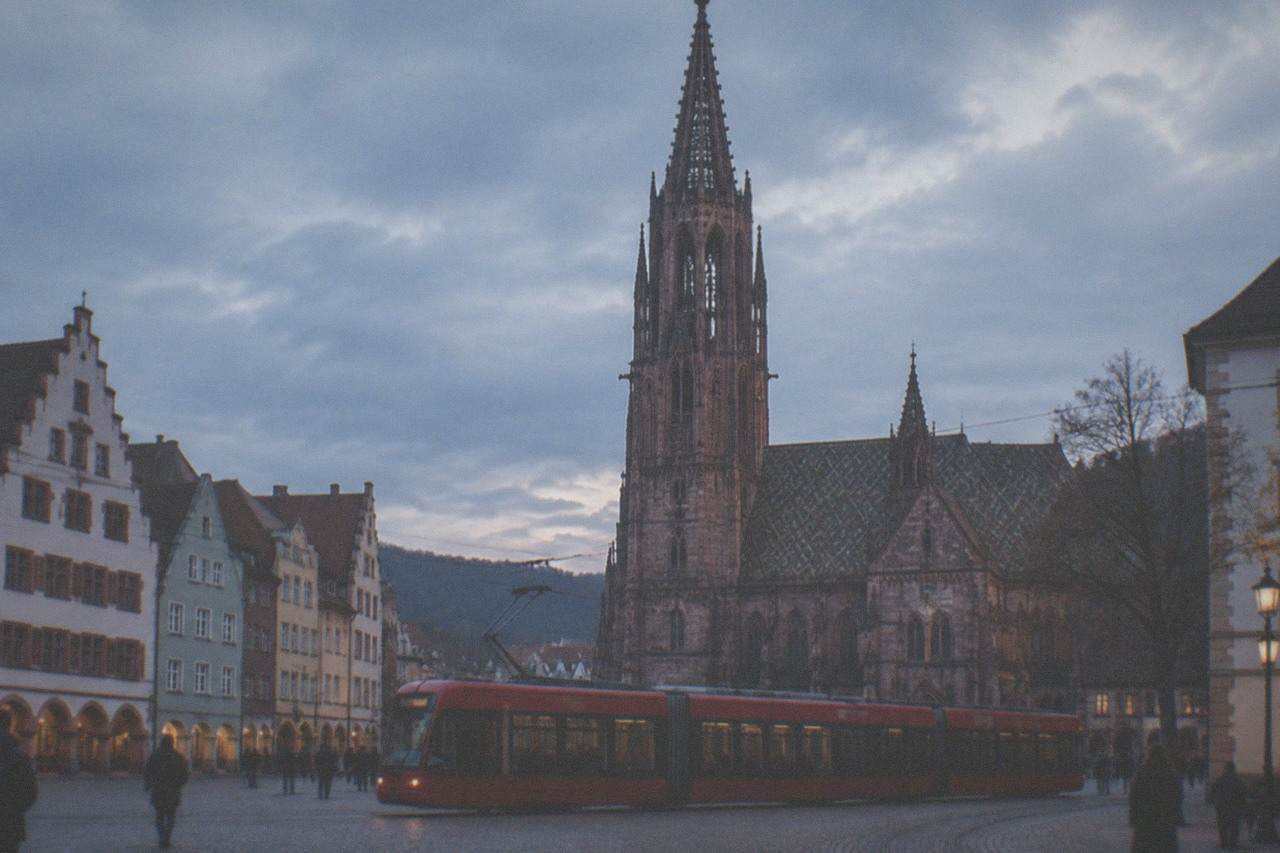
Freiburg public transport is run by VAG trams and buses under the RVF tariff. A single zone 1 ticket is €3.00 (€2.70 on a smartphone), a one-zone day ticket is €7.20, the 3-day Welcomekarte is €27.00 including the Schauinslandbahn cable car, and the Deutschlandticket costs €63.00 per month. Most of the old town is walkable on foot.
Freiburg moves 76 percent of all trips made in the city by walking, cycling and public transport combined, up from 67 percent in 2017. That single number, from the city's own monitoring report, tells you most of what you need to know: this is a city engineered around trams, bikes and feet, not around parked cars. The network itself is compact, cheap by big-city standards, and dense enough that the overwhelming majority of hotel rooms sit within a few minutes' walk of a tram stop.
The system is operated by VAG Freiburg, the city's transport company, under a regional tariff called RVF that also covers buses and trains across the whole Breisgau area. For a visitor this matters less than it sounds: you buy one ticket, validate it, and it works on trams, buses and regional trains inside the zones you paid for. There is no separate fare for the tram versus the bus, no separate airport surcharge inside the city zone, and no need to plan routes in advance for anything inside the ring.
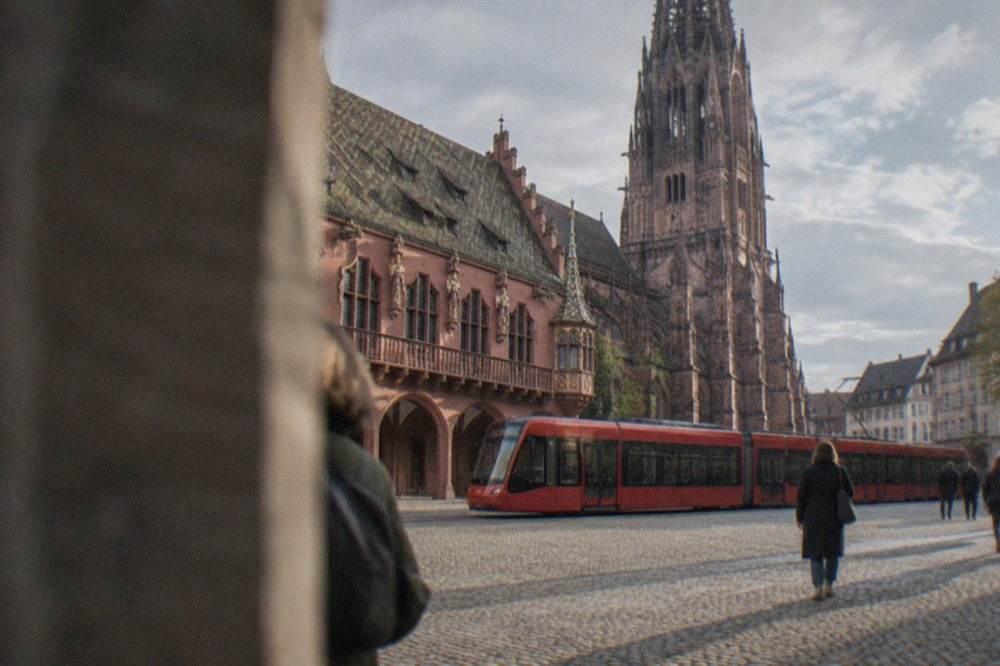
Freiburg's tram and bus network is operated by VAG under the regional RVF tariff, and a single ticket covers trams, buses and regional trains within the zones you buy: a zone 1 single costs €3.00, a smartphone single €2.70, and a one-zone day ticket €7.20. There are four tram lines plus bus routes running into the suburbs, and the old town itself is compact enough that most visitors ride the tram only to reach the outskirts.
How Much Do Tram And Bus Tickets Cost In Freiburg?
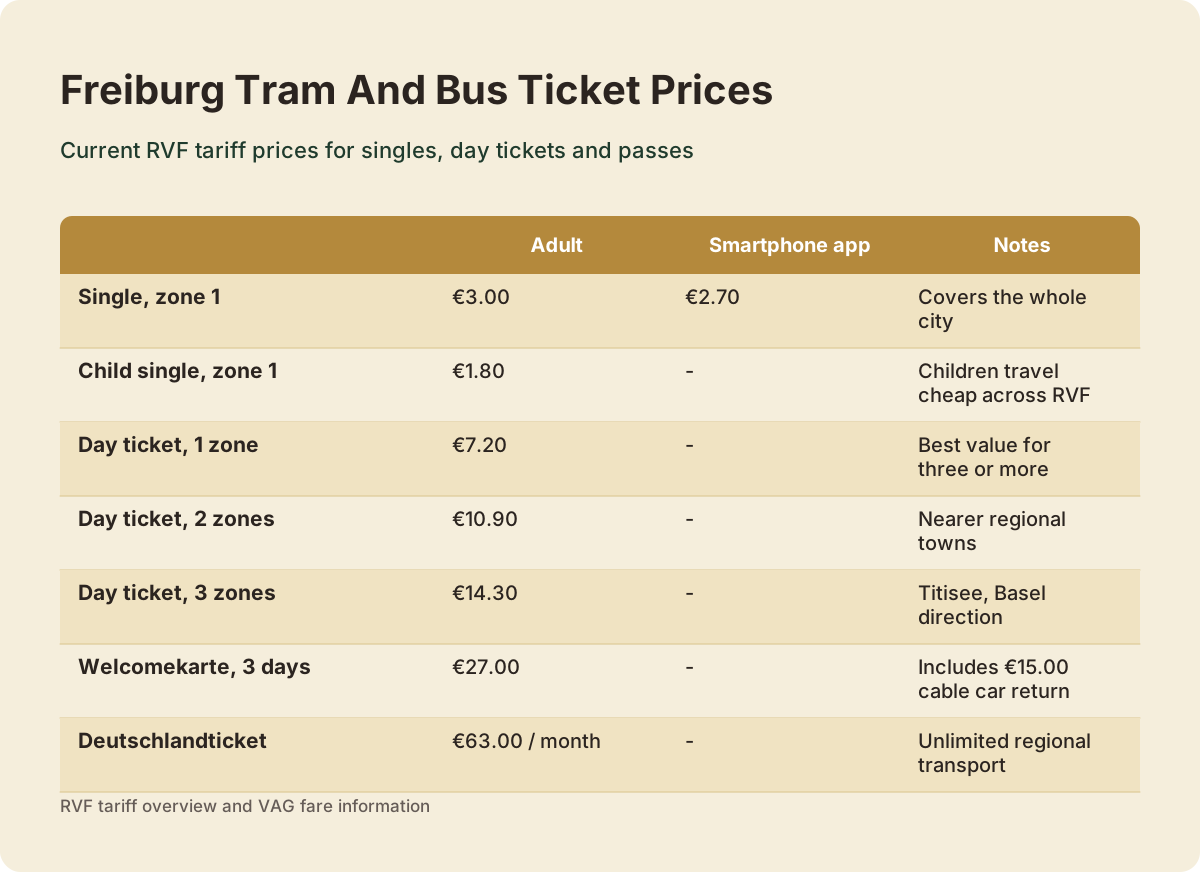
A single adult ticket for zone 1, which covers the whole city, costs €3.00, or €2.70 when bought through a smartphone app. A child ticket is €1.80. Day tickets run €7.20 for one zone, €10.90 for two zones and €14.30 for three, with reduced companion rates set out on the RVF fare sheet. Every price here comes from the current RVF tariff overview, not from an aggregator estimate.
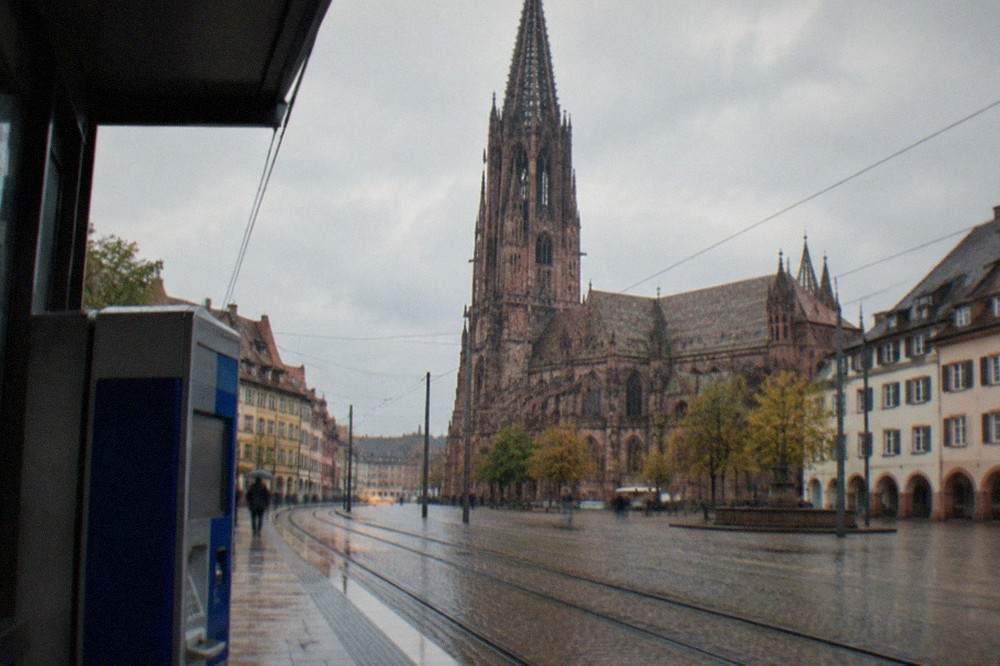
Tickets are sold at the machines on tram platforms, through the RVF smartphone app, and increasingly on board the newer electric buses, which carry cashless machines. On most trams you validate a paper ticket in the small stamping box near the doors before you sit down; if a machine is out of order, the convention is to keep the ticket unstamped and show it to an inspector with an explanation. Inspections are random and fines are real, so stamp the ticket even for a two-stop hop.
The zone system is simpler than it looks. Zone 1 swallows essentially everything a visitor does: the old town, the Hauptbahnhof, the Stühlinger and Wiehre districts, the Sektkellerei and even the edge of the Vauban quarter. Zone 2 and 3 matter mainly if you are heading out toward the Kaiserstuhl wine villages, Titisee, or Basel. When in doubt, the machine asks you for your destination and prices it correctly.
| Ticket | Adult price | Notes |
|---|---|---|
| Single, zone 1 | €3.00 | €2.70 via smartphone app |
| Child single, zone 1 | €1.80 | Children travel cheap across RVF |
| Day ticket, 1 zone | €7.20 | Best value for three or more rides |
| Day ticket, 2 zones | €10.90 | Covers out to the nearer regional towns |
| Day ticket, 3 zones | €14.30 | Titisee, Basel direction |
| Deutschlandticket | €63.00 / month | Unlimited regional transport nationwide |
One warning that saves money: buying single tickets at €3.00 each for a day of museum hopping costs more than the €7.20 day ticket after the third ride, and the day ticket is transferable between the people traveling together on it within the RVF rules printed on the fare sheet. The full current tariff, including companion and transfer rules, is published as a PDF by the transport association at the RVF fare overview.
Which Ticket Should A Visitor Buy In Freiburg?
For a stay of one to two days, buy the €7.20 day ticket each morning and be done. For three days or more, the RVF Welcomekarte at €27.00 for three days is usually the better call because it includes the Schauinslandbahn cable car, a €15.00 return ride on its own. The Deutschlandticket at €63.00 per month only pays off if you are staying a full month or touring Germany widely by regional train.
The Welcomekarte deserves its own paragraph because it is the product most visitors confuse with the KONUS card. Freiburg is not a KONUS municipality: hotels in the city do not hand out that free Black Forest guest card, and no amount of asking at reception changes that. The Welcomekarte is the real Freiburg product. It costs €27.00 for adults, runs for three days, covers buses and trains across the RVF zones, includes the Schauinslandbahn up the mountain, and adds a Kulturbonus discount at cultural venues. If the cable car is on your list, the card effectively pays for itself on day one, and the details are listed by the transport association on the official Welcomekarte page. For more on the card itself, see the dedicated guide to the Freiburg Welcomekarte and what it covers.
The Deutschlandticket, meanwhile, is a subscription product at €63.00 per month, valid on regional trains and city transport across all of Germany. It is aimed at residents and long-stay visitors; you can cancel monthly, but for a four-day city break it is simply the wrong instrument. Students and longer-term visitors should also know the RVF offers its own monthly Abos on eTicket chip cards, with monthly fare capping now applied to the smartphone check-in system as well.
A second practical note: cash. The newest electric buses in the fleet, in service since December 2025 across all lines, carry cashless ticket machines that take card payment only. If you habitually ride buses with coins, expect the newer vehicles to refuse them, and use the platform machine or the app instead.
| Stay length | Best ticket | Why |
|---|---|---|
| Half a day, two rides | Two singles at €3.00 | Cheapest below three rides |
| One full day | Day ticket €7.20 | Beats singles after ride three |
| Two days | Two day tickets €14.40 | No two-day product exists |
| Three days with Schauinsland | Welcomekarte €27.00 | Includes the €15.00 cable car return |
| A month or more | Deutschlandticket €63.00/month | Unlimited regional travel nationwide |
How Do The Trams And Buses Work Day To Day?
Trams run on four city lines plus the Schnellbus express routes, generally from early morning until late evening, with night services on weekends; frequency in the core is high enough that you rarely check a timetable. Roughly two thirds of the bus fleet is now electric, and every line has run electric buses since the December 2025 schedule change. Real-time arrival boards sit at the major stops downtown.
VAG's 2025-2026 changes affect visitors mostly in small ways. Twenty-two new electric buses joined in October 2025, bringing the electric share of the bus fleet to around two thirds and opening a second charging port at the depot. The December 14, 2025 schedule change added an extra early tram on line 3 from Haslach, extra weekend trips on line 14 toward the Uniklinikum, a new school bus service, and an extra morning run on Schnellbus 37. Line 2's destination display also changed to show "Brühl" instead of "Hornusstraße".
Construction disrupts things periodically, and 2026 has more than its share. Tram line 3 has run a partial replacement service from May to mid-October 2026 while track works proceed in Zähringen, and sewer and track work in September and October 2026 has affected lines 2, 3 and 15 with substitute buses. None of this is permanent, but it is worth checking before you plan a tight connection. The operator posts current disruptions at the VAG traffic alerts page, and the same page lists the Haslacher Straße works running through December 2026.
For a fuller picture of the main rail hub, including the barrier-free modernization now underway, read the guide to Freiburg Hauptbahnhof and its current works.
Is Freiburg Walkable Enough To Skip The Tram?
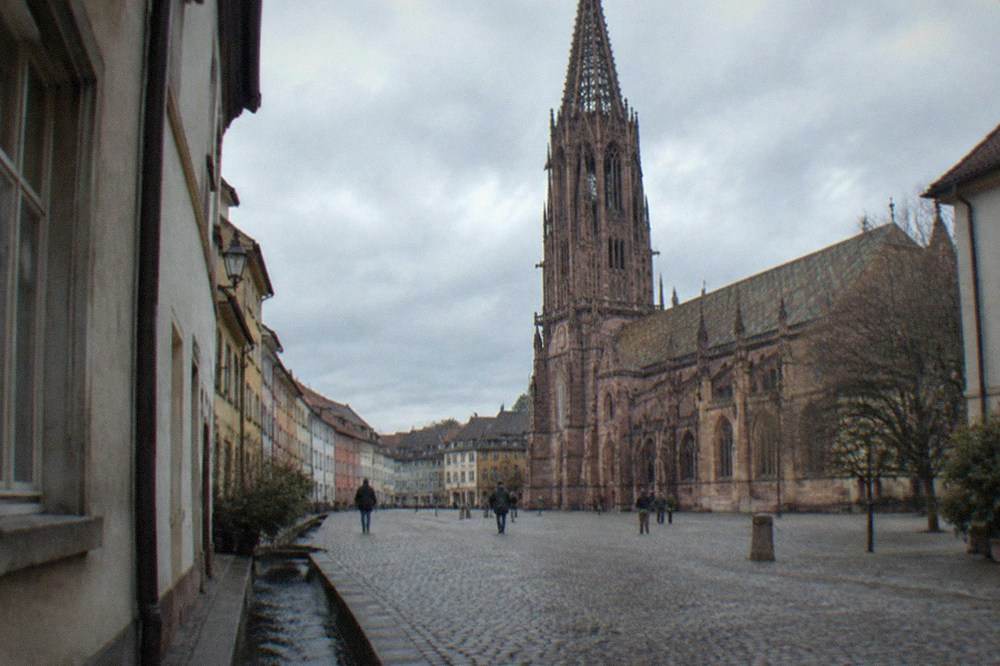
Yes, for the old town itself. The historic core between Martinstor and the Münster is roughly fifteen minutes end to end on foot, and the famous Bächle gutters line streets that were never designed for trams in the first place. Walking, cycling and public transport together carry 76 percent of all trips in the city, which tells you the streets are built for pedestrians. Most visitors use the tram to reach the outskirts and then walk everything else.
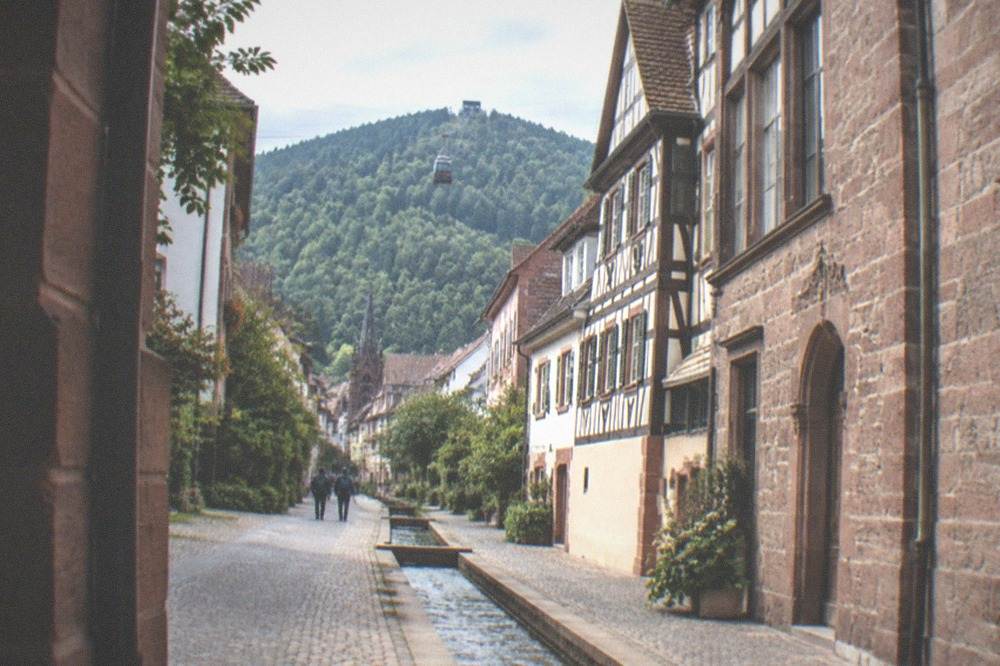
The gable-roofed lanes of the Altstadt, the Fischerau and Gerberau stream side streets and the Augustinerplatz steps are all pedestrian-paced, and the city's green-network plan approved in March 2026 pushes further in that direction, adding trees, meadows and seating to the inner-city streets. The Schlossberg hill above town is walked rather than ridden by most locals, though the Schlossbergbahn funicular exists for the return leg, which is covered in its own section below.
This walkability is why the guided-walk products on this site make sense as a transit day's centerpiece rather than as a separate excursion. A two-hour stroll with a guide needs no ticket at all beyond whatever tram brings you to the starting point. The private option, Walking and Strolling the Historic Center, runs about two hours from $228 and lists six reviews, too few for a star claim; treat that pool size honestly when weighing it against the big shared tours, which carry hundreds of reviews each. A city walk is also the natural companion piece to the questions answered in the post on whether Freiburg is a walkable city.
For cycling, Frelo is the city's bike-share system. Reporting from the 2026 rollout puts the renewed fleet at around 1,200 bikes including 206 e-bikes, stationed across roughly 162 locations in the city and region from March 2026. Those fleet figures come from fresh press reporting rather than the operator's own published table, so check the current station map in the app; the classic-bike prices, though, were left unchanged in the renewal, which is a genuinely useful detail for budget planning.
How Do You Get From Basel EuroAirport To Freiburg?
The Freiburger Reisedienst Airportbus runs daily between Freiburg and EuroAirport Basel-Mulhouse-Freiburg, and the ride takes about an hour. It is the only direct service, it stops at Freiburg's central bus station beside the Hauptbahnhof, and no verified public fare table exists for it, so confirm the price on the operator's live listing rather than trusting aggregator estimates that float around online.
The Freiburger Reisedienst Airportbus between Freiburg and Basel Euro Airport runs about 55 minutes. Its fare sits on the operator's site rather than in any published tariff we can verify, which is itself the honest answer to a question travelers ask constantly: nobody has produced a primary source for the airport bus fare, and the numbers circulating on comparison sites are estimates, not fares. Everything else covered here is indexed on Freiburg Travel Guide.
The airport itself sits on French soil, operated jointly with Switzerland, and it is a genuinely large hub for a city Freiburg's size. The dedicated guide to EuroAirport and how it works covers the two-nationalities quirk and the terminal layout. For the onward journey in detail, including the train alternative via Basel Badischer Bahnhof, read getting from Basel Airport to Freiburg.
Rail Works And Closures To Know About In 2026
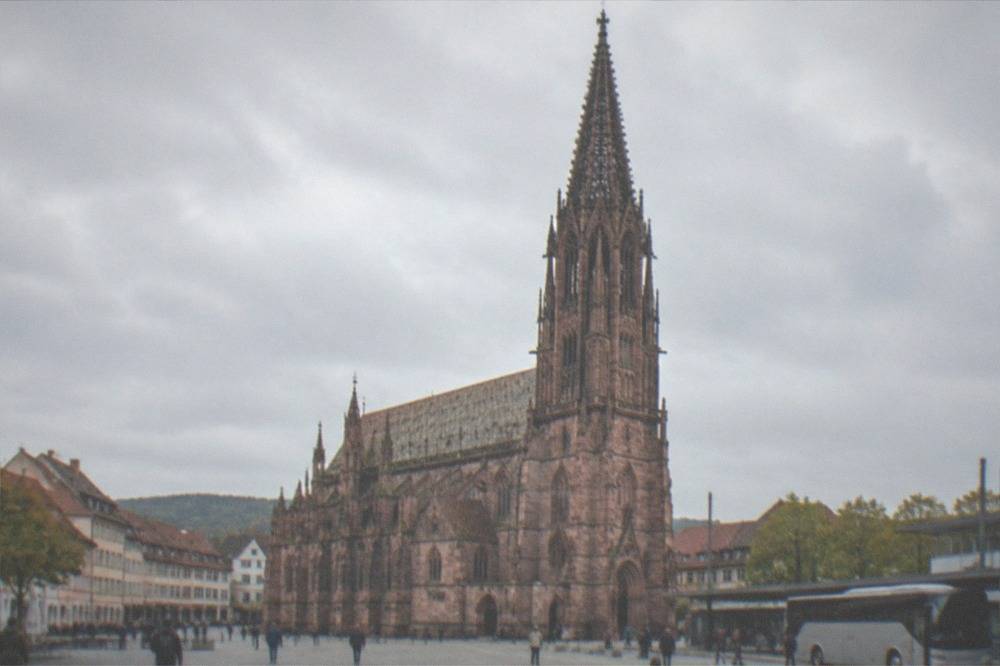
Freiburg Hauptbahnhof began a major barrier-free modernization on 14 September 2026, running until around December 2028, with the northern underpass initially fully closed and platforms 3 to 5 being renewed. The Rheintalbahn line toward Basel has repeated temporary closures in 2026 with replacement buses, including one in early October 2026. Both projects are disruptive but temporary, and trams in the city are unaffected by either.
The station project, funded at roughly €36.7 million by Deutsche Bahn, the federal and state governments and the city, adds five new lifts, adjusts platform heights and installs new platform roofs and lighting. During the works, the northern pedestrian underpass is closed, which lengthens some connections between platforms; budget an extra few minutes for any change of train at Freiburg in the coming two years.
The Rheintalbahn closures are part of the four-track Karlsruhe-Basel expansion and follow a pattern DB announces well in advance: full-section weekend and multi-day closures in 2026 have included stretches in August and September, with the Freiburg-Basel section closed in early October 2026 and regional and long-distance trains replaced or rerouted. The Höllentalbahn into the Black Forest has had its own shorter closures, including maintenance holds in July and September 2026 with substitute buses. Before any day trip by rail, check the operator's own disruption pages that morning, because the replacement-bus timings do not always match the printed schedule.
| Disruption | Dates | Effect on travelers |
|---|---|---|
| Hauptbahnhof underpass closure | From 14 Sep 2026 to ~Dec 2028 | Longer platform changes; lifts being added |
| Tram line 3 replacement service | May to mid-Oct 2026 | Buses replace trams in Zähringen |
| Lines 2, 3, 15 sewer and track works | Sep to mid/late Oct 2026 | Substitute buses on inner-city routes |
| Haslacher Straße works | Aug to Dec 2026 | Reroutes in the Haslach area |
| Rheintalbahn Freiburg-Basel closure | Early Oct 2026 | Replacement buses, some ICE reroutes |
| Schauinslandbahn autumn revision | 16 Nov to 4 Dec 2026 | Cable car and mountain restaurant closed |
None of this should scare anyone off. Replacement buses in this region are well organized, the tram network runs underneath the disruption, and the affected trips are almost always ones where a slow-crafted alternative, the Schauinslandbahn or a Kaiserstuhl bus, fills the gap nicely.
Getting Up The Hills: Schlossbergbahn And Schauinslandbahn
The Schlossbergbahn, the inclined lift up the city's own hill, costs €3.70 one way or €6.50 return for an adult. The Schauinslandbahn cable car up the Schauinsland costs €15.00 return or €12.00 single, runs daily 09:00-17:00, and is included in the €27.00 Welcomekarte. Its 2026 autumn overhaul closes it from 16 November to 4 December, cable car and mountain restaurant together.
The Schlossberg lift was fully modernized, with new drive and control components accepted by TÜV in March 2025, and it now runs as reliably as any piece of infrastructure in the city. It saves a steep ten-minute climb and lands you within an easy walk of the Schlossbergturm viewpoint tower. Child fares run €2.80 one way and €4.60 return.
The Schauinslandbahn, at 3,600 m one of the longest cable cars of its kind, is the transit most visitors underestimate. The Welcomekarte includes it, which converts the €27.00 card into good value the moment the mountain is on the itinerary. Its 2025 revision ran long, five weeks instead of the usual maintenance window, because one of the four original 1975 support cables was replaced with a new one carrying integrated fiber optics. The spring 2026 revision in March was a standard three-week shutdown, and the operator has already published the 2027 window: 22 February to 19 March. Current fares and times are on the Schauinslandbahn tariff page.
One small tax note closes the money picture, since it appears on your hotel bill rather than at a ticket machine: Freiburg charges an overnight accommodation tax of 5 percent of the net room price, not a Kurtaxe, and it applies to private and business stays alike, with under-18s exempt. It has nothing to do with transit, but travelers reading the Welcomekarte marketing often ask, and the honest answer is that no card waives it.
How A Car-Free Freiburg Day Fits Together
A car-free day in Freiburg works because the transit pieces are cheap and short: a €3.00 tram ride in, a walk across the old town, the €3.70 Schlossbergbahn up for the view, and a tram back out for under €15 total in singles, or for one €7.20 day ticket. Add the Schauinslandbahn on a Welcomekarte day and the whole mountain is included at €27.00 for three days. The city was built for exactly this pattern.
The pattern holds for travelers who arrive without German, too. Ticket machines offer English menus, the stops are announced on board, and the transit authority's app handles the whole purchase in a few taps. What the transit cannot do is explain the city, and that is the one gap a guide fills: which of the two remaining medieval gates is which, why the Bächle run along the streets, and what the Augustinerplatz steps were before they were steps. Travelers who prefer a guided version of the old town in Italian, for instance, can take the private Old Town tour in Italian, about ninety minutes from $51, listed with eleven reviews, too few a pool for a star claim.
The honest summary of Freiburg public transport is that it is cheap, dense, and currently under more construction than usual, none of which changes the underlying math: you can spend an entire visit inside zone 1, and most people should. The same logic extends to the whole Breisgau: the regional trains that the day tickets cover run out to Titisee and the Kaiserstuhl, so a car-free week here is not a compromise, it is simply the local way of traveling.
That Italian-language option is one of the few tours on this roster built around a language rather than a theme, which is worth knowing for mixed-language family groups. For everyone else, the trio below covers the three most common transit-day add-ons: a guided historic-center walk, a private Italian tour and the airport transfer, and comparing all three side by side takes about a minute.
Common Questions About Getting Around Freiburg
Is public transport in Freiburg free?
No. A single zone 1 ticket costs €3.00, or €2.70 via the smartphone app, and a day ticket costs €7.20. Nothing in the city's tram and bus network is free to ride, though the cultural bonus attached to the Welcomekarte gives discounts rather than rides. The confusion usually comes from the KONUS card, which is free, but Freiburg is not a KONUS municipality and its hotels do not issue one.
What is the best transport ticket for tourists in Freiburg?
For one or two days, the €7.20 one-zone day ticket. For three days or more, the €27.00 Welcomekarte, which covers buses and trains across the RVF area, includes the €15.00-return Schauinslandbahn cable car, and adds a cultural discount bonus. The €63.00-per-month Deutschlandticket only makes sense for stays of a month or more.
Can I get from Basel EuroAirport to Freiburg by public transport?
Yes. The Freiburger Reisedienst Airportbus runs daily between the airport and Freiburg's central bus station and takes about an hour, with the bookable transfer service listing a ride time of about 55 minutes. There is no verified public fare table for the bus, so confirm the price on the operator's live listing before you travel.
Do I need a car in Freiburg?
Almost never. Walking, cycling and public transport together account for 76 percent of trips in the city, the old town is largely pedestrian-paced, and parking is scarce and paid. A car is worth considering only for a wider Black Forest loop with multiple stops, and even then the regional trains and the Schauinslandbahn cover most of the headline destinations.
Are the trams affected by construction in 2026?
Periodically. Tram line 3 has run a partial replacement service from May to mid-October 2026 for track works in Zähringen, and September and October 2026 work has affected lines 2, 3 and 15. The disruptions are temporary and well signed, and the operator posts current alerts on its traffic-messages page before you travel.
Is the Schauinslandbahn included in a transport pass?
Yes, in the Welcomekarte. The three-day, €27.00 visitor card includes the cable car, whose normal return fare is €15.00, alongside buses and trains. The cable car closes for its annual autumn overhaul from 16 November to 4 December 2026, and the spring 2027 revision is scheduled for 22 February to 19 March.