Freiburg Bächle: A Practical Guide To The Old Town's Street Gutters
The Bächle, the little water channels beside the curbs of the old town, are the detail most visitors remember long after the Münster blends into memory. Here is what they are, why they exist, and how to build a walk around them.
Short answer
The Bächle are narrow stone-lined gutters carrying stream water along the curbs of Freiburg's old-town streets. They are free, visible at any hour, and densest in the lanes around the Münster and Oberlinden. A single ticket on Freiburg's trams costs €3.00 within zone 1, and the old town itself is entirely walkable.
What Are The Bächle In Freiburg?
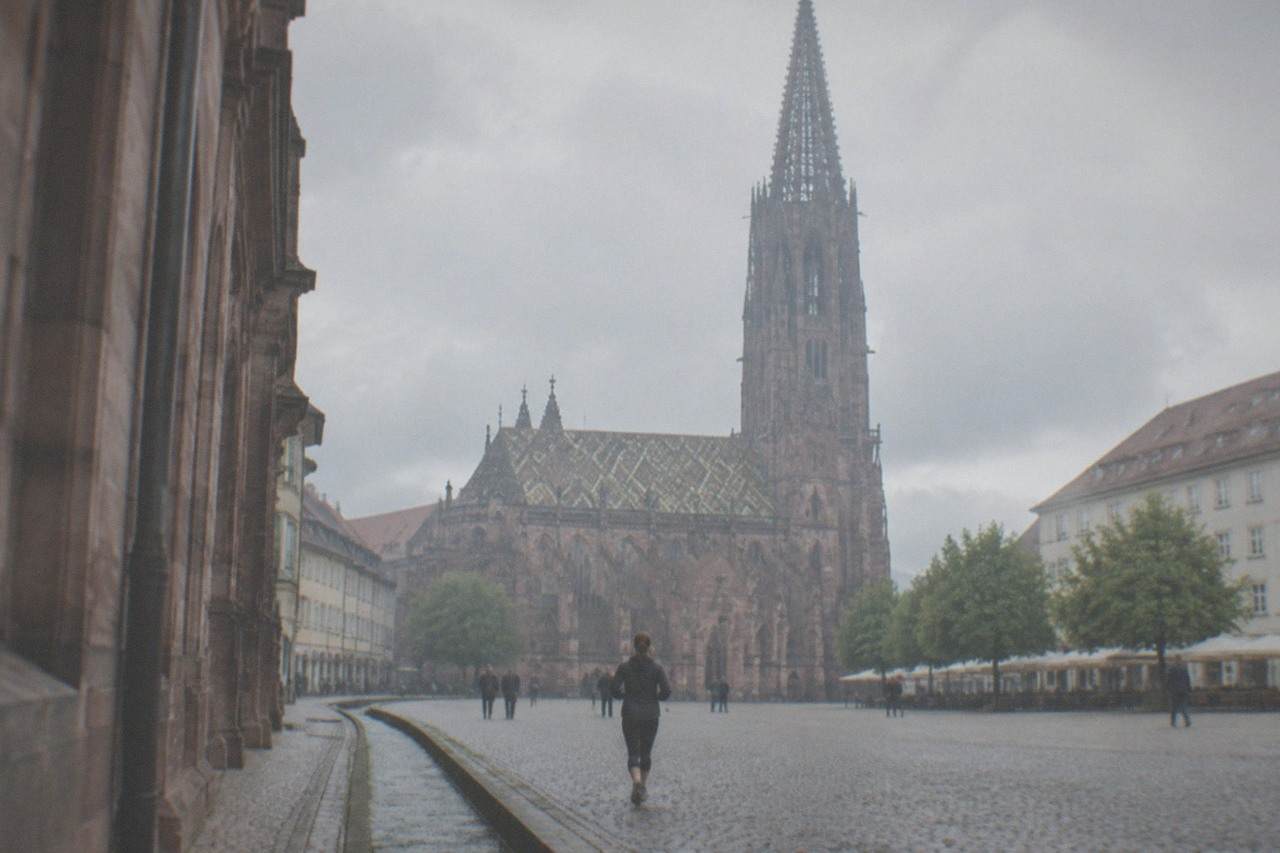
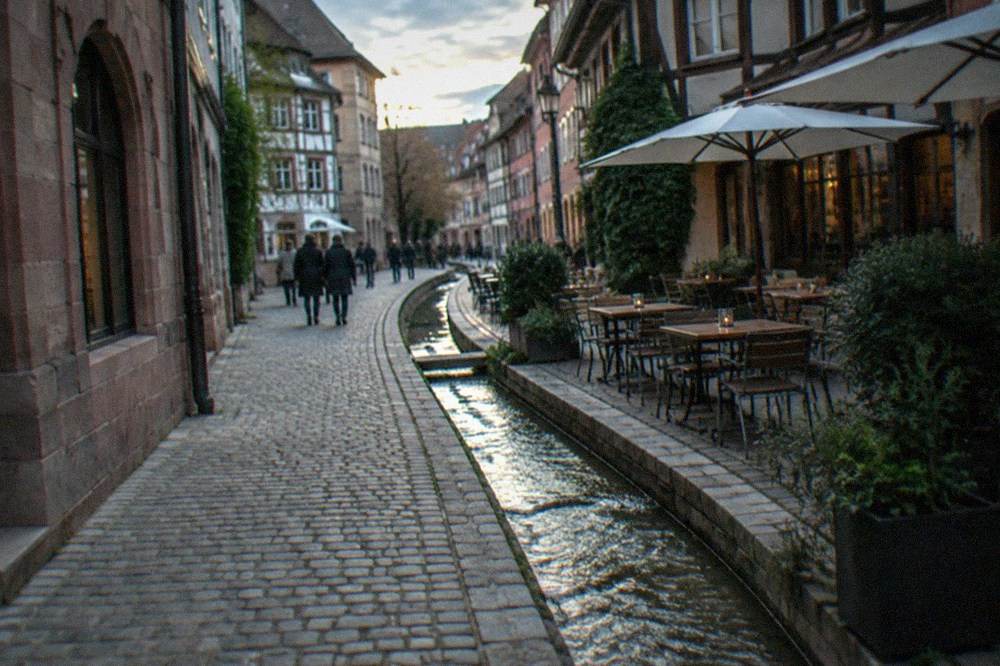
The Bächle are narrow, stone-lined water channels that run alongside the curbs of Freiburg's old-town streets, carrying a shallow sheet of flowing water through the heart of the Altstadt. They are public, free to see at any hour, and so much part of the street furniture that locals step over them without looking, while visitors stop and photograph them every few meters.
If you have read anything about Freiburg before arriving, you have probably met the word already. It rhymes loosely with "beck-le," and the singular is Bach, a southern German word for a small stream. A Bächle is literally a little stream, brought down to street level and slotted into a channel perhaps a hand's width deep, hugging the edge of the pavement.
The channels are not decorative in origin, even if they are decorative now. They are a working piece of medieval street infrastructure that has simply outlived its original job description. Freiburg's old town is small enough that you will cross dozens of them without trying, and the lanes where they are densest are also the lanes with the most photogenic old facades, so the two experiences tend to bundle together.
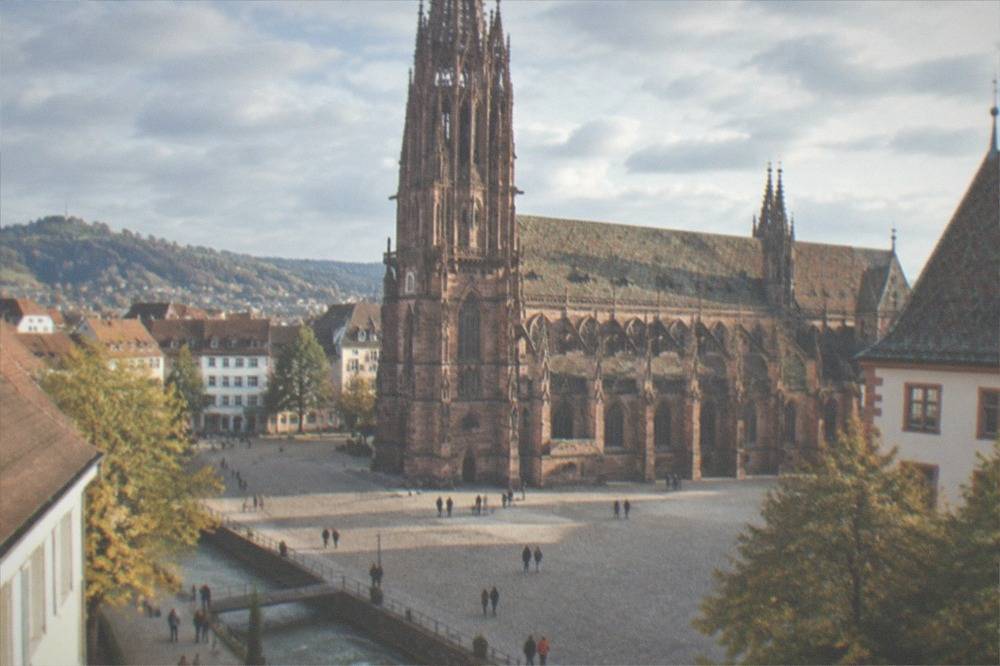
Visitors planning a first day in the city often pair the Bächle with the old town walking loop, since the gutters thread through almost every street that loop covers. The Freiburg Münster sits at the center of that network, and the market square around it is one of the places where the channels and the crowd-watching are both at their best.
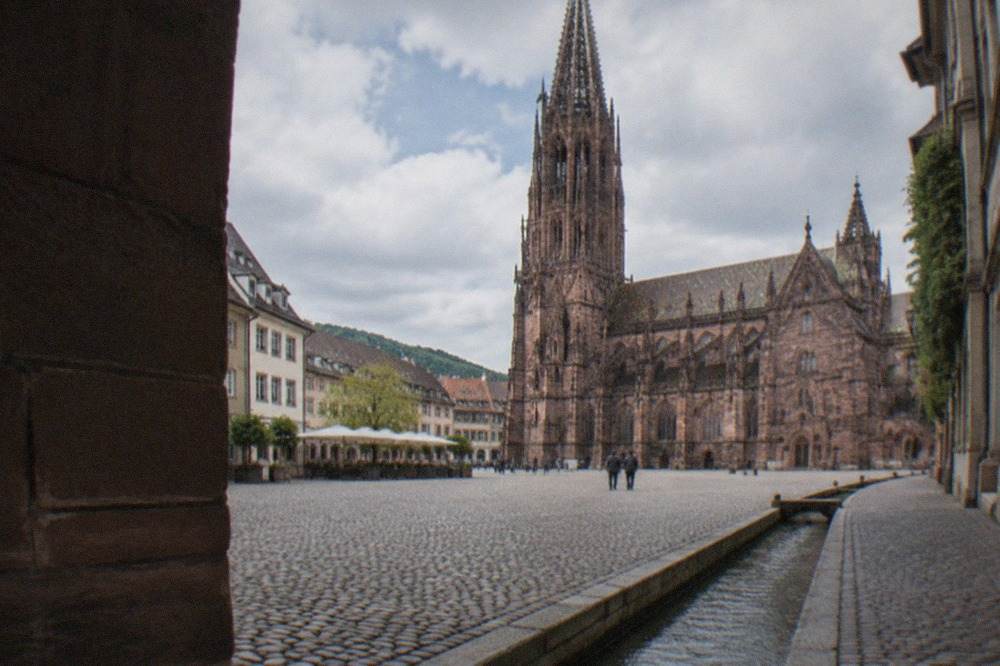
One thing worth setting expectations on: the Bächle are small. First-time visitors sometimes expect canals, Venetian or Strasbourg-style, and are surprised to find something closer to a permanent gutter with clean, quick water running through it. The charm is precisely that modesty. A whole city's worth of streets has agreed to keep a little river beside every curb, and that agreement is what makes the old town feel the way it does.
Why Freiburg's Streets Have Running Water
The Bächle began as medieval street infrastructure: the flowing water cleaned the lanes, carried away waste water, and provided a ready firefighting reserve in a city built mostly of timber. The channels were fed by diverting water from the Dreisam, the river that runs along the city's eastern and southern edge, and that gravity-fed arrangement still moves water through the old town today.
The practical logic is simple. A medieval city without sewers needs somewhere for dirty water to go, and a medieval city without fire hydrants needs water close to hand. A shallow channel on every street solves both problems cheaply, especially when a river sits uphill of the streets it needs to serve. The water is not stagnant; it moves, which is why the channels still read as clean rather than as a puddle that never left.
That firefighting role is worth a moment of respect. Before pressurized mains, the difference between one burned house and a burned quarter was often the speed of bucket chains, and a channel running along the street meant the buckets never had to travel far. Freiburg's old town still has lanes narrow enough that you can see exactly how fire would have spread, and how useful water at your feet would have been.
The modern city has sewers and hydrants, so the Bächle's original jobs are done. What the channels now do is cultural work. They cool the street air a little in summer, they give children something to float things down, and they have become the single most recognizable signature of Freiburg's streetscape, reproduced on postcards, tourist posters and the city's own marketing. Removing them would save maintenance money and cost the city its face, which is why every generation has chosen to keep paying.
For context on the climate that keeps the water moving, Freiburg is one of Germany's warmest and sunniest cities, with an annual mean of 11.0°C and 1,815.1 hours of sunshine per year in the 1991-2020 measurement series, per DWD's 1991-2020 normals. Those figures are national rankings territory, not superlatives: the same series shows dozens of German stations warmer, so treat "warmest city" claims you may have read with care.
Where To Find The Best Bächle
The densest and most attractive Bächle run through the Altstadt lanes between the Münster and the two surviving gates, Martinstor and Schwabentor, with especially good stretches on Oberlinden near the Schwabentor, along the Gerberau and Fischerau in the former tanners' quarter, and on the small lanes just off the Münsterplatz. All of it is free and walkable in an afternoon.
The old town is compact, so rather than a route, think of it as a set of neighborhoods, each with its own character of channel. The table below matches the best-known stretches to what you actually see when you get there.
| Area | What The Bächle Look Like There | What Else You Get |
|---|---|---|
| Oberlinden, by the Schwabentor | Wide, shallow runs beside café terraces under old trees | The gate itself, the Lindbrunnen fountain, quiet corners |
| Gerberau and Fischerau | Channels beside low tanners' houses, now wine bars and shops | The most atmospheric evening stretch in the city |
| Lanes off the Münsterplatz | Narrow gutters crossing between market stalls | The Münster, the Historisches Kaufhaus, the market crowd |
| Rathausgasse and Oberstraße | Classic runs beside stepped gables and shopfronts | Easy link between the gates and the square |
| Konviktstraße | Postcard lane, channel down the middle of the street beside half-timbered houses | The single most photographed Bächle in Freiburg |
Two of those names deserve a flag. Konviktstraße is the lane that appears on most Freiburg postcards, a half-timbered street with the channel running down the middle, and it can feel busy on a sunny afternoon for exactly that reason. Gerberau and Fischerau, the old tanners' lanes, are where the channels sit beside buildings that once used them in earnest, and they hold up better in the evening, when the wine bars open and the water catches the light.
If you would rather have a guide point out the details, the best-matched product on the roster is the Gässle, Bächle and More City Tour, a roughly 1.5-hour walk rated 4.7 across 3,187 reviews, from $15. Its name is literally built around the two things this article is about: the Gässle, the little alleys, and the Bächle, the channels beside them.
Beyond the old town, the idea of the Bächle shows up in the wider city in smaller ways, in drainage details and stream-side paths, but the Altstadt is where the real thing lives. Plan an unhurried loop, cross the Münsterplatz market at some point, and let the channels pick the route for you. When your legs run out, the Schlossberg lift or a tram back to the ring is never far.
The Bächle Legend And Other Local Sayings
The famous legend says that if you step into a Bächle, you will marry a Freiburger, or if you are already married to one, that you are staying. It is folklore rather than fact, nobody enforces it, and it is told to visitors with a smile, but it has become one of the city's best-loved stories and the reason people watch their feet on these streets.
Like most good legends, it works because it gives a physical act a hidden meaning. You are walking along, admiring the facades, and one misstep supposedly rewrites your marital future. Ask a local about it and you will usually get the story, a pause, and then an admission that the mud on your shoe is the only guaranteed consequence.
The story also feeds the Bächle's role as a courtship of the city itself. People who fell in love with Freiburg on a visit often cite the channels as the detail that did it, the thing that made the place feel lived-in rather than staged. In that sense the legend is true in spirit: get involved enough with these streets to step in the water, and the city tends to keep a hold on you.
The channels have collected other habits around them. Children float leaves and paper boats downstream, which is exactly what children have done here for centuries. On hot days, locals and visitors alike stand with a foot in the cool water, which is the most efficient free air conditioning in the old town. And around Christmas, when the market lights are strung above the lanes, the running water doubles the reflections, and the channels are at their most photogenic of the whole year.
That December overlap is why a themed evening walk belongs on some itineraries. During the market period, which runs 19 November to 23 December 2026 per the official Weihnachtsmarkt Freiburg pages, the Bächle lanes sit directly between the main market squares, so a market visit and a Bächle stroll are the same walk after dark.
One honest note about the water itself: it is stream water running through an open city channel, not drinking water and not a swimming pool. It is shallow and clear-looking most days, fine for a wet shoe or a cool foot, but treat it as scenery rather than a feature to play in with small children unsupervised.
How The Bächle Change With The Seasons
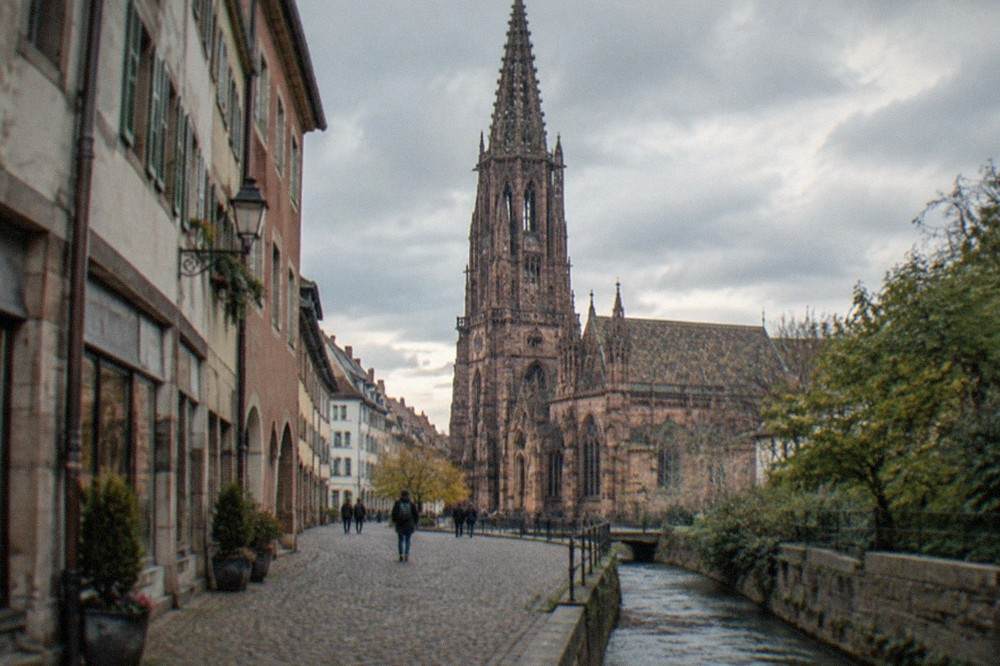
The Bächle run all year, but they read differently by season: loudest and fullest in the rain of late spring, laziest in dry summer weeks when the flow drops and children take over the channels, and at their most atmospheric from late November when the Christmas market lights reflect in the water. Rain is spread fairly evenly across the year, with May the wettest month at 103.4 mm on average.
The climate numbers behind that rhythm come from the long-run measurement series for the city's weather station. Freiburg's rain is not concentrated in one stormy season; it arrives steadily, which suits a system of small permanent channels. The table shows the monthly averages from the 1991-2020 normals for station 1443. More of these guides are collected on Freiburg Travel Guide.
| Month | Mean Temp (°C) | Average Rain (mm) |
|---|---|---|
| January | 2.5 | 48.6 |
| February | 3.5 | 49.1 |
| March | 7.0 | 54.3 |
| April | 10.8 | 63.8 |
| May | 14.9 | 103.4 |
| June | 18.3 | 89.8 |
| July | 20.1 | 92.2 |
| August | 19.7 | 83.3 |
| September | 15.4 | 77.4 |
| October | 10.9 | 78.5 |
| November | 6.1 | 66.2 |
| December | 3.4 | 66.9 |
What the dry numbers mean on the street is this. In May, the wettest month, the channels are brisk and loud and the gutters do their old job in front of you. In February, the driest by average, the flow can thin to a trickle sliding over the stones. Neither state is a disappointment: a full Bächle shows you the mechanism working, a quiet one shows you the stonework.
Frost days are concentrated between November and March, averaging 64 across the year, so in deep winter the water edges can ice over while the center still runs. That is the closest the old town gets to a natural decoration in the cold months, before the market scaffolding goes up and takes over the job.
If you are choosing a travel window around more than the gutters, the Freiburg weather guide breaks the whole year down month by month, and the best time to visit Freiburg weighs crowds, prices and events against it.
Guided Walks That Follow The Bächle
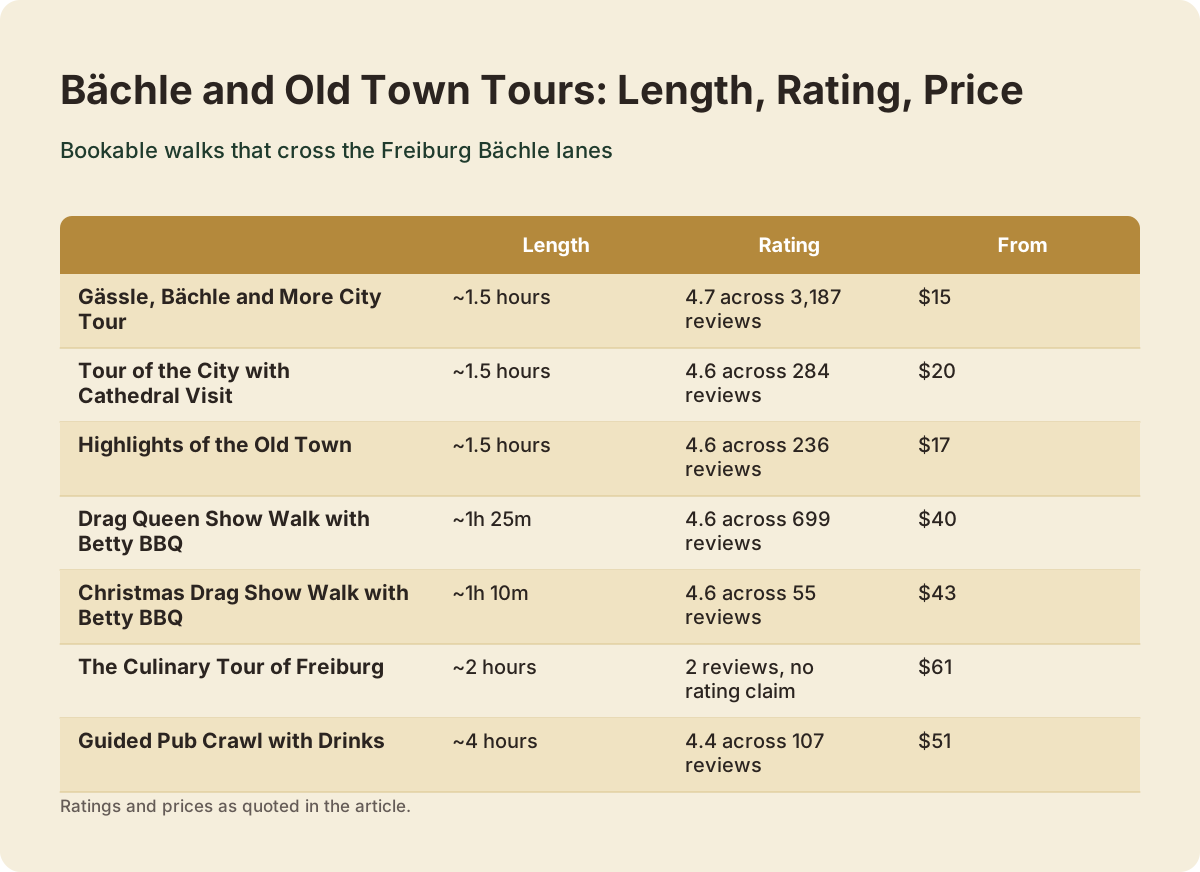
Several bookable walks cover the Bächle as part of a broader old-town loop, since any route through the Altstadt crosses them constantly. Options range from a $15 city walk with 3,187 reviews behind it to themed evening walks and a roughly 4-hour pub crawl. Ratings below are quoted with their review counts, and where a listing is too new for a meaningful rating, that is stated plainly.
The honest starting point is that you do not need a guide for the Bächle. They are free and self-explanatory. What a guided walk adds is the stories layered on top: who built the lanes, what the gates were for, which fountain is which, and the local telling of the step-in-the-Bächle legend with the timing a guide knows how to land.
The roster's clearest Bächle match is the one already mentioned above, the Gässle and Bächle walk. Around it sit several other formats, each with a different emphasis. The table compares the main English-language options.
| Tour | Length | Rating And Reviews | From |
|---|---|---|---|
| Gässle, Bächle and More City Tour | ~1.5 hours | 4.7 across 3,187 reviews | $15 |
| Tour of the City with Cathedral Visit | ~1.5 hours | 4.6 across 284 reviews | $20 |
| Highlights of the Old Town | ~1.5 hours | 4.6 across 236 reviews | $17 |
| Drag Queen Show Walk with Betty BBQ | ~1h 25m | 4.6 across 699 reviews | $40 |
| Christmas Drag Show Walk with Betty BBQ | ~1h 10m | 4.6 across 55 reviews | $43 |
| The Culinary Tour of Freiburg | ~2 hours | 2 reviews, too few for a rating claim | $61 |
| Guided Pub Crawl with Drinks | ~4 hours | 4.4 across 107 reviews | $51 |
The Betty BBQ walks deserve their own paragraph because they are a genuinely Freiburg format rather than a generic tour in a local wrapper. The Christmas edition, the Christmas Drag Show Walk with Betty BBQ, runs during the market season, is rated 4.6 across 55 reviews and starts from $43, and it threads the market lanes that the Bächle run through, so the gutters, the lights and the show walk happen in the same hour. Check availability if that is your season.
Outside the market weeks, the year-round Drag Queen Show Walk with Betty BBQ, 4.6 across 699 reviews and from $40 for roughly 1h 25m, plays the same register in the ordinary evening old town. If you would rather eat your way along the channels than perform your way along them, the Culinary Tour of Freiburg, about 2 hours from $61, is the food-led option; it is a newer listing with only 2 reviews so far, too few to support a rating claim, which is stated here as plainly as the listing shows it.
And for the late-night version, the Guided Pub Crawl with Drinks, about 4 hours from $51 and rated 4.4 across 107 reviews, keeps the party in the lanes where the water runs, which is the closest thing the Bächle have to a nightlife cameo. Prices for all of these are in US dollars on this site's booking panels, separate from the euro prices you will pay at Freiburg tills for everything else.
What The Bächle Say About Freiburg Itself
The Bächle have outlasted their job description and been kept anyway, which tells you most of what you need to know about how Freiburg treats its own city. The same instinct shows up elsewhere: walking, cycling and public transport together rose from 67% of trips in 2017 to 76% in 2023, and the city's Green City identity, from the Vauban district to the solar research presence of Fraunhofer ISE, is built on that long-horizon habit.
The modal-split figure is the most concrete evidence, and it is a verified one from the city's own monitoring. A city where three quarters of trips happen without a private car is a city making the same trade the Bächle represent: give up a little convenience, keep a lot of character. Recent reporting also describes the Frelo bike-share system renewed with roughly 1,200 bikes across 162 stations in 2026, which extends the same logic to visitors.
The Green City story is bigger than any one street detail. The city's own Green City pages point to the car-reduced Vauban district, the Rieselfeld district and the Fraunhofer Institute for Solar Energy Systems, one of Europe's significant solar research presences, all of which grew out of decisions taken decades before sustainability became a travel marketing word.
None of that is why tourists come, but it is why the place feels coherent. The Bächle are the street-level expression of a city that decided its identity was worth maintaining, and that decision is visible in everything from the tram fleet, now about two thirds electric buses and expanding, to the protected old lanes themselves.
For visitors who want the deeper background, the history of Freiburg runs from the city's founding through the university charter of 1457, and the Green City explainer covers Vauban, Rieselfeld and the solar angle in detail.
Planning Your Bächle Walk: Costs, Transport And Timing
Seeing the Bächle costs nothing, and the old town needs no ticket, so the only costs are getting there and what you add around it. A single tram ticket within zone 1 is €3.00, a day ticket for one zone is €7.20, and the 3-day RVF Welcomekarte at €27.00 covers buses and trains and includes the Schauinslandbahn cable car. Allow two to three unhurried hours for the core loop.
The transport math is simple because the old town is small. Arriving at the main station, you are one tram stop or a ten-minute walk from the edge of the Altstadt, and once inside it, everything in this article is on foot. The table gathers the fares a visitor is most likely to actually use.
| Ticket | Price | What It Covers |
|---|---|---|
| Single, zone 1 | €3.00 (€2.70 on smartphone) | One trip on trams and buses in the core zone |
| Day ticket, 1 zone | €7.20 | Unlimited trips in one zone for a day |
| Day ticket, 3 zones | €14.30 | Day travel across the wider regional zone ring |
| RVF Welcomekarte | €27.00 | 3 days, buses and trains, includes the Schauinslandbahn |
| Deutschlandticket | €63.00 per month | Nationwide local and regional transport, monthly subscription |
One correction worth making while we are on the subject of cards: Freiburg city itself is not a KONUS municipality, so a hotel stay in Freiburg does not hand you the Black Forest guest card. The visitor product here is the Welcomekarte, per the RVF's own Welcomekarte page. If you are staying in a nearby KONUS member town such as Titisee-Neustadt or Staufen, that card is valid on Freiburg's trams and buses, but that is a different product issued elsewhere.
While walking the channels, you will pass the entrances of most of the city's main sights, and their admissions are euro till prices as follows.
| Sight Near The Bächle Loop | Admission |
|---|---|
| Freiburg Münster nave | Free |
| Münster tower climb | Adults €5, children and teens €3, family €13, under 7 free |
| Augustinermuseum | €12, reduced €8, free under 27 |
| Archäologisches Museum Colombischlössle | €5, reduced €3, free under 27 |
| Museum Natur und Mensch | €5, reduced €3, free under 27; permanent exhibition closed 4 Aug 2026 to about end of Feb 2027 for renovation, special exhibitions open |
| Dokumentationszentrum Nationalsozialismus | Free |
Timing advice in one line each: mornings give you the Münstermarkt crowd, up to 130 stalls on weekdays from 07:30 to 13:30, Saturdays to 14:00, and the channels at their most working-class; late afternoon gives you golden light on Konviktstraße; evening in December gives you the market reflections. If it rains, do not reschedule: a rainy day is the day the Bächle earn their keep, and the flow is at its most convincing.
For pairing, the one day in Freiburg itinerary slots the Bächle loop into a full day, and the rainy day guide covers the museum fallbacks listed above when the rain stops being charming.
A final honest note on what to bring: shoes you do not mind getting wet at the toe, since the legend is only a legend until you step in one.
Common Questions About The Bächle In Freiburg
Can You Fall Into A Bächle?
Only your shoe. The channels are a few centimeters deep and at most a boot's width across, so falling in is not a realistic hazard. Stepping in one is, and per the local legend it means you will marry a Freiburger. The practical consequence is a wet sock, not an injury.
Are The Bächle Clean Enough To Touch?
The water is stream water diverted from the Dreisam and it runs rather than sits, so it looks and behaves clean. It is still an open street channel, not treated water, so treat it as scenery: fine for a cooling foot on a hot day, not for drinking.
Do The Bächle Run All Year?
Yes. The channels are permanent fixtures, though the flow varies with the season and the weather, from brisk in the wetter months of May through summer thunderstorms to a thin trickle in dry spells. In hard winter frost the edges can ice over while the center still runs.
Is There A Fee To See The Bächle?
No. They are part of the public street, visible at any hour and free. The only costs come from what you add: transport to the old town, museum admissions along the route, or a guided walk if you want the stories told to you.
Which Streets Have The Best Bächle?
Konviktstraße is the postcard lane with the channel down its middle, Oberlinden by the Schwabentor has the café-terrace version, and Gerberau and Fischerau are the most atmospheric in the evening. All sit within a few minutes' walk of the Münster.
Which Tour Covers The Bächle?
The Gässle, Bächle and More City Tour, about 1.5 hours from $15 and rated 4.7 across 3,187 reviews, is the roster's most direct match, since the Bächle are in its name. Otherwise, any old-town walk crosses the channels constantly.