Freiburg Welcomekarte: The 3-Day Visitor Pass Explained
The Welcomekarte is Freiburg's answer to the question every visitor eventually asks: how many tram tickets am I going to need? For €27.00 it bundles three days of buses and trains with a ride up the Schauinslandbahn, and this guide runs the numbers on when it pays off.
Short answer
The RVF Welcomekarte costs €27.00 per adult and is valid for 3 days on Freiburg's trams and buses plus regional trains in the RVF network. It includes a return ride on the Schauinslandbahn cable car, normally €15.00, and a Kulturbonus offering perks at cultural venues. It is bought for a fixed calendar period, not activated on first use.
What Is The Freiburg Welcomekarte?
The Welcomekarte is a 3-day visitor pass sold by the RVF, the transport association that runs ticketing for Freiburg's trams, buses and regional trains. An adult card costs €27.00 and the headline inclusion is a return trip on the Schauinslandbahn cable car, which would cost €15.00 bought on its own. The card also carries a Kulturbonus, a small package of perks at cultural venues around the city.
It helps to understand what the RVF actually is, because the name appears on every ticket machine and fare table you will encounter. The Regio-Verkehrsverbund Freiburg is the umbrella body coordinating fares across the city's tram operator VAG and the regional bus and train services reaching into the surrounding Breisgau. One ticket, one fare system, many operators. The Welcomekarte is the product the RVF built specifically for visitors, and the official Welcomekarte page is the source for the current terms.
The card sits in a middle position between two things it is not. It is not a day ticket, which covers 24 hours from validation and comes in zone-based prices. And it is not the KONUS guest card, the free Black Forest transport card that hotels in certain holiday towns hand out, which we cover properly further down because the two get confused constantly. If you are sleeping in Freiburg itself, the Welcomekarte is the visitor product that applies to you.
Three days means three consecutive calendar days, which matters for planning. You cannot stretch a Welcomekarte across a weekend plus the following Tuesday. That makes the card a fit for the classic short trip, one spent exploring the old town, another riding out to the Schauinsland, and a third for whichever day trip you settle on. For a two-night stay with one full sightseeing day, the arithmetic usually tilts back toward ordinary tickets.
| Feature | Welcomekarte detail |
|---|---|
| Price (adult) | €27.00 |
| Validity | 3 consecutive days |
| Transport covered | Trams, buses and trains in the RVF network |
| Schauinslandbahn | Return ride included |
| Extras | Kulturbonus cultural perks |
| Sold as | Fixed-dated visitor ticket |
What The Welcomekarte Includes, And What It Does Not
Included: unlimited rides on Freiburg's trams and buses and on RVF regional trains for 3 days, plus one return journey on the Schauinslandbahn cable car, plus the Kulturbonus. Not included: the Deutschlandticket, which is a monthly subscription product at €63.00, and anything outside the RVF network such as long-distance ICE trains or transport in other German regions.
The core value sits in that cable car inclusion. The Schauinslandbahn is a 3,600 m gondola running from the valley station on Freiburg's southern edge up to the Schauinsland summit at the edge of the Black Forest, and an adult return ticket on its own is €15.00. Over half of the Welcomekarte's €27.00 price is therefore a mountain ride you would probably take anyway on any trip longer than a weekend. The rest of the card then needs to earn €12.00 across three days of city transport, which a single zone 1 tram ticket priced at €3.00 makes quite achievable.
What the Kulturbonus actually delivers changes from season to season, so treat it as a pleasant extra rather than a reason to buy. RVF promotes it as added-value offers at museums and cultural institutions, and the practical way to check what is currently on the table is the Welcomekarte page linked above. If a specific exhibition discount is the deciding factor in your purchase, confirm it before buying, because these bonus packages rotate.
The card also does not reach into France or Switzerland. Freiburg's position on the Upper Rhine means day trips to Basel, Colmar or Strasbourg are tempting, and those cross-border legs need separate tickets bought at the station or on the train. The same applies to the ICE network: a fast train toward Frankfurt or a direct connection to Basel SBB is outside the card's scope.
One practical note on buying aboard: the newer electric buses in the VAG fleet carry cashless ticket machines only, a change rolled out from March 2025. If you board one of those without a ticket, you are expected to use the machine or a smartphone app. Holding a valid Welcomekarte means none of this touches you, which is a small but real part of the card's appeal for anyone who dislikes fare-zone arithmetic in a foreign language.
Is The Welcomekarte Worth The Price For Your Trip?
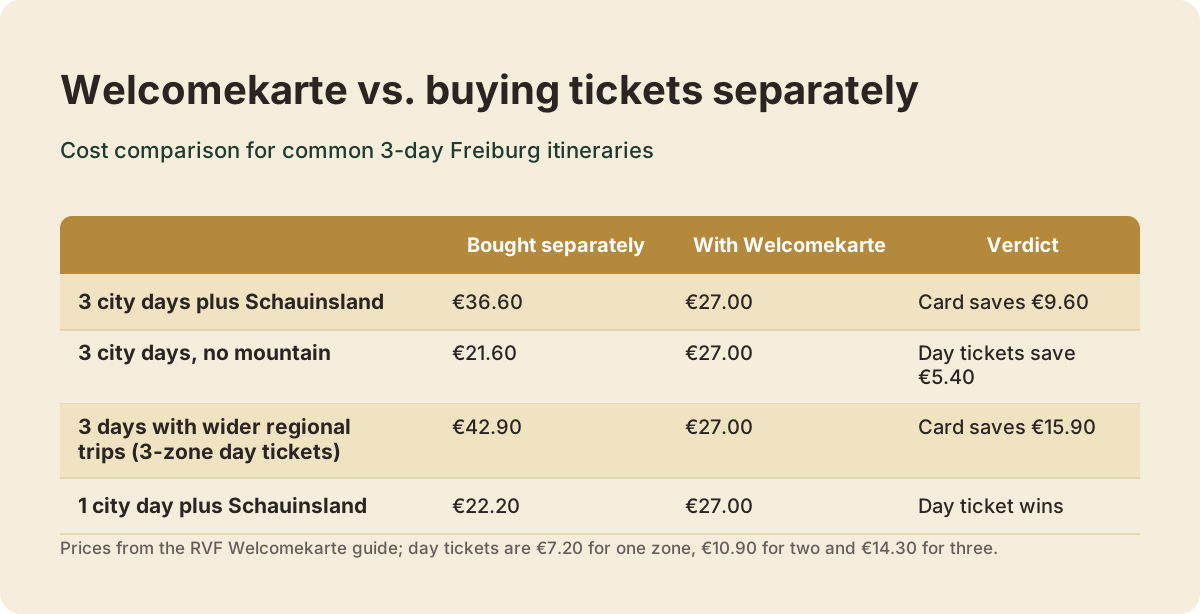
For a 3-day trip that includes the Schauinslandbahn, the card is clearly cheaper: the cable car return alone is €15.00, and three day tickets for the city zone total €21.60, so the same itinerary bought separately costs €36.60 against the card's €27.00. Without the mountain trip, three day tickets at €21.60 undercut the card by €5.40. The math is that simple.
That is the whole decision in one paragraph, but a few scenarios deserve spelling out because travel plans rarely fit the textbook case. A visitor staying four nights with three full days of activity almost certainly lands on the card. Someone in town for 36 hours, arriving one afternoon and leaving the next morning, has two real sightseeing blocks and should compare against day tickets instead. And a family faces different arithmetic again, because child versions of the card exist alongside the adult €27.00 product, and the family tower-climb price on the Münster shows how family bundles work in this city: €13 covering the group.
| Itinerary | Bought separately | With Welcomekarte | Verdict |
|---|---|---|---|
| 3 city days plus Schauinsland | 3 × €7.20 day ticket + €15.00 cable car = €36.60 | €27.00 | Card saves €9.60 |
| 3 city days, no mountain | 3 × €7.20 = €21.60 | €27.00 | Day tickets save €5.40 |
| 3 days with wider regional trips (3-zone day tickets) | 3 × €14.30 = €42.90 | €27.00 | Card saves €15.90 |
| 1 city day plus Schauinsland | €7.20 + €15.00 = €22.20 | €27.00 | Day ticket wins |
The third row is the one first-time visitors overlook. Day tickets in the RVF are zone-priced, at €7.20 for one zone, €10.90 for two and €14.30 for three, and plenty of worthwhile destinations around Freiburg sit beyond the city zone. If your three days involve scattered regional exploring rather than a tight city-and-mountain pattern, the card's flat coverage starts to look generous rather than merely convenient.
There is a related question worth asking while you are doing this math: what will you actually do with the hours the card moves you around? A transport pass optimizes distance, not experience. If you would rather have someone else handle the plan for at least one of your three days, the tours below fill that role, from a photogenic-spots walk to a self-guided scavenger hunt and a full-meal food tour.
For the tighter budgets, our guide to visiting Freiburg cheaply works through the city from hostel beds to market lunches, and pairs well with the pass decision, since transport is one of the few costs you can genuinely compress.
How To Buy And Use The Card On Trams, Buses And Trains
The Welcomekarte is sold at ticket counters and machines in the RVF area, including at Freiburg's main station, and through the RVF smartphone ticketing channels. It is issued for specific dates rather than activated on first boarding, so buy it for the window you actually plan to travel. Children pay a reduced price, and a child single on the city network is €1.80 for comparison.
The fixed-date point catches people out more than anything else about the card. If your plans shift by a day after purchase, you are carrying a ticket for a day you no longer need. The safest pattern is to buy on arrival, either at the station's service point or from a platform machine, for the dates you have already locked into your accommodation. The card then needs no stamping or validation on board; it is already dated, and you simply show it if an inspector asks.
On the vehicles themselves, nothing changes from any other RVF ticket. Trams, buses and regional trains all take the card without a zone check inside the network. The one place to have the ticket physically or digitally ready is the Schauinslandbahn valley station, where the return ride is part of the card rather than a separate purchase. The cable car's operating times page carries the seasonal schedule, and the pattern to know is daily 09:00-17:00, stretching to 18:00 during the Baden-Württemberg summer holidays.
If buying in person feels like a chore on arrival day, the smartphone route is the alternative, and the same app ecosystem gives you €2.70 singles instead of the €3.00 machine price, a 10 percent discount on single tickets that RVF applies to phone purchases. Whether that route suits you depends on data access, and our guide to getting around Freiburg covers the full ticketing landscape, from the Deutschlandticket to the bike-share system, for readers weighing longer options.
One transport reality check while you are planning movement through the city: Freiburg's tram network has been under recurring construction-related disruption through 2026, with section closures and replacement buses on various lines at different points in the year. None of this affects the validity of the Welcomekarte, but it can affect your journey time, so a quick look at current service notices before each day out is a habit worth forming.
Where The Welcomekarte Takes You Beyond The City
The card's reach is the whole RVF network, which extends well past Freiburg's boundaries into the surrounding Breisgau and toward the Black Forest foothills. The flagship destination is the Schauinsland summit, reachable by the included cable car, standing above the city with the Eugen-Keidel observation tower on top. Regional trains and buses carry you to smaller towns that most short visitors never see.
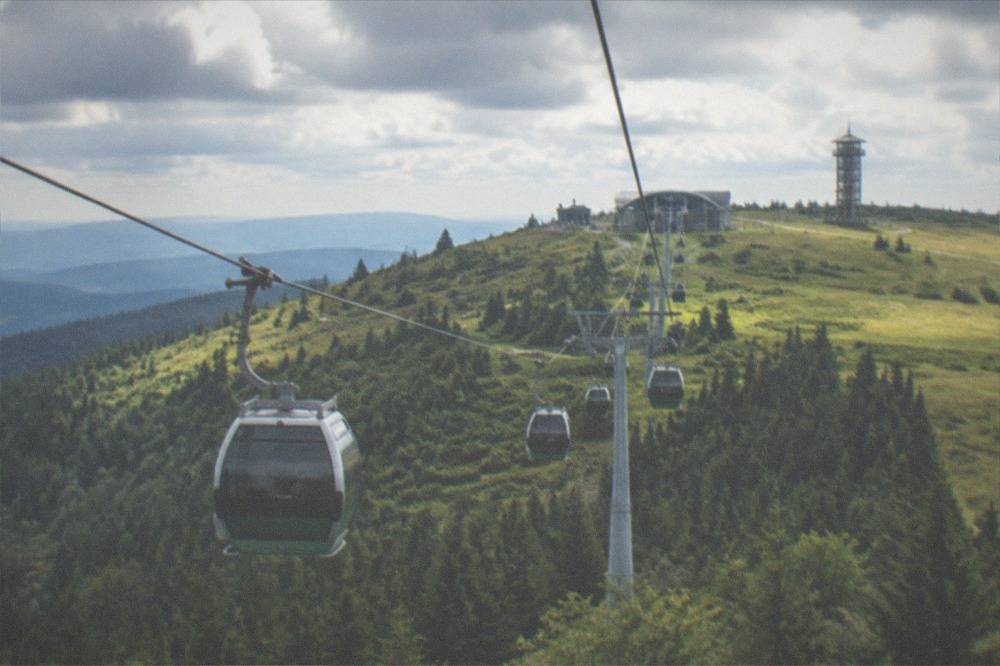
The Schauinsland trip deserves a half-day of your itinerary, not a rushed hour. The gondola ride itself covers 3,600 m of cable, and at the top the walking options fan out across the summit plateau. The observation tower reopened in April 2025 after a closure for refurbishment, and the wider area includes the Museums-Bergwerk Schauinsland, a former silver mine running guided seasonal tours from April into early November. The cable car is closed through the autumn overhaul from 16 November to 4 December 2026, a window that matters if you are traveling in late November for the Christmas market, since the market runs from 19 November and the mountain ride does not.
| Destination | How the card gets you there | Notes |
|---|---|---|
| Schauinsland summit | Included cable car return | Cable car daily 09:00-17:00, to 18:00 in BW summer holidays |
| Freiburg old town and all city districts | Trams and buses across the network | No zone checks within the card's coverage |
| Breisgau towns by regional train | RVF regional trains | Fixed dates, no validation needed on board |
| Schlossberg viewpoint | Not needed, but reachable by tram to the valley station | The Schlossbergbahn lift costs €3.70 one way separately |
Note that last row carefully, because it is the one frequent misunderstanding. The Welcomekarte includes the Schauinslandbahn on the city's southern edge but not the little Schlossbergbahn funicular that climbs the hill right behind the old town, and not the observation tower rides elsewhere. The Schlossberg itself is free to walk up, and the steep path behind the Swabian Gate takes most people under half an hour. The lift, at €3.70 one way or €6.50 return for an adult, is a separate purchase for tired legs.
Back in the city, the card quietly pays for itself on journeys you would otherwise not bother taking. A tram out to see the Vauban district's car-reduced streets, a bus to the Seepark, an evening ride back from a brewery on the city fringe: each is a €3.00 single if bought ad hoc. Over three active days those small trips add up faster than most visitors expect, which is exactly the mechanism the card is priced around.
For readers planning to go deeper into the Black Forest from this base, our overview guide to the Black Forest region maps the bigger picture, and pairs naturally with a card that handles the first leg of any such journey.
Welcomekarte Or KONUS Card: Which One Applies To You
The KONUS card is free and issued only by hotels and hosts in member municipalities of the Black Forest holiday region. Freiburg is not one of them, so a stay in Freiburg itself never produces a KONUS card. The Welcomekarte is Freiburg's visitor product instead, and the two schemes coexist: a KONUS card issued in a nearby member town remains valid on Freiburg's trams and buses.
This is the single most confused topic in Freiburg transport, so it is worth being blunt about the mechanics. KONUS, the Black Forest's guest-card scheme, covers local buses and trams across nine transport associations including Freiburg's, from the day you arrive to the day you leave, at no charge. But the card exists only where your accommodation is. The official KONUS information page lists the participating towns, and nearby members include Kirchzarten, Horben, Titisee-Neustadt, Bad Krozingen, Staufen and St. Peter. Freiburg's name is not on that list.
| Welcomekarte | KONUS card | |
|---|---|---|
| Who gets it | Anyone who buys it | Guests of member municipalities only |
| Cost | €27.00 | Free with your stay |
| Coverage | RVF buses, trams and trains, 3 days | Local transport across 9 associations, whole stay |
| Schauinslandbahn | Return ride included | Not included |
| Extras | Kulturbonus | Regional guest-program benefits |
The practical split is therefore about where you sleep, and it cuts both ways. Sleep in Titisee-Neustadt or Staufen and you hold a KONUS card valid on Freiburg's trams when you day-trip in, but you do not get the Schauinslandbahn ride. Sleep in Freiburg and you buy the Welcomekarte if you want the bundled cable car, or ordinary tickets if you do not. Some travelers split a trip deliberately, a couple of nights in a KONUS town followed by nights in the city, to capture both schemes. That is a legitimate plan, though it adds luggage logistics that not everyone wants.
A word on the tax that follows accommodation around, because it is often mixed into this conversation. Freiburg levies an Übernachtungsteuer, an overnight tax of 5 percent of the net room price, not a Kurtaxe and not a flat nightly fee. Under-18s are exempt. Unlike the KONUS card, this tax does not buy you any transport benefit in Freiburg, which is a structural difference from many German resorts where the local visitor levy and the guest card are two halves of the same system. Budget it as a small line item on your hotel bill rather than as a pass.
A reasonable closing thought for this section: the Welcomekarte rewards a plan, and the KONUS card rewards a destination choice. If you have already settled on Freiburg as your base, the remaining decision is only the arithmetic we ran in the earlier section, and that arithmetic now has everything it needs.
A Three-Day Plan That Pays The Card Off
A card-friendly three days looks like this: day one for the old town on foot and by tram, day two for the Schauinslandbahn and the summit, day three for a regional train ride and the museums. That pattern touches every inclusion the card carries, spends almost nothing on extra transport, and leaves the €27.00 price comfortably beaten by the €36.60 it would cost in separate tickets.
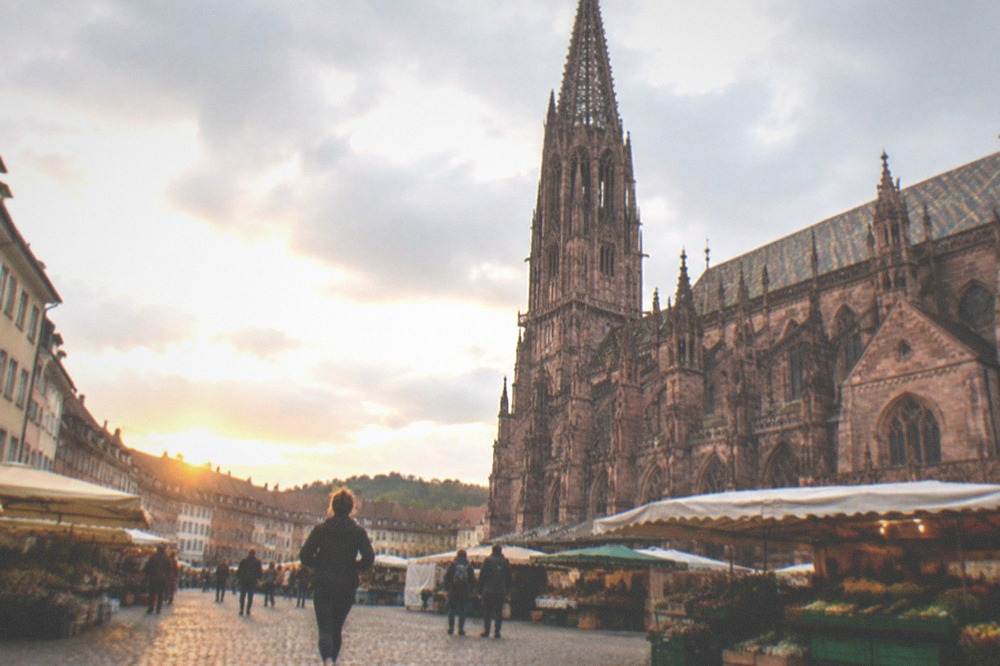
Day one belongs to the city core. The Münsterplatz market runs weekdays from 07:30 to 13:30 and Saturdays to 14:00, so start there, and if the tower is open, the climb to the 70 m gallery costs €5 for an adult with the family ticket at €13. The Bächle, those little water channels running beside the old town streets, the two remaining gates and the Augustinermuseum, fully reopened in February 2026 with admission at €12 or €8 reduced and free for anyone under 27, fill the afternoon. Trams handle the longer hops, and the card covers every one of them. The cultural institutions of the city are covered in depth in our guide to the Augustinermuseum and city museums, which pairs well with the Kulturbonus angle of the card.
Day two is the mountain. Ride out to the cable car, take the included gondola up, walk the summit plateau, and descend either by cable car or, for confident hikers, on foot. The mountain restaurant at the top station runs alongside the cable car's hours, and the same closure windows apply. Coming back down with daylight to spare, the card still carries you anywhere in the city for an evening, from the Rathausplatz to the breweries on the edge of the old town.
Day three is where the card's regional coverage earns its keep. A regional train into the Breisgau, a market lunch somewhere smaller, and a slow return through the vineyard landscapes that frame the city. This is also the natural day to hand the plan over to someone local for a few hours, and there are three formats worth weighing. The photogenic-spots walk with a local runs about 1.5 hours and costs from $115, though with only 2 reviews on the listing so far there is little traveler signal to go on yet. The self-guided scavenger hunt, at from $3, is rated 4.4 across 43 reviews and turns the old town into a puzzle, a format that suits a day you want structured without a schedule.
The third format is the full-meal food tour, about 3 hours and from $126, with 7 reviews on the listing, too few to treat as a consensus, but enough to see the shape of the experience. It fits neatly at the end of a three-day stay, when you have earned a long lunch that someone else has chosen. Whichever you pick, the pattern holds: the card moves you, and a good plan makes the movement worth something.
If a slower final afternoon sounds better than any of that, the photogenic-spots walk is the lightest of the three, a 90-minute frame around the city's most photographed corners that leaves the rest of the day open.
The Welcomekarte, then, is best understood as a planning tool rather than a discount coupon. When your itinerary already contains the Schauinslandbahn, and almost every good three-day Freiburg itinerary does, the €27.00 card is simply the cheaper way to buy the trip you were going to take anyway. When it does not, ordinary tickets win, and knowing which situation you are in before you reach the ticket machine is the whole game. This Freiburg Travel Guide covers the rest of that planning, from where to sleep to how the tram network fits together.
Common Questions About The Freiburg Welcomekarte
How much does the Welcomekarte cost?
An adult Welcomekarte costs €27.00 and is valid for 3 consecutive days. Reduced-price versions exist for children. The card covers trams, buses and trains in the RVF network, and includes a return ride on the Schauinslandbahn cable car, which is €15.00 bought separately.
Does the Welcomekarte include the Schauinslandbahn?
Yes. A return journey on the Schauinslandbahn is included in the card, and it is the single biggest value component: the cable car return alone is €15.00 of the €27.00 card price. The cable car runs daily 09:00-17:00, extended to 18:00 in the Baden-Württemberg summer holidays, and closes for its autumn overhaul from 16 November to 4 December 2026.
Is the Welcomekarte the same as the KONUS card?
No. KONUS is a free guest card issued only by accommodations in Black Forest member municipalities, and Freiburg is not one of them. The Welcomekarte is the visitor product for people staying in Freiburg. A KONUS card issued in a nearby member town such as Titisee-Neustadt or Staufen does remain valid on Freiburg's trams and buses.
When is the Welcomekarte not worth buying?
When your trip is short or city-only. Three one-zone day tickets cost €21.60, less than the €27.00 card, so a three-day stay without the mountain trip loses money on the card. The card wins the moment the Schauinslandbahn or wider regional travel enters the plan, at which point the separate-purchase cost climbs to €36.60 or more.
Where can I buy the Welcomekarte?
At RVF ticket counters and machines, including Freiburg main station, and through the RVF smartphone ticketing channels. The card is issued for fixed travel dates rather than activated on first use, so have your dates settled before buying. On board, no validation is needed; inspectors are shown the dated card.