Botanical Garden Freiburg: A Practical Visitor Guide
The botanical garden is the University of Freiburg's living collection, a quiet green stop between the old town and the hills. This guide covers the practical side: transit fares, timing, weather, nearby alternatives and a one-day plan that works.
Short answer
The botanical garden in Freiburg belongs to the university, founded in 1457, and sits inside the city, reachable on any RVF ticket. A single zone 1 ticket costs €3.00, a day ticket €7.20, and the 3-day Welcomekarte at €27.00 also includes the Schauinslandbahn cable car. Current hours and admission are listed on the university's own pages.
Botanical Garden Freiburg: A Practical Visitor Guide
Freiburg runs green. Walking, cycling and public transport together carried 76% of all trips in 2023, up from 67% in 2017, according to the city's own monitoring report, and the place a visitor feels that most is a university city that treats its parks, hills and gardens as everyday infrastructure rather than attractions. The botanical garden belongs to the University of Freiburg, an institution chartered on 21 September 1457 and now teaching roughly 24,507 students in the winter semester of 2025/26, and it exists first for research and teaching rather than for tourism. That is exactly why it makes a good stop: it is quiet, it is central, and it shows a side of the city that the cathedral square does not.

What Is The Botanical Garden In Freiburg?
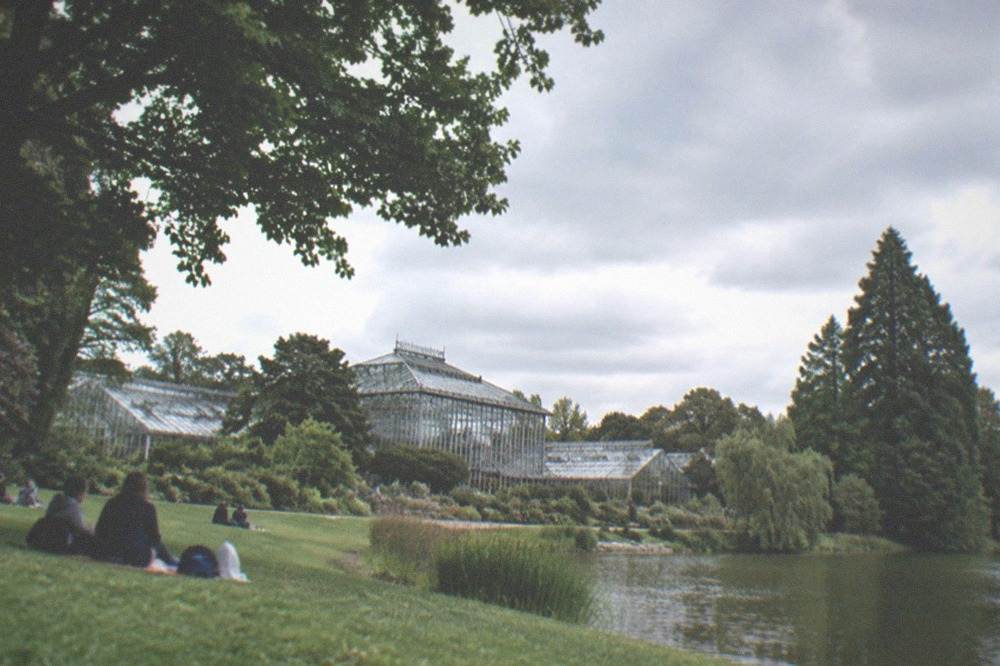
It is the University of Freiburg's living plant collection, a teaching and research garden run by one of Germany's oldest universities rather than by the city's tourism office. The university was chartered in 1457, and its botanical collection serves students and researchers first. Practical details, current opening hours and any admission rules are published on the university's own pages, so check those before you set out.
What that means for a visitor is a garden with a working character. There are no turnstiles, mascots or souvenir aisles; there are beds, glasshouses and labels, maintained by an institution whose main business is degrees. The university's own history pages document the 1457 charter under Albrecht VI of Austria, and the student statistics published for the current winter semester put enrollment at 24,507, numbers that explain why a garden attached to a university of this size exists at all: botany, biology, pharmacy and forestry all need living reference material.
The honest position for a guide like this one is simple. The city's verified fact base confirms the garden exists as part of the university and where it sits in the city's green network, but it does not carry the garden's hours, admission terms or planting inventory, and this site does not invent figures. Treat the university's own site as the single source for those, and treat everything here as the planning layer around the visit: how to arrive, when the weather cooperates, what a day around the garden looks like, and what else is within a short tram ride.
The setting helps. Freiburg is one of Germany's warmest and sunniest cities, with an annual mean of 11.0°C and 1,815.1 hours of sunshine per year in the 1991-2020 normals for station 1443, which stretches the season in which a garden visit is pleasant well into spring and autumn. For more on what the city is known for generally, see the sibling guide on Freiburg Travel Guide, and for the deeper green context, the Freiburg Green City guide covers the Vauban district, Rieselfeld and the solar research cluster that earned the city its reputation.
How To Get To The Botanical Garden By Tram, Bus Or On Foot
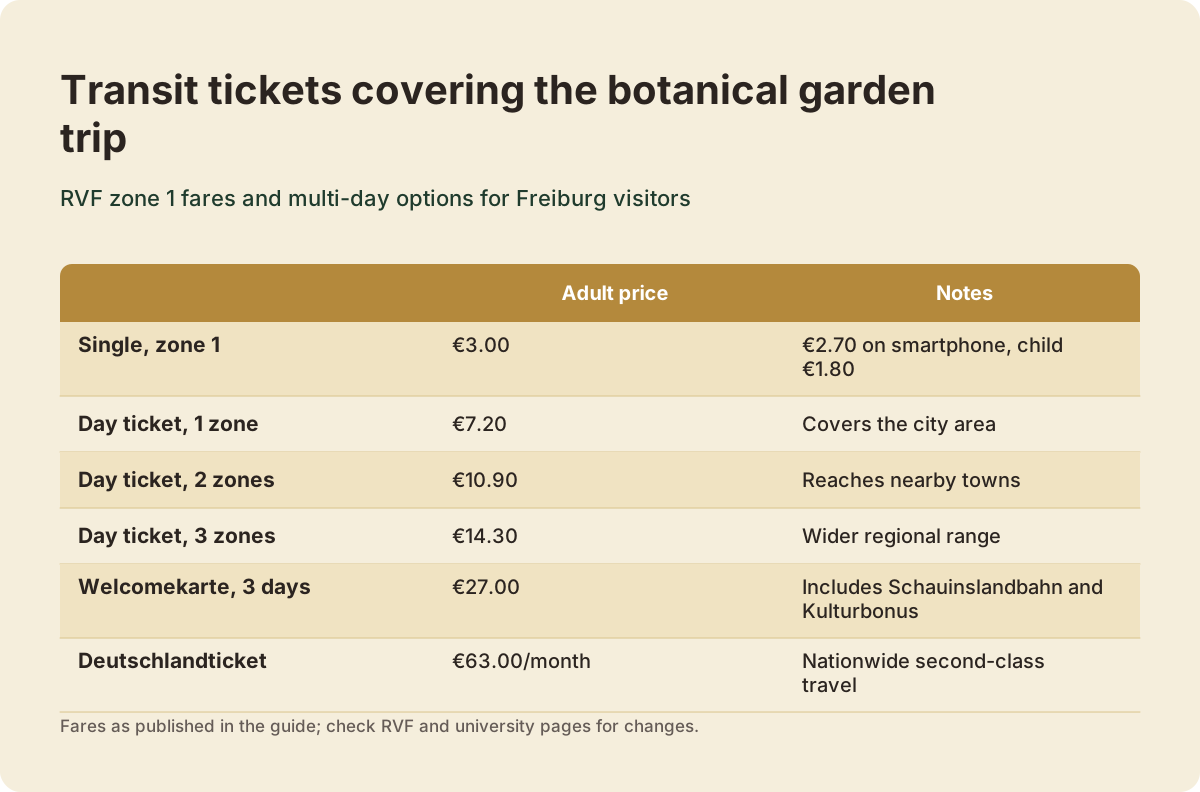
Any RVF zone 1 ticket covers the trip: a single costs €3.00, or €2.70 bought on a smartphone, with children at €1.80. A day ticket for one zone is €7.20. Visitors staying several days should look at the Welcomekarte, 3 days at €27.00 for adults, which covers buses and trains and includes the Schauinslandbahn cable car plus a culture bonus.

Freiburg's tram and bus network is the natural way in. The RVF tariff structure is flat and simple, and the verified fare table looks like this:
| Ticket | Adult price | Notes |
|---|---|---|
| Single, zone 1 | €3.00 | €2.70 on smartphone, child €1.80 |
| Day ticket, 1 zone | €7.20 | Covers the city area |
| Day ticket, 2 zones | €10.90 | Reaches nearby towns |
| Day ticket, 3 zones | €14.30 | Wider regional range |
| Welcomekarte, 3 days | €27.00 | Includes Schauinslandbahn and Kulturbonus |
| Deutschlandticket | €63.00/month | Nationwide second-class travel |
A few of these deserve comment. The Welcomekarte is the visitor product for people staying in Freiburg, and it is not the same thing as the KONUS card: Freiburg city is not a KONUS municipality, so a hotel stay in Freiburg does not hand you a free regional guest card, though a KONUS card issued in a member town such as Kirchzarten or Titisee-Neustadt is valid on Freiburg's trams and buses. The city's own overnight levy is a separate matter, an Übernachtungsteuer of 5% of the net room price rather than a Kurtaxe, with guests under 18 exempt. The Freiburg Welcomekarte guide works through the arithmetic of when the card pays off, and the Getting Around Freiburg guide covers the network itself, including the construction-related tram diversions that recur around the city in 2026.
On foot is often just as fast. Freiburg is compact, its old town is essentially car-free in the center, and the garden sits close enough to the inner city that many visitors fold it into a walk rather than planning a tram leg. Walking is also the majority mode in the city's modal split, part of that 76% share of trips made without a private car. If you prefer company and structure on that walk, a guided option is the Walking and Strolling the Historic Center tour, about 2 hours and from $228, a private format with a small review pool of 6 reviews, too few for a star rating to mean much, so judge it on its itinerary rather than a score. The operator's live listing carries the current times and terms.
Opening Hours, Admission And What A Visit Actually Costs
The garden's own hours and any admission charge are published by the university, and this site will not print a number it cannot verify. Budget the parts that are verifiable: transit at €3.00 single or €7.20 for a day ticket, and free sights all around it, since the Münster nave, the Schlossberg and the Augustinerplatz are all free to enter. Plan the garden as a low-cost stop inside a low-cost day.
University gardens across Germany keep their own schedules, which vary by season, by glasshouse staffing and by the academic calendar, and the reliable move is to read the university's botanical garden page on the morning of your visit. What a guide can usefully do is put a frame around the day so that the garden, whatever its hours that week, slots into a plan that does not depend on it.
Around the garden, the free layer of Freiburg is unusually thick. The Münster's nave is free to enter, though the tower climb is not: the west tower stands 116 m tall but visitors climb only to a gallery at 70 m, at €5 for adults, €3 for children and teens, €13 for a family, with under-7s free, and the top gallery closes in winter. The Münstermarkt runs up to 130 stalls on weekdays from 07:30 to 13:30 and Saturdays to 14:00. The Schlossberg park is free, and its 33.27 m tower is reached on foot; the Schlossbergbahn funicular costs €3.70 one way or €6.50 up and down for adults if you would rather not climb.
The honest cost picture for a full day, then, looks like this: transit in the city, EUR at the till; tours and experiences booked through this site, USD on the listing. The two never mix, and this guide will not convert one into the other. What can be said firmly is that a day built around the garden, the market and the Schlossberg is one of the cheapest full days available in a German city of this size, with the only mandatory spend being the tram ticket and whatever you eat.
When To Visit: Freiburg's Climate Month By Month
July and August are the warm months, averaging 20.1°C and 19.7°C, but they are also the wettest after May, with 92.2 mm and 83.3 mm of rain. May and June offer 14.9°C and 18.3°C with the year's best sunshine before peak heat. For gardens specifically, April through June is the strongest window, balancing warmth, long light and manageable crowds.
The verified climate normals for station 1443, at 236.5 m, give a precise picture of what each month brings:
| Month | Mean °C | Rain mm | Sun hours | Days ≥30°C | Frost days |
|---|---|---|---|---|---|
| Jan | 2.5 | 48.6 | 64.7 | 0 | 15.7 |
| Feb | 3.5 | 49.1 | 91.8 | 0 | 13.7 |
| Mar | 7.0 | 54.3 | 146.8 | 0 | 8.9 |
| Apr | 10.8 | 63.8 | 182.2 | 0 | 2.2 |
| May | 14.9 | 103.4 | 206.8 | 0.8 | 0.1 |
| Jun | 18.3 | 89.8 | 232.7 | 4 | 0 |
| Jul | 20.1 | 92.2 | 252.2 | 7.3 | 0 |
| Aug | 19.7 | 83.3 | 234.4 | 7 | 0 |
| Sep | 15.4 | 77.4 | 176.2 | 0.6 | 0 |
| Oct | 10.9 | 78.5 | 116.2 | 0 | 1.7 |
| Nov | 6.1 | 66.2 | 66.6 | 0 | 6.5 |
| Dec | 3.4 | 66.9 | 56.3 | 0 | 13.8 |
Read as a gardener would, the table says three things. First, the growing season here is long: mean temperatures clear 10°C by April and hold there through October, a stretch matched by few German cities, and the reason Freiburg counts as one of the warmest and sunniest cities in the country, 34th of 1,093 stations on mean temperature and 20th of 1,091 on sunshine, not first on either, despite the guidebook clichés. Second, summer visits trade heat for storms: those 18.5 days at or above 30°C across the year cluster in July and August, and the rain comes down in brief heavy showers rather than all-day drizzle. Third, winter is genuinely dormant but bright on its good days, with December still offering 56.3 hours of sun, and a winter garden visit becomes a walk among structure, bark and glasshouses rather than bloom.
For timing within the week, mornings are the standard advice for any popular green space, and here it holds for a practical reason: the garden sits inside a city that hosted 2,130,785 overnight stays in 2025 across establishments with at least 10 beds, and the old-town streets between the station and the garden carry the heaviest foot traffic from late morning. An early garden hour before the market and the Münster fill up is the single best sequencing move available.
The Garden Among Freiburg's Other Green Escapes
The botanical garden is the scholarly option in a city full of green escapes. Seepark gained heritage protection in 2026 for its 1980s garden art, the Schlossberg is free and central with its 33.27 m tower, and Mundenhof, the city's animal park, went entirely non-smoking from 1 June 2026. Each suits a different mood; the garden suits a slow, curious one.
| Green space | Character | Verified fact | Cost |
|---|---|---|---|
| Botanical garden | University teaching and research collection | University founded 1457 | See university's own pages |
| Schlossberg | Hillside park above the old town | Tower 33.27 m | Free; funicular €3.70 one way |
| Seepark | Lake park, 1980s garden design | Heritage protection granted 2026 | Free |
| Mundenhof | Animal park and grounds | Non-smoking rule since 1 June 2026 | Check the operator's listing |
| Münstermarkt | Market square, plants and flowers among up to 130 stalls | Weekdays 07:30-13:30 | Free to browse |
The Schlossberg is the garden's closest rival for a green hour, and the two pair well: one is a designed collection, the other a wooded hill with views back over the roofs. Seepark, out toward Betzenhausen, is the family pick, with water, lawns and playground energy; its recent heritage listing recognizes the park as significant garden art of the 1980s, a fact worth knowing because it changes how you look at the layout. Mundenhof is the day-trip-scale option, and it has been in the news lately for a new non-smoking rule across indoor and outdoor areas in force since 1 June 2026, with designated smoking zones, a detail families planning a picnic will want to know. The Seepark guide and the Mundenhof guide carry the fuller pictures.
For a guided version of this green-and-old-town combination, the Walking and Strolling the Historic Center tour runs about 2 hours from $228 and is a private format. Its review pool is small, 6 reviews, which this site treats honestly as too few for a star claim either way, so weigh the itinerary and the guide's local framing rather than a rating.
Rain, Cold Or A Closed Glasshouse: Indoor Alternatives Nearby
Freiburg's museum layer is close, cheap for under-27s, and newly refreshed. The Augustinermuseum fully reopened on 28 February 2026 after more than 20 years of renovation, at €12 adults, €8 reduced, free under 27. Museum für Neue Kunst is €7/€5; the Colombischlössle archaeological museum is €5/€3. One caveat: Museum Natur und Mensch's permanent exhibition is closed from 4 August 2026 until around the end of February 2027.
That closure is the kind of detail a guide should flag rather than bury. The building stays open for special exhibitions, the mineral vault and workshops, so it is not a full closure, but a visitor expecting the natural history displays will be disappointed. The rest of the museum quarter is in strong form, and the Augustinermuseum's reopening is the headline: after a phased renovation running more than two decades, the final phase finished and the doors opened fully in February 2026, with new exhibition space in the former convent building and vaulted cellars bringing the total to roughly 3,400 m².
| Museum | Admission | Reduced | Under 27 | Notes |
|---|---|---|---|---|
| Augustinermuseum | €12 | €8 | Free | Day ticket for all city museums |
| Museum für Neue Kunst | €7 | €5 | Free | Open late Thursdays to 19:00 |
| Colombischlössle archaeological museum | €5 | €3 | Free | Modernization completed 2024-25 |
| Museum Natur und Mensch | €5 | €3 | Free | Permanent exhibition closed to about Feb 2027 |
| Dokumentationszentrum Nationalsozialismus | Free | Free | Free | Free entry |
The Augustinermuseum's day ticket covering all the city museums at €12 is one of the better values in the city when the weather turns, effectively pricing four or five houses at a couple of euros each once you move beyond the first one. The Rainy Day in Freiburg guide builds a full wet-weather itinerary around these, and the Augustinermuseum guide covers what the reopened building actually holds. Italian-speaking visitors have a dedicated option in the Old Town Private Walking Tour in Italian, from $51 for about 1.5 hours, with a review pool of 11, again too small for a star claim to be meaningful; the live listing has the current departures.
Fitting The Garden Into One Day In Freiburg
A workable single day sequences the garden early, the Münster and market around midday, the Schlossberg in the afternoon and a wine stop before dinner. Transit for the day is €7.20 on a one-zone day ticket. Arriving from Basel EuroAirport, the Freiburger Reisedienst Airportbus runs daily and takes about an hour, with the fare shown on the booking listing rather than quoted here.
The sequencing logic is simple: put the quiet, low-density stop first, before both the crowds and the afternoon heat build. An early garden hour costs nothing in schedule flexibility because the university quarters wake slowly, then the walk toward the center passes through the streets most visitors come to Freiburg for, the two old gates, the Martinstor and the Schwabentor, and the Bächle, the small water channels running alongside the lanes. By the time the Münstermarkt hits its stride, you are already in position. The afternoon belongs to altitude: the Schlossberg on foot, or €3.70 on the funicular if the legs object, then evening at Augustinerplatz, where the square fills with students from a university of 24,507.
For travelers flying in, the Basel connection matters: the EuroAirport sits on the French-Swiss border, and the direct Airportbus from Freiburg runs daily, taking about an hour, with its fare on its live listing. The fare belongs on the listing, not in this guide, because no primary source confirms a number. The Basel Airport to Freiburg guide covers the full set of options, and the One Day in Freiburg guide expands the itinerary above into a complete hour-by-hour plan. Two-day and three-day versions exist too, for which the Two Days in Freiburg guide is the natural next read, and they leave room for a cable car day on the Schauinsland, where the Welcomekarte's inclusion of the railway becomes genuinely useful.
Whatever shape the day takes, the botanical garden earns its place in it precisely because it asks so little: no ticket queue to plan around, no time slot to book, just a green hour attached to an institution chartered in 1457, reached on a €3.00 tram ride or a short walk from the center. Few university cities offer that combination this compactly.
Common Questions About The Botanical Garden In Freiburg
Is the botanical garden in Freiburg free to visit?
The university publishes current admission terms on its own pages, and this site does not print a figure it cannot verify. The surrounding day is cheap regardless: the tram ride is €3.00 single or €7.20 for a one-zone day ticket, and the Münster nave, the Schlossberg and the Münstermarkt are all free.
How do I get to the botanical garden in Freiburg?
Any RVF zone 1 ticket covers the trip: €3.00 for a single, €2.70 on a smartphone, €1.80 for a child, or €7.20 for a one-zone day ticket. The 3-day Welcomekarte at €27.00 covers buses and trains and includes the Schauinslandbahn cable car plus a culture bonus.
When is the best time of year to visit?
April through June is the strongest window, with mean temperatures of 10.8°C, 14.9°C and 18.3°C and sunshine climbing from 182.2 to 232.7 hours per month. July and August are warmer still, at 20.1°C and 19.7°C, but bring 92.2 mm and 83.3 mm of rain respectively.
Can I combine the garden with other sights in one day?
Yes, easily. A one-zone day ticket at €7.20 covers a full day of trams, and a sequence of garden, Münster and market, Schlossberg, then Augustinerplatz is realistic on foot and rail. The Münster tower climb to the 70 m gallery costs €5 for adults.
What if it rains on the day of my visit?
The museum quarter is the fallback, and it is strong: the Augustinermuseum fully reopened on 28 February 2026 at €12/€8 with under-27s free, and its day ticket covers the other city museums. Note that Museum Natur und Mensch's permanent exhibition is closed from 4 August 2026 until around the end of February 2027.
Do hotels in Freiburg include a KONUS guest card?
No. Freiburg city is not a KONUS municipality, so a hotel stay in the city does not include one. The visitor transport product for Freiburg is the RVF Welcomekarte, 3 days at €27.00 for adults, and the city's overnight levy is a 5% Übernachtungsteuer, not a Kurtaxe.