Freiburg Green City: How Germany's Solar Capital Actually Works
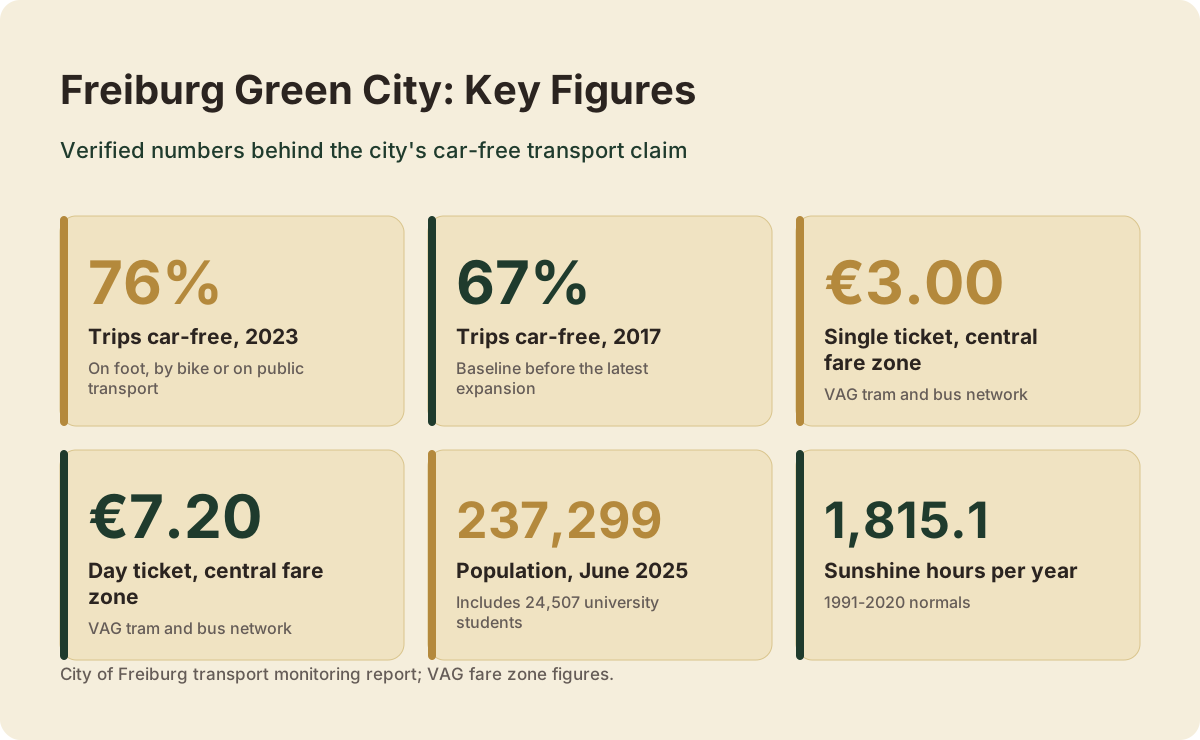
Freiburg markets itself as a Green City, and most of the claim survives scrutiny: three quarters of local trips now happen on foot, by bike or by tram, and its newest districts were designed around that from day one.
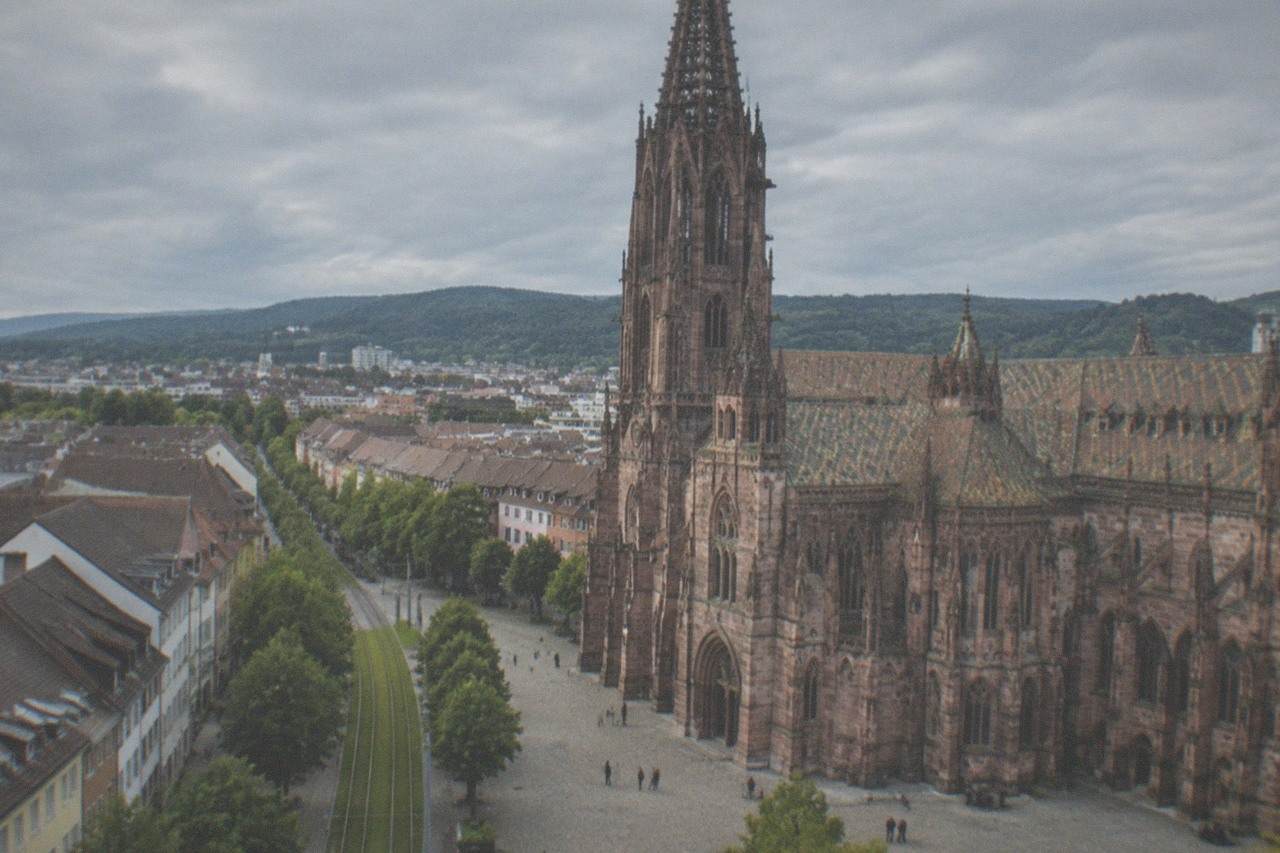
Short answer
Freiburg's Green City label rests on real numbers: walking, cycling and public transport rose from 67% of trips in 2017 to 76% in 2023, and the city runs Germany's densest solar research cluster. Visitors see it in the grass tram tracks, the car-reduced Vauban district and 162 bike-share stations.
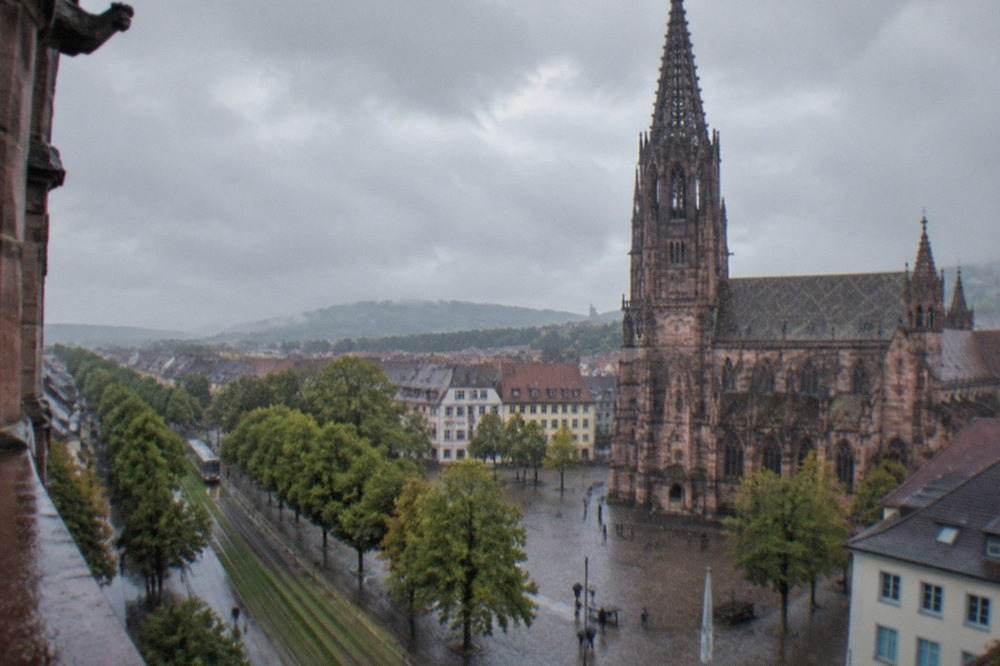
Freiburg sells itself as a Green City, and unusually for a tourism slogan, the phrase survives contact with the data. The city's own monitoring report shows walking, cycling and public transport rising from 67% of all trips in 2017 to 76% in 2023. The university, founded in 1457, now hosts a cluster of solar research institutes, and the two districts built on its western and southern edges were designed around bicycles, trams and passive houses before a single foundation was poured.
This guide is for someone already in Freiburg or about to arrive, who wants to understand what the green label means in practice and where to see it with their own eyes. It draws on the city's published figures, its transport authority's tariff documents and reporting from the official city pages, and it separates the verified numbers from the claims that are still only reported rather than confirmed. If you are planning a broader stay, start with the one day in Freiburg itinerary and slot the green-city stops into it.
What Does The Green City Label Actually Mean?
The label is an official city program, not a marketing invention. Freiburg's own Green City pages present the phrase as a planning identity built on measurable targets: shifting trips away from private cars, expanding renewable energy, and growing the city's forests and meadows rather than its parking lots. The two numbers that anchor the claim are the modal split, 76% of trips made without a car in 2023, and the solar research concentration around the university and Fraunhofer ISE.
The city publishes these figures itself. The transport monitoring report is a public document, and the rise from 67% to 76% between 2017 and 2023 is stated in it plainly, which is more than most self-described green destinations can show. Reporting on the city's transport habits also frequently cites a bike share of about 33% and a car share of about 24% of trips, but those two breakdown figures have not been confirmed against the report text, so treat them as reported rather than verified.
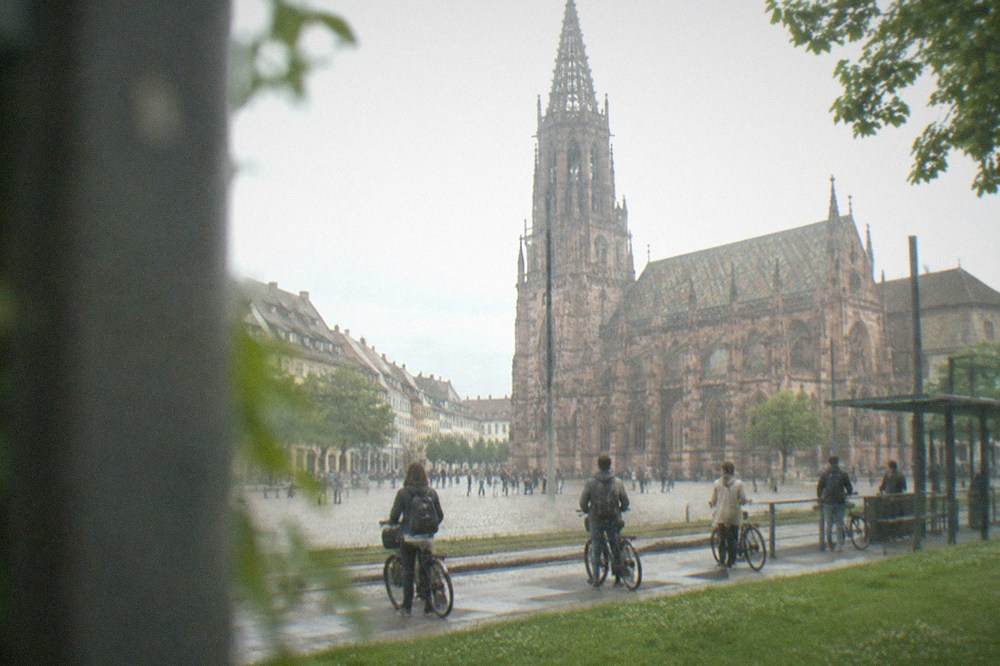
For a visitor the label shows up in small, physical ways before it shows up in statistics. The tram tracks running down several central streets are set into grass rather than concrete. There are more cyclists than cars on most inner streets at rush hour. The streams, the Bächle, that run alongside the old town gutters are fed by the Dreisam river and have been part of the street plan for centuries, long before anyone used the word sustainability.
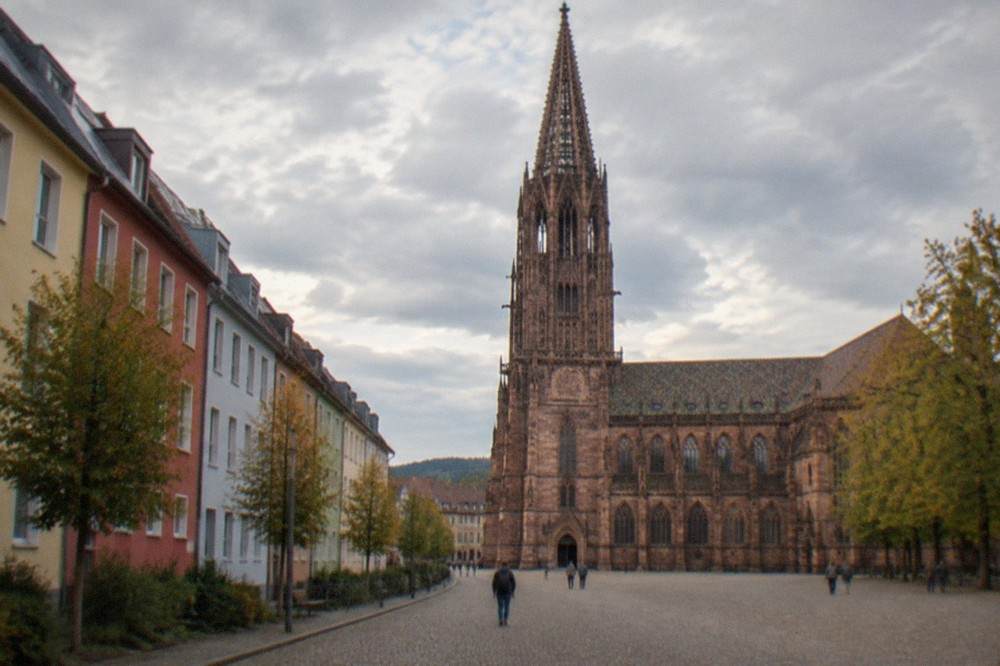
The official Green City page also names the two flagship districts, Vauban and Rieselfeld, and the solar research institute Fraunhofer ISE, as the three pillars of the identity. Those three are covered in their own sections below, because they are the parts a visitor can actually walk through and recognize. The city's own Green City page is worth a read if you want the framing in the city's own words.
The Transport Numbers Behind The Claim
The verified figure is the combined share: 67% of trips in 2017, 76% in 2023, all made on foot, by bicycle or on public transport. That is a nine point shift in six years, measured across the whole city and not just the central district. The city's population, 237,299 as of mid-2025, includes 24,507 university students, a group that skews heavily toward tram and bike use, which explains part of the shift.
The numbers come from the city's transport monitoring, published as an annex to a council report, and they were verified against the document text rather than taken from a press summary. That matters because Freiburg's green reputation attracts a lot of loose claims. It is one of Germany's warmest and sunniest cities, which genuinely helps solar output, but it is not the warmest or sunniest, and any source that says so is rounding the city up to a slogan.
| Green city indicator | Figure | What it means for a visitor |
|---|---|---|
| Trips by foot, bike or public transport, 2017 | 67% | Baseline measured before the latest expansion |
| Same share, 2023 | 76% | Roughly three of every four trips are car-free |
| Population | 237,299 (June 2025) | A mid-sized city, walkable core |
| University students | 24,507 (winter 2025/26) | Heavy tram and bike usage |
| Bike-share stations | Reported at 162 from March 2026 | Bikes available citywide, figure reported not verified |
| Bike-share fleet | Reported at about 1,200 bikes, 206 e-bikes | Renewed from January 2026, figure reported |
The bike-share figures deserve their caveat. Reporting indicates the Frelo fleet was fully renewed in January 2026 with about 1,200 new bikes including 206 e-bikes, and expanded to 162 stations from March 2026, but those numbers come from press reporting rather than the operator's own tariff page, so print them with that framing in mind. What is certain from standing on any street corner: the bikes are everywhere and the stations are dense.
If the numbers make you want someone to walk you through what they look like on the ground, a private guide is the most efficient way to see the sustainable districts and understand what you are looking at.
The tram system itself is the most visible piece of green infrastructure. The VAG network runs on electricity, and its electric buses, 45 of them by the October 2025 count, now run on every line. Roughly two thirds of the bus fleet is electric. A single ticket in the central fare zone costs €3.00, a day ticket €7.20, and the RVF Welcomekarte, three days for €27.00, includes the Schauinslandbahn cable car, which makes it the single best green-city purchase a visitor can make.
Vauban And Rieselfeld: Districts Built Around The Idea
Vauban and Rieselfeld are the two large districts Freiburg built on former French barracks land and former farmland, and both were planned around tram access, passive-house building standards and sharply restricted car use. Vauban is the famous one: its streets are legally car-reduced, parking is concentrated in community garages at the district edge, and its Solar Settlement was built to produce more energy than it consumes.
Vauban began on the site of French army barracks, and the reuse of existing structures rather than demolition set the tone. The district's street-level design assumes you will walk, cycle or take tram 3, which arrived before most of the housing did. Car ownership is possible but deliberately inconvenient and more expensive than in a conventional suburb: residents who keep a car pay for a space in one of the peripheral garages, and the inner streets are play streets where children have priority.
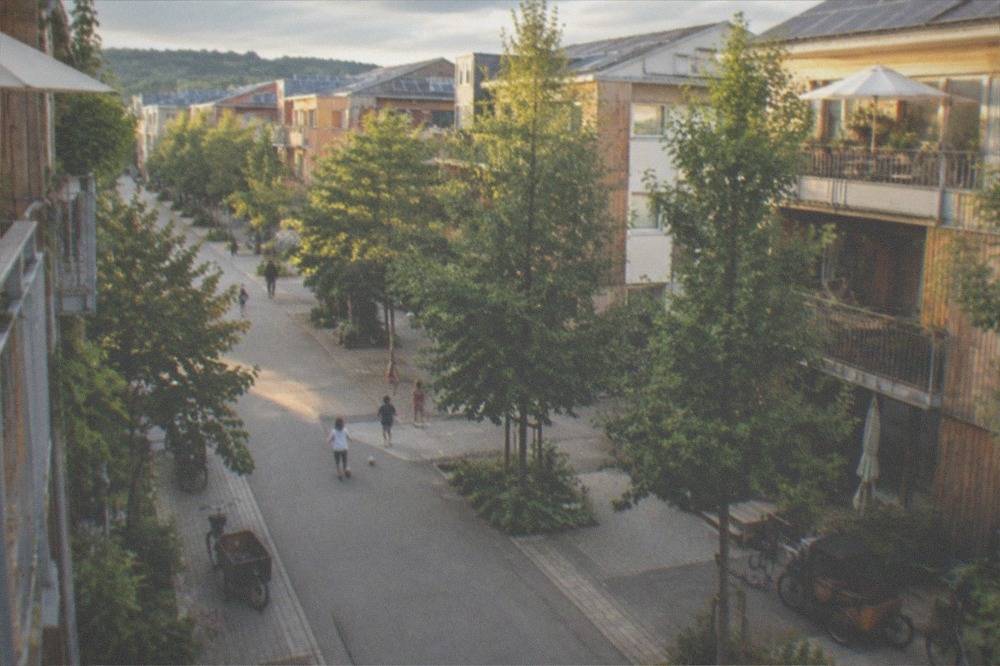
Rieselfeld, on the western edge, is the slightly larger, slightly less photographed sibling. Its name comes from the sewage fields it replaced, and its layout is a compact grid of mid-rise blocks around a central tram spine, designed so that no home is more than a few minutes' walk from a stop, a school or a shop. The district has its own character and its own green corridor along the Dietenbach, and it is a genuinely pleasant walk even for a visitor with no planning background.
| District | Origin | Green design feature | What a visitor notices |
|---|---|---|---|
| Vauban | Former French barracks site | Car-reduced streets, community parking garages, Plusenergie houses | Quiet streets, trees, tram 3, playing children |
| Rieselfeld | Former sewage fields | Compact tram-served grid, passive-house standards | Mid-rise blocks, green corridor, walkable core |
| Altstadt | Medieval core | Bächle streams, pedestrian zones, tram on grass tracks | The historic frame the newer districts answer |
The characterisation of Vauban's Plusenergie houses, the Solar Settlement and the Fraunhofer ISE research concentration comes from the city's Green City page, and it is consistent across the city's own materials. Vauban is easy to reach: tram 3 runs from the city center, and the ride takes under twenty minutes. Walk from the Vauban stop through the main street and you will pass the Solar Settlement on the way toward the Schönberg slopes.
The complication for any visitor trying to unpack all of this alone is that neither district looks like a museum exhibit. They look like ordinary neighborhoods where people live, which is precisely the point, but the story, why the garages are at the edge, why the streets are so narrow, why there are so few parked cars, benefits enormously from someone who can narrate it. The Hello Freiburg private two-hour walk with a local guide is built for exactly this: a local who can route you through the sustainable districts and explain the planning logic, from $141 with a local guide, at a pace you set.
Solar Research And The Solar Settlement
Freiburg's solar credentials run through two institutions: Fraunhofer ISE, Europe's largest solar energy research institute, headquartered in the city, and the university's renewable energy programs, which together make Freiburg a genuine research cluster rather than a city that merely installed panels. The Solar Settlement in Vauban, a terrace of Plusenergie houses, was designed to generate more energy over a year than its residents consume.
Fraunhofer ISE is the concrete anchor of the claim. It is a research institute with hundreds of staff in Freiburg, and its presence has attracted related research, startups and a technical culture that shows up on the city's rooftops. The city's climate is a genuine asset here: 1,815.1 hours of sunshine per year on the 1991-2020 normals puts Freiburg among the sunnier German cities, though not at the top of the table, and the sunny climate makes solar a rational investment rather than a symbolic one. The full index of guides sits on Freiburg Travel Guide.
The Solar Settlement, the Solarsiedlung, is the showpiece. Its houses were built to Plusenergie standard, meaning their annual energy production exceeds their consumption, and the roofs are a dense grid of photovoltaic panels. It sits at the southern edge of Vauban, and while the houses are private homes you cannot enter, the architecture and the roofscape are visible from the street and worth the walk. A visitor with an hour to spare in Vauban should see it, then walk uphill toward the Schönberg viewpoint for the district panorama.
The everyday effect of the research culture is less photogenic but more widespread: the city's building stock has been retrofitted with district heating, the tram runs on renewable electricity, and the market for renovation expertise means local tradespeople know passive-house standards. None of that makes for a photo stop, but it is what keeps the Green City label from being a facade.
How To Experience Green Freiburg As A Visitor
The practical way to see the green city is to use it: take the tram to Vauban, walk the Solar Settlement, cycle the Frelo network along the Dreisam, and finish on the Schlossberg, the forested hill the city kept public instead of developing. Every one of those experiences costs little or nothing, and together they cover the transport, housing and green space pillars of the label in a single day.
Start with transport, because it is the easiest and the most revealing. Buy the RVF Welcomekarte, €27.00 for three days, and it covers the trams, buses, regional trains and the Schauinslandbahn cable car, plus a Kulturbonus for culture venues. A single day ticket in the central zone is €7.20 if you only need one day. Then rent a Frelo bike, or simply walk: the central districts are compact, and the point of the modal split numbers is that most residents do exactly this.
| Green city experience | Cost | Time needed |
|---|---|---|
| Tram 3 to Vauban and walk the car-free streets | €3.00 single, zone 1 | Half day |
| Solar Settlement in Vauban | Free, viewed from the street | 30 minutes |
| Frelo bike ride along the Dreisam | Frelo rental, classic prices unchanged | 1 to 2 hours |
| Schlossberg walk from the old town | Free | 1 hour |
| Schauinslandbahn cable car, included in Welcomekarte | €15.00 return, or Welcomekarte | Half day |
| Stühlinger and the Seepark green corridor | Free | 1 hour |
The Seepark, which received heritage protection status in 2026 for its 1980s garden design, connects the Stühlinger district to the western neighborhoods and is where much of the city actually relaxes. The Stühlinger Kirchplatz next to it has been deliberately redesigned as a public space, with new seating, play areas and a Kulturkiosk that has hosted more than ninety events since it opened around March 2026. It is a good example of what green city planning means when it is not about energy at all: a public square made livable.
For the wider context, the getting around Freiburg guide covers the tram network in detail, and the cycling in Freiburg guide covers bike routes and the Frelo system for riders who want more than a casual spin. If your interest in the green theme is more about eating and drinking locally, the Freiburg food guide and the Baden wine country guide cover the regional produce side of the story.
If a private walk is beyond your budget for this trip, the two cheaper private options cover similar ground at different depths. The Private Guided Walking Tour, from $239 for about 1.5 hours, is the full-treatment version, with twelve reviews, too few for a star claim, on the listing. The Express Walk with a Local in 60 Minutes, from $90, is the compressed version, same twelve-review situation, built for visitors with one free hour.
The Green Spaces And Everyday Evidence
Beyond the flagship districts, the green city is visible in the forested hills that frame the city, the protected Seepark, and a network of small interventions: meadows replacing ornamental beds, sheep grazing city slopes, and a gold-label city nature program renewed in 2025. The Schlossberg, reached from the old town, is the clearest case of deliberate choice, a hill the city kept as forest within a short walk of the cathedral.
The city's nature program, StadtGrün naturnah, had its gold label renewed in September 2025, valid through 2028, citing new meadows, perennial plantings, trees and sheep grazing among the measures. That is a formal certification rather than a slogan, and it reflects a maintenance philosophy that favors biodiversity over clipped lawns. A visitor sees it in the long grass along the Dreisam and the wildflower strips on the Schlossberg slopes.
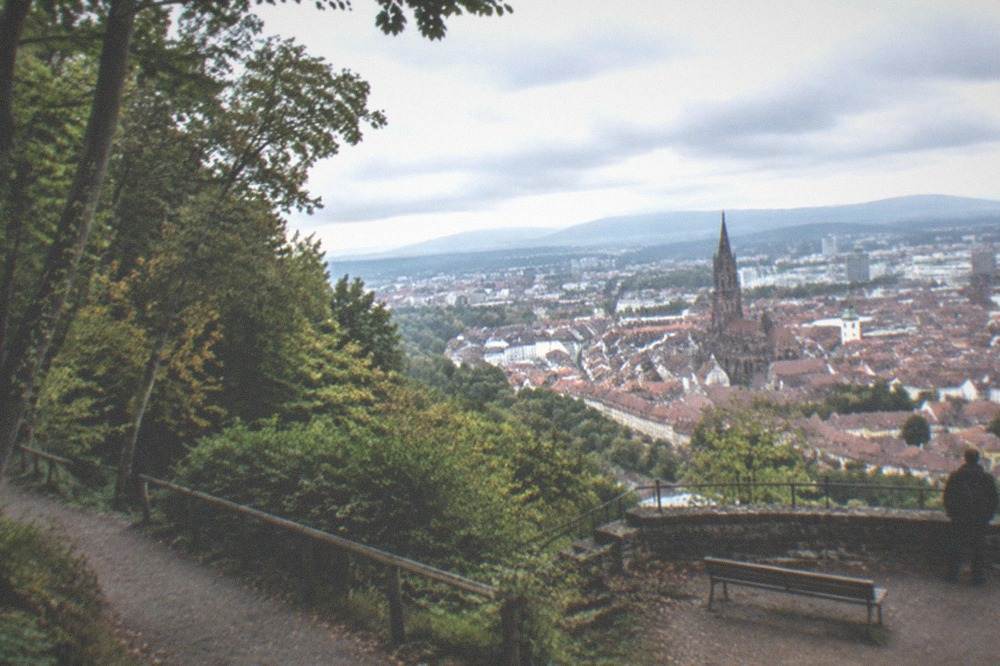
The Schlossberg is the everyday access point. From the old town it is a ten-minute walk up to the first clearings, and the Schlossbergturm, a 33.27 m tower on the summit, is free to climb and gives the best overview of how tightly the city fits against its green frame. The Schlossbergbahn funicular, €3.70 one way for an adult, saves the climb if you would rather ride. The Schlossberg guide covers the trails and viewpoints in full.
The newest chapter, the Dietenbach district on the western edge, broke ground with a public festival marking the start on 13 July 2025, and its landscape park concept for the Dietenbachaue was approved in April 2026. Nothing is built for visitors yet, but if you read about a third sustainable district alongside Vauban and Rieselfeld, that is the one, and its first residents will move into a district planned around the same tram-first logic.
One more honest note: the label does not mean Freiburg is problem-free. The city's transport works cause real disruption, tram line 3 has been on replacement service through parts of 2026 for track works, and the B31 tunnels are heading for a multi-year renovation from 2028. A green city is a direction, not a finished state, and the disruptions are themselves part of the maintenance the earlier investment now needs.
Practical Planning: Costs, Access And Season
A green-city day in Freiburg is among Europe's cheaper themed days: walking the car-free districts costs nothing, central-zone tram singles run €3.00, a day ticket is €7.20, and the €27.00 three-day Welcomekarte bundles the cable car. Arrive between May and September, when July, the sunniest month at 252.2 hours of sunshine, and the full meadow program are both at their peak.
Practicalities are simple. The central zone single ticket, €3.00 for an adult, drops to €2.70 on the smartphone app, and children pay €1.80. The Frelo bike share uses classic-bike pricing that was unchanged in the January 2026 fleet renewal, and the stations, reported at 162 from March 2026, are dense enough that you can pick up and drop off without planning. For the weather angle, the Freiburg weather guide has the month-by-month detail, and the best time to visit Freiburg guide ranks the seasons.
| What you need | Cost | Notes |
|---|---|---|
| Tram single, central zone | €3.00 (€2.70 on app) | Covers Vauban, Rieselfeld, all central stops |
| Day ticket, 1 zone | €7.20 | Cheapest if you make 3+ trips |
| Welcomekarte, 3 days | €27.00 | Includes Schauinslandbahn and Kulturbonus |
| Frelo bike | Rental price on the operator's site | Classic prices unchanged in the 2026 renewal |
| Schlossbergturm | Free | 33.27 m tower, best city panorama |
| Schlossbergbahn | €3.70 one way adult | Saves the climb from the old town |
If you are combining the green city theme with the wider region, the Black Forest guide covers the hiking country the cable car delivers you into, and the Welcomekarte makes the Schauinslandbahn leg effectively free once you hold it. The cable car, 3,600 m long, runs daily 09:00-17:00, with extended hours in the Baden-Württemberg summer holidays, and its autumn maintenance closure runs 16 November to 4 December 2026, so plan around that window.
For depth rather than speed, the longer private format gives a guide room to explain the planning history properly. This is the version for visitors who arrive with questions about the district planning, the tram-first layout and the solar standards, and who want answers in context rather than in summary form.
The trio of walks below covers the range: a private two-hour local walk, a full private guided tour and a sixty-minute express version. All three are bookable in English, and all three can be routed through the green-city districts if you say so when booking.
Common Questions About Freiburg Green City
Is Freiburg really a green city?
The verified numbers support the label: 76% of trips in 2023 were made on foot, by bike or on public transport, up from 67% in 2017, and the city hosts Fraunhofer ISE, a major solar research institute. The districts of Vauban and Rieselfeld were built around tram access and car reduction. It is a genuine planning identity, not just a slogan, though some supporting figures are reported rather than independently verified.
What is the best way to see green Freiburg as a visitor?
Take tram 3 to Vauban, walk the car-reduced streets and the Solar Settlement, then return to the center and climb the Schlossberg or ride the Schlossbergbahn. The RVF Welcomekarte at €27.00 for three days covers the trams, regional trains and the Schauinslandbahn cable car, making it the single most useful purchase for a green-city themed visit.
Is Freiburg car-free?
No. Cars are allowed almost everywhere in Freiburg; the city's achievement is that three quarters of trips happen without one. Vauban is car-reduced rather than car-free: residents who own cars park in community garages at the district edge and pay for the space. The old town center is largely pedestrian, and the Bächle streams run alongside many streets, but the city as a whole is a normal German city with trams, bikes and cars sharing space.
What is the Solar Settlement in Vauban?
It is a group of Plusenergie houses at the southern edge of Vauban, designed so that each home produces more energy over a year than its residents consume. The roofs carry dense photovoltaic arrays. The houses are private homes and cannot be entered, but the architecture and roofscape are visible from the street, and the settlement sits on the walk from the Vauban tram stop toward the Schönberg slopes.
Does the Green City label affect my hotel or transport costs?
Transport is cheap by design: €3.00 for a central single ticket, €7.20 for a day, €27.00 for the three-day Welcomekarte including the cable car. Your hotel bill carries the city's overnight tax, the Übernachtungsteuer, at 5% of the net room price, which applies to private stays and, since July 2023, business stays too, with under-18s exempt. It is not a Kurtaxe and it is not a green fee, despite what the label might suggest.