How Far Is Colmar From German Border?
A direct, honestly sourced answer to how far Colmar sits from the German border, plus what to do on the German side once you cross the Rhine.
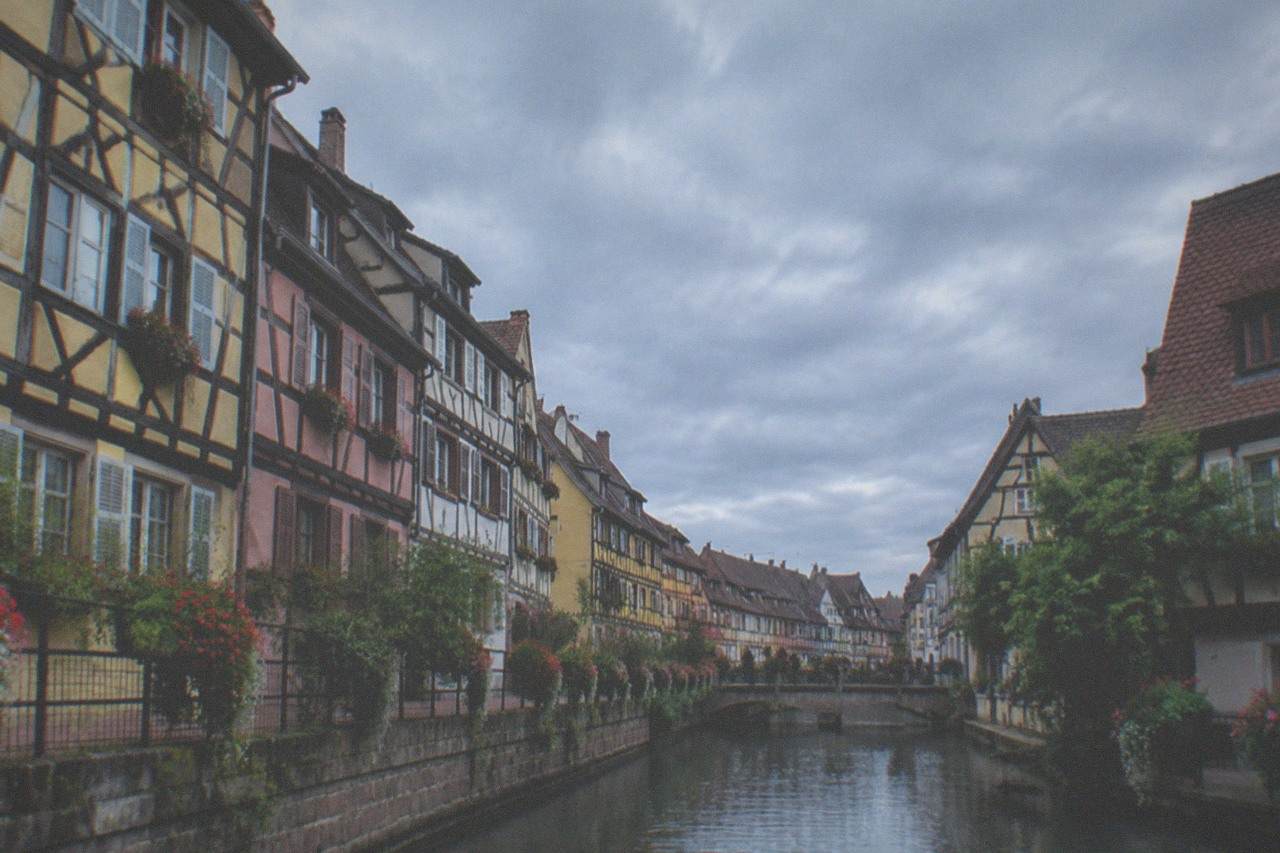
How Far Is Colmar From German Border?
Colmar lies in the Alsace region of France, a short distance west of the Rhine, the river that forms the Franco-German frontier along this entire stretch. The first German town across the water is Breisach, and Freiburg sits a modest drive beyond it. This site's verified facts file carries no single kilometre figure for the Colmar to border run, so no precise distance is invented here, and any number you see elsewhere deserves the same scrutiny.
That is the honest core of the answer. Colmar is one of France's border-hugging towns, sitting in the plain between the Vosges foothills and the Rhine, and the frontier itself is the river rather than a line in open farmland. Cross the Rhine heading east and you are in Baden, in the German state of Baden-Württemberg, whose Black Forest begins rising almost immediately behind the first row of towns. The geography makes the crossing feel routine: locals cycle and drive over the bridges for work, shopping and wine, and the customs posts that once slowed everything down were dismantled decades ago when both countries joined the Schengen area.
The reason this page will not print a figure like "seventeen kilometres" is simple. Every distance, price and statistic on Freiburg Travel Guide has to trace back to the site's verified facts file, and the Colmar to border run is one of those gaps where aggregator sites confidently disagree with each other. A number that cannot be sourced can be wrong by a kilometre or by ten, and a border article is exactly where a reader plans a day around it. What the facts file does support is the relational picture: Breisach is the German Rhine town on Colmar's latitude, Freiburg is the regional hub beyond it, and the whole triangle of Colmar, Breisach and Freiburg is covered by this site's own guide pages, starting with the Colmar and Alsace guide and the Breisach Rhine crossing guide.
If your real question is "how much of my day does the border cost me," the practical answer is: very little. There is no border control on this stretch in normal times, the crossing points are bridges rather than tunnels or ferries, and the main planning variable is not distance but which side you sleep on and what you want to do once you are across. That is where the rest of this page goes: the crossing itself, the German side, the transport numbers that are actually verified, and the tours that fit a two-country day.
Which Crossing Point Serves Colmar Best?
The Breisach crossing is the natural gateway for anyone starting in Colmar, because Breisach is the German town sitting directly across the Rhine on roughly Colmar's own latitude. Further crossings exist up and down the river, but they add detours rather than saving them. For a day trip into Germany, Breisach first and Freiburg after it is the sequence that keeps the driving simple and the day flexible.
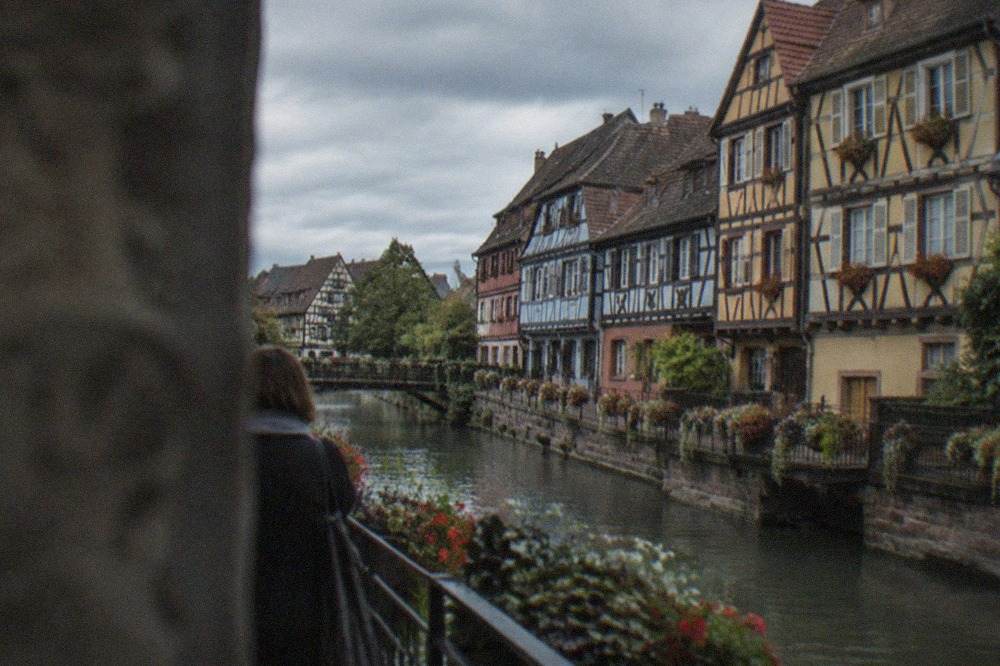
Breisach deserves more than a roll-through. It is a small cathedral town on the German bank, its Münster on a hill that was a bone of contention between the two countries for centuries, and its situation, half-island in the Rhine, made it a frontier symbol long before it became a frontier crossing. The town changed hands repeatedly in earlier centuries, and that layered history is exactly the kind of detail a first page of search results will gloss over. Wine is the other reason to pause: Breisach is a Kaiserstuhl wine town, and the Kaiserstuhl vineyard region, one of the warmest corners of Germany, rises just behind it. The site's Kaiserstuhl wine region guide covers it in full.
A practical note for anyone stringing Colmar and Freiburg together: the two towns belong to different countries, so your phone, your data and your rail apps change regimes at the river. Germany is in the Eurozone and the Schengen area, so there is no currency exchange and no passport stop, but roaming rules and ticketing systems do differ. French rail tickets do not carry you onto German local trains and vice versa, which matters if you are doing the trip by rail rather than by car. Buy each leg in its own system, and check the specific connection on the day rather than trusting a cached timetable, because engineering works on the German side of the river are frequent and are usually announced only in German.
The third crossing worth knowing is the one nobody thinks about: the bicycle bridges. The Rhine has a well-developed network of dedicated cycle crossings and riverbank paths on both sides, and the Colmar to Breisach to Freiburg axis is a classic two-country cycling day. Freiburg itself is one of Germany's most bike-oriented cities, with the modal split for walking, cycling and public transport together rising from 67% of trips in 2017 to 76% in 2023, figures verified by the city's own monitoring report. If you arrive on two wheels you will find the German side of the river built for you in a way the French side only partly matches.
What Is On The German Side Once You Cross?
Freiburg is the payoff. It is the regional capital of the southern Black Forest edge, a university city of about 237,299 people, with its university established in 1457. Its old town, Münster, Bächle and gates make it one of the most rewarding mid-sized cities in Germany, and it sits close enough to the border to be the natural first stop for anyone crossing from Colmar.
The old town is compact and mostly pedestrian, which is why a guided walk pays for itself quickly here. The Exciting City Tour with Sightseeing and History runs about two hours, costs from $26, and is rated 4.4 across 118 reviews on its live listing, a genuinely useful pool rather than a handful of entries. It covers the Münster, the gates, the historic squares and the narrative glue between them, and because it is one of the longer standard walks at around two hours, it suits a border-day visitor who wants the whole story in one pass rather than assembling it alone. See the tour page for full details, or Check availability if the date is already in your diary.
The Münster itself is free to enter, and its tower climb is one of the few hard numbers this site can quote with confidence: the west tower is 116 m tall, but visitors climb to a gallery at 70 m, not the top, and adults pay €5 for it. That pairing of figures trips up a lot of copy, so it is worth restating plainly here. Beyond the church, the Augustinermuseum, fully reopened on 28 February 2026 after more than two decades of phased renovation, charges €12 for a day ticket valid across the city museums and is free for anyone under 27. Both figures come from the museum's own pages.
For a different register of German side, the National Socialism walking tour covers the city's role in the dictatorships and world wars in about one hour, from $17, though with only 2 reviews so far it is too early to call it anything but a new listing, which is stated here honestly rather than dressed up. And on the entertainment end, the Drag Queen Show Walk with Betty BBQ, about 1 h 25 m and from $40, rated 4.6 across 699 reviews, is Freiburg's signature night out, proof that the city a short hop from the French border is not just stained glass and gabled roofs.
How Do The Transport Numbers Compare?
In Freiburg the local till currency is the euro, and the verified fares are refreshingly concrete: a single ticket for one zone is €3.00, or €2.70 on a smartphone, day tickets run €7.20 to €14.30 by zone count, and the visitor-oriented Welcomekarte costs €27.00 for three days and includes the Schauinslandbahn. The Deutschlandticket is €63.00 per month. Every figure in that sentence comes from the transit authority's own tariff pages.
That last point matters more than it sounds. Cross-border articles are usually where invented fares go to live, and this site's corrections file exists because of it. The one fare this site explicitly refuses to quote is the EuroAirport bus fare near Basel, where aggregators disagree and no primary source has confirmed a number, so if you see an airport bus price for the Freiburg area anywhere, treat it as suspect. The same discipline applies to rail times: ICE connections between Freiburg and Frankfurt and between Freiburg and Basel SBB exist and are fast, but the exact minutes are flagged as unverified in the research file and so are not printed here.
| Product | Price | Coverage |
|---|---|---|
| RVF single, 1 zone | €3.00 (smartphone €2.70) | One trip within the city transit zone |
| RVF day ticket, 1 / 2 / 3 zones | €7.20 / €10.90 / €14.30 | Unlimited trips for one day |
| Welcomekarte | €27.00 for 3 days | Buses and trains plus the Schauinslandbahn and a culture bonus |
| Deutschlandticket | €63.00 per month | Unlimited second-class regional travel nationwide |
Two scheme names are worth separating, because border visitors routinely mix them up. The Welcomekarte is the product for people staying in Freiburg, detailed on the Freiburg Welcomekarte guide. KONUS is a different card issued by Black Forest member towns, and Freiburg city is not a KONUS municipality: a hotel stay in Freiburg does not hand you one. A KONUS card issued in a nearby member town such as Kirchzarten or Titisee-Neustadt is valid on Freiburg's trams and buses, but that is the only direction the convenience flows. The transit authority's Welcomekarte page is the primary source for all of this.
One more number border-hoppers should know: if you stay overnight in Freiburg, the city levies an Übernachtungsteuer, an overnight tax of 5% of the net room price, not a flat Kurtaxe, and under-18s are exempt. It has been unchanged in the last year of reporting. The city's own overnight tax page states the rate and the exemptions, and it is the page to trust over any summary that calls it a visitor tax per night.
Which Freiburg Tours Fit A Border Day?
Three tours dominate the shortlist for a day built around crossing the river: the two-hour city and history walk from $26, the one-hour National Socialism walk from $17, and the Betty BBQ drag show walk from $40. Together they cover Freiburg's classic daytime layer, its darkest historical layer, and its completely unbuttoned evening layer, and each is bookable with free cancellation through the operator's live listing.
| Tour | Length | Price | Rating |
|---|---|---|---|
| Exciting City Tour with Sightseeing and History | ~2 hours | from $26 | 4.4 across 118 reviews |
| Guided Walking Tour on National Socialism, World Wars and Dictatorship | ~1 hour | from $17 | 2 reviews, too few for a star claim |
| Drag Queen Show Walk with Betty BBQ | ~1 h 25 m | from $40 | 4.6 across 699 reviews |
The city tour is the safe pick and the one most first visitors want. The National Socialism walk is the one that surprises people: a compact, serious hour on a subject most cities gloss over, run at a price that makes it an easy add-on rather than a whole evening's commitment. The drag show walk is the phenomenon, 699 reviews deep, a bilingual comedy-and-costume circuit of the old town that has made Betty BBQ one of Freiburg's recognizable public figures. If your border day runs into the evening, that is the one to hold a slot for.
For travelers who prefer to move at their own pace, the self-guided options are strong too. The Scavenger Hunt Self-Guided Tour runs about three hours, costs from $45, and is rated 4.9 across 15 reviews, and a lighter self-guided highlights variant starts from just $3, rated 4.4 across 43 reviews. Neither needs a schedule, which suits a cross-border day whose timing depends on bridges, trains and appetite.
Is A Colmar To Freiburg Day Trip Realistic Without A Car?
Yes, and many people do it by train, but the border means you are buying two national tickets and riding a route whose German section is under heavy engineering work in 2026. Regional trains connect the Rhine valley communities on the French side with Breisach and onward toward Freiburg, and the whole journey is a string of short hops rather than one long leg. Build in buffer time rather than a tight connection.
The honest caveat is the works. The Rheintalbahn, the Freiburg to Basel main line that anchors the German side of the valley, has been closing for repeated engineering weekends through 2026, including a closure around early October 2026 that replaced regional and some long-distance trains with buses between Freiburg and Basel. And Freiburg's main station itself entered a modernization program on 14 September 2026 that will run until around December 2028, with the northern underpass initially fully closed and platforms 3 to 5 being renewed. None of this stops the trip, but all of it rewards checking the day's specific connections rather than trusting a timetable printed in a blog post.
Once you are inside Freiburg, the car becomes a liability rather than an asset. The old town is compact, the tram network is dense and frequent, and single journeys cost €3.00, so the economics of parking versus riding are not close. The getting around Freiburg guide covers the tram system in detail, and the one day in Freiburg itinerary is the right skeleton for a day that starts with a river crossing and needs to end somewhere near a station.
Timing the day in both directions is the real skill. Colmar's old town deserves a slow morning, the crossing deserves a pause in Breisach at the very least for the Münster hill and the view back over the Rhine plain, and Freiburg deserves the afternoon and, if you can stretch to it, the evening, because the city's character changes completely once the day-trippers thin out and the taverns around Augustinerplatz fill. A day that tries to add a Black Forest viewpoint on top of all that is a day that ends in a bus. Keep it to two towns and one river.
The final planning question is which side to sleep on, and the answer depends on what kind of trip this is. Colmar makes the better single-night base if the trip is really an Alsace trip with a German detour attached; the town is small, atmospheric and walkable, and the wine villages of the Alsace route sit behind it. Freiburg makes the better base if the trip is a Germany trip with Colmar as the elegant excursion, because the German side offers the Black Forest, the Schauinslandbahn and the deeper tour roster. The triangle guide on this site, Freiburg, Alsace and Basel, is built for exactly that three-corner decision.
Common Questions About Colmar And The German Border
How far is Colmar from German border?
Colmar sits in Alsace a short distance west of the Rhine, which is the German frontier along this stretch. The first German town across the river is Breisach, with Freiburg beyond it. This site does not print a kilometre figure for the run because its verified facts file does not carry one, and the crossing matters more in practice than the number.
Is there a border check between Colmar and Freiburg?
No. Both France and Germany are in the Schengen area, and the crossing points over the Rhine are ordinary bridges. There is no routine passport control, though spot checks remain legally possible on either side, and drivers should carry normal ID documents as they would anywhere in Europe.
Which German town is closest to Colmar across the border?
Breisach is the answer that matters: it is the German cathedral town directly across the Rhine on roughly Colmar's latitude, the natural first stop on the German side, and a wine town of the Kaiserstuhl region in its own right.
Can you do Colmar and Freiburg in one day?
Yes, and it is a popular pattern, especially with a car. The realistic shape is a morning in Colmar, a pause at Breisach, and an afternoon and evening in Freiburg. Rail travelers can do it too, buying the French and German legs separately and building in buffer time for the 2026 engineering works on the German side of the valley.
Do I need euros on both sides?
No exchange is needed: France and Germany both use the euro. The practical currency note is different, namely that German local transit fares, museum admissions and the Welcomekarte are quoted in euros, while the tours bookable through this site are priced in US dollars on their listings, and the two are never blended.
Is the Freiburg Welcomekarte worth it for a border day?
For a single day, usually not: a one-zone day ticket at €7.20 covers a normal day of tram riding. The Welcomekarte at €27.00 for three days, including the Schauinslandbahn cable car and a culture bonus, starts making sense when the stay lengthens or the cable car is on the itinerary.