Colmar Day Trip From Freiburg: What To Know Before You Go
Colmar is the Alsatian town most Freiburg visitors end up falling for, half-timbered, canal-lined and close enough that a day trip barely dents your schedule. Here is how to plan it, what to see and how to fold it into a wider Freiburg trip.
Short answer
Colmar is a French Alsatian town just across the Rhine from Freiburg, reachable by regional train via Breisach or by car in about an hour of border-to-border driving. Give it a full day for the old town, the canals and at least one surrounding wine village, and pair it with the Alsace wine route if you have longer.
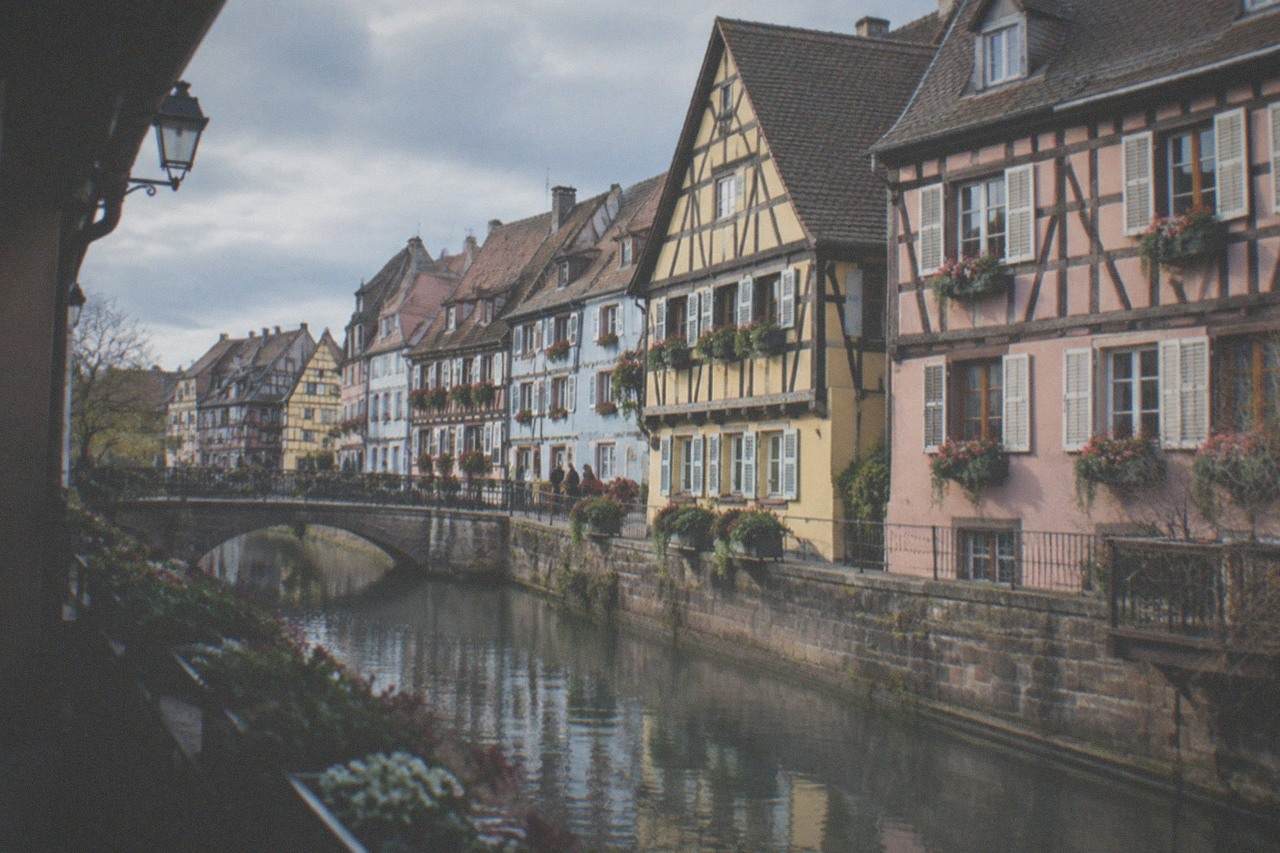
Most people arrive in Freiburg with a list that says Münster, Bächle, Black Forest, and then someone mentions Colmar and the list gets rewritten. The town sits in Alsace, on the French side of the Upper Rhine, and it is the single most requested cross-border day trip from the Freiburg area. Half-timbered houses in candy colors, a canal district that photographs like a stage set, and a wine region that starts at the edge of town: it is a lot for one place to carry, and it mostly carries it.
This guide is written for someone already based in Freiburg or about to be. It covers the crossing, the day itself, food, the wine villages around Colmar, the Christmas season, and how to close out the evening back on the German side. Everything here is grounded in verified sources and the site's own tour data; where a figure is not verified, you will get a planning range or a pointer rather than an invented number.
Why Colmar Works As A Freiburg Day Trip
Colmar works because it delivers a genuinely foreign feeling for the cost of a regional train ticket: French street signs, Alsatian food, a different currency expectation and a completely different architectural mood, all within a morning's travel of Freiburg's Münsterplatz. Freiburg and Colmar share a border region but not much else. One is a German university city of red slate and gothic stone, population 237,299, and the other is a smaller Alsatian town built around canals and wine merchants. The contrast is the whole point.
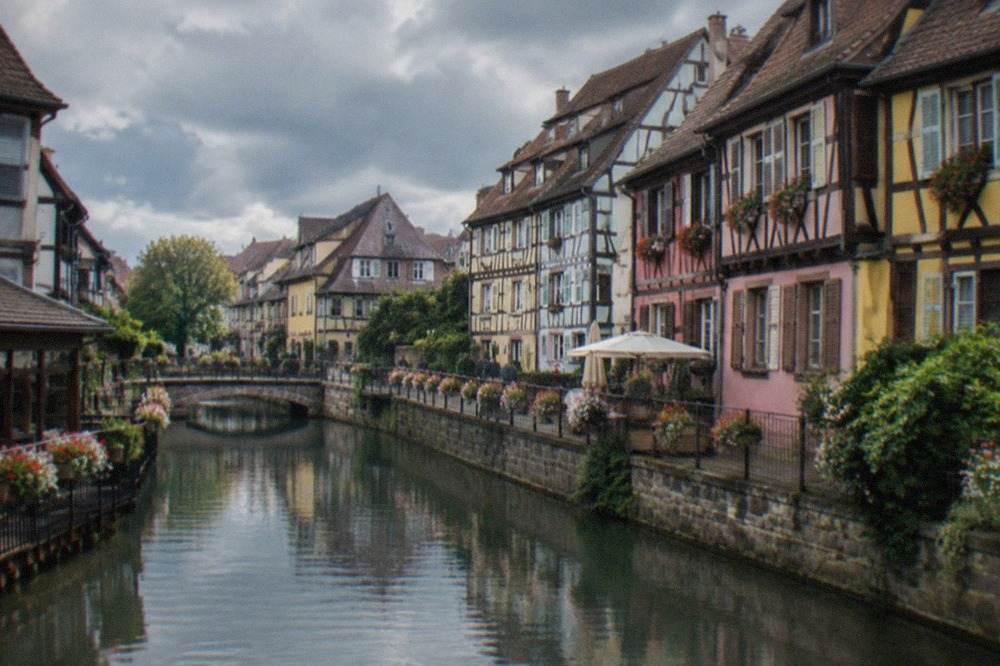
What surprises most first-time visitors is how quickly the change happens. You leave Freiburg's tram-lined streets, cross the Rhine, and within the hour the bakery windows show kougelhopf instead of Black Forest cake. That speed makes Colmar different from bigger cross-border options like Strasbourg, which rewards a full day or two of its own and gets its own planning on this site. Colmar is compact enough that a single well-organized day genuinely covers it.
It also slots neatly into the itinerary math of a Freiburg trip. If you are working through a Freiburg, Alsace and Basel triangle plan, Colmar is the French leg. If you are doing the region by car, it sits on the western edge of the route described in the Alsace wine route guide. And if your base never moves from Freiburg, it is still the easiest "another country before lunch" trip you can make, a point this Freiburg Travel Guide makes repeatedly for good reason.
Getting From Freiburg To Colmar
The two practical routes are regional train via Breisach, where you change onto the French line into Colmar, or car across the Rhine, and each suits a different traveler: the train is relaxed and runs through pretty river country, while the car wins if you want to add wine villages such as Eguisheim or Riquewihr on the same day. Neither option needs to be booked far ahead, which is part of the appeal.
The rail route runs Freiburg to Breisach, a German border town worth a stop in its own right and covered in the Breisch day trip guide, then onward into France. You buy German tickets for the leg to Breisach and French tickets for the leg beyond; through fares across the border are not part of the standard regional schemes, so plan on two purchases. For the German side, a standard RVF ticket covers you, and if you are staying several days the Welcomekarte, 3 days at €27.00 for adults, covers buses and trains across the RVF network as described at the RVF Welcomekarte page. Check the French side on the day you travel; cross-border timetables change with the season.
| Option | Best for | What to know |
|---|---|---|
| Train via Breisach | Relaxed day, no parking stress | Two tickets, one change at Breisach; timetables are thinner than domestic German lines, so note your return times in advance |
| Car via the Rhine crossing | Wine villages, flexibility | You will want central parking in Colmar; arrive early in peak season, the old town gets congested by late morning |
| Organized day tour | Zero planning | Group excursions from the Freiburg area exist on the major platforms; compare inclusions, some cover only transport, some add guided walks |
Driving times sit around an hour each way depending on the crossing, though treat that as a planning range rather than a promise: border traffic and Colmar's own streets add minutes in summer. One genuinely current wrinkle: the Rheintalbahn works program on the German side has been producing weekend replacement-bus stretches on parts of the Freiburg-to-Basel corridor in 2026, and while the Breisach line is a different corridor, it pays to check the operator's travel notices the week you go. German rail disruption usually arrives with advance notice rather than surprise.
If you are flying out or in around your trip, note that Colmar also pairs with an arrival via EuroAirport Basel-Mulhouse-Freiburg, which sits roughly between the two cities; some travelers do the airport, a night in Freiburg, and Colmar the next day before continuing into France or Switzerland.
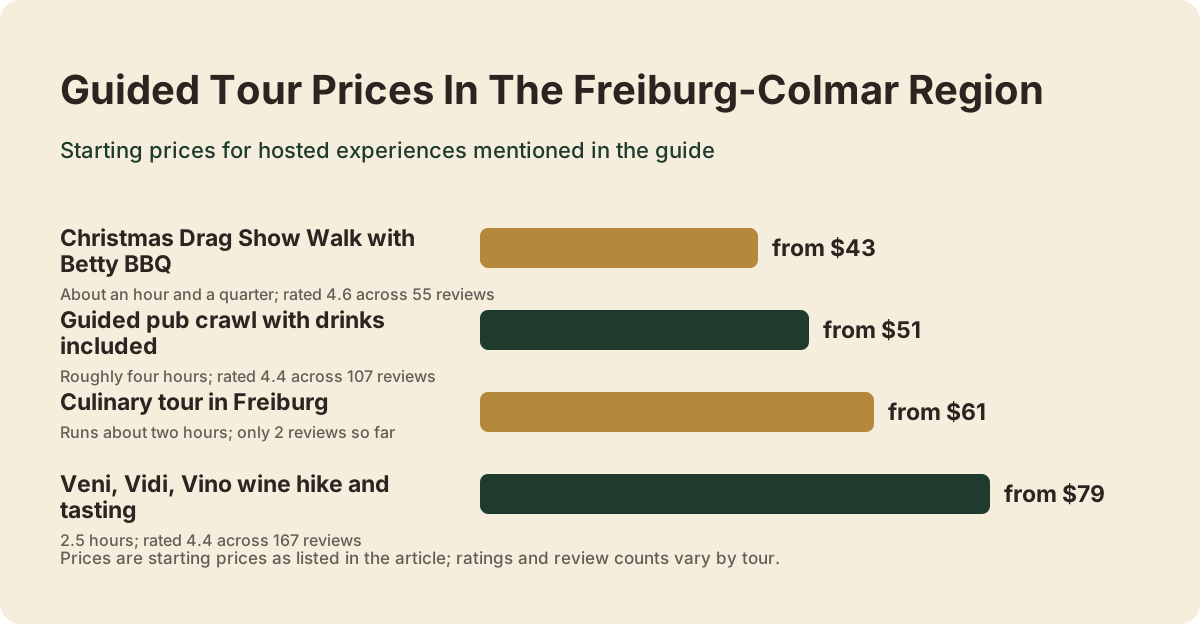
Once the logistics are settled, the evening back in Freiburg is worth planning too. If a hosted experience sounds better than hunting down dinner reservations in two languages, these are three of the strongest options running from the city.
What To See In Colmar In One Day
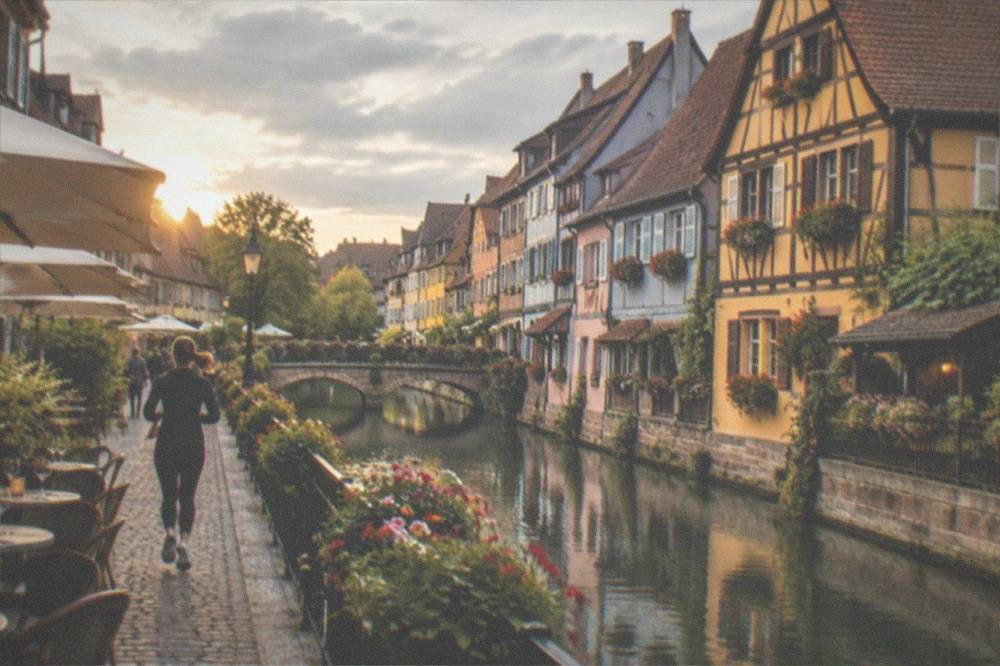
The core of Colmar is walkable in about half a day: the Tanners' District along the canal, the old customs house, the Unterlinden area with its museum, and the Maison Pfister, and each of these clusters within fifteen minutes of the others on foot. That tightness is why one day is enough. You do not need transport inside the town, and the only real decision is which two or three interiors you enter versus how much time you keep for simply wandering.
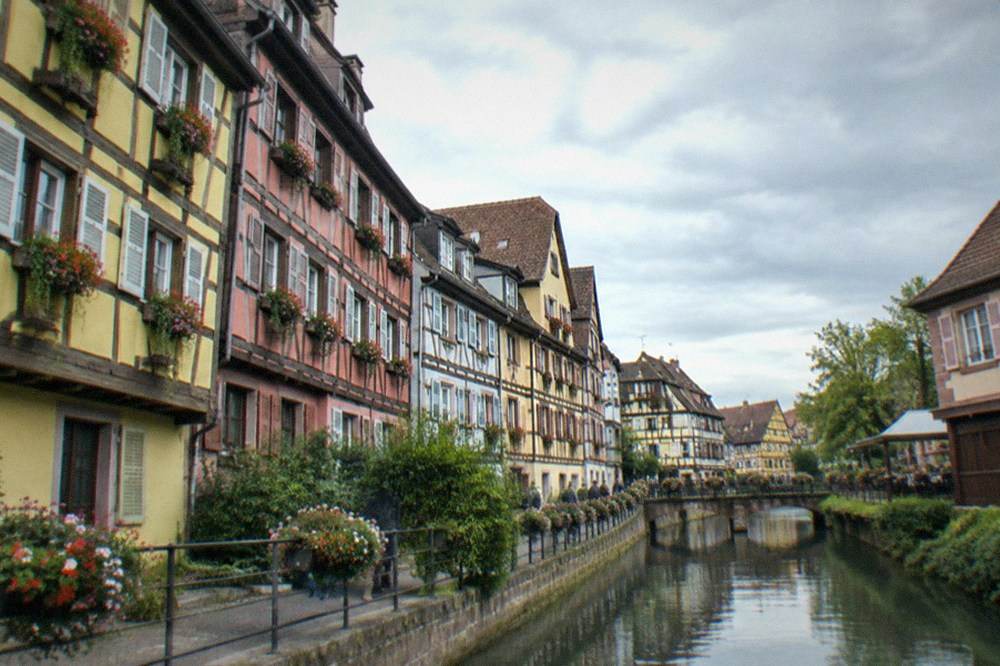
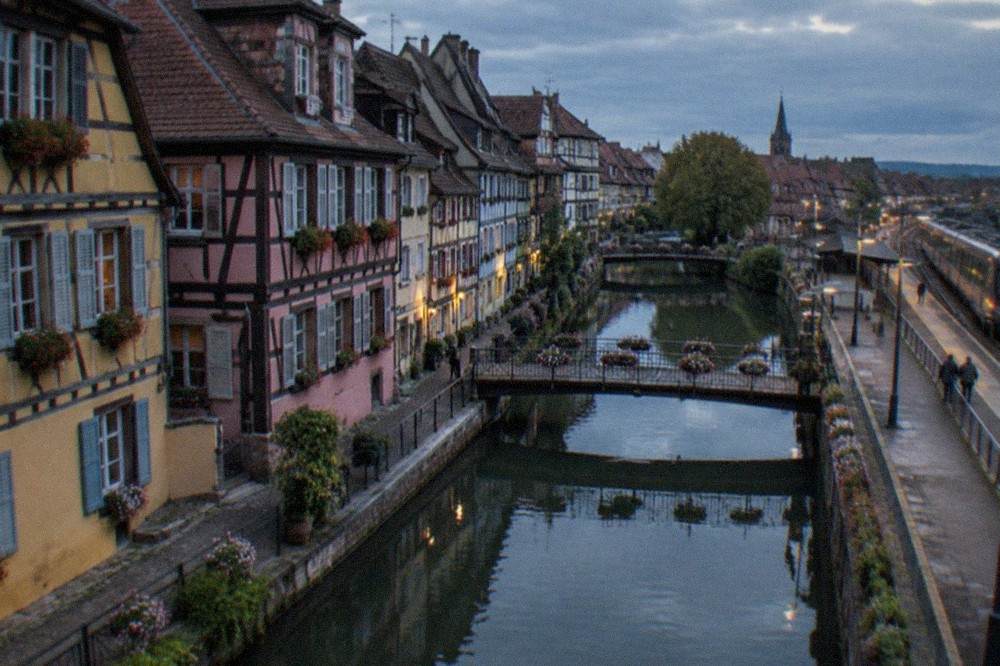
Start in the Tanners' District, the canal-side quarter that produces most of the postcards. Early morning is the honest recommendation: by eleven in high season the footbridges are congested and the photographs have strangers in them. From there the old town opens out toward the Place de l'Ancienne Douane, the former customs square, and the Maison Pfister, the painted burgher house that anchors most walking routes. The Unterlinden Museum holds the region's marquee art collection, including the Isenheim Altarpiece, and it deserves two unhurried hours if you go in; skip it without guilt if the weather is good and the streets are calling.
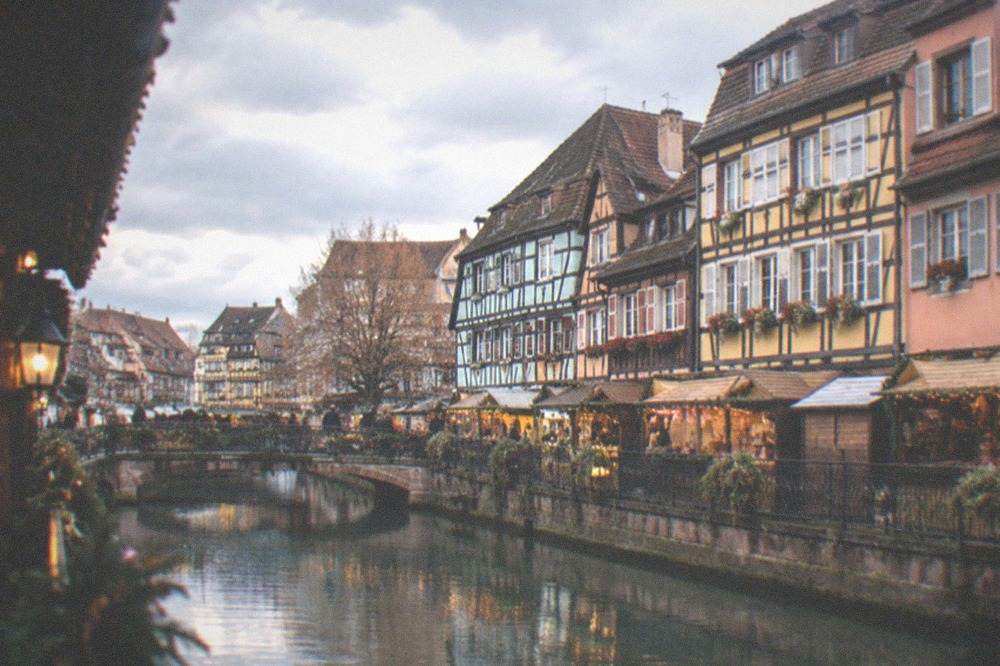
The Christmas period changes the calculus. Colmar's markets run through the Advent weeks and the old town lights up in a way that competes with Freiburg's own, which is covered in the Freiburg Christmas market guide. Some visitors deliberately do both in one season: German market one weekend, French the next. The French markets skew a little more toward crafts and food stalls, and the five separate market sites across Colmar mean you cover ground even when the town feels full.
A word on language: English works in the tourist core, French everywhere else, and a Bonjour at the bakery counter goes further than you would think. Colmar is a working Alsatian town under the Instagram layer, and it reads as warmer when you meet it halfway.
Eating And Drinking In Colmar
Alsatian food is the reason many people repeat the trip: it eats like a hybrid of French technique and German portions, and the signature dishes to look for are choucroute garnie, tarte flambée, baeckeoffe and kougelhopf alongside local Riesling and pinot gris. Colmar has more restaurants per square meter than its size suggests, and the quality floor is high, but the famous canal-side tables book out weeks ahead in summer, so either reserve or resign yourself to the second row of streets, where locals eat just as well.
Tarte flambée, thin dough baked with cream, onions and lardons, is the casual default, served everywhere from proper restaurants to market stalls. Choucroute garnie, the sauerkraut platter piled with sausages and pork, is the heavy hitter and pairs with the region's Riesling. Baeckeoffe, a slow-baked casserole of three meats and potatoes, is the one to order when you want the dish you cannot easily make at home. Dessert is kougelhopf, the brioche-like mold cake that shows up in every bakery window and makes a legitimate souvenir.
Wine is not an accompaniment here, it is the town's industry, and the local pour is immediate and cheap by the glass. You are in the middle of one of France's most decorated white-wine regions. Tastings in Colmar itself cluster around the old town; the dedicated Baden wine guide covers the German side of the border for comparison, and the two make an interesting contrast in a single week: Baden and Alsace grow similar grapes on opposite banks of the same river and argue about it cheerfully.
| Dish or drink | What it is | When to order it |
|---|---|---|
| Tarte flambée | Thin baked dough with cream, onions, lardons | Casual lunch or market-stall snack |
| Choucroute garnie | Sauerkraut platter with sausages and pork, Riesling-friendly | The full sit-down dinner |
| Baeckeoffe | Slow-baked three-meat and potato casserole | The dish you cannot easily make at home |
| Kougelhopf | Brioche-like mold cake, the regional emblem | Breakfast, dessert or an edible souvenir |
| Local Riesling, pinot gris | The region's flagship white pours | With everything above, by the glass |
Back in Freiburg, if the food day left you wanting a hosted version with a guide doing the ordering, the culinary tour runs about two hours and costs from $61; it is a new listing with only 2 reviews so far, too few for a rating claim. The trade is real: a guide who moves you between four or five stops and explains what you are eating, versus the freedom of wandering Colmar's stalls on your own instincts.
Colmar As A Wine Region Base
Colmar is the practical capital of the Alsace wine route, with the celebrated villages of Eguisheim and Riquewihr a short drive away, and Riquewihr in particular is the archetypal walled wine village that most visitors picture when they imagine Alsace. The full route runs north toward Strasbourg, but from Colmar the southern and central highlights cluster so tightly that a half-day of driving connects several of them.
| Village | Character | How it fits a Colmar day |
|---|---|---|
| Eguisheim | Circular old core, wine bars in every corner | Closest headline village; pairs with a morning in Colmar |
| Riquewihr | Walled, ramparts intact, the classic postcard | Deserves two hours minimum; the drive alone is worth it |
| Kaysersberg | Hillside ruins above a stone town | Good midpoint stop if you are heading north |
| Turckheim | Quieter, fewer crowds, working town | The overflow option when Riquewihr is gridlocked |
The honest planning note is seasonality. July and August bring tour buses to Riquewihr in numbers that flatten the charm; May, June, September and October give you the same buildings with breathing room, and autumn adds harvest color to the vineyard slopes. If wine is the actual point of your trip rather than a side effect, read the full Alsace wine route guide before committing to a single village, because the route rewards an overnight in one of them over a rushed loop.
Tasting etiquette is simple. Cellars in the villages pour small tastings, often free or the price of a token purchase, but confirm before you sit down, and never assume a tasting is free just because it was on your last visit somewhere. Buy a bottle of something you liked. The economics of a small family cellar depend on it, and the bottles travel fine.
One more pairing worth knowing: Freiburg itself sits on the edge of the German Baden wine country, so a week in the region can legitimately do Alsatian whites, Baden whites and a German wine hike, the last of which exists as a guided experience, the Veni, Vidi, Vino wine hike and tasting at 2.5 hours from $79, rated 4.4 across 167 reviews. Two regions, one week, very few regrets.
Colmar In The Christmas Season
Advent turns Colmar into one of Europe's concentrated Christmas destinations, with multiple market sites threaded through the old town and the canal district lit after dark, and this is simultaneously the best and the most crowded time to visit, so timing within the season matters nearly as much as the season itself. Weekends in December are genuinely packed. Weekday evenings give you the lights with a fraction of the people, and the difference is large enough to shape your whole trip if you have flexibility.
The pairing with Freiburg is the part most visitors underuse. Freiburg's own market runs 19 November to 23 December across Rathausplatz and the surrounding old town, free to enter, with over a hundred stands, details in the Freiburg Christmas market guide. Because the two towns are a short hop apart, the ambitious move is a December weekend with a German market evening, a French market day, and a decision about which glühwein tradition you prefer, which is a real argument and both sides win it nightly.
The Christmas season also happens to be when Freiburg's most distinctive evening tour runs. The Christmas Drag Show Walk with Betty BBQ is a seasonal theater-and-walk hybrid, about an hour and a quarter, priced from $43 and rated 4.6 across 55 reviews. It is not a market crawl and it is not a standard city tour; it is a show that moves, and it books as a genuine evening out. For a December itinerary that pairs a daytime Colmar run with a hosted Freiburg night, it slots almost too neatly.
Coming Home: Freiburg Evening Plans
If you leave Colmar by late afternoon, you are back in Freiburg in time for dinner, and the strongest way to close a cross-border day is a hosted evening that starts near the Münster: a show walk, a food tour or a guided pub crawl all launch from the old town and need no planning from you. The pub crawl, roughly four hours with drinks included, runs from $51 and carries a 4.4 rating across 107 reviews, a large enough pool for that figure to mean something.
The logic is simple. A Colmar day costs you decision-making energy: trains, tickets, restaurant choices, two languages. By the time you are back over the Rhine, the appeal of a guide who handles the last four hours of the evening is considerable, and the old town between Augustinerplatz and the Münster is where most of those evenings play out. The Augustinerplatz itself, one of Freiburg's liveliest evening squares, is covered in its own Augustinerplatz guide.
Not every night needs a tour, to be clear. A seat at a wine tavern, a stroll past the Bächle and an early night is a perfectly good close to a long day. But if the day has left you sociable rather than spent, the hosted options below are the ones the data actually supports.
When To Go And How Long To Stay
The best months for a Colmar day trip are May, June, September and October: warm enough for canal-side lingering, before or after the peak tour-bus window, and in autumn the surrounding vineyards are at their most photogenic, while December trades crowd levels for lights. July and August remain workable but only if you start early and accept company.
Length of stay splits cleanly. One long day covers Colmar town plus either the Unterlinden Museum or one quick village. Two days let you add Eguisheim and Riquewihr properly, taste without watching the clock, and see the old town both at midday and after dark, which are different experiences. Beyond two days you are really doing the wine route, and you should plan it as its own trip rather than an extended day trip from Germany.
Cost-wise, keep the two currencies straight in your head. Colmar prices everything in euros at the till, from the market stalls to the museums; anything you book through this site's tour listings is priced in US dollars, because that is how those products are sold. The two never blend, and nothing on the French side needs a card premium beyond the usual cross-border fee your bank charges.
Whatever the season, the underlying advice is the same: Colmar rewards early risers. The town at nine in the morning and the town at one in the afternoon are different places, and you get to choose which one you meet.
Common Questions About Colmar Day Trips
Is Colmar worth a day trip from Freiburg?
Yes, for most travelers it is the best single cross-border day trip in the region. The old town, the canals and the food culture are concentrated enough that one well-planned day delivers the essence of Alsace, and the contrast with Freiburg after a short crossing is the whole appeal.
How do I get from Freiburg to Colmar without a car?
Take the regional train to Breisach, then continue on the French line into Colmar. You will need a German ticket for the first leg and a French ticket for the second; check timetables the week you travel, because cross-border services are thinner than domestic German lines.
How many hours do I need in Colmar itself?
Half a day covers the walkable core, and a full day is comfortable with a long lunch and either the Unterlinden Museum or a wander at unhurried pace. If you want wine villages as well, either stay overnight or dedicate a second day.
What food should I try in Colmar?
Look for choucroute garnie, tarte flambée and baeckeoffe, with kougelhopf for dessert, and drink local Riesling or pinot gris alongside. The region's cooking blends French technique with German-sized portions, which is exactly what a day trip from Freiburg should taste like.
Is Colmar better at Christmas or in summer?
Christmas brings the markets and the lights but serious December weekend crowds; summer brings long canal-side evenings but tour-bus traffic in July and August. May, June, September and October offer the best middle ground, and December is worth it if you can go on a weekday evening.