Freiburg Vs Heidelberg: Which City Fits Your Trip Better?
Two university cities, two old towns, two very different trips. Here is how Freiburg and Heidelberg actually compare on cost, sights, transport and the kind of traveler each one rewards.
Short answer
Freiburg suits travelers who want a lived-in university city beside the Black Forest, with the Münster, the Bächle and hiking on the doorstep. Heidelberg suits castle-and-romantics. Freiburg's Münster tower climb costs €5, the Augustinermuseum €12, and a three-day RVF Welcomekarte €27.00.
Freiburg Vs Heidelberg: Which City Fits Your Trip Better?
Every year, travelers planning a route through Germany's southwest weigh the same two names. Freiburg im Breisgau sits at the edge of the Black Forest, a working university city of 237,299 residents with a Gothic minster at its center and hiking trails on its hillsides. Heidelberg, upstream on the Neckar, trades on a ruined castle, a famous old bridge and one of the most photographed old towns in the country. Both are small, walkable and student-shaped. They are not, however, interchangeable, and choosing the wrong one for your travel style is the difference between a trip that feels effortless and one that feels like a long detour.
This comparison is written for someone already in or near Freiburg, or holding a Freiburg hotel booking and wondering whether Heidelberg should replace or accompany it. Every Freiburg figure below comes from verified local sources: the Münster's own tower page, the regional transport authority's fare tables and the city's museum listings. Heidelberg is described qualitatively rather than with invented numbers, because the honest answer to "which is better" depends less on statistics and more on what kind of trip you actually want.
How The Two Cities Compare At A Glance
Freiburg and Heidelberg both present a compact old core, a famous university and a river, but they differ in setting and pace: Freiburg is a gateway to the Black Forest with free hiking hills at its edge, while Heidelberg is a self-contained romantic stop best known for its castle silhouette. Freiburg's verified visitor base is large: 1,010,708 arrivals and 2,130,785 overnight stays across 2025. The choice usually comes down to outdoor access versus postcard romance.
Start with what the cities share, because the overlap is real and it confuses people. Both are university towns where students shape the street life, the café prices and the evening noise levels. Both have largely pedestrianized historic centers that you can cross on foot in under half an hour. Both sit on rivers, the Dreisam in Freiburg's case, and both anchor a well-known German travel region.
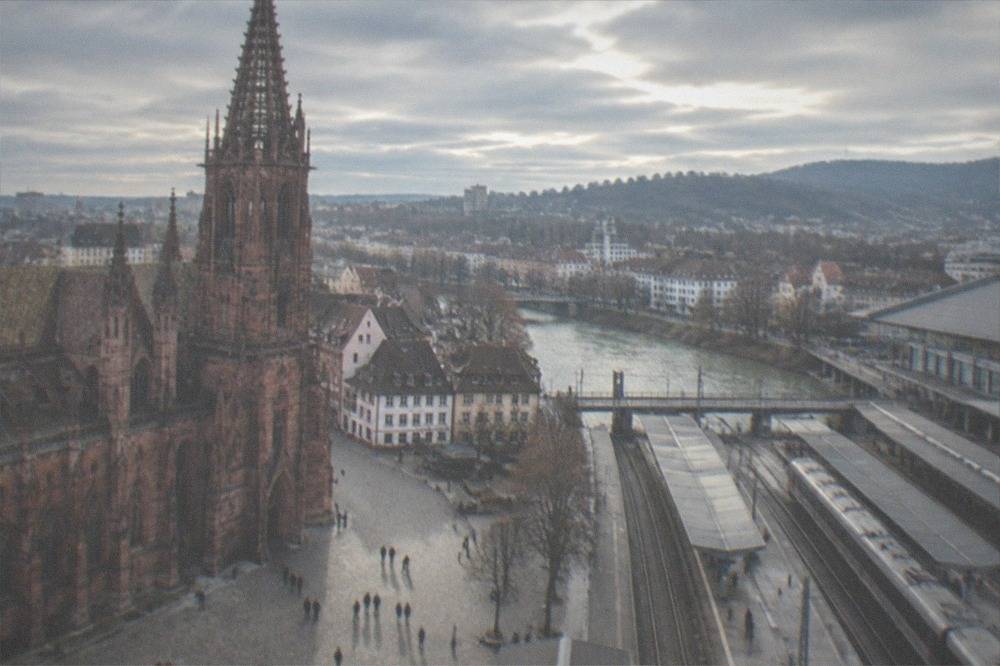
The differences start with geography. Freiburg sits at the foot of the Black Forest, and that relationship defines the city. The Schlossberg, a wooded hill with a free viewing tower, rises directly from the old town's eastern edge. The Schauinslandbahn cable car, 3,600 meters long, lifts you to the Schauinsland summit with a return ticket at €15.00. From Heidelberg, the equivalent excursion is the Philosophenweg hillside path and the castle itself, which are beautiful but are urban walks rather than mountain access.
The second difference is scale of fame. Heidelberg is one of Germany's most internationally recognized destinations, and it wears that status heavily in peak season, when tour groups fill the Hauptstraße and the castle courtyard. Freiburg receives substantial tourism too, 2.1 million overnights in 2025, but its visitors spread across a wider city and a bigger surrounding region, and the international share, 310,346 arrivals in 2025, is still a minority of total demand. If you want fewer crowds per square meter of old town, Freiburg gives you better odds, especially outside the July Weinfest and the Christmas market weeks.
A third difference is what surrounds the city. Heidelberg's day-trip orbit runs toward the Neckar valley and the Odenwald. Freiburg's runs toward Titisee, Feldberg, the Kaiserstuhl wine hills, Basel, Colmar and the Alsace, a genuinely cross-border playground covered across this site, for example in the Freiburg Alsace Basel Triangle guide. If your trip is really a region trip, Freiburg is the stronger base.
What Freiburg Does Better Than Heidelberg
Freiburg wins on outdoor access, on wine country within a short ride, and on a lived-in city fabric that survives peak season: the Münster is free to enter, its 70-meter tower gallery costs €5 for adults, the Münstermarkt runs up to 130 stalls, and the Schlossberg and its tower are free. No other comparably sized German city stacks free hills, a free Gothic nave and a cable-car summit this close together.
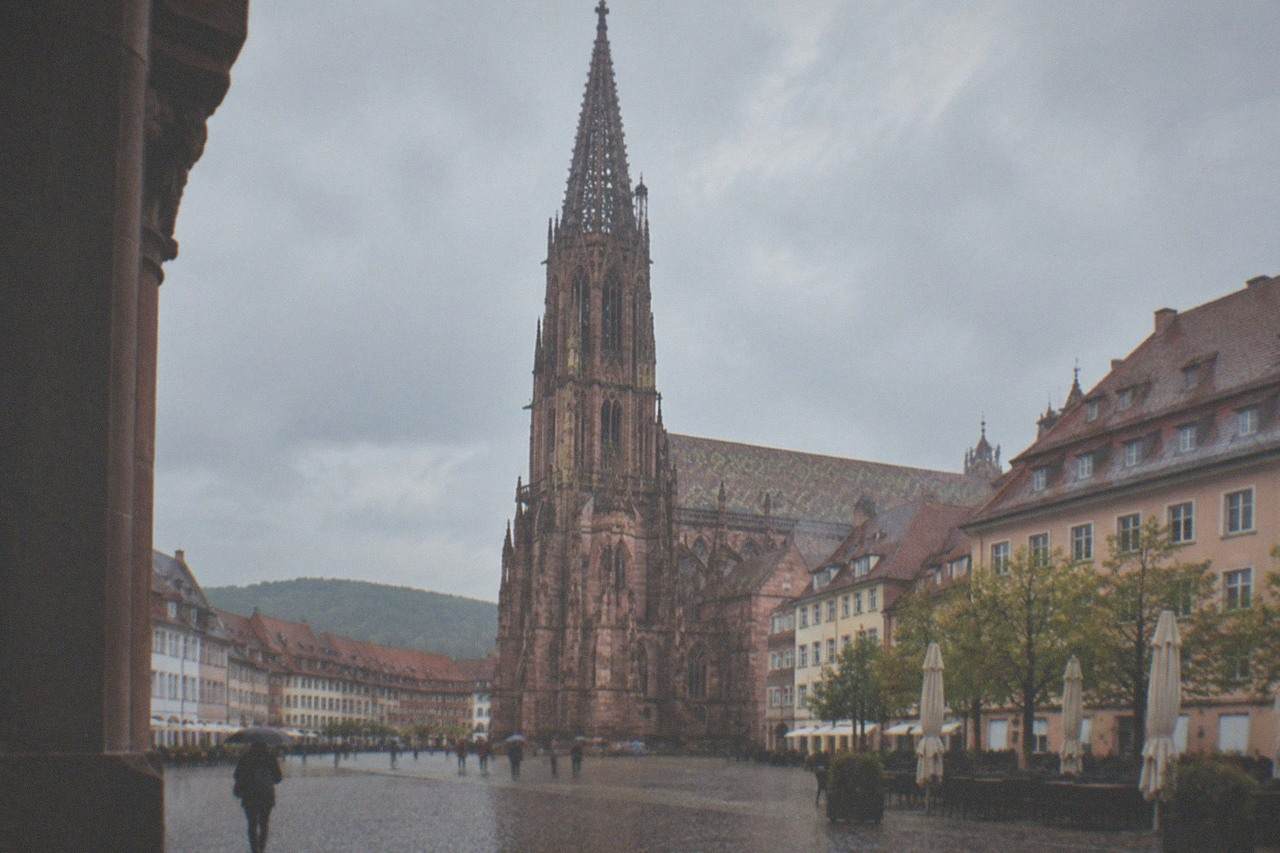
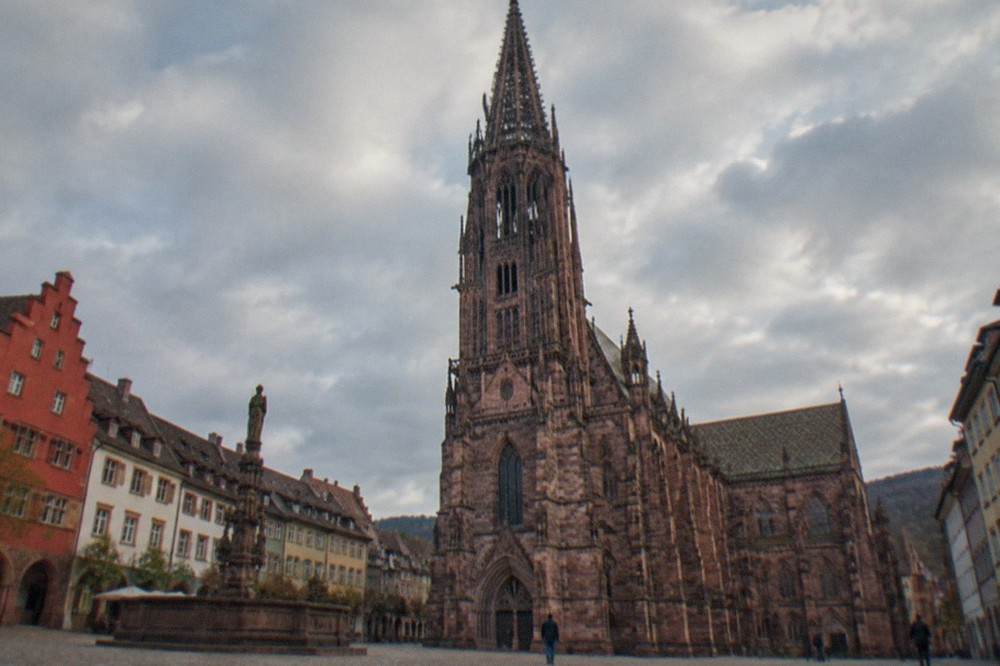
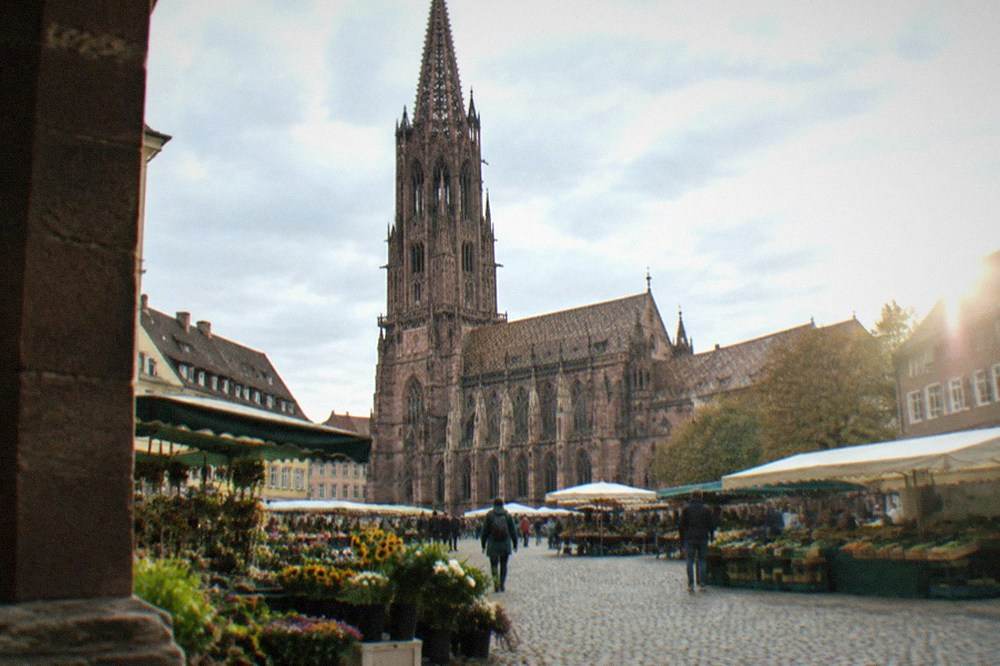
The single best argument for Freiburg is the Münster and its market. The cathedral's nave is free to enter, and the sandstone tower, 116 meters tall with a visitor gallery at 70 meters, charges adults €5, children and teens €3, with a family ticket at €13 and under-7s free, per the official tower page. The Münstermarkt around it operates Monday to Saturday, starting 07:30, running to 13:30 on weekdays, with up to 130 stalls. That is a working weekly market, not a festival set piece, and it anchors a food culture this site covers in depth in the Freiburg food guide.
Then there is the museum story, which took a turn in 2026. The Augustinermuseum, after more than twenty years of phased renovation, fully reopened on 28 February 2026, adding roughly 1,600 square meters of new exhibition space in the former convent building. Admission is €12, reduced €8, free for anyone under 27, and the day ticket covers the other city museums. Heidelberg's museum scene is respectable, but it did not just reopen an entire building this year.
Wine is the quiet advantage. Freiburg sits inside Baden's wine region, and the city's own Weinfest drew a record of roughly 110,000 guests across six days in early July 2026. A tasting of four regional wines with onion tart at Town Hall Square runs from $31 through a bookable experience, and a guided wine hike with tasting, the Veni, Vidi, Vino tour, runs from $79. Heidelberg is a beer and Studentenkultur town by reputation; nothing in its immediate orbit matches a Baden wine district you can reach on a regional train.
Finally, transport economics. Freiburg's visitor product, the RVF Welcomekarte, costs €27.00 for three days, covers buses and trains across the region and includes the Schauinslandbahn, per the RVF fare page. A single zone-1 ticket is €3.00, a one-zone day ticket €7.20. For a city whose headline attractions include a cable car, that inclusion is genuinely unusual.
What Heidelberg Does Better Than Freiburg
Heidelberg wins on instantly legible spectacle: one ruined castle above one old town, joined by a famous bridge, all visible from a single viewpoint, plus a stronger claim on the classic "romantic Germany" itinerary that runs Heidelberg with the Rhine and Rothenburg. If your trip is a first-time Germany highlight reel, Heidelberg serves that specific brief more directly than Freiburg does.
Be fair to the rival. Heidelberg's castle is a genuinely singular object, a mix of Gothic and Renaissance ruins that has been the face of German romanticism for two centuries. Freiburg's answer, the Münster, is a complete and intact Gothic building, but an intact building is a different emotional product from a ruin. Travelers who want the silhouette photograph, the floodlit evening view and the sense of a vanished court will get that only in Heidelberg.
Heidelberg also wins on directness. Its old town, the Hauptstraße and the bridge are arranged along one obvious axis, and the walk from station to castle is short and signposted. Freiburg's old town rewards wandering: the Bächle gutters, the gates, the Fischerau and Gerberau lanes, the Augustinerplatz steps. That is a richer texture for a two-day stay but a less efficient hit for a four-hour stop. If your plan allows only half a day between two trains, Heidelberg is the easier city to "do."
There is also the itinerary logic. The classic first-timer route through southern Germany strings Heidelberg with the Romantic Road, the Rhine valley and Nuremberg, all north of Freiburg. If that is the shape of your trip, Heidelberg slots in without backtracking. Freiburg, by contrast, belongs to a different route: the Black Forest, Basel, Colmar and the Alsace, the one covered in our Freiburg vs Strasbourg comparison. Neither is wrong; they are two different maps.
What Heidelberg does not offer is the outdoor stack. Freiburg's Schlossberg path, the 33.27-meter Schlossbergturm and the free access to both, plus the Schauinsland summit, give you a half-day of real elevation gain without leaving the local transit network. Heidelberg's hills are charming but modest. For hikers and cyclists, this is the clearest tiebreaker in the whole comparison, and the cycling in Freiburg guide covers how deep that advantage runs.
How To Get From Freiburg To Heidelberg
Traveling between the two cities is a rail journey north along the Rhine plain, generally requiring at least one change, usually at Offenburg or Karlsruhe, with trains running for most of the day. Because both cities sit on the same broad corridor, seeing both in one trip is entirely realistic, though a same-day round trip eats most of a day. Book regionally and check live schedules before committing.
The honest transport advice is that the two cities are far enough apart that they are not interchangeable day trips from each other. There is no direct high-speed link dedicated to the pair; the practical routing runs via the Karlsruhe corridor, and the exact connection count and journey length shift with the timetable and with construction. That last point matters right now: the Rheintalbahn corridor between Freiburg and Basel, and sections further north, have seen repeated temporary closures and replacement-bus windows during 2026 for the four-track Karlsruhe-Basel expansion, with more weekend work announced into the autumn. Any long-distance rail plan in this corridor in 2026 and 2027 should be checked against live schedule information before you build an itinerary around it, and the Freiburg train station guide tracks the current works, including the barrier-free modernization of Freiburg Hauptbahnhof that began in September 2026.
A saner plan is sequencing rather than commuting. Two nights in Freiburg, then a train north with a Heidelberg stop on the way toward Frankfurt or the Rhine, uses the geography instead of fighting it. In the reverse direction, Heidelberg first, then Freiburg as your base for the Black Forest, works just as well and is the better order if hiking or wine country is the point of the trip.
If you are already committed to Freiburg and Heidelberg is a maybe, ask what you would actually do there. If the answer is "see the castle and the bridge," that is a half-day of activity, and it is reasonable to weigh whether a closer Freiburg-region highlight, the Schwarzwald railway, the Kaiserstuhl or Basel across the border, gives you more per hour of travel. The best Black Forest towns guide lays out those alternatives.
What A Day In Each City Actually Looks Like
A Freiburg day mixes a Gothic interior, a market, a hillside and a wine stop, with nearly all of it inside the walkable core or on a single tram line; a Heidelberg day concentrates on one castle, one long pedestrian street and one bridge. Neither itinerary is better, but they have very different rhythms, and the Freiburg version scales better to a second and third day without repeating itself.
Here is the Freiburg day in concrete terms. Morning: the Münster nave, free, then the tower climb, €5, open Monday to Saturday 11:00-16:00 and Sundays and holidays 13:00-17:00, with the last ascent about fifteen minutes before closing and the top gallery closed in winter. Then the Münstermarkt stalls before the 13:30 weekday close. Lunch on long red sausage or Flammkuchen. Afternoon: the Augustinerplatz steps, the Augustinermuseum at €12, or the Bächle-lined lanes of the old town, covered in the old town guide. Evening: a Badische wine tavern, several of which are new since 2025, including an Augustiner Wirtshaus that opened at Augustinerplatz in October 2025 and a Trotte wine bar with roughly 400 wines that opened in Fischerau in 2026.
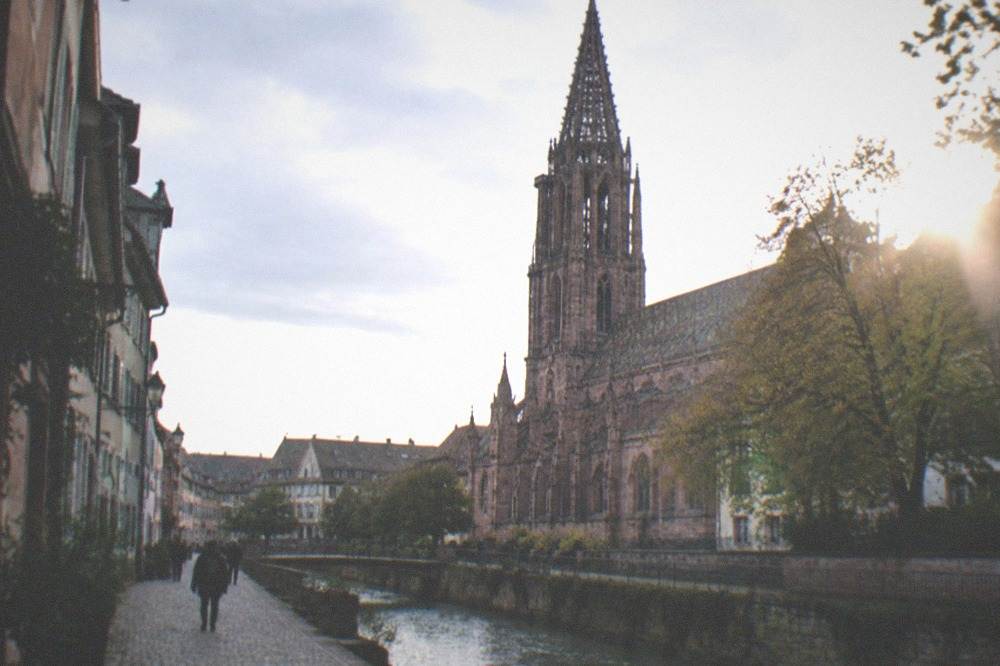
The second Freiburg day is where the city pulls away as a base. Take the Schlossbergbahn up the Schlossberg, €3.70 one way or €6.50 return for adults, walk to the free tower, or ride the full region: the Schauinslandbahn is included on the three-day Welcomekarte, and the summit's Eugen-Keidel-Turm has been open again since April 2025. Alternatively, a regional train toward the Kaiserstuhl wine hills or Titisee turns the day into something Heidelberg cannot match from its own station. That depth is why this site's itinerary pages give Freiburg three full days in the three days in Freiburg plan.
Heidelberg's day is tighter and more concentrated: the castle, the view over the old town and the Neckar, the bridge, and the Hauptstraße for shopping and food. It is a superb half-day and a good full day. It starts to feel thin on a third day unless you branch into the Neckar valley or the Odenwald, which are fine walking country but demand more planning than Freiburg's turn-up-and-hike hills. The wider set of guides lives on Freiburg Travel Guide.
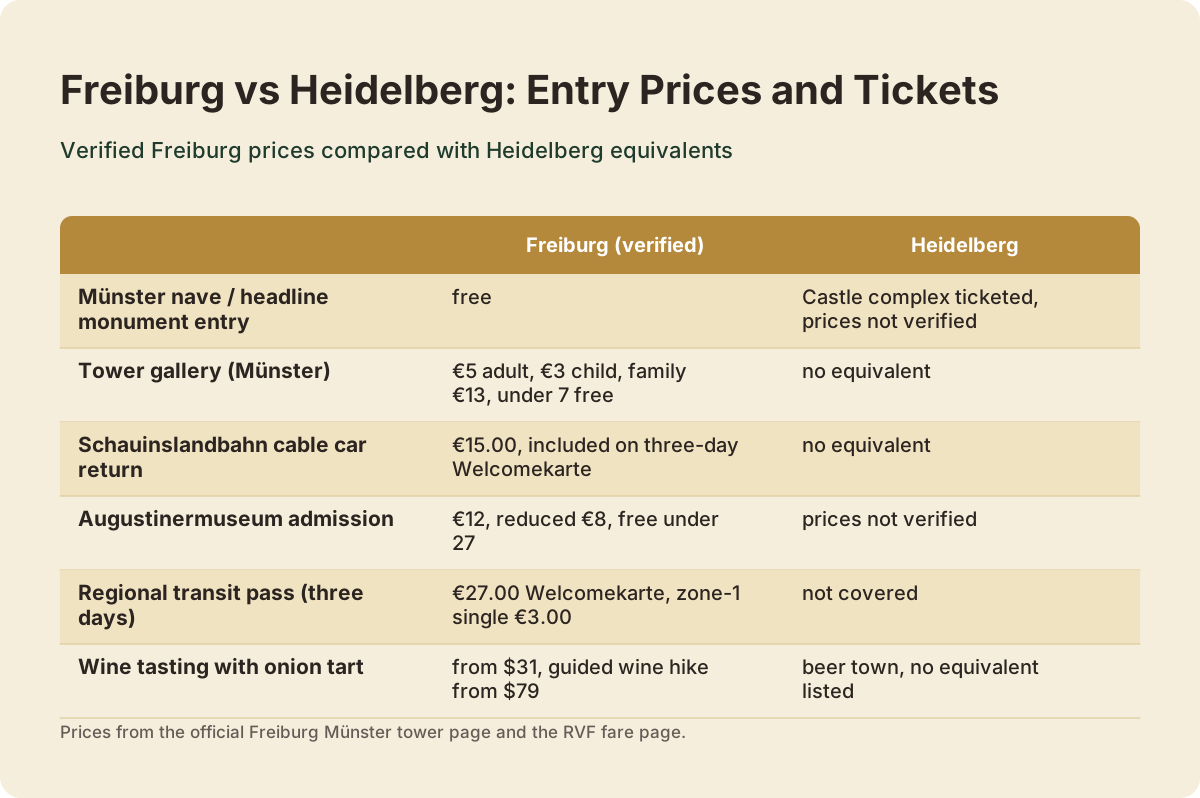
The comparison in spending terms, using only verified Freiburg figures and noting honestly where Heidelberg numbers are not part of this site's verified research:
| Item | Freiburg (verified) | Heidelberg |
|---|---|---|
| Headline monument entry | Münster nave free; tower gallery €5 adult, €3 child, family €13, under 7 free | Castle complex ticketed, prices not verified for this site |
| Major museum | Augustinermuseum €12 / reduced €8, free under 27, day ticket covers all city museums | Museum scene present, figures not verified |
| Local transport | Zone 1 single €3.00, day ticket €7.20, three-day Welcomekarte €27.00 including the Schauinslandbahn | Local transit available, figures not verified |
| Hill access | Schlossberg free, tower free; Schlossbergbahn €6.50 return | Philosopher's path free on foot |
| Weekly market | Münstermarkt, up to 130 stalls, Mon-Sat from 07:30 | Market square, smaller scale |
What The Weather Means For The Choice
Freiburg's climate is one of the warmest in Germany, with a verified annual mean of 11.0°C and 1,815.1 hours of sunshine, which puts it 34th of 1,093 stations for warmth and 20th for sunshine nationally. Summer trips favor Freiburg's outdoor stack, with July averaging 20.1°C, though May is the wettest month at 103.4mm. Winter visitors face frost on about 64 days a year.
Those numbers deserve precise framing, because a lazy version of this claim circulates widely. Freiburg is often called Germany's warmest or sunniest city, and that is not what the data shows: the DWD 1991-2020 normals for station 1443 place it among the warmest and sunniest, ranking 34th of 1,093 stations on mean temperature and 20th of 1,091 on sunshine hours. The correct and defensible statement, the one this site uses everywhere, is that Freiburg is one of Germany's warmest and sunniest cities.
For the Heidelberg comparison, the practical reading is that both cities sit in the warmer southwest and both have pleasant summers. The difference that matters is what you do with the warmth. Freiburg's warm months feed directly into its best features: the cable car, the wine hike, the swimming lakes such as Tunisee, the bike-share network of roughly 1,200 bikes. Heidelberg's warm months feed the riverbank and the castle terrace. Roughly 18.5 days a year hit 30°C or above in Freiburg, mostly in July and August, so midsummer travelers should plan indoor middays, and the best time to visit Freiburg guide breaks the seasons down month by month.
Winter flips the argument slightly toward Heidelberg's classic profile, but only slightly, and Freiburg's Christmas market, 19 November to 23 December 2026 across Rathausplatz and the surrounding old-town squares with over 120 stands, is a serious draw in its own right, covered fully in the Freiburg Christmas market guide. The Münster tower's top gallery closes in winter, and the Schauinslandbahn runs its autumn overhaul closure from 16 November to 4 December 2026, so a late-November visitor loses both of those, while gaining the market.
Which Guided Tours Are Worth Booking In Freiburg
The strongest bookable walks in Freiburg cluster around two poles: actor-led dramatized history and themed specialty tours. The Guided City Tours with Actors is rated 4.9 across 497 reviews from $17, the Historix dramatized tour of the main attractions, running since 1998, is rated 4.7 across 78 reviews from $17, and the "Witches, Torture, Stakes" evening walk is rated 4.7 across 97 reviews from $17. Heidelberg's guided offer is not verified on this site.
The actor-led format is the one to single out, and not just because its review pool is by far the largest of the dramatized options. Costumed historical figures walk you through the old town while staying grounded in real events, and it converts the two hours a first-time visitor would otherwise spend working out the lanes alone into a structured introduction. At from $17 for roughly 90 minutes, it is also priced in the same band as a museum admission, and it is the tour this site points most first-time visitors toward, with free cancellation on the operator's live listing.
Beyond the actors, the choice depends on your appetite. The classic Gässle, Bächle and More City Tour, rated 4.7 across 3,187 reviews from $15, is the highest-volume standard city walk on the roster and the safe pick for a neutral overview. The Historix dramatized tour, running since 1998, covers the main attractions in about an hour and three quarters. The darker "Witches, Torture, Stakes" walk takes the same theatrical idea into the city's grim chapters. There are also private options, such as a two-hour private walk with a local guide from $141, for travelers who want the guide to themselves, though with a single review on the listing so far.
Here is how the headline Freiburg options compare on the numbers that exist:
| Tour | Length | Rating | Price from |
|---|---|---|---|
| Guided City Tours with Actors | ~1.5 hours | 4.9 across 497 reviews | $17 |
| Gässle, Bächle and More City Tour | ~1.5 hours | 4.7 across 3,187 reviews | $15 |
| The Dramatized Tour of the Main Attractions (since 1998) | ~1h 45m | 4.7 across 78 reviews | $17 |
| "Witches, Torture, Stakes" Dramatized Tour | ~1.5 hours | 4.7 across 97 reviews | $17 |
| Veni, Vidi, Vino Wine Hike and Tasting | ~2.5 hours | 4.4 across 167 reviews | $79 |
| Hello Freiburg: Private 2-Hour City Walk | ~2 hours | 1 review on the listing | $141 |
Heidelberg's own guided walks and castle tours are, of course, widely sold, but this site's research does not extend to verifying their prices and ratings, and no figure for them is printed here as a result. If your trip includes both cities, book the Freiburg walk with the numbers you can see, and treat Heidelberg's options as something to evaluate on their own listings.
So Which One Should You Actually Choose?
Choose Freiburg if your trip is really about the Black Forest, wine, hiking or a cross-border Alsace-and-Basel itinerary, and choose Heidelberg if this is a classic first-time Germany route built around castles and the Rhine. A trip that fits both is better than forcing a choice: two or three nights in Freiburg as a regional base, then Heidelberg as a stop en route north, captures the strengths of each without backtracking.
The honest summary is that Freiburg rewards a longer stay and a wider map. Its verified strengths, the free Münster and market, the €5 tower climb, the €12 Augustinermuseum reopened in February 2026, the €27.00 three-day Welcomekarte with the cable car included, the 1,815.1 hours of annual sunshine, the 130-stall market, all compound when you give the city two or three days plus excursions. Heidelberg rewards concentration: its identity is legible in an afternoon, and its best version is as one brilliant stop in a Romantic-Germany sequence.
For the reader already holding a Freiburg booking, which is this site's home audience, the useful question is not "which city" but "is Heidelberg worth the detour from my base?" If your remaining days would otherwise go to the Black Forest or the Alsace, the answer is usually no; those regions are why you chose Freiburg, and they will outperform a second old town. If your trip is ending northward anyway, the answer is yes, and half a day at the castle is a fine send-off.
| Your trip is... | Better choice | Why |
|---|---|---|
| Black Forest hiking and summits | Freiburg | Schlossberg, Schauinslandbahn, Titisee and Feldberg all on local transport |
| Wine-focused travel | Freiburg | Baden region, Weinfest, wine hike and tasting tours from $31-$79 |
| First-time Germany highlights | Heidelberg | Castle-and-Rhine classic itinerary, less backtracking |
| A regional base for 3-5 days | Freiburg | Welcomekarte €27.00 covering trains and the cable car |
| A half-day stop between trains | Heidelberg | Compact axis, station-to-castle walk, faster payoff |
One last practical note for anyone splitting the trip. Freiburg's overnight tax, the Übernachtungsteuer, is 5% of the net room price, applies to private stays and, since 1 July 2023, to business stays too, with under-18s exempt. It is not a Kurtaxe and it is not included in the headline rate you see at booking, so expect it as a small line at checkout, and note that a hotel stay in Freiburg does not come with a free KONUS guest card: the KONUS scheme covers member towns in the surrounding Black Forest, not the city itself, while the Welcomekarte is the genuine Freiburg visitor product. That distinction is one of the most common booking surprises in the region, and the KONUS guest card guide explains exactly where the card does and does not apply.
For further reading on this site, the question "is Freiburg worth visiting" is answered in full on its own page, and the is Freiburg worth visiting guide is the natural next stop if you landed here while still deciding. If you have already decided and are building the itinerary, start with the one day in Freiburg plan and expand from there.
Common Questions About Freiburg Vs Heidelberg
Is Freiburg better than Heidelberg?
Neither city is objectively better. Freiburg is the stronger base for Black Forest hiking, Baden wine country and cross-border trips to Basel and the Alsace, with the Münster nave free, the tower gallery at €5 and a €27.00 three-day Welcomekarte that includes the Schauinslandbahn. Heidelberg is the stronger single stop for the classic romantic-Germany itinerary of castle, bridge and old town.
Can you visit both Freiburg and Heidelberg on one trip?
Yes, and it works best as a sequence rather than a day trip. Train travel between them runs along the Karlsruhe corridor with generally at least one change, and temporary rail works in the region during 2026 make checking live schedules essential. Two or three nights in Freiburg, then Heidelberg as a stop heading north, is the efficient shape.
Which city is cheaper, Freiburg or Heidelberg?
This site can only verify Freiburg's figures: a zone-1 tram or bus ticket is €3.00, a day ticket €7.20, the Münster tower climb €5, the Augustinermuseum €12 with free entry under 27, and the Schlossberg free including its tower. Guided walks run from $15 to $17 for the standard options. Heidelberg's ticket prices are not part of this site's verified research.
Is Heidelberg a good day trip from Freiburg?
It is a long day and a thin one. The journey each way involves regional or long-distance trains with changes, and current construction on the Rheintalbahn corridor adds temporary replacement-bus windows. Most travelers get more from a day in the Black Forest, the Kaiserstuhl or Basel, all of which are closer to Freiburg on local transport.
Which city has better hiking?
Freiburg, clearly. The Schlossberg rises directly from the old town with a free viewing tower, the Schauinslandbahn cable car covers 3,600 meters to a summit that reopened its Eugen-Keidel-Turm in April 2025, and Titisee and Feldberg are regional-train distance. Heidelberg's paths, including the Philosophenweg, are pleasant urban walks rather than mountain hikes.
Which city is better in winter?
Both have strong Christmas markets. Freiburg's runs 19 November to 23 December 2026 with over 120 stands across the old town, free entry, and the city is one of Germany's warmest, with a verified annual mean of 11.0°C. Note that the Münster's top gallery closes in winter and the Schauinslandbahn's autumn overhaul closure runs 16 November to 4 December 2026.