Freiburg History: A Practical Guide To The City's Past
Freiburg rewards visitors who arrive knowing a little of the story behind the stones. This guide walks through the city's past, and through the streets where that past is easiest to see.
Short answer
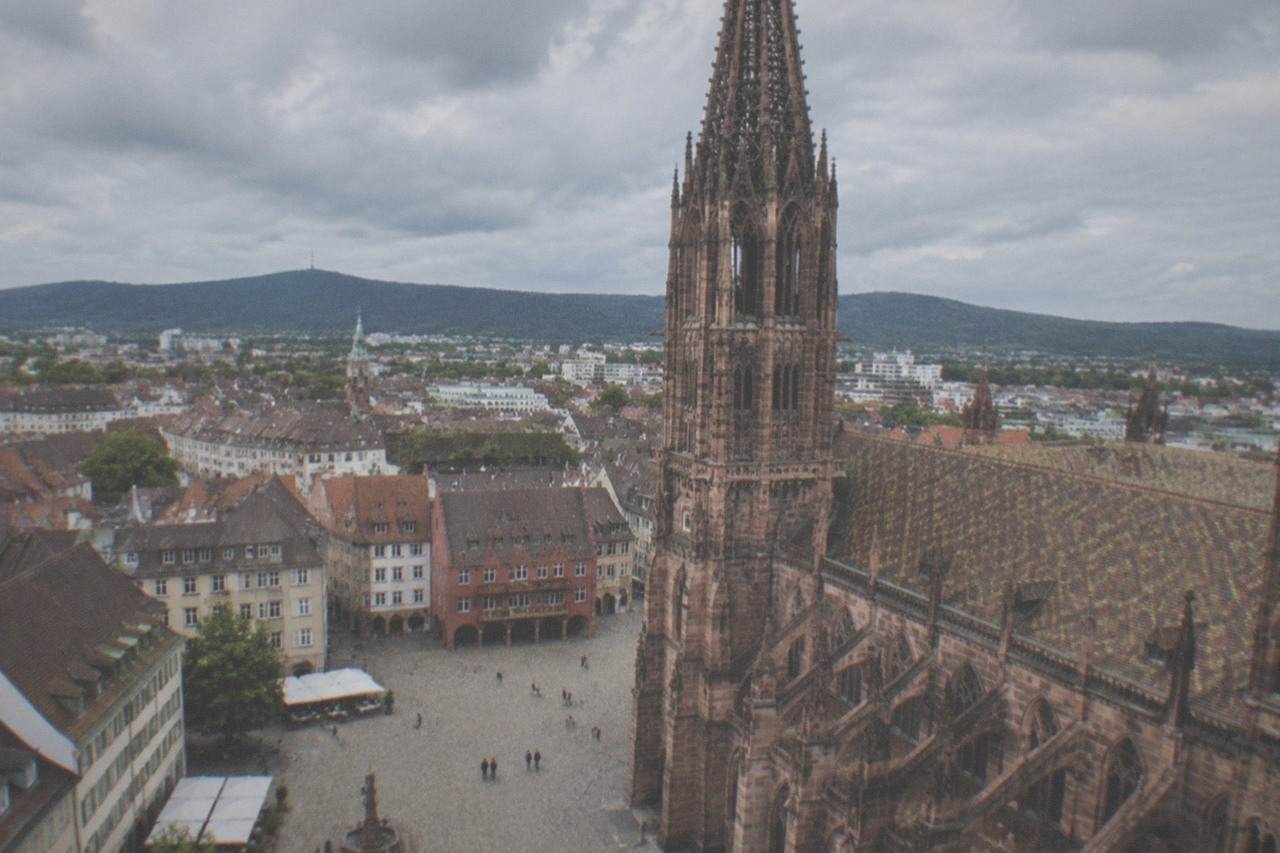
Freiburg's history is visible in a compact old town: a brook-lined medieval core, a minster whose west tower rises 116 m, a university chartered in 1457, and a rebuilt twentieth-... city that now runs 76% of its trips on foot, bike or public transport. Most of it can be walked in a day.
What Is The Short Version Of Freiburg History?
Freiburg im Breisgau grew as a trading town on the edge of the Black Forest, close to the Rhine crossing points that carried goods between the Upper Rhine plain, Alsace and Switzerland. A university chartered in 1457, a soaring minster at the market's heart, and a web of water channels called Bächle gave the city its enduring shape. Dictatorship, wartime destruction and a determined rebuild followed, and the Freiburg of today presents itself as a Green City. That last claim is more than marketing. The city's own monitoring report puts walking, cycling and public transport at 76% of all trips in 2023, up from 67% in 2017, a shift few European cities of 237,299 residents can match. Reading that story on the ground takes a day, not a week, because the old core is small and the layers sit close together.
The practical point for a visitor: almost everything historical sits within a fifteen minute walk of the Münster. Gates, market squares, museums, the university quarter and the Schlossberg hill form one continuous route. You do not need a car, and you mostly do not need a tram.
What you do need is a sense of what you are looking at. A gargoyle, a Bächle, a coat of arms on a merchant house and a bomb-plain wall each tell a different chapter, and the city rarely labels them in English on the spot. That is where a guide, printed or human, earns its price.
Where Medieval Freiburg Still Shows Itself
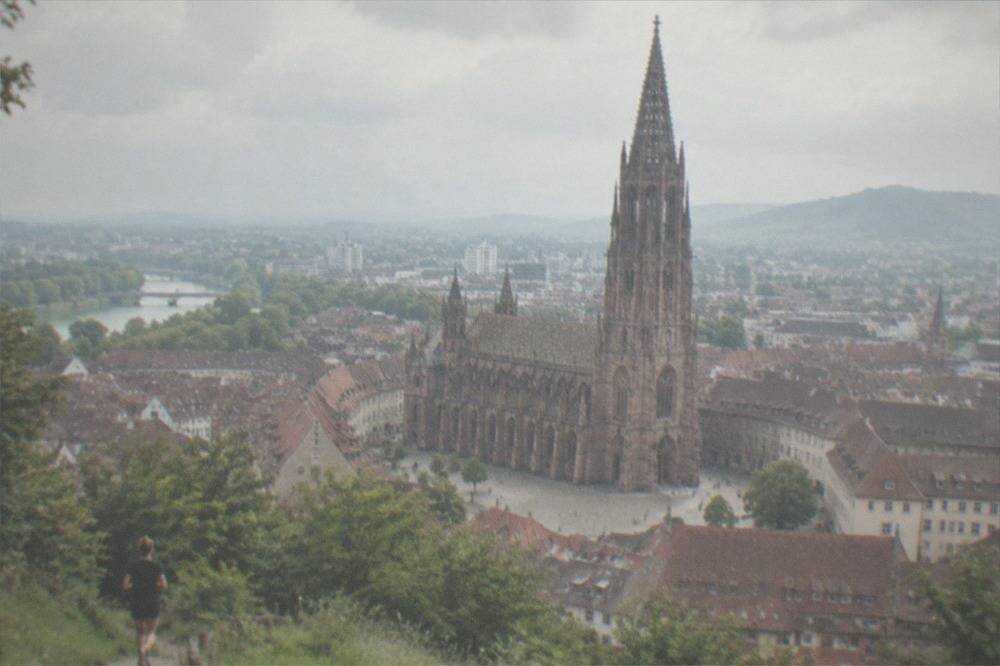
The medieval city survives most vividly in its gates, its brooks and its market square. Martinstor and Schwabentor, the two remaining city gates, still frame the streets they once closed at night. The Bächle, the open water channels running beside many lanes, still drain the old core. And the Münsterplatz, ringed by the Historisches Kaufhaus and up to 130 market stalls, remains the civic center it was built to be. Walk the segment between the two gates and you cover the full length of the old town in about twenty minutes at a strolling pace. The gates are free to walk through, the Bächle are free to step over, and the Münster nave is free to enter. Only the tower climb and the museums cost money, and none of it is expensive.
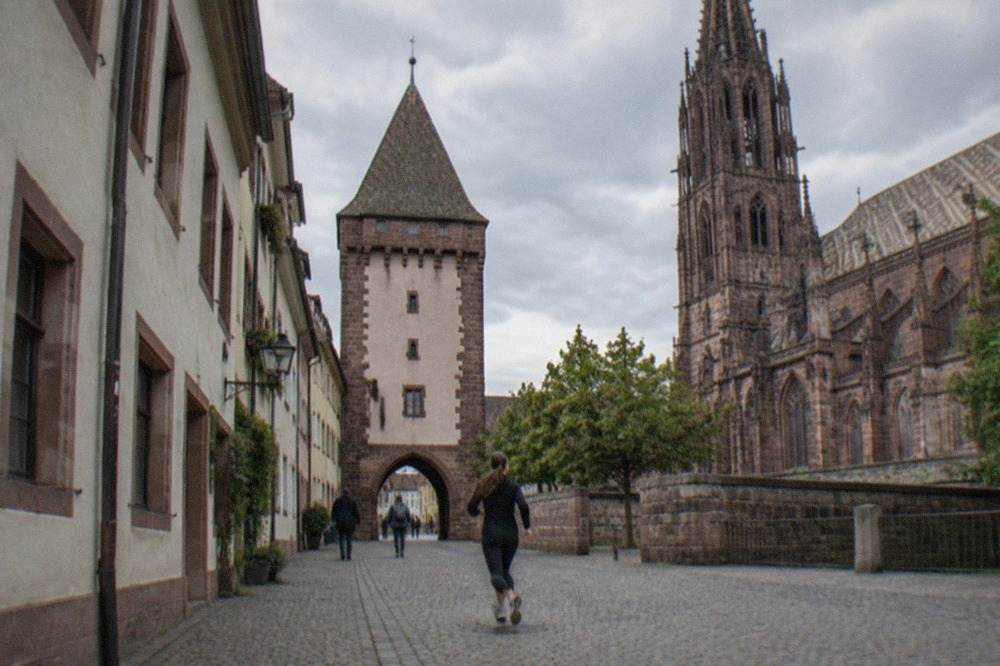
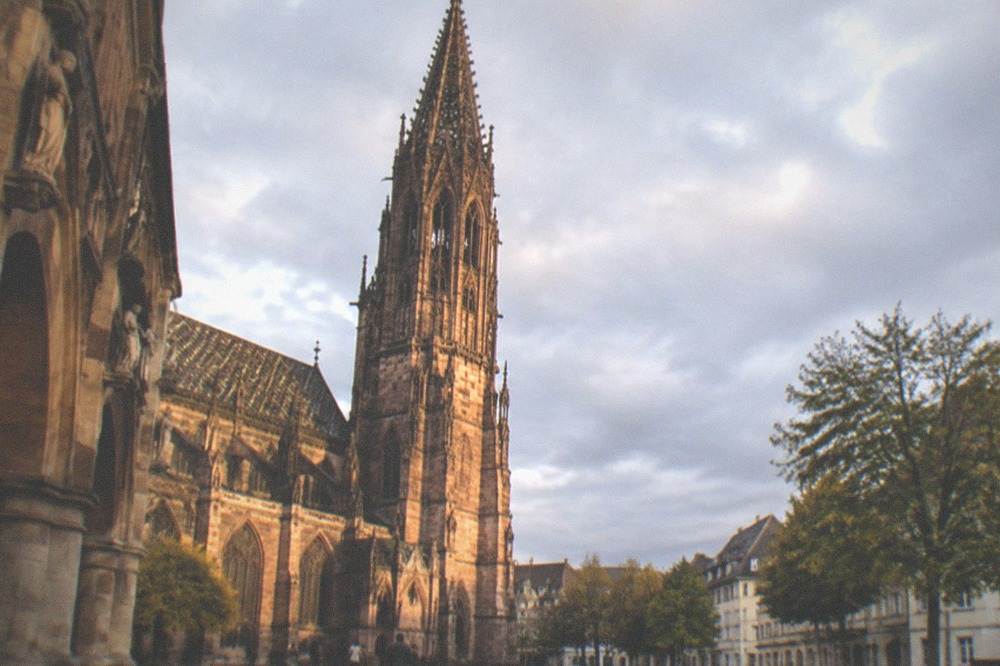
Two warnings from the record. First, the Münster tower is 116 m tall, but visitors climb to a gallery at 70 m, not the top; anyone promising a 116 m view is overselling. The climb runs Monday to Saturday 11:00-16:00 and Sundays and holidays 13:00-17:00, with adults at €5, children and teens at €3, a family ticket at €13 and under-7s free, tickets bought in the Türmerstube. The top gallery closes in winter. Second, the stone you see is under constant repair: the Münsterbauhütte has been working on the choir, the northern nave and chapel areas through 2025 and 2026, and a major restoration of the tower octagon, budgeted at over €18 million, is slated to begin around 2027. Some scaffolding is part of the view.
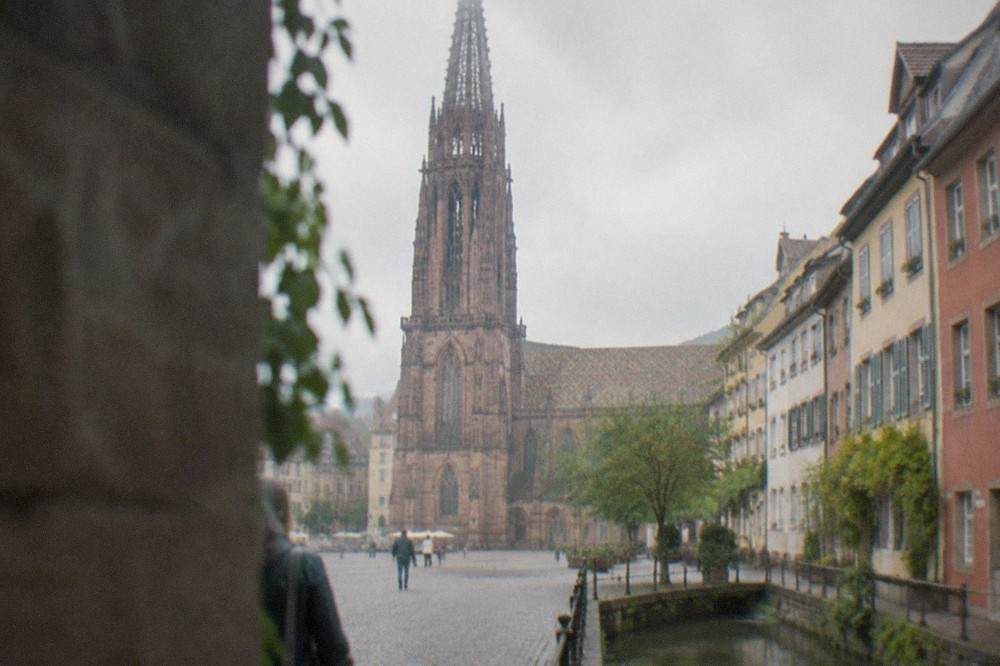
The Bächle deserve more attention than most visitors give them. These are not decorative fountains but working drainage, fed by the Dreisam and routed through the old core for centuries, which is why they appear on lanes that otherwise look purely decorative. Local lore says if you step in one you will marry a Freiburger. The practical lore is simpler: watch your feet.
| Medieval sight | What it is | Cost to visit |
|---|---|---|
| Münster nave | Gothic church interior, free entry | Free |
| Münster tower climb | 116 m tower, gallery at 70 m | €5 adult, €3 child, €13 family |
| Martinstor | One of two surviving city gates | Free, walk through |
| Schwabentor | Second surviving gate, east side | Free, walk through |
| Bächle | Historic open drainage channels | Free |
| Münstermarkt | Market square, up to 130 stalls, Mon-Sat | Free to browse |
For a deeper look at the brooks and the lanes that carry them, the Bächle water channels explained guide covers the system in detail, and the old town walking orientation guide maps the lanes between the gates.
The University And The Münster: Two Projects That Built A City
Freiburg's two defining medieval projects were the minster and the university. The Münster took generations of masons, and its workshop, the Münsterbauhütte, still exists and still repairs the building today. The university was chartered by Albrecht VI of Austria on 21 September 1457, making it one of Germany's oldest, and its 24,507 students in the winter semester of 2025/26 still shape the city's economy and street life. The university's own history pages carry the charter details, and the figure is worth checking there: the university's official history records the 1457 founding and the Habsburg connection. That a small trading town on the Upper Rhine edge could sustain a university says much about its position on the trade routes between the Rhine, the Black Forest and the Swiss plateau.
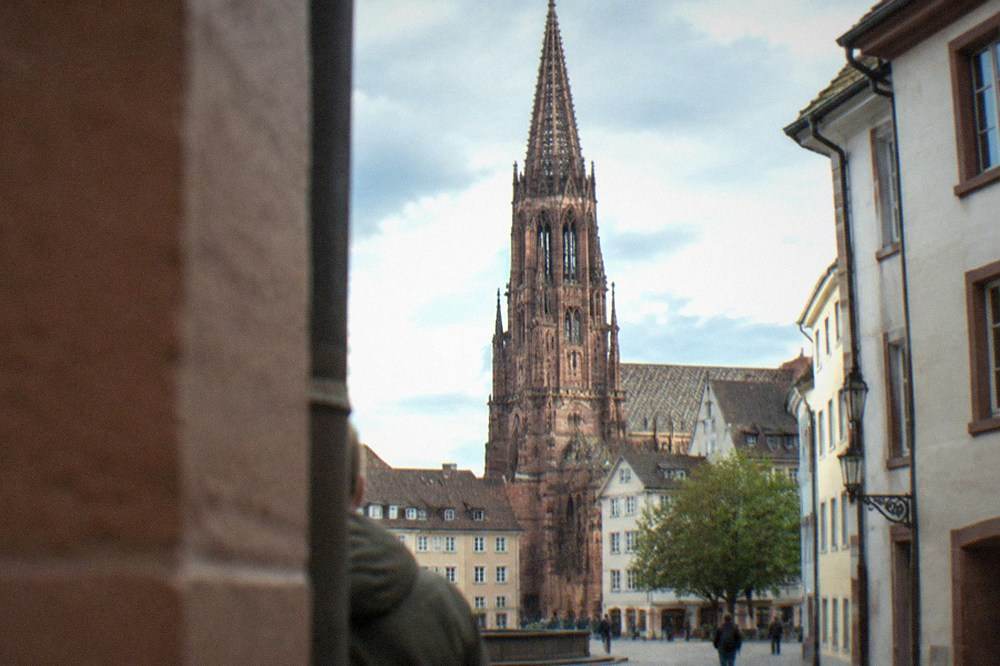
The Münster's story is a construction story that has never finished. A new Münsterbaumeister, Moritz Richter, takes up the post on 1 October 2026, and among his projects is the octagon restoration planned from about 2027. The masons replaced a stone railing element in October 2025, funded by a donation, because earlier railings used unsuitable stone. In September 2026 the fire service ran a large-scale rescue exercise on the tower scaffolding, simulating a fire. This is a living workshop, not a frozen monument, and visitors who come back in five years will see a different building.
A guided walk binds these two threads together well, because a local guide can point out what the stones themselves only hint at. Three options cover the range:
The Walking and Strolling the Historic Center tour runs about two hours at from $228 for the group, a private format aimed squarely at visitors who want the old town's layers unpacked rather than just pointed at. For Italian speakers, the Old Town Private Walking Tour in Italian covers similar ground in about 1.5 hours from $51. And for anyone landing at Basel EuroAirport, the Freiburger Reisedienst Airportbus runs about 55 minutes each way, with its fare shown on the operator's site. Booking panels on this site quote tour prices in US dollars; the till prices inside Freiburg, museum entry, transit, market food, are in euros, and the two do not mix.
How A History Walk Fits Together In Freiburg
A workable history day: start at Martinstor, walk north through the old lanes to the Münsterplatz for the market and the tower climb, cross to the Historisches Kaufhaus, then climb the Schlossberg for the defensive view, and finish in the Augustinerplatz quarter. Done at a moderate pace with the tower climb and a museum, that is a full six to seven hour day, all inside a one-square-kilometer core. The Schlossberg is free, and its 33.27 m viewing tower is reached on foot. The Schlossbergbahn, the inclined lift up the hill, charges adults €3.70 one way or €6.50 up and down, children €2.80 and €4.60, so the lift is a comfort purchase rather than a necessity.
The practical sequence matters less than the shoes. Cobbles, the Bächle, and the slope to the Schlossberg punish thin soles. A morning start beats the afternoon for the tower climb, which closes at 16:00 on weekdays, and the Münstermarkt runs 07:30-13:30 on weekdays, Saturdays to about 14:00, closed Sundays.
For travelers who would rather hand the route to a local, the historic center walk remains the best fit: it covers this loop in about two hours, from $228, with a guide who can answer questions as the streets raise them. Six reviews so far is a small pool, so treat the rating as a modest signal rather than a verdict, but the format itself, a private, unhurried old town walk, suits first-time visitors well. Check availability if the day looks right.
Timing the private walk is straightforward. Because it is private rather than a fixed-departure group tour, the start time is arranged with the guide, which means it can slot in after a morning tower climb or before an evening museum run on a Friday, when the Augustinermuseum stays open to 19:00. Booking a day or two ahead is usually enough outside the Christmas market weeks, though summer weekends in the old town fill guides faster than you would expect for a city of this size.
Tours That Tell The Story: Dramatized, Dark And Private
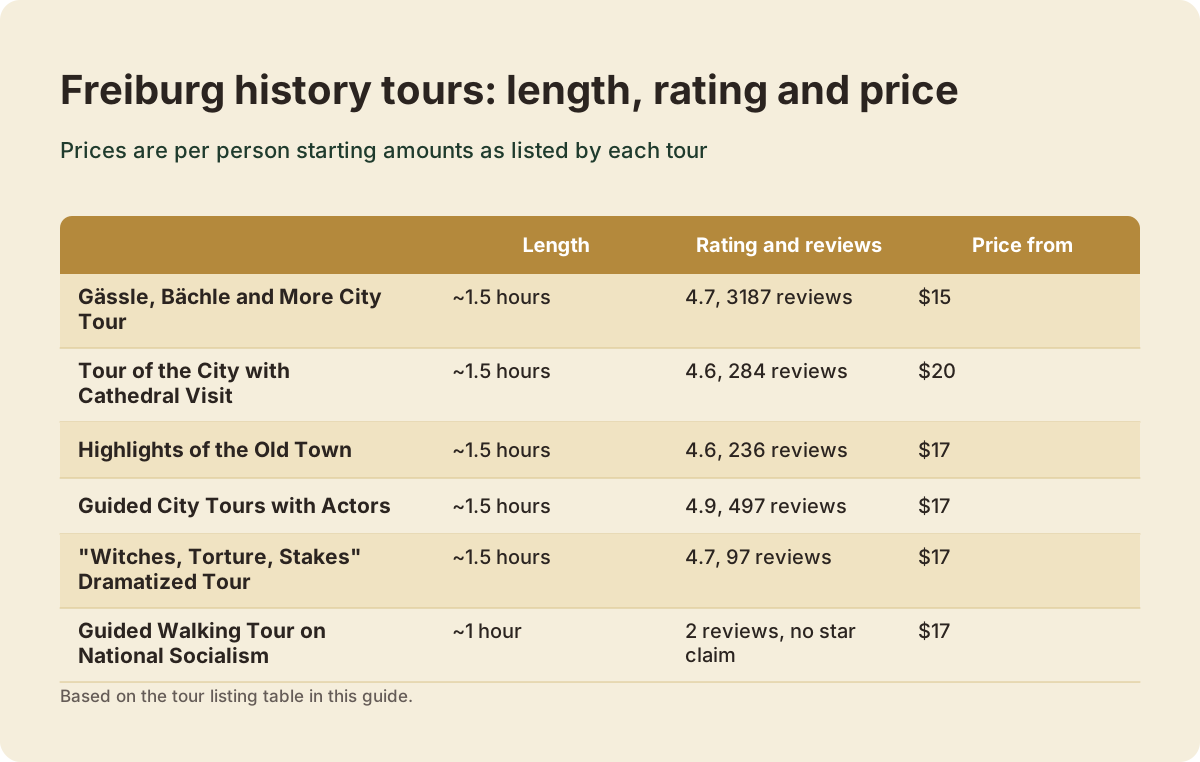
Freiburg's history tour market splits into three families: classic city walks from about $15 to $26, dramatized costumed tours from $17, and darker themed walks on witch trials, National Socialism and the red light district from $17 to $26. Private guided walks run from $90 for an express hour up to $239. The dramatized formats, run by actors since 1998, are Freiburg's distinctive offer and its best reviewed, at 4.9 across 497 reviews. That review count matters. A 4.9 from three reviews means little; a 4.9 across 497 reviews is a genuine verdict from travelers, and the Guided City Tours with Actors carry exactly that. The Dramatized Tour of the Main Attractions, running since 1998 according to its own listing, holds 4.7 across 78 reviews at about 1 hour 45 minutes from $17.
| Tour | Length | Rating and reviews | Price from |
|---|---|---|---|
| Gässle, Bächle and More City Tour | ~1.5 hours | 4.7, 3187 reviews | $15 |
| Tour of the City with Cathedral Visit | ~1.5 hours | 4.6, 284 reviews | $20 |
| Highlights of the Old Town | ~1.5 hours | 4.6, 236 reviews | $17 |
| Guided City Tours with Actors | ~1.5 hours | 4.9, 497 reviews | $17 |
| "Witches, Torture, Stakes" Dramatized Tour | ~1.5 hours | 4.7, 97 reviews | $17 |
| Guided Walking Tour on National Socialism, World Wars & Dictatorship | ~1 hour | 2 reviews, no star claim | $17 |
| Historical Red Light Tour | ~2 hours | 3 reviews, no star claim | $27 |
| Private Guided Walking Tour | ~1.5 hours | 12 reviews, no star claim | $239 |
The Gässle, Bächle and More City Tour, at from $15 and 4.7 across 3,187 reviews, is the volume leader and the cheapest full introduction on the roster. The National Socialism walk has only two reviews, so judge it on its subject rather than its stars; the era is one many visitors want handled seriously, and a specialist walk is a reasonable way to engage it. The historical record of that period is a topic in its own right, covered in did Freiburg get bombed in WWII.
Museums And Monuments: Where The Story Keeps Moving
Freiburg's museum quarter tells the city's history in objects, and it has just changed shape: the Augustinermuseum fully reopened on 28 February 2026 after more than twenty years of phased renovation, adding about 1,600 m² of exhibition space in a former convent building and historic cellars. Admission is €12, reduced €8, free for under-27s, and the day ticket covers the other city museums. It is open Tuesday to Sunday 10:00-17:00, Fridays to 19:00. The reopening is the single biggest change to Freiburg's cultural offer in years, and the house now presents regional art and cultural history with modern, barrier-free displays, an auditorium and a café. The other houses cost less: Museum für Neue Kunst at €7/€5, the Archaeological Museum Colombischlössle at €5/€3, Museum Natur und Mensch at €5/€3 with its permanent exhibition closed from 4 August 2026 until about the end of February 2027 for renovation, and the Documentation Center National Socialism free. Under-27s enter the city museums free.
| Museum | Admission | Notes |
|---|---|---|
| Augustinermuseum | €12, reduced €8 | Reopened 28 Feb 2026, day ticket covers all city museums |
| Museum für Neue Kunst | €7, reduced €5 | Free under 27 |
| Colombischlössle Archaeological Museum | €5, reduced €3 | Free under 27 |
| Museum Natur und Mensch | €5, reduced €3 | Permanent exhibition closed 4 Aug 2026 to about end Feb 2027 |
| Documentation Center National Socialism | Free | N/A |
History is also still being dug up. A rescue excavation at Albertstraße and Habsburgerstraße, north of the old core, ran from March to early October 2025 ahead of a new tax school building, and the state archaeology service reported on it publicly. The lesson for visitors: Freiburg's past is not a closed book, and the city's official pages, including the museum group's own site, are the place to confirm current openings before you commit an afternoon.
Getting There And Getting In: Practical Numbers For A History Day
For a history-focused stay, the numbers that matter are transport and the overnight tax. The RVF Welcomekarte costs €27.00 for three days, covers buses and trains in the region, and includes the Schauinslandbahn cable car plus a culture bonus. A single zone 1 ticket is €3.00, a one-zone day ticket €7.20. Freiburg adds an overnight tax of 5% of the net room price, not a flat Kurtaxe, with under-18s exempt. Two corrections travelers often meet in outdated guides. Freiburg city is not a KONUS municipality, so a hotel stay here does not include a free KONUS card; the Welcomekarte is the actual visitor product. And the Deutschlandticket costs €63.00 per month, not the €58 figure still circulating in older articles. Both matter if you are budgeting a multi-day history trip.
| Item | Figure | Notes |
|---|---|---|
| RVF single ticket, zone 1 | €3.00 | €2.70 on smartphone |
| RVF day ticket, 1 zone | €7.20 | 2 zones €10.90, 3 zones €14.30 |
| RVF Welcomekarte | €27.00 | 3 days, includes Schauinslandbahn |
| Deutschlandticket | €63.00/month | Not €58 |
| Overnight tax | 5% of net room price | Under-18s exempt |
Arriving by air, the Freiburger Reisedienst Airportbus runs daily between Freiburg and Basel EuroAirport in about 55 minutes; the fare is on the listing rather than in this guide, and no confirmed figure exists. The transfer tour option below bundles the same journey as a bookable product for travelers who prefer everything in one booking.
One planning note on seasons. The Christmas market runs 19 November to 23 December 2026 across Rathausplatz, Kartoffelmarkt, Unterlindenplatz and Franziskanerstraße, and it overlays the historical squares with a modern market crowd; the Münstermarkt's own stalls shift to their winter rhythm, closed Sundays. If your interest is the medieval fabric rather than the festive atmosphere, spring and early autumn give you the stones more to yourself.
If this is your first visit, Freiburg Travel Guide as a whole covers the transport, weather and neighborhood decisions in more depth than this single page can.
Common Questions About Freiburg History
How old is Freiburg?
The city's visible fabric is dominated by its medieval core: the gates, the Bächle and the Münster. The precise founding era is best checked against primary sources, but the two anchor dates visitors can rely on are the Münster's generations-long construction, still ongoing through the Münsterbauhütte, and the university's charter of 21 September 1457.
How tall is the Münster tower and how far do you climb?
The west tower is 116 m tall, but visitors climb only to a gallery at 70 m. Adults pay €5, children and teens €3, a family ticket €13, and under-7s go free. It opens Monday to Saturday 11:00-16:00 and Sundays and holidays 13:00-17:00, with the top gallery closed in winter.
Which museum covers Freiburg's history best?
The Augustinermuseum, which fully reopened on 28 February 2026 after more than twenty years of renovation. Admission is €12, reduced €8, free for under-27s, and the day ticket is valid at the other city museums.
What does a history walking tour in Freiburg cost?
Classic city walks run from $15 for the Gässle, Bächle and More City Tour (4.7 across 3,187 reviews) to $20 for the cathedral-visit version. Dramatized actor-led tours cost from $17, and private guided walks run from $90 for a one-hour express walk to $239 for a full private tour.
Is the Documentation Center National Socialism free?
Yes, it is listed among the free city museums, while the other municipal museums charge €5 to €12 depending on the house, with under-27s free at all of them.
Do I need a car to see Freiburg's history?
No. Nearly everything historical sits within a fifteen minute walk of the Münster. A zone 1 day ticket at €7.20 or the three-day Welcomekarte at €27.00 covers anything farther out, including the Schauinslandbahn, which the Welcomekarte includes.