Freiburg Old Town: A Practical Walking Guide To The Altstadt
Freiburg's old town packs a cathedral, two surviving gates, a daily market and a network of narrow lanes into a space you can cross on foot in twenty minutes. Here is what to see, what it costs and how to plan the walk.
Short answer
The Freiburg old town centers on the Münster and Münsterplatz, with the Schlossberg to the east and the remains of the city wall beyond. The cathedral tower climb costs €5, the Augustinermuseum €12, and shared walking tours start from $15. Allow at least half a day.
What Counts As The Old Town In Freiburg?
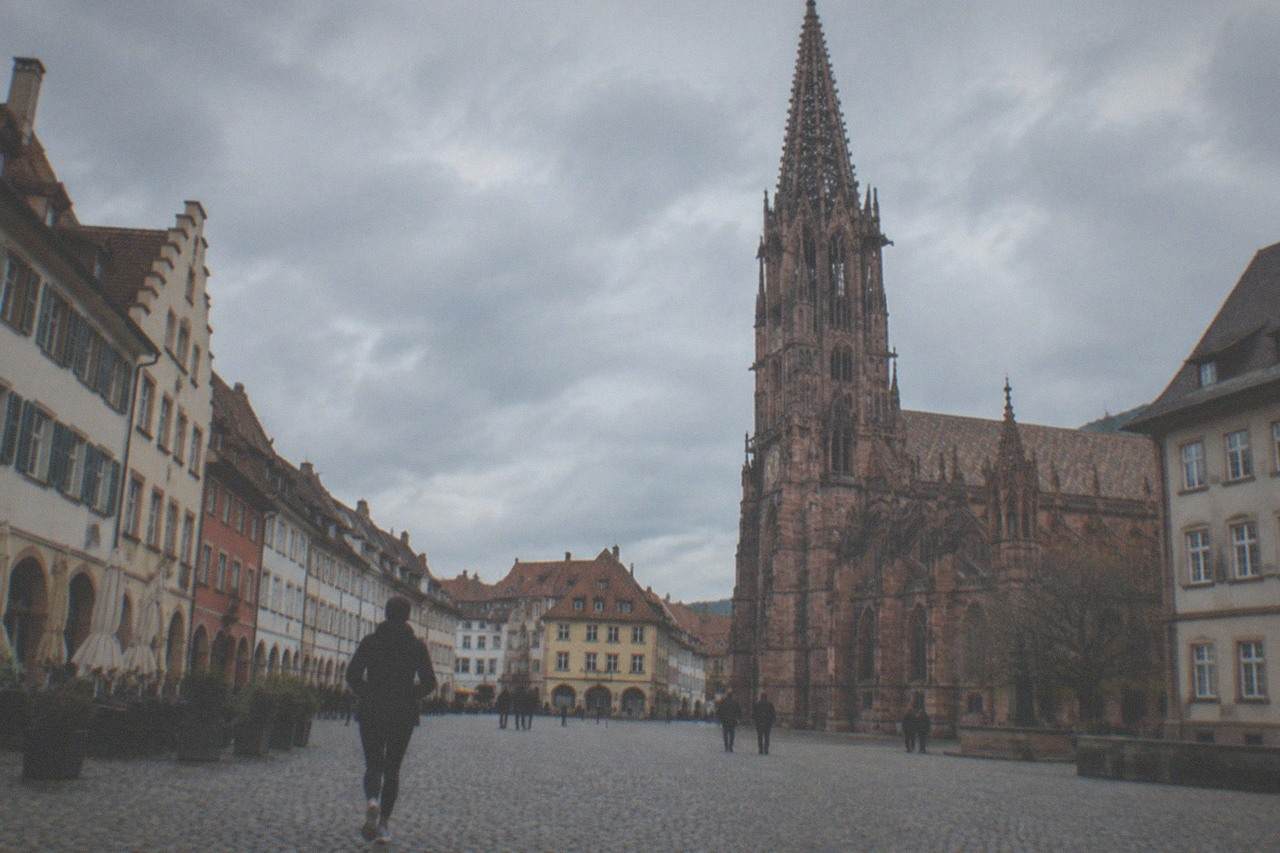
The old town, the Altstadt, is the roughly triangular core bounded by the old city wall, the Schlossberg to the east and the Rotteckring to the west, with the Münster and Münsterplatz at its heart, and a fast walker crosses it north to south in about fifteen minutes. Almost everything a first-time visitor wants sits inside that triangle, which is why so many people never leave it, and why the lanes get busy from late morning onward.
The character of the place comes from three layers stacked on top of each other. There is the medieval trading city, with its market square, guild houses and the two gates that still stand at the southern end of the Kaiserstraße. There is the university city, founded in 1457, whose students have kept the quarter supplied with bars, bookshops and cheap eats for more than five centuries. And there is the rebuilt city: Freiburg's center was heavily damaged in the Second World War, and much of what looks centuries old is careful post-war reconstruction, the Did Freiburg Get Bombed In WWII story explains how thoroughly.
Two features define the streetscape more than any single building. The Bächle, the narrow gutters of running water along most lanes, once fed firefighting reserves and now cool the ankles of anyone who missteps; local legend says stepping in one means you will marry a Freiburger. And the Rhine gravel underfoot: the old town sits in the Breisgau plain, warm for German standards, with the Black Forest escarpment beginning at the city's eastern edge. The DWD's 1991-2020 normals put Freiburg's annual mean at 11.0 °C and its sunshine at 1,815.1 hours, which makes it one of Germany's warmest and sunniest cities, though not the single warmest as the guidebooks sometimes claim.
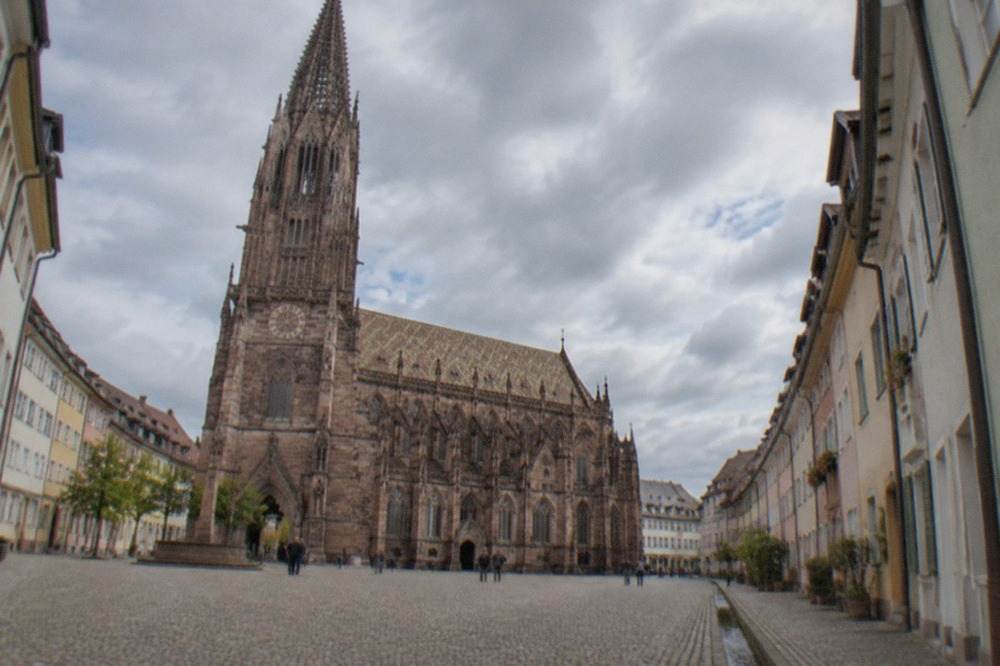
For orientation, fix four points: the Münsterplatz at the center, the Rathausplatz and Alte Wache a block southwest, the Augustinerplatz at the southwest corner of the quarter, and the Konviktstraße and Gerberau lanes running south toward the two gates. This Freiburg Travel Guide site covers each of the individual squares and sights, the Freiburg Münster and the Martinstor and Schwabentor gates each have their own detail pages, so this guide stays practical: how the pieces fit together on the ground.
How Do You Spend A Perfect Day In The Old Town?
Start at the Münstermarkt before 10:00, climb the cathedral tower mid-morning while the queue is short, spend the early afternoon in the museums or on the Schlossberg, and give the evening to Augustinerplatz, where students fill the steps around the fountain. That sequence works because it moves you against the crowd: the market thins after lunch, the tower line builds exactly then, and the steps only come alive after 18:00.
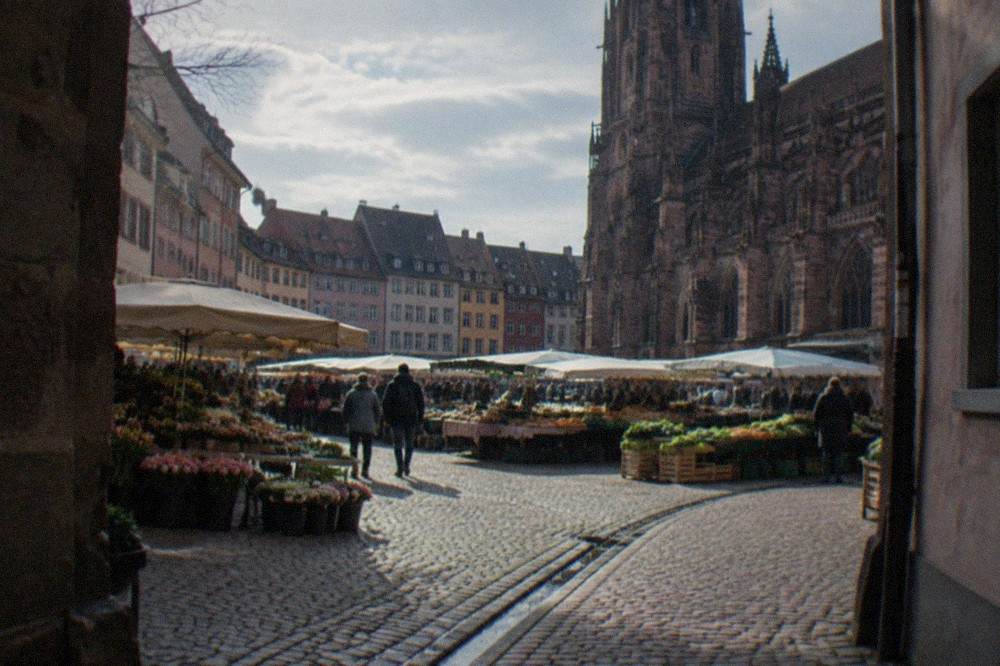
The market is the correct first stop. Up to 130 stalls fill the Münsterplatz Monday to Saturday, from 07:30 to 13:30 on weekdays and to 14:00 on Saturday, and it is the one place where the old town still functions as a working city rather than a backdrop. Buy whatever looks good and eat it standing: a slice of onion tart in late summer, Brägele potatoes, cherries from the Kaiserstuhl in June. The square goes quiet on Sunday and public holidays, when the stalls are gone and only the cathedral is open.
Here is how a full day distributes across the quarter:
| Time | Where | What You Are Doing |
|---|---|---|
| 08:00-10:00 | Münsterplatz | Market breakfast, coffee at the edge of the stalls |
| 10:00-11:00 | Münster tower | Climb to the 70 m gallery, city view from above the rooftops |
| 11:00-13:00 | Münster nave and Historisches Kaufhaus | Free cathedral entry, Gothic marketplace facade |
| 13:00-15:00 | Augustinermuseum | €12 day ticket, valid for all the city museums |
| 15:00-17:00 | Schlossberg | Walk up, or the Schlossbergbahn at €3.70 one way |
| 17:00 onward | Augustinerplatz and Konviktstraße | Steps, fountain, dinner as the students arrive |
The tower deserves its slot. The west tower of the Münster stands 116 m, but visitors climb to a gallery at 70 m, and the top gallery closes in winter. The official tower page lists the hours: Monday to Saturday 11:00-16:00, Sunday and holidays 13:00-17:00, with the last ascent about fifteen minutes before closing. Adults pay €5, children and teenagers €3, a family ticket €13, under-7s go free.
The tower climb is the one fixed time commitment of the day. Everything else can drift. The nave is free and worth ten unhurried minutes for the stained glass, some of it funded by medieval guilds whose trade symbols still appear in the windows. The Historisches Kaufhaus on the square's south side, with its red facade and scalloped arches, housed the customs office of a city that grew rich taxing Rhine trade.
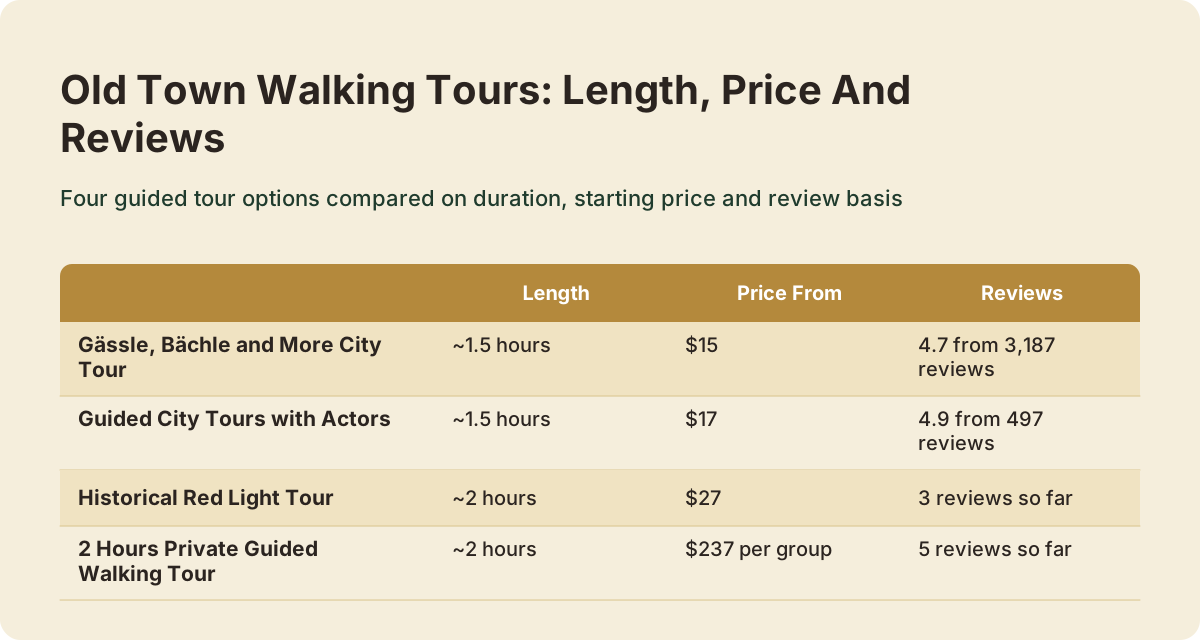
If you would rather have the story than the schedule, a guided walk compresses the whole quarter into ninety minutes. The shared city walks start from $15 per person and the best-reviewed of them carry ratings earned across hundreds of tours; the private options suit families or anyone who wants to set the pace.
Which Walking Tour Is Worth Booking For The Old Town?
For the standard sightseeing walk, the Gässle, Bächle and More City Tour at from $15 is the strongest value on the roster, rated 4.7 across 3,187 reviews; for something different, the Historical Red Light Tour at from $27 tells the side of the old town the plaques skip, with three reviews so far. The choice is really between coverage and character.
The dramatized walks are a Freiburg specialty worth knowing about. Guided City Tours with Actors, from $17 and rated 4.9 across 497 reviews, sends costumed performers through the lanes, and the Witches, Torture, Stakes variant covers the city's early-modern persecutions in the same format at the same price. None of these are ghost-train kitsch; the material is real local history delivered theatrically, and teenagers in particular tend to stay engaged for the full ninety minutes where a lecture would lose them.
The red light walk belongs to a different category. It runs about two hours, from $27, and traces the historical prostitution and crime geography of the quarter around the Gerberau and Fischerau, streets that most visitors photograph without knowing what they are photographing. Three reviews so far is an honest but thin pool, so treat the rating as unformed rather than as a verdict.
On the private side, the 2 Hours Private Guided Walking Tour of Freiburg runs from $237 for the group, five reviews so far, and makes sense when the price splits across four or more people who want their questions answered at their own speed. There is also a professionally guided walking tour with the price shown on the live listing rather than fixed here, worth checking if your dates are flexible.
A quick comparison of the formats on offer for the old town:
| Tour | Length | Price From | Rating Basis | Best For |
|---|---|---|---|---|
| Gässle, Bächle and More City Tour | ~1.5 hours | $15 | 4.7 from 3,187 reviews | First visit, full overview |
| Guided City Tours with Actors | ~1.5 hours | $17 | 4.9 from 497 reviews | Families, theatrical delivery |
| Historical Red Light Tour | ~2 hours | $27 | 3 reviews so far | Adults, the hidden history |
| 2 Hours Private Guided Walking Tour | ~2 hours | $237 per group | 5 reviews so far | Small groups, custom pace |
Book whichever walk for your first evening or your first morning, then walk the quarter again alone afterward. The guided version teaches you what you are looking at; the solo version is when you actually see it.
What Does It Cost To Visit The Old Town Sights?
The old town itself is free to walk, and its two biggest draws, the cathedral nave and the market square, cost nothing; the paid items are the tower climb at €5, the Augustinermuseum at €12, and the Schlossbergbahn at €3.70 one way. Before food, the biggest variable cost is lunch on the market square, so plan around that.
| Sight | Adult Price | Notes |
|---|---|---|
| Münster nave | Free | Open daily, stained-glass windows |
| Münster tower | €5 | 70 m gallery, closed in winter, under-7s free |
| Münstermarkt | Free | Mon-Sat mornings, up to 130 stalls |
| Augustinermuseum | €12, reduced €8 | Day ticket valid for all city museums, free under 27 |
| Museum für Neue Kunst | €7, reduced €5 | Free under 27 |
| Archäologisches Museum Colombischlössle | €5, reduced €3 | Free under 27 |
| Schlossberg | Free | Walk up from the old town in 10-15 minutes |
| Schlossbergbahn | €3.70 one way, €6.50 return | Avoids the steep path up |
The under-27 rule is the budget traveler's best friend in this city: every municipal museum lets visitors under 27 in free, so a student couple can see all four houses for the price of one lunch. The €12 Augustinermuseum ticket doubles as a day ticket across the group, which makes it the anchor purchase if museums are your thing.
One planning note on timing: the Augustinermuseum fully reopened on 28 February 2026 after more than two decades of phased renovation, adding around 1,600 m² of new exhibition space in the former convent building and vaulted cellars. If your mental image of the museum is of a partly closed construction site, it is out of date.
Where Do Locals Eat And Drink In The Old Town?
Eat at the market in the morning, take lunch in a Markthalle or a Wurst stand within sight of the Münster, and spend the evening on the Augustinerplatz steps with something from a nearby shop rather than a table at a tourist restaurant on the square itself. The rule of thumb that never fails: the closer a table is to the Münsterplatz, the more you pay for the view and the less you get on the plate.
The old town's drinking culture has one genuine institution, the Augustinerplatz. The wide steps around the fountain there are the city's shared living room on summer evenings, and buying a bottle at a shop and joining the crowd is both the cheapest and the most local night out available. The square takes its name from the Augustinian monastery whose buildings now house the Augustinermuseum next door.
Two openings from the past year have added to the options. Augustiner am Platz, the first Augustiner Wirtshaus in Baden-Württemberg, opened on 14 October 2025 after a six-month conversion at Augustinerplatz, pouring the Munich brewery's beers alongside Badense specialties. And in Fischerau, at the southern edge of the quarter, the Trotte wine bar opened around August 2026 with a list of roughly 400 wines, twelve of them by the glass, focused on German and Burgundy rarities. For the full depth of the scene, the Baden wine country around the city has its own dedicated pages.
The Markthalle itself, the historic market hall on the Kaiserstraße, is the wet-weather answer and the lunch answer, with stalls selling everything from sausages to regional pasta in a building that has served the same purpose for generations. The ranges above are planning figures from typical stall pricing, not promises; check the board at each stand before you order.
Long-running institutions anchor the upper end of the scale. The city's five Michelin one-star restaurants from the 2026 guide sit mostly outside or at the edge of the quarter, but the historic eating houses near the cathedral, the ones with dark wood and waiters in white shirts, deliver Schwarzwald classics, ham, trout, dumplings, at prices that start around the mid-20s in euros for a main. Reserve for anything with a Michelin mention.
One closure to know about: Café Melange, the long-running Italian-style café on Eisenbahnstraße, closed for good at the end of August 2026 after 29 years. Lists online that still show it are stale.
What Should You Know About The Bächle, The Gates And The Old Town Look?
The Bächle are the open water gutters running along most old town streets, the Martinstor and Schwabentor are the two surviving medieval gates at the south end of the Kaiserstraße, and together with the tiny lanes called Gässle they give the quarter the look that first-time visitors usually photograph most. None of them costs anything or takes long, which is exactly why people underestimate them.
The Bächle network dates to the medieval city, when the channels distributed stream water for firefighting and trade. Today they are purely ornamental and purely beloved, and the marriage legend attached to them is repeated to every visitor with a straight face: step in one, marry a Freiburger. The full story of the gutters covers their actual engineering history, which is more interesting than the legend.
The two gates mark what was once the southern boundary of the walled city. The Martinstor, the older and squarer of the two, and the Schwabentor, with its pointed tower and painted facade, stand a few hundred meters apart, and the Schwabentor now has a café in its base. Between them runs the pedestrian Kaiserstraße, the spine of the old town, which doubles as a tram line: watch for trams, because they run through the middle of the pedestrian zone and they do not slow down for photographers.
The framing view is the one from the east. The postcard shot of Freiburg, red rooftops with the Gothic tower rising above them and the Black Forest hills behind, comes from the Schlossberg paths, a ten to fifteen minute walk uphill from the Oberlinden at the southeast corner. Sunset from up there looks down exactly onto the lanes described in this guide.
When Is The Best Time To Walk The Old Town?
Early morning and the late evening are the quiet windows: the market before 09:00, the lanes after 20:00 in summer, while the hours between 11:00 and 16:00 in July and August carry the heaviest foot traffic of the year. The old town is compact enough that crowds are the single biggest factor in how much you enjoy it.
Season matters less than hour. The DWD climate normals for the city give July a mean of 20.1 °C with 7.3 days at or above 30 °C, against a January mean of 2.5 °C and 15.7 frost days, so summer days are warm enough that the morning window is also the comfortable one, and winter days are mild enough that walking is still pleasant if the sky is clear. May is the wettest month at 103.4 mm on average; September drops to 77.4 mm with a 15.4 °C mean, which makes early autumn arguably the best walking season of all.
| Season | Mean Temp | Rain, Monthly | Walking Conditions |
|---|---|---|---|
| Spring (Mar-May) | 7.0-14.9 °C | 54.3-103.4 mm | Fresh, market ramps up, May wettest |
| Summer (Jun-Aug) | 18.3-20.1 °C | 89.8-92.2 mm | Warm, busiest, use mornings |
| Autumn (Sep-Nov) | 15.4 down to 6.1 °C | 66.2-78.5 mm | Settled, best balance of all |
| Winter (Dec-Feb) | 2.5-3.5 °C | 48.6-66.9 mm | Quiet, tower gallery closed |
One seasonal event changes the whole quarter. The Christmas market runs from 19 November to 23 December 2026 across the Rathausplatz, Kartoffelmarkt, Unterlindenplatz and the lanes connecting them, with over a hundred stands, free entry, and opening hours from 10:00 to 20:30 on weekdays. In those weeks the old town is at its busiest and arguably its most beautiful, and the crowd advice doubles: go at opening or after dinner.
Outside the market weeks, Sunday is the sleeper option. The market stalls are gone and many shops shut, but the cathedral is open, the museums run normal hours, and the lanes are close to empty on a winter Sunday morning. Anyone photographing the quarter should be there by 08:30.
How Do You Get To The Old Town And Where Do You Park?
You do not drive into the old town: it is a pedestrian zone with tram lines through the middle, reached from the Hauptbahnhof in ten minutes on foot or four minutes by any tram heading to the Bertoldsbrunnen or Münster stops. Parking goes in the garages at the edge of the ring, and the walk in from the Rotteckring garages is under ten minutes.
The trams deserve a specific warning rather than a general one. Lines run along the Kaiserstraße itself, through what looks like a pure pedestrian street, and the tracks are easy to miss when the lanes are crowded. Look up at the intersections and the overhead wires, not down at the pretty gutters, when you cross.
Ticketing is simple and cheap. A single RVF zone 1 ticket costs €3.00 at the machine or €2.70 on a phone, and a day ticket covering zone 1 travel costs €7.20. If the Schauinslandbahn cable car is on your list, the RVF Welcomekarte is the better buy: three days for €27.00, covering buses and trains across the region and including the cable car plus a small culture bonus. Visitors staying overnight should also know that the city charges an Übernachtungsteuer, a 5% overnight tax on the net room price, not a Kurtaxe, and guests under 18 are exempt.
| Way In | From | Cost | Time To The Münster |
|---|---|---|---|
| On foot | Hauptbahnhof | Free | ~10 minutes |
| Tram, zone 1 | Hauptbahnhof | €3.00 single | ~4 minutes plus the walk |
| Car | Rotteckring garages | Garage day rates | ~10 minutes walking |
| Airport bus | EuroAirport Basel | Fare on the listing | About an hour to the city |
The main station itself is worth a pause before you rush out of it: it sits directly north of the old town across the Rotteckring. Note that a modernization program began there in September 2026, running into late 2028, which initially closed the northern underpass while five new lifts and renewed platforms are built.
Finally, the escape valve. When the lanes feel full, the Schlossberg paths start at the Oberlinden and climb out of the crowds within five minutes, and the trail network east of the city connects onward into the Black Forest proper. The old town rewards an early start, but its best feature may be how quickly it lets you leave it.
Common Questions About The Freiburg Old Town
Is the Freiburg old town free to visit?
Yes. Walking the quarter, the cathedral nave, the Münsterplatz and the Schlossberg all cost nothing. The paid items are the tower climb at €5, the city museums from €5 to €12, and the Schlossbergbahn at €3.70 one way if you skip the stairs.
How long do you need for the Freiburg old town?
A focused half day covers the market, the cathedral, one museum and the gates at a reasonable pace. A full day lets you add the tower climb, the Schlossberg viewpoint and a long evening on the Augustinerplatz steps, which is the version most visitors end up preferring.
Can you drive into the Freiburg old town?
No. The Altstadt is a pedestrian zone with tram tracks running through it. Park in the garages on the ring roads, Rotteckring or the station area, and walk in; the longest walk from a central garage to the Münster is about ten minutes.
What is the prettiest street in the Freiburg old town?
Opinions split between the Konviktstraße, a narrow lane of medieval houses running south from the Gerberau, and the Oberlinden with its old linden tree at the foot of the Schlossberg. Both are quietest before 09:00, before the day-trip crowds arrive from the station.
Are the Bächle still running water?
Yes, most of the old town gutters carry live stream water year-round, which is why the standing joke about stepping in one and marrying a Freiburger persists. The water is clean stream water, cold in every season, and the gutters run alongside the cobblestones on the edges of the lanes.
What should I avoid in the Freiburg old town?
Tourist restaurants directly on the Münsterplatz, where the price rises and the quality drops; crossing the tram tracks on the Kaiserstraße without looking; and trying to drive into the pedestrian zone, which is both prohibited and pointless given the ring garages.