Strasbourg From Freiburg: The Practical Day Trip Guide
Strasbourg sits just across the Rhine from Freiburg, close enough for a comfortable day trip and different enough to feel like a second country in a single morning.
Short answer
Strasbourg works as a Freiburg day trip because it sits just across the Upper Rhine in France, with train connections short enough to skip a hotel night. Expect a canal-laced old town, a Gothic cathedral, Alsatian food, and French at the till. Bring euros, allow a full day, and compare it with Colmar and Basel before choosing.
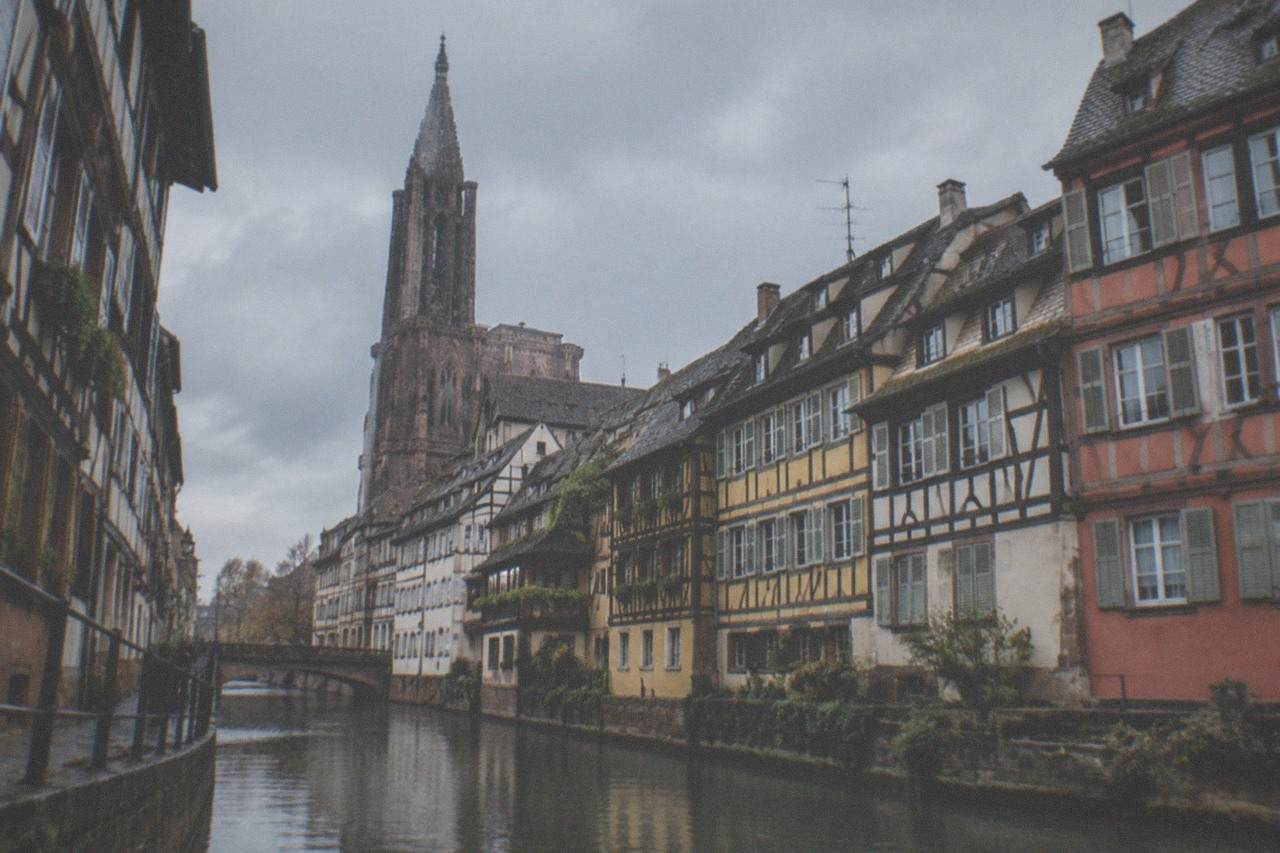
Strasbourg is the one major French city most Freiburg visitors can reach without booking a hotel, and that alone makes it worth planning properly. It is the capital of the Alsace region, the seat of the European Parliament, and a canal town whose historic core sits on an island ringed by water. Freiburg and Strasbourg face each other across the Upper Rhine plain, two university cities of similar scale with completely different languages, cuisines and street life on either bank.
This guide is written for someone already based in Freiburg or the surrounding Breisgau. It covers how the journey works from a practical standpoint, what to do with a single day on the other side, how Strasbourg compares with Colmar and Basel as a day out, and what to plan around, from weather at the Freiburg end to the renovation works currently reshaping Freiburg's main station. Facts about prices and schedules come from the city's own transport pages and from this site's verified research file, and everything that is a matter of taste is flagged as taste.
Why Strasbourg Works As A Freiburg Day Trip
Strasbourg earns its place on a Freiburg itinerary because it delivers a genuinely different country in a short hop: French street names, Alsatian half-timbering, a Gothic cathedral anchoring the old town, and a food culture built on tarte flambée and Riesling rather than Badische spätzle. The connection is short enough that no hotel night is needed. You leave a German tram city and land in a French canal city, and that contrast is the entire point.
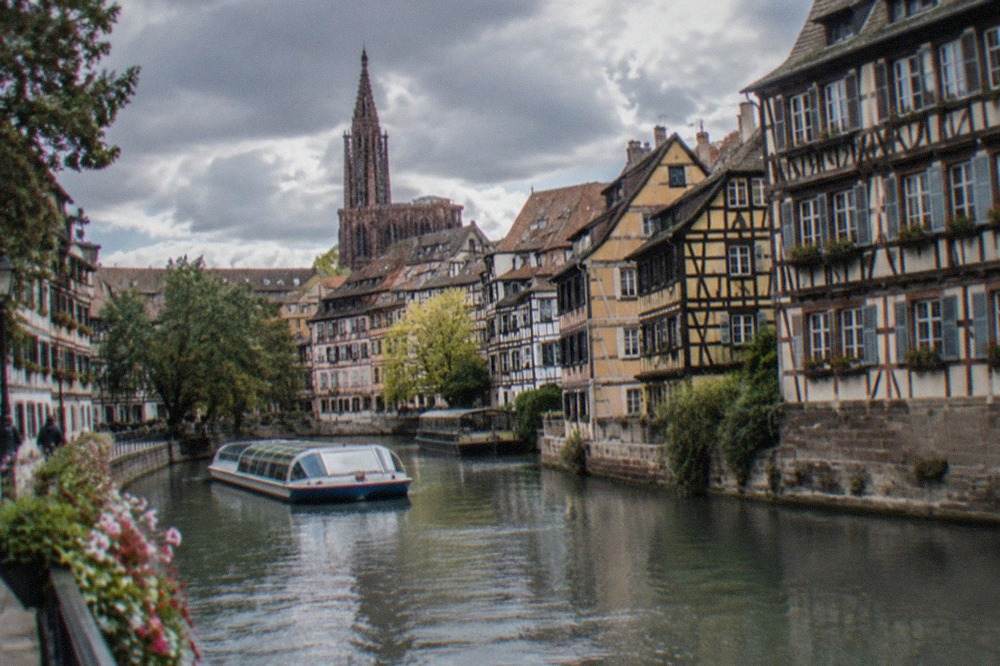
Think of the two cities as a pair. Freiburg gives you the Bächle, the Münster's red sandstone and a Black Forest gateway; Strasbourg gives you the Grande Île, the Ponts Couverts and the flat Rhine horizon. Both are walkable, both sit on rivers, and both have cathedral squares at their heart, which makes the differences stand out more sharply. A traveler who has spent two days in Freiburg will recognize Strasbourg's rhythm instantly and still feel, within minutes of arriving, that they have crossed a border.
The practical case is just as strong. Both cities use the euro, so there is no money changing to plan. Both are compact enough that a day visitor on foot covers most of what matters. Strasbourg's own tram network picks up where the walkable core ends, so a day trip does not require a car, and driving into a French city center is the one option most visitors should avoid anyway. The Alsace wine route also starts effectively at Strasbourg's doorstep, which turns the city into a natural second day for anyone whose trip allows more time in France.
Planning the trip from the Freiburg side is where this site's Freiburg Travel Guide coverage earns its keep: the details that decide whether the day goes smoothly, from the station works at Freiburg Hbf to which tickets matter before you board, all sit on the German end of the journey. The sections below take the trip in order.
How To Get From Freiburg To Strasbourg
The journey runs by rail out of Freiburg's Hauptbahnhof, north along the Rhine valley toward Offenburg and across the border into France, and the practical work happens on the Freiburg side: getting to the station, timing the departure, and not overbuying tickets. Freiburg's transport association stops at the German border, so no Freiburg ticket, including the Welcomekarte, covers any part of France.
Start with the station itself, because it is changing. Modernization work at Freiburg Hbf began on 14 September 2026 and is due to run until around December 2028, with five new lifts being installed in the northern pedestrian underpass, which is initially fully closed, alongside platform renewals, new roofs and lighting on platforms 3 to 5, at a total reported cost of around €36.7 million, funded jointly by Deutsche Bahn, the federal government, Baden-Württemberg, the region and the city. Anyone heading to Strasbourg should budget a few extra minutes at the station and check the current access routes before travel, since the underpass closure reshapes how you reach some platforms. Deutsche Bahn's press release on the Freiburg Hbf works sets out the full scope.
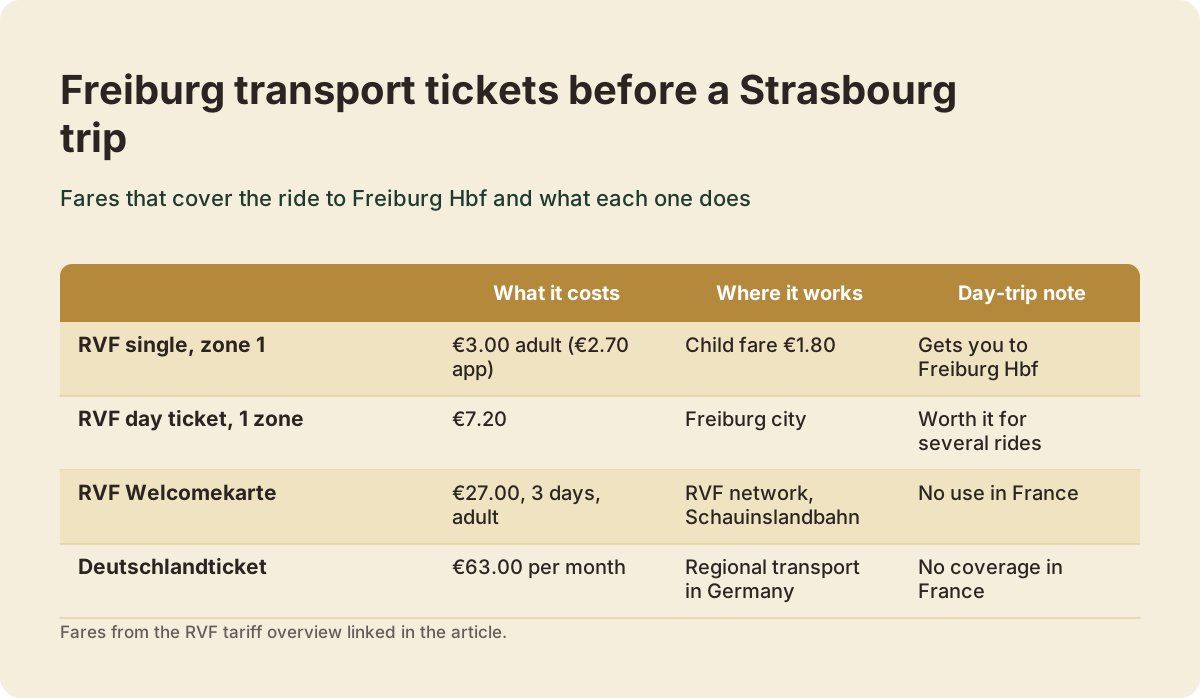
Getting to the Hauptbahnhof is cheap and simple. A single RVF zone 1 ticket, the fare that covers a tram or bus ride within Freiburg, costs €3.00 for adults, or €2.70 when bought through the smartphone app, with children at €1.80. A day ticket for one zone costs €7.20. The RVF's own current fare sheet is the source for these figures. One point that trips up visitors staying in the city: the RVF Welcomekarte, a 3-day visitor pass at €27.00 for adults that covers regional buses and trains and even includes the Schauinslandbahn cable car, is valid only within the RVF network in Germany. It is excellent value for Black Forest days, but it does nothing for you in Strasbourg, so do not buy it for this trip unless you have other plans for it. The RVF's Welcomekarte page spells out exactly where it applies.
Two more Freiburg-side details are worth knowing. Since December 2025, recent reporting puts electric buses on all VAG lines in the city, and the newer e-buses carry cashless ticket machines only, so on those vehicles you cannot pay the driver in coins; buy before you board or use the app. And if you are staying in one of the nearby Black Forest KONUS member towns rather than Freiburg itself, your KONUS guest card is valid on Freiburg's trams and buses for the journey to the station, though Freiburg city itself does not issue one.
Once you cross into France the practicalities flip to French systems: the Strasbourg end has its own transit network, its own signage and French as the working language. A pocket of German phrasebook confidence from Freiburg will not carry, though in the tourist core of Strasbourg you will hear plenty of German and English alongside the French. Confirm your exact departure times and connections on the rail operator's own journey planner on the day you travel, because engineering work on the German side periodically reshuffles Rhine valley services on weekends.
| What you are buying | What it costs | Where it works | Notes for a Strasbourg day trip |
|---|---|---|---|
| RVF single, zone 1 | €3.00 adult (€2.70 in the app, €1.80 child) | Trams and buses in Freiburg | Gets you to Freiburg Hbf |
| RVF day ticket, 1 zone | €7.20 | Freiburg city | Only worth it if you make several rides |
| RVF Welcomekarte | €27.00, 3 days, adult | RVF network in Germany, includes the Schauinslandbahn | Useless in France; buy for Black Forest days instead |
| Deutschlandticket | €63.00 per month | Local and regional transport across Germany | A monthly product, not a day-trip tool, and no coverage in France |
One last planning note on the German side: if your Strasbourg day is part of a longer stay, it pairs naturally with a morning or afternoon of guided sightseeing in Freiburg itself on a different day. The three options below are the walks this site covers most often for visitors who want a structured introduction before they start day-tripping.
| Freiburg walk | Length | Price | Reviews |
|---|---|---|---|
| Exciting City Tour with Sightseeing and History | about 2 hours | from $26 | rated 4.4 across 118 reviews |
| Guided Walking Tour on National Socialism, World Wars & Dictatorship | about 1 hour | from $17 | 2 reviews, too few for a star claim |
| Drag Queen Show Walk with Betty BBQ | about 1h 25m | from $40 | rated 4.6 across 699 reviews |
Each of the three takes a different angle on the same city, which is really the point: Freiburg rewards a second look before you spend a whole day looking at somewhere else.
What To See In Strasbourg In One Day
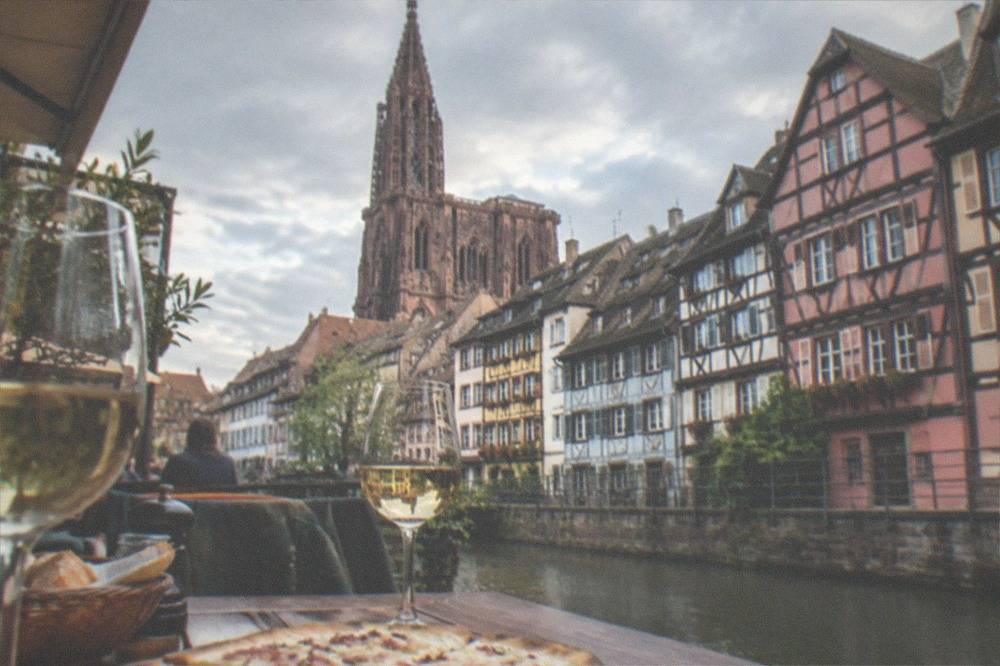
A single well-planned day in Strasbourg should cover the Grande Île, the island core listed by UNESCO for its historic fabric: the cathedral square, the Petite France quarter of former tanneries at the western tip, the Ponts Couverts and their covered bridges, and a wander along the canals that frame it all. Start at the cathedral, work outward toward the water, and leave museum interiors for a second visit. This is a city whose streets are the attraction.
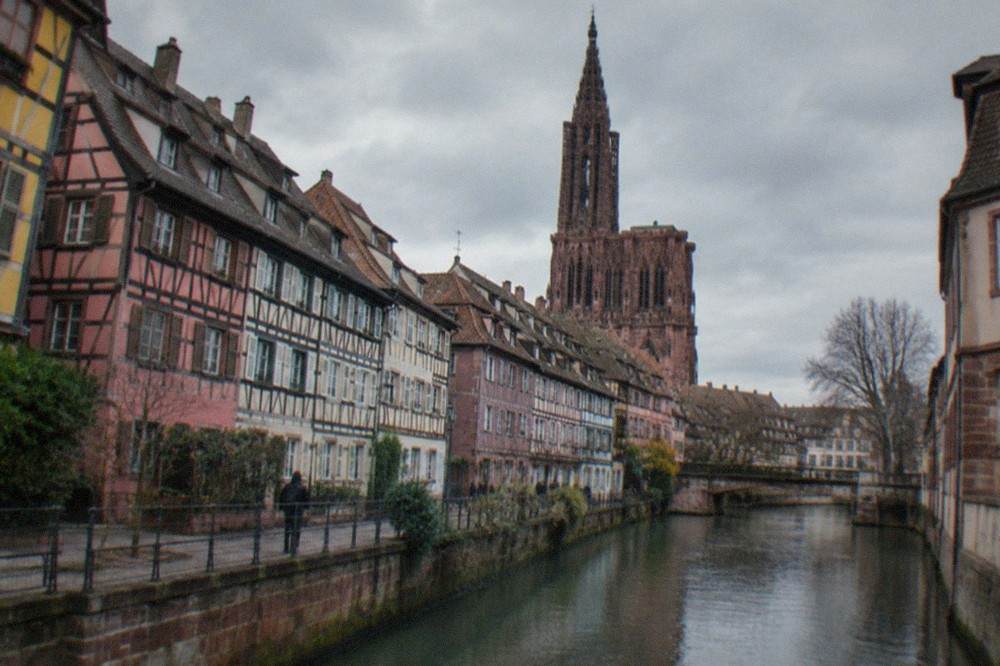
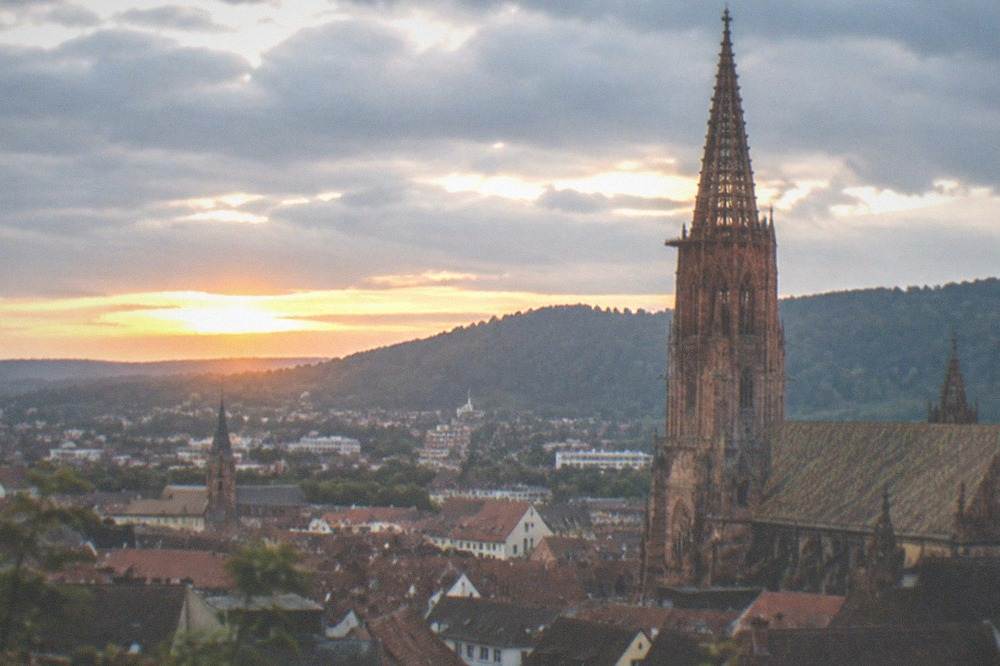
The cathedral square is the natural first stop, and not only because it is hard to miss. Strasbourg's cathedral of Notre-Dame is one of the great Gothic buildings of the Rhine world, built in the same warm red-Vosges sandstone family as Freiburg's Münster, and the two churches make an instructive pair for anyone who has just climbed, or looked up at, the Freiburg tower. The Münster's west tower stands 116 m, though visitors climb only to a gallery at 70 m, and its top gallery closes in winter; the Strasbourg tower is a separate climb with its own terms, so check the listing at the door rather than assuming the Freiburg pattern carries over. Around the square, the old quarter opens out in every direction, and the tourist office sits close by if you want a paper map as a backup.
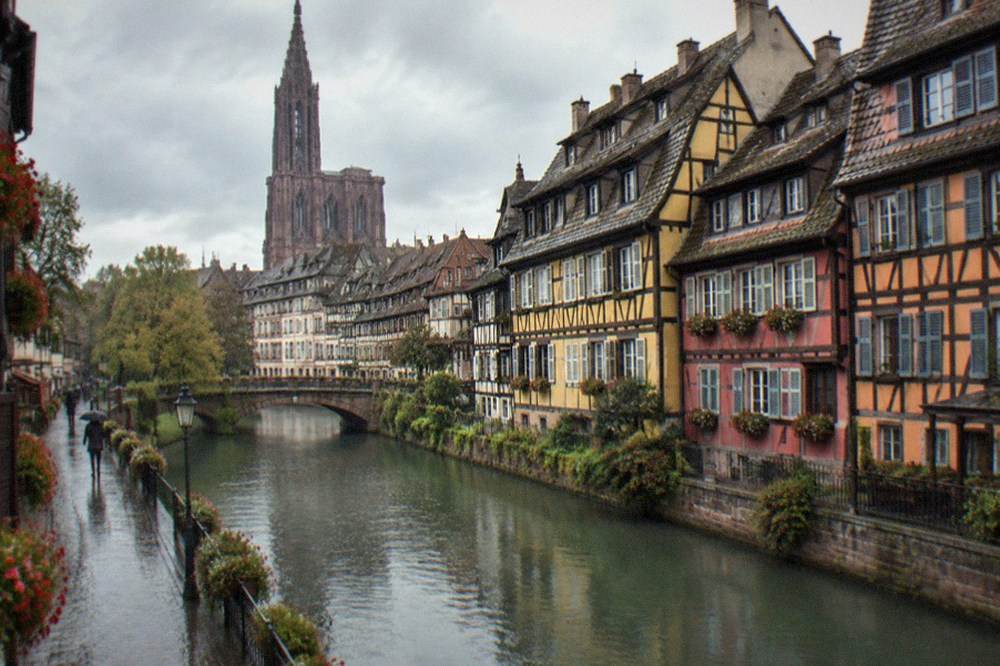
From the cathedral, the walk downhill toward the river leads into Petite France, the old tanners' and millers' quarter where the Ill river splits into channels. This is the postcard Strasbourg: black-and-white timber framing, geraniums, waterwheel remnants, terraces over the water. It is also the most crowded part of the city by a wide margin, so morning is noticeably calmer than mid-afternoon. Continuing west brings you to the Ponts Couverts, the fortified covered bridges with their three square towers, and the modern panoramic terrace beside them that looks back over the whole quarter. Barrage Vauban, the old defensive dam further along, offers the classic elevated view of the skyline from its roof terrace.
Lunch belongs somewhere in the old town, and the food section below covers what to order. Afterward, the day's remaining hours split naturally between two options: the riverside loop out to the European district along the Ill, or a boat trip through the canal locks. The flat-bottomed sightseeing boats, which this site does not sell and which you book on the spot, drift around the island through the old city defenses and are a sensible way to rest tired feet. Church interiors, the Alsatian museum and the astronomical clock inside the cathedral are all real rewards, but on a one-day visit they compete directly with simply walking the island, and walking wins.
If a structured introduction appeals more than self-direction, the same instinct works in Freiburg, and it is worth feeding before you travel rather than after. The Exciting City Tour with Sightseeing and History, about two hours and from $26, rated 4.4 across 118 reviews, is the walk this site most often recommends to visitors who want the Freiburg story told coherently, from the Münster through the old gates to the Bächle that run along the streets. Doing it before your Strasbourg day means both cities arrive with context, and you notice what the Rhine changed and what it did not.
Strasbourg, Colmar Or Basel: Choosing Your Day Trip
Strasbourg, Colmar and Basel are the three obvious day trips from Freiburg, and they answer different needs: Strasbourg for the big-city French experience and a UNESCO-listed old town, Colmar for a smaller, wine-country Alsatian mood, and Basel for Swiss culture and the Rhine. Strasbourg is the most complete of the three as a single-day city, Colmar the most romantic, Basel the easiest to reach. Choose by what you want the day to feel like.
The honest way to choose is by what you want the day to feel like rather than by any ranking. Strasbourg is a working capital with a parliament, a university and a major hospital, and its old town sits inside a modern French city, so the day includes real urban life and not just heritage streets. Colmar, covered in this site's Colmar guide, is smaller and more uniformly picturesque, a place of canals called La Petite Venise, wine-industry wealth and a town center you can cross on foot in half an hour. Basel is Swiss: a bigger city again, museums of international standing, the Rhine swimming culture in summer, and a different currency entirely, since Switzerland is not in the Eurozone even though Basel's airport terminal famously straddles the border.
| Strasbourg | Colmar | Basel | |
|---|---|---|---|
| Country | France | France | Switzerland |
| Language at the till | French, German widely heard | French, German widely heard | German |
| Currency | Euro | Euro | Swiss franc |
| Scale | Regional capital, big-city feel | Small wine town | Swiss cultural capital |
| Signature sights | Cathedral, Grande Île canals | La Petite Venise, old town | Rhine, old town, museums |
| Best for | A full urban French day | Romance and wine tasting | Museums and Swiss city life |
| Pairs well with | The Alsace wine route | Kaiserstuhl wine back in Germany | Basel airport arrivals |
For most Freiburg-based travelers the deciding factors are pace and appetite. If the group includes children, museum-lovers or people who tire of walking, Colmar's compactness wins; if the day is meant to feel like a proper city visit, Strasbourg does. And if the trip is really about wine, neither French city beats combining Strasbourg with the wine route villages south of it, or staying in Germany entirely with the Kaiserstuhl region on Freiburg's own doorstep.
Before locking any day in, this is also the natural moment to sort out what you want from your Freiburg time around it: Check availability on the two-hour city walk if a guided grounding in Freiburg itself is part of your plan.
Eating And Drinking In Strasbourg
Strasbourg's table is Alsatian, which means a German-French hybrid unknown in Freiburg: tarte flambée, the thin crème fraîche and bacon tart baked in seconds; choucroute garnie, sauerkraut stacked with sausages and pork; baeckeoffe, a slow meat and potato casserole; and dry Riesling or spicy Gewurztraminer from the surrounding vineyards. Restaurant prices in the old town are set for visitors, so expect the tourist premium and check the posted menus before sitting down rather than guessing.
Ordering is where the trip gets genuinely fun for anyone based in Freiburg, because the overlap is close enough to feel familiar and the differences are real. The Badische kitchen at home leans on spätzle, onion tart during the wine season and Black Forest ham; cross the Rhine and the same instincts arrive transformed, with the flammekueche of Alsace sitting somewhere between a pizza and a very thin quiche, traditionally shared and cut into strips. Winstubs, the Alsatian equivalent of the Badische Weinstube, are the places to seek out: small wood-paneled taverns with paper tablecloths, chalkboard menus and regional wines by the glass and carafe.
A practical warning about time: lunch service in provincial France starts around noon and winds down by early afternoon, and many kitchens close between lunch and dinner. A day tripper who lingers at the cathedral until three risks finding the winstub of their guidebook shut. Eat lunch on the French clock, treat the mid-afternoon as terrace, café or boulangerie time, and if you are staying for dinner, know that service begins later than a German evening. The tarte flambée, at least, is available almost everywhere at almost any hour, which is exactly why it is the reliable choice for a day visitor.
For wine, the logic of the region should push you toward grapes you already know from Baden but grown a few kilometers away: Alsace Riesling is drier and more mineral than many visitors expect, and Gewurztraminer is the local signature that has no real Badische equivalent. If the tasting bug bites properly, the right answer is not more hours in the city but a second day on the Alsace wine route, whose villages string south from Strasbourg toward Colmar. Travelers who prefer to keep the wine day on the German side of the border can pair it with this site's coverage of Baden wine instead.
Strasbourg's History And What It Shares With Freiburg
Strasbourg and Freiburg have spent their modern history being pulled by the same forces: both are Rhine-border cities whose region changed hands repeatedly between France and Germany, whose older buildings carry the fingerprints of both cultures, and whose present identities are built partly on reconciling that past. Every political cycle left marks in the streets. That shared, contested history is the deepest reason the two cities make such an instructive pair.
The half-timbered architecture that visitors photograph in Petite France is the visible layer of this story. Timber framing is a Germanic building tradition, and Strasbourg's old town wears it more densely than most German cities of the same size, because France preserved what it inherited even as the language changed around it. Freiburg's own old town, rebuilt faithfully after wartime air raids destroyed the center, is a German city's version of a comparable inheritance. Walking both in the same week is a short course in how the Upper Rhine's two banks kept trading the same materials back and forth.
The Second World War is the somber chapter, and it is one both cities now address directly rather than quietly. Freiburg's old town was almost entirely destroyed in an air raid late in the war and rebuilt; Strasbourg changed hands in the war's first year and its region was reannexed by Nazi Germany, with the consequences that followed for its Jewish community and for Alsatians conscripted into the German army. Strasbourg is today home to a major European institution dedicated to that history. For visitors who want to understand the Freiburg side before crossing the river, this site's coverage of Freiburg's history is the starting point.
On the ground, one guided option in the German city speaks directly to this shared chapter: the Guided Walking Tour on National Socialism, World Wars & Dictatorship, about an hour and from $17. It is a new listing with only 2 reviews so far, too few for this site to make any star claim about it, and honesty about that matters; what can be said is that the format exists, the price is low, and the subject is one the city itself takes seriously. Paired with a Strasbourg day, it turns a pleasant Rhine excursion into something with an actual through-line.
Evenings Back In Freiburg And The Best Time To Go
The best time to take this Freiburg-based Strasbourg day trip is April to June or September to October, when weather and crowds are balanced; May through September are the comfortable walking months, July and August the busiest and warmest, and December brings Christmas markets on both sides of the Rhine. Expect Freiburg's July mean of 20.1°C versus 2.5°C in January, with rain possible in every month.
| Month | Mean temp (°C) | Rain (mm) | Sun (hours) |
|---|---|---|---|
| January | 2.5 | 48.6 | 64.7 |
| February | 3.5 | 49.1 | 91.8 |
| March | 7.0 | 54.3 | 146.8 |
| April | 10.8 | 63.8 | 182.2 |
| May | 14.9 | 103.4 | 206.8 |
| June | 18.3 | 89.8 | 232.7 |
| July | 20.1 | 92.2 | 252.2 |
| August | 19.7 | 83.3 | 234.4 |
| September | 15.4 | 77.4 | 176.2 |
| October | 10.9 | 78.5 | 116.2 |
| November | 6.1 | 66.2 | 66.6 |
| December | 3.4 | 66.9 | 56.3 |
Those numbers come from the official 1991-2020 climate normals for the Freiburg station and describe the German end of the journey, but the Upper Rhine plain is a single climate zone, and Strasbourg's weather runs broadly in step with it. May is technically the wettest month at 103.4 mm of rain, which surprises visitors who assume summer is the risky season; the practical reading is that rain gear belongs in the day pack in every month, and the summer peak of 252.2 sun hours in July is real but comes with the year's busiest terraces and thinnest winstub tables. Freiburg itself is one of Germany's warmest and sunniest cities, and that pleasant fact transfers comfortably to the whole valley.
December deserves its own paragraph because it is the season many travelers specifically come for. Strasbourg runs one of Europe's classic Christmas markets across its old town, and it pairs naturally with Freiburg's own market, whose 2026 edition fills the Altstadt locations listed above. A December day trip that takes in one market in each city is one of the great winter itineraries of the region; the trade-offs are early darkness, cold that averages 3.4°C in Freiburg in December, and crowds that peak on weekends. This site's Freiburg Christmas market guide covers the German half of that plan in detail.
Whenever you go, the day ends back in Freiburg more often than not, and the German city has a proper evening culture to land in. For a group that wants the day to finish with something staged rather than merely eaten, one option stands out on this site's roster: the Drag Queen Show Walk with Betty BBQ, about an hour and a quarter of comedy and city lore rolled together, from $40 and rated 4.6 across 699 reviews, a pool large enough that the rating genuinely means something. An afternoon back from Strasbourg, dinner in the Altstadt, and an evening show is a full day by any standard, and a very Freiburg one.
The last thing to settle before you go is simply the order of the day. Leave early, eat lunch on the French clock, walk the island until your feet complain, and keep the return journey loose enough that a delayed train does not unravel the evening. Strasbourg rewards the unhurried version of a day trip, and it will still be there on the next visit.
Common Questions About A Strasbourg Day Trip
Is Strasbourg a good day trip from Freiburg?
Yes, and it is one of the few French cities that genuinely works as one. The connection along the Rhine valley is short, the historic core is compact and walkable, and the contrast with Freiburg, in language, food and architecture, is exactly what makes a day trip worthwhile. Plan a full day rather than a half, since lunch on the French clock and an afternoon of walking both need room.
How do I get from Freiburg to Strasbourg?
Take the tram or bus to Freiburg Hbf on a cheap RVF zone 1 ticket, €3.00 for a single adult, and then the train north toward the French border. Note that station modernization work at Freiburg Hbf began in September 2026, so allow extra time and check platform access before you travel. No German transport ticket, including the RVF Welcomekarte, covers any part of the journey in France.
Is a day enough for Strasbourg?
A day covers the heart of it: the cathedral and its square, the Petite France quarter, the Ponts Couverts and a canal-side wander, with a proper Alsatian lunch in between. What a day does not cover is the museums, the European district in any depth, or the wine route villages to the south. Treat the first visit as the island walk and plan a return if the city hooks you.
Strasbourg or Colmar: which is the better day trip from Freiburg?
Strasbourg for a full city experience, Colmar for a smaller, prettier, wine-country mood. Strasbourg has the cathedral, the UNESCO-listed island core and real big-city energy; Colmar is crossed on foot in half a day and pairs beautifully with a tasting stop. If it is your only French day, most travelers enjoy Strasbourg more; if you are combining with the Alsace wine route, Colmar is the easier base.
What should I eat in Strasbourg?
Tarte flambée first, the thin Alsatian tart of crème fraîche, onions and bacon that every winstub serves. Beyond that, choucroute garnie and baeckeoffe are the two classic hearty dishes, and a dry Riesling or a Gewurztraminer from the surrounding vineyards is the local pour. Eat lunch on the French clock, around noon, because kitchens commonly close in the afternoon before reopening for a late dinner service.
When is the best time to visit Strasbourg from Freiburg?
April to June and September to October give the best mix of walkable weather and thinner crowds, based on Freiburg's official climate normals, which describe the whole Upper Rhine plain. July and August are the warmest and sunniest months but also the busiest. December is the special case: both cities run celebrated Christmas markets, and a December day trip pairing the two is one of the region's great winter itineraries, just dress for 3.4°C means and early darkness.