Alsace Wine Route From Freiburg: A Practical Day Trip Guide
The Alsace wine route sits just across the Rhine from Freiburg, close enough for a relaxed day trip and different enough in glass, plate and village architecture to feel like a proper border crossing.
Short answer
The route lies just west of the Rhine, reachable from Freiburg by rail via Basel or by car via the Breisach crossing. The RVF Welcomekarte covers the German side at €27.00 for 3 days, a Deutschlandticket is €63.00 per month, and July and August are the sunniest months in the regional record.
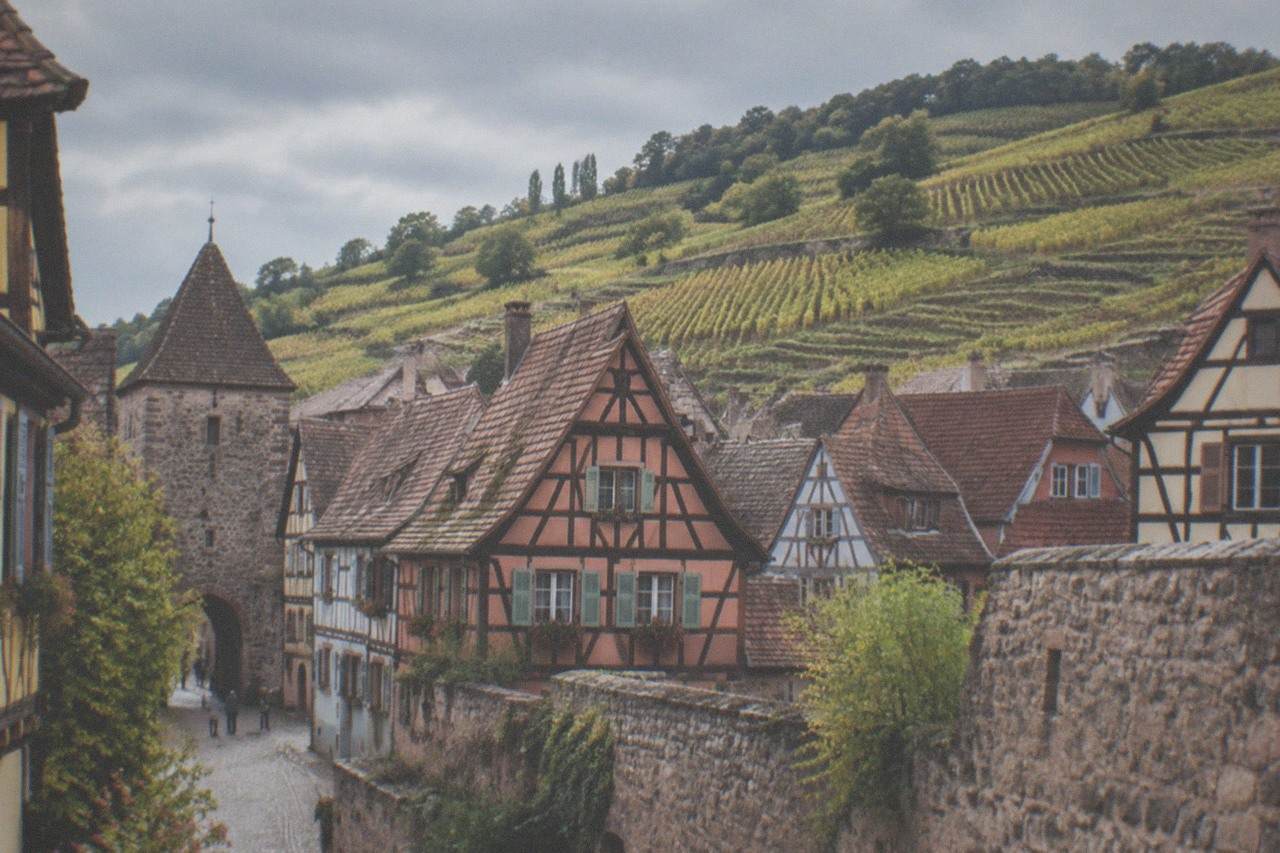
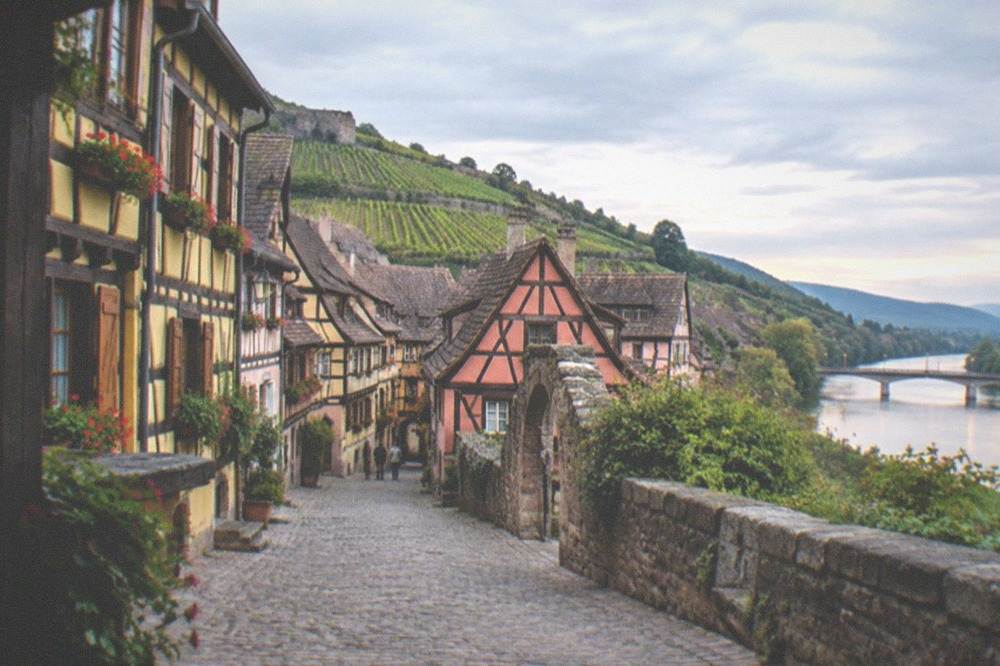
The Alsace wine route is the string of wine villages that runs along the eastern foot of the Vosges, and from Freiburg it is a border hop rather than an expedition. You cross the Rhine, and suddenly the grape varieties change, the bottles change, and the half-timbered houses change from Black Forest solid to Alsatian ornate. That contrast is the whole point of the trip for a visitor based in Freiburg, a city whose own Baden wine tradition is covered in our Baden wine basics guide.
What the route is not, from Freiburg, is something you conquer in a day. The full Alsatian ribbon is long, and the honest approach for a Freiburg visitor is to pick one anchor town, two or three villages around it, and a single lunch stop, then leave the rest for a second trip. This guide is built around that idea: what the route is, how to reach it with the transport that is actually documented, which towns reward the effort, when to go, what it costs on the German side, and how the events calendar on both sides of the river can make the timing work.
What The Alsace Wine Route Actually Is
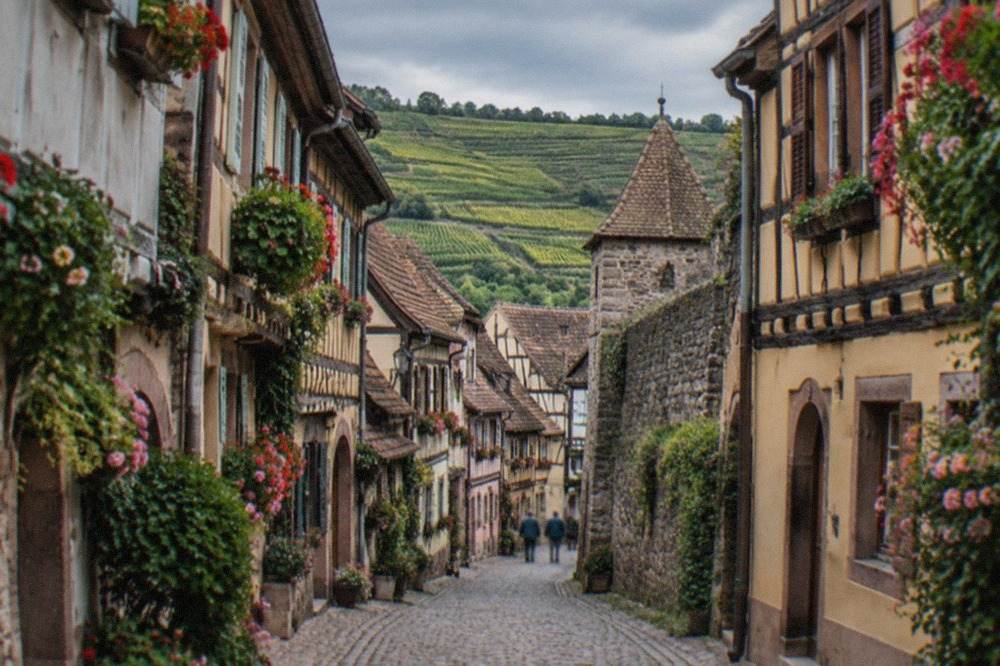
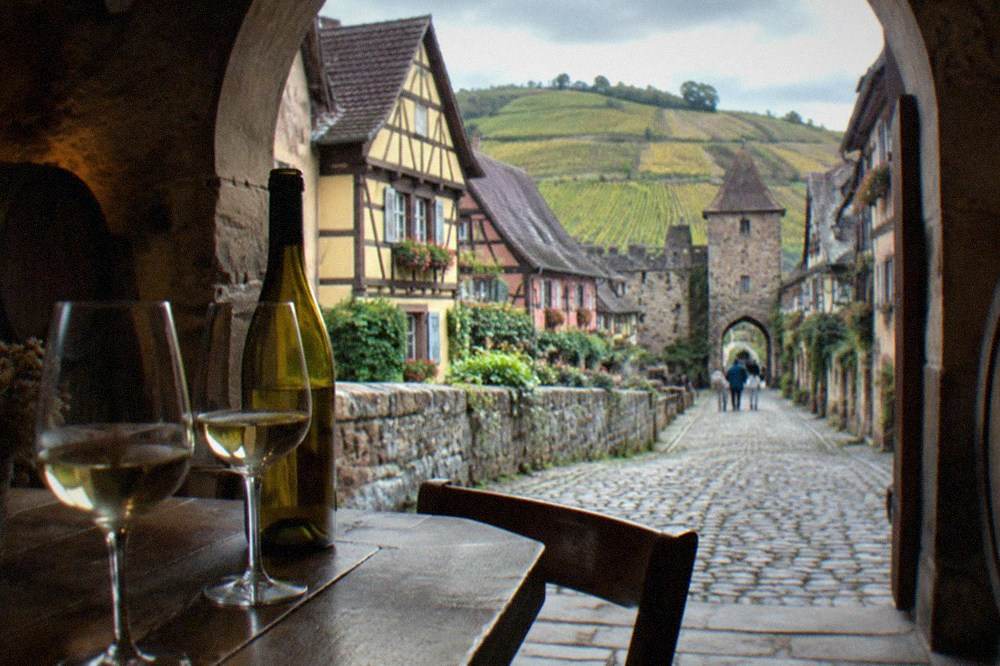
It is a signposted tourist route along the Alsatian wine villages at the base of the Vosges, running roughly north to south between the plains and the vineyards west of the Rhine, and it exists for exactly the kind of visitor Freiburg attracts: someone with a base in a walkable city, an interest in wine, and a willingness to spend a day moving slowly between cellar doors. The villages are compact, the cellars are family operations, and the pace is set by lunch, not by a museum schedule.
For a Freiburg visitor the region splits naturally into two ideas. In the south, around Colmar, the route is dense and the villages are small and famously photogenic; our Colmar guide covers the town that most travelers use as the region's hub. In the north, toward Strasbourg, the route becomes sparser and more urban at its edges; the Strasbourg guide handles that end if your day trip stretches into an overnight.
The contrast with the German side is part of the pleasure. Baden and Alsace share a border and a climate, but not a cellar tradition: Alsatian bottles lean toward aromatic whites and single-variety labeling, Baden leans toward its own whites and the Spätburgunder that thrives on the Kaiserstuhl, the volcanic hill covered in our Kaiserstuhl guide. Tasting your way across both in the same week is one of the quiet advantages of staying in Freiburg.
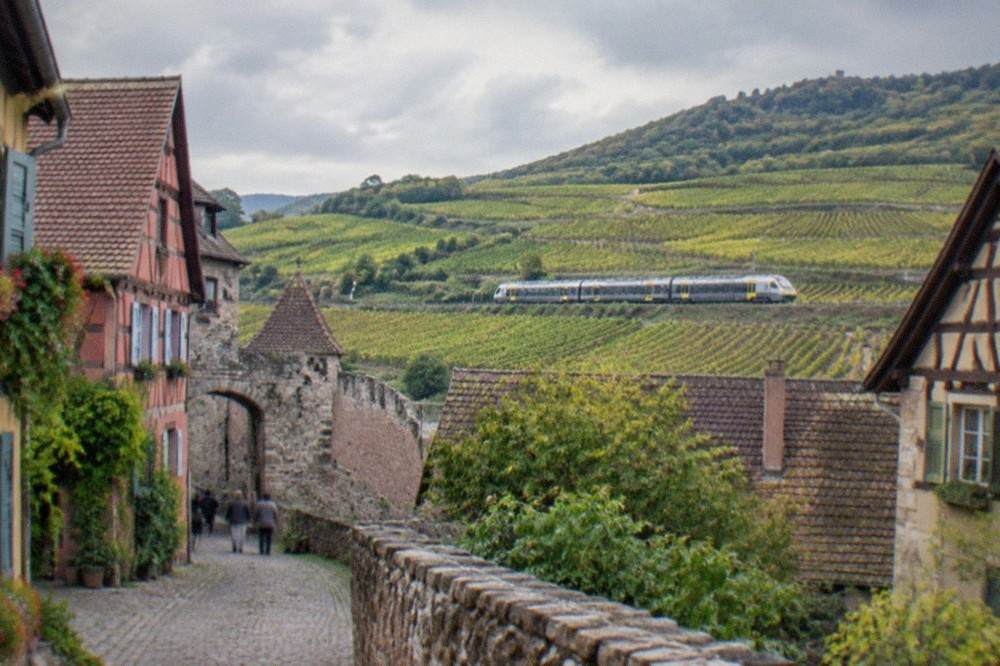
Practically, the route rewards drivers least in high summer and rewards rail visitors year-round, because the anchor towns are stations and the villages between them are often a short taxi or bus hop. If you plan to drive, note that the crossing points matter: Freiburg sits opposite the Breisach and Basel ends of the region, and where you cross decides which end of the route you meet first.
How To Get There From Freiburg
Rail is the documented, low-friction option: a fast train runs Freiburg to Basel SBB, from where French regional trains continue to the Alsatian towns; the fare side on German soil is a single RVF zone system, with a day ticket at €10.90 for 2 zones and the 3-day Welcomekarte at €27.00. The ICE time to Basel is reported at roughly 35 to 50 minutes but is not independently confirmed against the live timetable, so treat it as a planning figure and check the current schedule before you commit to a lunch reservation.
The fare structure on the German side is straightforward. RVF's published tariff lists a zone 1 single at €3.00 for adults, €2.70 by smartphone, and day tickets at €7.20 for 1 zone, €10.90 for 2 zones and €14.30 for 3 zones. For a visitor doing several days of local exploring around the trip, the RVF Welcomekarte is the product to know: 3 days, €27.00 for adults, valid on buses and trains and including a ride on the Schauinslandbahn, which makes it a legitimate companion to a Schauinsland day trip on the day before you cross the river.
| Option | What it covers | Cost | Notes |
|---|---|---|---|
| RVF single, zone 1 | One tram or bus ride in central Freiburg | €3.00 adult, €2.70 by smartphone | Child single €1.80 |
| RVF day ticket, 2 zones | A day of local rail and tram around Freiburg | €10.90 | Good for reaching Breisach on the German bank |
| RVF Welcomekarte | 3 days of regional buses and trains plus the Schauinslandbahn | €27.00 adult | Includes a Kulturbonus for culture venues |
| Deutschlandticket | A full month of German local and regional transport | €63.00 | Valid to the border only, not on French legs |
Two caveats matter. First, none of the German cards cover a wheel turning in France, so the Basel-to-Colmar or Strasbourg-to-village legs are separate tickets bought on the French side. Second, engineering works on the Rheintalbahn between Freiburg and Basel have produced recurring weekend closures in 2026, with replacement buses between Freiburg and Basel for some early-October dates; these are temporary but real, and they can turn a short connection into a long one on exactly the kind of Saturday a wine route trip wants. Check the railway's live travel information for your date.
If you drive, the crossing at Breisach is the natural one for the southern route, and Breisach itself, a cathedral town on a hill over the Rhine described in our Breisach guide, is a sensible first stop for a coffee and a view before you disappear into the French lanes. The southern approach via Basel suits travelers heading to Colmar directly.
Freiburg's own station is itself mid-modernization: work on lifts, platforms and lighting at the Hauptbahnhof began in September 2026 and runs until around the end of 2028, per Deutsche Bahn's project announcement, with the underpass initially fully closed. The trains keep running, but allow a few extra minutes to find the right platform, and note the station details in our Freiburg train station guide.
For travelers weighing whether a guided day removes the timetable stress entirely, the comparison below is the honest shortcut: a guided wine experience keeps you on the German side, but it takes every planning decision off your plate. For some visitors that trade is exactly right, and this site's picks for a wine-and-walk day in Freiburg are a good baseline to compare against.
Which Towns To Build The Day Around
Build the day around one anchor town, Colmar for the classic southern route or Strasbourg for the northern end, and add no more than two villages beside it, because the route rewards depth over mileage: two tastings, one unhurried lunch and a village walk make a better day than five stops at a sprint. Colmar is the hub most Freiburg visitors choose: it is walkable, its old center is compact, and it sits within a short hop of a cluster of wine villages, which is why our Freiburg, Alsace and Basel triangle guide treats it as the fulcrum of the whole cross-border region.
The village strategy matters more than the town strategy. Between two Alsatian cellar towns, the temptation is to add a third, and the result is a day spent watching platforms. Choose villages that pair naturally with your anchor, plan one proper tasting stop mid-morning, one long lunch, and one final glass before the return train, and leave the schedule loose enough that a cellar conversation can run long. Tasting practices vary from cellar to cellar; some pour free for buyers, some charge a modest fee waived with a purchase, so ask at the door rather than assuming.
For visitors who prefer to stay on the German side of the line but still want the wine-country day, the Kaiserstuhl and the Markgräflerland around Staufen offer an equivalent rhythm of cellar doors and small towns without a border crossing at all. Staufen, covered in our Staufen guide, is an easy car or rail day from Freiburg and its wine festival is on the events table further down this page. The comparison is worth making honestly: Alsace gives you the French village look and the Alsatian bottle; Baden gives you the shorter journey and your own timetable.
| Plan | Anchor | Character | Best for |
|---|---|---|---|
| Southern classic | Colmar | Dense cluster of small wine villages, canal quarter, museums | First-time visitors, photographers |
| Northern end | Strasbourg | City weight, cathedral, one or two nearby villages | Travelers who want a city day with a cellar detour |
| German mirror | Kaiserstuhl and Staufen | Volcanic hills, Baden cellar doors, no border formalities | Short days, last-minute plans, train-only travel |
One planning note that is easy to miss: the Alsatian weekend is not the German weekend. Cellar doors in small villages keep irregular hours and many close for a proper Sunday, so a Saturday plan with a Sunday fallback is safer than a Sunday-only plan. Midweek visits see fewer fellow tasters and more of the winemaker's actual attention.
If the evening back in Freiburg still has room in it, the city's nightlife is documented separately in our Freiburg nightlife guide, and the summer season around the Münsterplatz and the Augustinerplatz keeps the center lively late.
When To Go: The Seasonal Case
July and August are the sunniest months on record for the Freiburg station, at 252.2 and 234.4 sun hours respectively, with mean temperatures of 20.1°C and 19.7°C, which makes them the statistically safest bets for a route built around long light and outdoor tasting courtyards. The DWD 1991-2020 normals for Freiburg, the nearest long-run record for the cross-border region, also show why September has quietly become the connoisseur's month: the heat drops to a 15.4°C mean while the sun holds at 176.2 hours and the vines carry ripe fruit.
| Month | Mean temperature | Sunshine hours | Rainfall | Frost days |
|---|---|---|---|---|
| April | 10.8°C | 182.2 h | 63.8 mm | 2.2 |
| May | 14.9°C | 206.8 h | 103.4 mm | 0.1 |
| June | 18.3°C | 232.7 h | 89.8 mm | 0 |
| July | 20.1°C | 252.2 h | 92.2 mm | 0 |
| August | 19.7°C | 234.4 h | 83.3 mm | 0 |
| September | 15.4°C | 176.2 h | 77.4 mm | 0 |
| October | 10.9°C | 116.2 h | 78.5 mm | 1.7 |
May deserves its own warning. The same normals that crown July the sunniest month show May as the rainiest of the warm half of the year at 103.4 mm, and a wet May afternoon on a village terrace is a different day from the same terrace in June. The trade-off is that May is also when the vines are fresh and green and the crowds have not arrived, so it suits travelers who pack for weather and plan indoor fallbacks, the kind of day our rainy day in Freiburg guide anticipates for the home base.
Harvest time, roughly late September into October, is when the route feels most like its working self: cellar doors are busy, tastings are shorter, and the villages smell of crush. The December counter-season is a different product entirely, built around Christmas markets rather than vineyards; the Freiburg market's 2026 dates run 19 November to 23 December, and the cross-border market circuit is covered in our Freiburg Christmas market guide.
What The Trip Costs On The German Side
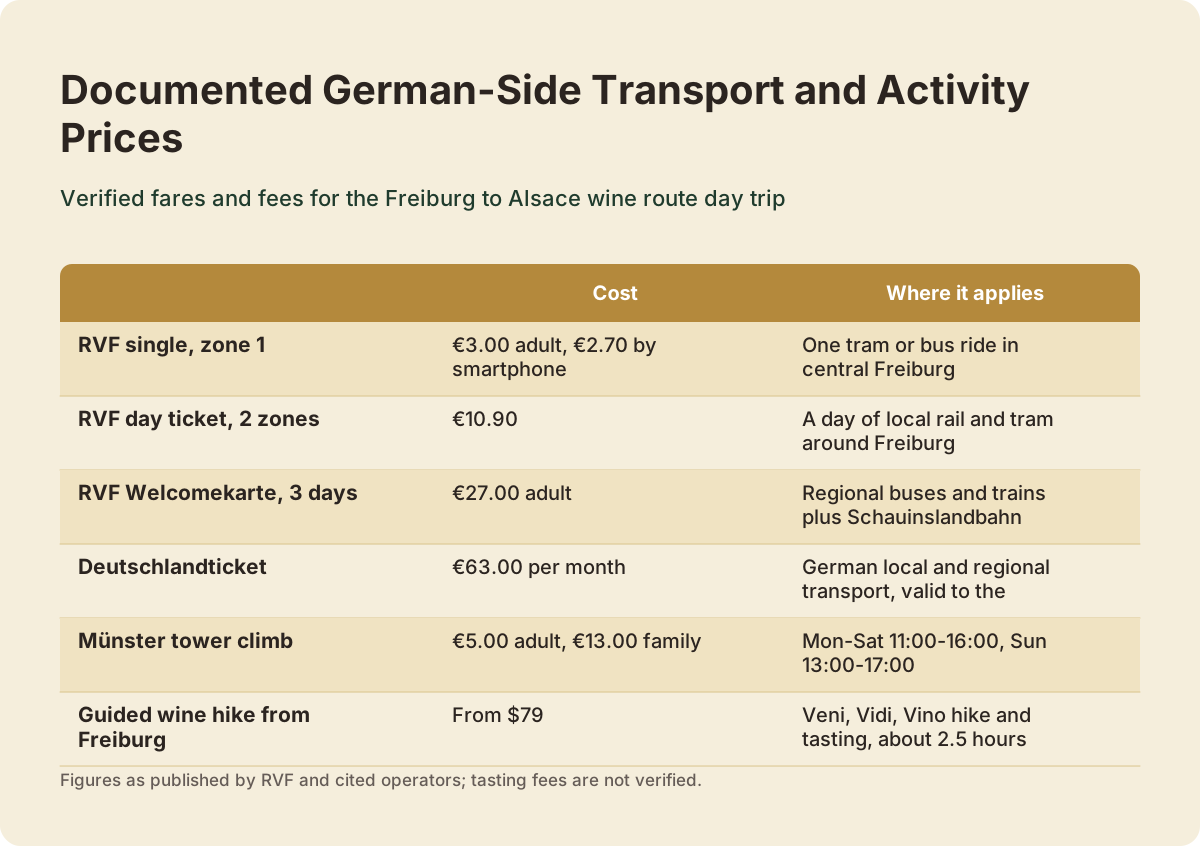
Count on three cost layers: German-side transport, which runs €10.90 for a 2-zone day ticket or €27.00 for the 3-day Welcomekarte, French-side tickets bought separately, and cellar spending, where the honest advice is to plan a range and ask at the door rather than assume a fixed tasting fee. This site's policy is to print only figures that are documented, and tasting fees on the route are not in the verified facts pack, so the table below sticks to what is actually confirmed.
| Cost layer | Documented figure | Where it applies |
|---|---|---|
| RVF day ticket, 2 zones | €10.90 | Freiburg to Breisach and local rail |
| RVF Welcomekarte, 3 days | €27.00 | Regional buses and trains, includes Schauinslandbahn |
| Deutschlandticket | €63.00 per month | All German local and regional transport, valid to the border |
| Münster tower climb, if you start the day in Freiburg | €5.00 adult, €13.00 family | Mon-Sat 11:00-16:00, Sun 13:00-17:00 |
| Guided wine hike from Freiburg | From $79 | Veni, Vidi, Vino hike and tasting, about 2.5 hours |
The overnight-tax question sometimes surprises cross-border planners. Freiburg's levy is an Übernachtungsteuer of 5% of the net room price, not a Kurtaxe, and it applies to private stays since 2014 and business stays since 1 July 2023, with under-18s exempt; the city's own overnight tax page states the terms. If you convert the day trip into a night on the French side instead, that particular Freiburg line item simply does not arise.
For travelers who want the wine-country experience without the border logistics at all, the German-side guided options are competitive on price and several are among the most-reviewed products on this site's roster. The wine hike below pairs a walk with a tasting and holds a 4.4 rating across 167 reviews, from $79, a useful benchmark for what a guided half-day of walking and tasting costs when you stay on the eastern bank.
A cheaper self-guided benchmark exists too: a scavenger-hunt walking tour of Freiburg, rated 4.9 across 15 reviews, runs from $45 and turns a city walk into a structured game. It is not a wine product, but for a group traveling with mixed interests, one person on a tasting tour and another on a self-paced city puzzle is a genuinely workable split.
Wine Events Worth Timing The Trip Around
The cross-border festival calendar gives you fixed dates to aim at: Freiburg's own Weinfest returns 1 to 6 July 2027 after a record 2026 edition, the Markgräfler Weinfest in Staufen runs 31 July to 3 August 2026, and the KaiserHerbst tasting series spans about 10 October to 8 November 2026. Anchoring a visit to a festival means the wine finds you, rather than you hunting cellar doors that happen to be open.
| Event | Dates | Place | Notes |
|---|---|---|---|
| Freiburger Weinfest | 1-6 July 2027 | Münsterplatz, Freiburg | About 110,000 guests attended the 2026 edition; free entry |
| Markgräfler Weinfest | 31 July-3 August 2026 | Staufen | Regional wineries, easy rail or car day from Freiburg |
| Weinfest Breisach, Kaiserstuhl and Tuniberg | 28-31 August 2026 | Breisach | Sits right on the Rhine crossing used for the southern route |
| KaiserHerbst series | About 10 October-8 November 2026 | Kaiserstuhl villages | Tastings including Lagenverkostung and themed pours |
The Breisach festival is the one with real trip-planning value, because Breisach is the German end of the river crossing that puts you on the Alsace route's doorstep. A late-August plan that starts at the festival, crosses the Rhine, and finishes with a night in Colmar stitches both wine regions into a single arc. The events listing is also worth checking against our Freiburg festivals guide for the city-side calendar.
A Sample Day, Hour By Hour
Start with an early train from Freiburg, cross at Breisach or Basel depending on your anchor, taste mid-morning before the lunch crowd, eat long at midday, take one final cellar stop in the afternoon, and return before the evening engineering works bite. The shape matters more than the clock: two tastings, one unhurried lunch and one walk is a full day done well, while three tastings and two villages is a day done at a sprint.
| Segment | Plan | Planning note |
|---|---|---|
| Early | Train or car from Freiburg toward the crossing | Allow extra minutes at the Hauptbahnhof during the modernization works |
| Mid-morning | First tasting in or near the anchor town | Cellar hours vary; ask rather than assume |
| Midday | Long lunch, Alsatian table | Reserve ahead in July and August |
| Afternoon | One village walk and a final glass | Keep the return leg unhurried |
| Evening | Back in Freiburg for dinner or a nightcap | Münsterplatz and Augustinerplatz stay lively in season |
Build slack into the return. The Rheintalbahn closures described earlier hit weekends hardest, and a delayed evening return with an unreserved connection is the difference between a good day and a stressful one. If the day runs long, the fallback options on the German side are covered in our one day in Freiburg guide, which works as a template for salvaging a late arrival with an evening walk through the old town.
Freiburg Tours For The Rest Of Your Stay
A cross-border wine day pairs well with a lighter, city-based product on the days around it: the dramatized history walks from $17 and the red light district tour from $26, rated 4.2 across 22 reviews, are short evening slots that leave the daytime free. Mixing one heavy planning day with several easy ones is the pattern that keeps a Freiburg stay from becoming an itinerary marathon.
The red light district walk is this site's related pick for this guide not because it is a wine product, but because it occupies exactly the evening slot a wine-route day leaves empty: about 2 hours, from $26, with a 4.2 rating across 22 reviews. It covers the city's adult-district history with the same documentary tone as the rest of the roster.
For families or groups who want the evening to stay lighter still, the dramatized options are the strongest-reviewed products in the city category. The Guided City Tours with Actors hold 4.9 across 497 reviews from $17, and the classic Gässle and Bächle walk holds 4.7 across 3,187 reviews, also from $17, a reminder that the biggest review pools in Freiburg sit in the inexpensive city-walk tier rather than the specialty tours.
| Tour | Length | Rating | Price |
|---|---|---|---|
| Gässle, Bächle and More City Tour | About 1.5 hours | 4.7 across 3,187 reviews | From $17 |
| Guided City Tours with Actors | About 1.5 hours | 4.9 across 497 reviews | From $17 |
| Veni, Vidi, Vino wine hike and tasting | About 2.5 hours | 4.4 across 167 reviews | From $79 |
| Red Light District City Tour | About 2 hours | 4.2 across 22 reviews | From $26 |
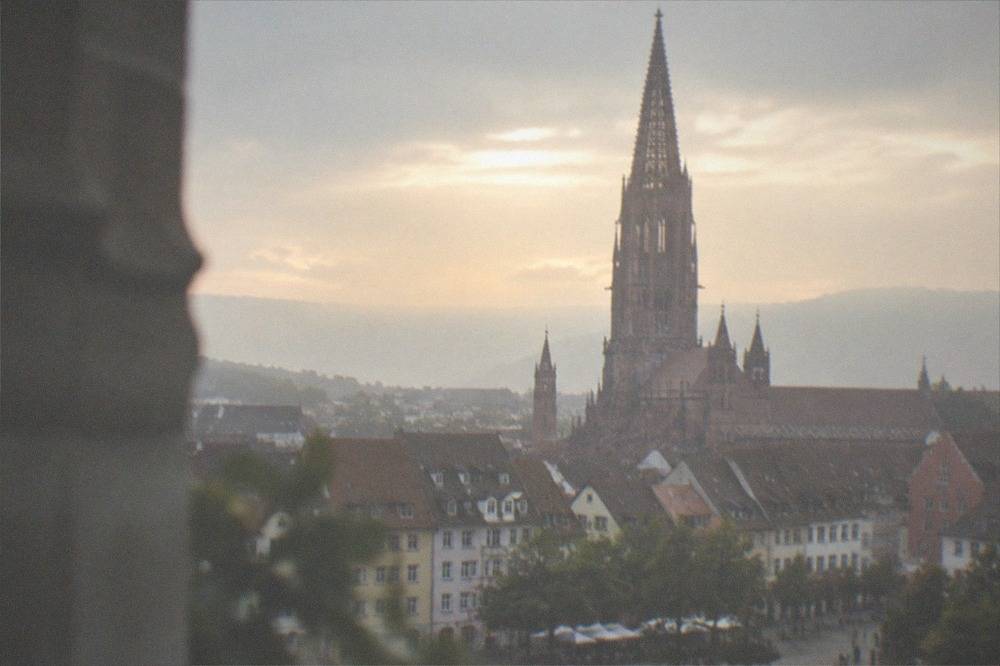
Whatever the shape of the stay, the underlying logic of this site's planning advice is the same: Freiburg Travel Guide treats the city as the base and the wine regions on both banks as its pantry, and the best trips alternate one ambitious day with one that asks nothing but a glass and a bench. The Alsace wine route earns its ambitious slot. Crossing back over the Rhine at dusk with Alsatian bottles in the bag and the Black Forest skyline ahead is one of the region's better feelings, and it costs less planning than most visitors expect.
If a guided structure still appeals after weighing the timetable, the three formats below cover the spread: a themed city walk, a wine hike with tasting, and a self-guided game for independent travelers.
Common Questions About The Alsace Wine Route
How do I get from Freiburg to the Alsace wine route without a car?
Take a train from Freiburg toward Basel or Breisach and continue on the French side from there. A 2-zone RVF day ticket at €10.90 covers the German leg toward Breisach; the French legs are separate tickets. Check the live timetable before traveling, as Rheintalbahn engineering works have replaced some trains with buses on 2026 weekends.
Which towns should I visit on the Alsace wine route from Freiburg?
Anchor the day on one town, Colmar for the southern route or Strasbourg for the northern end, and add no more than two nearby villages. Depth beats mileage on this route: one mid-morning tasting, a long lunch and a final glass make a better day than a sprint through five villages.
When is the best time of year for the Alsace wine route?
July and August are the sunniest months in the regional record, with 252.2 and 234.4 sun hours and means of 20.1°C and 19.7°C. September offers riper vines, a 15.4°C mean and 176.2 sun hours with fewer crowds. May is the rainiest warm month at 103.4 mm, so pack a fallback plan.
Is a German transport card like the Welcomekarte valid in Alsace?
No. RVF tickets, the Welcomekarte and the €63.00-per-month Deutschlandticket cover German transport up to the border only. French legs need separate French tickets. The Welcomekarte, €27.00 for 3 days, does include the Schauinslandbahn, which makes it useful for the German side of your stay.
Can I do the Alsace wine route as a guided tour from Freiburg?
The guided wine experiences bookable through this site run on the German side, notably the Veni, Vidi, Vino wine hike and tasting, about 2.5 hours, from $79, rated 4.4 across 167 reviews. For Alsace itself, independent travel with one anchor town remains the standard approach.