Basel Day Trip From Freiburg: The Practical Guide
Basel sits close enough to Freiburg that a day trip needs almost no planning, and far enough into Switzerland that the plan you do make, trains, tickets and timing, decides how the day feels.
Short answer
Basel is the easiest international day trip from Freiburg: a direct regional train crosses the border with no change, and recent reporting puts the fastest Basel SBB connections at roughly 35-50 minutes. Go early, buy the right tariff ticket before boarding, and keep Swiss francs in mind once you arrive.
Basel is the one foreign city most Freiburg visitors can reach before lunch without ever changing trains. The Rhine, the old town, the Minster and a dense cluster of museums all sit within a short walk of Basel SBB, and the border crossing is a non-event: regional trains roll through without stopping for checks in ordinary circumstances. That ease is also the trap. A day trip that starts late, buys the wrong ticket or ignores the current rail works between Freiburg and Basel can burn two hours of a twelve-hour window. This guide lays out the practical decisions, and it sticks to figures that are actually verified: the German-side fares and card options are documented, the Swiss side is treated honestly as a separate tariff zone, and everything time-sensitive is flagged as such.
Why Basel Works As A Day Trip From Freiburg
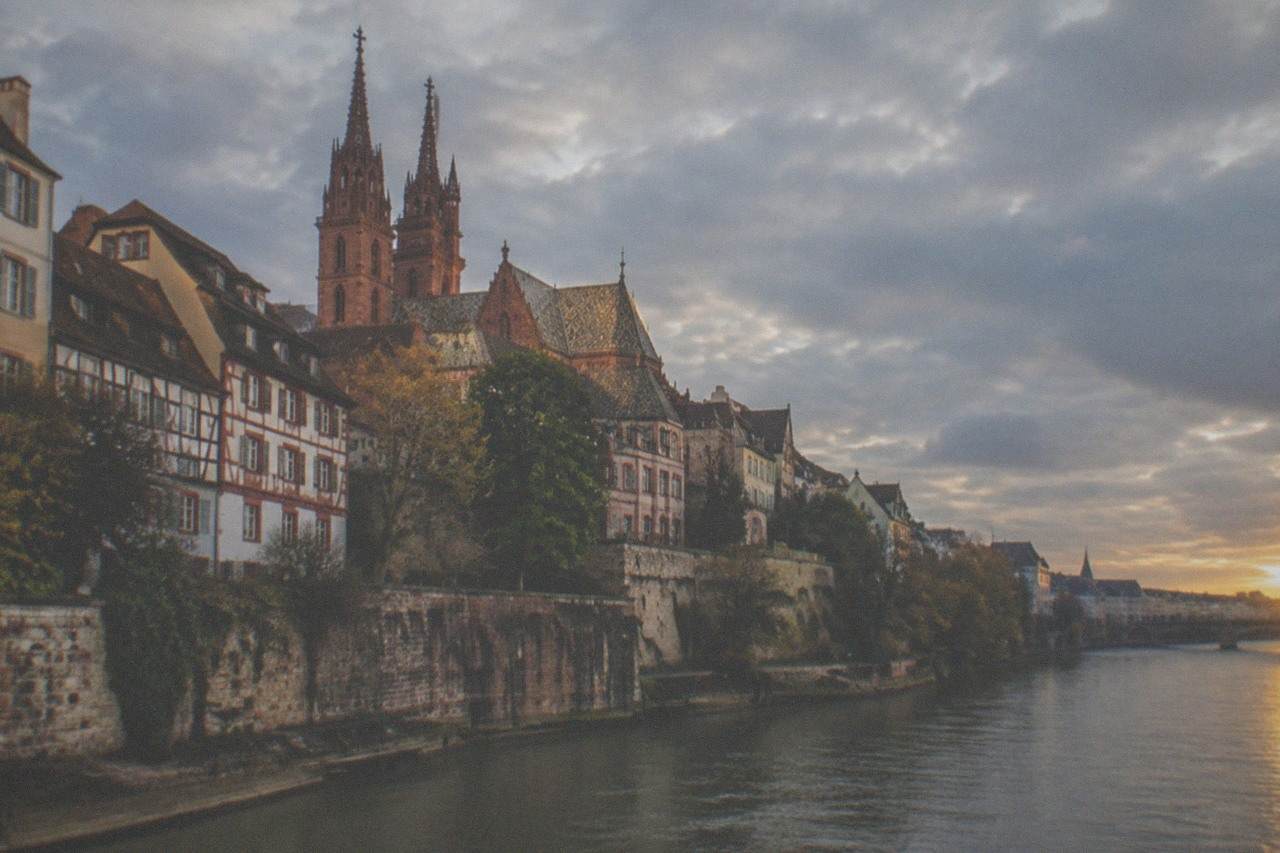
Basel is close, walkable at the arrival end, and different enough from Freiburg to feel like a real border crossing rather than a suburb with another flag. The old town clusters around the Rhine bend, the Minster and the market square, so a first visit needs no internal transit at all, and the contrast with Freiburg's Bächle-and-gates scale is the whole point of going.
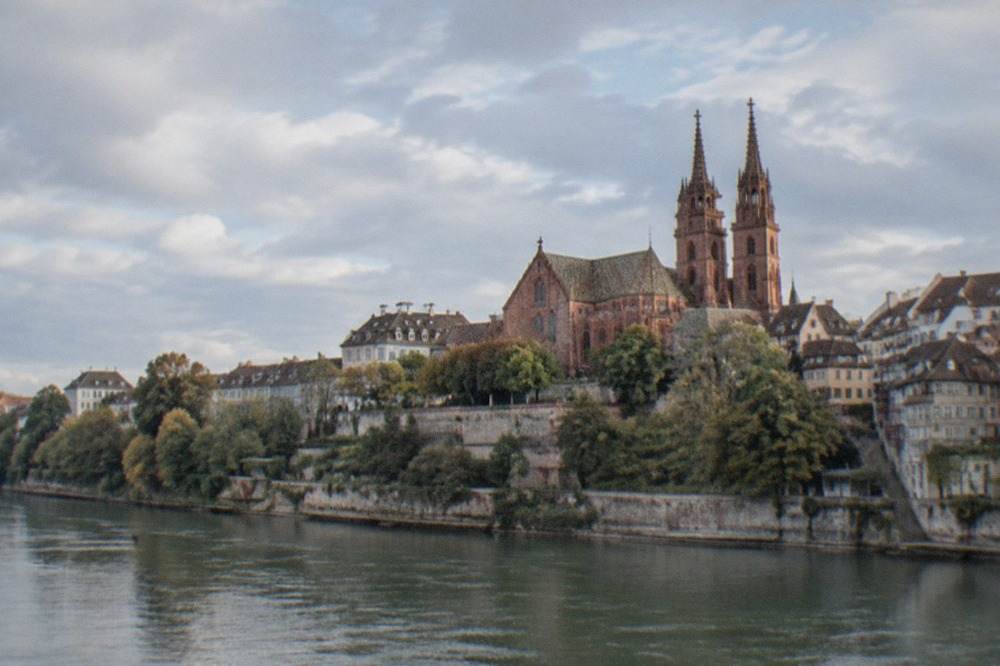
The geography explains the popularity. Freiburg sits in the Breisgau a short run north of the Swiss border, and Basel is the first substantial Swiss city on the corridor, connected to Freiburg by the Rheintalbahn, the same line that carries regional and long-distance trains toward Karlsruhe and beyond. For a visitor based in Freiburg, that means Basel competes not with Zurich or Bern but with Black Forest towns like Titisee or Staufen, and it wins on a different axis: those trips deepen the German side of the border, while Basel adds a second country, a second currency zone and a genuinely different old town in barely more travel time. The Freiburg And Alsace Basel Triangle itinerary exists precisely because Freiburg, Basel and the Alsatian wine country form a tight triangle that car-free travelers can work through by train.
There is also a mood difference worth naming. Freiburg is a university town with a market square and church towers; Basel is a Rhine city with merchant money in its walls, a Carnival tradition of its own and museums packed into a small footprint. Neither is better. They are different enough that a day trip does not feel like more of the same.
One practical note shapes the whole day: you leave the RVF fare zone and Germany entirely. The Freiburg Travel Guide covers the German side of that boundary in depth, but the crossing itself is where planning pays off, and the sections below take it in order.
How To Get From Freiburg To Basel
The default answer is the direct regional train from Freiburg Hauptbahnhof to Basel SBB, no change required, running frequently through the day. Recent reporting puts the fastest connections at roughly 35 to 50 minutes, but treat any single figure as a timetable question and check the live schedule, because engineering works on this line are frequent and replace trains with buses on some weekends.
The ticket question deserves more care than the train question. German-side products like the RVF day ticket or the Welcomekarte cover travel inside the RVF network, which ends at the German border; Basel is beyond it. The RVF Welcomekarte is a 3-day visitor product at €27.00 for adults that includes buses, trains and the Schauinslandbahn cable car within its zone, and it is excellent value for Black Forest excursions from Freiburg, but it is not a Basel ticket. You can read its exact coverage on the RVF Welcomekarte page. For Basel you need a rail fare valid across the border, priced in the tariff that applies to cross-border regional trains, and the safe habit is to buy it in the app or at a DB machine before boarding rather than guessing at the conductor's goodwill.
| Option | What it is | What to check before you go |
|---|---|---|
| Direct regional train | Freiburg Hbf to Basel SBB, no change | Live timetable; some weekends run replacement buses for engineering works |
| Long-distance train | Faster services on the same corridor | Cross-border fare conditions and seat reservation policy |
| Car | About an hour-plus drive depending on the route and border traffic | Swiss motorway vignette is required for motorway use; parking in Basel is expensive |
| Airport angle | EuroAirport Basel-Mulhouse-Freiburg sits in the Basel area | See the dedicated Basel airport pages for transfer details |
Two German-side facts are worth carrying into this decision. First, a KONUS guest card, which many Black Forest visitors hold, is issued only by member municipalities, and Freiburg city is not one; a card issued in a member town is valid on Freiburg's trams and buses, per the Schwarzwald Tourismus KONUS page, but no card makes the Basel leg free. Second, Deutschlandticket subscriptions at €63.00 per month cover participating German networks; whether a particular cross-border journey into Basel is included depends on the route and the operator, so verify the cross-border segment specifically rather than assuming. The nearest airport guide for the region covers the airport side of the same corridor if your trip ends in a flight.
Timing beats route choice. Trains run through the day, so the real decision is the 08:00-versus-10:00 departure. Basel's museums and shops open late by German standards, but the Rhine walk and the Minster area are at their best before the midday crowds, and an early start is what makes a comfortable return possible without a sprint.
Choosing A Guided Start In Freiburg Before You Cross The Border
A dramatized Freiburg walking tour in the morning pairs well with an afternoon in Basel: you get two cities, two guided experiences and a story-driven contrast, all inside one day if the rail timetable cooperates. The actors-led city tour runs about 1.5 hours from $17 and is rated 4.9 across 497 reviews, the deepest review pool of the three dramatized Freiburg walks on this site's roster.
The logic is simple. Basel rewards a self-guided wander along the Rhine and through the old town, while Freiburg has a small set of theatrical walks that turn its gates, squares and church into a stage. Doing the Freiburg tour first, early, then catching a midday train, gives the day a narrative arc: the dramatized version of the German city in the morning, the Swiss city encountered raw in the afternoon. The actors-led walk is the strongest of the three on the evidence available, a 4.9 rating across 497 reviews is a large, consistent pool by the standards of this roster, and its about-1.5-hour length leaves a workable margin before a late-morning train.
The alternatives in that band cover the two other dramatized formats, and they suit different temperaments. The Historix tour of the main attractions has run since 1998 and carries a 4.7 rating across 78 reviews, also about 1 hour 45 minutes from $17, so it is a slightly longer, more established format with a smaller review base. The witches-and-torture-stakes walk, likewise about 1.5 hours from $17 and rated 4.7 across 97 reviews, goes darker, which travelers with children may want to weigh before booking. All three are evening-compatible too, so an equally valid pattern is Basel by day and a dramatized Freiburg night walk on the return, which is how the Freiburg Nightlife guide frames the evening half of a border day.
Before booking, the practical questions are cancellation and timing, and the operator's live listing states both for each departure. A morning Freiburg tour plus a Basel afternoon is only comfortable if the walk ends with at least forty minutes of slack before your train, because Freiburg Hauptbahnhof itself is a construction site from mid-September 2026, and platform changes eat time.
What A One-Day Basel Route Looks Like
Walk out of Basel SBB, across the river and up into the old town, and the standard first-day route writes itself: the Minster and its cloister, the market square and city hall, the Rhine promenade, then the museum quarter, all inside roughly two to four hours on foot. Spend Swiss francs, expect Swiss prices, and treat the middle Rhine bridge crossing as the pivot of the day.
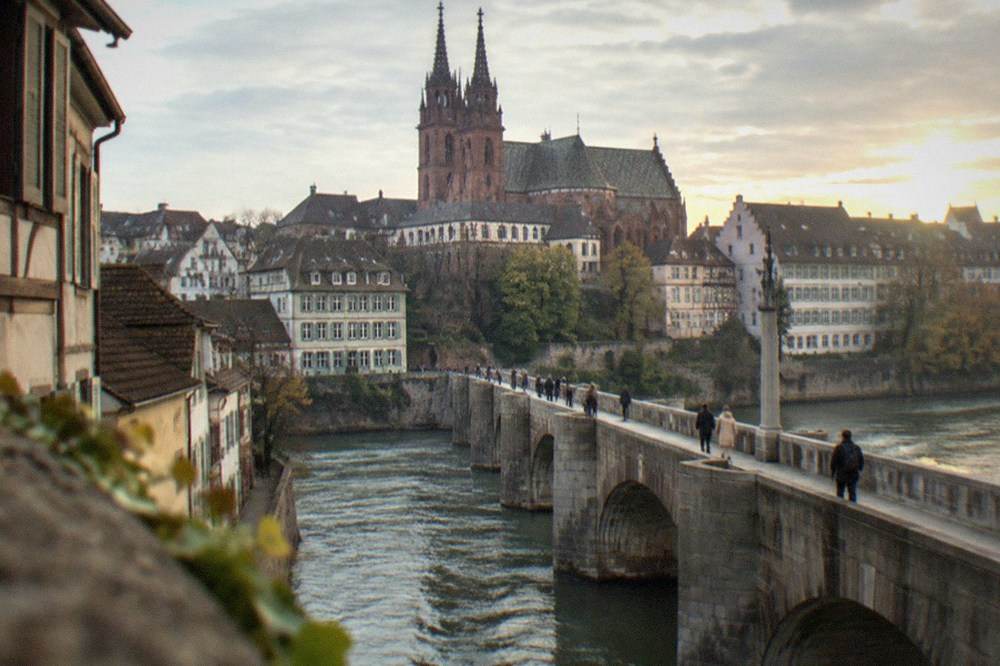
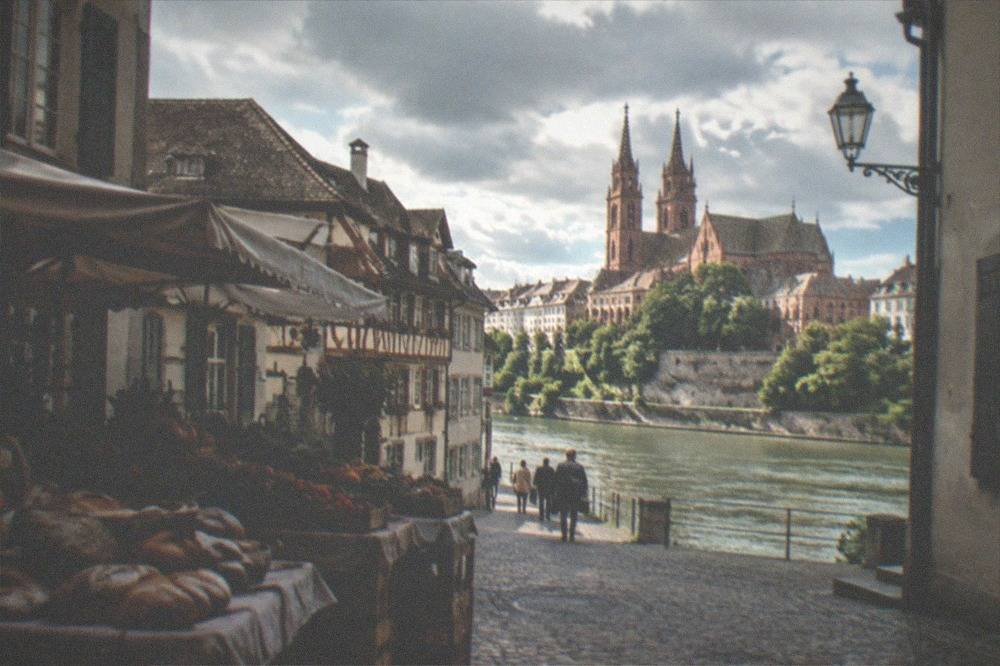
Arriving at Basel SBB, the walk to the old town takes fifteen to twenty minutes at visitor pace, and there is a strong argument for doing the river first and the old town second. The Rhine bend is Basel's defining geography: the middle bridge is the classic crossing, the opposite bank gives the best view of the Minster, and in warm months locals swim the current with the characteristic dry bags that hold their clothes. From the bridge, climb toward the Minster, whose red sandstone and riverside terrace are the city's signature view, then descend through the old town lanes to the market square with its richly painted city hall. That loop is the core of every first visit.
| Block | Area | What to do there |
|---|---|---|
| First hour | Rhine and middle bridge | Cross on foot, take in the Minster view from the opposite bank, walk the promenade |
| Late morning | Minster and old town lanes | Red sandstone Minster, cloister, riverside terrace, then descend toward the center |
| Midday | Market square and city hall | Painted façades, bakery counters and market stalls for a frugal lunch |
| Afternoon | Museum quarter | Pick one house on foot from the old town; check franc admission on its own site |
| Early evening | Return to Basel SBB | Fifteen to twenty minute walk back; leave slack for platform changes |
The afternoon belongs to depth. Basel's museum density is exceptional for a city of its size, with the fine-arts collection and the museums around the old town reachable on foot, and admission prices there are set in Swiss francs by each house, so check the museum's own site rather than carrying a figure from a German-side source, which would be in euros and simply wrong. Mid-afternoon is also when the day-trip arithmetic starts to matter: to be back in Freiburg for dinner you want a departure no later than early evening, and the regional trains give you that without stress unless rail works intervene.
A calmer variant swaps depth for water. Some visitors take a short river crossing by ferry, one of the small cable ferries that cross the Rhine on the current, which is cheap, charming and takes minutes; others simply buy time on the promenade and skip a second museum. Basel rewards slow absorption more than checklist speed, and a day trip that tries to see everything ends the evening on a platform watching a departure board. Pick one museum, one view and one long walk, and let the rest go.
Food deserves a sentence of honesty. Basel is not a bargain city, and a restaurant lunch for two can exceed what some travelers budget for the entire Swiss half of the day. The market square and bakery counters are the workarounds locals use, and the standard advice, eat something substantial on the German side or at the station, is genuinely useful here. The Rhine Falls, by the way, make a possible add-on if you would rather leave Basel early, and the dedicated falls guide covers that detour from the Swiss side.
How Much A Basel Day Costs
The honest budget splits in two: the German-side transit layer is cheap and verified, a €3.00 single or €7.20 one-zone day ticket, while the cross-border rail fare and everything after Basel SBB are priced elsewhere, the rail fare on the live booking page and the Swiss side in francs. Lunch and one museum decide most of the swing between a frugal and a comfortable day.
Breaking that down by layer. The Freiburg-side transit layer, if you need a tram to the Hauptbahnhof, is cheap and verified: a single in the first fare zone is €3.00 at the machine or €2.70 on a smartphone, and a day ticket for one zone is €7.20, all from the current RVF tariff. The rail layer to Basel is a cross-border fare and varies by train type and how far ahead you book, which is why this guide refuses to print a number for it; the live timetable and fare page is the source that is actually correct on the day you travel. The Basel layer, transit inside the city, is often zero because the old town is walkable from SBB, and many hotels and visitor cards in Basel include local transit, so ask at your Freiburg accommodation whether any partner arrangement applies rather than assuming. The food and museum layers are the real budget variables, both in francs, both set by each venue.
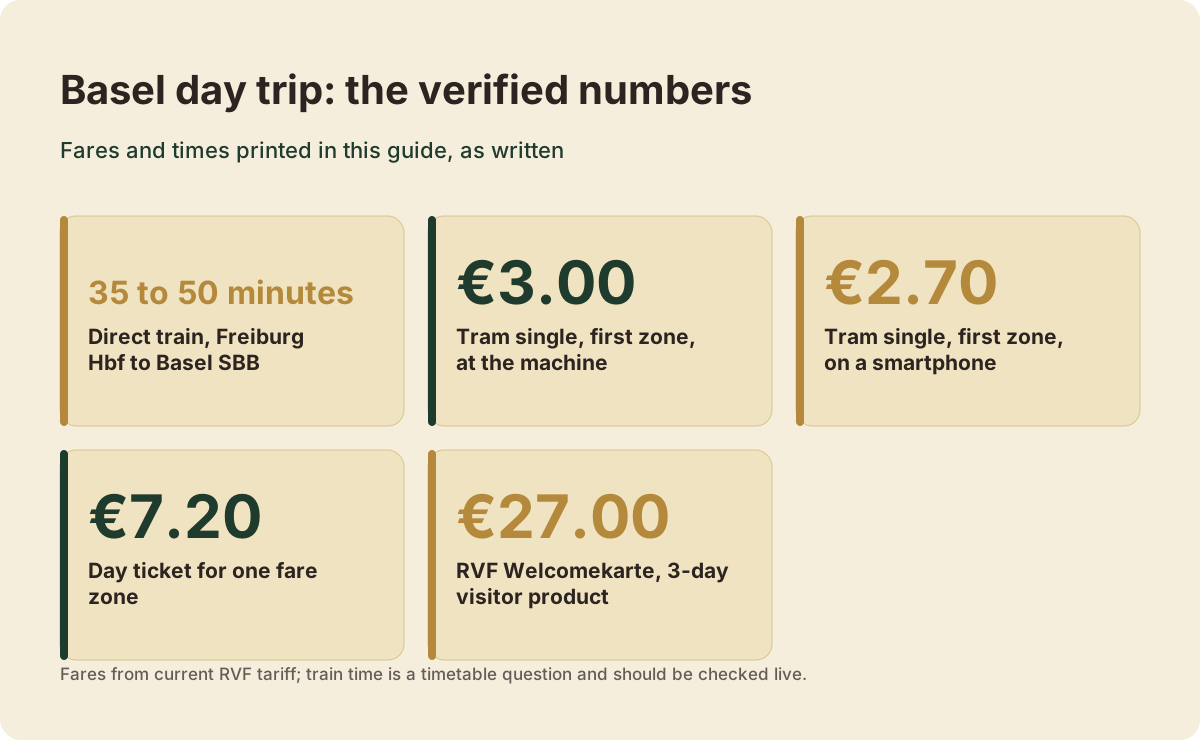
One comparison travelers often get backwards: the Welcomekarte, at €27.00 for three days, looks expensive next to a €7.20 day ticket until you notice it includes the Schauinslandbahn cable car, which costs €15.00 for an adult return on its own. That arithmetic only makes sense if you are staying several days and doing Black Forest excursions; for a single Basel day, it is irrelevant, and the plain day ticket plus a cross-border rail fare is the honest comparison. If your Basel day is part of a longer stay, the Getting Around Freiburg guide sets out the full fare landscape, and the Basel To Freiburg guide covers the same corridor from the opposite direction for anyone returning the other way.
When The Rail Works Change The Plan
The Freiburg to Basel corridor is under continuous engineering for the Karlsruhe to Basel four-track expansion, and 2026 has seen repeated weekend closures with replacement buses between Freiburg and Basel, including closures in August, mid-September and early October. When a closure lands on your chosen date, the trip is still doable, but budget an extra hour and check whether your specific departure is a bus or a train.
This is the section that saves the day, so it is worth being blunt about the pattern. The Rheintalbahn works bundle closures into weekends and short blocks, and Badische Zeitung reported on 25 September 2026 that the Freiburg to Basel section would close in early October with regional and some long-distance trains replaced by buses. Earlier in the year the same corridor saw closures on 7 to 10 August, 14 to 17 August and 18 to 21 September, with the work pattern continuing into autumn. None of this makes the day trip a bad idea; it makes an unchecked timetable a bad idea.
| Period | What happens | Practical effect on a Basel day |
|---|---|---|
| 7-10 Aug 2026 | Corridor closure, replacement buses | Add roughly an hour each way |
| 14-17 Aug 2026 | Corridor closure, replacement buses | Same; avoid a same-day return at night |
| 18-21 Sep 2026 | Corridor closure, replacement buses | Same |
| Early Oct 2026 | Freiburg-Basel section closure, buses between Freiburg and Basel or Basel Badischer Bahnhof | Check which Basel station your bus reaches |
| From 14 Sep 2026 to about Dec 2028 | Freiburg Hbf station modernization, platforms 3-5 renewal | Allow extra time for platform changes and lifts at the origin |
Two further wrinkles. Freiburg Hauptbahnhof itself began a barrier-free modernization on 14 September 2026, running until around December 2028, with the northern underpass initially fully closed and platforms 3 to 5 being renewed; that is an origin-side delay risk, not a route closure, but it is exactly the kind of thing that makes a tight connection tight. And note that Basel has two major stations, Basel SBB and Basel Badischer Bahnhof, the German-operated one inside Swiss territory; replacement buses and some German regional services use the Badischer Bahnhof, which is a short local hop from the center but not the same arrival point. The blog post on Basel's two train stations explains the split if you want the background.
Freiburg Tours That Pair Well With A Basel Day
The strongest pairings are the dramatized walks, because their evening departures let you take Basel by day and a theatrical Freiburg night by return, and their prices cluster tightly from $17 to $43 with ratings from solid review pools. The actors-led city tour, at 4.9 across 497 reviews, remains the anchor pick; the Historix tour and the witches-and-torture walk are the same-family alternatives with smaller but respectable pools.
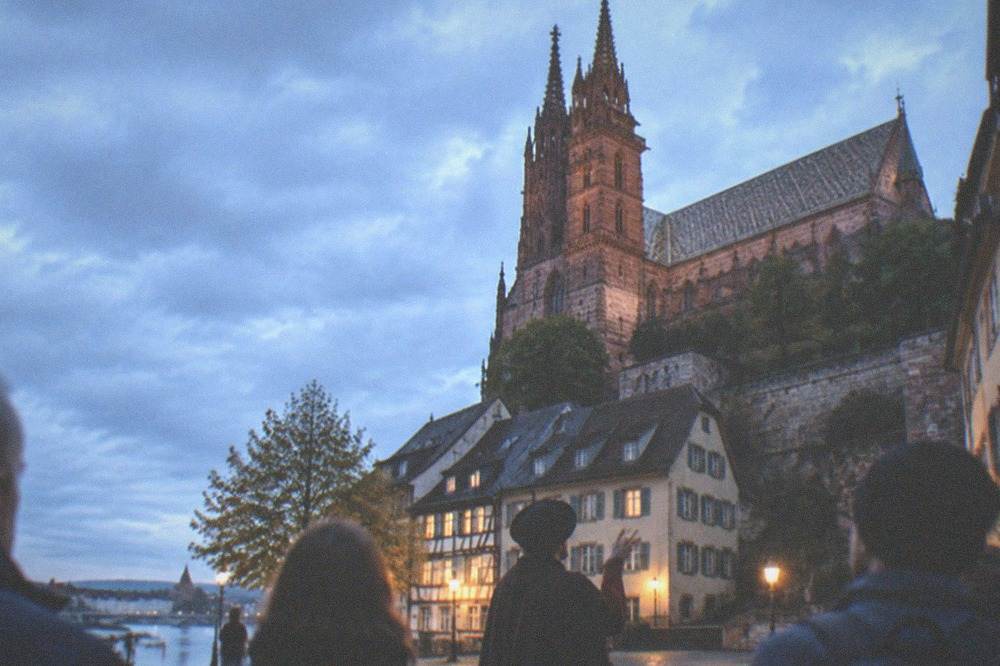
The evening pattern deserves the explanation. Basel after dark is quieter than most visitors expect, Swiss cities go to bed early on weeknights, and a Freiburg return in the early evening slots neatly in front of an 8 pm dramatized walk. The Guided City Tours with Actors format, about 1.5 hours from $17, is the broadest crowd-pleaser on the roster, and its review pool of 497 is large enough that the 4.9 figure actually means something; a rating from a handful of reviews would not, and this roster carries several such listings, which this site says plainly rather than padding. If you prefer your history less performed, the plain sightseeing options, from the Gässle and Bächle walk at 4.7 across 3,187 reviews from $15, to the cathedral-visit tour at 4.6 across 284 reviews from $20, are covered in the Freiburg tours overview.
The Historix dramatized tour of the main attractions, running since 1998 and rated 4.7 across 78 reviews, suits visitors who want the theatrical format but with a longer, more chronological spine, and its about-1-hour-45-minute length makes it a better standalone evening than a pre-train add-on. Book it for the night after your Basel day rather than the same evening, and the pacing works. You can also Check availability beside the tour's own page before committing.
The witches-and-torture-stakes walk is the format contrast: darker, steeper in tone, about 1.5 hours from $17 and rated 4.7 across 97 reviews. It pairs with a Basel day in the same evening slot, but the content skew means it is a decision about what kind of night you want, not just a price comparison. Families with younger children often steer to the actors-led walk instead, and the review pools on both listings are small enough that reading a handful of recent reviews on the live listing is worth the five minutes.
Beyond the dramatized trio, the food and wine walks are the other natural Basel pairing, because they let the day run tasting-first through two countries. The Veni, Vidi, Vino wine hike and tasting, about 2.5 hours from $79 and rated 4.4 across 167 reviews, is the substantial option, while the four-wines tasting at Town Hall Square with onion tart, about one hour from $31, is a compact stop that fits the pre-departure window. Neither belongs on the Basel day itself; both belong on the German-side days around it, which is exactly how the Freiburg Food And Wine Tours guide sequences them.
One last booking note, applying to every tour above: prices here are the operator's USD listing figures, while everything you buy in person in Freiburg or Basel is in euros or francs respectively. Do not convert mentally; the two price worlds are separate, and the listings state what is included. Free-cancellation terms vary by product and are stated on each live listing, which matters most on a rail-works weekend when a delayed return can push an evening walk out of reach.
Common Questions About Basel
How Long Does The Train From Freiburg To Basel Take?
Recent reporting puts the fastest connections at roughly 35 to 50 minutes on the direct regional service, but treat that as a range to confirm on the live timetable, because engineering works on the corridor repeatedly replace trains with buses on weekends. A closure can add an hour each way.
Do I Need My Passport For A Day Trip To Basel From Freiburg?
Both countries are in the Schengen area, so border checks are not routine on this corridor, and regional trains roll through without stopping. You should still carry valid ID, since checks can occur on either side, and non-EU visitors in particular should carry the passport they used to enter the Schengen area.
Which Basel Station Do Trains From Freiburg Arrive At?
Most services from Freiburg arrive at Basel SBB, the main Swiss station, a short walk from the old town. Some German regional services and replacement buses during the rail works use Basel Badischer Bahnhof instead, which is inside Basel but a separate stop, so check which one your specific departure reaches.
Does The Welcomekarte Or A KONUS Card Cover Travel To Basel?
No. The Welcomekarte covers the RVF network, which ends at the German border, and KONUS cards are issued only by member Black Forest municipalities, of which Freiburg city is not one. The Basel leg needs a cross-border rail fare bought separately.
Is Basel Worth A Day Trip From Freiburg?
Yes, if the draw is contrast: a Rhine city with a different currency, a denser museum cluster and a more formal old town, reachable without changing trains. It is less worthwhile if you mainly want more of the Black Forest atmosphere that surrounds Freiburg, in which case Titisee or Staufen fit better.
What Currency Do I Need In Basel?
Swiss francs. Basel prices are set in francs, and Swiss price levels run higher than the German side of the border. Cards are widely accepted, but carrying some francs in cash avoids awkward small purchases at market stalls and ferry crossings.