Martinstor Freiburg: How To Visit The City's Medieval Gate
The Martinstor is one of the two medieval gates still standing in Freiburg's old town, and most visitors walk through it within minutes of arriving without realizing what it is. This guide covers what the gate is, how to reach it, and how to build a visit around it.
Short answer
The Martinstor is one of Freiburg's two surviving medieval city gates, standing at the edge of the Altstadt where the pedestrian shopping streets begin. Walking through it is free at any hour. A single RVF tram ticket costs €3.00, a day ticket for one zone €7.20, and the 3-day Welcomekarte €27.00 including the Schauinslandbahn.
What Is The Martinstor In Freiburg?
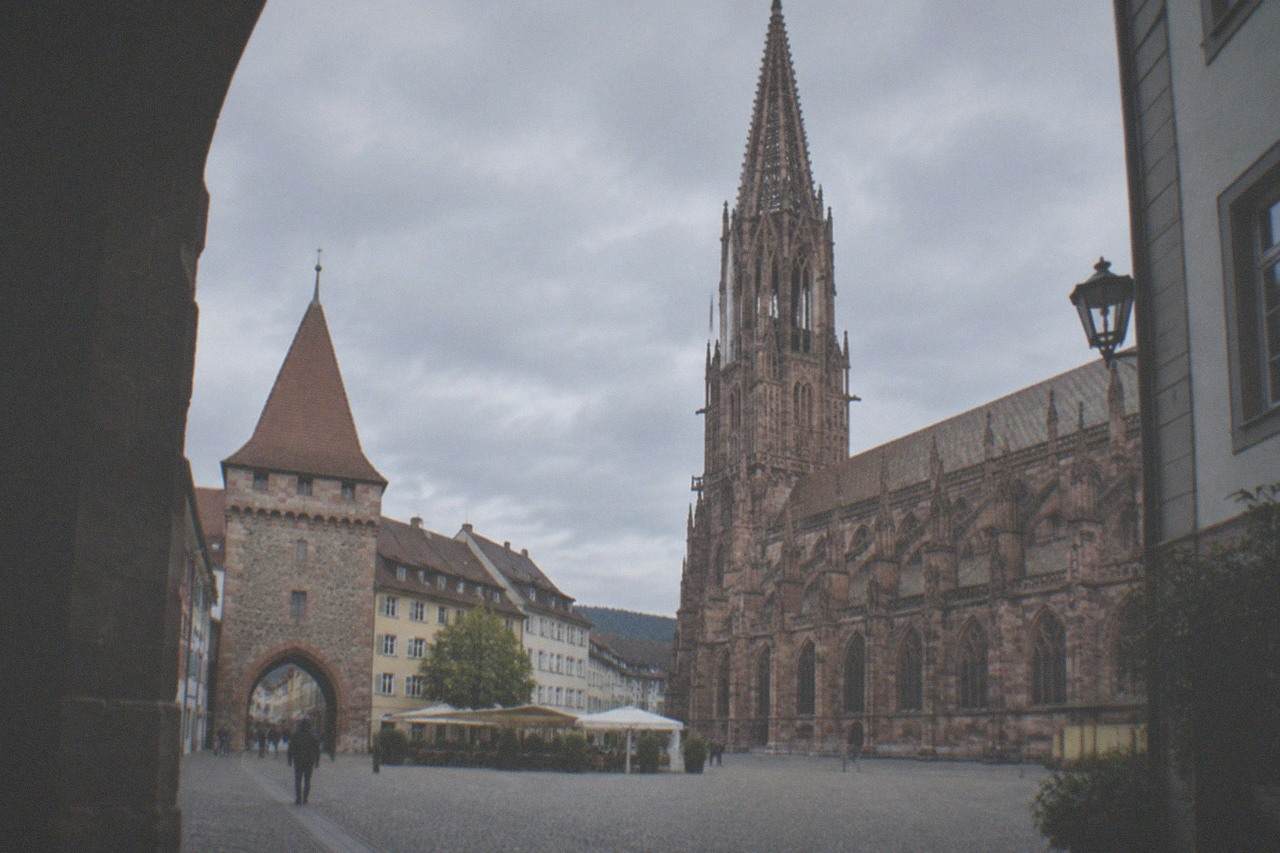
The Martinstor is one of the two medieval gates that survive from Freiburg's old city wall, the other being the Schwabentor on the eastern side of the Altstadt. It is not a museum or a ticketed attraction: it is an open passage in the middle of a pedestrian street, free to walk through at any hour, and most visitors pass under it several times without noticing. Treat it as a landmark you cross, not a sight you enter.
That is the honest framing, and it matters for planning. Travelers who arrive expecting a castle-style gatehouse with an interior, a staircase and a view will be disappointed. Those who understand it as a piece of living street furniture, a stone frame around the flow of shoppers, cyclists and students, will get exactly what Freiburg offers: a city where the medieval fabric is still in daily use rather than fenced off behind ropes.
The gate anchors the southern approach to the old town. Walk through it heading north and you move straight into the pedestrian core, the lanes that eventually deliver you to the Münsterplatz with its market and the cathedral's 116 m west tower. Head the other way and the streets widen into the grid of the newer city. That geography is the Martinstor's real value: it is a wayfinding anchor. If you are lost in the Altstadt, finding the gate resets your bearings instantly.
The name itself refers to Saint Martin, a traditional patron of town gates across the German-speaking world, and it sits at what was historically the exit toward the south. Freiburg's Altstadt keeps a lot of its medieval layout: the two gates, the Bächle, the little gutters running alongside the streets, and the network of lanes that grew inside the wall. The Freiburg Travel Guide covers each of those pieces separately, and this page sticks to the gate itself and the practical ring of things around it.
For context on how the gate fits into the bigger picture of the city's development, from its founding through the university's establishment in 1457 to today's population of 237,299, read the companion piece on Freiburg's history in depth, and for the walk that strings the old town together, see the Old Town walking guide. Both give the Martinstor a wider frame than a single page can.
Where Is The Martinstor And How Do You Get There?
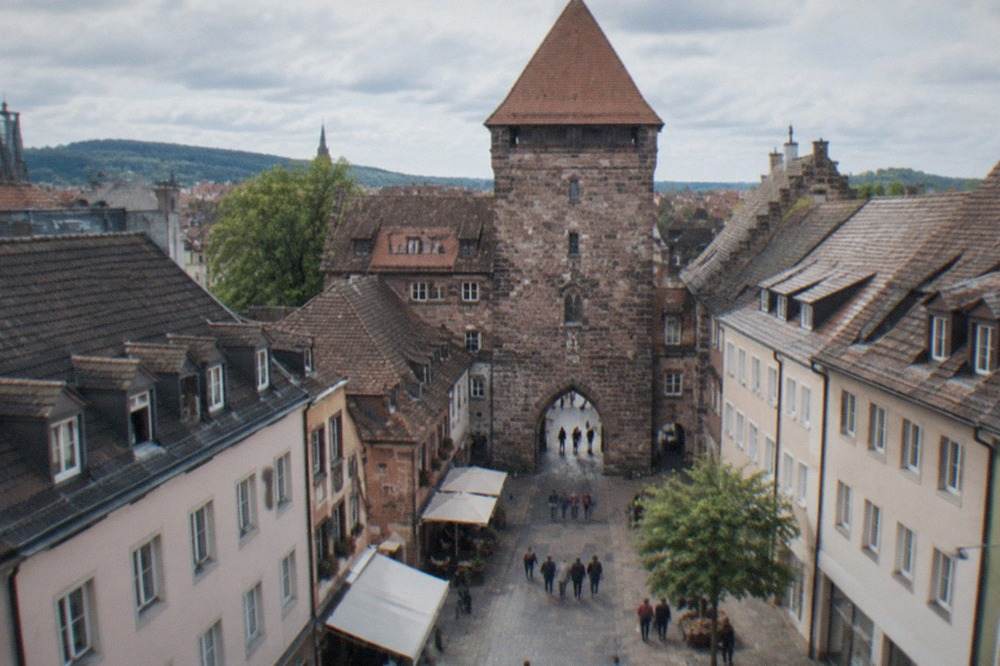
The Martinstor stands where the Altstadt meets the newer city grid on the southern side of Freiburg's old town, and the simplest approach is on foot or by tram. A single RVF zone 1 ticket costs €3.00, and a one-zone day ticket costs €7.20. From Freiburg Hauptbahnhof the walk into the pedestrian core is short and flat, and the gate sits on the direct line between the station area and the Münsterplatz.
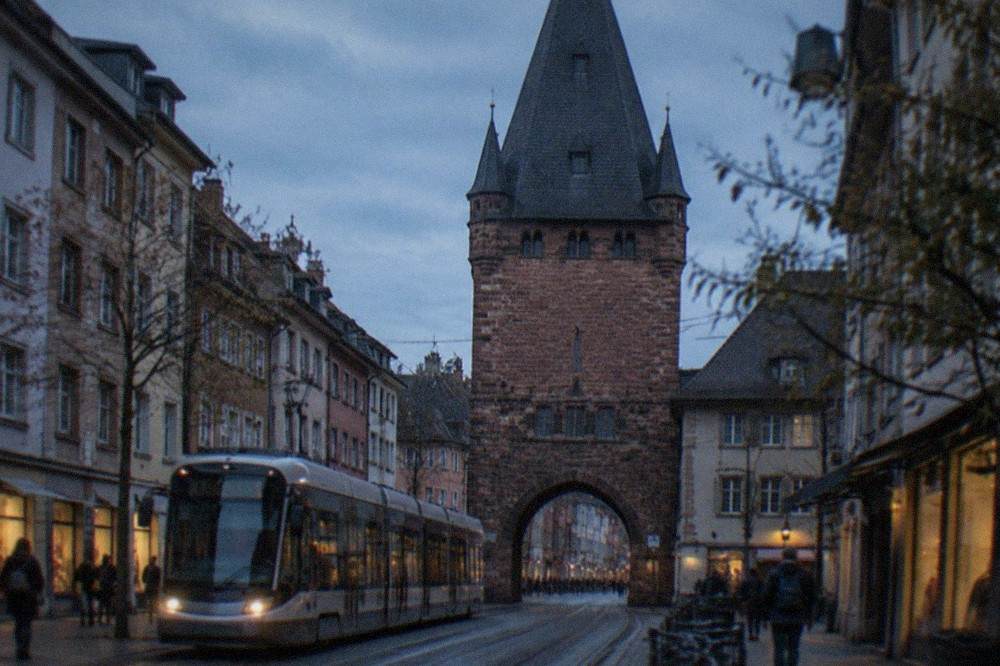
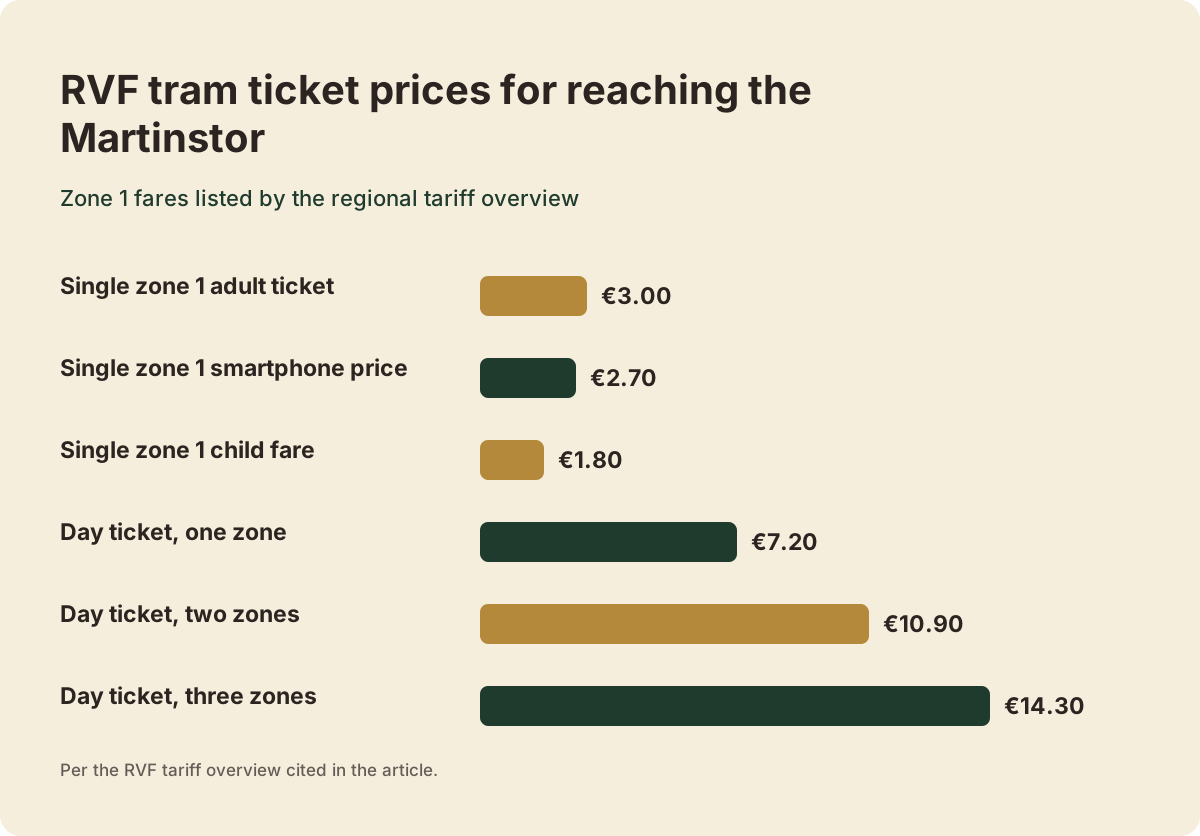
Freiburg's tram network makes this easy. The Verkehrs-AG Freiburg (VAG) runs trams through the center with stops ringing the Altstadt, and the RVF fare structure covers the whole region. The tariff overview published by the RVF lists the single zone 1 adult ticket at €3.00 with a smartphone price of €2.70 and a child fare of €1.80, and day tickets at €7.20 for one zone, €10.90 for two and €14.30 for three. If you are staying in the city and making several trips, the day ticket pays for itself quickly; if you are planning wider exploration, the Welcomekarte at €27.00 for three days includes buses, trains and the Schauinslandbahn cable car, per the official RVF page at RVF's Welcomekarte information.
Two practical notes for 2026 visitors. First, the Hauptbahnhof itself is in the middle of a modernization program: work began on 14 September 2026 and runs until roughly December 2028, with five new lifts, renewed platforms and new roofing, per Deutsche Bahn's regional press information. Trains keep running, but allow a few extra minutes if you are changing there. Second, VAG's fleet has shifted heavily toward electric buses, with recent reporting putting roughly two-thirds of the fleet electric after new vehicles arrived through 2025 and 2026. Fares are unaffected.
If you are driving in and parking outside the center, the same zone 1 ticket covers the tram ride from the park-and-ride stops into the Altstadt. Cyclists will find the gate on a through-route, and Freiburg's bike-share network, Frelo, was fully renewed from January 2026 with around 1,200 bikes across 162 stations from March 2026, per recent local reporting, so a borrowed bike is a genuine option for reaching the old town from further out.
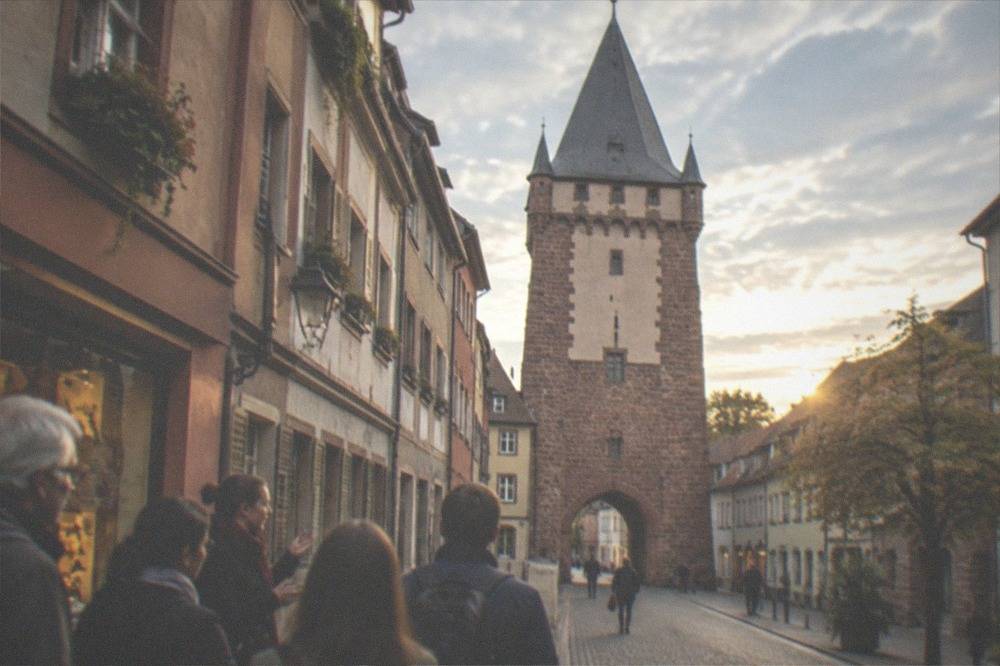
Once you are in the pedestrian zone, the gate is hard to miss: it is one of only two structures of its kind left in the city, and the stone mass of it interrupts the shopping street in a way that photographs better in the early morning before the crowds build.
For travelers who prefer someone else to handle the wayfinding on day one, a guided walk is a reasonable shortcut, and the trio below covers the main formats: a themed city walk, a wine-focused half day, and a self-guided option.
What To See Around The Martinstor
Within a short walk of the Martinstor you reach the Münsterplatz with its cathedral and market, the Augustinerplatz with its museum and steps, and the network of lanes carrying the Bächle gutters. The Münster nave is free to enter, the tower climb costs €5 for adults, and the Augustinermuseum charges €12. Together these make the gate a natural starting point for a half-day loop rather than a destination on its own.
The classic loop is simple and mostly flat. Pass through the gate heading north, follow the pedestrian lanes as they narrow and widen, and let the Bächle, the small water channels running beside the kerbs, confirm you are inside the old street plan. The Münsterplatz arrives quickly enough. The market there runs up to 130 stalls on weekdays from 07:30 to 13:30, per the official tourism listing at visit.freiburg.de's Münstermarkt page, and it is worth timing a morning arrival to catch it.
The cathedral itself deserves more than a glance from outside. Entry to the nave is free, and the tower climb, priced at €5 for adults, €3 for children and teens, €13 for a family with under-7s free, runs Monday to Saturday from 11:00 to 16:00 and Sundays and holidays from 13:00 to 17:00, with the last ascent about 15 minutes before closing. Be clear about one thing before you queue: the tower is 116 m tall, but visitors climb only to a gallery at 70 m, and the top gallery closes in winter. The official Turmbesteigung page carries the current hours.
From the Münsterplatz, the loop continues to the Augustinerplatz, the wide steps and square that act as the old town's living room in warm weather. The Augustinermuseum alongside it fully reopened on 28 February 2026 after more than two decades of phased renovation, adding around 1,600 square meters of new exhibition space in the former convent building and vaulted cellars. Admission is €12, reduced €8, and the day ticket is valid across the other city museums; under-27s enter free. It is open Tuesday to Sunday, 10:00 to 17:00, with extended hours to 19:00 on Fridays.
The streets immediately south of the gate carry a racier history than the postcard lanes to the north, and that side of the old town is exactly what the Red Light District City Tour unpacks: an adult-oriented, two-hour walk through a part of Freiburg's past that most visitors never hear about.
One honest scheduling note: the Museum Natur und Mensch has its permanent exhibition closed from 4 August 2026 until roughly the end of February 2027 for renovation, though its special exhibitions continue. If a museum afternoon is part of your plan, the Augustinermuseum, the Museum für Neue Kunst at €7, and the Colombischlössle archaeological museum at €5 are the reliable choices this season.
Martinstor Or Schwabentor: Which Gate Should You Visit?
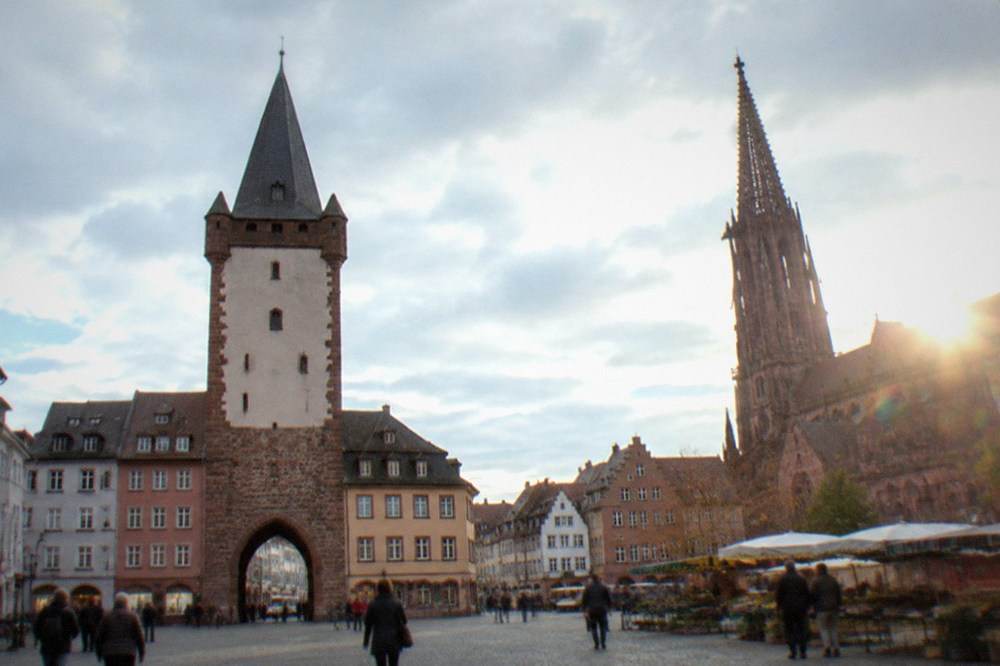
You should visit both, because they sit on opposite sides of the same compact Altstadt and seeing one from the other is a 15-to-20 minute stroll through the most scenic lanes in the city. If time forces a choice, the Martinstor wins for its direct line to the shopping core and the Münsterplatz, while the Schwabentor, on the eastern side, wins for the quieter, prettier lanes around it. Neither charges admission.
The two gates are the surviving pair from Freiburg's medieval fortifications, and locals treat them as the old town's bookends. Walking from one to the other is the single best free orientation exercise in the city: you cross the whole historic core, pass the Bächle, the Augustinerplatz, the Münsterplatz and the lanes between, and finish with a second stone gate as your reward. Doing it once, unhurried, teaches you the geography of the Altstadt better than any map.
The contrast between the two is real, though. Around the Martinstor the atmosphere is commercial and busy: chain stores, pedestrian traffic, the practical face of the city. Around the Schwabentor the streets feel older and more residential, and the Fischerau and Gerberau lanes nearby carry a village-within-a-city character, with the little streams running openly beside the houses. Photographers tend to prefer the Schwabentor side in the morning; shoppers and first-time visitors pass the Martinstor more often simply because of where it sits on the walking line.
For the deeper rundown of the other gate, see the Schwabentor visitor guide, which covers that side of the Altstadt in detail. And for the lanes in between, the Old Town guide strings all of it into a single walk.
The practical answer for most itineraries: start at whichever gate is closest to your hotel, walk to the other, and let the route decide your day. The gate you choose as a starting point matters far less than the fact that both are free, both are always open, and both anchor walks that cost nothing but an hour or two of your time.
Which Tours Work Well From The Martinstor Area?
The tours that pair best with a Martinstor visit are the themed city walks that start in or near the Altstadt: the Red Light District City Tour at from $26, rated 4.2 across 22 reviews, and the Veni, Vidi, Vino wine hike at from $79, rated 4.4 across 167 reviews. For independent travelers, the self-guided scavenger hunt at from $45, rated 4.9 across 15 reviews, turns the old town itself into the activity.
A themed walk changes what you notice in streets you would otherwise walk past. The Red Light District City Tour leaves the postcard route behind and spends two hours on the adult side of Freiburg's history, the bars, the characters and the stories the official brochures skip. It is a niche format: 22 reviews is a small pool, and the 4.2 rating reflects that pool honestly rather than a mass verdict. At from $26 it is one of the cheaper guided options in the city, and its subject matter makes it a genuinely different product from the standard highlights walk. Check availability if the format appeals.
The wine hike suits a different mood. The Veni, Vidi, Vino tour runs about 2.5 hours and pairs a walk with tastings, moving between the vineyard country on the city's edge and the glass in hand, which is a natural fit for Freiburg: this is the heart of Baden wine country, and the region's taverns and wineries are part of the city's everyday life rather than a tourist overlay. The rating of 4.4 across 167 reviews is a solid mid-size pool for this kind of product. At from $79 it sits in the upper-middle price band of the local roster, which reflects the tastings included rather than the walking.
For comparison, here is how the main formats near the old town stack up, using the roster's own figures:
| Tour | Length | Rating | Reviews | Price from |
|---|---|---|---|---|
| Gässle, Bächle and More City Tour | ~1.5 hours | 4.7 | 3,187 | $15 |
| Tour of the City with Cathedral Visit | ~1.5 hours | 4.6 | 284 | $20 |
| Highlights of the Old Town | ~1.5 hours | 4.6 | 236 | $17 |
| Red Light District City Tour | ~2 hours | 4.2 | 22 | $26 |
| Veni, Vidi, Vino wine hike and tasting | ~2.5 hours | 4.4 | 167 | $79 |
| Scavenger hunt, self-guided | ~3 hours | 4.9 | 15 | $45 |
The table tells a useful story about this city's tour market. The classic city walks carry enormous review pools at low prices: the Gässle tour's 4.7 across 3,187 reviews is the most battle-tested product in Freiburg. The niche formats, by contrast, trade review volume for a distinctive angle. None of these numbers predict what you personally will enjoy; they predict how many people have gone before you and how they scored it on average.
What Does A Visit Cost And How Much Time Does It Take?
The Martinstor itself costs nothing and takes minutes: you walk under it, you photograph it, you move on. A half-day built around it, including the Münster, a museum and a coffee stop, costs roughly €17 to €24 per adult in entry fees plus whatever you spend on food, and takes three to four hours at an unhurried pace. Transport inside the city center adds €3.00 per single tram ride or €7.20 for a day ticket.
The honest budget math looks like this. The gate, the Altstadt lanes, the Bächle, the exterior of the Münster and the whole pedestrian core are free. The paid items are the ones you choose to add: the tower climb at €5, a museum at €5 to €12 depending on which one, the market if you buy snacks, and lunch. A comfortable adult morning, climbing the tower and visiting the Augustinermuseum, runs €17 in admissions before a single espresso. Add the Museum für Neue Kunst instead of the Augustinermuseum and the figure drops to €12.
Here is the full picture of the numbers a Martinstor-centered visit actually involves:
| Item | Adult price | Notes |
|---|---|---|
| Martinstor and Altstadt lanes | Free | Open passage, any hour |
| Münster nave | Free | Free entry to the cathedral nave |
| Münster tower climb | €5 | Children and teens €3, family €13, under 7 free |
| Augustinermuseum | €12 | Reduced €8, free under 27, day ticket covers city museums |
| Museum für Neue Kunst | €7 | Reduced €5, free under 27 |
| Colombischlössle archaeological museum | €5 | Reduced €3 |
| RVF single ticket, zone 1 | €3.00 | €2.70 by smartphone, child €1.80 |
| RVF day ticket, one zone | €7.20 | Two zones €10.90, three €14.30 |
| Welcomekarte, 3 days | €27.00 | Includes the Schauinslandbahn |
Time is the more interesting variable than money. The gate itself is a two-minute stop. The loop from the gate to the Münsterplatz, through the market, up the tower and back through the Augustinerplatz is three to four hours at the pace most travelers actually move. Add a museum and you have a full day. Compress it to a tight ninety minutes and you will still see the gate, the cathedral exterior and the best lanes, but you will queue for nothing and climb nothing.
Travelers who like structure without a guide should look at the self-guided scavenger hunt, a roughly three-hour format at from $45 that sends you through the old town solving clues. Its 4.9 rating comes from a small pool of 15 reviews, so treat the score as a promising signal from a handful of players rather than a mass verdict, but the format fits Freiburg unusually well: the city's compact Altstadt is essentially a ready-made game board.
When Is The Best Time To See The Martinstor?
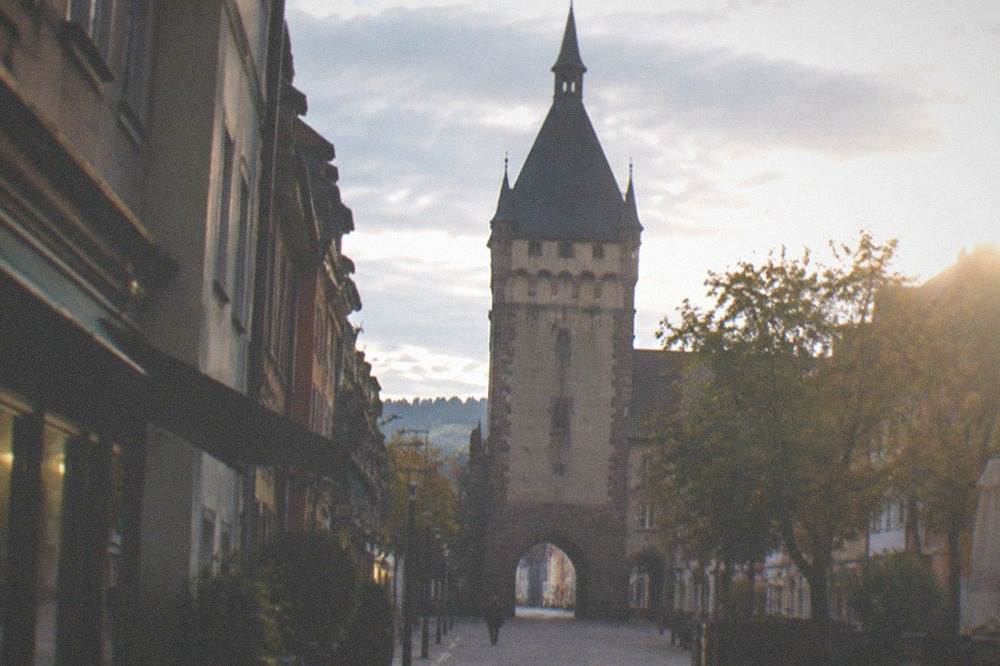
Early morning is the best time: before about 09:00 the pedestrian streets are nearly empty, the light is low and warm on the stone, and you can photograph the gate without a crowd. Freiburg averages 1,815.1 hours of sunshine a year, making it one of Germany's warmest and sunniest cities, so even the shoulder months are pleasant. July and August are the warmest at mean temperatures of 20.1°C and 19.7°C.
The seasonal picture, drawn from the official DWD climate normals for the Freiburg station, gives the honest version of the city's famous weather. Summer means 252.2 hours of sunshine in July and around seven days at or above 30°C in both July and August. Spring ramps up fast, from a mean of 10.8°C in April to 14.9°C in May. Autumn stays workable into October, with a mean of 10.9°C and 116.2 hours of sun. Winter is gray rather than brutal: a mean of 2.5°C in January, with 64 frost days spread across the year.
| Month | Mean temp | Sunshine hours | Rain, mm |
|---|---|---|---|
| January | 2.5°C | 64.7 | 48.6 |
| April | 10.8°C | 182.2 | 63.8 |
| July | 20.1°C | 252.2 | 92.2 |
| October | 10.9°C | 116.2 | 78.5 |
Two cautions color that pleasant picture. May is the wettest month at 103.4 mm of rain, and the summer months all carry 80 to 92 mm, so a warm-weather visit still wants a light rain layer. And the claim you will sometimes read, that Freiburg is Germany's warmest or sunniest city, is not supported by the official data: the DWD 1991-2020 normals put the city 34th of 1,093 stations on annual mean temperature and 20th of 1,091 on sunshine. One of Germany's warmest and sunniest cities is the accurate and still-impressive phrasing.
The gate's own viewing conditions follow the street's rhythm. By mid-morning the shopping lanes are full and photographing the arch means waiting for gaps in the foot traffic. In the evening the area stays lively late, since this is a university city of 24,507 students, and the streets around the gate are part of the nightlife catchment. Winter visitors get a bonus: from 19 November to 23 December 2026 the Christmas market spreads across Rathausplatz, Kartoffelmarkt, Unterlindenplatz and the Franziskanerstraße, per the official market site, and the walk from the gate toward those squares turns into the city's most atmospheric half hour.
Beyond weather and light, one more timing note matters for 2026 and early 2027 travelers: the region's rail network is carrying a program of works. The Rheintalbahn line between Freiburg and Basel sees temporary closures with replacement buses in early October 2026, and the Höllentalbahn toward the Black Forest heights had temporary shutdowns for slope-securing work in July and September 2026. None of this touches the Martinstor itself, but if the gate is stop one on a wider Black Forest itinerary, check the rail situation for your travel dates before you lock in day trips.
However you time the visit, the same rule holds for every product mentioned on this page: formats and prices hold steady, but live availability always depends on the day, and the operator's listing is the source of truth.
Common Questions About The Martinstor In Freiburg
Is the Martinstor free to visit?
Yes. The gate is an open passage in a public pedestrian street, with no ticket, no counter and no closing time. You can walk through it at any hour, and the only costs in the area are the ones you choose, such as the €5 Münster tower climb or museum admissions of €5 to €12.
Can you go inside the Martinstor?
Not in the sense of exploring an interior. The Martinstor functions as a passage and a landmark rather than a building with rooms, stairs or exhibits open to the public. The experience is walking under it, viewing the stonework from the street and using it as the anchor for the old town lanes around it.
How long should I spend at the Martinstor?
The gate itself is a stop of a few minutes. A half-day loop built around it, covering the walk to the Münsterplatz, the market, the tower climb and the Augustinerplatz, takes three to four hours at an unhurried pace, and adding a museum turns it into a full day.
Which tours start near the Martinstor?
Themed city walks and wine tours use the old town as their territory, so the gate area is a natural meeting point. The main formats are the Red Light District City Tour at from $26 for about two hours, rated 4.2 across 22 reviews, the Veni, Vidi, Vino wine hike at from $79 for around 2.5 hours, rated 4.4 across 167 reviews, and the self-guided scavenger hunt at from $45, rated 4.9 across 15 reviews.
Is the Martinstor the same as the Schwabentor?
No. They are two different gates on opposite sides of the Altstadt, the two survivors of the medieval city wall. The Martinstor sits on the southern side in the commercial pedestrian core, while the Schwabentor stands to the east near quieter, more residential lanes. Walking between them takes a leisurely 15 to 20 minutes through the old town and is the best free orientation walk in the city.
When is the best time of day to photograph the gate?
Early morning, before the shops open and the pedestrian traffic builds. Low morning light warms the stone and the street is often empty enough to frame the arch cleanly. In the evening the area stays busy late into the night, which suits street photography of the crowds more than clean shots of the gate itself.