Schwabentor Freiburg: A Practical Guide To The Old Town's Southern Gate
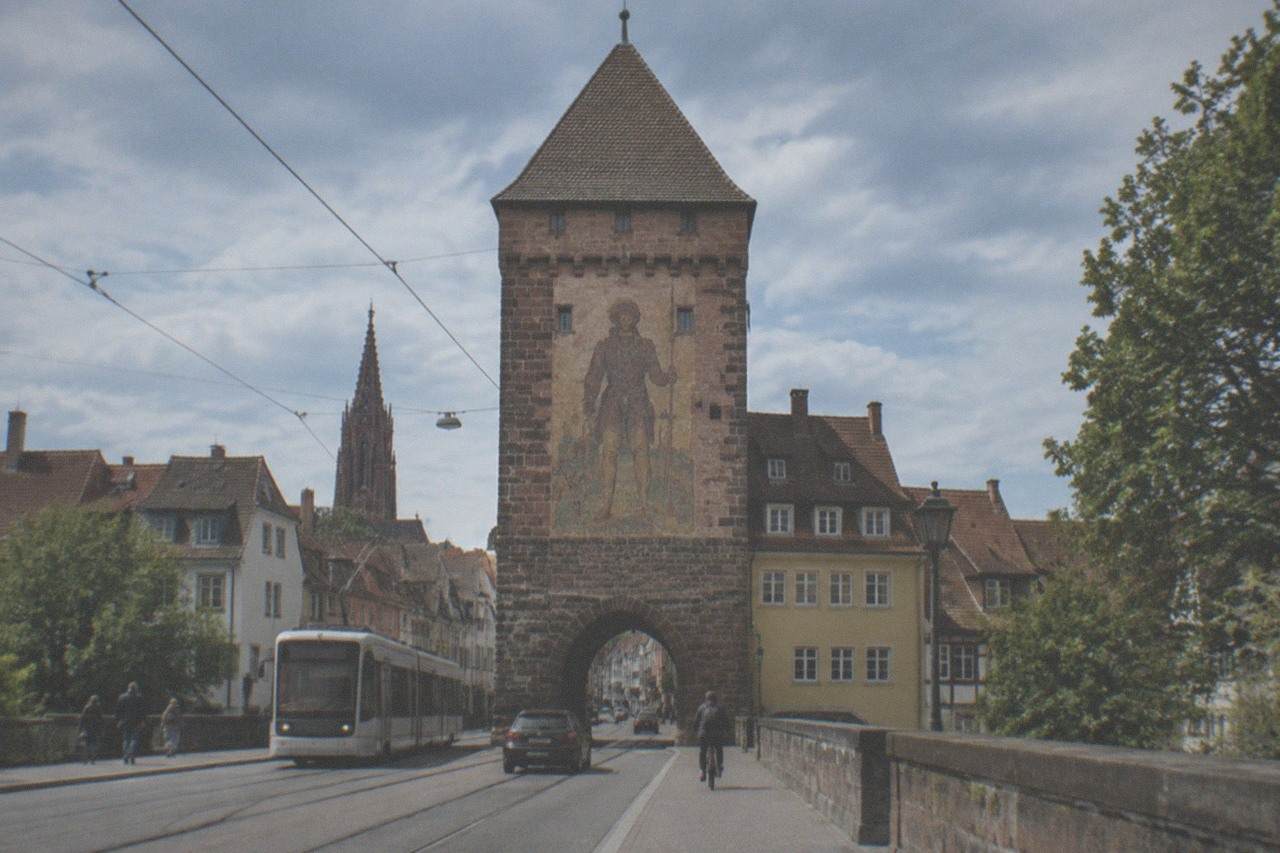
The Schwabentor is the southern of the two medieval gates that still stand in Freiburg's old town, a stone tower that once watched the road out toward Basel and Swabia. Today it is a landmark, a meeting point and the natural starting edge for exploring the southern Altstadt.
Short answer
The Schwabentor is one of Freiburg's two surviving medieval city gates and marks the southern edge of the old town. The Münster tower climb nearby costs €5 for adults, the Augustinermuseum reopened in February 2026 at €12 admission, and an RVF single tram ticket is €3.00. Most visitors spend 30 to 60 minutes at the gate before moving on.
The Schwabentor stands at the southern lip of Freiburg's old town, a stone gate tower that has watched over the road heading south since the city was a walled place. Two of those gates survive, this one and the Martinstor, and between them they bracket the whole Altstadt. Visitors tend to meet the Schwabentor almost by accident: the tram tracks run past it, the little water channels of the Bächle flow alongside the streets near it, and nearly every walking route through the southern old town passes under its arch.
This guide is written for someone already in Freiburg, or about to be. It covers what the gate is, what sits within a short walk of it, which guided and private walks make sense if you want someone else to do the storytelling, where to eat nearby, how the trams and fares work, and what the calendar brings to the squares around it. Everything priced here comes from the city's own published figures or from the tour listings themselves.
What Is The Schwabentor?
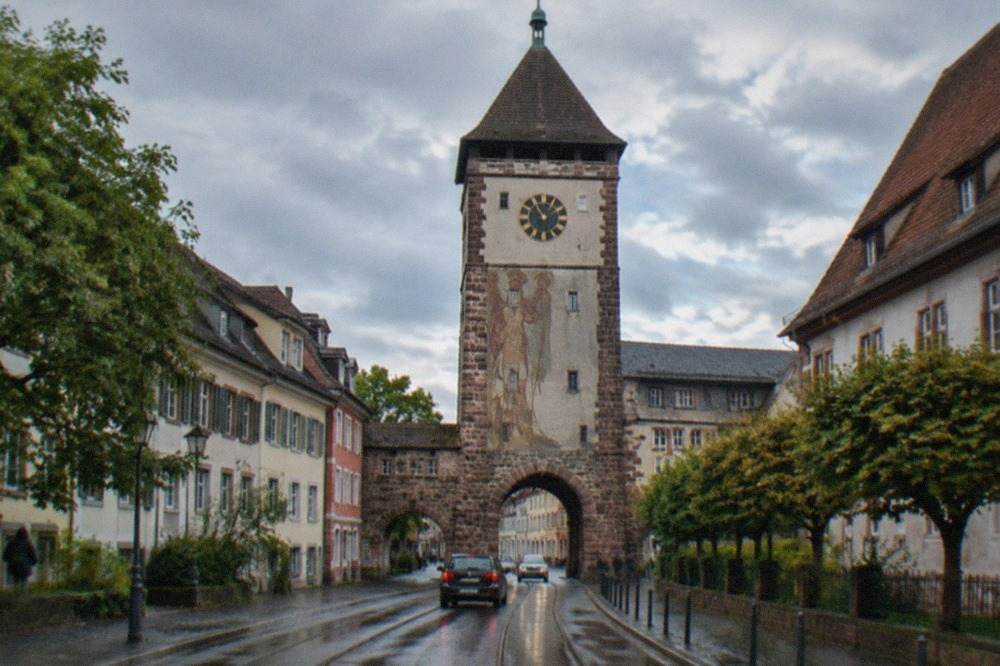
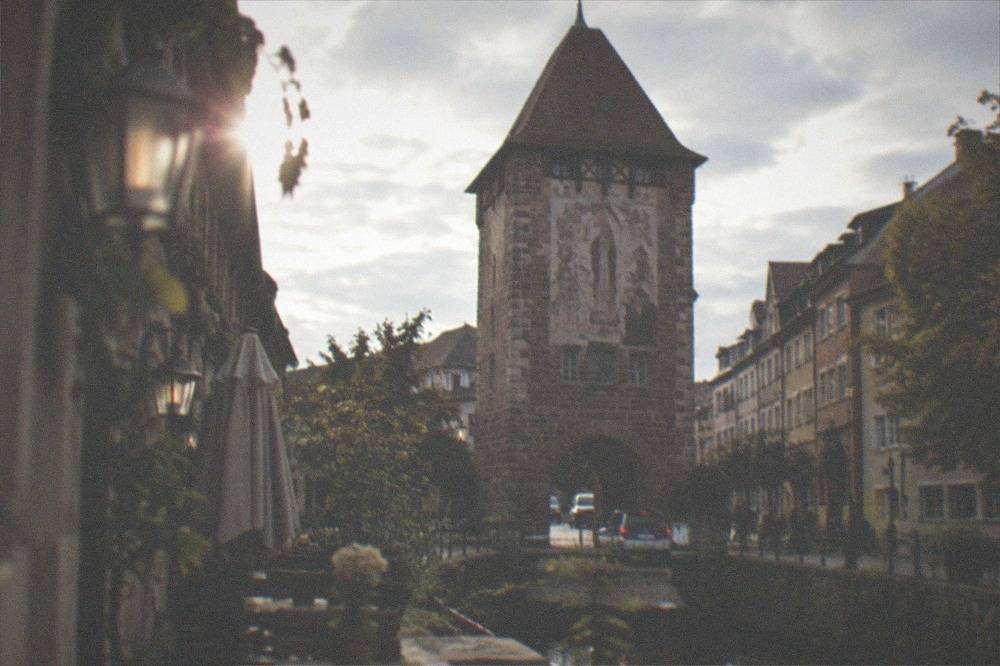
The Schwabentor is one of the two medieval city gates that survive from Freiburg's old fortified town, the one that guarded the road leading south and west out of the city. It is a stone tower with a clock face, standing where the southern old town meets the newer streets beyond, and it remains one of the most photographed structures in the city after the Münster. Its name is straightforward German: Schwaben means Swabia, the historic region to the south, and Tor means gate. It was the Swabian Gate, the exit for traffic bound for Basel and the lands beyond. The Martinstor, its surviving sibling, did the same job at the northern end of the old town.
The gate's practical role ended long ago, when the walls came down and the city grew past its medieval outline. What remains is a landmark and an anchor. Locals give directions by it. Tram lines pass within sight of it. And for a visitor it is the clearest single marker of where the atmospheric old streets begin, in the way that city gates always are.
A short orientation helps before you go. The table below collects the basics, drawn from the city's own visitor materials and this site's verified facts file.
| Question | Answer |
|---|---|
| What is it? | One of two surviving medieval city gates of Freiburg, the southern one |
| Its sibling gate | The Martinstor, at the opposite, northern end of the old town |
| What does the name mean? | "Swabian Gate," for the road toward Swabia and Basel it once guarded |
| What stands near it now? | The southern Altstadt, the stream streets, and tram lines running south |
| What does it cost to see? | Nothing. The gate is a public street landmark, visible from outside at any hour |
| Why do visitors care? | It anchors the southern old town and appears on most walking routes |
The gate rewards a slower look. Stand under it and the old street scale becomes obvious: everything in the Altstadt was built for foot traffic and carts, not cars. That scale is exactly why the old town is so walkable today, and why the gate still feels like a threshold rather than a traffic obstacle. For more on that street texture, see the companion page on the Freiburg Travel Guide and its overview of the old town, linked below.
Where The Schwabentor Stands In The Old Town
The gate sits at the southern edge of the Altstadt, a short walk from the Münsterplatz and the streams streets of the Gerberau and Fischerau, with the Schlossberg rising just to the east. From it, every major old town sight lies within an easy stroll, which is why the gate area works so well as a starting or ending point for a first walk through the city. Freiburg's old town is compact. A visitor can stand at the Schwabentor, look north toward the Münster's 116 m tower, and understand the whole medieval street plan in one glance: the gate, the gate square, the commercial streets running up to the cathedral.
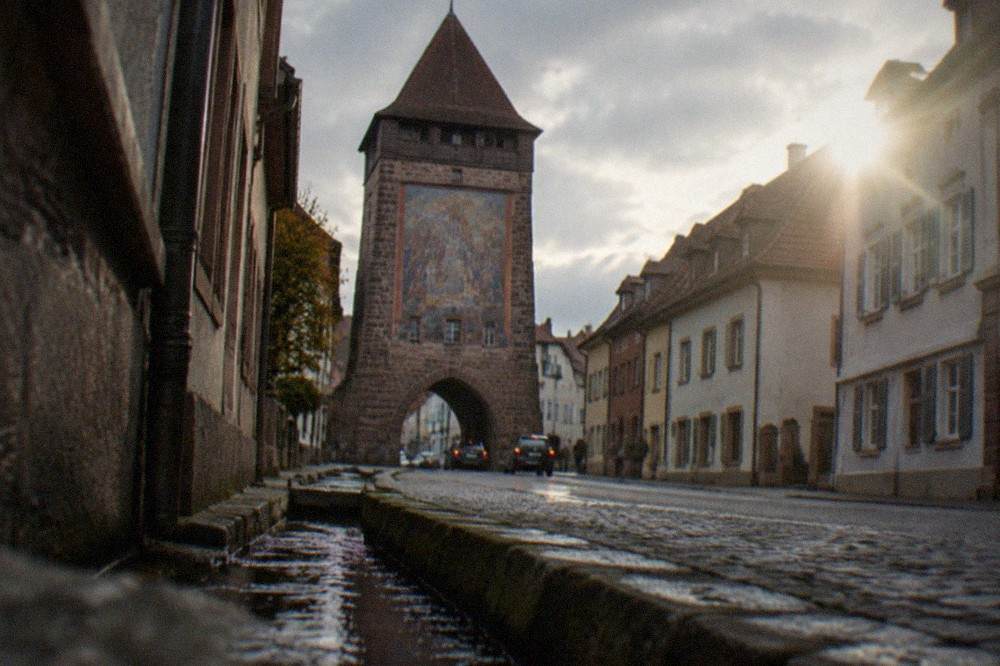
Walk north from the gate and the streets narrow into the best of the Altstadt. The little open gutters the city calls Bächle run along the kerbs, fed by stream water, and they are as much a part of the street picture as the buildings. The old stream-side lanes of the Fischerau and Gerberau sit just west of the gate area, low, quiet and lined with small restaurants. The Münsterplatz with its daily market lies a few minutes further on, up to 130 stalls strong on market days.
East of the old town the Schlossberg rises, and the quickest reward up there is the view back over the rooftops you just walked through. The Schlossberg itself is free to roam, and the inclined Schlossbergbahn lifts visitors up part of the way for €3.70 one way or €6.50 up and down, with child fares at €2.80 and €4.60. For the full picture of that hill, its paths and its tower, read the dedicated Schlossberg walking guide. For the water channels themselves, the guide to the Bächle covers their history and the local superstition about stepping in one.
If you prefer someone else to hold the narrative, the old town's commercial walking tours all work this same territory, gates included. The options below are the three this site highlights for the old town: a private two-hour walk with a local guide, a full private guided walking tour, and a one-hour express walk for visitors short on time.
What To See Within Five Minutes Of The Gate
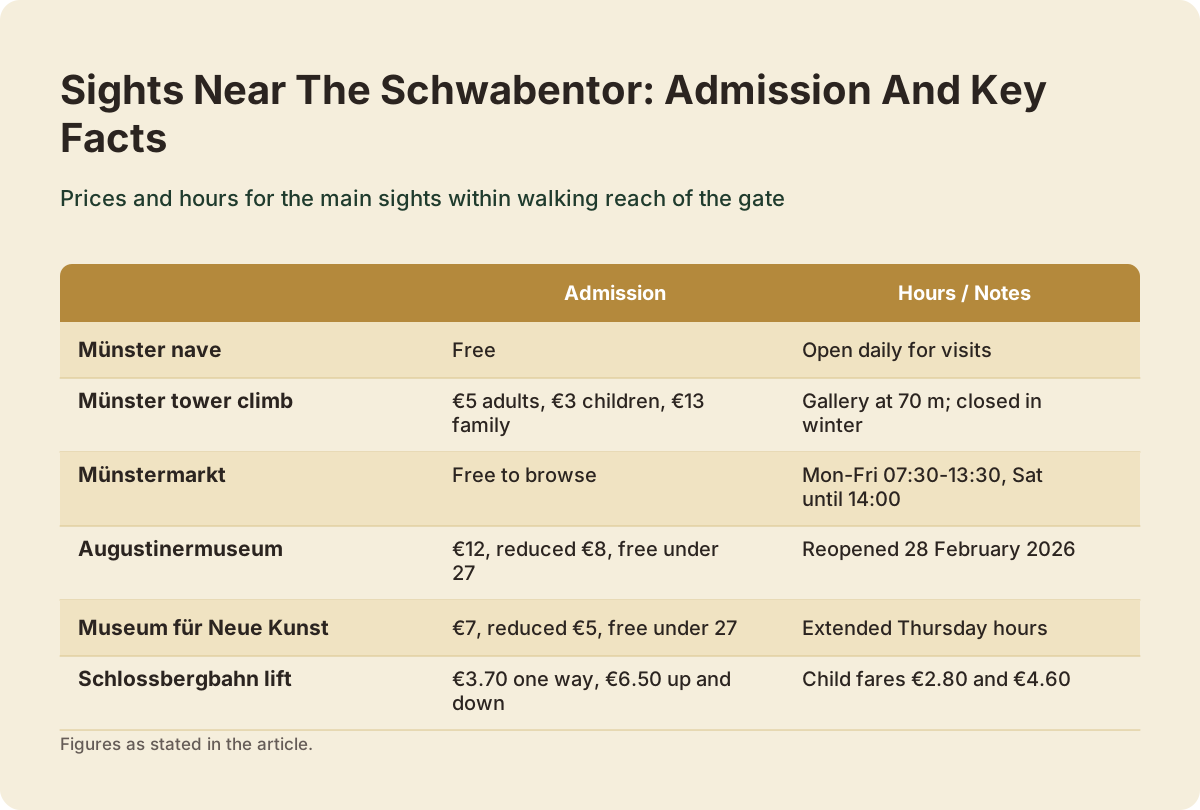
The heaviest concentration of sights near the Schwabentor runs north toward the Münster: the cathedral's free nave, the €5 tower climb to a gallery at 70 m, the Münstermarkt with up to 130 stalls, and the Augustinermuseum, which fully reopened on 28 February 2026 after more than two decades of renovation and now charges €12 admission. None of it needs a car or even a tram. The whole cluster is a walking district, and the gate is a sensible door into it.
Start with the Münster, the single structure that defines the city. The nave is free to enter. The tower climb is the paid highlight: the west tower stands 116 m tall, but visitors climb only to a gallery at 70 m, a detail the cathedral's own tower page states plainly, and the top gallery closes in winter. Hours are Monday to Saturday 11:00-16:00 and Sundays and holidays 13:00-17:00, with the last ascent about 15 minutes before closing. Tickets cost €5 for adults, €3 for children and teens, €13 for a family, and nothing for under-7s. Full details are on the official tower climb page.
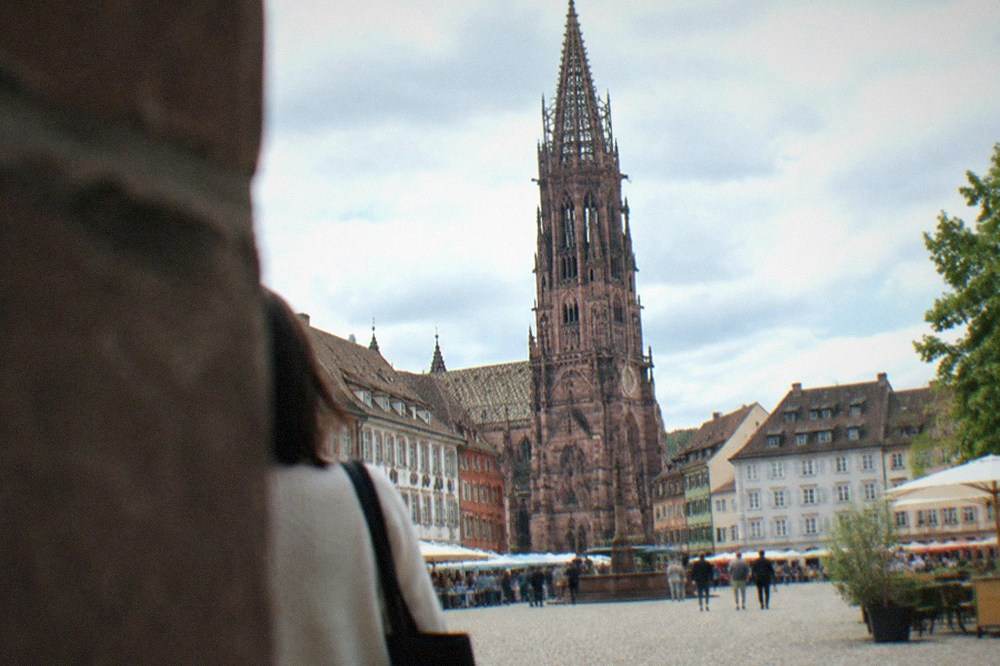
The Münstermarkt outside runs Monday to Friday from 07:30 to 13:30 and Saturday until 14:00, closed Sundays, holidays and 15 August. Flowers, bread, cheese, and the long red sausages the region is famous for all appear among the stalls. The Münsterplatz market guide covers the stall layout and the best hours to go.
The museums come next. The Augustinermuseum, the region's art and cultural history collection, finished its final renovation phase and fully reopened on 28 February 2026, adding roughly 1,600 m² of new exhibition space in the former convent building. Admission is €12, reduced €8, and the day ticket is valid across the other city museums. Entry is free for anyone under 27. The Museum für Neue Kunst charges €7, reduced €5, the Archäologisches Museum Colombischlössle €5, reduced €3, and the Dokumentationszentrum Nationalsozialismus is free. The under-27 free rule applies across the city museums, which makes them unusually good value for younger travelers and students.
| Sight | Distance from the gate | Admission | Notes |
|---|---|---|---|
| Münster nave | A short walk north | Free | Open daily for visits |
| Münster tower climb | A short walk north | €5 adults, €3 children, €13 family | Gallery at 70 m; top gallery closed in winter |
| Münstermarkt | On the Münsterplatz | Free to browse | Mon-Fri 07:30-13:30, Sat until 14:00 |
| Augustinermuseum | In the old town | €12, reduced €8, free under 27 | Fully reopened 28 February 2026 |
| Museum für Neue Kunst | In the old town | €7, reduced €5, free under 27 | Extended Thursday hours |
| Schlossberg and tower | East of the old town | Hill free, tower area on foot | Schlossbergbahn €3.70 one way |
For travelers who want the gate and its neighbors explained rather than just seen, a private walk is the format that fits. This site's related tour is the Hello Freiburg private two-hour city walk with a local guide, from $141, a format where the route and pace are yours to set.
Walking Tours That Pass The Schwabentor
The old town's guided walks all work the same compact streets, so the choice between them is really a choice of style: a classic city walk from $15 with 4.7 stars across 3,187 reviews, a dramatized tour with costumed actors from $17 with 4.9 stars across 497 reviews, or a private walk from $141 where the route is your own. The Schwabentor and Martinstor sit at either end of the district these tours cover, so gate sightings are close to guaranteed on any old town route.
The biggest review pool by far belongs to the Gässle, Bächle and More city tour, about 1.5 hours, from $15, rated 4.7 across 3,187 reviews. It is the standard first walk: lanes, gutters, gates and stories, at the lowest price point on the old town roster. For visitors who want the same ground with more theater, the Guided City Tours with Actors runs about 1.5 hours from $17 and carries a 4.9 rating across 497 reviews, the strongest score on a large pool among the city walks. Its darker sibling, the "Witches, Torture, Stakes" dramatized tour, covers the grimmer chapters from $17 with 4.7 stars across 97 reviews.
For something private, the Hello Freiburg two-hour private walk with a local guide starts at $141 and currently shows a single review, too few for a meaningful star rating. A private walk is the format to pick when the gates, the Bächle and the market squares are items on your own list rather than a fixed script.
Between those poles sit several strong mid-priced options. The Tour of the City with Cathedral Visit costs from $20 and holds 4.6 stars across 284 reviews. Highlights of the Old Town is from $17 with 4.6 stars across 236 reviews. The Exciting City Tour with Sightseeing and History runs about two hours from $26, rated 4.4 across 118 reviews. And for visitors with one free hour, the Express Walk with a Local covers the essentials from $90.
| Tour | Length | Price | Rating and reviews |
|---|---|---|---|
| Gässle, Bächle and More City Tour | ~1.5 hours | from $15 | 4.7, 3,187 reviews |
| Guided City Tours with Actors | ~1.5 hours | from $17 | 4.9, 497 reviews |
| Tour of the City with Cathedral Visit | ~1.5 hours | from $20 | 4.6, 284 reviews |
| Highlights of the Old Town | ~1.5 hours | from $17 | 4.6, 236 reviews |
| "Witches, Torture, Stakes" Dramatized Tour | ~1.5 hours | from $17 | 4.7, 97 reviews |
| Exciting City Tour with Sightseeing and History | ~2 hours | from $26 | 4.4, 118 reviews |
| Express Walk with a Local in 60 Minutes | ~1 hour | from $90 | 12 reviews, too few for a star claim |
| Hello Freiburg: Private 2-Hour City Walk | ~2 hours | from $141 | 1 review, too few for a star claim |
The most-booked classic walk deserves its own line here. The Gässle, Bächle and More city tour is the volume leader on this site's roster, and its combination of price and review depth makes it the sensible default for a first visit: Check availability.
Where To Eat And Drink Near The Schwabentor
Eating near the gate means the southern Altstadt's small restaurant lanes, the Münstermarkt for daytime grazing, and the Augustinerplatz a short walk north, where benches under plane trees make the city's most relaxed open-air aperitif spot; a seated tasting of four regional wines with onion tart starts at $31 as a bookable experience. The old town does not have a restaurant scene so much as a restaurant fabric, woven through the lanes on every side of the gate.
The stream streets west and south of the gate area, the Fischerau and Gerberau, hold a dense run of small kitchens, wine taverns and beer gardens. The scene has been moving, too. A Trotte wine bar opened in the Fischerau in August 2026 with about 400 wines on the list, twelve by the glass, focused on rarities from Germany, France and Burgundy. Ludvigs opened as the region's first standing wine tavern after a long renovation. And Augustiner am Platz, the first Augustiner brewery house in Baden-Württemberg, opened in October 2025 on Augustinerplatz serving Bavarian and Badische specialties alongside Augustiner beers and regional wines. The Augustinerplatz guide covers that square in full.
For regional depth, the Baden wine primer explains what grows in the vineyards around the Kaiserstuhl, and the Freiburg food guide maps the city's specialties, from the long red sausage at the market to Black Forest ham and cake. Tasting fees and menu prices are planning figures rather than fixed promises: check the room or the listing before you order. If you want tasting built into a booked experience, the wine hike with tasting runs from $79 and about 2.5 hours, rated 4.4 across 167 reviews.
| Option | What you get | Where |
|---|---|---|
| Münstermarkt stalls | Bread, cheese, flowers, the long red sausage, up to 130 stalls | Münsterplatz, Mon-Sat mornings |
| Stream street taverns | Small kitchens and wine bars along the water | Fischerau and Gerberau lanes |
| Augustiner am Platz | Bavarian and Badische dishes, Augustiner beers, opened October 2025 | Augustinerplatz |
| Trotte wine bar | Around 400 wines, twelve by the glass, opened August 2026 | Fischerau |
| Tasting of 4 Wines at Town Hall Square | Four regional wines with onion tart, from $31, about 1 hour | Rathausplatz |
| Veni, Vidi, Vino wine hike | Guided hike with tasting, from $79, about 2.5 hours, 4.4 from 167 reviews | Vineyards near the city |
How To Reach The Schwabentor By Tram, Bus Or On Foot
Arriving at the gate by tram costs €3.00 for a single zone-1 ticket, €2.70 on a smartphone, or €7.20 for a one-zone day ticket; a three-day RVF Welcomekarte at €27.00 also includes the Schauinslandbahn cable car, and Freiburg's old town is compact enough that most visitors simply walk to the gate from the station area. Freiburg runs one of Germany's most-used tram networks, and the tracks heading south out of the old town pass within sight of the gate itself.
A few fare details matter. The Deutschlandticket costs €63.00 per month from January 2026, useful only for longer stays. Single tickets on the new electric buses are sold by cashless machines on board, with no cash or driver sales on those vehicles, a change worth knowing before boarding. And visitors staying in Freiburg should not expect the KONUS guest card: Freiburg city is not a KONUS municipality. The visitor product for a Freiburg base is the RVF Welcomekarte, three days at €27.00 for adults, covering buses and trains and including the Schauinslandbahn plus a small culture bonus. The official Welcomekarte page lists the current terms.
On foot, the whole equation is simpler. The city's walking, cycling and public transport share of trips rose from 67% in 2017 to 76% in 2023, and the old town is closed to through car traffic in most places, so walking is not just possible but the default. From the main station, follow the tram lines into the old town and keep the Münster tower in view; the gate sits at the far southern end of the same street grid. The getting around Freiburg guide explains the tram lines, tickets and the bike-share system in detail.
| Ticket or sight | Price | Good for |
|---|---|---|
| RVF single, zone 1 | €3.00, smartphone €2.70 | One tram or bus ride |
| RVF day ticket, 1 zone | €7.20 | A day of hopping around the city |
| RVF Welcomekarte | €27.00, 3 days | Buses, trains, plus the Schauinslandbahn |
| Deutschlandticket | €63.00 per month | Longer stays using regional transport |
| Münster tower climb | €5 adults, €13 family | The best old town view from above |
| Schlossbergbahn | €3.70 one way, €6.50 return | The quickest lift up the Schlossberg |
The Schwabentor Through The Year: Markets, Mess And Fasnet
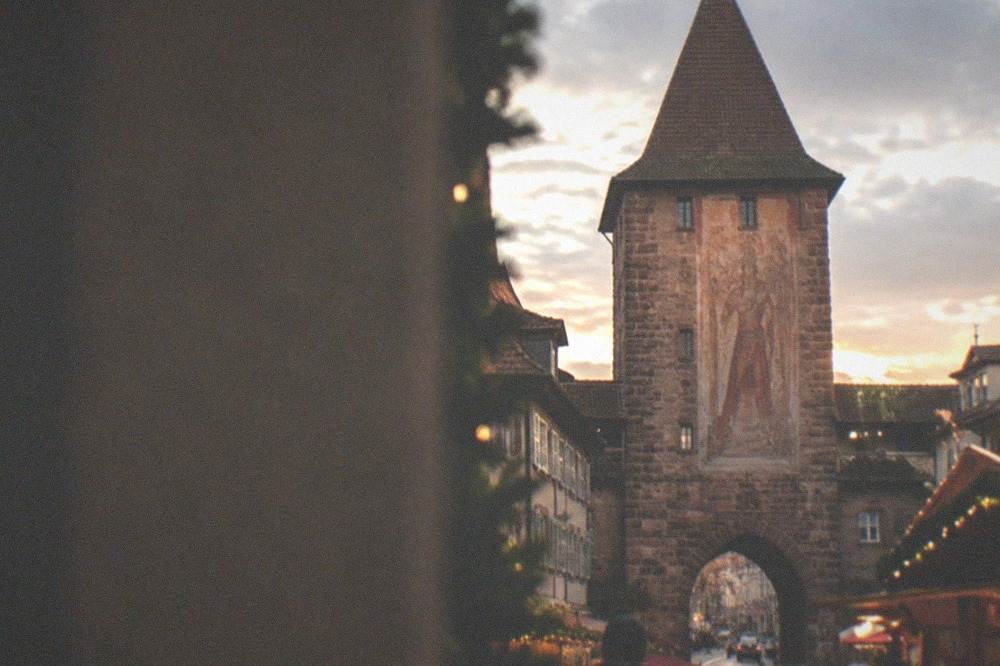
The squares and lanes around the gate change character with the calendar: the Christmas market runs 19 November to 23 December 2026 with free entry, the spring fair takes the city 14 to 25 May, the wine festival drew a record crowd of about 110,000 in July 2026, and Fasnet brings costumed street carnival in February. The gate itself stands through all of it, which is part of its appeal as a photographic constant against changing seasonal backdrops.
The Christmas market is the biggest draw, spreading across the Rathausplatz, Kartoffelmarkt, Unterlindenplatz and Franziskanerstraße, all within the same old town the gate anchors. Opening day is 19 November from 14:00, weekday hours run 10:00-20:30, Sundays 11:30-19:30, with a closure on 22 November and a final evening on 23 December until 19:30. Entry is free, mulled wine and bratwurst are not. The dates and rules are confirmed for 2026 on the official Christmas market page.
The rest of the year fills in quickly. The Frühjahrsmess, the spring fair, runs 14 to 25 May 2026. The wine festival on the Münsterplatz set its visitor record in early July 2026 with roughly 110,000 guests over six days, and its 2027 dates are already set for 1 to 6 July. The Zelt-Musik-Festival runs 15 July to 2 August 2026 at Mundenhof. The Herbstmess follows 16 to 26 October 2026. And Fasnet, the regional carnival, peaks in February: in 2027 the storming comes on 4 February, street Fasnet on 6 and 7 February, and the great procession on 8 February at 14:00. On these days the old town is crowded, joyful and difficult to photograph empty, so plan accordingly.
The dramatized walks earn their keep in this season. The Guided City Tours with Actors, from $17 and rated 4.9 across 497 reviews, plays the city's history in costume, and at Christmas the show tours with Betty BBQ take over the evening lanes: the Christmas Drag Show Walk is from $43 with 4.6 stars across 55 reviews.
| Event | Dates | What it is |
|---|---|---|
| Christmas market | 19 Nov-23 Dec 2026 | Stalls across Rathausplatz and nearby squares, free entry |
| Frühjahrsmess | 14-25 May 2026 | Spring fairground with rides and food |
| Freiburg Weinfest | 1-6 July 2027 (record ~110,000 in 2026) | Regional wines on the Münsterplatz, free entry |
| Zelt-Musik-Festival | 15 Jul-2 Aug 2026 | Nineteen days of music at Mundenhof |
| Herbstmess | 16-26 Oct 2026 | Autumn fair with fireworks finale |
| Fasnet | 4-8 Feb 2027 | Costumed street carnival, procession 8 Feb at 14:00 |
The Schwabentor earns its place on any Freiburg itinerary not as a destination that fills a day but as the fixed point that organizes one. Two gates survived the centuries, and the southern one holds the quieter, more livable half of the old town around it: the stream lanes, the wine taverns, the market mornings, the tram that slides past on its way south. Give it half an hour on the way to the Münster, or build the whole southern old town walk around it. Either way, if a guided format appeals, the three walks below are the ones this site rates for the job.
Common Questions About The Schwabentor
What is the Schwabentor in Freiburg?
The Schwabentor is one of the two medieval city gates that survive from Freiburg's old fortified town, and it guarded the road leading south toward Swabia and Basel, which is where its name comes from. Today it is a free, always-visible landmark marking the southern edge of the old town.
Is the Schwabentor free to visit?
Yes. The gate is a public street landmark with no admission and no opening hours, visible from outside at any time of day. Paid attractions nearby include the Münster tower climb at €5 for adults and the Augustinermuseum at €12.
How far is the Schwabentor from the Freiburg Münster?
The two stand in the same compact old town, a short walk apart along the pedestrian streets, with the Münster's 116 m tower visible from the gate area as an orientation point. No timetable is needed; the whole route is pedestrian.
Which tram goes to the Schwabentor?
Tram lines run south out of the old town past the gate area, and a zone-1 single ticket costs €3.00, or €2.70 bought on a smartphone. A one-zone day ticket is €7.20, and the three-day RVF Welcomekarte at €27.00 also includes the Schauinslandbahn cable car.
What is there to do near the Schwabentor with kids?
Plenty within walking distance: the Münstermarkt stalls, the free Schlossberg hill with its walking paths, and the €13 family tower climb at the Münster, with under-7s climbing free. The Augustinermuseum is free for everyone under 27.
When is the best time of year to see the Schwabentor?
December, when the Christmas market runs 19 November to 23 December 2026 across the nearby squares, or July, when the wine festival fills the Münsterplatz. For empty photographs, early mornings on market days, when stalls are being set up from 07:30, are the quietest the old town gets.