Keidel Bad Freiburg: A Practical Guide To The City's Thermal Baths
Freiburg has a genuine mineral thermal bath tradition, and the Keidel is where locals actually go to soak. This guide covers how to plan a visit, how to get there on the city's trams, what it costs to move around, and how a spa day fits alongside everything else the city does well.
Short answer
The Keidel is Freiburg's mineral thermal bath complex, and a visit needs almost no planning beyond a swimsuit and a towel: a single RVF zone 1 ticket costs €3.00, a day ticket €7.20. Plan around off-peak hours, give the baths half a day, and pair them with a slow evening in the old town.
Keidel Bad Freiburg: A Practical Guide To The City's Thermal Baths
Freiburg does a lot of things loudly: a red-sandstone minster, streams running along the streets, a market that fills the square most mornings. The Keidel baths are the quiet opposite of all that. This is a mineral thermal bath complex on the city's western edge, the kind of place where Freiburgers disappear for two hours on a grey Tuesday and come out looking refurbished. This guide is for the visitor who wants the same thing: what the Keidel is, how to fold a soak into a real itinerary, what the tram there costs, and what to do with the rest of the day once you are pruned and hungry. Where the baths' own details are concerned, hours and admission change with seasons and refurbishments, so the plan below points you to the operator's own listing rather than printing numbers that could go stale the month after you read them.
What Is The Keidel Bad In Freiburg?
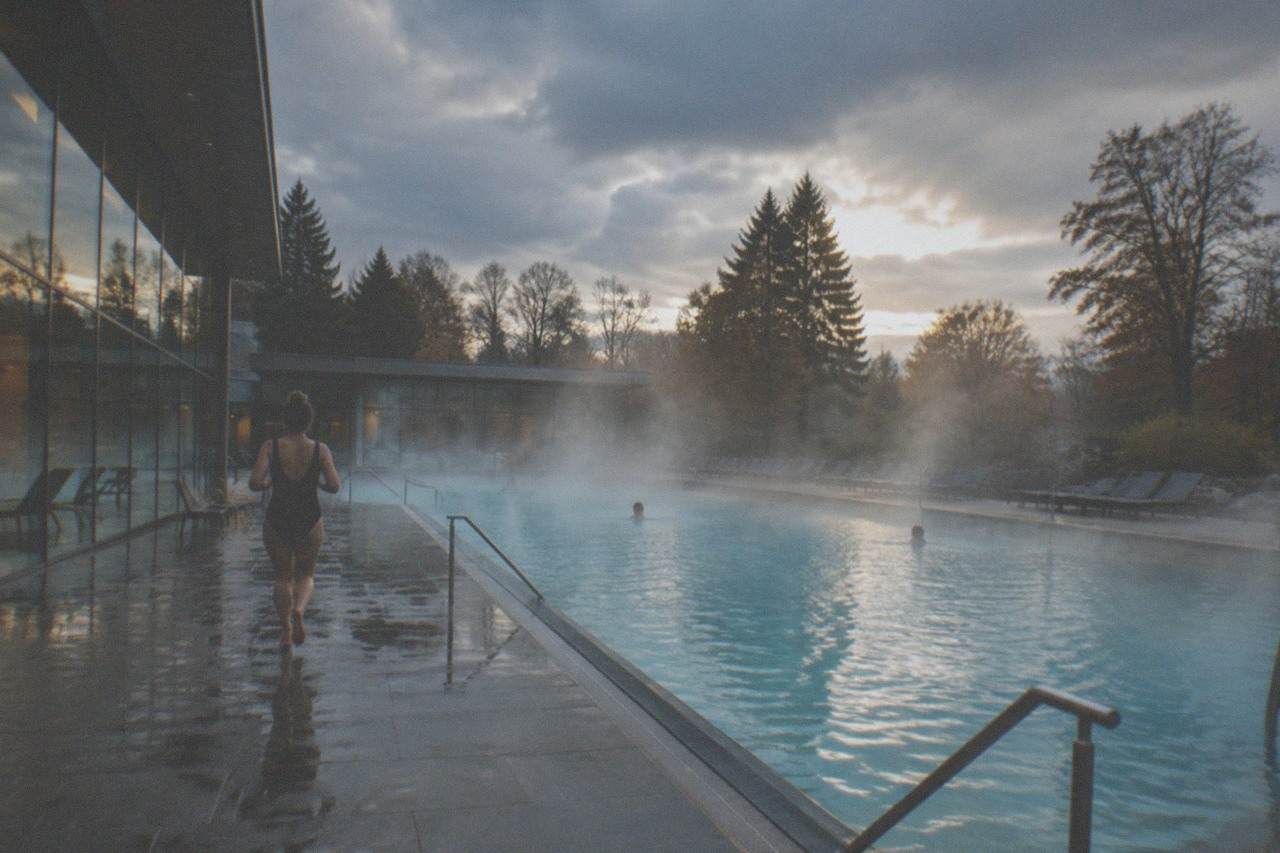
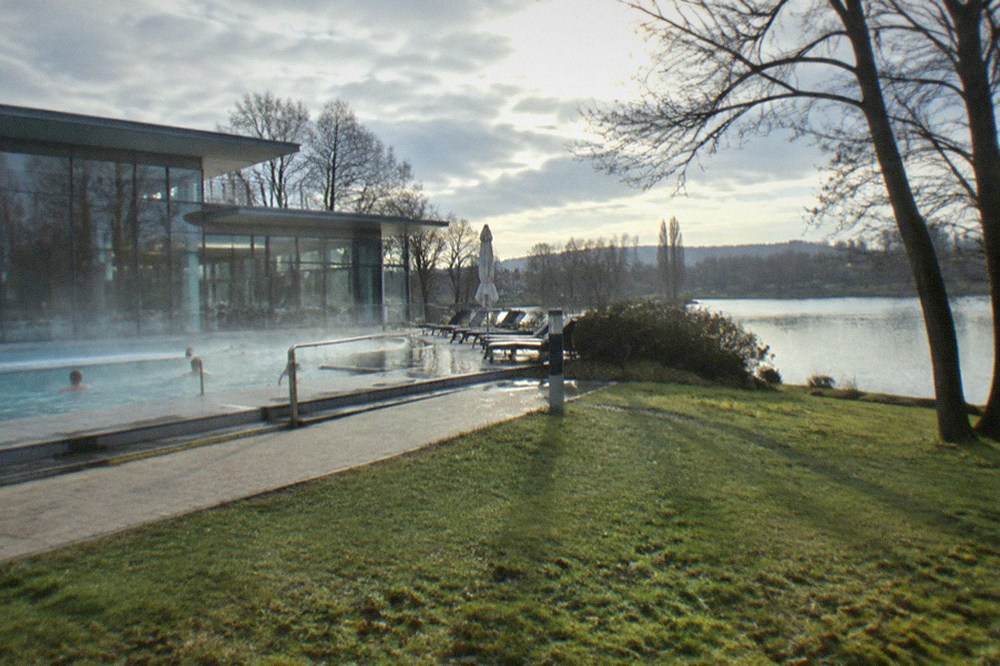
The Keidel is Freiburg's mineral thermal bath complex, a purpose-built spa facility drawing warm mineral water for indoor and outdoor pools, saunas and relaxation spaces, sitting in a quiet residential district a short tram ride west of the old town. It is a working local institution rather than a resort, and it anchors the city's whole wellness offer. Freiburg's spa culture sits inside a broader Baden tradition. The wider region, from Baden-Baden's historic bathing houses down to the small Kur parks of the Black Forest towns, grew up around mineral springs, and Freiburg's own contribution is a modern municipal-scale facility rather than a palace. That matters for what you should expect: the Keidel is a place with a pool hall, thermal water, sauna areas and a lot of regulars, not a luxury hotel spa with robes and champagne.
The distinction is worth dwelling on because it changes how you plan. A resort spa sells a half-day package and expects you to surrender to it. A city thermal bath sells blocks of time, and the crowd around you shifts with the clock: retirees mid-morning, parents with children in the afternoon splash hours, people straight from work in the early evening. The German sauna culture here is also genuinely textile-free in its designated areas, which surprises some first-time visitors. Nothing about that is exotic to the locals, and no one will make a thing of it, but knowing in advance saves an awkward ten minutes at the changing lockers.
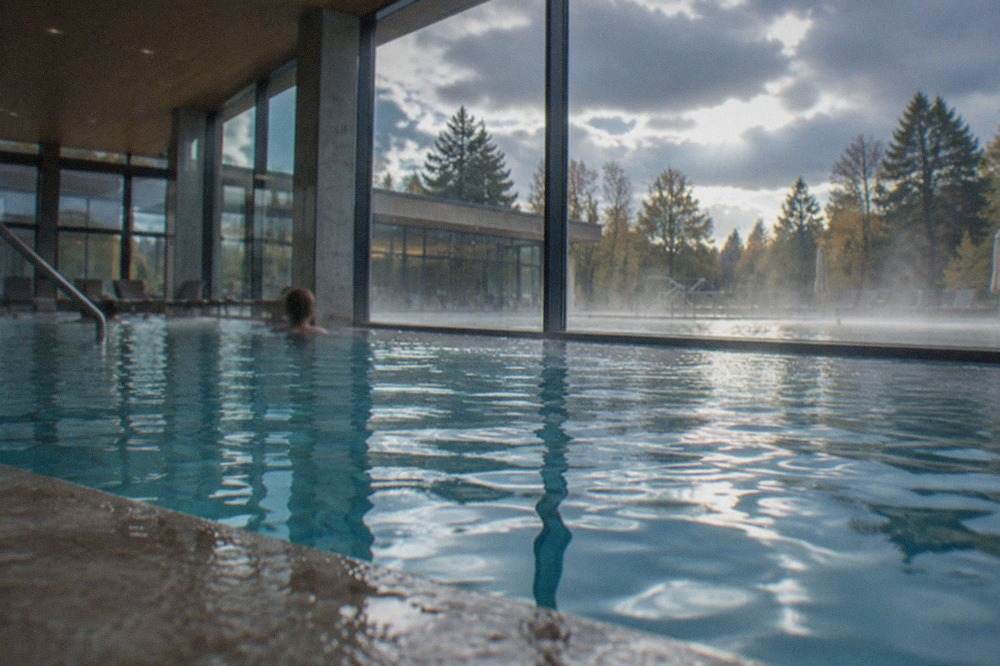
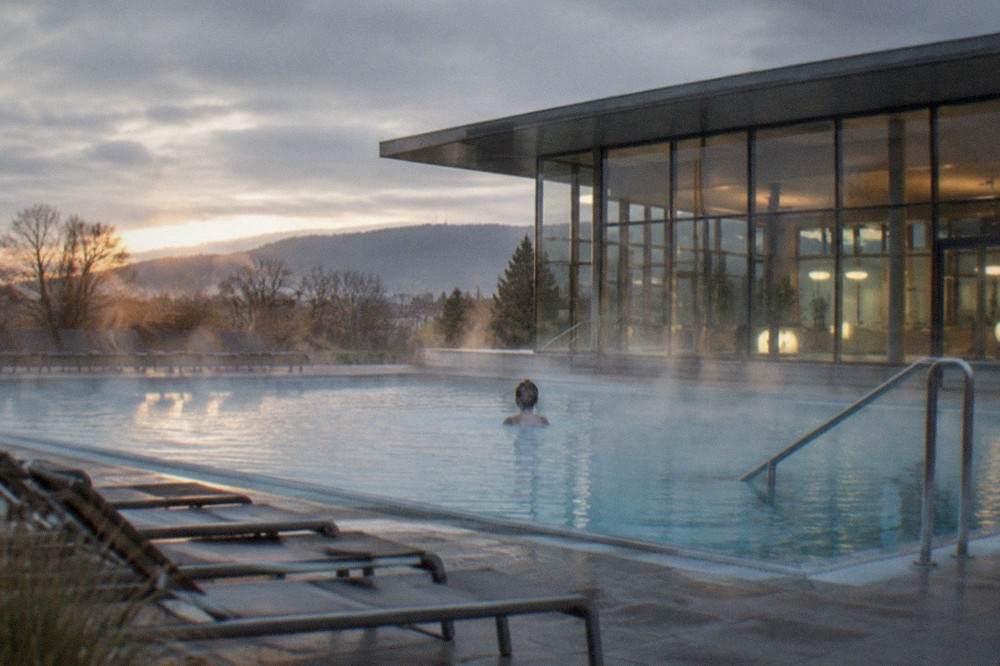
What the water does is the actual draw. Thermal mineral water at bathing temperature does the thing a hot bath does, but sustained, and the outdoor pools are the reason to pick a cold or rainy day for a visit. Steam off the surface, rain on the roof of the pool hall, that specific German contentment of being warm while the weather is not. If your trip lands in the darker months, the baths may honestly be the best two hours of the day.
How To Plan A Visit To The Keidel Baths
Plan the Keidel as a half-day activity: pick an off-peak block, bring a swimsuit, towel and flip-flops, budget for whichever zone of the facility you want, and book or check the operator's own listing for current hours, session lengths and prices, since those change with seasons and maintenance. The first decision is pool or sauna. German thermal baths typically run two distinct offers: a swimming and thermal pool area where swimwear is worn, and a sauna area where it is not. Some visitors want the water, some want the heat, and the price structure usually reflects which you choose, with combined access costing more than a single zone. Decide before you queue rather than at the counter.
Timing is the second lever. The baths are busiest in late afternoon and on weekends, quietest mid-morning on weekdays. A soak between roughly ten and one buys you calm water and an empty deck chair. School holidays flip that pattern, and Freiburg has a lot of families, so a weekday in term time is the sweet spot. Session blocks are usually sold in steps, an hour or two, with the option to extend, and the front desk staff in a university city handle English without drama.
What to bring: swimsuit, towel, flip-flops and a bottle of water. Towels are often rentable but not always, and dragging a hotel towel across town on a tram is a nuisance you can avoid with a cheap microfibre one. If you plan the sauna areas, a larger towel or two to sit on is the local convention. Lockers take a euro coin or a deposit token in most German facilities, so keep a coin loose.
The honest gap in any written guide, including this one, is the live schedule. Baths close for cleaning days, swap sauna hours seasonally, and adjust prices year to year. The figures that stay reliably current are the ones the operator prints on its own site, so treat that as the single source for hours and admission, and treat everything else here as the shape of the visit rather than its price list. For the rest of your stay, pairing matters more than precision, and the sections below handle that.
If a soak is one item on a longer list, the escorted options are worth a look alongside it. The live listings carry current availability, and the operator's pages hold the session details this guide deliberately does not invent.
Where The Baths Fit In A Day Around Freiburg
A soak slots most naturally into the second half of a day: markets and the minster in the morning, lunch, the Keidel from mid-afternoon, then dinner somewhere close to the tram line home. Reversing it, baths first, works too, but leaves you freshly relaxed at the exact moment the old town gets loud. The afternoon-to-evening order is the one locals use, and for a good reason. Freiburg's morning program is the part that rewards energy. The Münstermarkt runs weekday mornings until 13:30, with up to 130 stalls, and the minster itself is free to enter, its 116 m west tower climbable to a gallery at 70 m for €5 in the daytime hours listed on the minster's own page. By early afternoon you have walked a few kilometers, and a warm pool is an easy sell.
The reverse order has one real use case: jet lag. If you have landed that morning and your body clock is in another time zone, two hours of warm water in the afternoon can be a merciful way to stay awake until a reasonable German dinner hour without walking yourself into a worse state. Arriving via Basel EuroAirport, the dedicated airport bus to Freiburg runs daily and takes about an hour, so a late-morning hotel check-in and an afternoon soak is a realistic first-day plan.
The pairing also works across multiple days. On a two or three day stay, the baths earn their slot on the day you would otherwise waste: the rainy afternoon, the post-hike evening, the Sunday when many shops shut and the city goes quiet. A useful planning anchor for the wider trip is our one day in Freiburg itinerary, which covers the morning half of this pairing in order, and for a longer stay the five day Freiburg and Black Forest plan leaves deliberate room for exactly this kind of slow afternoon.
One honest note on crowds: Freiburg is a small city with big visitor numbers, over a million arrivals and more than two million overnight stays recorded in 2025 by the official tourism release, and hotel occupancy was 55.2% that year. The baths absorb locals and visitors alike without much friction, but a holiday-weekend sauna is a different experience from a Tuesday. Plan around it.
Getting To The Baths: Trams, Tickets And Timing
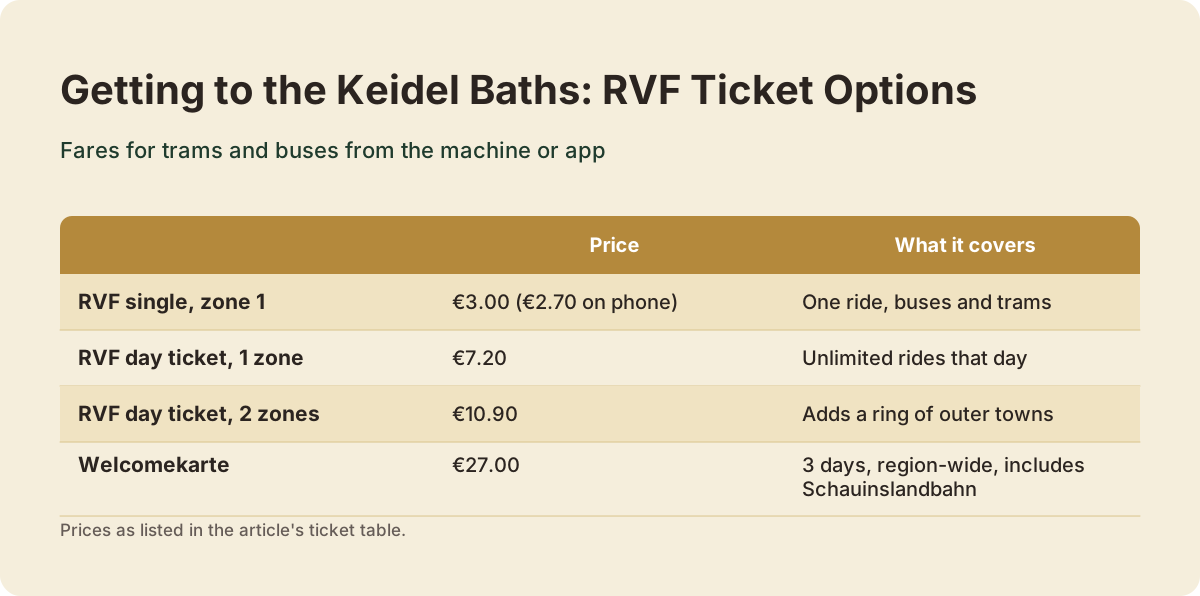
The Keidel sits west of the center in a residential district reached by Freiburg's tram network, and a single RVF zone 1 ticket at €3.00 covers one ride, with a day ticket at €7.20 if the baths are one stop on a longer route. Buy from the platform machines or an app before boarding. The tram is the whole answer here, and Freiburg's network is genuinely easy: lines radiate from the center, the Bertoldsbrunnen junction is the hub where most of them cross, and the ride toward the baths is short. Check the VAG network map for the current line serving the district, since construction works reroute individual lines for weeks at a time.
The ticket side is where visitors lose small amounts of money for no reason. A single zone 1 ticket is €3.00 at the machine, €2.70 on a smartphone, and children pay €1.80. If you are making three or more trips in a day, the day ticket at €7.20 wins. Visitors staying several days can look at the RVF Welcomekarte: 3 days at €27.00 for adults, covering buses and trains across the region and including the Schauinslandbahn cable car, details on the RVF Welcomekarte page. That card is the visitor product in Freiburg; the KONUS guest card belongs to Black Forest member towns, not Freiburg itself, so do not build a plan around receiving one with a city hotel stay.
| Ticket | Price | What it covers |
|---|---|---|
| RVF single, zone 1 | €3.00 (€2.70 on phone) | One ride, buses and trams |
| RVF day ticket, 1 zone | €7.20 | Unlimited rides that day |
| RVF day ticket, 2 zones | €10.90 | Adds a ring of outer towns |
| Welcomekarte | €27.00 | 3 days, region-wide, includes Schauinslandbahn |
Two practical notes from the transport side of the research. Freiburg's fleet went roughly two-thirds electric across 2025, with 45 electric buses and a second charging port opened at the depot, and some of the newer buses sell tickets only from cashless machines, so a card or the app beats coins. Second, the tram lines carry a fair amount of track renewal in 2026, including a Line 3 replacement service running through mid-October, so a quick check of current VAG service notices on the day you travel saves a surprise.
Once you are at the district, the baths are a standard signposted city facility, a few minutes' walk from the stop. Coming back, the same junction logic applies in reverse, and the evening frequency is generous enough that you will not be planning your soak around the last tram.
Rainy Days, Winter Days And The Thermal Ritual
The best days for the Keidel are the ones that are worst for everything else: Freiburg averages 886.5 mm of rain a year with a grey November, and a rainy or cold afternoon is exactly when an outdoor thermal pool with steam rolling off it turns from an option into the plan. This is the single most useful thing to understand about a Freiburg spa visit. The city's shoulder seasons are lovely and quiet, but they are wet. November carries 66.2 mm of rain and about 66.6 hours of sun across the whole month; December is grimmer still at 56.3 hours. If your November trip hits a two-day rain front, the minster and the museums fill one afternoon, and the baths fill the other, comfortably.
Winter works the same way. Freiburg is one of Germany's warmest and sunniest cities, with an annual mean of 11.0°C, but warmest is relative: January averages 2.5°C with 15.7 frost days, and a hot outdoor pool at 2°C air temperature is one of travel's quietly great experiences. The contrast is the point. Every local in the water with you knows it. More of these guides are collected on Freiburg Travel Guide.
The ritual itself deserves a paragraph. Arrive, change, shower properly before entering, which is both hygiene and etiquette, and take the first ten minutes slowly. German bathers treat the move between hot water, cool air and rest as the whole method, not a bonus. Sit outside on a deck chair between rounds with the water bottle you brought. In the sauna areas, the rules are silent, towel-under-you, no phone. Violating the phone rule is the one thing that will genuinely annoy people.
For more on the wet-weather problem the baths solve, our rainy day in Freiburg guide lays out the full indoor program, museums included, and the Freiburg in winter page covers the colder months, from the Christmas market dates to what stays open. Both pair naturally with this one: the baths are the evening half of a rainy-day plan, the museums the morning half.
Other Ways To Unwind In And Around Freiburg
If the baths are full, closed or simply not your thing, Freiburg has a strong bench of alternatives: the free Schlossberg hill and its 33.27 m lookout tower, the Schauinslandbahn cable car to a mountain summit, the calm Seepark, and the city's under-27-free museums, each with verified admission figures listed below. The cheapest unwind in the city is also the most obvious: walking up the Schlossberg. The hill itself is free, the views over the red rooftops and the minster tower are the canonical ones, and the funicular exists for the way down, the Schlossbergbahn charging €3.70 for a one-way adult ride or €6.50 return, per its own tariff page. For travelers, the wider region adds the big one: the Schauinslandbahn, a 3,600 m cable car running daily 09:00-17:00 with an adult return at €15.00, according to the official Schauinslandbahn tariff page, and included in the Welcomekarte mentioned above. Note its autumn overhaul closure, 16 November to 4 December in the current published schedule.
| Unwind option | Cost | Status |
|---|---|---|
| Schlossberg hill and paths | Free | Always open |
| Schlossbergturm climb | Free | Reached on foot |
| Schlossbergbahn funicular | €3.70 one way, €6.50 return | Verified tariff page |
| Schauinslandbahn cable car | €15.00 adult return, €12.00 single | 09:00-17:00 daily, closed 16 Nov-4 Dec for overhaul |
| Augustinermuseum | €12, reduced €8, free under 27 | Fully reopened 28 Feb 2026 after renovation |
| Museum für Neue Kunst | €7, reduced €5, free under 27 | Open, Thursday hours to 19:00 |
The museums deserve the plug they get in that table. The Augustinermuseum completed more than two decades of phased renovation and fully reopened on 28 February 2026, adding around 1,600 m² of new exhibition space in the former convent building and cellars, and its day ticket is valid across the other city museums. A slow museum afternoon is a different kind of rest from a thermal pool, but it is rest, and the under-27 free entry at all city museums makes it the bargain option for younger travelers. The Seepark, a 1980s garden-art landscape that gained heritage protection in 2026, is the free outdoor version: lake, lawns, a replaced and reopened shore bridge.
Guided walks slot into the same slow-evening slot as a soak, and a couple on the roster fit the mood. Betty BBQ's travestie city tour is a Freiburg institution, roughly 80 minutes of drag-hosted old town storytelling, rated 4.9 across 140 reviews, and an evening laugh after an afternoon in the water is a genuinely good day.
For a calmer alternative, a 60-minute walk with a local covers the highlights at a spa-day pace; it runs from $92 on the live listing, rated 4.7 across 23 reviews. And for travelers who would rather drift at their own speed after drifting in the water, a self-guided audio tour in English starts from $9 and pairs with any evening you like. Whichever style suits, the listings below carry the current times and terms.
Between those two, the self-guided option is the one that bends most easily around a long soak, since you can start it whenever the water finally releases you.
When To Go: Weather, Crowds And Seasonal Timing
The best Keidel weather is bad weather: November through February delivers the rain, cold and short days that make an outdoor thermal pool magical, while July and August, averaging 20.1°C and 19.7°C, turn the baths into a cooldown rather than a warm-up. Shoulder seasons split the difference with smaller crowds. The table below carries the DWD 1991-2020 normals for the Freiburg station, and it reads like a planning tool once you know what to look for. May is the wettest month at 103.4 mm, so a May visit is a baths week waiting to happen. September still averages 15.4°C and 176.2 hours of sun, which makes it the best all-round month in the city and the one where you must decide between the pool and the trail.
| Month | Mean °C | Rain mm | Sun hours | Baths verdict |
|---|---|---|---|---|
| Jan | 2.5 | 48.6 | 64.7 | Prime soak weather |
| Mar | 7.0 | 54.3 | 146.8 | Good, cold snaps |
| May | 14.9 | 103.4 | 206.8 | Wettest month, plan the pool |
| Jul | 20.1 | 92.2 | 252.2 | Heat relief |
| Sep | 15.4 | 77.4 | 176.2 | Best all-round month |
| Nov | 6.1 | 66.2 | 66.6 | Soak, then sauna |
Crowd timing follows the same curve inversely. August is the peak visitor month and the school holiday month, and the baths fill with families in exactly the hours you would want them quiet. December belongs to the Christmas market, which in the current published dates runs 19 November to 23 December across Rathausplatz and the other old town squares, and a market evening plus a late soak is the best cold-weather double the city offers. For the fuller seasonal picture, including the events calendar, see the best time to visit Freiburg guide.
Eating Before And After The Soak
Eat light before the baths and late after them: a market or bakery lunch before a soak is the local pattern, and the evening options cluster back toward the old town and the tram corridors, where Badische taverns, the Markthalle and a growing wine-bar scene cover every budget from a €3 slice to a Michelin-starred dinner. The before-half is easy. The Münstermarkt's up to 130 stalls run weekday mornings until 13:30, and a Bratwurst or a piece of quiche from a market stand is the correct pre-soak weight. The Markthalle, the covered market hall off the old town, does the same job all day and in any weather.
The after-half is where Freiburg quietly excels. The city holds five one-star restaurants in the 2026 Michelin Guide, Jacobi, Zur Wolfshöhle, the Colombi Zirbelstube, Hawara and Eichhalde, unchanged from the previous year. You do not need any of them after a soak, but it is worth knowing the ceiling is there. The floor is excellent too: Badische wine taverns, the long student tradition of cheap eats, and a wine-bar scene that added both a first Stehausschank and a new 400-bottle cellar bar in Fischerau during 2026, with a Bavarian-Badische brauhaus opening on Augustinerplatz in late 2025. For the full picture, the Freiburg food guide and the wine and tavern walkthrough cover both ends of the budget.
One pairing note: the Übernachtungsteuer, Freiburg's overnight tax of 5% of the net room price, applies to private stays and, since July 2023, business stays, with under-18s exempt, details on the city's official overnight tax page. It is not a spa charge and has nothing to do with the baths, but it appears on hotel bills and confuses visitors who expected a Kurtaxe, a thing Freiburg does not have.
Common Questions About The Keidel Baths
Do I need to book the Keidel baths in advance?
Usually not. City thermal baths in Germany sell time blocks at the desk, and weekday sessions rarely sell out. Check the operator's own listing for current hours, prices and any maintenance closures before you travel, and treat any changes there as the authoritative version.
What should I bring to the Keidel baths?
A swimsuit, a towel, flip-flops and a water bottle cover the pool areas. If you plan the sauna areas, bring a larger towel to sit on, which is the local convention. Lockers generally take a euro coin or deposit token, so keep one loose.
How do I get to the Keidel baths from the old town?
By tram, using the line serving the western district. A single RVF zone 1 ticket costs €3.00, or €2.70 on a smartphone, and a day ticket is €7.20 if the baths are one stop among several. Buy before boarding, since some of the newer electric buses only sell from cashless machines.
Are the Keidel baths good in winter?
Yes, winter is their best season. Freiburg averages just 2.5°C in January with over 15 frost days, and an outdoor thermal pool in cold air is a genuinely memorable experience. The outdoor pool and sauna areas are the parts to prioritize.
Can I combine the baths with a guided tour the same day?
Easily. A soak in the afternoon followed by an evening walk is a natural pairing, and the tours on this page, from a 60-minute local walk to the drag-hosted old town show, all run in the evening hours that follow a thermal afternoon.
Is the Keidel suitable for children?
The swimming and thermal pool areas are family-oriented and busier in the after-school hours and school holidays, while the sauna areas are adult in convention and atmosphere. If you are visiting with children, aim for the pool zone at off-peak hours and check the operator's listing for any age restrictions on specific areas.
Before you lock the day in, these three options cover the escorted half of the pairing, from an evening show walk to short local-led tours that fit around a long soak.