Freiburg In Winter: A Practical Cold-Weather Guide
Freiburg in winter is quieter, cheaper to sleep in and largely indoor-first: a six-week Christmas market, reopened museums, a cable car that keeps running, and short, grey days that reward a plan.
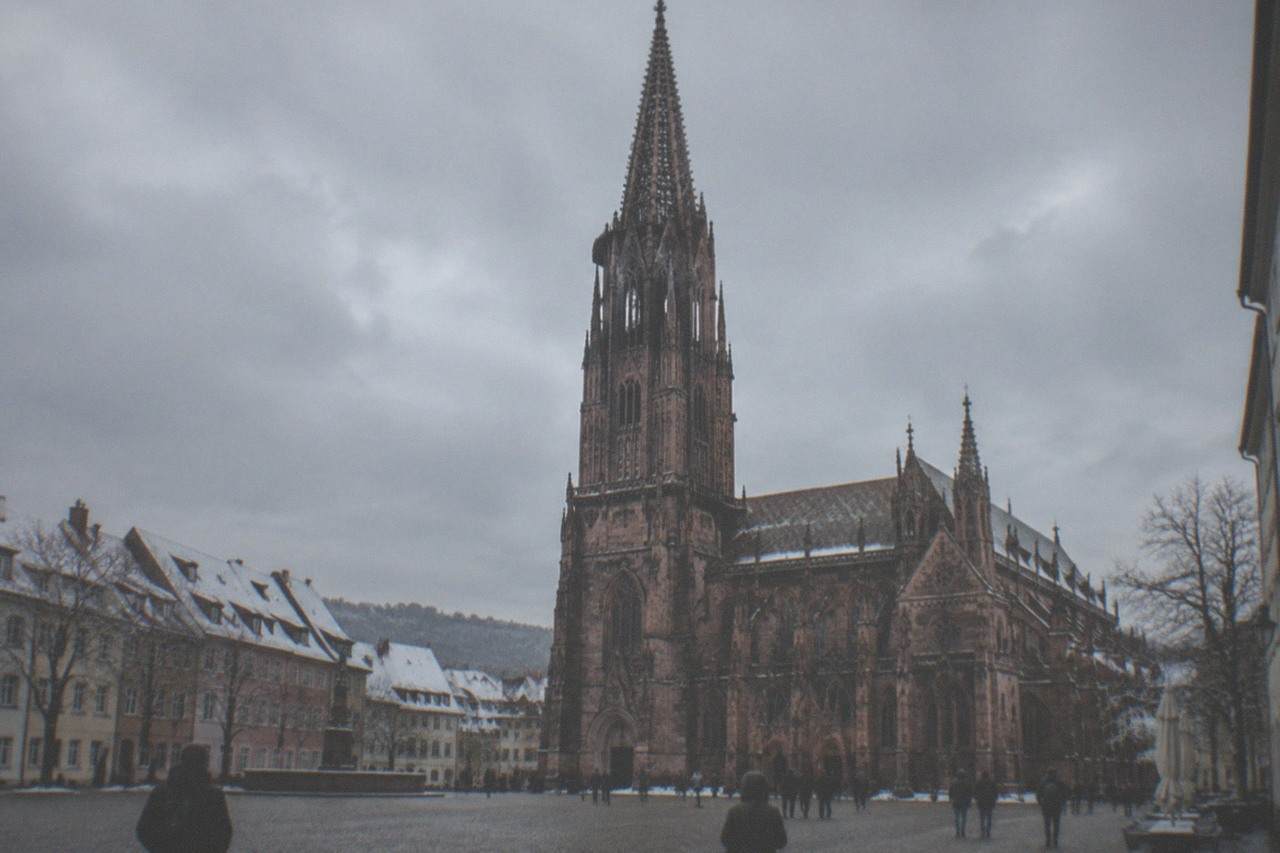
Short answer
Freiburg in winter runs cool and grey: December averages 3.4°C, January 2.5°C, with only 56 to 65 sunshine hours per month. The Christmas market fills the Old Town from 19 November to 23 December 2026, museums are fully open, and the Schauinslandbahn runs daily except a 16 November to 4 December 2026 overhaul closure.
Freiburg's winter reputation is built on one honest number: this is one of Germany's warmest and sunniest cities, but that title only goes so far in December. The DWD climate normals for the city's own station put December at a mean of 3.4°C with 56.3 hours of sunshine, and January at 2.5°C with 64.7. Summer tells the opposite story, and the seasonal gap is enormous. The city does not shut down for this. It shifts indoors, strings lights across the Old Town squares, and keeps a cable car running up the nearest mountain almost every day of the year.
What follows is the practical version: what the weather actually does, what stays open, what closes, what the Christmas market looks like this year, and how to spend three days well. A good winter visit to Freiburg costs less to sleep in than a summer one, and it rewards anyone who books the two or three things that do sell out, namely the Christmas weeks and the tower gallery on a clear afternoon. This Freiburg Travel Guide article is written for someone already in or about to arrive in the city, so the emphasis stays on decisions, not on persuading you that Freiburg exists.
What Winter Weather In Freiburg Actually Looks Like
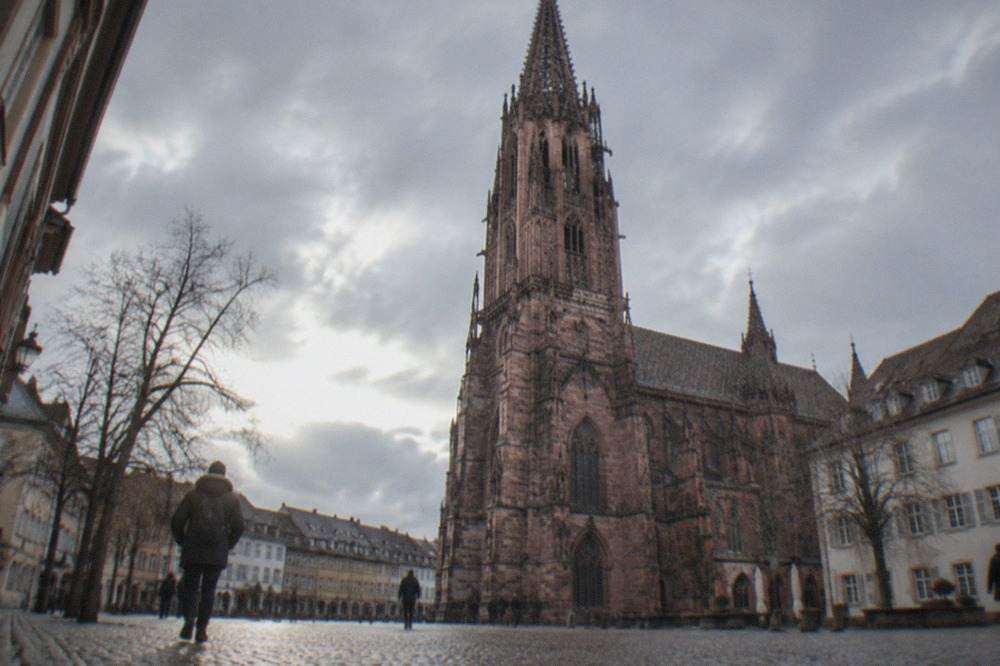
Winter in Freiburg is mild for Germany but genuinely grey: December averages 3.4°C, January 2.5°C and February 3.5°C, with 56 to 92 hours of sunshine per month, the darkest stretch of the year. The city sits on the warm Upper Rhine plain, so snow rarely settles in the streets, though frost hits on roughly 43 mornings across the three winter months. Expect rain more than white. The DWD 1991-2020 normals for station 1443, the official long-term record, show the pattern clearly. December brings 66.9 mm of rain, January 48.6 mm, February 49.1 mm. Frost days run 13.8 in December, 15.7 in January and 13.7 in February. Days at or above 30°C, a Freiburg summer signature, are exactly zero from November through March.
Two practical consequences follow. First, real winter in Freiburg is an indoor-and-lights season, with outdoor windows: the Schlossberg, the Black Forest ridgelines and the vineyards of the Kaiserstuhl are all reachable in under an hour and look their best under the low winter sun that February starts to deliver. Second, the nearby mountains hold their own weather. The Feldberg and the Schauinsland sit high enough that snow up there is normal while rain falls in town, which is exactly why the Christmas market and the cable car make such a good pairing.
| Month | Mean temp | Rain | Sunshine hours | Frost days |
|---|---|---|---|---|
| December | 3.4°C | 66.9 mm | 56.3 | 13.8 |
| January | 2.5°C | 48.6 mm | 64.7 | 15.7 |
| February | 3.5°C | 49.1 mm | 91.8 | 13.7 |
For a fuller month-by-month picture, see the site's Freiburg weather and climate guide, and for the question of when to go at all, the best time to visit Freiburg compares winter against the festival summer. If your dates are flexible within winter itself, pick late November or early December: the market is in full swing, hotel rates sit below the Christmas-week peak, and the city has not yet emptied into the holidays.
Is Winter A Good Time To Visit Freiburg?
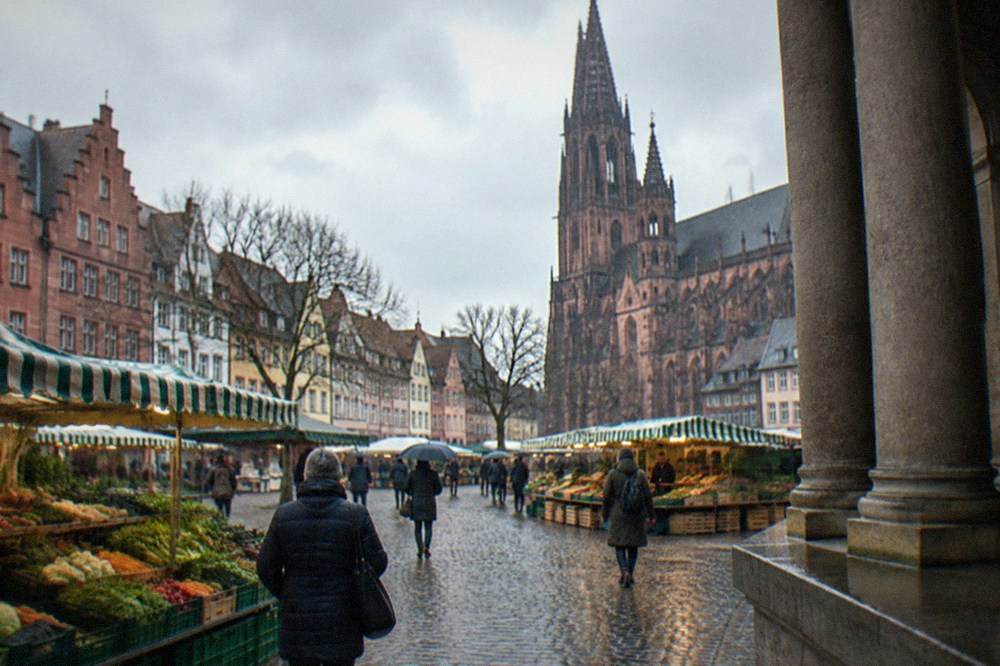
Yes, for three specific reasons: the Christmas market runs from 19 November to 23 December 2026 with free entry, museum capacity is generous because summer crowds are gone, and overnight stays are cheaper and easier to find. The tradeoffs are short days, rain instead of snow in town, and a handful of seasonal closures listed below. The honest case for winter is the indoor one. Freiburg has one of the densest small-city museum offerings in southwest Germany, and in July you queue behind tour groups for it. In January you often have the rooms nearly to yourself. Food is the second argument: Badische winter cooking, onion tart, and long-established wine taverns are built for cold evenings, and the Markthalle and Münstermarkt keep the supply side running.
The walkable Old Town is the third. Freiburg's core is compact enough that a 15-minute walk between cathedral, museum and tavern never becomes an ordeal at 3°C, provided you dress for rain rather than snow. Good boots matter more here than in the ski towns up the road, because the Bächle gutters and cobblestones stay damp all season.
If you want a structured introduction to the Old Town before setting off on your own, three guided walks dominate the city's roster. The best-reviewed by far is the Gässle, Bächle and More city tour, a roughly 90-minute walk rated 4.7 across 3,187 reviews and priced from $15. Two same-family alternatives shape the choice: the cathedral-visit tour, from $20, and the Old Town highlights walk, from $17.
Winter versions of these walks run on reduced schedules, so the availability you see for a July date will look fuller than a January one. Book the first available slot of your stay rather than the last: it functions as a preview lap, and everything a guide points out on day one is somewhere you can return to on day two.
The Christmas Market And Winter Events Calendar
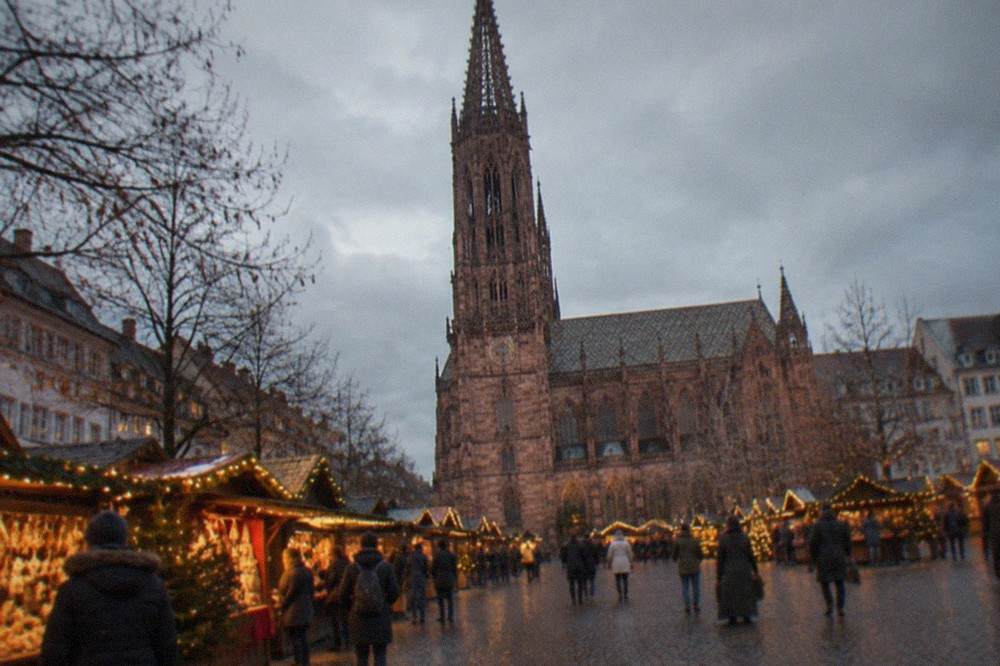
Freiburg's Christmas market runs 19 November to 23 December 2026, spread across Rathausplatz, Kartoffelmarkt, Unterlindenplatz, Franziskanerstraße and further Old Town locations, with free entry, over 120 stands, weekday hours of 10:00 to 20:30, and Sunday hours of 11:30 to 19:30. It closes on 22 November for Totensonntag and finishes 23 December at 19:30. The market is the single biggest draw of the Freiburg winter and the reason hotel demand spikes in early December. Unlike the giant markets of Nuremberg or Stuttgart, Freiburg's is distributed: rather than one vast square, the stands string through several small ones, each with its own density and character, which makes it comfortable even on busy weekends. Mulled wine, Glühwein, is sold in deposit cups you can return or keep, and the food leans Badische: bratwurst, Schupfnudeln, and the onion tart that appears everywhere in the region from autumn onward.
Official dates, locations and the current hours are published on the market's own site, and the site's dedicated Freiburg Christmas market guide covers stands, food and timing in depth. After Christmas, the calendar empties fast: the weeks between 2 January and Fasnet are Freiburg's quietest of the year, and then the Swabian-Alemannic carnival takes over in early February.
| Event | 2026/27 dates | Where | Notes |
|---|---|---|---|
| Christmas market | 19 Nov to 23 Dec 2026 | Rathausplatz, Kartoffelmarkt, Unterlindenplatz, Franziskanerstraße and more | Free entry, 120+ stands, closed 22 Nov (Totensonntag) |
| Quiet season | 2 Jan to late Jan | City-wide | Lowest hotel demand of the year, thin crowds at museums |
| Fasnet (carnival) | 4 to 8 Feb 2027 | Old Town streets | Schmutziger Donnerstag storming at 15:00, main parade 8 Feb at 14:00 |
| Christmas market hours | Weekdays 10:00-20:30, Sundays 11:30-19:30 | All market sites | 23 Dec closes 19:30 |
Fasnet deserves a word because it is not the Rhineland carnival most visitors picture. Freiburg's version is the older Alemannic form: wooden carved masks, drummers, and crowds in the narrow streets around the Münster. The 2027 dates put Schmutziger Donnerstag on 4 February with the storming of the town hall at 15:00, street Fasnet on 6 and 7 February, and the big Fasnetmendig parade on 8 February at 14:00. If your winter trip can land on that weekend, book rooms early, because the whole city center fills.
The evenings between market and parade do not go to waste either. Freiburg's year-round drag show walk with Betty BBQ, a roughly 85-minute tour rated 4.6 across 699 reviews and priced from $40, runs through the season in an entirely different register from the historical walks, part comedy, part city tour. For a more conventional history evening, the dramatized tours with actors, rated 4.9 across 497 reviews and from $17, keep a theatrical edge while staying closer to the city's real past.
A private, professionally guided market visit is also bookable, priced from $253, though with no reviews on its listing yet it is a new option rather than a proven one. Most visitors do better wandering the squares themselves and saving the guiding budget for the Old Town walks, which have the review volume behind them.
Indoor Freiburg: Museums, Baths And The Münster
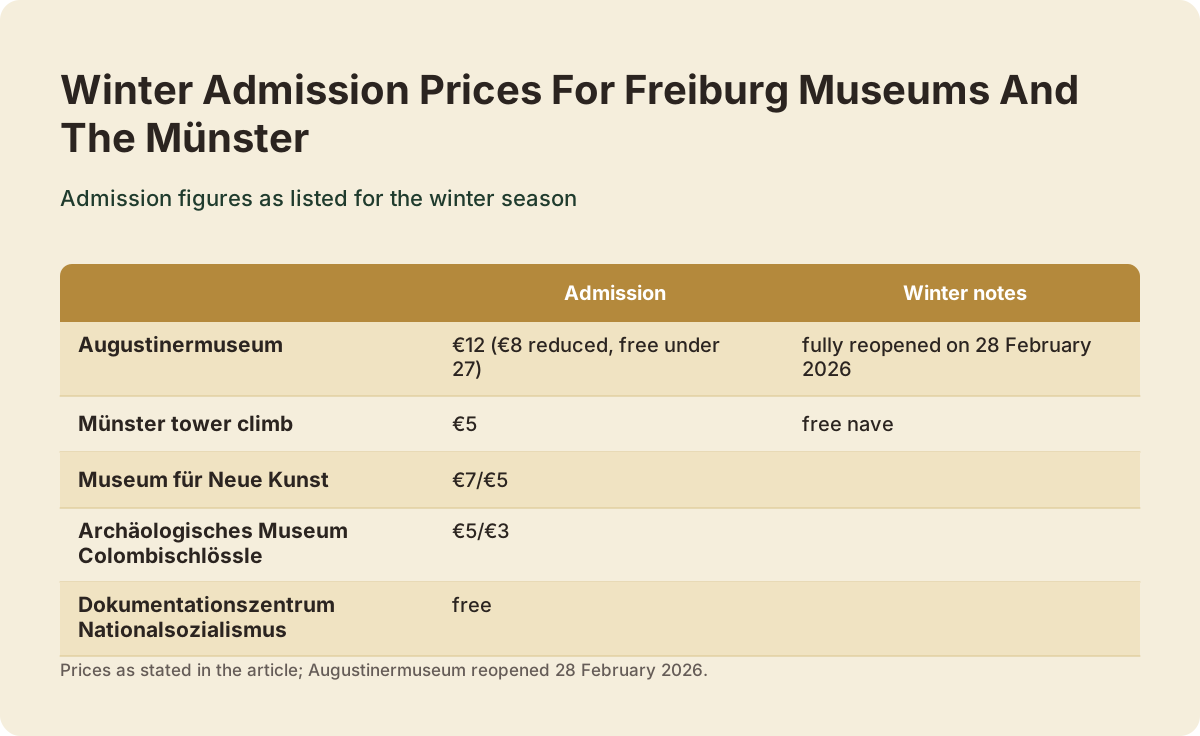
The indoor core of a Freiburg winter is the Augustinermuseum, fully reopened on 28 February 2026 at €12 admission (€8 reduced, free under 27), the Münster's free nave and €5 tower climb, the Markthalle, and the hot pools of the Keidel thermal baths. Between them they cover art, Gothic architecture, food and pure warmth, which is most of what a cold weekend asks for. The Augustinermuseum is the headline. After more than 20 years of phased renovation, the final phase completed and the museum reopened fully on 28 February 2026, adding roughly 1,600 m² of new exhibition space in the former convent building and historic vaulted cellars to reach about 3,400 m² in total. Its day ticket, €12 for adults and €8 reduced, is also valid for the other city museums, and under-27s get in free. Do not repeat the outdated claim you may still find elsewhere that the museum is partly closed for renovation: it is not, and it is the single best indoor hour in the city.
The other city museums cluster within a short walk. Museum für Neue Kunst charges €7/€5, the Archäologisches Museum Colombischlössle €5/€3, and the Dokumentationszentrum Nationalsozialismus is free. One winter-specific caveat: the Museum Natur und Mensch has closed its permanent exhibition from 4 August 2026 until roughly the end of February 2027 for renovation, though its special exhibitions, including "Voll unfair!", running to 3 January 2027, stay open. The city's Museumsnacht, which once bundled the houses into a late-evening circuit, has been paused for 2025 and 2026 while the museum group focuses on its major projects.
| Sight | Winter admission | Hours and winter notes |
|---|---|---|
| Augustinermuseum | €12 / €8 reduced | Tue-Sun 10:00-17:00, Fri to 19:00; free under 27; ticket valid at all city museums |
| Museum für Neue Kunst | €7 / €5 | Free under 27; Thursdays to 19:00 |
| Archäologisches Museum Colombischlössle | €5 / €3 | Free under 27 |
| Museum Natur und Mensch | €5 / €3 | Permanent exhibition closed to about end of Feb 2027; special exhibitions open |
| Freiburg Münster nave | Free | Open daily |
| Münster tower climb | €5 adults / €3 children / €13 family | Mon-Sat 11:00-16:00, Sun and holidays 13:00-17:00; top gallery closed in winter |
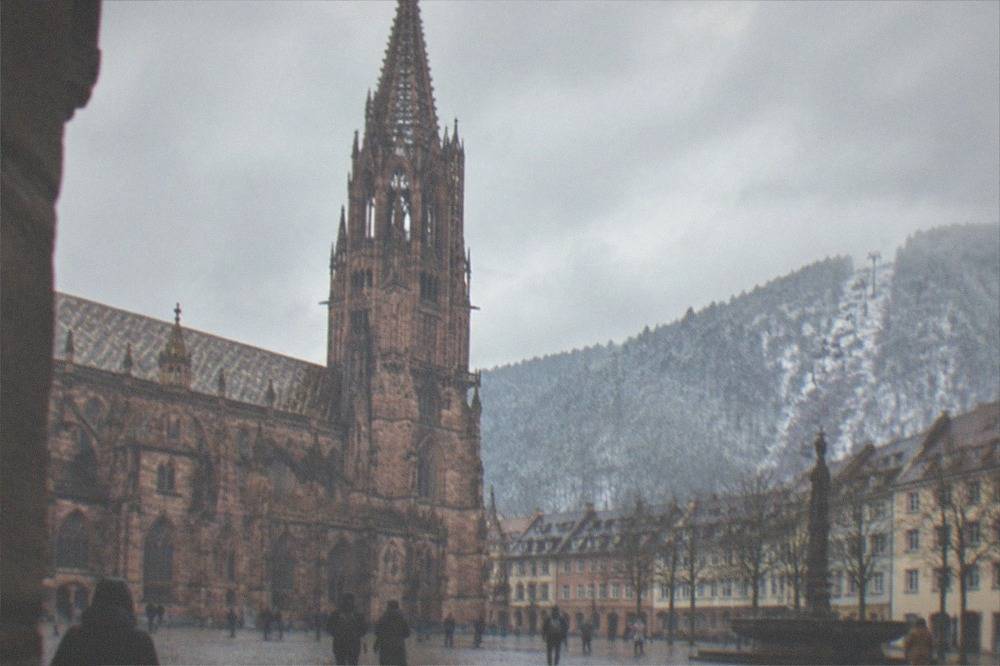
That last line matters more than visitors expect. The Münster's west tower stands 116 m tall, but the visitor climb ends at a gallery at 70 m, and the top gallery closes for the whole winter. The lower gallery still opens Monday to Saturday from 11:00 to 16:00 and Sundays from 13:00 to 17:00, with the last ascent about 15 minutes before closing, and on one of Freiburg's frequent crisp, bright winter afternoons the view over the Black Forest edge is the best €5 in the city. The Münster itself rewards a slow circuit even in rain: the stained glass holds its color in grey light, and the nave is free.
For warmth of a different kind, the Keidel thermal baths on the city's western edge are the local winter ritual: mineral pools, saunas and a roofed bathhouse. Note that German sauna culture is textile-free in the sauna zones, which surprises some first-time visitors, so read the house rules before you go.
Getting Around Freiburg In Winter: Fares, Cards And Works
A single tram or bus trip in central Freiburg costs €3.00, a one-zone day ticket €7.20, and the visitor-facing RVF Welcomekarte €27.00 for 3 days, which includes buses, trains and, unusually, the Schauinslandbahn cable car. The Deutschlandticket is €63.00 per month. Winter 2026 also brings planned rail works, including replacement buses between Freiburg and Basel around early October 2026 and scheduled tram diversions. The Welcomekarte is the card that matters for most winter visitors, and it is not the KONUS card you may have read about. Freiburg city is not a KONUS municipality: a hotel stay in Freiburg does not hand you a free regional transport card. KONUS cards issued by nearby member towns like Kirchzarten, Horben or Titisee-Neustadt are valid on Freiburg's trams, but you only get one if you actually stay in one of those towns. For a stay in Freiburg itself, the RVF's own Welcomekarte is the product: 3 days, €27.00 for adults, buses and trains across the region, the Schauinslandbahn ride included, plus a small cultural bonus.
Fares rose modestly in the region: Preisstufe 1 singles went to €3.00 for adults from August 2025, with a 10% smartphone discount bringing that to €2.70 if you buy in the app. Children pay €1.80. Day tickets for one, two and three zones cost €7.20, €10.90 and €14.30 respectively. The current RVF tariff overview carries the full table.
| Ticket | Price | What it covers |
|---|---|---|
| Single, Preisstufe 1 (adult) | €3.00 | One tram/bus trip in the central zone; €2.70 by smartphone |
| Day ticket, 1 zone | €7.20 | Unlimited central-zone trips for a day |
| Day ticket, 2 / 3 zones | €10.90 / €14.30 | Wider regional coverage per day |
| RVF Welcomekarte | €27.00 | 3 days, buses and trains, Schauinslandbahn included, Kulturbonus |
| Deutschlandticket | €63.00 per month | Nationwide local and regional transport, 2nd class |
Two works affect winter travel. The Rheintalbahn, the main line between Freiburg and Basel, closes for engineering around early October 2026, with regional and some long-distance trains replaced by buses between Freiburg and Basel. And the city's own tram network runs periodic construction diversions through late 2026, affecting lines 2, 3 and 15 at various points. None of this is a reason to avoid the city; it is a reason to check the operator's disruption page the day you travel. Freiburg's main station is also in the middle of a longer modernization, started in September 2026 and running to about December 2028, which mostly means platform changes and a closed northern underpass, so allow a few extra minutes for connections.
The city's newest buses help with one winter detail: the fleet's electric buses, 45 of them by late 2025, carry cashless ticket machines and no driver sales, so on those vehicles you buy at the machine with a card or in the app before boarding.
The Schauinslandbahn, Schlossberg And Winter Outings
The Schauinslandbahn cable car runs daily 09:00-17:00 through winter at €15.00 return for adults, closing only for its autumn overhaul from 16 November to 4 December 2026. The Schlossbergbahn funicular in town runs €3.70 one way or €6.50 return. Both give you altitude without a car, and the Welcomekarte covers the Schauinslandbahn. The Schauinslandbahn is the unusual one. At 3,600 m it is one of the longest gondola circuits of its kind in Germany, and it runs 12 months a year, which means a winter visitor can be standing at over 1,200 m within half an hour of leaving the Old Town. Snow on the summit is regular even when Freiburg itself is grey and damp, and the walking trails up there shift to winter mode. Current tariffs, opening hours and the closure calendar sit on the operator's own pages, and the site's Schauinsland guide covers the summit, the mining museum and the viewing tower in detail.
The closure windows are the one planning trap. The autumn overhaul shuts both cable car and mountain restaurant from 16 November to 4 December 2026, and a spring overhaul follows from 22 February to 19 March 2027. Anyone visiting for the Christmas market in late November, in other words, cannot ride up; anyone coming in early December or January can. The Eugen-Keidel-Turm on the summit, closed for years, reopened in April 2025, so the panorama from the top is available again.
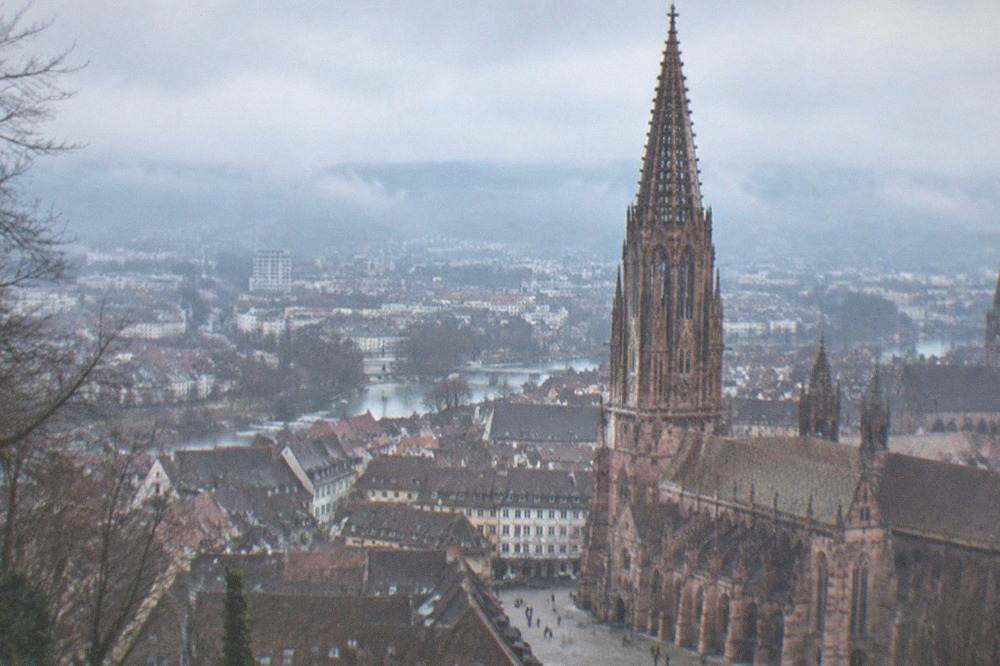
Closer to town, the Schlossberg is the free option: the hill itself costs nothing, the trail network is a 10-minute walk from the Schwabentor, and the modern Schlossbergturm viewing platform, 33.27 m tall, gives the classic winter view across the red rooftops to the Black Forest. The inclined Schlossbergbahn lift, €3.70 one way or €6.50 return for adults, saves the climb for anyone who would rather not arrive at dinner out of breath. On clear winter afternoons, the low sun drops behind the Vosges early, so the light for photographs is at its best between about 14:30 and 16:00.
What Winter Closes Or Changes In Freiburg
Winter takes four things off the table: the top gallery of the Münster tower (closed all winter, the 70 m lower gallery stays open), the Schauinslandbahn from 16 November to 4 December 2026, the permanent exhibition of the Museum Natur und Mensch until about end of February 2027, and the Museumsnacht, paused for 2025 and 2026. Everything else on the main sightseeing list stays open, mostly on reduced winter hours. The pattern is worth knowing in advance because it is uneven: nothing closes for "the season" as a block, but individual pieces each have their own winter rules, and a plan that assumes summer availability will hit three or four surprises.
| What | Winter status | Detail |
|---|---|---|
| Münster tower top gallery | Closed in winter | Lower 70 m gallery open Mon-Sat 11:00-16:00, Sun 13:00-17:00 |
| Schauinslandbahn | Closed 16 Nov to 4 Dec 2026 | Also 22 Feb to 19 Mar 2027; otherwise daily 09:00-17:00 |
| Museum Natur und Mensch (permanent exhibition) | Closed to about end Feb 2027 | Special exhibitions, mineral vault and workshops remain open |
| Museumsnacht | Paused for 2025 and 2026 | Museum group focused on the Augustinermuseum reopening and the Dokumentationszentrum |
| Freiburg main station underpass (north) | Closed, works to about Dec 2028 | Platform lifts and surfaces renewed through the project |
| Christmas market | 19 Nov to 23 Dec 2026 only | Free entry, 120+ stands |
One more number that belongs in every winter budget: the overnight tax. Freiburg charges an Übernachtungsteuer of 5% of the net room price, not a flat nightly Kurtaxe as many German spa towns do. It applies to private stays, has applied to business stays too since 1 July 2023, and exempts guests under 18. Your hotel bills it automatically, so the only planning consequence is that advertised room rates and final invoices differ by that 5%. The city's own page on the tax states the rate and exemptions plainly.
A Three-Day Winter Plan For Freiburg
Day one: the Old Town, the Münster and the Christmas market after dark. Day two: Augustinermuseum in the morning, Markthalle for lunch, Schlossberg tower for the late light. Day three: the Schauinslandbahn if open (avoid 16 November to 4 December), or the Kaiserstuhl and Staufen if the cable car is down. This uses one indoor anchor and one outlook per day, which is the right pace for 3°C. The structure is deliberate. Winter daylight in Freiburg runs roughly from 08:00 to 16:45 in December, which means each day has one long comfortable block and one short one, and the plan puts the outdoor outlook in the short afternoon block when the low sun is at its most photogenic.
Day one is the classic: start on the Münsterplatz for the market's late-morning calm, walk the Bächle streets with a guide, climb the 70 m tower gallery if the sky is bright, and return to the squares after 17:00, when the lights carry the atmosphere and the day-trip crowds have gone. Day two goes deeper indoors: the Augustinermuseum alone can absorb a full morning, the Markthalle five minutes away solves lunch, and the late afternoon belongs to the Schlossberg, either climbed on foot or ridden with the funicular for €6.50 return. Day three branches: with the cable car running, the Schauinsland gives snow, views and the mining museum in half a day, with time left for the thermal baths on the way back down; with it closed, the alternatives are the Kaiserstuhl wine villages, Staufen, or a train to Basel, each within about an hour.
Evening costs are modest and predictable. A market dinner of sausage, Glühwein and dessert runs to the low double digits in euros at the stands; a sit-down dinner in a Badische tavern runs more, and the city's five Michelin-starred restaurants, Jacobi, Zur Wolfshöhle, Colombi Zirbelstube, Hawara and Eichhalde, hold their stars into the 2026 guide if you want one dressed-up winter evening. Reserve that one table ahead, because January is thin crowds, not closed kitchens.
The guided-walk layer of the plan can slot into any of the three mornings. The Gässle, Bächle and More tour, from $15 and rated 4.7 across 3,187 reviews, is the high-volume favorite and a natural day-one anchor, since it covers the small-street geography you will otherwise miss. Check availability for your dates before you finalize the day plan, because winter schedules run thinner than summer ones.
What To Pack And Book For A Freiburg Winter
Pack for rain between 2 and 7°C, not snow: waterproof shoes, a real rain layer, and something warm for standing outdoors at the market in the evening. Book three things ahead: Christmas-week rooms, the guided walk you want, and nothing much else. Transport, museums and the baths all take walk-up custom in winter. The rain point deserves its emphasis. December delivers 66.9 mm and January 48.6 mm, spread across many small grey days rather than dramatic storms, and the Old Town's cobblestones and Bächle channels hold the damp. An umbrella works, but a hooded layer works better in the market crowds. Snow boots are unnecessary in town; they are useful on the Schauinsland summit, where snow lies through the season.
The booking picture is asymmetric. In late November and the run-up to Christmas, rooms tighten and the popular guided walks sell their few daily slots; in January and February, almost nothing sells out and you can plan day by day. If your dates fall in the soft weeks, arrive without a rigid plan, buy a Welcomekarte at the station or in the tram app, and let the weather decide between museum mornings and hill afternoons. That is the version of Freiburg in winter that regulars keep quiet about: a warm, lit, walkable city at its emptiest, with the tower gallery and the museum rooms to yourself.
For families and mixed groups, one more winter option earns its place: the scavenger hunt self-guided tour, roughly three hours, rated 4.9 across 15 reviews and priced from $45, turns the Old Town into a puzzle and keeps children moving between heated stops. It is a low-cost fallback for a day when a guided walk's winter schedule does not match yours.
Common Questions About Freiburg In Winter
Is Freiburg Worth Visiting In Winter?
Yes, especially between late November and 23 December, when the Christmas market fills the Old Town squares, and in January, when museums are quiet and hotel rates drop. The tradeoffs are short days, about 8 hours of daylight in December, and rain more often than snow in town.
Is There Snow In Freiburg In Winter?
Rarely in the city. December averages 3.4°C and January 2.5°C, so precipitation mostly falls as rain downtown. Snow is normal at altitude nearby: the Schauinsland summit above 1,200 m and the Feldberg both hold snow through the season.
When Is The Freiburg Christmas Market?
The confirmed 2026 dates are 19 November to 23 December, with free entry, more than 120 stands across Rathausplatz, Kartoffelmarkt, Unterlindenplatz and other Old Town sites. The market closes on Totensonntag, 22 November, and finishes 23 December at 19:30.
Does The Schauinslandbahn Run In Winter?
Yes, daily from 09:00 to 17:00, except during the overhaul closure from 16 November to 4 December 2026 and a spring closure from 22 February to 19 March 2027. An adult return ticket costs €15.00, and the RVF Welcomekarte includes the ride.
Can You Climb The Münster Tower In Winter?
Partly. The west tower stands 116 m, but the visitor climb ends at a gallery at 70 m, and the top gallery closes for the whole winter. The lower gallery opens Monday to Saturday 11:00-16:00 and Sunday 13:00-17:00, at €5 for adults and €3 for children.
What Is There To Do In Freiburg In Winter Besides The Market?
The Augustinermuseum, fully reopened since 28 February 2026 at €12 with the ticket valid across the city museums, the other four museums, the Markthalle, the Keidel thermal baths, the Schlossberg tower and funicular, and Fasnet in early February. The Münstermarkt also keeps its winter schedule, Monday to Saturday mornings.