Alter Friedhof Freiburg: A Practical Guide To The City's Historic Cemeteries
The Alter Friedhof and the neighboring Hauptfriedhof are Freiburg's most atmospheric grounds for a slow walk, and this guide covers how to reach them, when to go and what to combine with a visit.
Short answer
The Alter Friedhof and Hauptfriedhof sit a short tram or bus ride from Freiburg's old town, and reaching them costs a zone 1 single of €3.00 or a day ticket of €7.20. Entry to the grounds is free, they are at their best from April to October, and they pair naturally with a half day in the old town.
What The Alter Friedhof And The Hauptfriedhof Actually Are
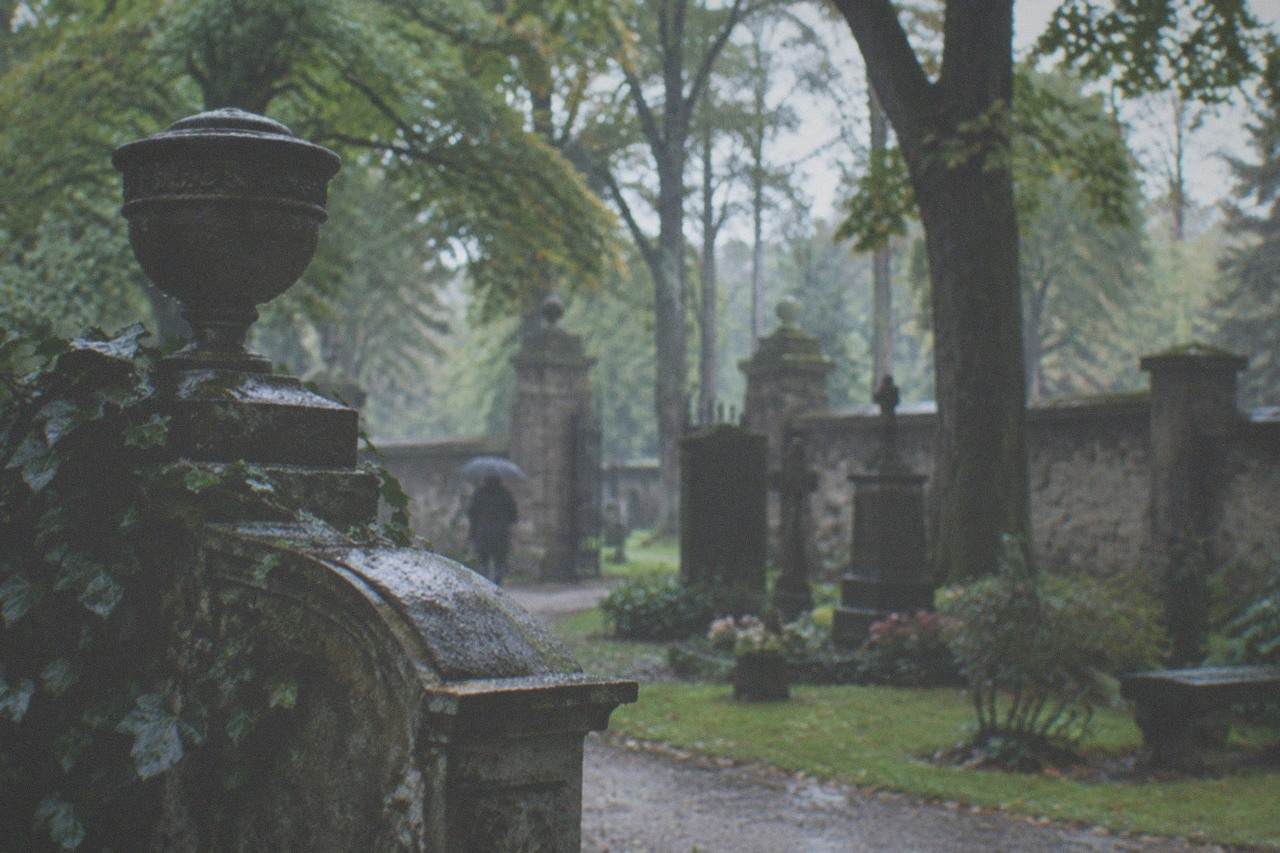
Freiburg buries its history in two adjacent grounds east of the old town: the Alter Friedhof, the older, more park-like of the pair, and the Hauptfriedhof, the main cemetery that still serves the city today. Neither charges admission, neither takes much time to reach, and both give a quieter, greener counterpoint to the Münsterplatz crowds than almost anywhere else within tram range.
The pairing matters for planning. The two cemeteries function as one large, walkable zone of mature trees, gravel paths and stone, with the older ground reading more like a garden and the main ground reading more like a working cemetery with long tree-lined avenues. Visitors who expect a somber stop often find they stay an hour or more, because the grounds behave like a park in a city that treats green space seriously.
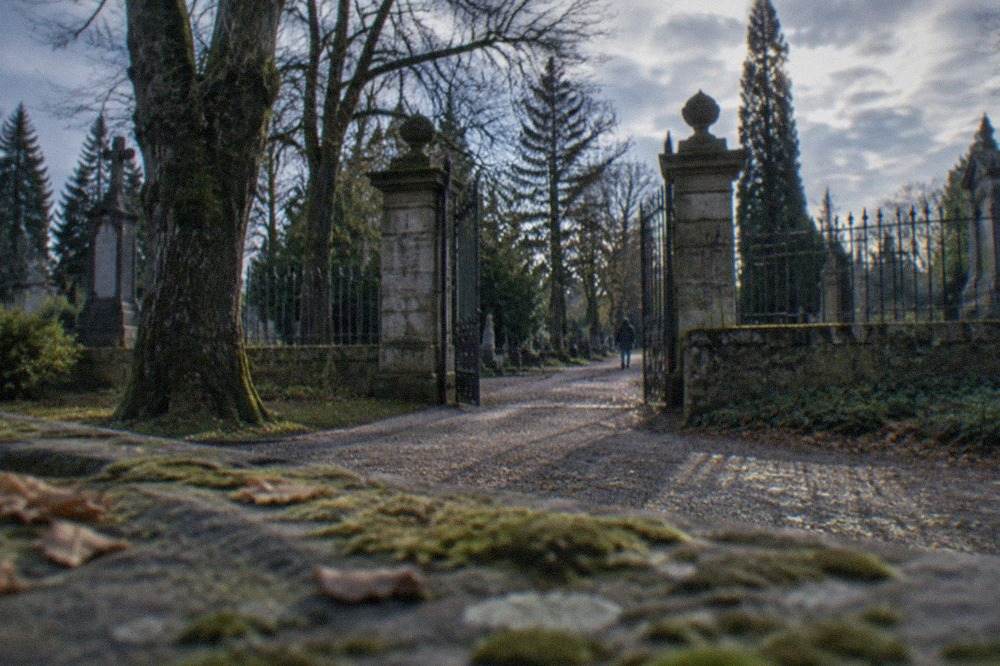
Context helps too. Freiburg is a university city of 237,299 residents as of mid-2025, with the university chartered in 1457, and a city of that age accumulates burial grounds the way newer cities accumulate parking lots. The old town that most visitors see first is compact and lively; the cemeteries are where that same city slows down. For a fuller picture of how the place grew, our Freiburg history guide walks the timeline in more detail.
One honest framing note before anything else: these are active, respectful public grounds, not a themed attraction. They reward visitors who come for atmosphere, trees and stone rather than for a checklist, and they are at their most interesting to travelers who already enjoy cemeteries at home. This Freiburg Travel Guide treats them accordingly, as a worthwhile stop for a certain kind of visitor rather than a must-see for everyone.
How To Reach The Cemeteries And What A Visit Costs
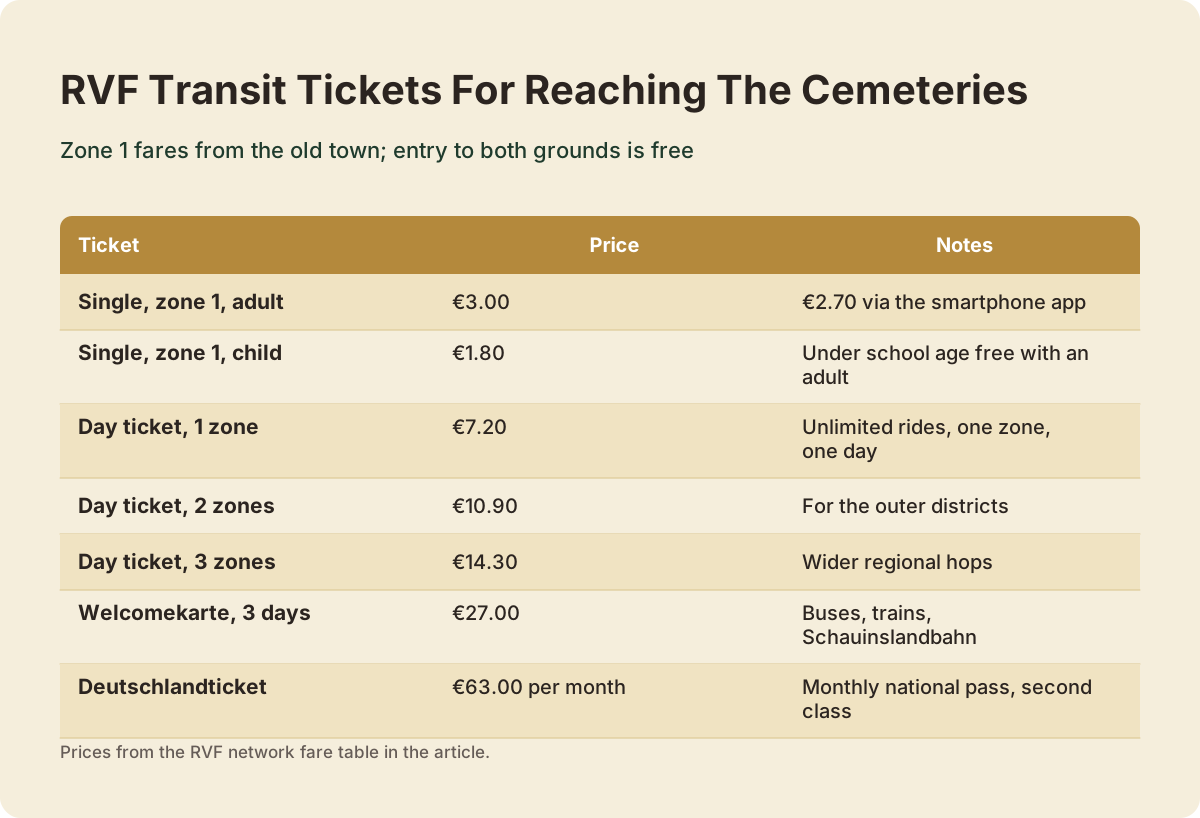
Reaching the cemeteries from the old town is a single tram or bus hop within the RVF network: a zone 1 adult single costs €3.00, or €2.70 on a smartphone, and a one-zone day ticket is €7.20 if you plan to hop around afterwards. Entry to both grounds is free, so the entire cost of a cemetery visit is the fare that gets you there.
The RVF network covers trams and buses across the region, and Freiburg's stops are dense enough that a miss simply means walking ten minutes. Tickets are per zone rather than per distance, so check the zone map on the RVF fare pages before assuming a longer ride costs more. If the cemeteries are part of a bigger sightseeing day, the day ticket usually wins on arithmetic; if they are a standalone stop, the single does.
| Ticket | Price | Notes |
|---|---|---|
| Single, zone 1, adult | €3.00 | €2.70 via the smartphone app |
| Single, zone 1, child | €1.80 | Children under school age travel free with an adult |
| Day ticket, 1 zone | €7.20 | Unlimited rides within one zone for one day |
| Day ticket, 2 zones | €10.90 | Useful if you extend into the outer districts |
| Day ticket, 3 zones | €14.30 | Covers wider regional hops |
| Welcomekarte, 3 days | €27.00 | Includes buses, trains and the Schauinslandbahn cable car |
| Deutschlandticket | €63.00 per month | Monthly national pass, second class |
Two cautions from the current schedule files. First, Freiburg's tram network has construction-related diversions running through 2026 on several lines, with replacement services on some routes; check the operator's current notices on the day you travel rather than trusting a printed itinerary. Second, if you are staying in Freiburg itself, the visitor transport product is the RVF Welcomekarte at €27.00 for three days, not the KONUS card. Freiburg city is not a KONUS municipality, though a KONUS card issued in a nearby member town such as Staufen or Titisee-Neustadt is valid on Freiburg's trams and buses.
A word on walking in, for travelers who prefer it: the grounds sit within reasonable walking range of the old town for anyone used to a half-hour urban walk, and Freiburg is a city where 76 percent of trips were already made on foot, by bike or by public transport in 2023, up from 67 percent in 2017. The walk itself passes through ordinary residential Freiburg, which is part of the point.
What You Will See Walking The Grounds
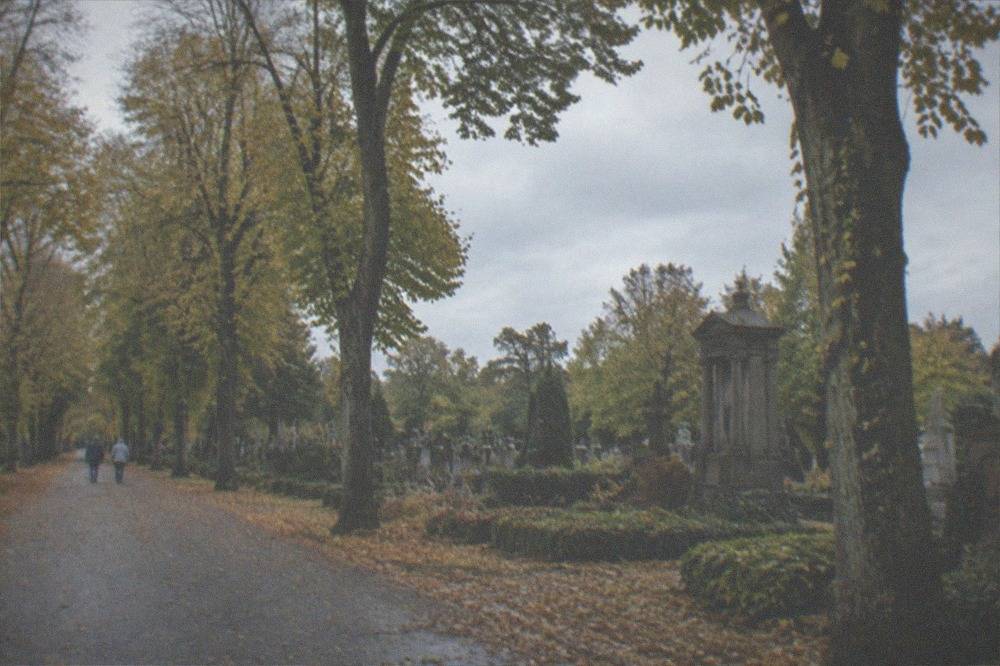
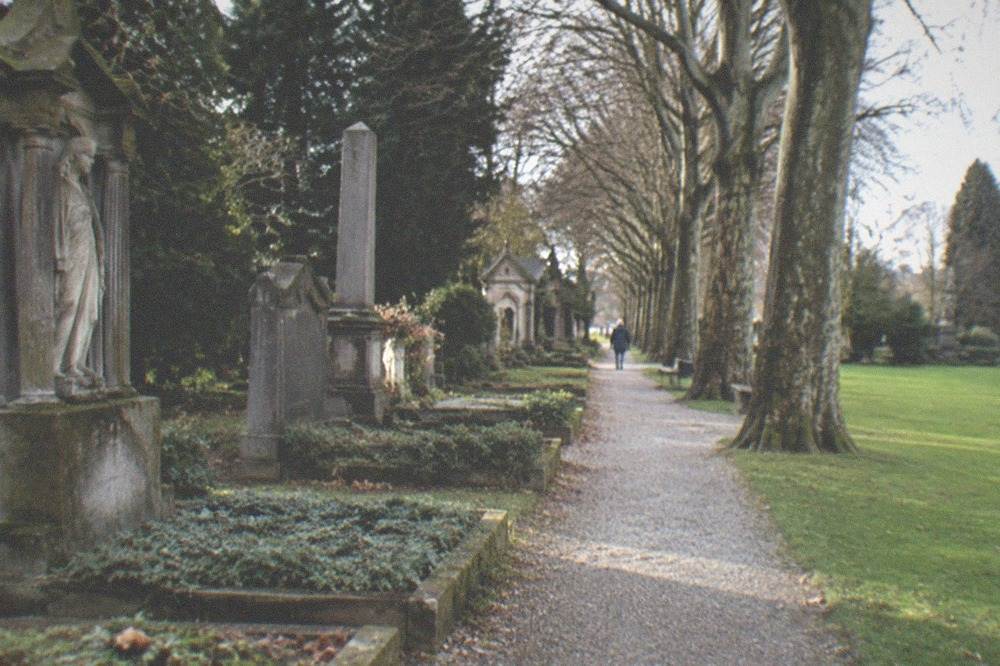
Expect mature trees, gravel and stone rather than spectacle: weathered old monuments, family plots behind low ironwork, shaded avenues that behave like park lanes, and the kind of quiet that a compact student city otherwise lacks. The grounds are flat enough for easy walking, and there is no route or ticket structure inside, so you simply walk and look.
The visual character changes with the season more than most attractions. In spring the older ground reads as a garden, with bulb planting and fresh leaf canopies; in high summer the avenues are among the shadiest walking spots in the city; in October the deciduous cover turns, and the stone takes on warmer color in low light. Winter visits are possible but bleaker, and short days compress the window.
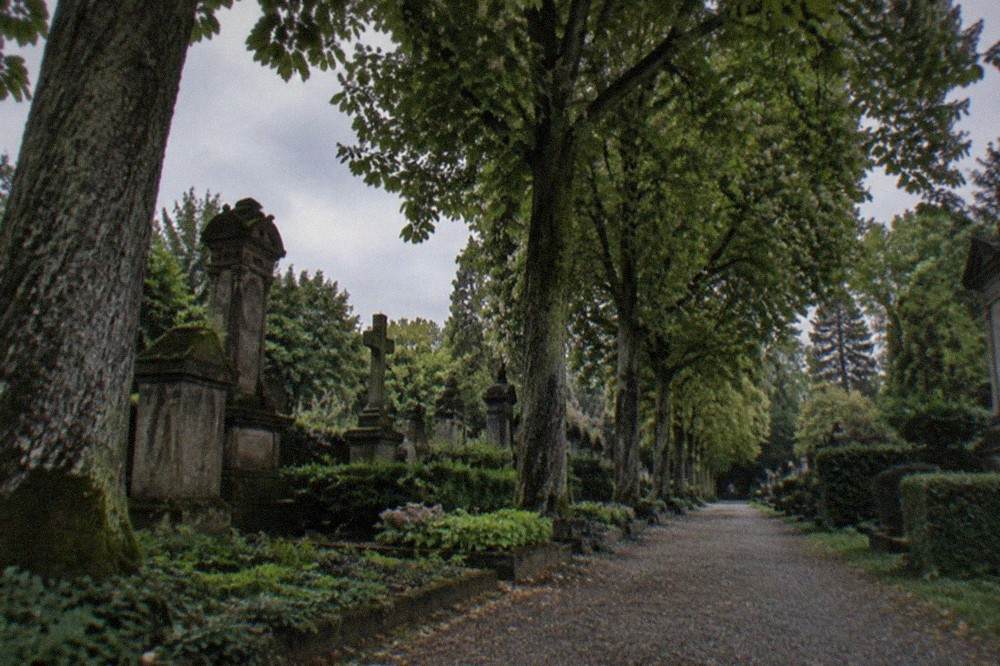
Photographers should come early or late. The combination of long tree-lined axes and low sun produces strong depth in the hour after opening and again toward evening, while midday flattens everything into green shade. Anyone traveling specifically for images may want a structured angle on the city; a photogenic-spots walk with a local runs about an hour and a half and is built around framing the city's quieter corners, and the live listing shows current times and departure points.
Etiquette deserves one honest paragraph. These are grounds where locals bury and visit family, so the usual rules of a working cemetery apply everywhere: keep voices low, leave flowers and candles alone, keep to paths over graves, and expect occasional services that pause foot traffic. None of this makes the visit difficult; it just means the grounds deserve the same courtesy a church interior gets.
How The Cemeteries Fit Freiburg's Green City Story
The grounds are a genuine part of why Freiburg reads as a green city: old cemeteries double as some of the most stable urban tree stock a city can have, and Freiburg's broader numbers, 76 percent of trips on foot, bike or transit in 2023, describe a place that treats planted space as infrastructure. The cemeteries are where that philosophy is most quietly visible.
Freiburg's reputation in this area is real but often overstated, and this guide keeps it accurate. The verified figures are the modal shift: walking, cycling and public transport together rose from 67 percent of trips in 2017 to 76 percent in 2023. The city's own Green City framing also points to the Vauban and Rieselfeld districts and to the presence of Fraunhofer ISE, the solar research institute. What a visitor actually experiences of all this is simpler: shaded streets, serious bike traffic, and large mature green spaces of exactly the kind the older cemetery grounds represent.
Recent reporting puts the city's bike-share fleet at roughly 1,200 renewed bikes, including 206 e-bikes, spread over 162 stations, so a cyclist can fold the cemeteries into a loop with the Seepark or the river meadows without much planning. The Seepark itself received heritage protection in 2026 for its 1980s garden-art significance, which says something about how Freiburg categorizes its designed landscapes. Cemeteries sit in the same mental category here: working landscapes first, green assets second.
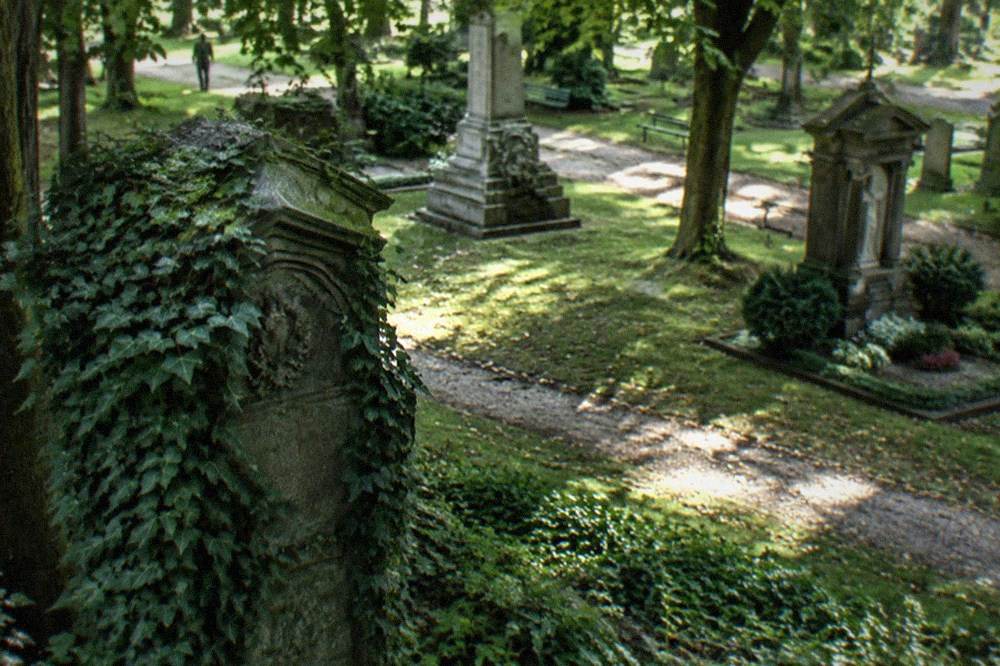
The practical payoff for a visitor is timing. Because the grounds are effectively a park with monuments in it, they work as a heat escape in July and August, when the city averages 18.5 days per year at or above 30°C and July alone averages 7.3 of them. On an afternoon when the Münsterplatz is radiating heat, the avenues under the old canopy can feel several degrees kinder, and that is a planning fact worth using.
The Best Months To Visit The Alter Friedhof
April through October is the honest window, with the sweet spots in late April to early June and late September to mid-October, when temperatures sit between roughly 11°C and 20°C on monthly average and rainfall stays manageable. Winter visits work but the light is short, 64 frost days fall across the year, and the grounds lose the canopy that gives them their character.
The climate behind that advice is Germany's warm-temperate pattern at one of its milder stations, measured at the city's own weather station against the 1991 to 2020 normals published by the national weather service. Freiburg is one of Germany's warmest and sunniest cities, with 1,815.1 hours of sunshine a year, though calling it the single warmest or sunniest is not supported: it ranks 34th of 1,093 stations on annual mean temperature and 20th of 1,091 on sunshine.
| Month | Mean temperature | Rain | Sunshine |
|---|---|---|---|
| January | 2.5°C | 48.6 mm | 64.7 h |
| April | 10.8°C | 63.8 mm | 182.2 h |
| July | 20.1°C | 92.2 mm | 252.2 h |
| October | 10.9°C | 78.5 mm | 116.2 h |
Two seasonal notes worth folding into a decision. May is the wettest month on the 1991 to 2020 normals at 103.4 mm, so a late-spring visit should carry a rain layer even though the month is otherwise lovely. And if you are building a whole trip around quiet, low-season Freiburg, our Freiburg in winter guide covers what genuinely works in the cold months; the cemeteries make a short, contemplative stop on such a day, not a centerpiece.
What To Combine With A Cemetery Visit
The strongest combination is a half day structured as old town first, cemeteries second: the Münster and its market square in the morning, a tram hop to the grounds for the shadiest hours, then a museum or a Badense meal in the late afternoon. Everything in that loop sits within a zone 1 ticket and short walking legs.
The old town anchors any Freiburg day, and the old town guide covers the gates, the Bächle gutters and the squares in the depth they deserve. From there, the pairing logic is simple: the cemeteries are the quiet chapter of the same story, so put them where your energy is lowest and your tolerance for crowds is spent.
| Sight or museum | Adult | Reduced | Notes |
|---|---|---|---|
| Münster nave | Free | Free | Restored Gothic interior, open during church hours |
| Münster tower climb | €5.00 | €3.00 | Family ticket €13.00; under 7 free; gallery at 70 m, closed in winter |
| Augustinermuseum | €12.00 | €8.00 | Day ticket valid across city museums; free under 27 |
| Museum für Neue Kunst | €7.00 | €5.00 | Free under 27 |
| Archäologisches Museum Colombischlössle | €5.00 | €3.00 | Free under 27 |
| Museum Natur und Mensch | €5.00 | €3.00 | Permanent exhibition closed 4 Aug 2026 to about end of Feb 2027 for renovation |
| Dokumentationszentrum Nationalsozialismus | Free | Free | Free entry as standard |
A few of those deserve a flag. The Augustinermuseum fully reopened on 28 February 2026 after its final renovation phase, so older write-ups describing it as partly closed are out of date; the €12.00 day ticket now also covers the other city museums, which makes it the best value in the table. The Münster's west tower is 116 m tall, but the climb ends at a gallery at 70 m, and that top gallery closes in winter, so pair the tower with a same-day itinerary only in the warmer half of the year.
For eating, the practical move is to return toward the center after the grounds: the Markthalle for a fast, indoor lunch, or a Badense plate and a glass of local Gutedel in the evening, since the Markgräflerland wine country begins just south of the city. An afternoon like this, one quiet green stop plus one lively one, is the shape of a good Freiburg day more often than any packed itinerary.
Photography, Tours And Quieter Ways To See The City
The cemeteries suit a self-directed, camera-first visit better than any guided format: there is no interior ticket, no queue and no commentary required. For travelers who want structure around Freiburg's quieter corners generally, the small, bookable options that fit this mood are a photogenic-spots walk with a local at from $92, a self-guided scavenger hunt at from $3, or a food tour that ends the day indoors, at from $126.
Honesty about those numbers matters on this roster. The photogenic walk and the food tour are genuinely new listings with review pools too small to support a rating claim, two reviews and seven reviews respectively, so treat them as a bet on format rather than on a proven crowd verdict. The scavenger hunt, by contrast, carries a 4.4 rating across 43 reviews and costs from $3, which makes it one of the cheapest structured activities in the city; the operator's live listing explains the mechanics and covers current times and meeting points.
| Experience | Length | Price | Review pool |
|---|---|---|---|
| Photogenic spots of Freiburg with a local | ~1.5 hours | From $92 | 2 reviews, no rating claim |
| Scavenger hunt and highlights, self-guided | ~2 hours | From $3 | Rated 4.4 across 43 reviews |
| Food tour, full meal and drinks | ~3 hours | From $126 | 7 reviews, no rating claim |
A DIY alternative deserves the last word here: a good camera, a zone 1 day ticket at €7.20 and the cemetery grounds at golden hour will cost less than any of the above and produce the same images, because nobody is guiding you to anything that is hidden. The paid formats earn their keep when you want a local's judgment or a social structure around the walk, not when you already know what you came to photograph.
Who Should Skip The Cemeteries And What To Do Instead
Skip them if you are in Freiburg for one day, traveling with restless children, or unmoved by graveyards in general: a single day is better spent on the Münster, the market, the Schlossberg viewpoint and the Augustinermuseum, all of which are higher-yield per hour. The grounds earn their slot from day two onward, or for travelers with a specific interest in funerary art, urban trees or quiet.
The one-day arithmetic is real. Freiburg's core sights sit within a compact walkable center, and the city recorded 2,130,785 overnight stays across 2025, with visitors averaging roughly two nights, which is exactly the trip length at which a second-tier stop starts to make sense. A one-day visitor who spends two hours at the cemeteries has traded away the Schlossberg or a museum, and most will regret that trade.
Travelers who should prioritize the grounds anyway are easy to name: photographers chasing low-season light, anyone visiting in July or August who needs shade, anyone with a personal practice of visiting cemeteries in the cities they travel to, and anyone with mobility that handles gravel but not hills, since the grounds are flat where the Schlossberg emphatically is not. Recent local reporting also notes a 6 percent drop in reported crimes in 2025, with Freiburg no longer the highest-rate city in Baden-Württemberg, so a quiet district walk is a comfortable proposition.
If you do skip them, spend the time up high instead. The Schlossbergbahn funicular costs €3.70 one way or €6.50 return for an adult, and the Schlossberg itself is free, with its 33.27 m tower reachable on foot. The Münster tower costs €5.00 and, in summer, delivers a 70 m gallery view over the red roofs. Between those two, a first-day visitor gets skyline, architecture and exercise, which is a fair swap for trees and stone.
Common Questions About The Alter Friedhof In Freiburg
Is the Alter Friedhof free to visit?
Yes. Entry to both the Alter Friedhof and the neighboring Hauptfriedhof costs nothing; the only cost is the transit fare to reach them, a zone 1 single at €3.00 or €2.70 by smartphone.
How do I get to the Alter Friedhof from Freiburg's old town?
Take any tram or bus heading through the eastern districts within the RVF network, a single zone 1 hop from the center. Check the operator's notices on the day, because construction diversions are running on several lines through 2026.
When is the best time of year to visit?
Late April to early June and late September to mid-October, when monthly average temperatures sit between about 11°C and 20°C and the canopy is at its best. Avoid May without a rain layer: it averages 103.4 mm of rain, the wettest month of the year.
Are the cemeteries worth visiting with kids?
Generally no for a short trip: they are quiet, reflective grounds where restless children have nothing interactive. Families do better at the Seepark, the Mundenhof animal park or the Schlossberg, all covered elsewhere on this site.
Can I take photographs in the cemeteries?
Yes, respectfully. Early and late light along the tree-lined avenues is the strongest photographic window, and there is no ticket or permit involved. Keep clear of ongoing services and leave flowers and candles undisturbed.
Is the Alter Friedhof suitable for wheelchair users?
The grounds are flat with gravel paths, which most wheelchair users manage comfortably, and they make one of the easier green stops in a city whose signature viewpoint, the Schlossberg, is a hill. Paths after heavy rain can soften, so time a visit after a dry spell where possible.