Fischerau And Gerberau: A Practical Guide To Freiburg's Old Lanes
Fischerau and Gerberau are two of the quietest, most atmospheric lanes in Freiburg's old town, a short walk south of the Münster. This guide covers what they are, what you see along them, where to eat and drink, and which tours cover them.
Short answer
Fischerau and Gerberau are two narrow medieval lanes just south of Freiburg's Münster, named for the fishermen and tanners who worked along the water. Today they hold wine bars, small restaurants and half-timbered houses, sit minutes from the Schwabentor, and the longest tours covering the area run about two hours from $26.
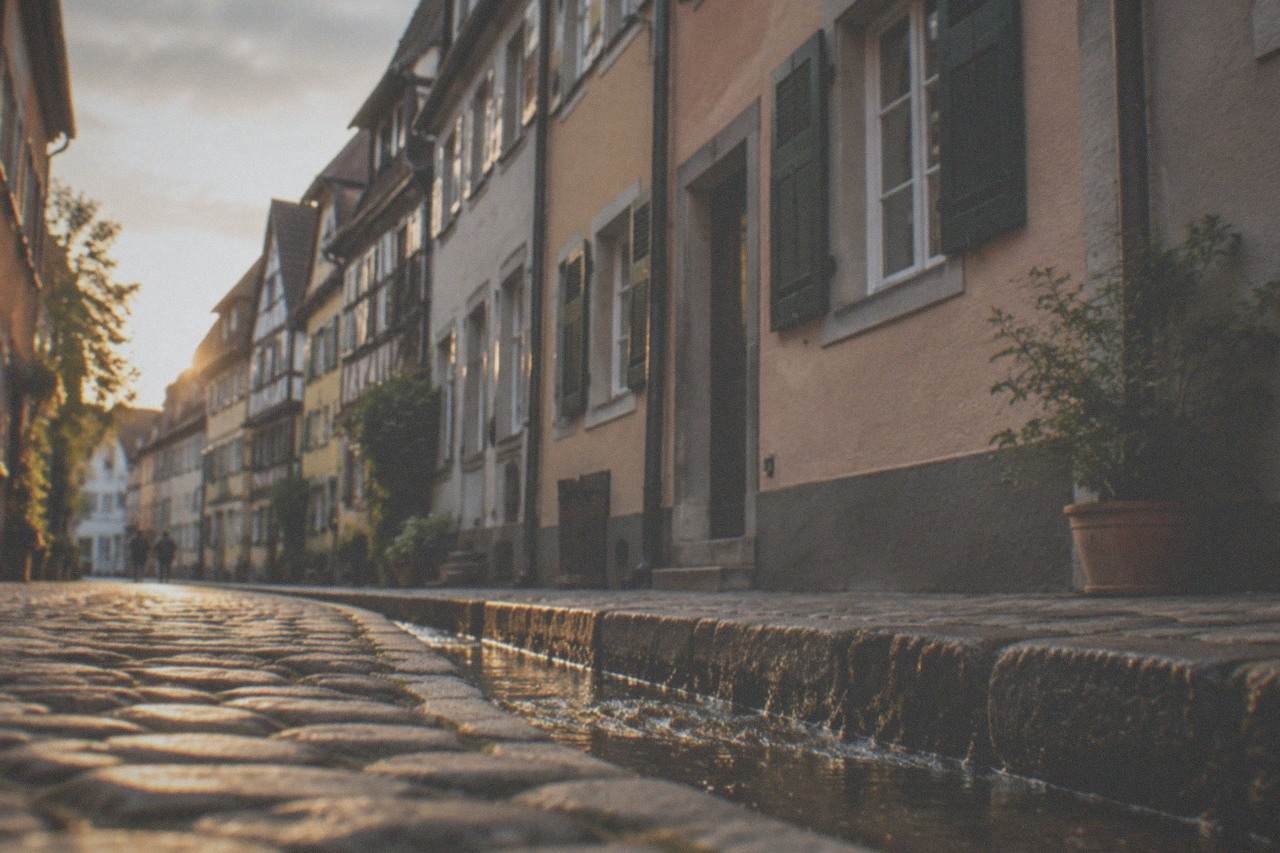
Fischerau and Gerberau rarely make the postcard. They sit one block back from the bigger streets, and most visitors walk past their openings without noticing. That is a fair trade. The lanes are narrow, the buildings press close, and a small stream still runs beside the pavement, which is exactly why the tanners and fishermen chose this ground in the first place. This Freiburg Travel Guide page walks the two streets end to end: what they were, what you see today, where the useful detours are, and what the visit costs.
Start with the names, because they carry the whole history in three German words. A Gerber is a tanner, a Fischer is a fisherman, and an Au is a wet, low-lying meadow beside a stream. Put together, Gerberau and Fischerau describe themselves: the tanners' water meadow and the fishermen's water meadow. Both trades needed the stream that still runs along the edge of the lanes, the Stadtgrabenbach, and both were trades the medieval city wanted at its margins rather than in the middle of the market square. The full old-town context is covered here.
What Are The Fischerau And Gerberau In Freiburg?
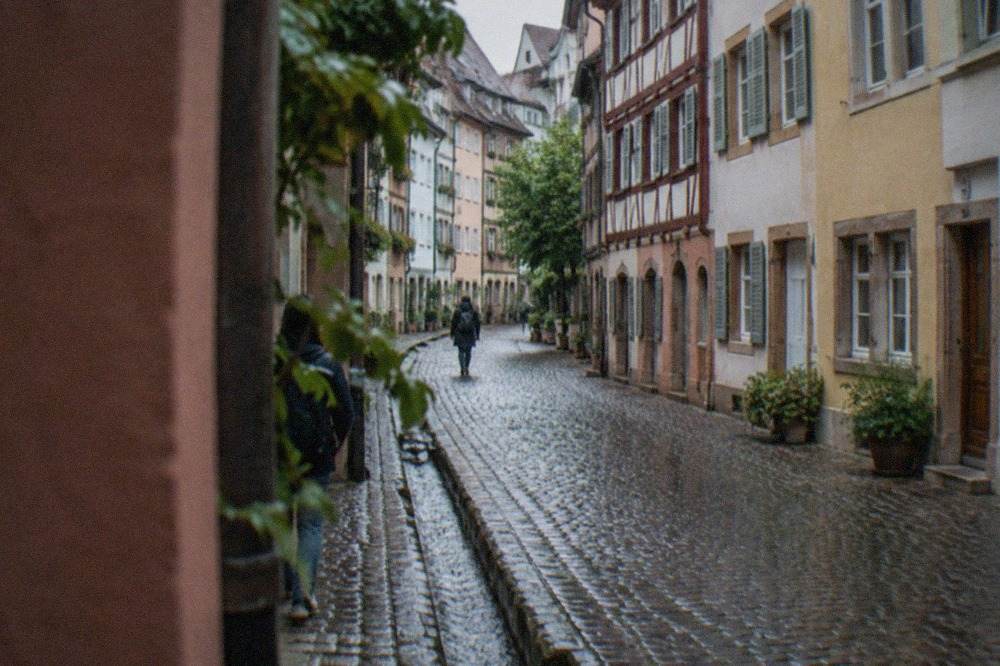
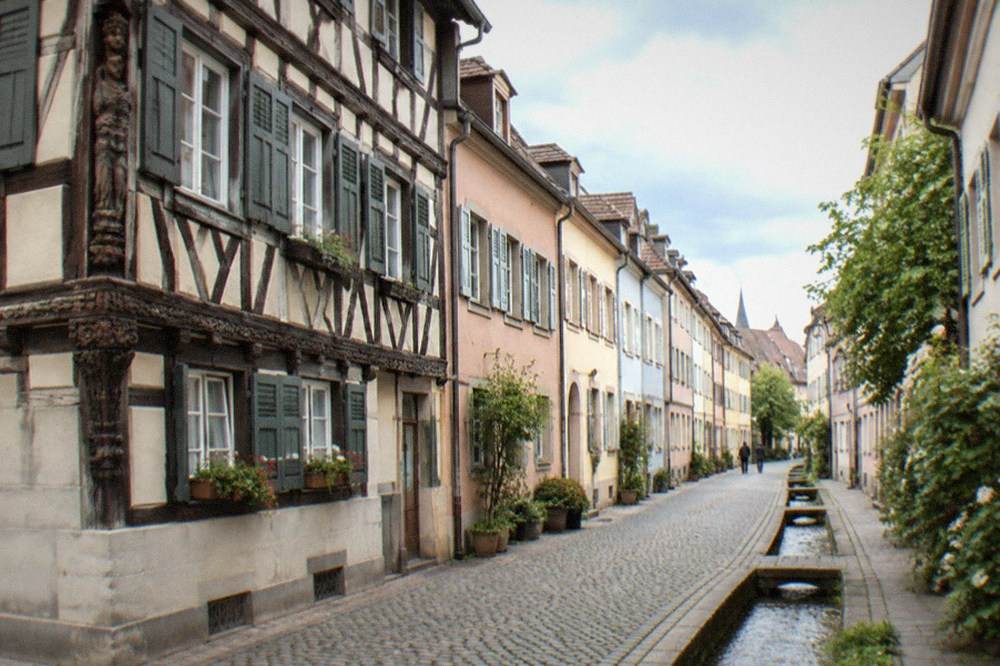
Fischerau and Gerberau are two short, parallel medieval lanes in the southwest of Freiburg's old town, a few minutes' walk south of the Münster and close to the Schwabentor. Their names record the trades that worked here, fishermen and tanners, and both depended on the Stadtgrabenbach, the stream that still runs beside the pavement. The lanes are narrow, mostly residential in feel, and lined with a mix of restored half-timbered houses and plain plastered facades. Visitors come here for the atmosphere rather than for any single named attraction: there is no ticket desk, no tower, no museum entrance on either street. What there is, in place of monuments, is the preserved shape of a working medieval district, the kind of street the grander squares lost when they were rebuilt.
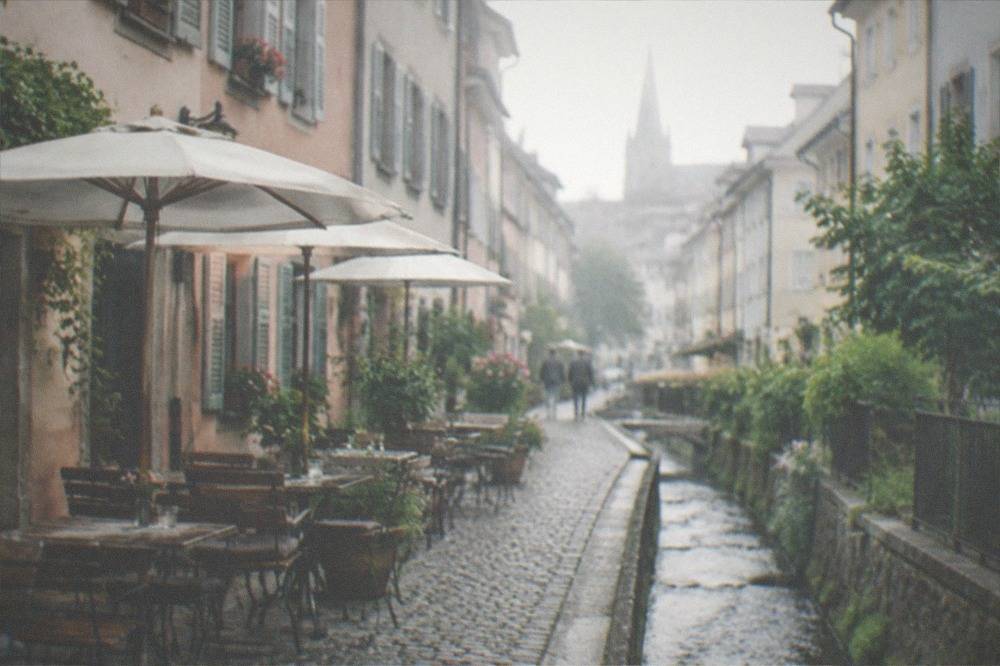
That shape is worth slowing down for. The lanes run roughly alongside the old town ditch, which is why they sit lower and feel damper than the Rathausplatz or the Münsterplatz a few minutes north. Water defines them. The stream beside the curb is the direct descendant of the working water the trades needed, and unlike the better known Bächle, the little gutters that run through much of the old town, this channel is a real named bach doing real work. Walk the length of either lane and you pass under hanging signs, past doorways a cart could barely fit through, and between walls that lean toward each other overhead.
Practically, treat the two lanes as a single ten-to-fifteen-minute stroll rather than a destination with a fixed duration. Most people combine them with the Schwabentor, one of the two surviving medieval city gates, which stands a short walk to the south and frames the old town perfectly from the outside. The Schwabentor deserves its own stop. From there the walk north through Fischerau or Gerberau deposits you near the southern edge of the Münster area within minutes, close to the market square and everything the center offers.
Why The Tanners And Fishermen Settled These Lanes
Tanning and fish handling were dirty, smelly trades that medieval cities pushed to their edges, and Freiburg pushed them here, beside the stream on the low ground near the city wall. The tanners needed constant running water to soak and wash hides; the fishermen needed direct access to the water and a short route to market with the day's catch. The Au ending in both street names marks the wet meadowland this was before it was built over. Neither trade could operate on the dry, prestigious ground around the Münster, and neither wanted to: water proximity was the entire business model.
The Stadtgrabenbach did the work. It still runs along the lanes today, channelled between stone, and in the medieval period it carried away what the trades produced, which was a great deal of waste. Cities across the German-speaking world solved this problem the same way, zoning the wet trades downstream and downwind of the centers of power. In Freiburg the geography made the solution easy: the old town sits on a spur, the wet ground lies along its western and southern base, and that is exactly where the tanners went.
What remains now is the layout, not the industry. The houses are small because the tradesmen were modest, the lanes are narrow because the district was never built for display, and the stream is clean now because the tanners left. Walk it with that history in mind and the streets read like a document: the grand squares nearby show you the city as it wanted to be seen, while Fischerau and Gerberau show you the city as it actually functioned day to day.
There is a later layer too, and it is the one guided tours focus on. A dedicated two-hour city tour of the red light district history runs in Freiburg today, rated 4.2 across 22 reviews, from $26, and it is the most direct way to have that side of the quarter's story explained on the ground where it happened. The lanes themselves are quiet and entirely ordinary in the evenings now, which is itself part of the story of how the quarter changed.
What To See Along Fischerau And Gerberau Today
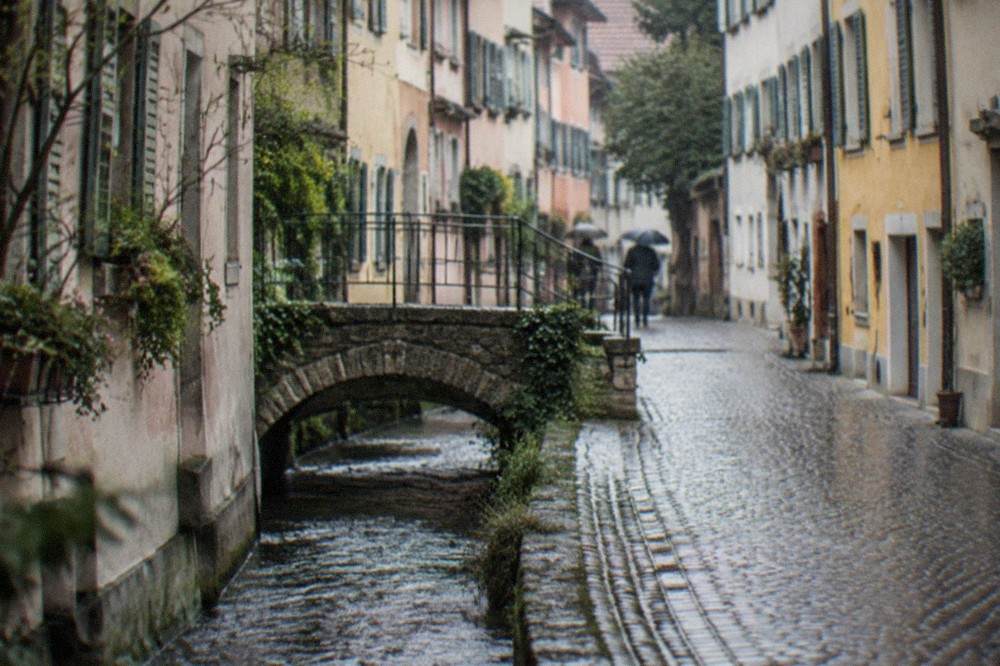
The honest answer is atmosphere: the lanes hold no ticketed sights at all. What you actually see is a preserved street plan of narrow lanes, a live stream beside the curb, half-timbered and plastered facades leaning overhead, small bridges and crossings, and, at the south end, the Schwabentor framing the district. Budget ten to fifteen minutes for the lanes themselves, more if you stop for a drink. The rewards are photographic and textural rather than monumental, and they are free, which balances nicely against the priced sights a few minutes north.
The most useful frame for a visit is a loop. Start at the Schwabentor and look back through it at the old town: the gate's arch is one of the classic views of central Freiburg. Walk north through Fischerau, detour one block to see the parallel Gerberau, and finish at the southern edge of the Münsterplatz. From there the full set of major sights is within a few minutes on foot: the Münster itself, the market, the Historisches Kaufhaus, and the cluster of small squares behind it. The market on the Münsterplatz runs weekdays from 07:30, with up to 130 stalls, so a morning loop catches it at full size.
For the priced sights nearest the lanes, the following table covers the ones within a short walk. Hours and prices are the official current listings for each.
| Sight | Distance from the lanes | Entry | Notes |
|---|---|---|---|
| Freiburg Münster nave | 5 minutes | Free | Open to visitors daily |
| Münster tower climb | 5 minutes | Adults €5, children and teens €3, family €13, under 7 free | Mon-Sat 11:00-16:00, Sun and holidays 13:00-17:00; gallery at 70 m, tower is 116 m |
| Augustinermuseum | 8 minutes | €12, reduced €8, free under 27 | Tue-Sun 10:00-17:00, Fri 10:00-19:00; day ticket covers other city museums |
| Archäologisches Museum Colombischlössle | 10 minutes | €5, reduced €3, free under 27 | Closed Mondays |
| Schlossberg and Schlossbergturm | 10 minutes uphill | Free | Tower reached on foot |
The tower climb deserves a line of warning before you commit. The Münster's west tower stands 116 m tall, but visitors climb to a gallery at 70 m, not the top, and the top gallery closes in winter. The official tower page lists the current hours and prices in full at the Münster's own Turmbesteigung page. The museum side is simpler: under-27s get free entry at all the city museums, and the Augustinermuseum day ticket spreads across the group.
The Bächle, The Stadtgrabenbach And The Water
The water beside Fischerau and Gerberau is the Stadtgrabenbach, the stream along the old town's southern and western base, not one of the famous Bächle gutters, though the Bächle network also runs through the nearby streets. The Stadtgrabenbach is a real stream with a name, the water the tanners and fishermen worked at, and it is one of the few working medieval waters in the city you can walk beside continuously. The two systems are related but distinct, and visitors who conflate them miss the point of both.
The Bächle are the small gutters that run along the curbs of the old town's streets, fed by the same water system, and they are Freiburg's most famous quirk, with a local superstition that stepping in one means you will marry a Freiburger. They run in the streets around the Münster and throughout the center. The Bächle have their own guide page. The Stadtgrabenbach, by contrast, is larger, fixed along the base of the old town, and historically did the heavy industrial work: dyeing, soaking, flushing, draining. Along Fischerau and Gerberau you are walking the industrial branch of the city's water.
A short walk north from the lanes crosses the Bächle streets, so the two waters can be compared directly in ten minutes, which is the quickest way to understand how Freiburg managed water in the middle ages. One system ornamented the streets the city showed off. The other powered the trades the city hid at its edge. The same city, the same water, two entirely different jobs. There is no better short demonstration anywhere in Freiburg of how a medieval town actually worked, and it costs nothing to see.
Food And Drink On And Around The Lanes
The lanes have become a quiet food and wine pocket: the standout is Trotte, a wine bar that opened in Fischerau with around 400 wines on the list and about 12 by the glass, focused on rarities from Germany, France and Burgundy. Around the corner the choices multiply, from Badische wine tavern traditions to the market food near the Münster, and the whole area is walkable in minutes. This is the district's second life, and it is a recent one.
For a fuller picture of what the tavern tradition tastes like, the Badische wine story is worth reading before you order, and the classic food pairings, from Lange Rote sausages to onion tart, Zwiebelkuchen, show up on market and tavern menus across the district. The Münstermarkt, up the hill by the Münster, is the practical fallback for picnic supplies: it runs weekdays from 07:30 to 13:30 and Saturdays from 07:30 to 14:00, with up to 130 stalls, and the official details are on the market's visitor page.
Prices in the taverns and wine bars of the old town are local till prices, charged in euros, and they move with the season and the list, so check the room before ordering rather than expecting a posted band. What the area reliably offers is the setting: a glass of Baden or Burgundy beside the stream the tanners used, in a lane built for people who could never have afforded it. If that contrast appeals, plan the drink stop into the walk rather than treating it as an afterthought, because the small rooms fill quickly on warm evenings.
Which Tours Actually Cover These Lanes
Three guided products touch this district or its themes: the Red Light District City Tour, about 2 hours and from $26, rated 4.2 across 22 reviews; the Veni, Vidi, Vino wine hike and tasting, about 2.5 hours and from $79, rated 4.4 across 167 reviews; and a self-guided scavenger hunt, about 3 hours and from $45, rated 4.9 across 15 reviews. Only the first is about the streets themselves; the other two suit the same half day for different reasons.
The red light tour is the specialist choice. It spends its two hours on the social history of the quarter around the lanes, the side of the city that never made the postcards, and it is the only product in the roster that treats Fischerau and Gerberau's fringe as the main subject rather than scenery. With 22 reviews it is a small-pool tour, so read a handful of recent guest reviews on the live listing before booking to calibrate expectations. The tour runs about 2 hours and starts at $26.
The wine hike is the complement. It runs about 2.5 hours from $79, is rated 4.4 across 167 reviews, and connects the vineyard country above the city with tastings, which pairs naturally with a day that ends at Trotte or a Badische tavern: you learn what is in the glass on the hill, then drink it in the lane. The scavenger hunt option, about 3 hours and from $45, rated 4.9 across 15 reviews, is a self-guided format that suits independent walkers who want a route and riddles rather than a guide, and its path through the old town can be bent to include these lanes between checkpoints.
For comparison, here are the products side by side, with the figures the listings carry.
| Tour | Length | Rating | Price from | Best for |
|---|---|---|---|---|
| Red Light District City Tour | ~2 hours | 4.2 across 22 reviews | $26 | The district's social history, on the ground |
| Veni, Vidi, Vino wine hike and tasting | ~2.5 hours | 4.4 across 167 reviews | $79 | Vineyards plus glasses, half a day |
| Freiburg scavenger hunt, self-guided | ~3 hours | 4.9 across 15 reviews | $45 | Independent walkers who want structure |
| Gässle, Bächle and More City Tour | ~1.5 hours | 4.7 across 3187 reviews | $15 | A general first-time walk, biggest review pool |
The last row is the mainstream alternative, the biggest-reviewed general walk in the roster, which passes through the old town's famous lanes but does not specialize in this quarter. If the lanes are your main interest, the specialist tour wins. If they are one stop in a first visit, the general walk plus an hour of self-guided wandering here covers it well.
How To Get There And What Transport Costs
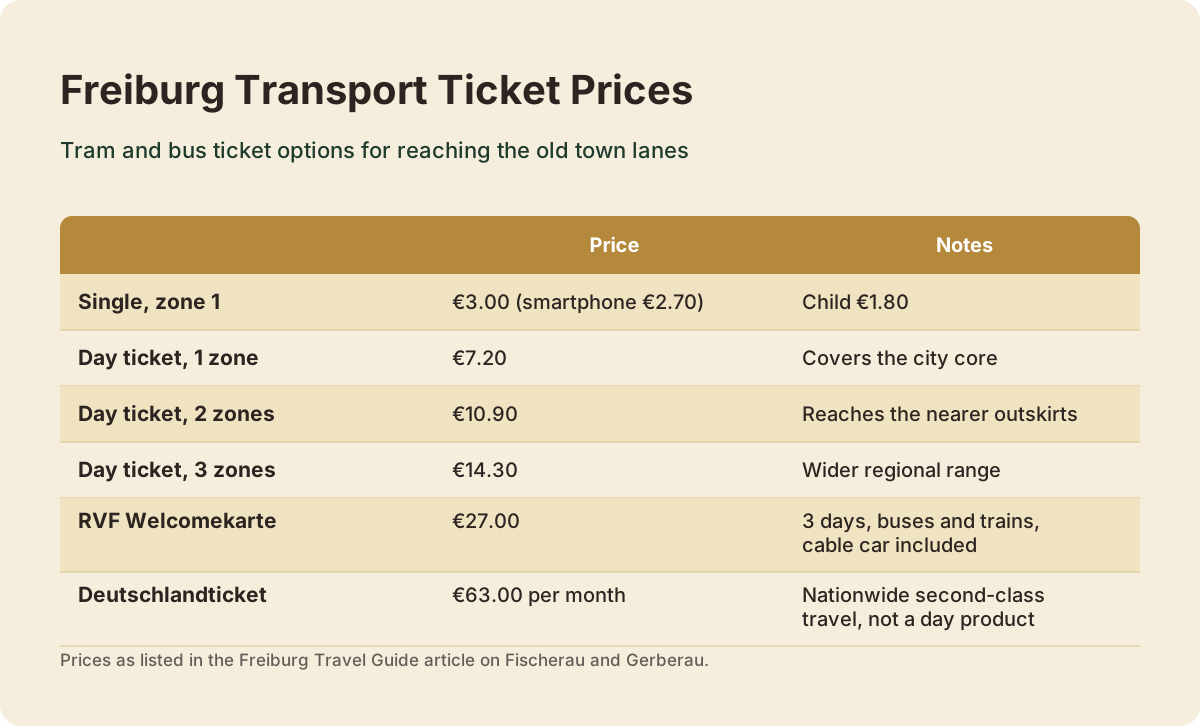
The lanes sit inside the old town, so on foot is the answer from anywhere central: from the Hauptbahnhof the walk is short, under fifteen minutes, and from the Münsterplatz about five. If you arrive by tram, the old town edges are ringed with stops, and a single zone 1 ticket costs €3.00, or €2.70 on a smartphone, with children at €1.80. No ticket is needed to walk the lanes themselves, and the whole district is free to enter.
The transport figures below are the current RVF tariff, the regional network that runs Freiburg's trams and buses. Note that a smartphone discount applies to single tickets, and the day tickets step up by zone count.
| Ticket | Price | Notes |
|---|---|---|
| Single, zone 1 | €3.00 (smartphone €2.70) | Child €1.80 |
| Day ticket, 1 zone | €7.20 | Covers the city core |
| Day ticket, 2 zones | €10.90 | Reaches the nearer outskirts |
| Day ticket, 3 zones | €14.30 | Wider regional range |
| RVF Welcomekarte | €27.00 | 3 days, buses and trains, includes the Schauinslandbahn cable car |
| Deutschlandticket | €63.00 per month | Nationwide second-class travel, not a tourist day product |
One correction worth making before you buy anything, because it traps visitors every year: Freiburg city is not a KONUS municipality, and a hotel stay in Freiburg does not hand you a free KONUS guest card. The KONUS card exists, it is issued by member towns in the surrounding Black Forest such as Titisee-Neustadt, Staufen and St. Peter, and a card issued there is valid on Freiburg's trams and buses. But for a stay in Freiburg itself the visitor product is the RVF Welcomekarte, 3 days at €27.00, covering buses and trains and including the Schauinslandbahn, with a Kulturbonus attached. The details are on the RVF's Welcomekarte page. The Welcomekarte is broken down fully elsewhere.
Two practical notes complete the picture. Freiburg's main station is in the middle of a modernization that began in September 2026 and runs until around December 2028, with platform renewals and five new lifts, so allow a little extra time on arrival and departure days while the works run. And the laneways themselves are cobbled and, beside the stream, occasionally damp underfoot: the shoes you want are the ones you would wear for any old town, not sandals on a rainy day.
When To Walk The Lanes
Any season works, and the choice is really about light and crowds: mornings are quietest, with the Münstermarkt at full stretch on weekday mornings until 13:30, while warm evenings are best for the stream-side tables but busiest in the bars. In winter the lanes darken early, the top gallery of the Münster tower closes, and the Christmas market running 19 November to 23 December pulls the crowds north toward Rathausplatz. Pick mornings for photographs and atmosphere, evenings for food and wine.
The climate supports most of the year. Freiburg is one of Germany's warmest and sunniest cities, with an annual mean of 11.0 °C and 1,815.1 hours of sunshine in the 1991-2020 normals, but it is not the warmest or sunniest spot in the country, and it still averages 886.5 mm of rain a year, spread across every month. June through August each carry over 80 mm, so a rain layer earns its place in the bag even in summer. Rain in these lanes is not a disaster, incidentally: the stream rises, the cobbles shine, and the half-timbered facades photograph better wet, provided you are dressed for it.
If you are timing a whole trip rather than a single walk, the best-time-to-visit question has its own guide, and the winter version of the city, with the market running, is covered in the Freiburg in winter guide. For the lanes specifically, the one seasonal note that matters is the tower: the Münster climb's top gallery closes in winter, so if the view from 70 m is on your list, book the walk before the cold months or accept the nave alone.
For a full day built around this quarter, the sequence that works is: morning market and Münster, the tower climb early while legs are fresh, the loop down through the Schwabentor, Fischerau and Gerberau in the late morning light, lunch from the market or a tavern, and an afternoon museum, with the evening free for the wine bars the lanes now carry. It is a day that uses the whole vertical range of the old town, from the 70 m gallery to the stream at the bottom.
Common Questions About Fischerau And Gerberau
What are the Fischerau and Gerberau in Freiburg?
Two short parallel medieval lanes just south of the Münster, named for the fishermen and tanners who worked along the Stadtgrabenbach. Today they are quiet residential-feeling streets with wine bars and restaurants, minutes from the Schwabentor.
Are the Fischerau and Gerberau free to visit?
Yes. There is no ticket, no gate and no charge for either lane. The priced sights nearby, such as the Münster tower climb at €5 for adults, are optional additions.
How far are Fischerau and Gerberau from the Freiburg Münster?
About five minutes on foot to the southern edge of the Münsterplatz. The lanes sit inside the old town, so no transport is needed from the center, and the walk from the Hauptbahnhof takes under fifteen minutes.
Is there a tour of the red light history of these streets?
Yes. The Red Light District City Tour runs about 2 hours from $26 and is rated 4.2 across 22 reviews. It is the roster's specialist product for the social history of the quarter around these lanes.
What is the stream running beside the lanes?
The Stadtgrabenbach, a named stream along the old town's base, which the tanning and fishing trades used historically. It is distinct from the Bächle, the small curb gutters that run through the old town's streets.
Where can you eat and drink on Fischerau and Gerberau?
Trotte, a wine bar in Fischerau with around 400 wines on the list and about 12 by the glass, is the standout, with a focus on rarities from Germany, France and Burgundy. Ludvigs, a standing wine tavern, opened nearby as the region's first Stehausschank.