Augustinerplatz Freiburg: A Practical Guide To The City's Favorite Square
Augustinerplatz is the square where Freiburg relaxes: a former monastery courtyard turned beer garden, student hangout and evening stage, five minutes on foot from the Münster. This guide covers what it is, how to get there, what to do around it and when to go.
Short answer
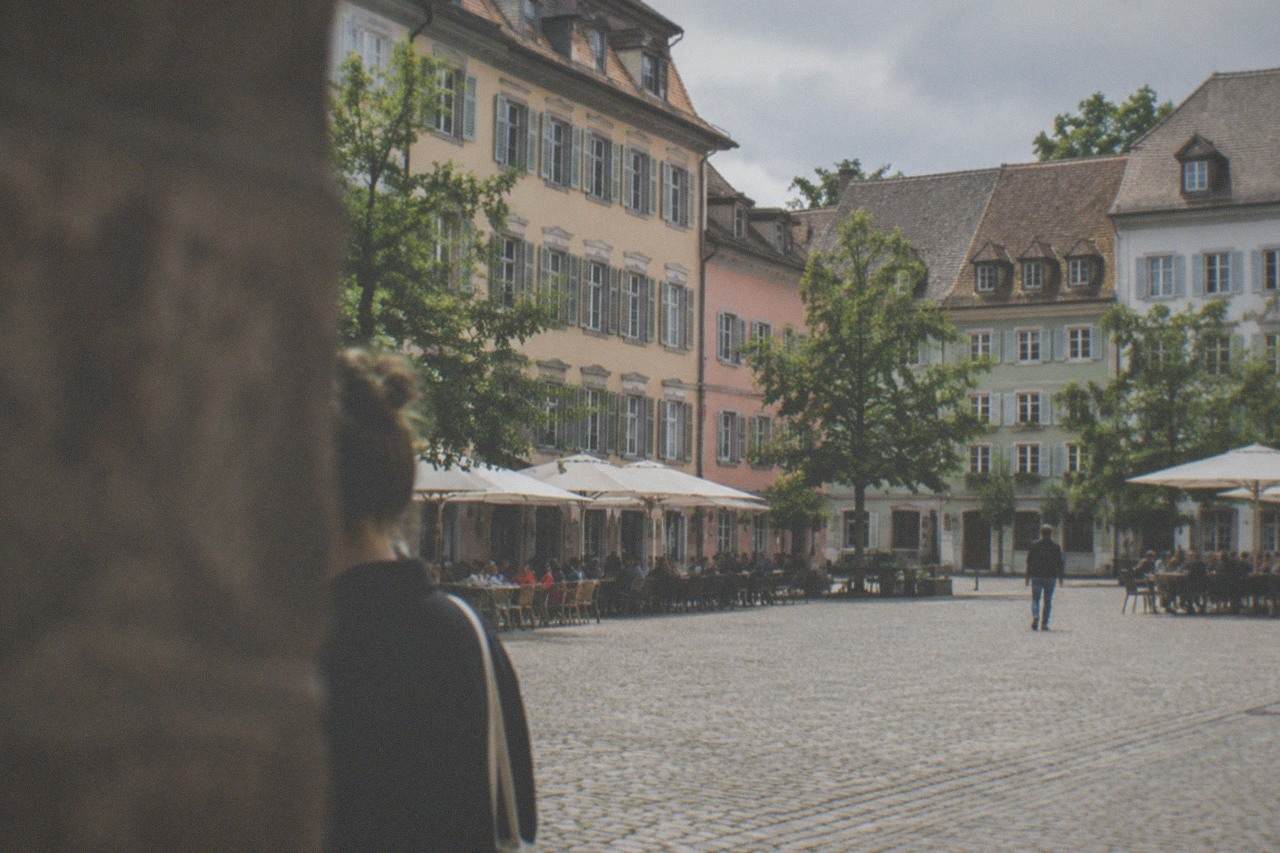
Augustinerplatz is a small, tree-shaded square in Freiburg's Old Town, built on the site of the medieval Augustinian monastery whose church now houses the Augustinermuseum. Locals treat it as an open-air living room: surrounded by bars and a beer garden, it fills with students and families on warm evenings and lies about five minutes' walk southwest of the Münster.
Freiburg keeps its most sociable square a short walk downhill from the Münster, in a pocket of the Old Town where the streets narrow, the Bächle run along the kerbs and the trees take over in summer. Augustinerplatz is that square. It began life as the courtyard of an Augustinian monastery, it gave its name to the museum that now occupies the monastery church, and today it works as the city's shared living room: students on the steps, families at the café tables, and a beer culture that runs from afternoon to late evening. This guide explains what the square actually is, how to reach it, what to eat and drink there, and how to fold it into a day in the Old Town without doubling back on yourself.
What Is Augustinerplatz And Why Do Locals Treat It As Their Living Room?
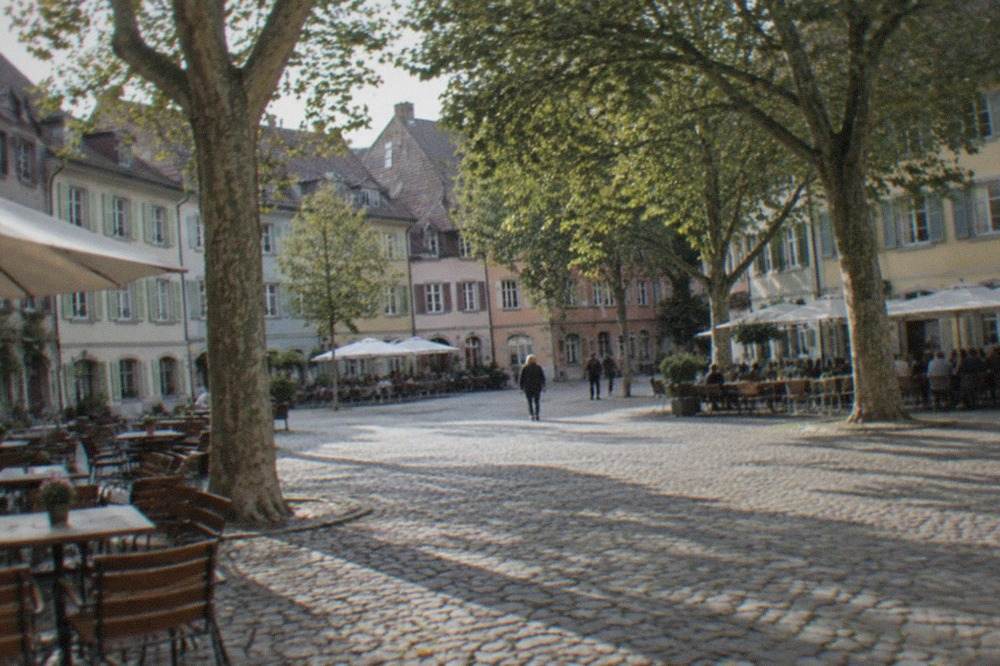
Augustinerplatz is a small, tree-lined square in the southwest of Freiburg's Old Town, sitting on the footprint of the medieval Augustinian monastery. The monastery church survived secularization and now serves as the Augustinermuseum, while the square itself became the city's favorite open-air meeting point, ringed by bars, a beer garden and café terraces that fill on almost every warm evening of the year.
The square's identity comes from its history and its crowd in roughly equal measure. The Augustinians settled here in the medieval period, and when their monastery was dissolved the church passed into civic use; the building beside the square now houses one of Baden's principal art and cultural history collections. That collection matters for visitors too, because the Augustinermuseum fully reopened on 28 February 2026 after more than two decades of phased renovation, adding around 1,600 square meters of new exhibition space in the former convent building and historic vaulted cellars. If you last visited Freiburg before 2026 and remember the museum as a building site, that memory is out of date.
The "living room" reputation is earned in the evenings. The University of Freiburg, founded in 1457, counts roughly 24,507 students in the current winter semester, and a large share of them live or study within walking distance of the Old Town. On a warm night the square's steps, benches and terraces fill with exactly that mix: students with supermarket beer, families with ice cream, tour groups pausing between stops, and older locals who have claimed the same table for decades. Nobody programs this. It happens because the square is car-free, shaded and central, which is also the honest answer to why you should go.
For context on how the city around it works, our Freiburg Travel Guide covers the wider Old Town and its main landmarks, and the Old Town walking guide strings the squares together into a sensible route. The Bächle guide explains the little water channels you will step over constantly on the way here.
How Do You Get To Augustinerplatz?
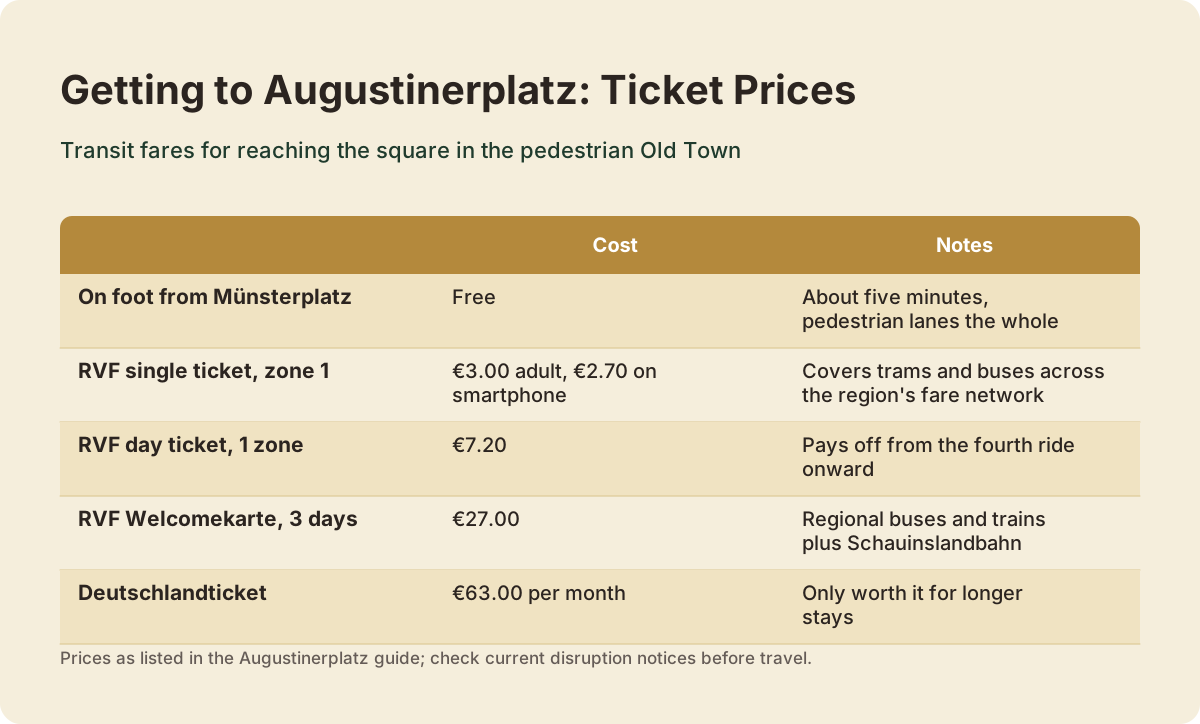
Augustinerplatz sits about five minutes' walk southwest of the Münster and the Rathausplatz, inside the pedestrian Old Town, so most visitors arrive on foot from the cathedral or the tram stops on the ring road. A standard RVF single ticket in zone 1 costs €3.00, a day ticket €7.20, and the three-day RVF Welcomekarte at €27.00 covers buses and trains region-wide, so the square rarely needs a dedicated journey of its own.
There is no tram through the Old Town itself, which is the point: the medieval street grid keeps cars out, and the tram lines run along the Kaiser-Joseph-Straße corridor and the ring. If you are staying anywhere in central Freiburg, walking is faster than transit for this square. From the Münsterplatz, head south past the Historisches Kaufhaus, cross the Salzstraße, and continue into the lanes of the Oberlinden quarter; the square announces itself before you see it, by noise and the smell of the beer garden.
If you are coming from further out, the practical options look like this:
| Option | Cost | Notes |
|---|---|---|
| On foot from Münsterplatz | Free | About five minutes, pedestrian lanes the whole way |
| RVF single ticket, zone 1 | €3.00 adult, €2.70 on smartphone | Covers trams and buses across the region's fare network |
| RVF day ticket, 1 zone | €7.20 | Pays off from the fourth ride onward |
| RVF Welcomekarte, 3 days | €27.00 | Includes regional buses and trains plus the Schauinslandbahn cable car |
| Deutschlandticket | €63.00 per month | Only worth it for longer stays |
One caution for the transit-curious: Freiburg's tram network is in a construction-heavy phase, and several lines have been running replacement or diversion services during 2026 while track and canal works proceed. Check the operator's current disruption notices on the day you travel rather than trusting a timetable printed on a card or in an older article. The works are temporary, but they move around the city week to week.
A guided walk is the other way to arrive with context rather than a map, and the pairing works especially well here because the square's history is easy to walk past unexplained.
What Is There To Do Around Augustinerplatz?
The square's own program is simple, sit, eat, drink and watch, but the streets within five minutes hold the Augustinermuseum, the Markthalle, the Martinstor gate, the Münster and its market, and the Fischerau lanes along the old stream, enough for a full half-day without crossing the same ground twice. Admission to the Augustinermuseum is €12, reduced €8, and free for anyone under 27.
Start with the museum, because it is the reason the square exists in its current form. The Augustinermuseum is Freiburg's principal collection of art and cultural history from the region, and after its full reopening on 28 February 2026 it displays across roughly 3,400 square meters, including the new convent-building floors and vaulted cellars. The day ticket is valid for the other city museums too, so it doubles as a museum-hopping pass if the weather turns. Details of current exhibitions are on the official museum site, and the practicalities of visiting are covered in our own Augustinermuseum guide.
Then work outward. The Markthalle on the edge of the Gruabaschtte is a covered market hall that solves the lunch problem cheaply. The Martinstor, one of the two surviving medieval city gates, is a short walk north up the Kaiser-Joseph-Straße; the Martinstor guide gives the history. The Münster and its market square anchor the whole Old Town.
| Sight | Distance from Augustinerplatz | Admission |
|---|---|---|
| Augustinermuseum | On the square | €12, reduced €8, free under 27 |
| Markthalle | About 4 minutes' walk | Free to enter, pay as you eat |
| Martinstor | About 5 minutes' walk | Viewed from outside |
| Münster nave | About 6 minutes' walk | Free |
| Münster tower climb | About 6 minutes' walk | €5 adult, €3 child, family €13 |
| Museum Natur und Mensch | About 10 minutes' walk | €5, reduced €3, free under 27 |
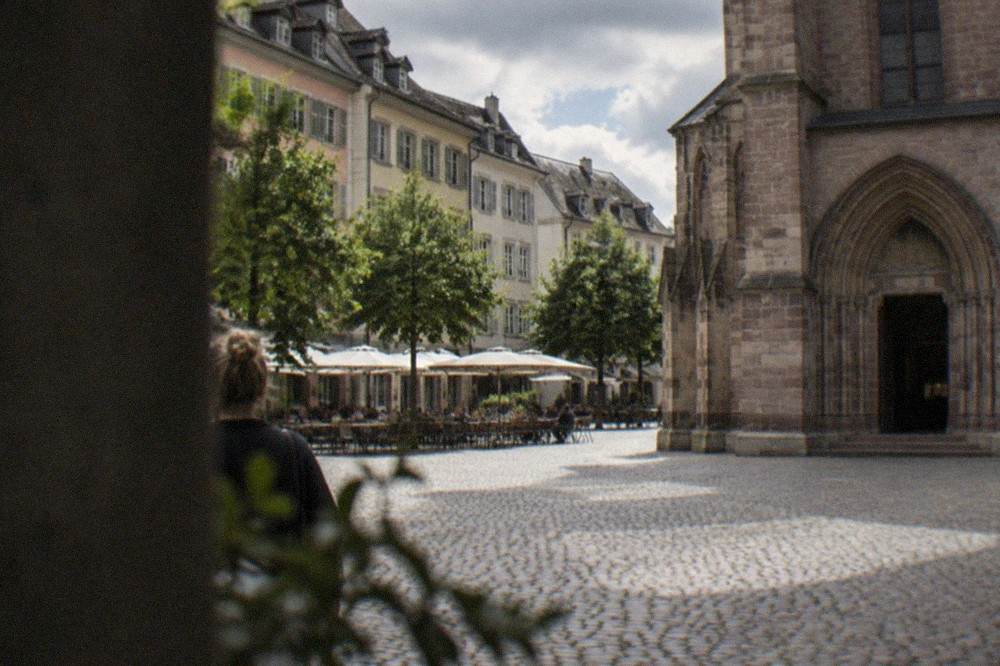
The Münster tower deserves a specific note because the numbers are easy to get wrong. The west tower stands 116 meters tall, but visitors climb to a gallery at 70 meters, not to the top, and the upper gallery closes in winter. Opening hours run Monday to Saturday from 11:00 to 16:00 and Sundays and holidays from 13:00 to 17:00, with the last ascent about fifteen minutes before closing, per the official tower page. Buy the ticket in the Türmerstube at the tower base and count on a narrow, spiral staircase the whole way up.
A guided option makes sense if you want the stories behind these streets rather than the sights alone, and the most direct fit is the historic-center stroll that includes this quarter.
Where Do You Eat And Drink On Augustinerplatz?
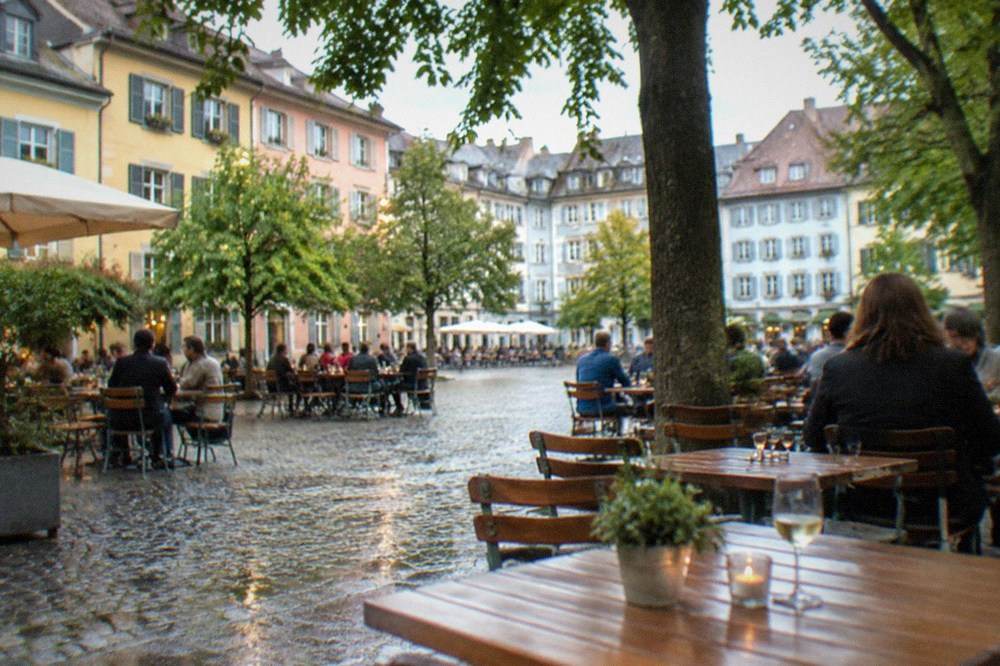
The square's food scene runs from a full Bavarian-style Wirtshaus to Badische wine taverns, quick market lunches and student-priced beer, with the beer garden under the plane trees as the default evening choice. A glass of regional Badische wine at a standing tavern or a table on the square is the local order, and the densest cluster of options sits within two streets of the square itself.
The anchor is Augustiner am Platz. It opened on 14 October 2025 as the first Augustiner Wirtshaus in Baden-Württemberg, converted from an Italian chain restaurant over about six months, and it brought Munich's oldest brewery's beers to a square that already had a strong beer-garden habit. The menu mixes Bavarian and Badische cooking, which in practice means pork knuckles and pretzels next to Badische onion tart and Maultaschen. It is the most substantial sit-down option on the square and the one that books out first in good weather.
Around the corner, the wine side of the square has grown quickly. A Stehausschank, a standing-style wine tavern, opened in mid-2026 after roughly seven months of renovation at a former café site, focused on regional producers, and a dedicated wine bar with around 400 wines in stock, twelve of them by the glass, opened in the Fischerau lanes nearby in August 2026 with an emphasis on German, French and Burgundy bottles. Neither is cheap by student standards; both are cheaper than a sit-down dinner. Our Baden wine guide explains what is actually in your glass.
| Stop | Style | Best For |
|---|---|---|
| Augustiner am Platz | Bavarian-Badische Wirtshaus, opened Oct 2025 | A full meal with beer on the square |
| Beer garden under the trees | Self-service, benches | Warm evenings, groups, low budget |
| Stehausschank wine tavern | Standing regional wine, opened mid-2026 | A quick glass between stops |
| Markthalle stalls | Covered market food, about 4 minutes' walk | Cheap lunch, rainy days |
| Münstermarkt stalls | Market produce, about 6 minutes' walk | Fruit, bread, picnic supplies |
For the picnic-and-bench version, the Münstermarkt is the supply point: up to 130 stalls, Monday to Saturday, from 07:30 to 13:30 on weekdays and until 14:00 on Saturdays, closed Sundays and holidays. Buy bread, cheese and fruit there in the morning, carry it to the square, and you have the local student dinner at a fraction of a restaurant price.
The evening scene matters more than the food for many visitors, and Freiburg's nightlife guide places the Augustinerplatz bars in the city's wider evening geography. If you would rather have the route delivered than planned, a guided pub crawl runs about four hours with drinks included, from $51, rated 4.4 across 107 reviews.
Whether you end the evening on a bar stool or start the next morning with a proper guided walk, the historic-center stroll remains the best-matched product for this part of town, and the current terms are worth a look before you lock in your day.
How Does Augustinerplatz Fit Into A Day In The Old Town?
The efficient sequence is Münsterplatz and the morning market first, then the Münster tower climb before the midday queue builds, lunch at the Markthalle or on the square, the Augustinermuseum in the afternoon, and Augustinerplatz itself as the evening finish, when the terraces fill and the square is at its best. Walking the whole loop covers well under two kilometers on pedestrian lanes.
The reason for this order is light and hours, not distance. The market closes early afternoon, so it has to be first. The tower has fixed opening hours, Monday to Saturday 11:00 to 16:00, so mid-morning or early afternoon works; the climb is a spiral staircase and is best done before a big lunch. The Augustinermuseum keeps daytime hours and closes by 17:00 on most days, though it runs later on Fridays. That leaves the square's own specialty, the evening, where it has no closing time to race.
A half-day version works too, and honestly it is what most visitors do: Münster, tower, market snack, Augustinermuseum, then park on the square for the rest of the evening. Families should note that the square is relaxed and low-traffic, but the steps get busy with students after dark, so the family-friendly window is late afternoon rather than late evening. Our one day in Freiburg itinerary and the Freiburg with kids guide both fold the square into longer plans.
If you want someone else to keep the route honest, a private walk is the format that lets you set the pace. A two-hour private city walk with a local guide runs from $141 and suits travelers who want questions answered rather than a fixed script; it currently carries a single review, so judge it on the listing details rather than a rating pool.
When Is The Best Time To Visit Augustinerplatz?
The square works year-round but peaks from May through September, when Freiburg averages 20.1°C in July, its warmest month, and the terrace season runs at full tilt; evenings from around 18:00 onward are when the square fills, and weekdays are noticeably calmer than Fridays and Saturdays. December adds the Christmas market from 19 November to 23 December, which shifts the center of gravity to Rathausplatz.
The climate data backs the instinct. The long-term averages for Freiburg put July at 20.1°C and August at 19.7°C mean temperature, with July also the sunniest month at 252.2 hours of sunshine; May through September together account for the overwhelming majority of the year's 1,815.1 sun hours. Rain is highest in May, at 103.4mm on average, and summer thunderstorms are a real thing, so the perfect terrace evening is a summer probability, not a guarantee. The Freiburg weather guide and the best time to visit guide go deeper on seasonal planning.
| Month | Mean temperature | Sunshine hours | Terrace verdict |
|---|---|---|---|
| May | 14.9°C | 206.8 | Busy, but the wettest month, at 103.4mm of rain |
| June | 18.3°C | 232.7 | Prime season |
| July | 20.1°C | 252.2 | Peak, book dinner tables ahead |
| August | 19.7°C | 234.4 | Peak, warm evenings run late |
| September | 15.4°C | 176.2 | Locals' favorite, student return |
| December | 3.4°C | 56.3 | Christmas market season instead |
Frost days average 15.7 in January and 13.8 in December, so the open-air living room closes for winter in any practical sense. What replaces it is the Christmas market: from 19 November to 23 December 2026, with stands across Rathausplatz, Kartoffelmarkt, Unterlindenplatz and the Franziskanerstraße, free entry and more than 120 stands in total, per the official market site. Augustinerplatz itself stays quieter during the market weeks, which makes it a good escape valve when the main market lanes get dense.
Festival weeks change the square's character too. The spring fair, the Frühjahrsmess, ran 14 to 25 May in 2026, and the autumn fair, the Herbstmess, runs 16 to 26 October 2026, with the Zelt-Musik-Festival at Mundenhof from 15 July to 2 August in between. During these weeks the whole city, students especially, is out at night, and the square runs at maximum capacity. If you want the sociable version, aim for those weeks; if you want space on a bench, avoid them.
What Do You Need To Know Before You Go?
You need almost nothing beyond a few practical notes: the square is free and open at all hours, the surrounding museums run a shared ticket with free entry for under-27s, transit tickets start at €3.00 for a zone-1 single, and the square's food options run from a full Wirtshaus to market picnic supplies, so the only real planning decision is whether you want a table or a bench.
Money first. Germany uses the euro at the till, and Freiburg's museums, transit and market stalls price in euro; the guided tours and experiences shown on this site, including the walks recommended above, price in US dollars, which is the currency of the booking panel rather than the local till. Do not expect to pay for a €5 museum ticket with a tour voucher or vice versa. Card acceptance is good in restaurants and museums and patchier at market stalls and in bars, so carry some cash for the square's evening economy.
Taxes second. Freiburg charges an Übernachtungsteuer, an overnight tax of 5% of the net room price, not a Kurtaxe and not a flat nightly fee. Private stays have been taxed since 2014 and business stays since July 2023, and guests under 18 are exempt. Your hotel bill shows it as a percentage, which is worth knowing when you check the price. And a note for anyone who has read about a free KONUS guest card: Freiburg city is not a KONUS municipality. The visitor transport product for stays in Freiburg is the RVF Welcomekarte, and the KONUS guest card guide explains exactly where that card does and does not apply.
Accessibility third. The square is flat, car-free and paved, and the surrounding lanes are a mix of cobbles and smooth stone; the Augustinermuseum's 2026 reopening was built around barrier-free access, with step-free routes through the new convent-building floors. Tram stops on the ring are level-boarding, and the accessibility guide covers the city in more detail than a square-by-square guide can.
Safety is rarely a concern here. Recent reporting puts Freiburg's 2025 crime figure 6% below the previous year, and the square's worst regular problem is noise past midnight rather than anything else. The usual city-sense rules apply late at night, as they would in any university town, but the square is not a place that requires planning around.
If you are landing into the region, the practical entry point is Basel's EuroAirport, from which a direct airport bus runs to Freiburg in about 55 minutes; its fare is on the listing rather than fixed, and the Basel airport to Freiburg guide covers the transfer in full. Once in the city, the whole Old Town, this square included, is on foot.
The three walks worth comparing for this square, side by side, look like this.
Common Questions About Augustinerplatz
What is Augustinerplatz?
A small, tree-shaded square in Freiburg's Old Town, built on the site of the medieval Augustinian monastery whose church now houses the Augustinermuseum. Locals use it as an open-air living room, ringed by bars, a beer garden and café terraces.
How far is Augustinerplatz from the Münster?
About a five to six minute walk southwest of the Münsterplatz, entirely on pedestrian lanes. There is no tram through the Old Town itself; the tram lines run along the Kaiser-Joseph-Straße corridor and the ring.
Is Augustinerplatz free to visit?
Yes, the square is a public open space with no entry charge at any hour. The Augustinermuseum next door charges €12, reduced €8, free for under-27s, and its day ticket is valid across the other city museums.
Where can you eat and drink on Augustinerplatz?
Augustiner am Platz, a Bavarian-Badische Wirtshaus opened in October 2025, anchors the square, with a beer garden under the trees, standing wine taverns nearby and the Markthalle and Münstermarkt a few minutes' walk away for cheaper supplies.
When is the best time to go to Augustinerplatz?
May through September, from around 18:00 onward, when the terraces fill; July averages 20.1°C and 252.2 sun hours. In winter the action shifts to the Christmas market around Rathausplatz from 19 November to 23 December.
Can you visit the Augustinermuseum on the same trip?
Yes, it is on the square's edge and fully reopened on 28 February 2026 after more than twenty years of phased renovation, with new exhibition space in the former convent building and vaulted cellars. Allow two to three hours.