Markthalle Freiburg: A Practical Guide To The City's Market Hall
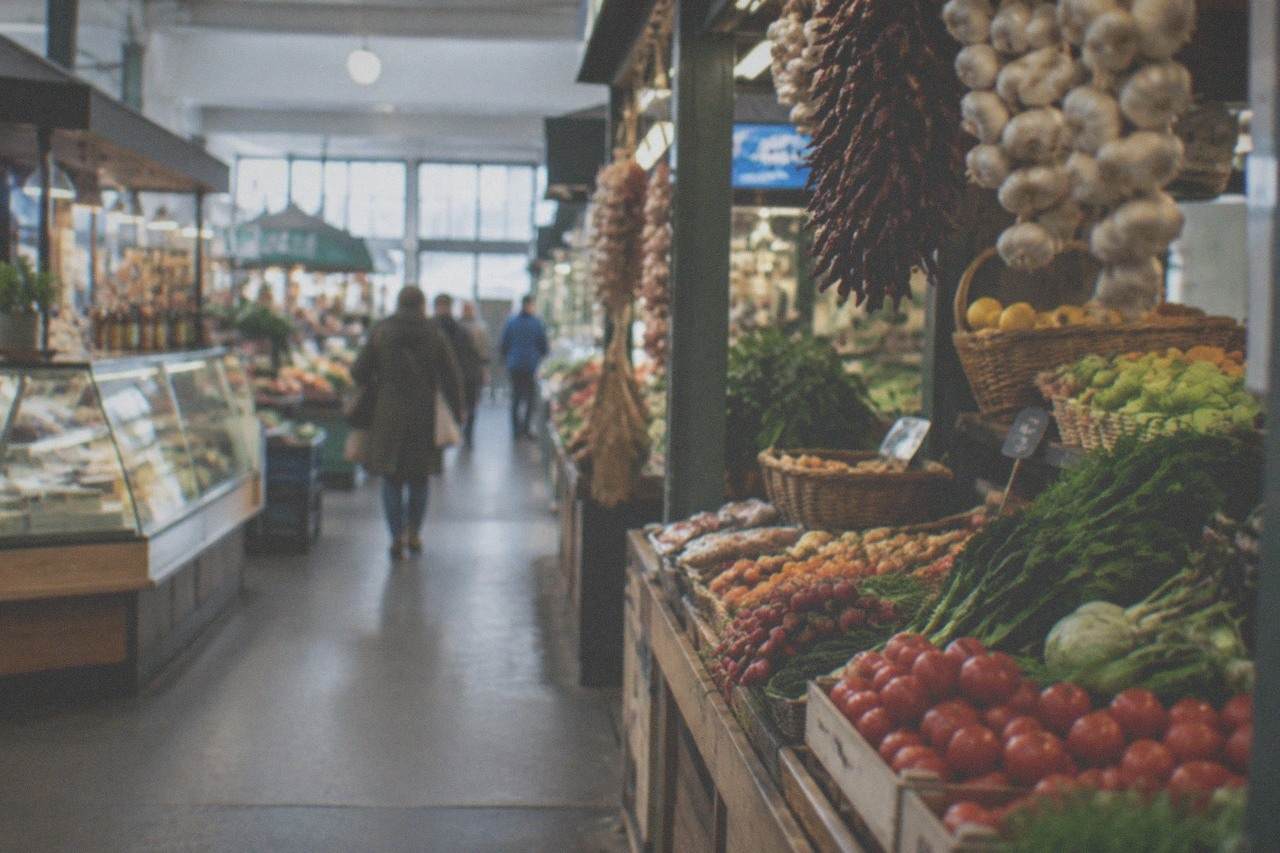
The Markthalle is Freiburg's covered market: the indoor answer to the Münstermarkt, and one of the most reliable places in the city center to eat well without a reservation.
Short answer
The Markthalle Freiburg is the city's covered market hall, a short walk from the Münster in the old town. Individual stallholders set their own hours and menus, so treat it as a walk-in lunch stop rather than a scheduled sight, and pair it with the Münstermarkt, whose stalls run Monday to Saturday until early afternoon.
Markthalle Freiburg: A Practical Guide To The City's Market Hall
Freiburg runs two market experiences in parallel: the famous open-air Münstermarkt in the shadow of the cathedral, and the Markthalle, a covered hall where butchers, bakers, cheese counters and hot-food stalls trade under one roof. Most visitors find the Münstermarkt first, because it fills the square with up to 130 stalls six mornings a week. The Markthalle is the quieter sibling, and for a traveler it solves a specific set of problems: rain, winter, a missed market morning, and the midday question of where to eat when everything nearby is booked or tourist-priced.
This guide lays out what the hall is, how it fits into a day in the old town, what the surrounding sights cost, and how to get there on Freiburg's trams without overpaying for tickets. It draws on the city's own verified figures, the transport authority's published fares, and the current listings for the market and the surrounding museums. Where a number is not verified, this page says so rather than guessing.
What The Markthalle Freiburg Actually Is
The Markthalle is a covered, permanently installed market hall inside the old town, a short walk from the Münster, where independent stallholders sell fresh produce, regional specialties and ready-to-eat food from fixed counters. It does not pack up at lunchtime like the Münstermarkt, and it is a working market rather than a food court, so locals shop for groceries alongside visitors eating lunch. The practical consequence is simple: the hall is a destination in its own right, not just a rain backup, and it rewards an unhurried visit at whatever pace the rest of your day allows.
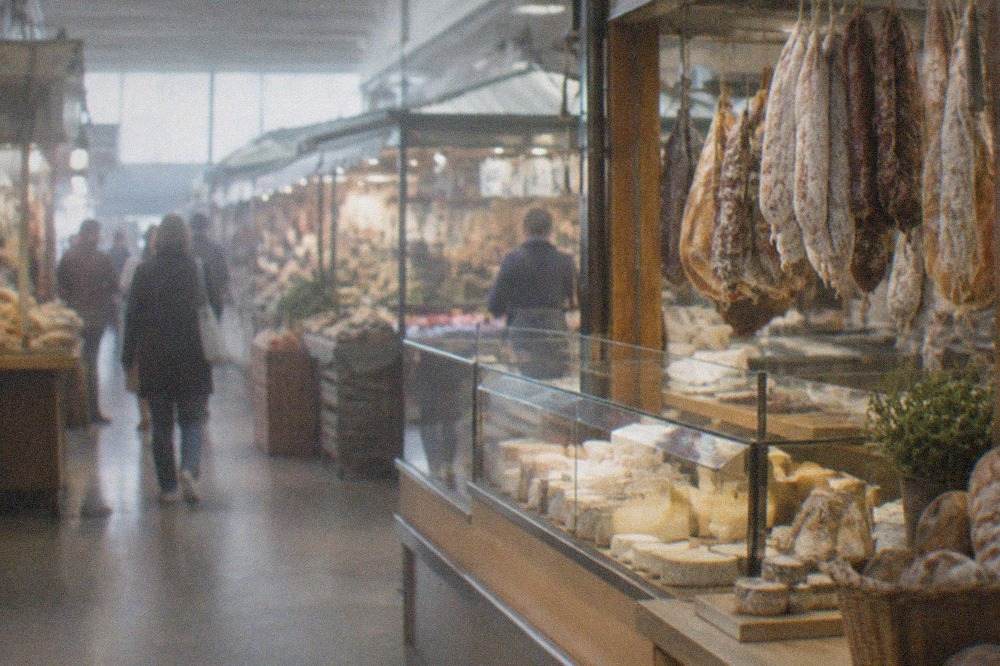
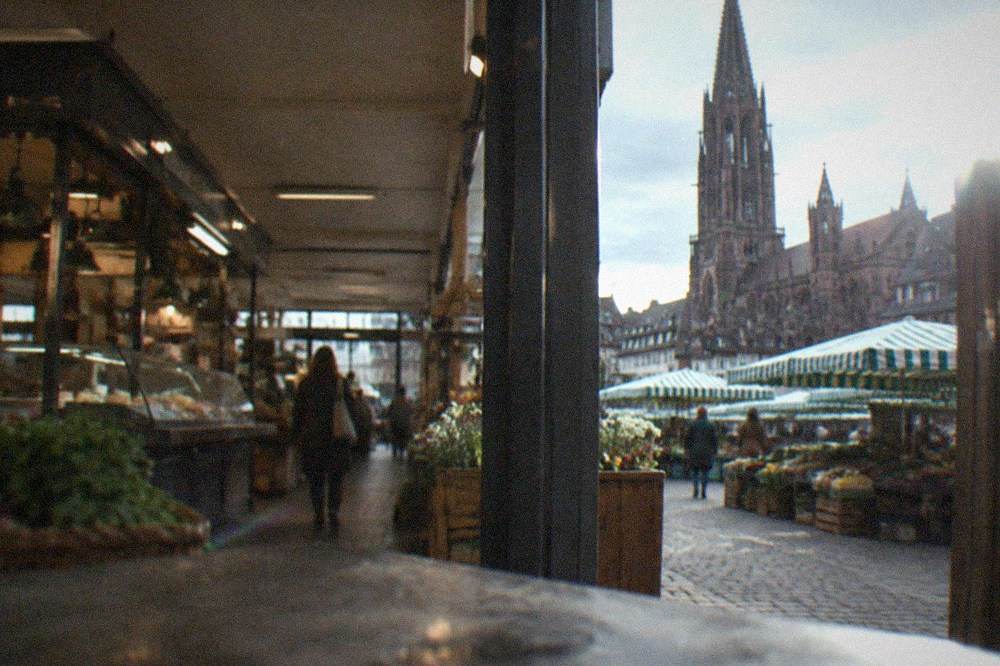
The hall's role in the city's food geography is best understood against the Münstermarkt. The market on the square runs Monday to Friday from 07:30 to 13:30 and Saturday from 07:30 to 14:00, with the flower, produce and regional-food stalls packed in around the cathedral's west front. The Markthalle extends that experience into a roofed space: you move between counters instead of stalls, and the trading day is set by the individual businesses rather than by a single market ordinance.
Because each counter is an independent business, the honest advice about hours is the boring kind: the hall does not publish a single verified schedule that this site can confirm, and the mix of stalls shifts over time. Plan around the shape of the day rather than the clock. Midday is when covered market halls in German university cities do their busiest trade, and Freiburg, with 24,507 students at the university in the winter semester 2025/26, is firmly in that category. An early lunch beats a late one.
Where The Markthalle Sits And How To Time A Visit
The hall sits inside the old-town ring, a short and level walk from the Münsterplatz, which makes it a natural stop between the cathedral, the gates and the Augustinerplatz rather than a separate trip. Its position matters less as an address and more as a link in a walk: most visitors reach it after the Münster and the market square, before continuing south toward the Martinstor. Timing then follows the German market rhythm, early for shopping energy, midday for food, and nothing much after the afternoon.
Freiburg's old town is compact enough that almost everything worth seeing sits within a fifteen-minute walk of everything else, so the Markthalle never requires dedicated transit. If you are staying near the station, the walk in is itself a tour: past the Historisches Kaufhaus, across the Münsterplatz, and through the lanes that give the Altstadt its character. The wall of bells at the Martinstor and Schwabentor, the two surviving city gates, brackets the southern old town, and both are worth a pause on the way.
Seasons change the calculus. In summer, the Münstermarkt and the café squares pull most of the attention, and the hall is a cool, shaded place to break a hot afternoon; Freiburg's long-term climate averages show July and August as the warmest months, with a mean of 20.1 and 19.7 degrees respectively. In winter, and especially in the weeks around the Christmas market, the covered hall becomes the more comfortable of the two market venues, because you can eat a hot lunch without standing in the cold. The Christmas market runs 19 November to 23 December, which puts the whole old town into festive mode, and the Markthalle is a sensible warm-up stop before the Glühwein circuit.
One caution that matters to photographers and early risers: do not build a tight itinerary around the hall opening at a specific hour. Treat any published stall hours as belonging to the individual stallholder. The city's verified market rhythm belongs to the outdoor Münstermarkt, not the hall, and this site will not print a hall schedule it cannot source.
The Stalls Inside: What To Order And How It Works
Inside, the hall works as a row of independent counters selling fresh goods and hot food, and the reliable way to eat there is to walk the full loop first, then buy from two or three counters rather than committing to a single one. A typical covered hall in this region mixes a butcher, a bakery or two, cheese and delicatessen counters, produce, and a handful of hot-food stands serving the lunch crowd. Payment is generally at each counter, seating is shared and functional, and the midday rush moves fast.
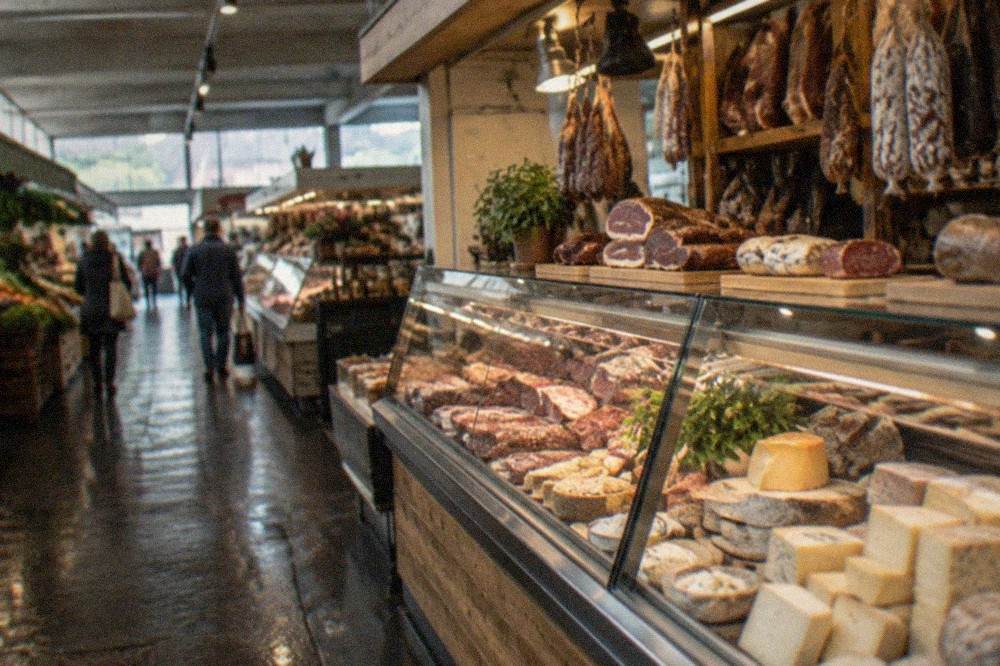
The regional anchors are the things Baden does well, and the same products you see at the Münstermarkt's regional stalls appear here in indoor form. Black Forest ham is the flagship cured product of the region, sold by weight and sliced to order at deli counters. Badische wine, from the nearby Kaiserstuhl and Markgräflerland vineyards, appears by the glass or bottle where counters serve it, and the onion tart, Zwiebelkuchen, that accompanies the new wine season shows up in autumn. A dedicated wine tasting at the town hall square, with four wines and an onion tart, is sold as a bookable experience from $31, which gives you a sense of how the region prices a sit-down version of what the hall does informally.
For a first visit, the practical order of operations is this: arrive before the midday peak if you want a table, walk the loop, and build lunch from counters that visibly turn over stock. Regional sausage, fresh bread, cheese and a glass of local wine is the classic Markthalle lunch, and it maps exactly onto what the surrounding region produces. Prices at individual counters are set by the stallholders and shift with the seasons, so check the board at each counter rather than budgeting from a number printed here; this site only quotes figures it can verify, and hall-counter pricing is not among them.
Visitors who want the same regional food story explained rather than just served have a guided option that covers the ground with a local: a private Italian-language walk through the old town, sold from $52, which suits Italian-speaking travelers who want the market-and-gates circuit in their own language. The wider tour roster also includes dramatized and themed walks, which are described later in this guide.
Markthalle Or Münstermarkt: Choosing Between The Two
Choose the Münstermarkt for the postcard setting and the biggest regional spread, and choose the Markthalle for weather-proofing, seating and hot food after the outdoor stalls have packed up; most visitors with time should do both on the same morning. The two are not competitors so much as two halves of one market culture, and the split between them is the most useful planning decision a first-time visitor can make. The table below sets out the honest differences.
| Question | Münstermarkt | Markthalle |
|---|---|---|
| Setting | Open square below the Münster | Covered hall inside the old town |
| Trading rhythm | Mon-Fri 07:30-13:30, Sat 07:30-14:00 | Set by individual stallholders; walk-in |
| Weather risk | High; stalls close in bad weather | Low; fully roofed |
| Best for | Produce, flowers, regional specialties, atmosphere | Hot lunch, seating, shopping on a rainy day |
| Peak time | Mid-morning | Midday |
| Verified stall count | Up to 130 stalls | Not published as a single figure |
The square market is the one with the verified numbers behind it: the city lists up to 130 stalls on the square, trading Monday to Friday from 07:30 to 13:30 and Saturday from 07:30 to 14:00, and the tourism office markets it as one of southern Germany's most beautiful weekly markets, a claim you can weigh yourself against the setting. On a bright Saturday between spring and autumn, the square is the show. On a Monday in November, or a rain-soaked Wednesday, the hall carries the day.
For language matters, the two venues have the same personality: German first, English available where the city caters to visitors, but nothing like a fully bilingual service economy. A private walk can bridge that. The private Italian-language tour of the old town, about 70 to 90 minutes long and sold from $52, is built for exactly this kind of traveler, someone who wants the market, the gates and the lanes narrated in Italian. It carries only 6 reviews, too few for a star claim, so read the listing itself rather than trusting a rating. If Italian is not your language, the same roster offers an old-town private walk covering the medieval gates, cathedral and historic squares, from $232, also with 6 reviews, which is the premium guided version of the same circuit.
What Nearby Sights Cost After Lunch
The honest budget for the surrounding sights is modest: the Münster nave is free, the tower climb is €5 for adults, the Augustinermuseum is €12 with the reduced rate at €8, and every city museum is free for visitors under 27. That makes the Markthalle the anchor of a half-day circuit that costs less than many single attractions elsewhere in Europe. The figures below are the ones this site has verified against official museum and operator pages.
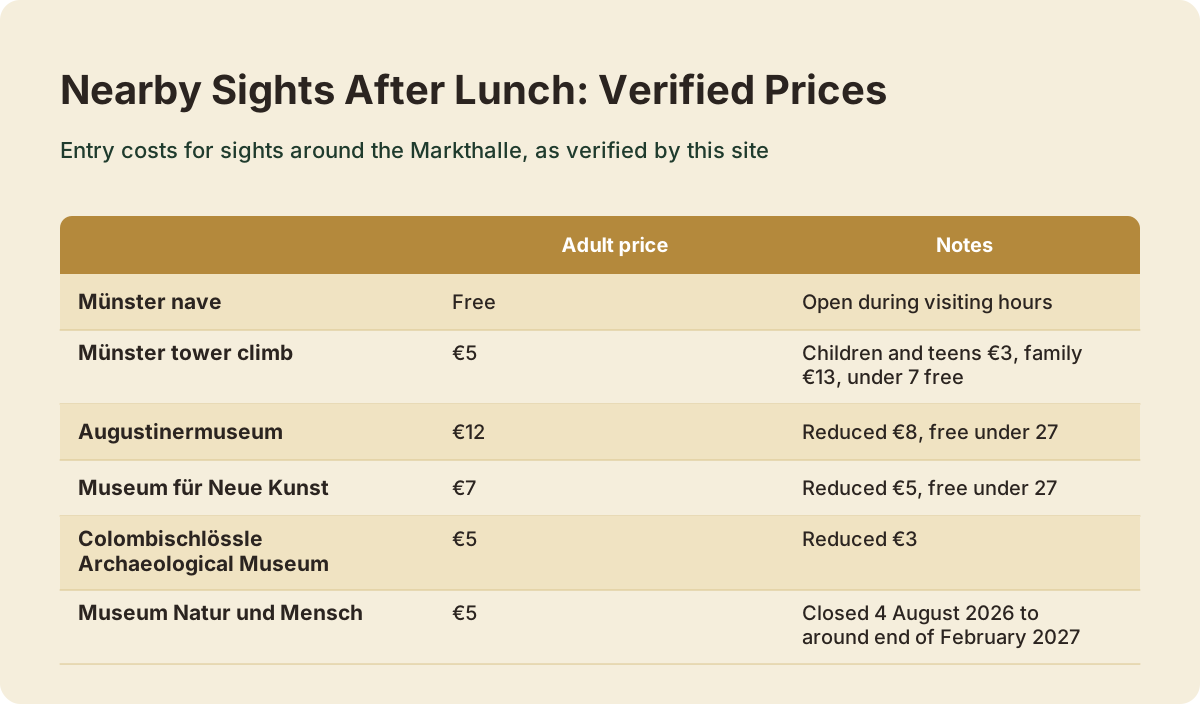
| Sight | Adult price | Notes |
|---|---|---|
| Münster nave | Free | Open during visiting hours |
| Münster tower climb | €5 | Children and teens €3, family €13, under 7 free |
| Augustinermuseum | €12 | Reduced €8, free under 27, day ticket valid for all city museums |
| Museum für Neue Kunst | €7 | Reduced €5, free under 27 |
| Colombischlössle Archaeological Museum | €5 | Reduced €3 |
| Museum Natur und Mensch | €5 | Permanent exhibition closed from 4 August 2026 to around end of February 2027 |
Two details deserve their own sentences. The tower climb is the single best value in the old town, but be precise about what it is: the west tower stands 116 m tall, and visitors climb to a gallery at 70 m, not to the top, and the top gallery closes in winter. The Augustinermuseum, fully reopened on 28 February 2026 after more than two decades of phased renovation, is now the city's flagship museum, and its day ticket covers all the municipal museums in one purchase, which makes the €12 look better the more of the list you intend to see. Everything else covered here is indexed on Freiburg Travel Guide.
The Museum Natur und Mensch row comes with a live caveat: its permanent exhibition is closed from 4 August 2026 until approximately the end of February 2027 for renovation, though the museum stays open for special exhibitions. If a natural-history visit is on your list, check the current status before you go rather than assuming the main halls are open.
A practical lunch-then-sights sequence for a half day: eat at the Markthalle at midday, walk to the Münsterplatz, climb the tower while your legs are still fresh, then choose one museum. That is a full and genuinely Freiburg afternoon, and it costs about the same as a sandwich and a coffee in a northern European capital.
Getting There: Trams, Fares And The Welcomekarte
The Markthalle needs no dedicated transit ticket for most visitors: if you are staying in or near the old town you walk, and if you are coming from further out, a single RVF zone-1 ticket at €3.00, a day ticket at €7.20, or the three-day Welcomekarte at €27.00 covers the trams. The fares below are the transport region's published 2026 figures, and the Welcomekarte is the one that includes the Schauinslandbahn cable car, which changes the value calculation for anyone heading uphill.
| Ticket | Price | What it covers |
|---|---|---|
| Single, zone 1 | €3.00 | One tram or bus trip; €2.70 on smartphone |
| Day ticket, 1 zone | €7.20 | Unlimited trips in one zone for a day |
| Day ticket, 2 zones | €10.90 | Adds the nearer outer zones |
| Day ticket, 3 zones | €14.30 | Wider regional reach |
| Welcomekarte | €27.00 for 3 days | Buses and trains, the Schauinslandbahn, plus a Kulturbonus |
| Deutschlandticket | €63.00 per month | Nationwide local transport, 2nd class |
Three clarifications save money and confusion. First, Freiburg is not a KONUS municipality, so a hotel stay in the city itself does not come with the free Black Forest guest card; the visitor product for people staying in Freiburg is the RVF Welcomekarte, and conflating the two is the most common mistake in travel threads about the city. The transport region's own Welcomekarte page sets out exactly what the three-day card includes.
Second, the Deutschlandticket at €63.00 per month only makes sense for a long stay; for two or three days of city sightseeing the day tickets or the Welcomekarte win. Third, buying singles on a smartphone saves a little per trip, which matters if you ride often but not if you ride twice.
For orientation rather than fares, the practical point is that every tram line that matters to a visitor touches the edge of the old town within a short walk of the hall. Freiburg's tram network is dense by any standard, and the city's long-term modal split, with walking, cycling and public transport together at 76% of trips in 2023, up from 67% in 2017, tells you how the city itself moves around. You will rarely wait long, and you will rarely need a car, which is worth internalizing before you consider renting one; the parking and car-hire notes cover the details if you are driving in.
The Markthalle As A Rainy-Day Anchor
On a wet day the hall is the single most useful indoor stop in the old town short of the museums: it combines lunch, shelter and shopping in one roofed space, and it pairs naturally with the Augustinermuseum or the Museum für Neue Kunst for a full day that never requires an umbrella. Freiburg averages 886.5 mm of rain a year, spread through every month, with May the wettest at 103.4 mm, so rain is a planning variable here, not an exception.
The regional climate record, from the national weather service's 1991-2020 averages for the city's own station, is more moderate than the city's reputation suggests. The summer months average 20.1 and 19.7 degrees in July and August, September still holds 15.4, and the city records about 18.5 days a year at or above 30 degrees. Frost days, 64 a year on average, cluster in December through February. None of that is extreme in either direction; it simply means a covered market is a good friend in every season.
A rainy-day sequence that works: start at the Markthalle for a late breakfast or early lunch, cross to the Münster nave, which is free, spend the afternoon in one museum, and finish in a café on the Augustinerplatz side of the old town. The full rainy-day guide expands this into a complete plan, including the Markthalle among its anchors.
For a guided version of the same circuit, a private old-town walk built around the medieval gates, the cathedral and the historic squares runs about two hours and is sold from $232; it has 6 reviews, too few for a star claim, so judge it on the itinerary described on its own listing. It is the widest private option in the roster, and it is priced accordingly.
Winter, Christmas Markets And Seasonal Notes
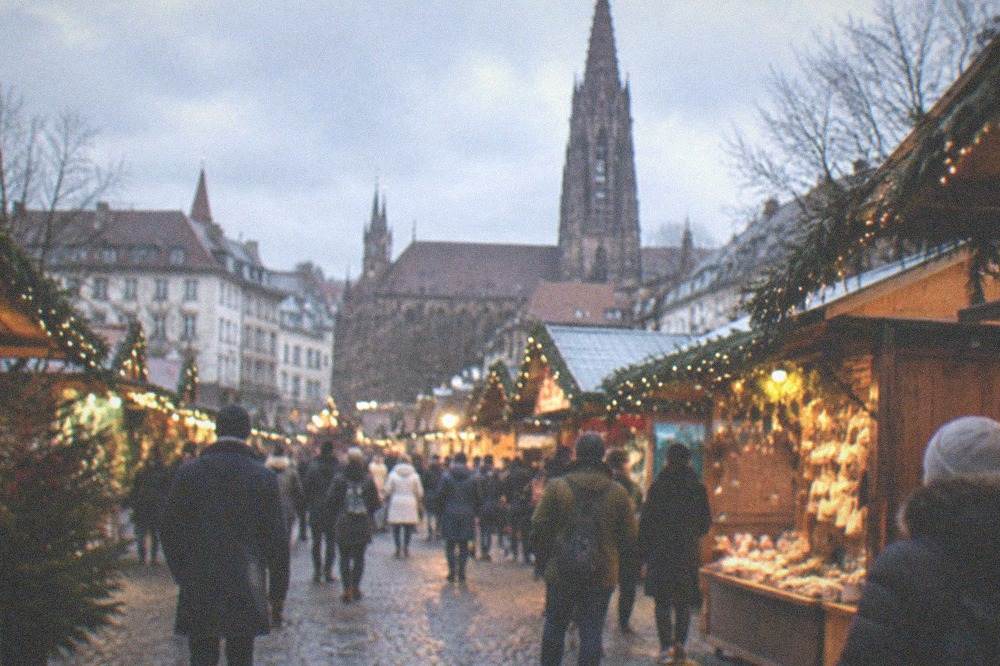
From late November the old town's center of gravity shifts to the Christmas market, which runs 19 November to 23 December 2026 with more than 120 stands across Rathausplatz, Kartoffelmarkt, Unterlindenplatz and other squares, and the Markthalle sits inside that circuit as the warm, quiet place to actually eat. Entry to the Christmas market is free, the stalls run late into the evening, and the hall provides the substance between the Glühwein.
| Season | Market rhythm | Markthalle role |
|---|---|---|
| Spring | Frühjahrsmess fair, 14 to 25 May 2026 | Lunch base between fairground and old town |
| Summer | Münstermarkt peaks; Weinfest in early July, about 110,000 visitors in 2026 | Cool indoor break from the square |
| Autumn | Herbstmess 16 to 26 October 2026; new-wine season brings Zwiebelkuchen | Regional wine and onion tart counters |
| Winter | Christmas market, 19 November to 23 December 2026 | Hot lunch inside the festive circuit |
The seasonal table is worth reading against the city's event calendar, because Freiburg's year is unusually event-dense. The Weinfest on the Münsterplatz set a visitor record in 2026, with about 110,000 guests over six days in early July, and its 2027 dates are already announced for 1 to 6 July. The wine angle matters inside the hall too: Baden's vineyards are an hour or less away, and the counters that sell regional wine in the hall sell the same story as the Weinfest, in miniature and without the crowds. The guide to Baden wine covers the region behind those glasses.
For visitors in the festive weeks who want the old town explained with some performance attached, the roster includes a Christmas show walk with Betty BBQ, a drag-hosted festive tour of about 70 minutes sold from $44. It carries 12 reviews, too few for a star claim, so treat it as a novelty format rather than a reviewed classic, and check the live listing for the seasonal schedule, since Christmas-format tours only run in the market weeks.
Guided And Private Tour Options That Include The Area
The guided options that make sense alongside a Markthalle visit are the private old-town walks, from the two-hour premium format at $232 down to the Italian-language walk at $52, plus the seasonal and themed formats that cost between $25 and $44 and add entertainment to the same streets. None of them includes lunch, which is exactly why the pairing works: book a walk for the morning or late afternoon and put the hall in the middle of the day.
| Tour | Length | Price | Reviews |
|---|---|---|---|
| Private old-town walk, medieval gates and cathedral | ~2 hours | From $232 | 6, too few for a star claim |
| Private walk in Italian | ~70-90 minutes | From $52 | 6, too few for a star claim |
| Christmas show walk with Betty BBQ | ~70 minutes | From $44 | 12, too few for a star claim |
| Freiburg food tour, full meal with drinks | ~3 hours | From $126 | 7, too few for a star claim |
| Self-guided scavenger hunt | ~2-3 hours | From $3-$45 depending on format | 4.9 across 15 reviews for one format |
The review counts above are printed deliberately. The mainstream group walks in Freiburg, including the classic city tour rated 4.7 across 3,187 reviews from $15, sit in the roster's volume tier, but the private and specialty formats that pair best with a market lunch are small-pool products, with single-digit review counts in several cases. That is not a criticism; it is the honest state of a boutique product in a mid-sized city, and the way to buy one is to read the itinerary on the live listing rather than to lean on a rating that the pool cannot support.
The Italian-language private walk deserves a specific mention for a simple reason: Freiburg draws a real share of Italian-speaking visitors, given the city's position on the route between Switzerland, Alsace and the north, and the roster's answer is a dedicated walk in Italian rather than a translated handout. If you are planning in that language, the Check availability link beside the tour card shows current dates and terms.
For readers building the wider trip, this page sits inside a fuller set of market-and-food coverage on this site, alongside the Münsterplatz market guide and the broader food and drink guide to Freiburg. The Markthalle is the thread that ties the eating day together; those pages fill in the square, the restaurants and the regional produce behind the counters.
Common Questions About The Markthalle Freiburg
What is the Markthalle Freiburg?
It is Freiburg's covered market hall, a short walk from the Münster in the old town, where independent stallholders sell fresh produce, regional specialties and hot food from fixed counters under one roof. It is the indoor counterpart to the open-air Münstermarkt and works as a walk-in lunch stop.
What are the Markthalle's opening hours?
Hours are set by the individual stallholders rather than by a single published schedule, and this site will not print an unsourced timetable. Treat the hall as a walk-in midday venue, and check the hall's own current listing before planning an early-morning or late visit.
Markthalle or Münstermarkt: which should I visit?
Both, if you have the morning. The Münstermarkt runs Monday to Friday from 07:30 to 13:30 and Saturday from 07:30 to 14:00, with up to 130 stalls on the square below the cathedral; the Markthalle is roofed, has seating and serves hot food after the outdoor stalls have packed up. On a rainy day, the hall wins outright.
How much does lunch at the Markthalle cost?
Prices are set by each stallholder and are not published in a verified form this site can quote, so check the board at each counter. A classic regional lunch of sausage, bread, cheese and a glass of local wine is the standard order, and the regional ingredients behind it, Black Forest ham and Baden wine, are covered in this site's food guides.
Is the Markthalle worth visiting in winter?
Yes, and winter is arguably its best season. During the Christmas market, which runs 19 November to 23 December 2026 with more than 120 stands across the old-town squares, the hall is the warm place to eat a proper lunch inside the festive circuit, with free entry to the market itself.
How do I get to the Markthalle by tram?
If you are staying in or near the old town, walk. From further out, a single zone-1 ticket at €3.00, a day ticket at €7.20, or the three-day RVF Welcomekarte at €27.00 covers the trams; the Welcomekarte also includes the Schauinslandbahn cable car, which makes it the better buy for anyone heading uphill during the same stay.