What Is The Closest City To Freiburg Germany?
The closest major city to Freiburg im Breisgau is Basel, Switzerland, a short direct train ride away, with Mulhouse in France close behind. This guide compares the nearest cities and how to reach them.
What Is The Closest City To Freiburg Germany?
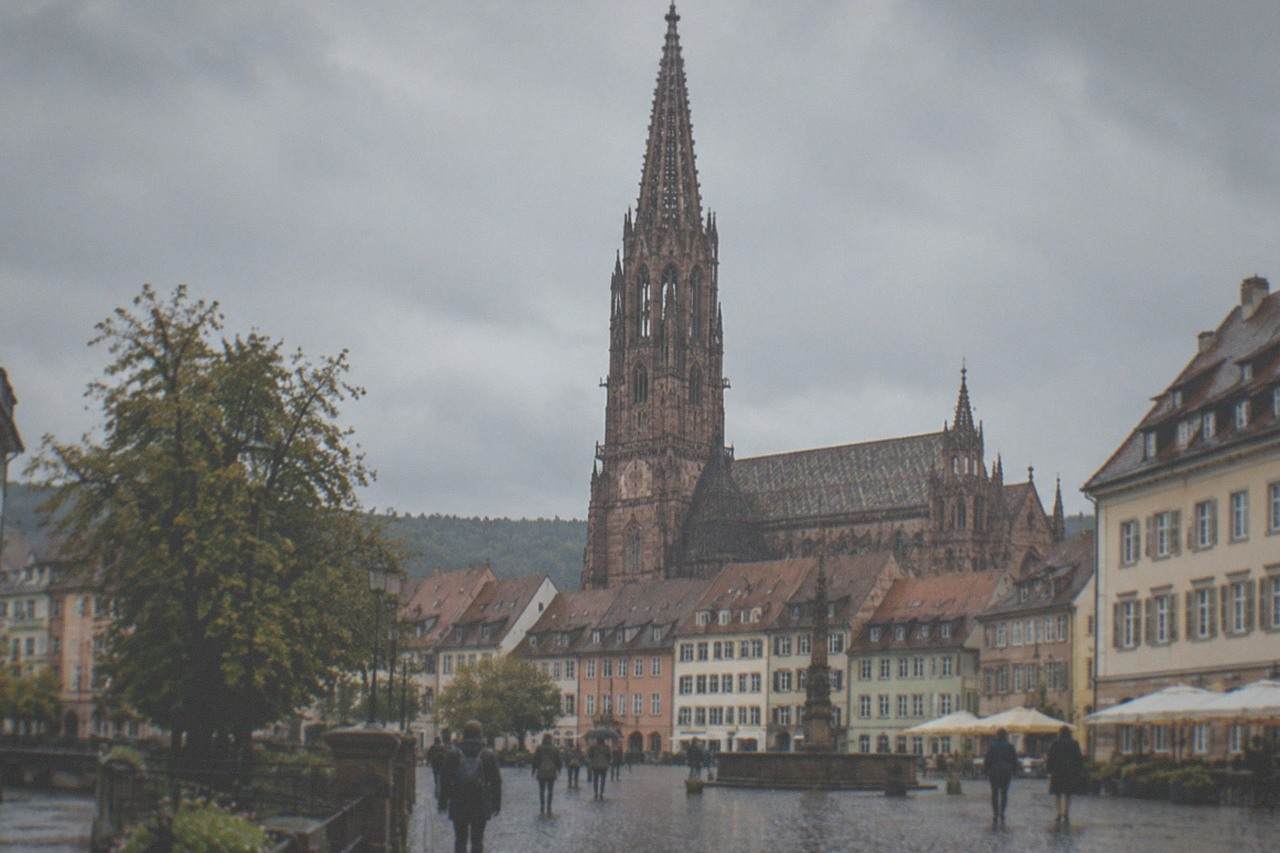
Basel, Switzerland is the closest city of significant size to Freiburg im Breisgau, roughly an hour away across the Upper Rhine plain. It sits at the corner where Germany, France and Switzerland meet, which means Mulhouse in France and the EuroAirport corridor are almost as close. Freiburg itself, with a population of 237,299, is the largest city within its own immediate region, so every near neighbor is either Swiss, French or a smaller German town.
The question sounds simple until you stand in Freiburg and look at a map. Freiburg sits in the Breisgau, the warm southwestern corner of Baden-Württemberg, about as far from Germany's geographic center as a German city can be while still being German. The Rhine is the western edge of the country here, and across it lie two other nations within easy reach. To the south and southwest, Switzerland. To the west, France. The result is a city whose nearest big urban neighbors are not German at all.
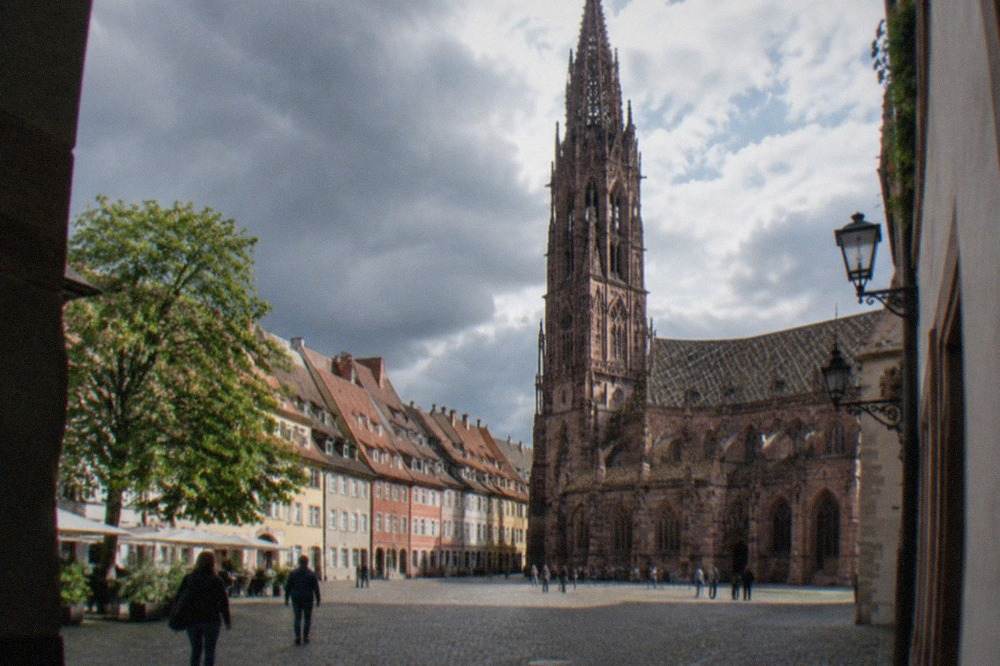
Basel is the headline answer. It is the nearest city with a large population, a major rail hub, an airport and a full cultural calendar, and it is connected to Freiburg by a direct rail line along the Rhine valley. Grok's research indicates the ICE or regional connection to Basel SBB takes roughly 35-50 minutes, though that figure has not been re-verified against the current timetable, so treat it as an approximation and check the live schedule when you plan. The two cities function almost as a pair: Basel residents come up to Freiburg for the Black Forest and the university-town atmosphere, and Freiburgers go down to Basel for the museums, the Rhine swimming and flights out of EuroAirport.
The second part of the answer, which surprises many visitors, is French. Mulhouse sits southwest of Freiburg across the border in Alsace, and while it is smaller than Basel it is a genuine city with a famous automobile museum and its own tram network. Freiburg's own tourism materials treat the whole triangle, Basel, Colmar, Mulhouse and Freiburg, as one cross-border region, and the Freiburg Travel Guide covers each of those neighbors in its own right because so many visitors combine them.
If you are looking for the closest German city rather than the closest city overall, the honest answer is that there is no large one nearby. Freiburg is the dominant city of the southern Upper Rhine on the German side. Offenburg and Karlsruhe sit well to the north, Stuttgart lies beyond the Black Forest to the east, and everything between is smaller: towns like Staufen, Breisach and Titisee-Neustadt rather than cities. That is precisely why Freiburg punches above its weight as a base, it is the natural German gateway to the Black Forest, the Alsace wine country and Basel, and the day-trip math works in every direction.
A good way to anchor yourself in Freiburg before heading off to any of these neighbors is a dramatized walking tour, and the actor-led format is the one that consistently earns the strongest ratings in the city. Here are the three most popular options in that family.
How Far Is Basel From Freiburg And How Do You Get There?
Basel is close enough that the journey is a genuine commute: Grok's research indicates the direct train between Freiburg and Basel SBB takes roughly 35-50 minutes, and the Freiburger Reisedienst airport bus reaches the EuroAirport between the two cities in about 55 minutes. The fare for the airport bus is on the listing rather than published as a fixed figure, and rail works on the standard German and cross-border tariffs.
The rail link is the backbone of the relationship. Trains run down the Rhine valley line, one of the busiest freight and passenger corridors in Europe, and Basel SBB is a terminus large enough to connect you onward to the whole of Switzerland. That convenience is why so many Freiburg visitors fly into Basel and travel up by rail, and why the reverse day trip, Freiburg to Basel for the Fondation Beyeler or the old town, is a standard weekend plan.
There are some things worth knowing about the current works on this route, because they are unusually active at the moment. The Rheintalbahn, the Freiburg-Basel section of the corridor, is being four-tracked in a multi-year expansion, and that means periodic weekend and full-section closures with replacement buses. One such closure was reported for early October 2026, with regional and some long-distance trains replaced by buses between Freiburg and Basel. The works are temporary, but if your whole plan hinges on a tight connection it is worth checking the operator's travel alerts before you travel.
The official source for the closure pattern and replacement services is the rail operator's own travel-information pages, and the city posts the local angles on its news feed: the Deutsche Bahn press release on the related Freiburg Hbf modernization, which began in September 2026, is at Deutsche Bahn's Freiburg Hauptbahnhof announcement.
Here is how the main options compare for the run between the two cities.
| Option | Typical Journey Time | What To Know |
|---|---|---|
| Direct train to Basel SBB | Grok's research indicates 35-50 min | Frequent daily service on the Rhine valley line; timetable not independently re-verified here |
| Airport bus to EuroAirport (BSL) | About 55 minutes | Freiburger Reisedienst runs it daily; the fare is on the listing, not published as a fixed figure |
| Car via the A5 motorway | About an hour, border queues vary | Rhine bridge crossings at Weil am Rhein and others; watch for Basel's environmental entry rules |
| Basel day trip with a tour | Varies by product | Some visitors book a guided walking product in Freiburg first, then travel to Basel independently |
For transport tickets, the practical detail for visitors staying in Freiburg is the RVF Welcomekarte, the regional visitor card. It costs €27.00 for three days for an adult, covers buses and trains across the RVF network and includes a ride on the Schauinslandbahn cable car plus a cultural bonus. The official RVF Welcomekarte page has the current terms. It is a German-regional product, so it will not carry you into Switzerland, but it covers everything on the Freiburg side of the border.
One warning that matters for anyone staying in the wider Black Forest: Freiburg city is not a KONUS municipality, so a hotel in Freiburg itself does not hand you the KONUS guest card. If you stay in a nearby KONUS member town such as Kirchzarten or Titisee-Neustadt, the card you receive there is valid on Freiburg's trams and buses, but the scheme and the Welcomekarte are separate things.
Which Other Cities And Towns Sit Close To Freiburg?
Beyond Basel, the closest neighbors of note are Mulhouse and Colmar in France, and the German Black Forest towns of Staufen, Breisach and Titisee-Neustadt. Freiburg is also only about an hour from Strasbourg by car and sits within easy reach of Baden-Baden to the north. None of the German neighbors are cities of comparable size, which is what makes Freiburg the regional center.
Mulhouse is the underrated one. It is the nearest French city, close enough that its employment area overlaps with the southern Alsace commuter belt, and it is home to the Cité de l'Automobile, one of the world's great car collections. Visitors reach it either by crossing at Breisach or by heading through the EuroAirport corridor, and the practical routing is a combination of German regional rail and French connections, so it is usually a half-day to full-day trip rather than a quick hop.
Colmar is farther than Mulhouse but more famous, and many travelers pair it with the Alsace wine route. It is a small city of canals and half-timbered houses, and it works well as a day trip from Freiburg if you start early. For the full picture of that side of the border, the guide to Mulhouse and the wider Alsace wine route guide cover the practical planning.
On the German side the pattern changes. Staufen is a small wine town at the foot of the Black Forest, Breisach is a Rhine-side town with a minster on a hill, and Titisee-Neustadt is a lakeside holiday town in the high Black Forest reached by a direct regional train on the Höllentalbahn line. The exact travel time to Titisee is not stated here because the available figure has not been verified against the current timetable, but the connection is direct and scenic, climbing through the gorge country south of the city. Our Basel to Freiburg guide goes deeper on the cross-border logistics.
For context on scale, here is how the nearest neighbors stack up in character.
| Place | Country | Character | Realistic Visit From Freiburg |
|---|---|---|---|
| Basel | Switzerland | Major city, art museums, Rhine old town | Easy day trip by direct train |
| Mulhouse | France | Industrial heritage, automobile museum | Full or half day trip, cross-border routing |
| Colmar | France | Alsatian old town, wine route hub | Full day trip |
| Staufen | Germany | Small wine town, castle ruin | Half day trip |
| Titisee-Neustadt | Germany | Lake resort in the high Black Forest | Half day trip by direct regional train |
| Baden-Baden | Germany | Spa town, north of Freiburg | Full day trip |
How Do You Pick Between The Closest Cities For A Day Trip?
Pick Basel for museums and big-city buzz in under an hour, Colmar for postcard streets and wine, Mulhouse for something quieter and less touristy, and Black Forest towns for walking and scenery. Weather matters too: Freiburg is one of Germany's warmest and sunniest cities, while the Black Forest side is hillier and cooler, and the Upper Rhine plain averages 18.5 days per year at 30°C or above.
A practical way to decide is by what you want from the day. Basel rewards the museum-goer: the Kunstmuseum, the Fondation Beyeler and the historical museum cluster can fill two full days, and the city is compact enough to walk between them. Colmar rewards the photographer and the eater, with wine taverns and a canal-side old town, but it is the busiest of the options in high summer. Mulhouse is the choice when you want France without the crowds, and it is genuinely family-friendly thanks to the automobile and train museums.
The German options are the slow-day choices. A morning in Staufen, a wine tasting and a walk up to the castle ruin, is a gentle day that keeps you in the Baden wine country. Titisee-Neustadt puts you on a lake with boat rentals and forest trails, and in winter the same trip becomes a snowy one with the Feldberg ski area next door. The three days in Freiburg itinerary shows how these half-day trips slot into a longer stay.
Money-wise, note that the currency switches at the border: Germany is in the Eurozone, and so is France, but Switzerland uses the Swiss franc. Cards are accepted nearly everywhere in Basel, but carrying a small amount of local currency for markets and tram ticket machines saves friction. Prices on this site's bookable tours are shown in US dollars, separate from the euro prices you will pay at tills and ticket counters in Germany and France.
Which Tours Show Freiburg Itself Before You Head Out?
If Basel and Mulhouse are your day trips, the tours worth booking are the ones that make you appreciate the base city first. The dramatized walking tours are the standout family in Freiburg: the actor-led Guided City Tours run about 90 minutes from $17 and are rated 4.9 across 497 reviews, and the Historix dramatized tour, running since 1998, covers the main attractions in about 1 hour 45 minutes from the same $17 starting price.
The actor-led format deserves a word of explanation, because it is unusual. Instead of a guide with a flag and a script, costumed performers play characters from Freiburg's past, which turns the Bächle, the gates and the Münsterplatz into a stage set. It is the highest-rated tour format in the city on review count, and the 4.9 across 497 reviews is a pool large enough to mean something.
The Historix variant is the older institution, on the road since 1998, and it is rated 4.7 across 78 reviews from $17. Its darker sibling, the Witches, Torture, Stakes tour, covers the city's grim early-modern history at the same starting price and holds a 4.7 across 97 reviews. All three belong to the same family of dramatized walks, so choosing between them is a matter of tone rather than quality.
For the standard formats, the classic city tour runs about 90 minutes from $15 at a 4.7 rating across 3,187 reviews, and the version that includes the cathedral visit costs from $20. If you would rather explore alone, a self-guided audio tour in English costs from $9, and the self-guided scavenger hunt is rated 4.9 across 15 reviews from $45.
Here is the dramatized family side by side.
| Tour | Duration | Rating | Price From |
|---|---|---|---|
| Guided City Tours with Actors | About 90 minutes | 4.9 across 497 reviews | $17 |
| The Dramatized Tour of the Main Attractions (since 1998) | About 1 hour 45 minutes | 4.7 across 78 reviews | $17 |
| Witches, Torture, Stakes Dramatized Tour | About 90 minutes | 4.7 across 97 reviews | $17 |
Booking is simple and the listings carry free-cancellation terms, so you can lock a walk in for your first evening and adjust later. To browse the current dates, check the actors tour listing or Check availability.
If a dramatized walk sounds like too much theater, the quieter options still reward booking over improvising: the guided pub crawl, rated 4.4 across 107 reviews from $51, and the Veni, Vidi, Vino wine hike and tasting, rated 4.4 across 167 reviews from $79, both take you into neighborhoods a first-time visitor would not find alone.
Whichever walk you choose, the geography lesson of this article still holds: Freiburg is the big city on the German side of this corner of Europe, and everything bigger nearby is foreign. That is not a limitation, it is the whole point of the place.
Common Questions About The Closest Cities To Freiburg
What is the closest city to Freiburg Germany?
Basel, Switzerland is the closest city of significant size, roughly an hour away by road and about 35-50 minutes by direct train according to Grok's research, a figure worth confirming against the live timetable. Mulhouse in France is the closest French city. There is no comparably sized German city nearby.
Is Basel close enough for a day trip from Freiburg?
Yes, and it is one of the easiest cross-border day trips in Europe. Trains run directly down the Rhine valley line, Basel's old town and main museums are walkable from the station, and the airport bus reaches the EuroAirport between the two cities in about 55 minutes. Watch for periodic rail works on the corridor, which are active through 2026.
Which French city is nearest to Freiburg?
Mulhouse, in Alsace, is the nearest French city, close enough to sit within the same cross-border commuter region. It is best known for the Cité de l'Automobile and its industrial heritage museums. Colmar, farther down the Alsace wine route, is more famous but takes longer to reach.
Do I need Swiss francs to visit Basel from Freiburg?
Cards are widely accepted in Basel, so many day-trippers never handle cash, but carrying a small amount of Swiss francs is useful for markets and ticket machines. Germany and France both use the euro, so only the Swiss side of the trip involves a currency change.
Does the RVF Welcomekarte cover travel to Basel or Mulhouse?
No. The Welcomekarte is a German regional product, €27.00 for three days for an adult, covering buses and trains in the RVF network plus the Schauinslandbahn and a cultural bonus. Cross-border travel into Switzerland or France needs a separate ticket, though the card does cover your journey to the edge of the German network.
Is there a bigger German city near Freiburg?
No. Freiburg, with a population of 237,299, is the largest German city in the southern Upper Rhine region. The nearest German cities of real size, Offenburg, Karlsruhe and Stuttgart, are all well to the north or east, which is why Freiburg serves as the region's gateway to the Black Forest.