What Is Freiburg, Germany Famous For?
Freiburg im Breisgau is famous for its Gothic Minster, the Bächle gutters of the Old Town, its Green City reputation and its role as Germany's gateway to the Black Forest. A full, fact-checked answer.
What Is Freiburg, Germany Famous For?
What Is Freiburg, Germany Famous For?
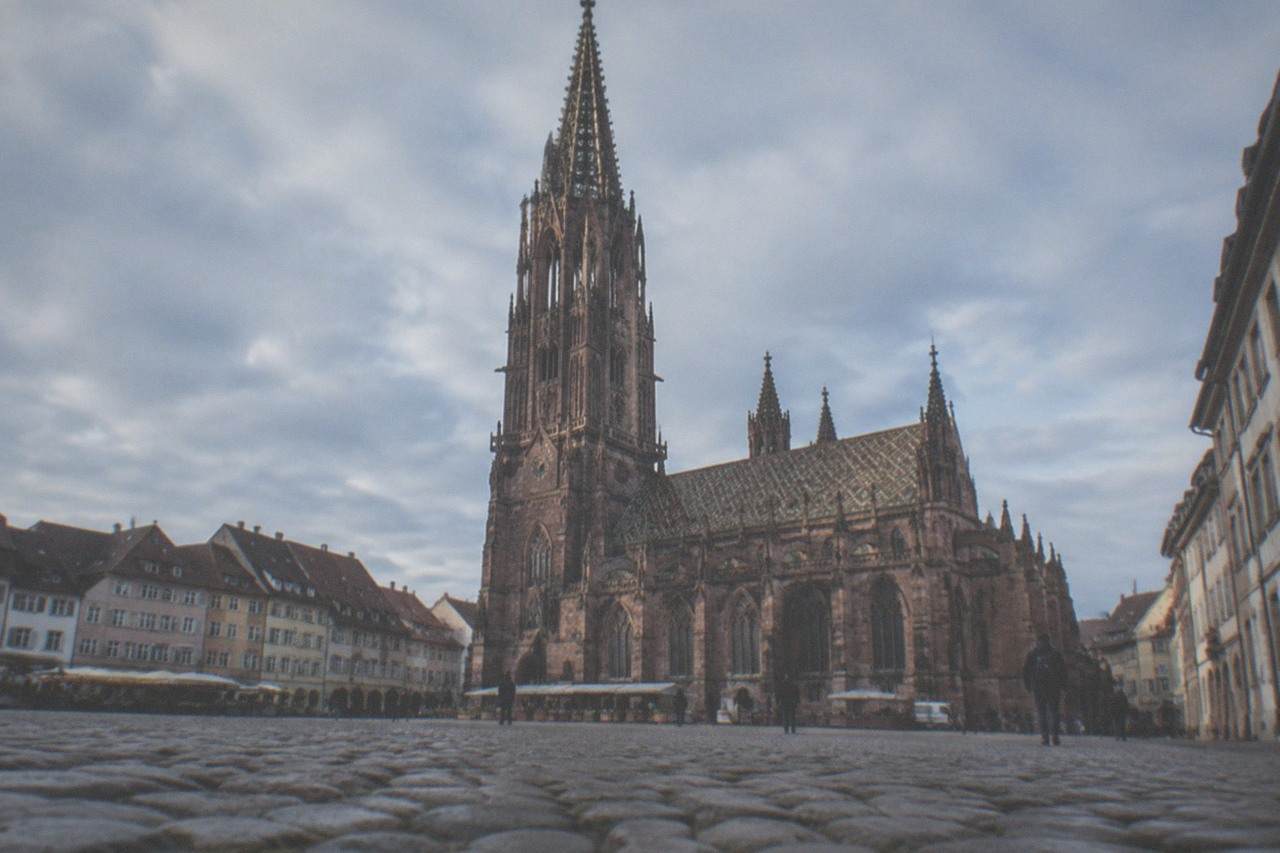
Freiburg im Breisgau is famous for its red-sandstone Minster and the market square at its feet, for the Bächle water gutters running beside the Old Town's cobbled lanes, and as Germany's main gateway to the Black Forest. It is also known as a Green City where walking, cycling and public transport account for 76 percent of all trips, and as a sunny university town of 237,299 people built around a university founded in 1457.
The city sits in the southwest corner of Germany, where the Black Forest hills meet the Rhine plain, close to both the French and Swiss borders. That position shapes almost everything it is known for. The mountains supply the timber, the trails and the cable cars; the plain supplies the vineyards of the Baden wine region; and the border position gives the place a tri-national character that few German cities can match. Basel is under an hour away by train, Colmar and the Alsace wine route sit just across the Rhine, and the EuroAirport at Basel-Mulhouse serves the whole region.
The university is the oldest part of the story after the Minster itself. Chartered on 21 September 1457 by Albrecht VI of Austria, it now enrolls 24,507 students in the winter semester, roughly one in ten of the city's residents. That is why Freiburg feels like a small city with a large town's social life: the taverns, the Augustinerplatz steps and the festival calendar all run on a student rhythm. The university also explains the density of research institutions, most visibly Fraunhofer ISE, the solar energy institute whose work helped earn the city its Green City label.
Visitor numbers back the fame. In 2025, establishments with at least ten beds recorded 1,010,708 arrivals and 2,130,785 overnight stays, a small decline of about two percent against 2024, while the international segment actually grew by 2.7 percent in arrivals. In other words: slightly fewer domestic visitors, more foreign ones, and hotel occupancy up to 55.2 percent. People keep coming for the same short list of things, and most of them can be walked between in a single day.
Because the famous sights are compressed into a compact Old Town, a guided walk is one of the most efficient first moves, and the city has an unusually theatrical version of it. The dramatized walks led by costumed actors are a Freiburg specialty that has been running since 1998, and the actor-led format is currently the best reviewed of the city's standard walks. For anyone deciding how to spend a first evening, these three cover the same famous ground in three different tones.
The Minster And The Tower Climb
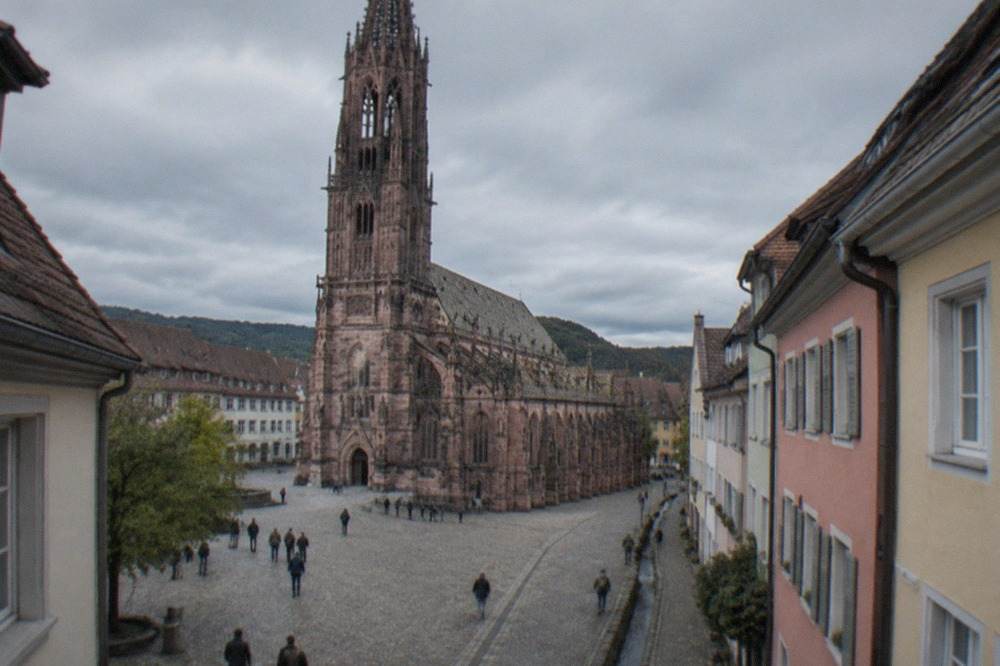
The Freiburg Minster is a red-sandstone Gothic church whose 116 m west tower defines the city skyline, though visitors climb only to a gallery at 70 m. The climb costs €5 for adults and runs Monday to Saturday from 11:00 to 16:00, and Sundays from 13:00 to 17:00. The nave is free to enter, and the Münsterplatz around it holds a market of up to 130 stalls.
The tower is the single most photographed structure in the city, and the climb is the classic Freiburg experience. Two figures belong together, because they are often confused: the tower is 116 m tall, but the stair you actually climb ends at a viewing gallery at 70 m. Nobody stands on top of the 116 m octagon. The gallery closes during the winter months, so anyone planning a cold-season visit should expect the lower viewing level only. Tickets are sold in the Türmerstube at the tower base, and the last ascent is about fifteen minutes before closing, per the Minster's own tower-climb page: the official Turmbesteigung listing.
The strained sandstone is under permanent repair by the Münsterbauhütte. Recent reporting on the works notes a new Münsterbaumeister, Moritz Richter, taking over on 1 October 2026, and a tower-octagon restoration planned from about 2027 at a cost above €18 million, with sectional scaffolding rather than a full enclosure. The church is not disappearing behind plastic; it will simply look partly scaffolded, as it has for years.
The square below is the other half of the pairing. The Münstermarkt runs Monday to Saturday, from 07:30 to 13:30 on weekdays, with stalls of flowers, bread, mushrooms, cheese and the region's long red sausages. It is a working market rather than a tourist set piece, and locals shop it before the tour groups arrive. Here is how the headline sights and their entry costs stack up:
| Sight | Entry | Notes |
|---|---|---|
| Minster nave | Free | Open daily; Gothic interior and stained glass |
| Minster tower climb | €5 adult, €3 child/youth, €13 family | Mon-Sat 11:00-16:00, Sun 13:00-17:00; 70 m gallery, closed in winter |
| Augustinermuseum | €12, reduced €8 | Day ticket valid for the other city museums; free under 27 |
| Schauinslandbahn cable car | €15 return, €12 single | Daily 09:00-17:00; closed 16 Nov to 4 Dec 2026 for overhaul |
| Schlossbergbahn | €3.70 one way, €6.50 return | Inclined lift up the Schlossberg hill above the Old Town |
For the museum side, one correction matters: the Augustinermuseum fully reopened on 28 February 2026 after the final phase of a renovation that stretched back more than twenty years. Guides and older articles still describe it as partly closed. It is not, and the reopened convent wing added about 1,600 m² of exhibition space to the complex.
The Old Town is small enough that a walk covering the Minster, the gates and the squares fits comfortably into ninety minutes, which is exactly the length of the most popular guided formats. For travelers who prefer a straight history walk over a theatrical one, that question is worth settling before you arrive.
Bächle, Gates And The Old Town Look
Freiburg's Old Town is famous for the Bächle, narrow water gutters that run beside the cobblestones of nearly every lane, and for two surviving medieval gates, the Martinstor and the Schwabentor. Together with the Minster and the Historisches Kaufhaus, they create the medieval look that most visitors picture when they think of the city.
The Bächle are the detail people remember longest. These shallow channels, some of them fed from the Dreisam river for centuries, run along the edge of the lanes and were originally used for watering livestock and fighting fires. Local superstition holds that a visitor who steps in one will marry a Freiburger. In practice they keep the lanes cool in summer and make a distinctive sound underfoot, and there are hundreds of them across the Altstadt. A dedicated background piece on the Bächle and their history covers where the water comes from and which lanes have the best runs of them.
The two gates frame the Old Town on its north-south axis. The Martinstor, a medieval fortification documented in the city's oldest records, stands at the top of the Kaiser-Joseph-Straße shopping drag, its upper floors once serving as a debtor's prison. The Schwabentor to the south carries a fresco of a Swabian trader with a barrel of wine, the emblem of a medieval merchant legend. Both were once part of a larger wall circuit; the two gates and a handful of wall fragments are what survived the centuries and the wartime bombing.
The dramatized walking tours lean hard on this backdrop. The Historix-Tours format, running since 1998, sends guides in period costume through the lanes at a theatrical pitch, and its main-sights dramatized tour is rated 4.7 across 78 reviews, from $17 for about one hour and forty-five minutes. It is a polarizing style: reviews either describe it as the highlight of a trip or as too theatrical for a straight history walk, so it pays to know your own taste before booking. The related darker variant, the "Witches, Torture, Stakes" tour, is rated 4.7 across 97 reviews at the same $17 entry price and covers the city's early modern persecution history rather than its architecture.
Beyond the gates and gutters, the same square-kilometer core holds the Augustinerplatz with its beer-garden steps, the Rathausplatz with its evening crowds, and the Fischerau and Gerberau lanes along the old canal, which is where the Bächle water goes. None of it needs a ticket. The Old Town is the one part of Freiburg that costs nothing to see properly, which is why it anchors every answer to the fame question.
The Green City Reputation
Freiburg is famous as one of Germany's most sustainable cities, a place where walking, cycling and public transport rose together from 67 percent of all trips in 2017 to 76 percent in 2023. The car-reduced Vauban district, the Rieselfeld development and the solar research of Fraunhofer ISE give that reputation its substance.
The modal-split figure is the one to quote, because it is measured and recent: 67 percent of all trips in 2017, 76 percent in 2023, meaning three of every four journeys in the city now happen without a private car. Freiburg's own reporting on the numbers is public, and it is the figure city planners cite when they call the place a Green City. What the Green City program adds beyond the statistic is a set of showcase districts. Vauban, built on a former French army barracks site, is deliberately car-reduced, with its streets designed so children can play in them and its parking concentrated in communal garages at the edge. Rieselfeld, the other major new district, follows the same principles at higher density. A deeper look at the Vauban district explains how the housing cooperative model there actually works.
For visitors, the practical layer of the Green City is the transit system. The RVF network covers trams and buses across the city and region, a single zone-1 ticket costs €3.00, and a day ticket for one zone €7.20. The visitor product is the Welcomekarte, three days for €27.00, which unusually includes a return ride on the Schauinslandbahn cable car plus a small culture bonus, per the transport association's own fare page: the RVF Welcomekarte listing.
One correction worth knowing, because it appears constantly in hotel listings and older guides: a hotel stay in Freiburg does not include a free KONUS guest card. KONUS is a Black Forest scheme issued only by member municipalities, and the city of Freiburg is not one of them. Nearby towns such as Kirchzarten, Titisee-Neustadt, Staufen and St. Peter do issue it, and a card issued there is valid on Freiburg's trams and buses, but Freiburg itself does not hand one out. The distinction is laid out plainly in the official KONUS details: the Black Forest tourism KONUS page. Freiburg's own visitor product remains the Welcomekarte, not KONUS.
The same honesty applies to the climate claim. Freiburg is often called Germany's warmest or sunniest city, and that is an exaggeration: national weather-service normals put its annual mean at 11.0°C, 34th among German stations, and its 1,815.1 hours of sunshine, 20th. "One of Germany's warmest and sunniest cities" is the accurate phrase, and the one this site uses.
Black Forest Gateway, Schauinsland And Baden Wine
Freiburg is Germany's main gateway to the Black Forest, sitting at the foot of the Schauinsland, whose 3,600 m cable car carries visitors up and down for €15 return. It is equally the hub of the Baden wine region, with the Kaiserstuhl volcano vineyards nearby and a July wine festival on the Münsterplatz that drew about 110,000 guests in 2026.
The mountain starts where the trams end. The Schauinslandbahn, one of Germany's longest cable cars at 3,600 m, runs daily from 09:00 to 17:00 and links the Horben valley station to the summit area, where a network of trails, a mining museum and the Eugen-Keidel observation tower, reopened in April 2025 after several years closed for sanitation work, spread out across the ridge. At the summit the terrain is genuinely high Black Forest, with views on clear days across the Rhine plain to the Vosges. The cable car's autumn overhaul closes it from 16 November to 4 December 2026, and the mountain restaurant closes with it, so winter visitors should check the operating calendar before committing to a day.
Wine is the other half of the mountain story. Freiburg is the regional center of Baden, one of Germany's thirteen wine regions and its warmest, planted mainly in Burgundy varieties: Spätburgunder for red, Grauburgunder and Weißburgunder for white. The city's own vineyards, the Freiburger Hausberg on the Schlossberg slope, sit within walking distance of the Old Town, and the Kaiserstuhl, Tuniberg and Markgräflerland vineyards are short train rides away. The annual Freiburger Weinfest on the Münsterplatz set a record in 2026 with roughly 110,000 guests across six days, and the 2027 dates are already fixed for 1 to 6 July.
The classic Black Forest day trips run from here too: Titisee and the Feldberg massif by direct regional train, the Ravenna Gorge and Hinterzarten on the Höllentalbahn side, and Triberg's waterfalls deeper in. Freiburg is also the practical base for Europa-Park in Rust, Germany's largest theme park, about a 30 to 40 minute drive away, reachable by train to Ringsheim plus a connecting bus. Check the current price at booking on the park's own site rather than a fixed figure quoted here.
Here is how the headline outdoor and wine options compare from the city:
| Experience | Cost | Time needed |
|---|---|---|
| Schauinslandbahn return | €15.00 | Half day, plus hiking at the top |
| Freiburg vineyard walk, Schlossberg slope | Free | About 1 hour from the Old Town |
| Wine hike with tasting, vineyards above the city | From $79 | About 2.5 hours |
| Titisee by regional train | RVF fare zones from Freiburg | Day trip |
| Guided hike, Germany's tallest tree | From $44 | About 4 hours |
Food, Festivals And Student Life
Freiburg is famous for a food scene anchored by the Münstermarkt and the long red sausage stalls, for five Michelin one-star restaurants, and for a student population of 24,507 that keeps the taverns and festival grounds busy year-round. Its Christmas market runs from 19 November to 23 December across the Rathausplatz and the adjoining Old Town squares.
The everyday food fame rests on cheap, regional things. The long red sausage, grilled at market stalls and served in a roll with mustard, is the city's fast-food signature. Baden's onion tart and Flammkuchen appear in every tavern through autumn. The Markthalle near the Martinstor packs regional producers under one roof, and the newer openings keep the wine-tavern tradition alive: the Trotte wine bar with roughly 400 wines opened in Fischerau in 2026, and the first Augustiner brewhouse in Baden-Württemberg opened on the Augustinerplatz in October 2025. At the top end, the 2026 Michelin Guide again lists five one-star restaurants in the city, Jacobi, Zur Wolfshöhle, Colombi Zirbelstube, Hawara and Eichhalde, with no additions or losses.
Festivals give the fame a calendar. The Zelt-Musik-Festival, three weeks of concerts at the Mundenhof site, ran its 42nd edition from 15 July to 2 August 2026. The autumn fair, the Herbstmess, follows from 16 to 26 October 2026. The Christmas market, spread across the Rathausplatz, Kartöffelmarkt and other squares with well over a hundred stands, runs from 19 November to 23 December; the full Christmas market guide covers dates, hours and which square is best for what. Freiburg is, in short, one of those rare cities where the festival calendar and the food calendar are the same thing.
The student layer ties it together. A university population of 24,507 in a city of 237,299 means the evenings run late, the bars around the Bertoldsbrunnen stay full, and the cost of eating out stays lower than in the region's business cities. It is also the audience for the theatrical walks that close the circle back to the Old Town: the actor-led city tour, rated 4.9 across 497 reviews, from $17 for about 1.5 hours, is the best-reviewed standard walk in the city precisely because it plays to that crowd, with costumed guides staging scenes at the Minster, the gates and the squares rather than reciting dates.
For planning purposes, the honest summary of Freiburg's fame is that it is a city of one square kilometer of medieval center, one mountain, one vineyard region and one long shopping street, with everything else built outward from those. The city this site documents, Freiburg Travel Guide, exists because those four things genuinely fill a week.
Common Questions About Freiburg
What is Freiburg, Germany famous for?
Freiburg is famous for its Gothic Minster with its 116 m tower, the Bächle gutters of the medieval Old Town, its Green City reputation with 76 percent of trips made without a car, Baden wine, its 1457 university, and its position as Germany's main gateway to the Black Forest.
Is Freiburg worth visiting for more than a day?
Yes. The Old Town sights fit in one day, but the Schauinsland cable car, the vineyard villages, Titisee and the museum quarter each need their own half day. Two days is a comfortable minimum, three covers a Black Forest excursion.
What food is Freiburg known for?
Long red sausages from the market stalls, onion tart, Flammkuchen, Baden wines led by Spätburgunder, and a Michelin scene of five one-star restaurants. The Münstermarkt and the Markthalle are the two main places to taste the region in one stop.
Can you see the Black Forest from Freiburg?
The Black Forest begins at the city edge. The Schlossberg and Lorettoberg hills have marked trails within walking distance of the center, and the Schauinsland summit, reached by cable car from the southern end of tram line 3, has views across the Rhine to the Vosges on clear days.
Does a Freiburg hotel stay include free transport?
No. Freiburg is not a KONUS municipality, so hotels there do not issue the Black Forest guest card. The visitor product is the RVF Welcomekarte, €27.00 for three days, which covers buses, trams and trains and includes a Schauinslandbahn return ride.
Is Freiburg Germany's sunniest city?
Not quite. Weather-service normals rank it 20th of German stations for sunshine hours, at 1,815.1 per year, and 34th for warmth at 11.0°C mean. "One of Germany's warmest and sunniest cities" is the accurate claim.