Where Is Freiburg And How Do You Get There
Freiburg sits in the far southwest corner of Germany, where the Upper Rhine Plain meets the Black Forest and two national borders sit within an hour's travel. Here is exactly where it is and how to get there.
Short answer
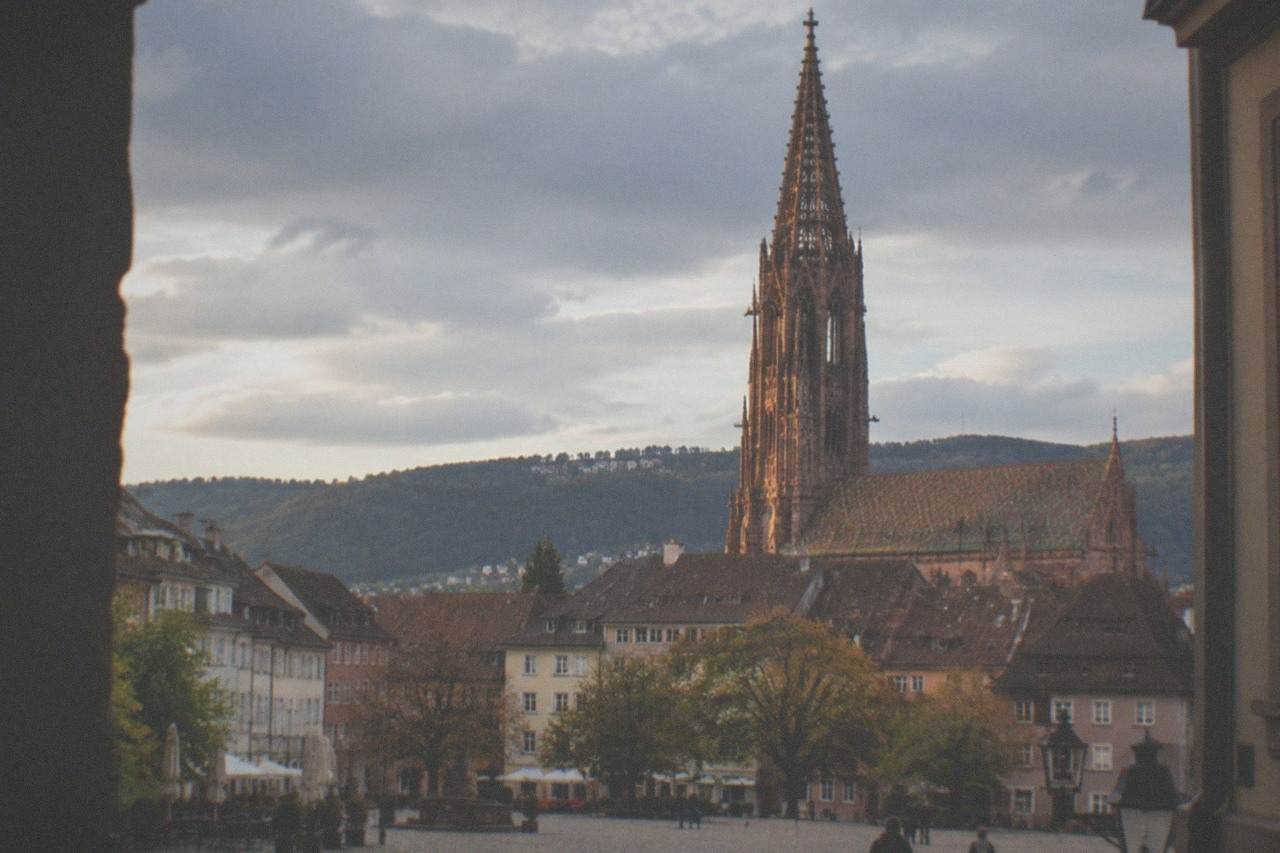
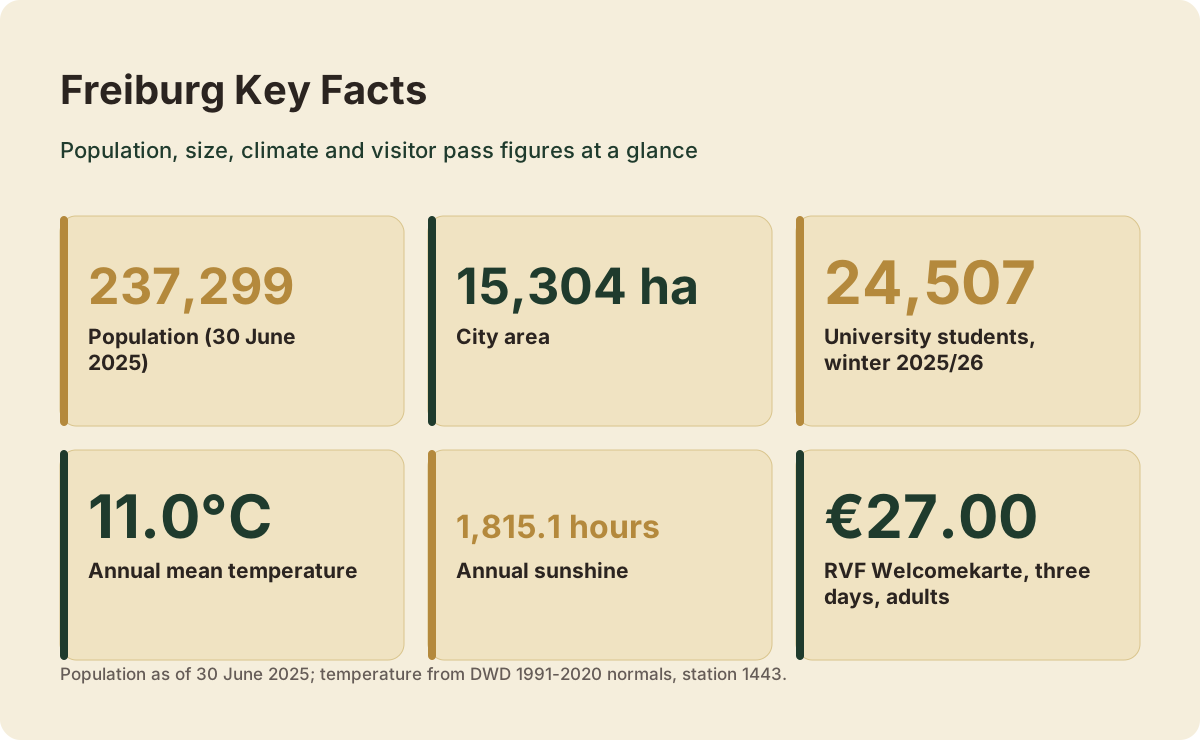
Freiburg im Breisgau is a city of 237,299 people in Baden-Württemberg, Germany, on the eastern edge of the Upper Rhine Plain where the Black Forest rises. It sits about an hour by bus from EuroAirport Basel-Mulhouse-Freiburg and close to both the French and Swiss borders.
Where Is Freiburg Exactly?
Freiburg im Breisgau is a city of 237,299 people in the German state of Baden-Württemberg, on the eastern edge of the Upper Rhine Plain where the western foothills of the Black Forest begin. It lies in the extreme southwest of Germany, close enough to both the French and Swiss borders that a tram-and-train afternoon trip to either country is a normal local outing.
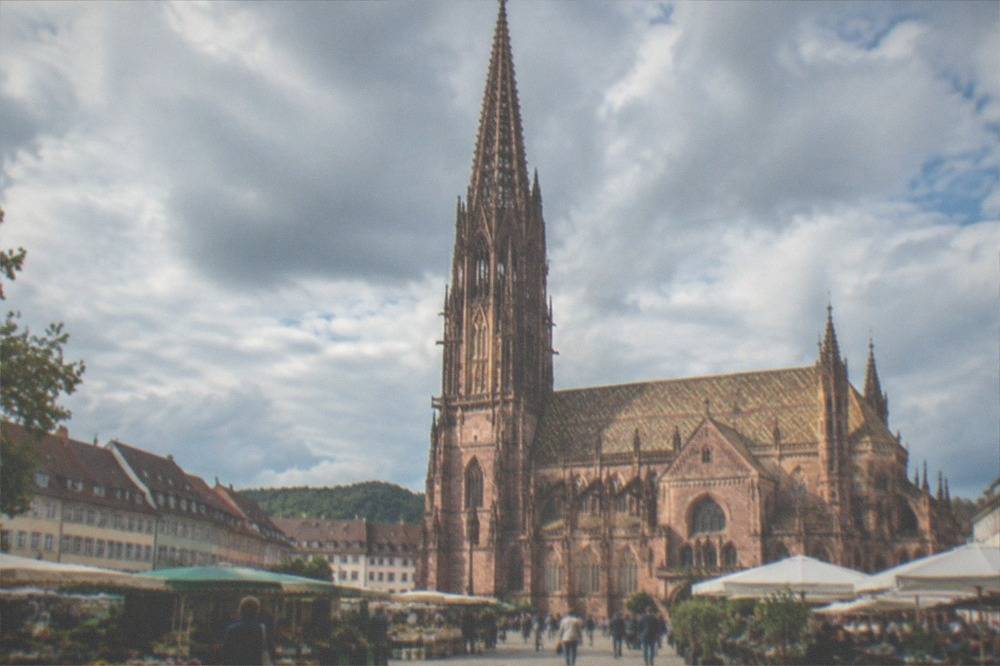
That single sentence answers the search question, but the geometry matters more than most visitors expect. Freiburg is not a city you pass through on the way somewhere else in Germany. It is a regional capital at the bottom left corner of the country, the last major city before the Rhine bends west toward Alsace, and it is built on the spot where the mountains and the flat river plain meet. The old town clusters around the Freiburg Minster, whose 116 m west tower is visible across the whole basin, though the public climb only reaches a gallery at 70 m.
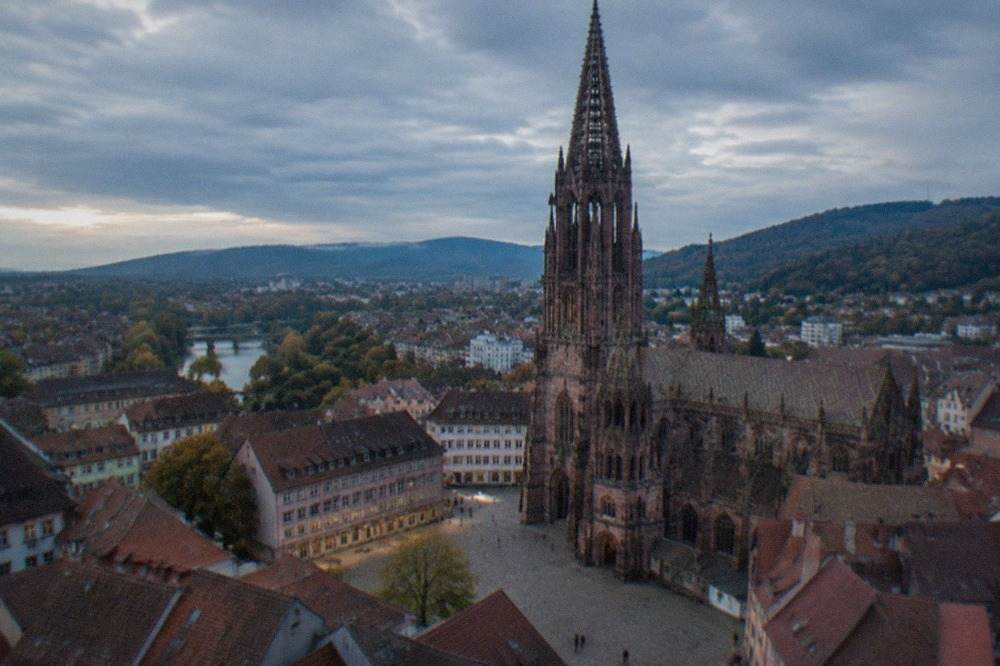
The city's full name, Freiburg im Breisgau, exists for a reason, and travelers who skip the second half of the name often end up in the wrong country. There is another Freiburg, spelled Fribourg, in French-speaking Switzerland, roughly south across the border. German speakers and train timetables keep the two apart with the "im Breisgau" suffix, and the comparison matters enough that the site covers it in detail in the guide to Freiburg versus Fribourg in Switzerland. Book trains to "Freiburg im Breisgau" or "Freiburg (Breisgau) Hbf" and you will land in the right one.
| Fact | Figure |
|---|---|
| Population | 237,299 (30 June 2025) |
| City area | 15,304 ha |
| State | Baden-Württemberg |
| Region | Breisgau, Upper Rhine Plain edge |
| University founded | 1457, with 24,507 students in winter semester 2025/26 |
| Annual mean temperature | 11.0°C (DWD 1991-2020 normals, station 1443) |
| Annual sunshine | 1,815.1 hours |
Those last two rows are worth noticing. The weather service's own long-term normals put Freiburg among Germany's warmest and sunniest cities, which is a large part of why the city's vineyards, wine taverns and market squares feel more Mediterranean than most German addresses. It is not the single warmest or sunniest place in the country, and the data does not support claiming that, but the climate is genuinely a regional selling point and shapes everything from the Baden wine on the Münsterplatz to the crowded August beer gardens.
Which Region And Country Is Freiburg In?
Freiburg is in Germany, in the federal state of Baden-Württemberg, and it serves as the administrative seat of the Freiburg government region, one of the state's four districts. Its immediate region is the Breisgau, a wine-growing strip between the Rhine and the Black Forest's western slopes, and the city is the undisputed center of the southern Upper Rhine area.
Baden-Württemberg is Germany's southwest state, home to Stuttgart, Karlsruhe, Heidelberg, Mannheim and the Black Forest in its entirety. Within it, Freiburg functions as the hub for the whole southwest corner: the university, the regional courts, the archdiocese and the tourism industry for the southern Black Forest all sit here. Around 2.1 million overnight stays were recorded in the city in 2025 across establishments with at least ten beds, which tells you the scale of visitor traffic a city of this size handles.
The Breisgau itself deserves a sentence of explanation because it explains the wine. The region between the Rhine and the mountains is one of Germany's warmest growing zones, and Baden is officially a wine region, with local specialties like Klingelberger, the Riesling of this area, poured in taverns a few streets from the cathedral. The Baden wine guide covers the bottles; the point for geography is that the vineyards run right up to the city's western districts, so the "where is Freiburg" question is partly answered by grapes.
Geographically, the city occupies the valley where the Dreisam river exits the Black Forest hills and flows northwest toward the Rhine. To the west, the terrain flattens into the Rhine plain toward Breisach and Alsace. To the east and south it climbs immediately, first to the Schlossberg and Lorettoberg viewpoints inside the city, then to forested ridges like the Schauinsland, whose cable car is reachable by city transit. Very few European cities have a genuine mountain hinterland this close to a medieval old town.
For orientation, the honest answer is that this is a compact city where the old town is the center of gravity. If you want a fast, memorable way to absorb the layout, the street grid, the Bächle gutters and the two surviving gates, the dramatized walks are a good fit: the Guided City Tours with Actors run about 1.5 hours from $17 and are rated 4.9 across 497 reviews, one of the strongest review pools of any walk in the city.
A second option in the same family, The Dramatized Tour of the Main Attractions, has run since 1998, costs from $17 and carries a 4.7 rating across 78 reviews. Both cover roughly the same core of the old town, so the choice is about the theatrical style and the start time rather than different ground.
How Far Is Freiburg From Major Cities And Airports?
The nearest airport is EuroAirport Basel-Mulhouse-Freiburg, which sits on the French-Swiss border and connects to Freiburg by a direct Airportbus that takes about an hour and runs daily. Basel, Strasbourg and Colmar are all within easy day-trip range by train, Frankfurt is a direct ICE route north, and Zurich is reached by changing at Basel, with a total journey of about 2.5 hours.
That airport deserves its own paragraph because it confuses people. EuroAirport is physically in France, administered jointly with Switzerland, and it is the airport most locals use, despite being in a different country from the city it partly serves. The Freiburger Reisedienst Airportbus runs between the airport and Freiburg's central bus station daily; the ride is about 55 minutes. The fare is not published in a primary source, so check the operator's listing rather than trusting aggregator estimates. The site keeps a full page on Basel airport to Freiburg transfers, and a broader comparison in the nearest airport to Freiburg guide.
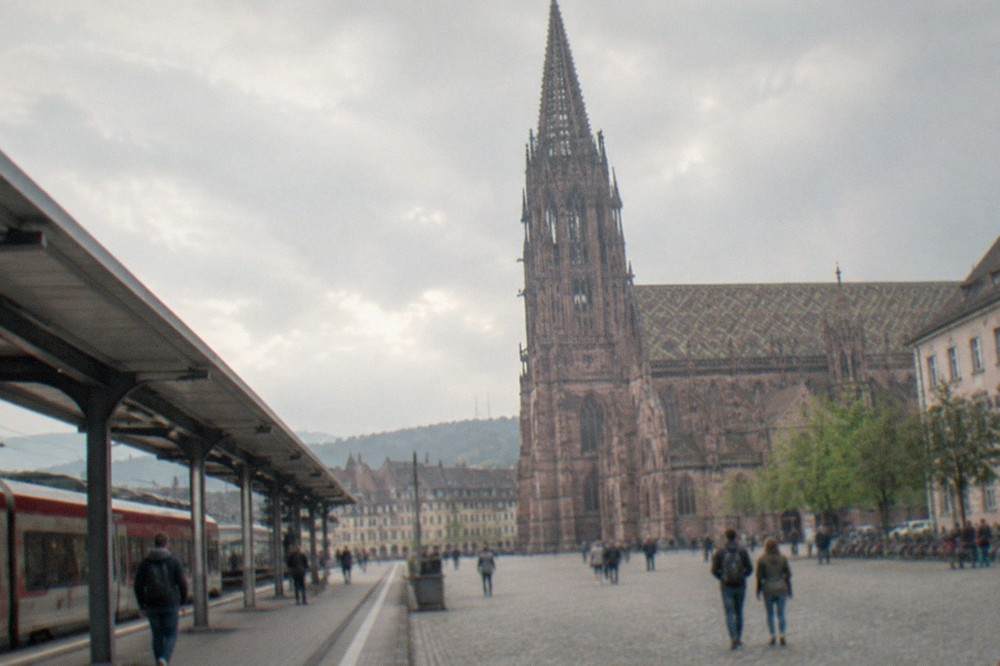
Rail is where Freiburg's position pays off. The city sits on the Rhine Valley railway, the main north-south artery from Karlsruhe through Offenburg and Basel, so direct long-distance trains link it to Frankfurt and points north, and to Basel and Zurich to the south. Eastward, the Höllentalbahn climbs into the Black Forest toward Titisee, a direct regional train ride, though exact timing should be checked on the German railway's own timetable rather than trusted to secondhand figures. The Freiburg train station guide covers the station itself.
| Destination | Direction | Practical connection |
|---|---|---|
| Basel, Switzerland | South | Direct regional trains, the route every Freiburg traveler uses at least once |
| Colmar, France | West | Regional train via Breisach or Mulhouse, straightforward half-day trip |
| Strasbourg, France | Northwest | Train via Offenburg, a full day trip |
| Titisee, Black Forest | Southeast | Direct regional train on the Höllentalbahn |
| Frankfurt | North | Direct ICE on the Rhine Valley line |
| Zurich, Switzerland | South | Train via Basel SBB, about 2.5 hours door to door |
| EuroAirport (BSL/MLH/EAP) | Southwest | Direct Airportbus, about 55 minutes, daily |
One caution about drive-time figures you may read elsewhere: road distances to the airport or Europa-Park circulate in aggregator content at varying precision. The site's own rule is to give you connections and methods from primary sources, and to send you to the operator or railway for exact minutes. What is certain is the pattern: two countries, one major airport and Europe's second-most-visited theme park all sit comfortably inside a day trip from a city of 237,299 people. More of these guides are collected on Freiburg Travel Guide.
Why Is Freiburg A Good Base For The Black Forest And Alsace?
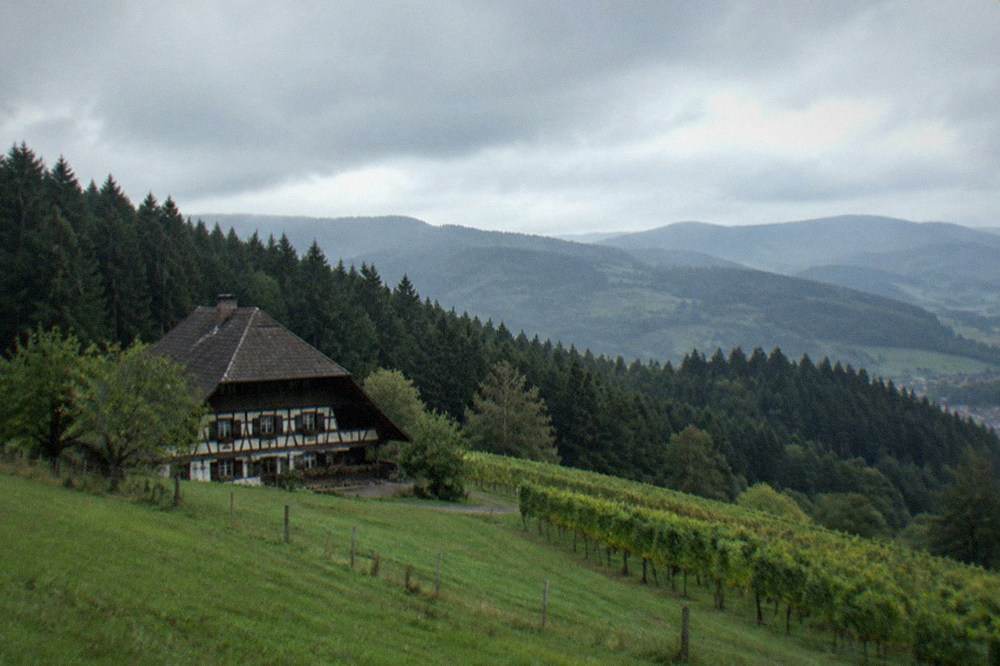
Because it sits at the hinge between two of Europe's most visited regions. The Black Forest begins at the city's eastern edge, with trailheads, the Schauinsland cable car and the Feldberg ski area on regional transit lines, while Alsace's wine route and Colmar's old town are a short train ride west across the Rhine. Few German cities offer both directions.
The eastern direction is the one most visitors underestimate. The Schauinslandbahn cable car, at 3,600 m one of the longest of its kind, is included in the RVF Welcomekarte, the region's visitor transport pass, which means a mountain cable car ride is covered by a city-region visitor ticket. Details on that pass are in the Freiburg Welcomekarte guide. The Schauinsland's hiking and mining museum are covered on the Schauinsland page. South of it, the Feldberg is the Black Forest's highest summit, a direct regional train away via the Höllentalbahn, with the Feldberg guide covering walking and skiing.
Westward, the Alsace wine route begins effectively at the Rhine. Colmar, with its canals and half-timbered streets, is one of the most photographed towns in France, and the site's Colmar guide shows how the train connections work. Strasbourg, seat of the European Parliament, is further but still a comfortable day trip, and the Alsace wine route guide maps the villages between. On rest days, Freiburg's own old town holds up on its own terms, which is the argument laid out in is Freiburg worth visiting.
| Day trip | Character | What it is known for |
|---|---|---|
| Titisee and Schluchsee | Lakes, easy walking | Black Forest lakes, boat rentals, lakeside promenades |
| Triberg | Deep forest | Waterfalls among Germany's highest, cuckoo clock culture |
| Staufen and St. Peter | Small towns, wine | Baden wine villages in the foothills, both KONUS member towns |
| Colmar | French old town | Canals, half-timbering, Alsace wine route gateway |
| Basel | Swiss city | Old town on the Rhine, museums, the shared airport |
| Europa-Park at Rust | Theme park | Germany's largest, reached by train to Ringsheim then bus 7231 |
Note that Staufen and St. Peter in that table are KONUS member towns, while Freiburg itself is not. That distinction trips up a lot of visitors, because much of what you read online about the Black Forest assumes every town issues the KONUS guest card. Freiburg does not; the city's own visitor product is the RVF Welcomekarte, three days at €27.00 for adults, covering buses and trains and including the Schauinslandbahn, per the regional transport association's own fare page. A KONUS card issued by a member town is still valid on Freiburg's trams and buses, but a hotel stay in Freiburg itself does not hand you one.
What Is The Weather Like In Freiburg?
Freiburg has one of the warmest and sunniest climates of any German city, with an annual mean of 11.0°C and 1,815.1 hours of sunshine in the 1991-2020 normals recorded at the city's own weather station. July and August average just over 20°C with seven days at or above 30°C each, while winters are mild for Germany, with 64 frost days a year.
Those figures come from the national weather service's long-term station data, which is the only source worth using for climate claims. The same dataset is what stops anyone honestly calling Freiburg "Germany's warmest city": it ranks 34th of 1,093 stations on annual mean temperature and 20th of 1,091 on sunshine hours, which is still remarkably high for a city at this latitude but is not the number-one spot popular articles assign to it. The truthful claim, that it is one of Germany's warmest and sunniest cities, is fully supported and still a strong pitch.
| Jan | Mar | May | Jul | Sep | Nov | Year | |
|---|---|---|---|---|---|---|---|
| Mean temperature | 2.5°C | 7.0°C | 14.9°C | 20.1°C | 15.4°C | 6.1°C | 11.0°C |
| Rainfall | 48.6 mm | 54.3 mm | 103.4 mm | 92.2 mm | 77.4 mm | 66.2 mm | 886.5 mm |
| Sunshine | 64.7 h | 146.8 h | 206.8 h | 252.2 h | 176.2 h | 66.6 h | 1,815.1 h |
The practical reading of that table: May through September is the reliable outdoor season, with the warmest and sunniest stretch in June and July, but May is also the wettest month, so pack for showers inside the good weather. Summer heat is real, with an average of 18.5 days a year at 30°C or above, nearly all of them between June and August. Winters are gray rather than harsh; December averages just 56 hours of sunshine, which is exactly why the Christmas market, running 19 November to 23 December 2026, is such a well-timed institution. The best time to visit Freiburg guide and the Freiburg weather guide break all of this down by month.
For a fuller seasonal feel of the city at its warmest, the Freiburg in summer guide covers swimming lakes, festivals and long evenings, and the Freiburg festivals and events guide lists the calendar, including the Zelt-Musik-Festival from mid-July to early August and the Herbstmess folk fair each October.
How Do You Get Around Once You Are There?
Freiburg's trams and buses, run by the city operator VAG under the regional RVF fare system, cover the whole city and its suburbs, with a single zone 1 ticket at €3.00 and a day ticket at €7.20. The old town itself is compact and pedestrian-first, and the airport, both Basel stations and the Black Forest rail lines all land within the same integrated network.
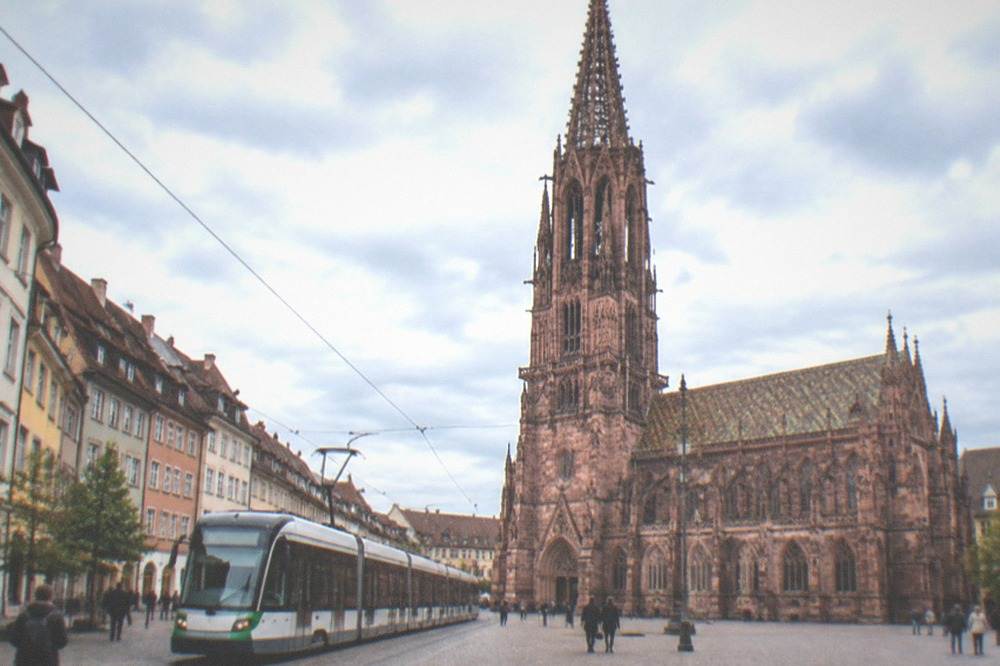
The city is famous for its tram system, and the fame is earned: trams reach nearly every district, run late, and since December 2025 the fleet has been roughly two-thirds electric after 22 new e-buses joined in October 2025. The fare logic is simple. A single journey in zone 1 costs €3.00 for adults, or €2.70 bought on a smartphone, and children pay €1.80. Day tickets cost €7.20 for one zone, €10.90 for two and €14.30 for three, enough to reach most day-trip territory. Visitors staying several days should compare those with the Welcomekarte at €27.00 for three days including the cable car, and anyone spending a month should know the Deutschlandticket, valid nationwide on regional transport, costs €63.00 per month from 1 January 2026, per the transport association's Deutschlandticket page.
| Ticket | Price | Validity |
|---|---|---|
| Single, zone 1 | €3.00 (€2.70 by smartphone) | One journey, city zone |
| Child single, zone 1 | €1.80 | Ages 6 to 14 |
| Day ticket, 1 zone | €7.20 | All day, city zone |
| Day ticket, 3 zones | €14.30 | Reaches most day-trip towns |
| Welcomekarte | €27.00 | 3 days, buses and trains, includes Schauinslandbahn |
| Deutschlandticket | €63.00/month | Nationwide regional transport |
Walking covers the old town completely. From the Minster to the Schwabentor, from Augustinerplatz to the Schlossberg lift, everything a first-time visitor wants is inside fifteen minutes on foot, and the city's famous Bächle, the small gutters running beside many old streets, line the walking routes. The getting around Freiburg guide has the full transport detail, and the cycling in Freiburg guide covers the bike-share system, which local reporting says grew to about 1,200 bikes and 162 stations from early 2026, though those fleet figures are from news reporting rather than a primary operator source.
The one climb worth planning is the Schlossberg, the wooded hill directly above the old town. The Schlossbergbahn funicular costs €3.70 one way or €6.50 return for adults, per the funicular's own fare page, and the hill itself is free. The Schlossberg guide maps the paths, the tower and the viewpoints over the city toward the Vosges on clear days.
Where Does The Old Town Sit Relative To Everything Else?
The old town sits in the geographic center, immediately south and east of the main train station, with the Minster at its heart, the Schlossberg rising to the east and the newer districts ringing it outward. Almost every listed attraction in the city is within a fifteen-minute walk of the Münsterplatz, which is why the standard advice is to treat the cathedral square as your compass point.
The station sits at the northwest corner of the walkable area. Step out of its main entrance and the old town begins within two blocks: the freight of history, the postwar rebuilds and the medieval street plan all unfold southeast of the tracks. The two surviving gates, the Martinstor in the south of the old core and the Schwabentor in the east, mark roughly where the medieval walls ran, and everything inside them plus the canal-side streets of the Gerberau and Fischerau makes up what most visitors mean by "Freiburg."
For a sense of how those streets earned their stories, the evening dramatized walks dig into the city's darker record, witch trials included, at $17 from a 4.7 rating across 97 reviews. They start from central points in the old town, which underlines the point of this section: in Freiburg, everything anchors back to one small, walkable core.
Beyond the gates, the districts fan out with distinct character. Stühlinger, west of the station, has become a student and nightlife quarter; the Wiehre to the south keeps quiet residential streets and the railway toward Basel; Vauban to the south-southwest is the internationally known car-reduced district, a stop on many green-city itineraries; and Herdern climbs toward the vineyards on the north. The old town guide and the where to stay in Freiburg guide cover the rest of the map for sleeping purposes.
One number frames how much of a compact city all this is: 15,304 ha of city area, of which the walkable old core is a small fraction. You do not need a car inside Freiburg, and given the parking situation and tram coverage, most visitors do well to leave one at the hotel or skip renting entirely, the trade-offs covered in car hire in Freiburg and parking in Freiburg.
If your trip is more than a passing stop, the site's itinerary pages build the days out in order: one day in Freiburg, two days in Freiburg, three days in Freiburg, and the five-day Freiburg and Black Forest plan that uses the city exactly the way its geography suggests, as a base.
Common Questions About Where Freiburg Is
Where is Freiburg in Germany?
Freiburg im Breisgau is in the extreme southwest of Germany, in the state of Baden-Württemberg, on the eastern edge of the Upper Rhine Plain where the Black Forest begins. It is the regional capital of the surrounding Breisgau area and the last major German city before the borders with France and Switzerland.
Is Freiburg near Switzerland?
Yes, very near. Basel, on the Swiss border, is a direct regional train ride to the south, and the jointly run EuroAirport Basel-Mulhouse-Freiburg sits on French soil but serves the Swiss city it is named after, with a direct Airportbus to Freiburg taking about an hour.
Is Freiburg the same city as Fribourg in Switzerland?
No. They are two different cities with linked names. Freiburg im Breisgau is German, in Baden-Württemberg, with 237,299 residents. Fribourg is in French-speaking Switzerland. German timetables use the "im Breisgau" suffix precisely to keep the two apart, so book trains to "Freiburg im Breisgau."
What is the closest airport to Freiburg?
EuroAirport Basel-Mulhouse-Freiburg (airport code BSL, MLH or EAP) is the closest major airport, connected by a daily direct Airportbus of about 55 minutes. Karlsruhe/Baden-Baden airport is an alternative reached by train from Baden-Baden station, with a new hourly line 215 bus linking that station and the airport since May 2026.
How far is Freiburg from the Black Forest?
The Black Forest effectively starts inside the city. The Schlossberg hill, the Lorettoberg and the trails toward the Schauinsland begin at or just beyond the old town, and the Schauinslandbahn cable car is included in the regional Welcomekarte visitor ticket, so a mountain summit is reachable on a city transit pass.
Which countries can you day trip to from Freiburg?
France and Switzerland are both practical day trips. Colmar and the Alsace wine route sit just across the Rhine to the west, Strasbourg is a comfortable train ride to the northwest, and Basel is a direct train south. Zurich takes about 2.5 hours via Basel and works as a long day trip.