Parking In Freiburg: A Practical Guide For Drivers Who Would Rather Not Drive
Freiburg's Old Town was built long before the automobile, and it shows. Here is how to handle parking in Freiburg, from the station district to the cathedral square, and when a tram ticket is the better plan.
Short answer
Parking in Freiburg works best when you park once, on the edge of the center or at your hotel, and use the tram network for everything else. A single RVF zone 1 ticket costs €3.00, a day ticket €7.20, and the 3-day Welcomekarte at €27.00 even includes the Schauinslandbahn cable car.
Freiburg's medieval street plan predates the car by roughly seven centuries, and the city has spent the decades since leaning hard into trams, bikes, and pedestrians rather than rebuilding itself around parking. The numbers make the priority plain: walking, cycling, and public transport together rose from 67% of all trips in 2017 to 76% in 2023, according to the city's own monitoring report. Only about a quarter of daily trips still involve a car, and the city is not shy about nudging that number lower.
None of that means you cannot bring a car. Freiburg sits at a crossroads of long-distance routes, tens of thousands of visitors arrive by road every year, and the city's 2025 tourism balance counted 1,010,708 arrivals and 2,130,785 overnight stays across accommodations with at least ten beds. What it means is that parking in Freiburg rewards a plan. Drivers who roll into the Old Town expecting a space beside the Münster are the ones who end up circling, and circling in a city whose central streets are part pedestrian zone, part tram track, part brook-lined lane is genuinely unpleasant.
This guide takes the driver's side of that bargain. It covers what the center actually feels like behind the wheel, where the practical strategy points, which transit tickets replace the second and third parking maneuvers of your day, what changed on Freiburg's roads and rails recently, and how to fill the hours after the engine switches off.
Where To Park In Freiburg Without Fighting The Old Town
The practical answer is to park on the ring around the pedestrian core, at a garage or lot near the station district or the edge of the Altstadt, and walk or tram the final stretch, because the medieval lanes around the Münster are narrow, partly pedestrianized, and threaded with the Bächle water channels that make curbside parking scarce and stressful. Hotels in the center frequently have no on-site parking at all, and the ones that do often work with a partner garage a few streets away. If your stay is in or near the Altstadt, confirm the parking arrangement when you book rather than on arrival evening, and ask whether the garage is walkable with luggage or requires a shuttle.
The geography works in your favor once you accept it. Freiburg's core sights, the Münster and Münsterplatz, the Historisches Kaufhaus, the Augustinermuseum, the Schlossberg, are packed into a compact area you can cross on foot in twenty minutes. That compactness is exactly why the parking pressure is concentrated: everyone wants the same small ring of spaces. The station district on the western edge of the Old Town carries a heavier share of parking structures and hotel capacity, and the tram network radiates from there into every district. A driver who parks near the Hauptbahnhof and never moves the car again for three days has, functionally, out-parked the city.
Expect to pay for the privilege, and treat any specific garage price you read anywhere, including here, with suspicion until you see the board at the entrance. Hourly and daily rates in German city garages shift with location and season, and this site's verified research does not carry a single confirmed Freiburg garage tariff. What the research does confirm is everything that happens after you leave the car: the tram fares, the day tickets, the funicular and cable car prices that replace the driving you would otherwise do. Plan around those numbers and the garage price matters far less, because you pay it once instead of four times.
One more framing helps. The city's overnight tax for visitors is 5% of the net room price, an Übernachtungsteuer rather than a Kurtaxe, with under-18s exempt. It is charged on the room, not per parking space, so it does not change your parking math, but knowing it exists prevents a surprise on the hotel bill and keeps your budget honest for the garage.
Do You Actually Need The Car Once You Arrive?
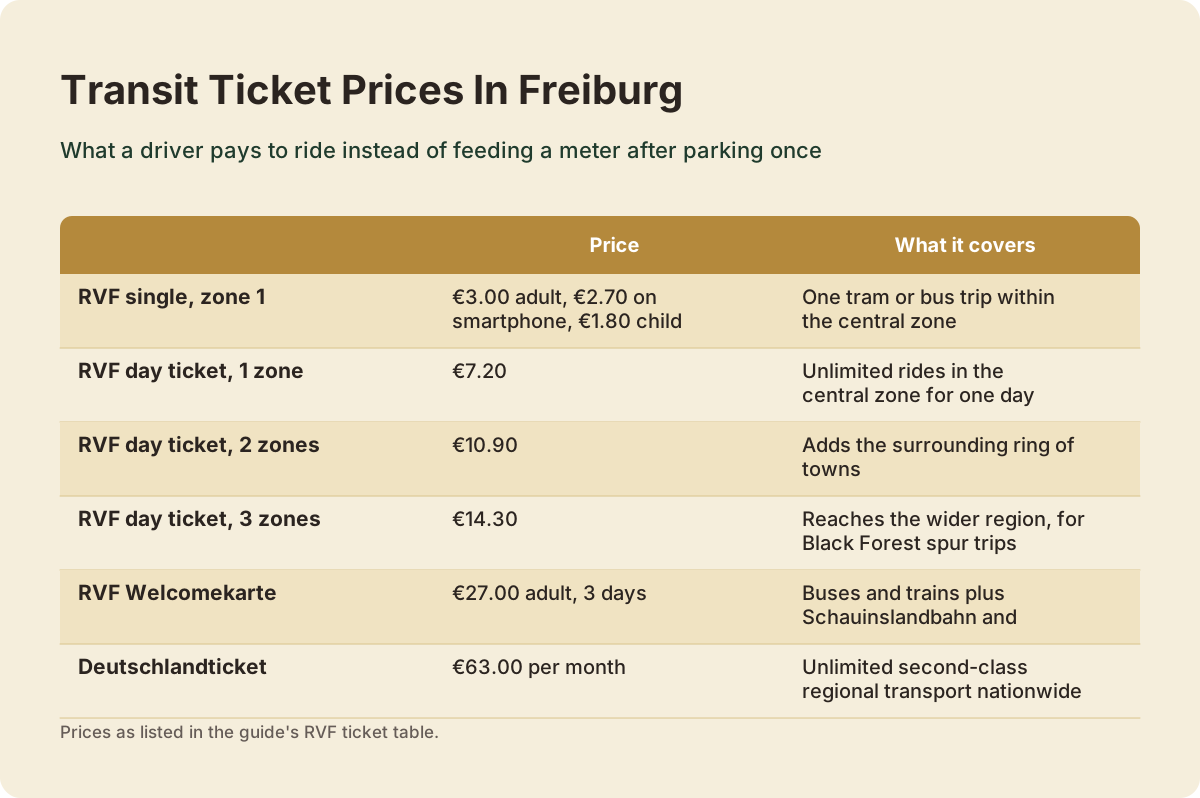
For almost every visitor, no: the tram network reaches all districts, a single zone 1 ticket costs €3.00, a day ticket for one zone costs €7.20, and the RVF Welcomekarte at €27.00 for three days covers buses and trains across the region and includes the Schauinslandbahn cable car plus a Kulturbonus. The economics are not close. If a garage charges anything like typical German city-center rates, one in-and-out cycle per day for a family will usually exceed a day ticket for the same family moving by tram, and the tram never needs you to find it a space.
The full ticket ladder is worth knowing before you park, because the right choice depends on how far you stray from the center.
| Ticket | Price | What it covers |
|---|---|---|
| RVF single, zone 1 | €3.00 adult, €2.70 on smartphone, €1.80 child | One tram or bus trip within the central zone |
| RVF day ticket, 1 zone | €7.20 | Unlimited rides in the central zone for one day |
| RVF day ticket, 2 zones | €10.90 | Adds the surrounding ring of towns |
| RVF day ticket, 3 zones | €14.30 | Reaches the wider region, useful for Black Forest spur trips |
| RVF Welcomekarte | €27.00 adult, 3 days | Buses and trains plus the Schauinslandbahn and a Kulturbonus |
| Deutschlandticket | €63.00 per month | Unlimited second-class regional transport nationwide |
The Welcomekarte deserves a special mention for drivers, because it quietly solves a problem the car cannot: the Schauinslandbahn. The cable car to the Schauinsland summit runs 3,600 m of cable, costs €15.00 return for an adult if bought separately, and is included in the Welcomekarte. A driver who would otherwise face a mountain road, a summit parking hunt, and €15.00 each can instead ride the tram to the valley station and let the cable do the climbing. The official Welcomekarte page lists the current terms, and the RVF tariff overview carries the single and day-ticket figures above.
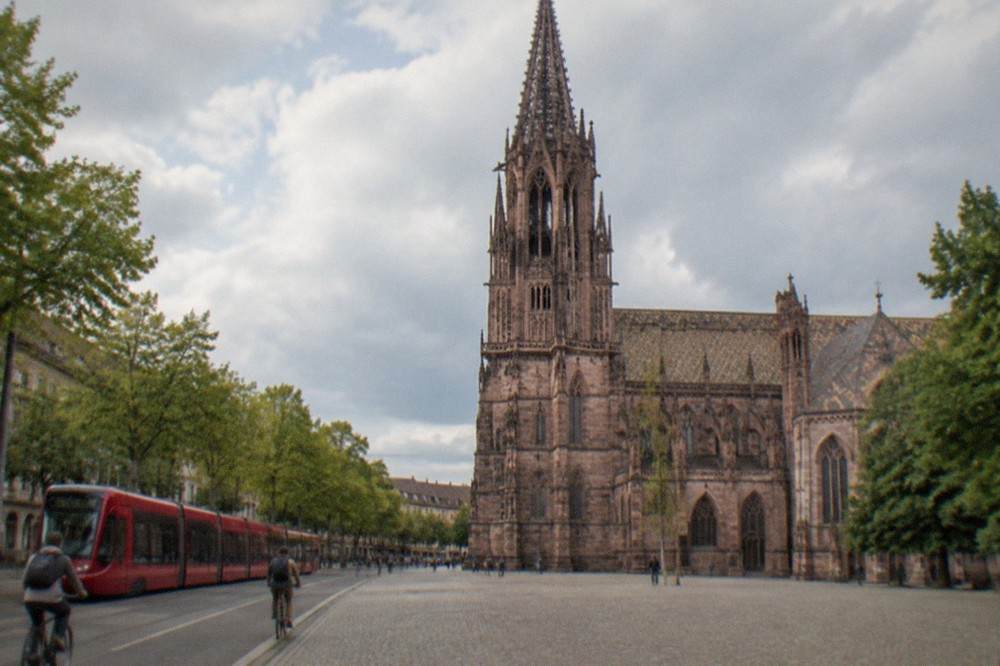
There is a second, softer reason to leave the car parked that goes beyond fares: Freiburg is a city that repays being walked. The Gässle, the narrow interlocking lanes of the Altstadt, the Bächle gutters running along the kerbs, the two surviving gates, Martinstor and Schwabentor, these are the sights a windshield flattens. A guided walk compresses them into 90 minutes and explains what you are looking at, and our overview of getting around Freiburg without a car covers the non-driving options in more depth.
The most-reviewed walk on this site's roster is the Gässle, Bächle and More City Tour, roughly 1.5 hours, rated 4.7 across 3,187 reviews, from $15. For a driver who has just parked, it doubles as an orientation session: you finish knowing which squares connect to which, so you stop being tempted to re-park closer to things.
Park Once, Then Ride: The Ticket Strategy That Beats Feeding A Meter
The strategy that saves the most money and stress is to park exactly once, ideally at your hotel or a garage on the center's edge, buy the right multi-day ticket on arrival, and treat the car as luggage storage for the rest of the stay. For a three-night stay, the arithmetic looks like this: one Welcomekarte at €27.00 per adult covers the transit and the cable car, versus several separate parking maneuvers, each of which risks a fee, a fine, or a twenty-minute detour. Even a solo day ticket at €7.20 undercuts a second garage entry in most German cities of Freiburg's size.
Families should note the child fares on singles, €1.80 in zone 1, and check the Welcomekarte's terms for children on the operator's listing before assuming adult pricing applies across the board. Long-distance day-trippers by car, people driving in from the Kaiserstuhl or Alsace for a single afternoon, have a different calculation: for them the day ticket, not the Welcomekarte, is the tool, and even a one-way walk can be skipped in favor of simply parking once and walking, since the core is small.
Drivers who arrive at the Hauptbahnhof by train rather than car face their own version of this decision, and the station itself is mid-change: a barrier-free modernization began on 14 September 2026, running until around December 2028, with five new lifts, renewed platforms 3 to 5, and new platform roofs, at a total cost of about €36.7 million. The northern underpass is initially fully closed, so if you are picking someone up or parking near the station, allow extra time and expect signage to move around during the works. Our Freiburg train station guide tracks what the works mean for connections.
Once parked, the steepest bit of sightseeing in the center needs no car and no ticket until you choose to spend one. The Schlossberg, the wooded hill directly east of the Old Town, is free to walk up, and the Schlossbergbahn funicular charges adults €3.70 one way or €6.50 up and down, with children aged 6 to 14 at €2.80 and €4.60. The official funicular tariff page carries the current figures. Driving to the Schlossberg is not a real option for a visitor, so this is one attraction where the transit answer is the only answer.
What Changed Recently On Freiburg's Roads And Rails
Several things a driver should know: 22 new electric buses joined the fleet in October 2025, the tram schedule changed on 14 December 2025, the Hauptbahnhof modernization started in September 2026, and temporary construction closures are hitting both tram lines and the Rheintalbahn rail corridor through late 2026. None of these remove the case for parking once and riding, but two of them change what the ride feels like, and one affects anyone driving to the station district during a hotel pickup or drop-off.
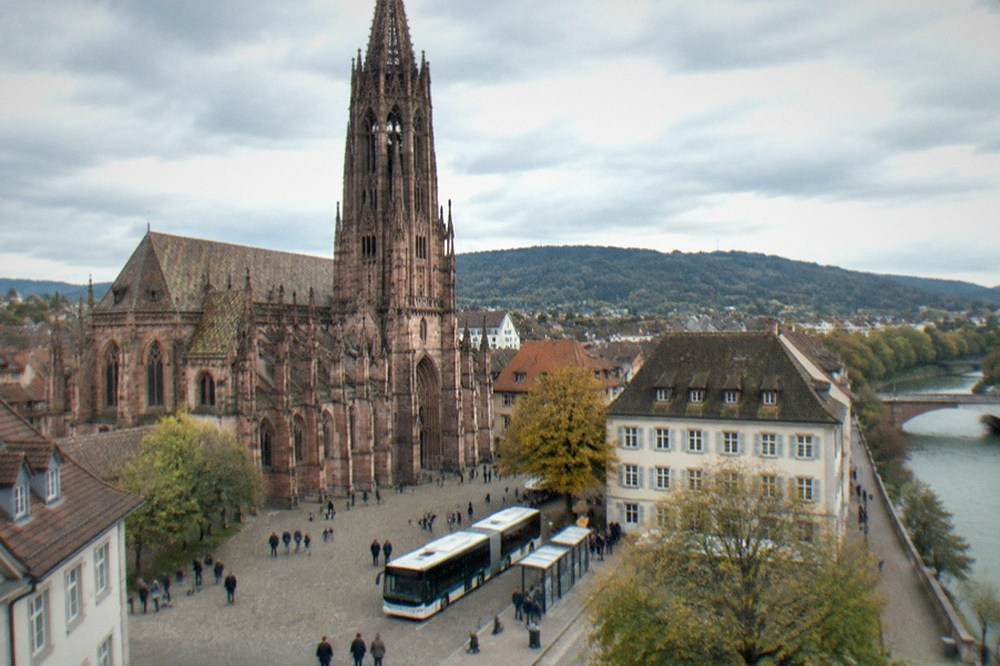
The bus fleet story matters less to drivers than to air quality, but it is worth knowing the vehicles you will board are increasingly electric: 45 of the fleet's buses are now E-buses, roughly two thirds, and they run on all lines since the December 2025 schedule change. That same schedule change added an extra morning trip on Schnellbus 37, extra early Line 3 trips from Haslach, extra weekend Line 14 trips to the Uniklinikum, and improved connections at Bertoldsbrunnen, the central transfer point. For a parked driver riding in for dinner, the last point is the useful one: evening connections through the middle of town got better, not worse. Other pages covering the same trip are gathered on Freiburg Travel Guide.
| Change | Timing | What it means for a driver |
|---|---|---|
| 22 new electric buses, second E-bus port | October 2025 | Quieter, cleaner rides on all lines |
| Tram and bus schedule change | 14 December 2025 | Extra early and weekend trips, better Bertoldsbrunnen links |
| Hauptbahnhof modernization | Started 14 Sept 2026, until about Dec 2028 | Northern underpass fully closed at first; allow extra time near the station |
| Line 3 replacement service (Zähringen works) | May to mid-October 2026 | Bus replaces tram north of the center |
| Sewer and track works, Lines 2, 3, 15 | September to mid/late October 2026 | Reroutes in the center and west |
| Rheintalbahn closures with replacement buses | Various 2026 weekends incl. early October | Freiburg to Basel trains partly replaced by buses |
The tram works deserve a plain warning for anyone whose parking plan assumes a specific stop. Construction-related disruptions are running on several lines through 2026, and the VAG current service alerts page is the place to check the morning you ride. The rail closures on the Rheintalbahn corridor, part of the Karlsruhe to Basel four-track expansion, replace regional and some long-distance trains with buses on affected weekends, which matters if your parking-in-Freiburg plan is a leg of a longer road trip with a Basel or Colmar component.
Two B31 tunnels, the Schützenallee and Kappler tunnels that carry the east-west artery under the southern city, are also periodic subjects of night closures and maintenance, with a full renovation reported to begin in 2028 and last more than three years. For now these are night-time and partial closures, not a reason to change plans, but a driver threading between the Black Forest and the city at night should expect the occasional detour.
Finally, for drivers who like the idea of parking the car and borrowing a bike instead: the Frelo bike-share system was fully renewed in January 2026 with, per recent reporting, about 1,200 new bikes including 206 e-bikes, and its station network expanded to 162 stations from March 2026. Those specific counts come from the freshness sweep rather than our own verification, so treat them as reported figures. What is verified is that 66 new bike parking spots were added at the Hauptbahnhof's eastern side in December 2025, a small fact that signals which direction the city keeps investing.
Parking Near The Münsterplatz And The Other Hot Spots
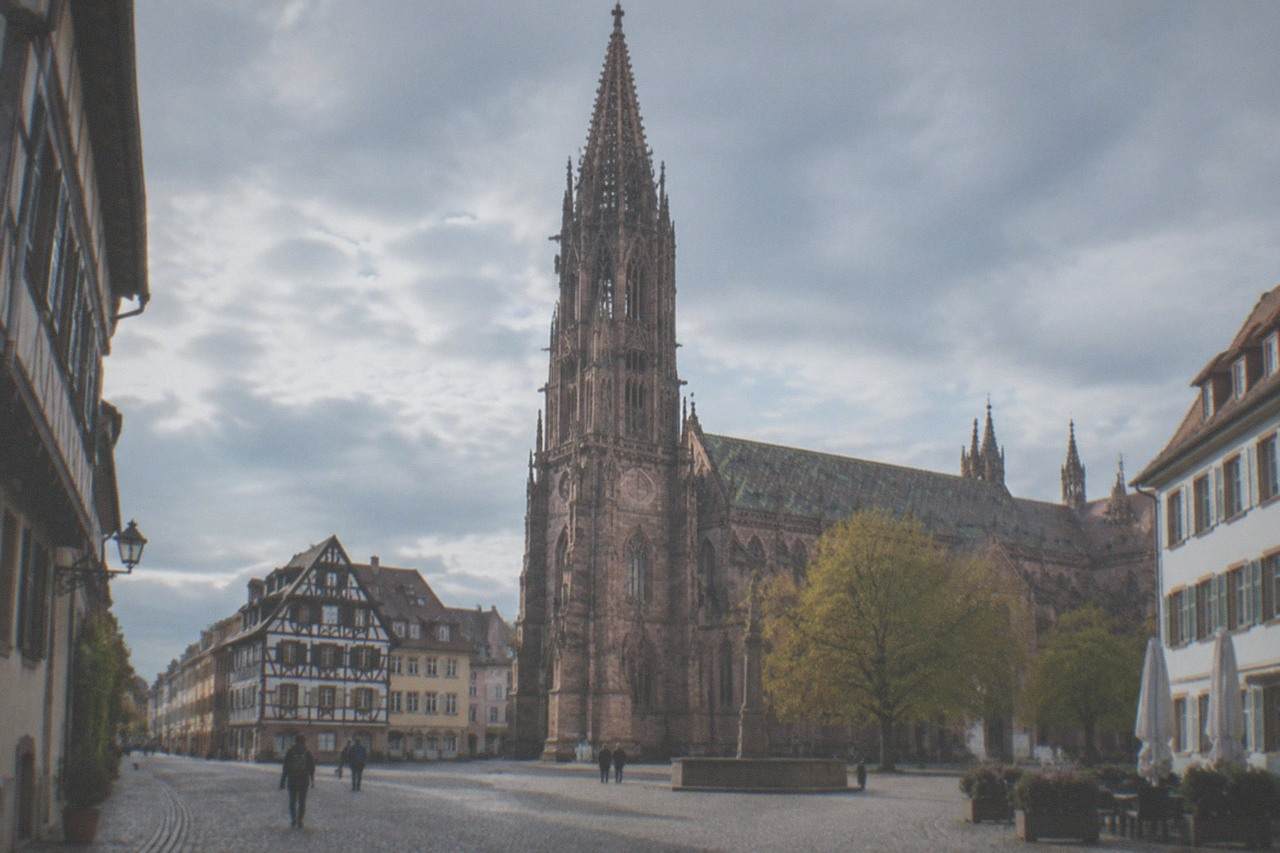
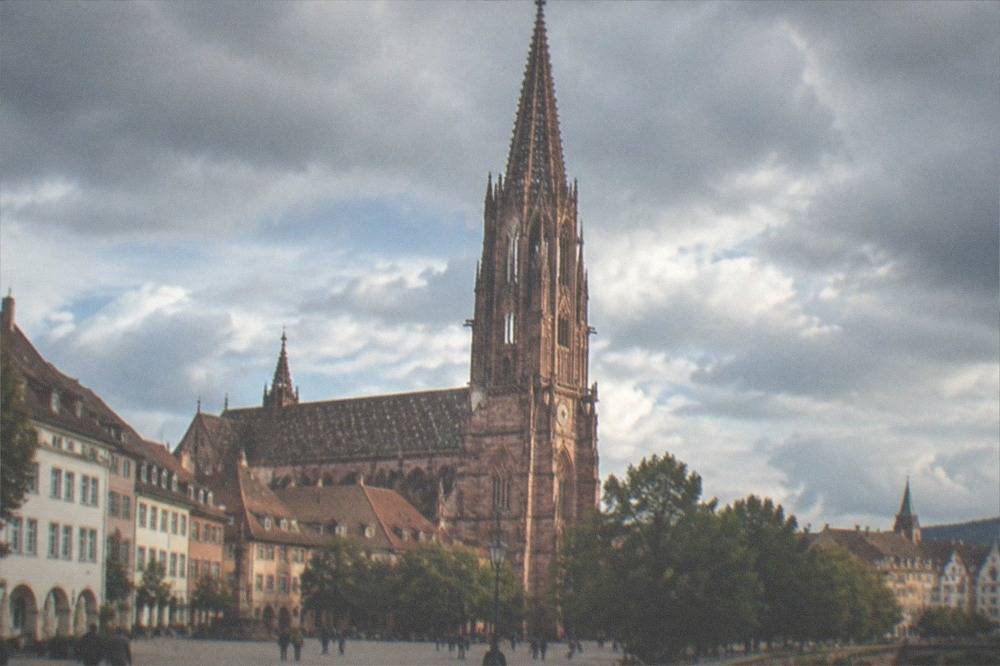
The honest answer is that you do not park at the Münsterplatz: the square is the city's market and cathedral heart, its weekday market runs 07:30 to 13:30 with up to 130 stalls, and the surrounding lanes are pedestrian-priority, so the realistic plan is a garage or lot a few blocks out and a five-to-ten-minute walk through the Altstadt. The walk is not a compromise, it is the sight. You will pass under Martinstor, along the Bächle, and through the Gässle network that gives the old lanes their character, which is exactly the texture a parking spot would have cost you.
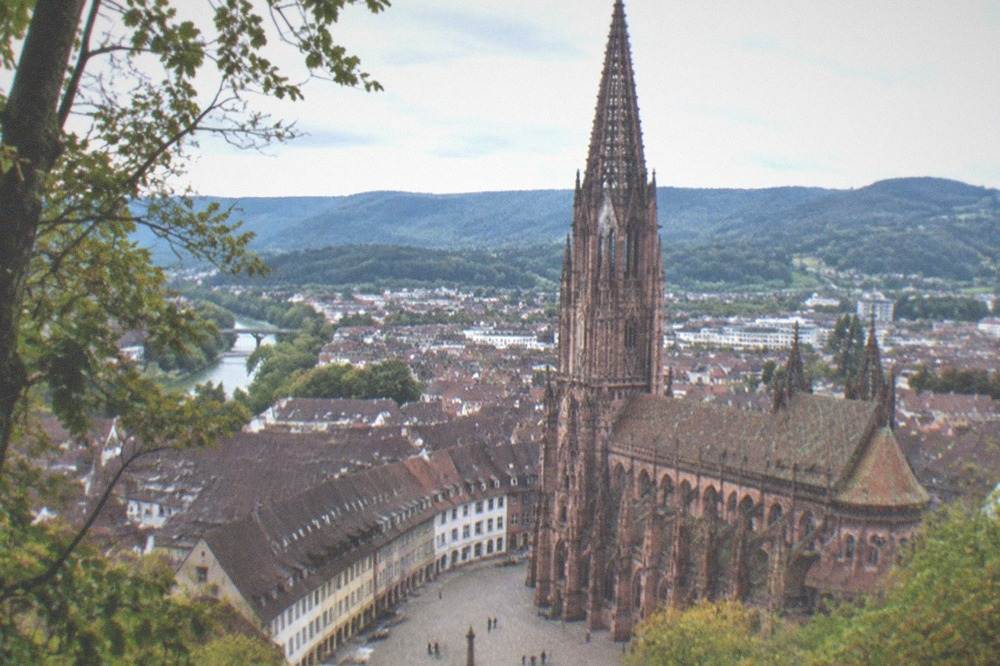
If a first-thing visit to the Münster is the goal, plan the tower climb rather than the parking. The west tower is 116 m tall, but visitors climb to a gallery at 70 m, not the top, and the gallery closes in winter. Hours are Monday to Saturday 11:00 to 16:00, Sundays and holidays 13:00 to 17:00, with the last ascent about 15 minutes before closing. Adults pay €5, children and teens €3, a family ticket is €13, and under-7s go free. The nave itself is free to enter. Ongoing restoration works, on the southern choir, the northern Langhaus, and the Peter-und-Paulskapelle, have sections of scaffolding, and a larger tower-octagon restoration is planned from about 2027 at a reported cost of over €18 million, but none of it closes the tower climb.
Other hot spots follow the same rule. Augustinerplatz and its terrace of chestnut trees sit inside the walkable core, as do Rathausplatz and the Fischerau and Gerberau lane cluster. The Augustinermuseum, fully reopened on 28 February 2026 after its final renovation phase, charges €12 with a €8 reduced rate, free for under-27s, and its day ticket covers the other city museums. Seepark, the 1980s garden-art landscape now under heritage protection, and the Mundenhof animal park on the western edge are the two family sights where a car genuinely competes with transit, because they sit beyond the core; even there, the tram network serves both, so the choice is comfort, not feasibility.
For a quick side-by-side of what the core's paid sights cost once the car is parked, the table below pulls the verified admission figures together in one place, all of them within walking distance of any central garage.
| Sight | Admission | Notes for the parked visitor |
|---|---|---|
| Münster nave | Free | Open to all, restoration scaffolding on some sections |
| Münster tower climb | €5 adult, €3 child, €13 family | Gallery at 70 m, closed in winter |
| Augustinermuseum | €12, €8 reduced, free under 27 | Day ticket valid for the other city museums |
| Museum für Neue Kunst | €7, €5 reduced, free under 27 | Extended Thursday hours to 19:00 |
| Schlossberg | Free to walk | Funicular optional at €3.70 one way |
| Schlossbergbahn funicular | €6.50 adult up and down | Child rates €2.80 / €4.60 |
A note on the cathedral-adjacent market for anyone arriving by car on a weekday morning: Münstermarkt days mean delivery traffic and market stalls until early afternoon, and a driver threading the edge of the square at 08:00 is sharing narrow lanes with vendors unloading. Park first, walk in, and let the market come to you. Our Münsterplatz market guide covers the stall layout and the Saturday hours.
For an early orientation with a guide involved, the Tour of the City with Cathedral Visit, about 1.5 hours and rated 4.6 across 284 reviews, from $20, pairs the lanes with the cathedral itself, a sensible first-morning outing for a driver who parked the previous evening and wants the city explained before setting out alone.
Leave The Car Behind: The Outings That Make Parking Once Obvious
The three outings that most reward a parked car are the Schauinsland cable car, the Schlossberg funicular and tower, and the themed walking tours of the Altstadt, because all three start from points the tram reaches faster than a car can park near them. The Schauinslandbahn runs daily from 09:00 to 17:00, extended to 18:00 in the Baden-Württemberg summer holidays, with an adult return at €15.00 or a single at €12.00. It closes for its autumn overhaul from 16 November to 4 December 2026, and a spring 2027 closure from 22 February to 19 March has been published on the operator's schedule page, so winter travelers should check dates against their trip. The summit's Eugen-Keidel-Turm observation tower reopened in April 2025 after years of closure, which makes the cable car a better outing now than it has been in a while.
The themed walks are where the parked afternoon fills itself. Beyond the standard city walks, the roster runs from a drag-hosted show walk with Betty BBQ, about 1h 25m, rated 4.6 across 699 reviews, from $40, to dramatized history walks with costumed actors rated 4.9 across 497 reviews from $17. The actor-led format is a particular fit for visitors who want story rather than lecture, and it covers the same lanes a self-guided wander would, minus the guesswork.
For travelers who prefer self-guided pace, the scavenger-hunt format turns the Altstadt into a puzzle, roughly 3 hours, rated 4.9 across 15 reviews, from $45. The review pool is small, so treat the rating as promising rather than proven, but the format suits families with teenagers who have exhausted their tolerance for guided commentary. And for a purely social evening, the guided pub crawl with drinks, about 4 hours, rated 4.4 across 107 reviews, from $51, solves the one problem parking never could: nobody should drive home from it.
A closing thought on the whole parking question. The city you are driving into has spent decades making the not-driving option the better one, and the visitor wins either way. Park once, pay once, and let the network that carried 76% of local trips in 2023 carry you too. The practical numbers are on your side, and so is the fact that everything worth seeing in the core sits within a walk you would take anyway. More on weighing the car against its alternatives, including the KONUS card question for visitors staying outside the city, is in our Freiburg Welcomekarte guide and our car hire in Freiburg overview.
If the actor-led walk is booked out or the schedule does not line up with yours, the two other walks in the comparison band below cover the same ground in a more conventional format, and the self-guided scavenger hunt needs no schedule at all.
Common Questions About Parking In Freiburg
Where can I park in Freiburg city center?
Use a garage or lot on the ring around the pedestrian core, ideally near the Hauptbahnhof district or your hotel, and walk or tram the last stretch. The medieval lanes around the Münster are pedestrian-priority and threaded with the Bächle channels, so curbside parking there is scarce. Confirm your hotel's parking arrangement at booking time, since many central hotels have no on-site spaces.
Is parking in Freiburg expensive?
This site does not publish a verified garage tariff, and rates shift with location and season, so treat any specific figure you read with caution until you see the board at the entrance. The reliable comparison is against transit: a zone 1 day ticket is €7.20 and a single is €3.00, so every parking maneuver you avoid is measured against those numbers.
Can I drive to the Schauinsland cable car instead of taking the tram?
You can drive to the valley station, but the Welcomekarte makes not driving the better deal: the 3-day card costs €27.00 for adults and includes the Schauinslandbahn, which otherwise charges €15.00 for an adult return. The cable car runs 09:00 to 17:00 daily and closes 16 November to 4 December 2026 for its autumn overhaul.
Do I need a car at all during a Freiburg stay?
Almost never. The tram and bus network reaches every district and the core sights sit within a twenty-minute walk of each other. Walking, cycling, and public transport accounted for 76% of local trips in 2023, and a visitor parked once at the hotel can replicate that easily with a day ticket or the Welcomekarte.
What transit disruptions should a visitor know about in 2026?
Line 3 has a replacement bus service north of the center from May to mid-October 2026, sewer and track works affect Lines 2, 3, and 15 into late October, and the Rheintalbahn corridor sees weekend closures with replacement buses during 2026. The Hauptbahnhof modernization, begun 14 September 2026, has the northern underpass fully closed at first. Check the VAG service alerts on the morning you ride.
Is the Münster tower worth the climb once I have parked?
Yes, with the right expectation: the west tower is 116 m tall but the climb ends at a 70 m gallery, not the top, and the gallery closes in winter. Adults pay €5, a family ticket €13, and the hours are Monday to Saturday 11:00 to 16:00, Sundays and holidays 13:00 to 17:00. The nave itself is free.