How To Pronounce Freiburg: A Practical Guide For Visitors
Freiburg looks simpler than it sounds. This guide breaks the name into its German sounds, explains the im Breisgau suffix, and separates the German city from Fribourg in Switzerland, so you can say the name the way locals do.
Short answer
Freiburg is pronounced FRY-burk, with the first syllable rhyming with high or why. The vowel in the second syllable is a short, clipped German u, closer to the oo in book than the ur in burn. In German the name is written [ˈfʁaɪ̯bʊʁk], and the final g is a k sound, never a soft j.
How To Pronounce Freiburg Correctly
The standard German pronunciation of Freiburg is FRY-burk, two syllables, stress on the first. The fry sounds exactly like the English word fry, because German ei is always the eye vowel. The second syllable is a short, tight u, as in the English word book, and the final g is pronounced k. Written in the International Phonetic Alphabet, the name is [ˈfʁaɪ̯bʊʁk].
That IPA string looks intimidating, but every piece of it maps to something an English speaker already knows how to do. The ˈ mark simply shows where the stress falls, on the first syllable. The fʁ combination is an f followed by a German r, which is produced at the back of the throat rather than by curling the tongue. If the German r feels awkward, a plain English r still produces a name locals will recognize instantly. The ɪ̯ diphthong is the eye sound, and the ʊ is the book vowel.
One reason the name causes trouble is that English contains the word bury, which many readers reach for when they see burg. But bury rhymes with berry, and the German u never sounds like that. The city suffix -burg appears across Germany, in Hamburg, Würzburg and Strasbourg's German cousin Strassburg, and in every case the vowel is short and clipped. Think of the oo in book or the u in put and you have it.
The table below breaks the name into its working parts. Say each piece slowly, then run them together, and you are pronouncing Freiburg the way it is said on Freiburg's own trams, in its hotels and at its market stalls.
| Piece | IPA | English approximation | What to watch for |
|---|---|---|---|
| Frei | [fʁaɪ̯] | FRY, rhymes with why | Stress this syllable; ei is always the eye vowel |
| burg | [bʊʁk] | burk, like book with an r | Short clipped u; final g is a k sound |
| Whole word | [ˈfʁaɪ̯bʊʁk] | FRY-burk | Two syllables only, never FRY-burg with three |
Why English Speakers Get Freiburg Wrong
Most English speakers make one of three mistakes: saying FREE-burg, saying FRY-berg, or softening the final g into a j sound as in Fray-burrzh. All three come from reading the name with English spelling habits. German ei is the eye vowel, not the ee in fee, and a final g after r is always a hard k. The correct FRY-burk is closer to English than it first appears.
The FREE-burg error is the most common, because in English the letter combination ei usually makes an ee sound, as in receive or ceiling. German does the opposite. Its ei pairing, seen in names like Leipzig and Weimar and in words like Wein (wine) and Eisen (iron), is reliably the eye vowel. The sibling spelling ie, by contrast, makes the ee sound, as in Wien (Vienna). Once you internalize that swap, a long list of German names starts reading themselves correctly.
The FRY-berg error usually comes from overcorrection, from someone who has learned that German vowels shift and decides to shift all of them. But there is no e in the second syllable of Freiburg at all. The berg that means mountain or hill, as in Heidelberg's counterpart or the Feldberg in the Black Forest, is a different word. Freiburg's second syllable comes from Burg, meaning a fortified castle or borough, and its vowel stays short.
The soft ending, FRY-burzh or FRY-burj, comes from blending the name with French habits, since the city sits close to the French border and the Alsatian city of Strasbourg. French does soften a final g. German does not. Keep the ending hard and you will be understood everywhere in Baden-Württemberg.
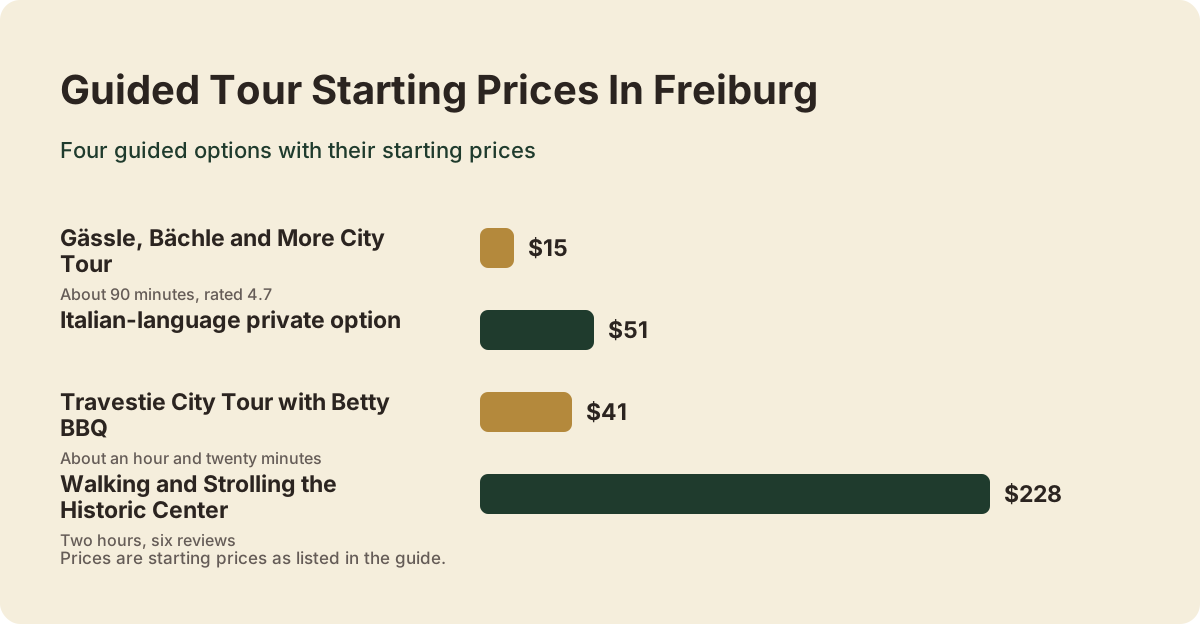
If you want to hear the name said by someone who lives there, a guided walk is the lowest-effort way to do it. The two-hour Walking and Strolling the Historic Center tour runs from $228, and with only six reviews on the listing so far it is a small-group experience rather than a mass-market one. An Italian-language private option runs from $51, and the direct Freiburger Reisedienst Airportbus from Basel EuroAirport, about 55 minutes, has its fare shown on the operator's site.
How To Say Freiburg Im Breisgau
The full official name is Freiburg im Breisgau, pronounced FRY-burk im BRYSE-gow. The im is simply the German for in, said quickly and almost swallowed between the two names. Breisgau rhymes loosely with nice-gow: the ei is again the eye vowel, and the au at the end is the ow sound in cow. Together the three words mean Freiburg in the Breisgau region.
Germans use the suffix to disambiguate. There is another Freiburg in Germany, a small town in Lower Saxony near the North Sea, and there is the Swiss city of Fribourg, so Baden's university city carries its region on formal occasions. Train departure boards, official mail and the city's own website use the long form. In conversation, locals almost always shorten it to just Freiburg, and you should too. Saying the full Freiburg im Breisgau to a local sounds a bit like announcing you have arrived in Chicago, Illinois, to a Chicagoan.
The region name Breisgau refers to the stretch of the Upper Rhine plain between the Black Forest and the Rhine itself, a wine-growing area that includes the Kaiserstuhl hills to the west of the city. The gau is an old German word for a district or region, and it appears in other regional names such as Allgäu in Bavaria. Stress in Breisgau falls on the first syllable, and the second syllable, spoken as gow, is where English speakers sometimes drift, so keep it crisp.
You will see the long form on a few visitor-facing things: on some rail tickets, on the university's formal documents and on signs as you enter the city limits. None of that requires you to say it aloud. But knowing how it sounds helps you catch announcements at the Hauptbahnhof, where the station announcer will say the full name on long-distance trains, and it helps you recognize your stop when you are tired at the end of a travel day.
| Element | Pronunciation | Meaning | Where you will hear it |
|---|---|---|---|
| Freiburg | FRY-burk | The city name | Everywhere in conversation |
| im | im | In | Train announcements, formal names |
| Breisgau | BRYSE-gow | The surrounding region | Station calls, regional maps |
| Breisgau-Hochschwarzwald | BRYSE-gow HOHKH-shvarts-valt | The rural district around the city | Regional bus destinations |
Freiburg, Fribourg Or Fryburg: The Two Cities Problem
Freiburg in Germany and Fribourg in Switzerland are different cities pronounced differently. The German city is FRY-burk. The Swiss city, on the French-speaking Sarine river, is pronounced free-BOOR in French, with a long oo and no k at the end. The confusion is old: both names come from the same German roots meaning free castle, and the Swiss city's German name is still Freiburg im Üechtland.
The two cities are not neighbors. Fribourg sits about 130 km southwest in Switzerland, while Germany's Freiburg lies in the Upper Rhine valley at the edge of the Black Forest. The Swiss canton is officially bilingual, and its capital answers to both names. So when a travel forum says Fribourg, someone may be describing a Swiss lake-and-cathedral town rather than the German cathedral city with the Bächle gutters.
This matters practically. Trains from Basel can serve both directions, and a booking mistake puts you in the wrong country, an hour and a half of extra travel apart. When booking rail tickets, use the station codes or the full names: Freiburg (Breisgau) Hbf for the German city and Fribourg/Freiburg for the Swiss one. The German station's full designation appears on tickets as Freiburg (Breisgau) Hbf, which is itself a useful disambiguator.
The site's guide to the Freiburg versus Fribourg comparison goes deeper on the travel side of the mix-up. For pronunciation, the short version is: German Freiburg ends hard and clips its second vowel; French Fribourg lengthens the vowel, drops the final consonant and stresses the second syllable. Say each name once or twice and the difference locks in.
| City | Country | Language | Pronunciation | Stress |
|---|---|---|---|---|
| Freiburg im Breisgau | Germany | German | FRY-burk | First syllable |
| Fribourg | Switzerland | French | free-BOOR | Second syllable |
| Freiburg im Üechtland | Switzerland | Swiss German | FRY-burk im UEKH-tlant | First syllable |
| Freiburg (Elbe) | Germany | German | FRY-burk | First syllable |
The German Sounds Inside The Name
Three German sound rules govern Freiburg. First, ei is always the eye vowel, so Frei rhymes with why. Second, a single vowel before a single consonant is short, which is why the u in burg is clipped like the oo in book. Third, a final g in German is a hard k sound after r, never the soft j of beige. Apply those three rules and the name reads itself.
The short-vowel rule is the one English speakers resist most, because English spelling lets the same u stand for very different sounds. German is more disciplined. A lone u in a closed syllable is always the book vowel. You hear it in Burg (castle), in Zug (train), and in gut (good). Once you trust the rule, second-guessing stops and the rhythm of the word settles.
The German r deserves a note. In Freiburg's accent, as in most of the German southwest, the r is a throat sound made with the back of the tongue, closer to a light gargle than to an English r. In the city's name, it colors the end of both syllables: FRY-burk. If you substitute an English r, nothing breaks. A local will hear an accent, not a mistake. The name remains fully recognizable, and no one will ask you to repeat it.
The final k is worth a moment of deliberate attention because it is the ending most often fumbled. The word ends firmly, like a door closing. Do not let it trail into a vowel, and do not voice it into a g. A clean stop at the back of the mouth finishes the name the way German finishes it.
A useful practice pairing is the city's own most famous word pair: Freiburg and Breisgau. Both contain the ei eye-vowel, both end in sounds that close cleanly, and both appear on every official document you will touch as a visitor. Say FRY-burk im BRYSE-gow five times slowly, then at conversational speed, and the pattern transfers to every other German place name you meet in the region.
Related Names You Will Say On The Same Trip
Once Freiburg clicks, the surrounding names click too. Baden-Württemberg is BAHD-en VURT-tem-bairg. Schwarzwald, the Black Forest, is SHVARTS-valt. Breisach am Rhein is BRY-zakh am HYNE, where z is a ts sound and Rhein ends like the English word line. Each of these names follows the same vowel rules as Freiburg itself.
Locals shorten Schwarzwald constantly, and you will hear it in hotel names, bus routes and tour titles. The w is an English v sound, so the word starts sh, not sw. The same applies to Wiehre, the southern district, said VEE-ruh, and to Währing-type names if you travel onward. V in German is usually pronounced f, which is why the VAG, the city transport operator, is said fah-geh by locals.
| Name | Meaning | Pronunciation | Note |
|---|---|---|---|
| Baden-Württemberg | The federal state | BAHD-en VURT-tem-bairg | Würt has the French u sound |
| Schwarzwald | Black Forest | SHVARTS-valt | w is a v sound |
| Breisach am Rhein | Town on the Rhine | BRY-zakh am HYNE | z is ts; Rhein rhymes with line |
| Basel | Swiss city | BAH-zl | German pronunciation; French is Bah-ZEL |
| Strasbourg | French city | strahs-BOOR | French; German name Strassburg |
| Titisee | Black Forest lake | TEE-tee-zay | Both i sounds are long ee |
Basel deserves its own line because it appears in your arrival planning. In German, the stress falls on the first syllable. In French, it moves to the second. The city is genuinely bilingual and both are correct, but the German first-syllable stress is what you will hear from Freiburg bus and train staff. The site's guide on the Basel day trip from Freiburg covers the crossing details.
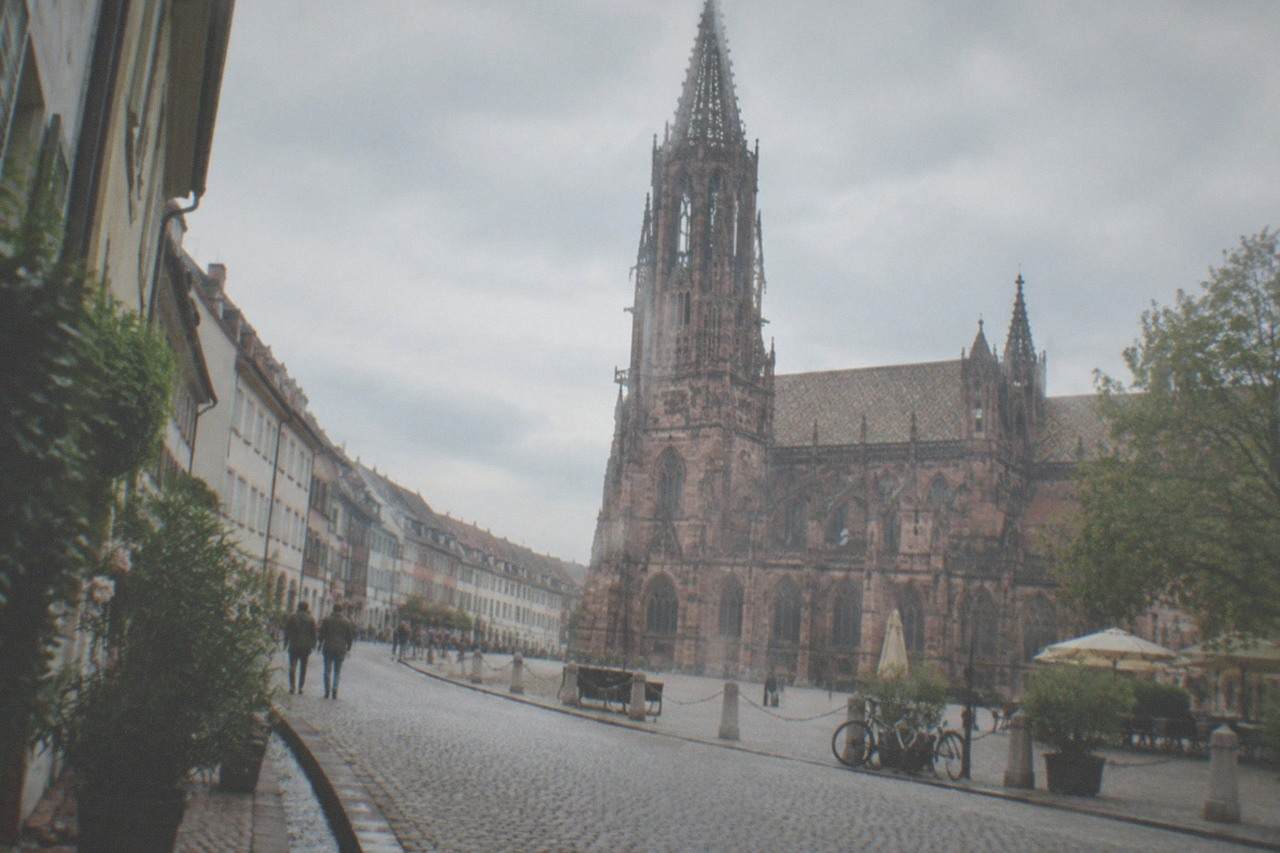
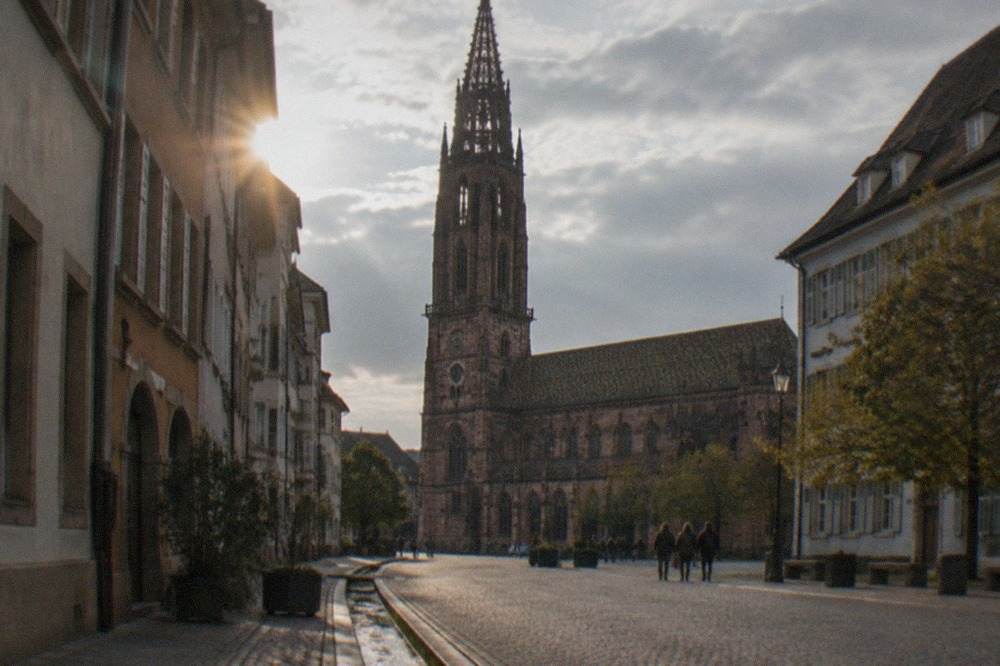
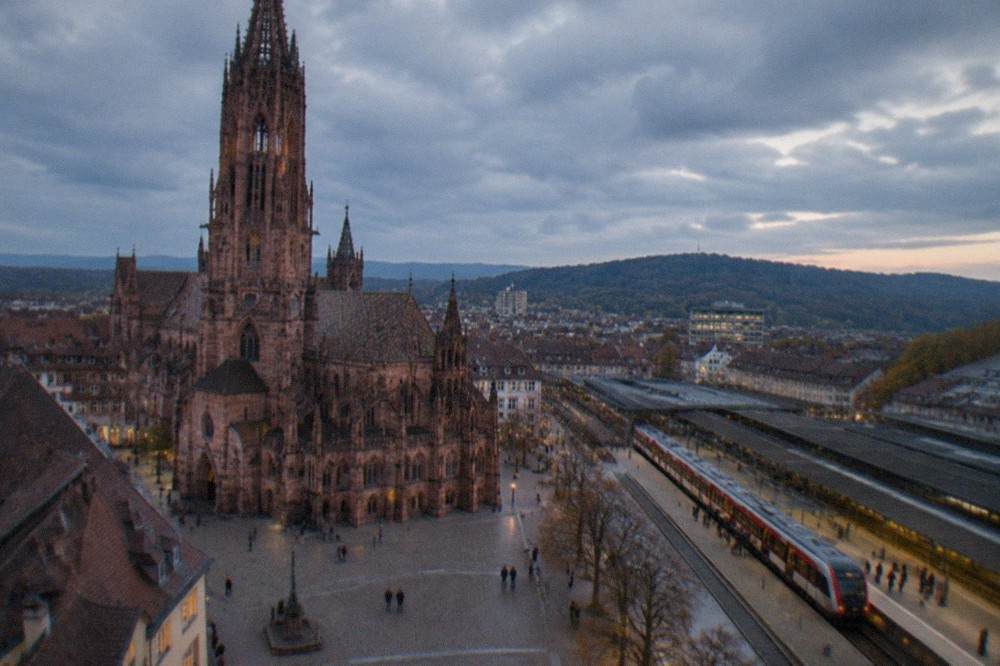
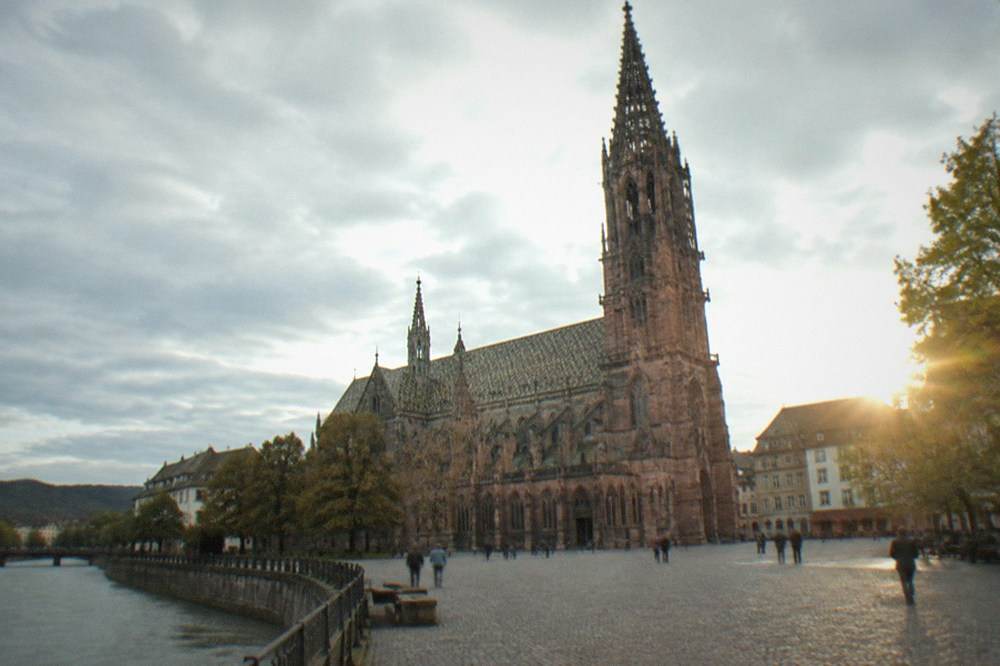
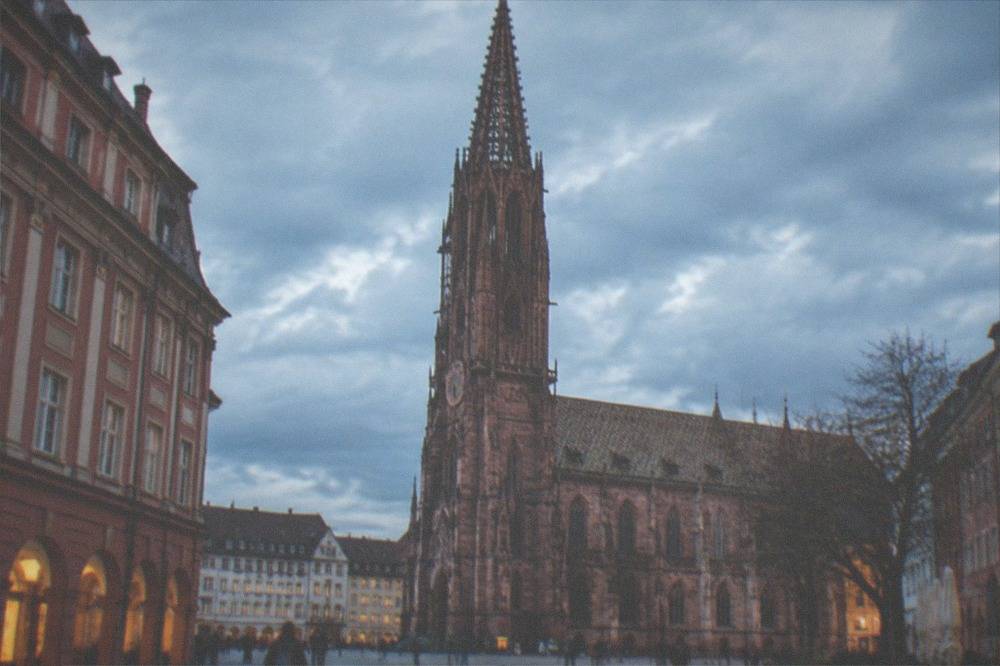
The Münster, the city's Gothic cathedral, is said MUEN-ster, with an ue that is the tight French u sound made with rounded lips. Its west tower is 116 m tall, though the climbable gallery sits at 70 m, a fact worth holding onto separately from the pronunciation. The market square at its feet, the Münstermarkt, keeps the same vowel.
Common Mistakes And Quick Fixes
The four most common mistakes are FREE-burg, FRY-burzh, three-syllable FRY-uh-burg and the full Swiss-style free-BOOR. Each fix is small. Drill the eye vowel for the first, keep the ending hard for the second, hold the word to two syllables for the third, and stress the first syllable for the fourth. None of these mistakes is rude; they are simply habits from English spelling.
Readers arriving by air often have the Basel EuroAirport connection in mind, and the arrival documents say Freiburg im Breisgau more than once. If you have been saying it wrong in your head the whole flight, that is fine. German speakers are used to English speakers trying, and the trying is what lands well. The fix table below pairs each error with its correction.
| Mistake | Why it happens | Correct form | Quick drill |
|---|---|---|---|
| FREE-burg | English ei habit from receive | FRY-burk | Rhyme Frei with why, three times |
| FRY-burzh | French soft g from Strasbourg | FRY-burk | End with a k, like look |
| FRY-uh-burg | Adding a vowel between sounds | FRY-burk | Two beats only, tap twice |
| free-BOOR | Confusing with Swiss Fribourg | FRY-burk | Stress syllable one, not two |
| FRAY-burg | Overcorrecting the vowel | FRY-burk | No long a anywhere in the word |
One cultural note. Germans do not expect visitors to have native pronunciation, and Freiburg, a university city with 24,507 students in the current winter semester, hears dozens of accents daily. The Freiburg Travel Guide exists partly because the city rewards visitors who make the effort. A clear FRY-burk earns a nod; a hesitant attempt still earns a helpful answer.
If you want a low-stakes place to practice, the Markthalle or the Münstermarkt stalls are ideal. Say the name of what you are pointing at, and let the vendor correct you gently. The market runs Monday to Saturday mornings, with up to 130 stalls around the cathedral square.
A city tour is another good place to test your pronunciation, because a guide will say each name as you walk past it. The Gässle, Bächle and More City Tour is rated 4.7 across 3,187 reviews, runs about 90 minutes and starts from $15, which makes it the least expensive guided option in the city. Its own title contains two of the region's trickiest words: Gässle, the little lanes, said GESS-luh, and Bächle, the gutters, said BEKH-luh.
Practicing The Name Before You Travel
The fastest practice method is chunk-then-link: say FRY alone until it rhymes cleanly with why, say burk alone until it matches book plus an r, then join them at slow speed and build up. Five minutes a day for a week is enough to make the correct form automatic. Record yourself once, compare it against the IPA string [ˈfʁaɪ̯bʊʁk], and adjust the ending if it drifts soft.
Voice assistants and rail apps help here too. Type Freiburg into a German rail app and the spoken announcement plays the name in a native voice, which you can mimic. The station's own long-distance announcements say the full Freiburg im Breisgau, so you get the suffix practice free. The site's overview of Freiburg's main train station covers what to expect when you arrive, including the platform layout.
If you are traveling with others, turn it into a game: the first person to say FRY-burk correctly at every sight wins. Families report this works better than drills, and children pick up the vowel rules faster than adults. The city itself is compact and walkable, which means you will say the name often, to taxi drivers, to hotel staff and to market vendors, so there is no shortage of live practice once you land.
The 2025 season brought 1,010,708 arrivals to the city, and a large share of them came from English-speaking countries, so every front desk in town has heard every variant of the name. You are not the first person to ask, and you will not be the last. The infographic below shows how the pieces of the name fit together and how each sound maps to an English word you already know.
When Pronunciation Actually Matters
Pronunciation matters most in four moments: booking rail tickets, catching announcements, giving a taxi or rideshare a destination, and asking directions. In all four, the disambiguator is Breisgau. If a listener hesitates at Freiburg, adding im Breisgau or saying the German city, not the Swiss one, resolves it instantly. In restaurants, shops and hotels, any clear attempt is understood.
Rail bookings are the highest-stakes moment, because the Swiss Fribourg shares a rail network through Basel. When you book, the German station appears as Freiburg (Breisgau) Hbf. Select that entry, and the system has no room for ambiguity. Onboard, listen for the full name in the announcement; German long-distance conductors say it precisely.
Taxi drivers in the region deal with tourists from three countries and are practiced at accented place names. A clear FRY-burk plus a street name is enough. If you are headed to the Old Town, the German is Altstadt, said ALT-shtadt, and the main square names follow simple rules: Rathausplatz is RAHT-house-plats and Münsterplatz is MUEN-ster-plats.
For a livelier place to hear the name and the city's humor at once, the Travestie City Tour with Betty BBQ is rated 4.9 across 140 reviews and runs about an hour and twenty minutes from $41. Betty BBQ is a Freiburg institution, and the tour is as much a comedy show as a walk, delivered in a mix of German and English that works for visitors with even modest German.
Common Questions About Pronouncing Freiburg
How do you pronounce Freiburg?
Say FRY-burk. The first syllable rhymes with why, the second is a short clipped u as in book, and the final g is pronounced as a hard k. In IPA the name is [ˈfʁaɪ̯bʊʁk]. Stress falls on the first of the two syllables.
Is Freiburg pronounced Free-burg?
No. The German ei spelling is always the eye vowel, so Frei rhymes with why, not with fee. FREE-burg comes from English spelling habits like the ei in receive. The correct form is FRY-burk.
What does the im Breisgau in Freiburg im Breisgau mean?
It means in the Breisgau, the region of the Upper Rhine plain between the Black Forest and the Rhine. The full name distinguishes the German city from Fribourg in Switzerland and from a smaller Freiburg in Lower Saxony. Locals say just Freiburg in conversation.
Is Freiburg in Germany the same city as Fribourg in Switzerland?
No. They are two different cities about 130 km apart in different countries. The German Freiburg is FRY-burk; the Swiss Fribourg is free-BOOR in French. Both names share a historical root meaning free castle, which is why the confusion persists.
Do locals mind if visitors mispronounce Freiburg?
Not at all. Freiburg is a university city that hosted over a million arrivals in 2025, and staff across hotels, restaurants and attractions hear every variant daily. A clear attempt at FRY-burk is appreciated, but any recognizable version gets a friendly, helpful answer.
How do you pronounce the Münster and the Bächle?
The cathedral is the Münster, said MUEN-ster, with the tight French-style u sound. The famous gutter streams are the Bächle, said BEKH-luh, where the ä sounds like the e in bed and the ch is a soft throat sound as in the Scottish loch.
If your trip extends beyond the city, the guides to the Black Forest region from Freiburg and to five days in Freiburg and the Black Forest carry the same place names you have just learned to say. External references for the founding date and the city's own history include the university's official history page, and the Black Forest tourism association covers regional travel logistics. A private tour of the historic center can also be arranged through Check availability if you would like a local alongside you as you practice.
The related option runs about two hours through the old town's lanes and squares, from $228, with six reviews on the listing so far, an early-stage listing whose guests have not yet produced enough ratings for a reliable average. It pairs naturally with the question this page answers: once you can say the name, walking it is the next step.