Black Forest Ham: Where To Find, Taste And Buy It Around Freiburg
Black Forest ham is the smoked, dry-cured pork that carries the region's name, and Freiburg is the natural place to taste it properly: at the Münstermarkt, in a Badische wine tavern, with a glass of local wine.
Short answer
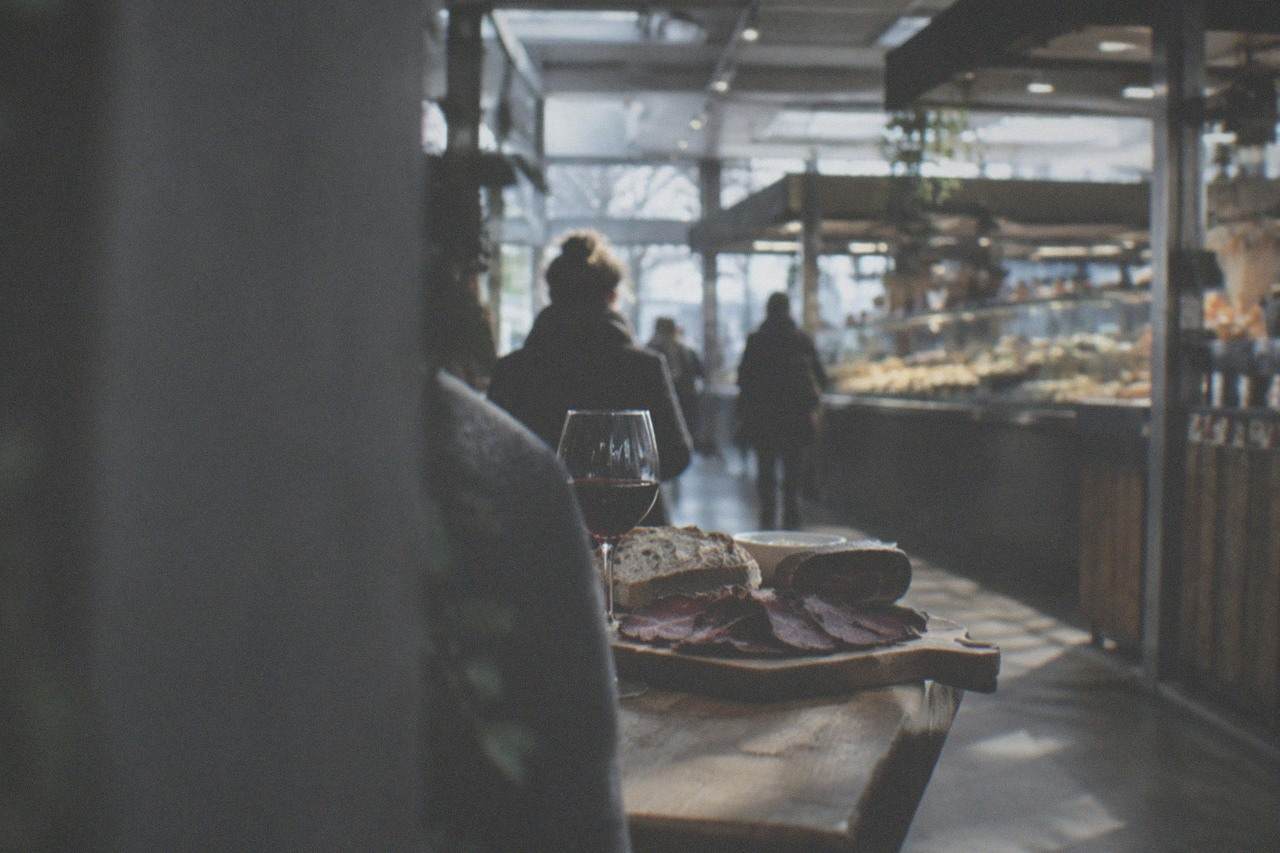
Black Forest ham is a dry-cured, fir-smoked pork leg protected under EU geographical-indication rules. In Freiburg you can taste it at the Münstermarkt (Mon-Sat, up to 130 stalls), in the Markthalle, in Badische wine taverns, and seasonally at the Christmas market. Pair it with Baden wine and onion tart for the classic local plate.
Black Forest ham, Schwarzwälder Schinken in German, is the cured meat that put this whole region on the culinary map long before the cake did. The name is protected under EU geographical-indication rules, which means that what is sold as genuine Black Forest ham follows a defined process: a boneless pork leg is dry-cured in salt and spices, air-dried, and then cold-smoked over conifer wood, the fir and spruce of the Black Forest itself, until the outside turns almost black and the inside stays rose-pink and firm.
Freiburg sits at the edge of that forest, and it works as the best base in the region for eating the ham in its home setting. The city has a daily cathedral market with up to 130 stalls, a covered market hall, a cluster of Badische wine taverns where ham arrives on a wooden board with bread and a local glass, and a small industry of guided food walks. This guide covers what the ham actually is, where to taste it in and around the old town, how to carry it home, and how to fold it into a full day that also takes in Baden wine and the evening side of the city.
What Black Forest Ham Actually Is
Black Forest ham is a raw, dry-cured and then cold-smoked pork leg, dark on the outside and pink on the inside, made in the Black Forest region under a protected geographical name; it is eaten in thin slices, usually cold, and in Freiburg it appears most naturally on market stalls, on tavern boards and beside Baden wine rather than as a cooked dish. The protection matters more than most visitors expect. Because the name is tied to a defined origin and process, a package sold in Freiburg that carries the protected label is not the same product as a generic "smoked Black Forest style" ham you might find in a supermarket elsewhere, and the price gap reflects that.
The making of it is slow by design. The leg is salted with a curing mix, rested, then hung to dry, and finally smoked gently over wood from the region's conifers over an extended period. That is where the black rind comes from, and it is also why the flavor is smoky, salty and slightly sweet at once, with a firmer, denser bite than the wet-cured hams most people know from deli counters. Traditionally it is not cooked at all. Slicing is part of the craft: cut paper-thin on a machine or with a long knife, and the fat streaks melt slightly on warm bread.
In everyday Freiburg eating, the ham shows up in three forms. First as a cold cut, on a board with buttered Schwarzbrot or Brezeln. Second as part of a Vesper, the southern-German snack plate of ham, sausage, cheese and bread that Badische taverns serve in the late afternoon with a Schoppen of wine. Third, in cooked dishes, most famously flädlesuppe or in the cream sauce poured over spätzle, though purists will tell you the raw sliced ham needs no cooking at all.
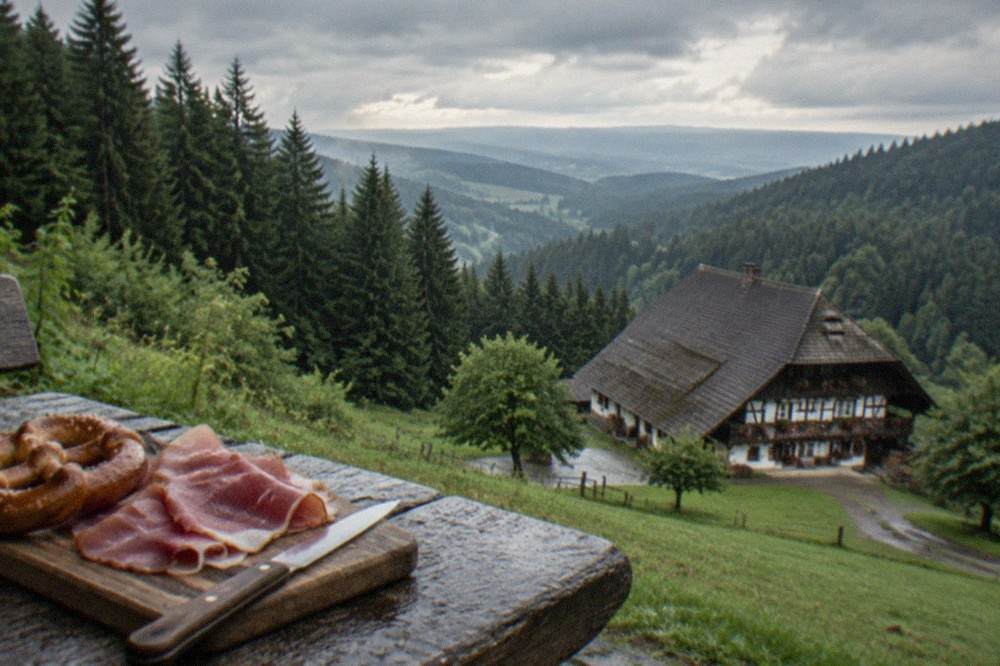
If you are comparing it with the region's other famous export, the cake, the ham is the more useful souvenir of the two: it travels well, keeps in its packaging, and you can eat it for a week after you get home. The Freiburg Travel Guide covers both, but this page is only about the ham.
Where To Try Black Forest Ham In Freiburg
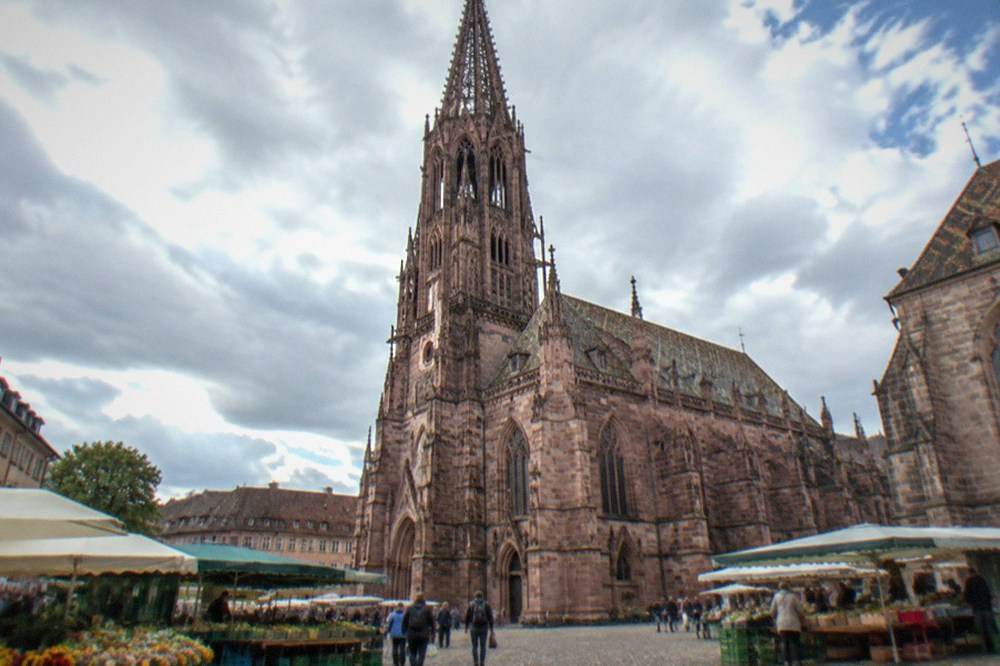
The three reliable places to taste genuine Black Forest ham in Freiburg are the Münstermarkt in the shadow of the cathedral, the Markthalle a few streets east, and the Badische wine taverns of the old town, where it arrives on a Vesper board with bread and a glass of local wine; stalls and taverns rotate their suppliers, so ask where the ham is cured before you buy. The Münstermarkt runs Monday to Friday from 07:30 to 13:30 and on Saturday from 07:30 to about 14:00, and it closes on Sundays and public holidays. Up to 130 stalls trade there, and the butchers and delicatessen stands among them are the most direct place to taste before buying: most will cut you a sample slice on the spot, which is exactly how you should decide between a smoky, fir-forward ham and a milder, longer-dried one.
The Markthalle, the covered market on the eastern edge of the old town, is the all-weather fallback. Reporting on it in 2025 and 2026 turned up no renovations, closures or schedule changes, so it works as the reliable option on a rainy weekday when you still want a proper ham board for lunch rather than a stall snack. Around both markets, the small delicatessens of the old town sell vacuum-packed legs and half-legs, and they are candid about which producers they stock if you ask.
The third route is the tavern, and it is the one most worth planning around. In a Badische Weinstube the ham does not travel alone: it comes as part of a Vesper with onion tart, bread, butter and whatever the house pours by the glass. The city's wine-tavern scene has been moving in the last year, with new openings including a Stehausschank in the old Café Légère site and a new wine bar in Fischerau focused on rarities, and any of them will build a board around the ham if you ask for a Schwarzwälder Vesper. For the fuller food picture of the city, from long slow meals to market snacks, the Freiburg food guide is the companion page.
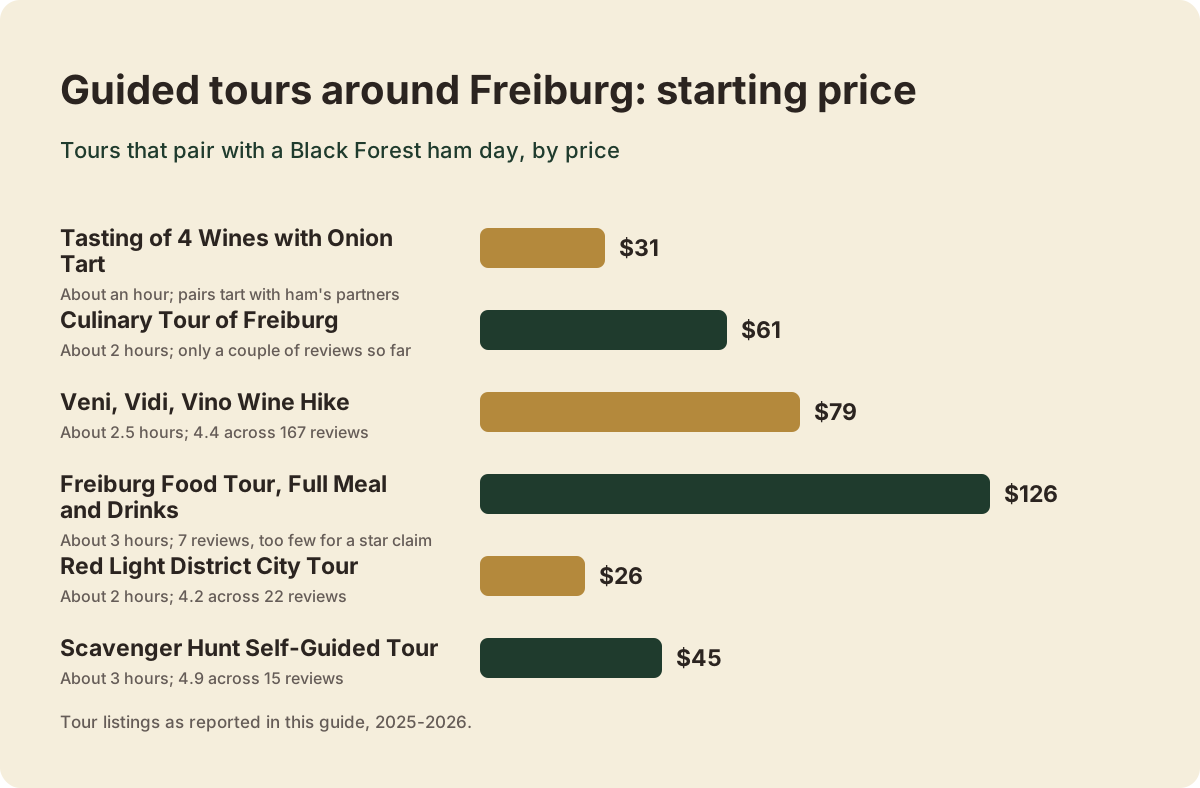
A guided walk changes the tasting math. The Culinary Tour of Freiburg runs about two hours from $61 and takes in a spread of local specialties, though it has only a couple of reviews so far, too few for a star claim either way. The Tasting of 4 Wines at Town Hall Square with Onion Tart runs about an hour from $31 and pairs exactly the right local notes with the ham's traditional partners. And a self-guided scavenger hunt option, about three hours from $45 and rated 4.9 across 15 reviews, lets you wander between tastings at your own pace. Whatever you choose, taste the ham raw and sliced before you taste it in anything cooked, because that is how the region eats it.
| Place | What You Get | Best Time | Notes |
|---|---|---|---|
| Münstermarkt | Sample slices at butcher and deli stalls, whole or half legs to buy | Mon-Fri 07:30-13:30, Sat to about 14:00 | Up to 130 stalls, closed Sundays and holidays |
| Markthalle | Ham boards for lunch, delicatessen counters | Weekdays, all weather | No renovation or schedule changes reported 2025-2026 |
| Badische wine taverns | Vesper board: ham, onion tart, bread, wine by the glass | Late afternoon into evening | Ask for the producer by name |
| Christmas market stands | Hot and cold ham plates in season | 19 Nov-23 Dec 2026 | Free entry, multiple old-town squares |
The market's own hours are worth pinning down precisely, because a first-time visitor reliably gets them wrong:
| Münstermarkt Detail | Figure |
|---|---|
| Weekday hours | Monday to Friday, 07:30-13:30 |
| Saturday hours | From 07:30, to about 14:00 |
| Stall count | Up to 130 |
| Closed | Sundays, public holidays |
| Verified source | visit.freiburg.de market page |
One market note for a specific weekend: a flower stand moved to the south side of Münsterplatz near the Fischbrunnen from March 2026 because of construction in Münzgasse, so stall positions have shifted a little. Nothing else about the market's schedule changed.
Buying Ham To Take Home: Packaging, Customs And What It Costs
Buy Black Forest ham vacuum-sealed from a market stall or delicatessen, keep it cool on travel day, and check your home country's meat-import rules before you pack it, because vacuum packing keeps the ham for weeks but customs rules, not the ham, are what usually decide whether it survives the journey. Within Europe this is simple: the ham is a normal EU food product, sealed packs travel freely in your luggage, and a leg bought at the Münstermarkt on Saturday morning is fine in a train to Basel or Strasbourg the same afternoon. Traveling farther, the customs question comes first. Travelers taking meat into the United States, for example, face restrictions on personal meat imports, and cured ham is not automatically exempt; check your destination's rules before you buy rather than at the airport. Australia and Japan are stricter still. None of this is about the ham going bad, it is about what your customs service allows, and it is the single most common way a good souvenir gets confiscated.
What you pay in Freiburg is in euros, the local till currency, and prices at the stalls vary by producer, cut and whether you buy a whole leg, a half, or sliced quantities, so treat any price you see at a stall as the stall's own price and ask directly. The tour and tasting prices shown on this site's cards are different: those are in US dollars, and the two currencies are never blended. As a planning range rather than a promise, expect to pay deli-counter prices comparable to a protected regional specialty, and check the stall before committing to a whole leg. The stalls cut to order, which is the honest way to buy: taste, then decide.
For the day of travel itself, buy the morning you leave if you can, ask for a cold pack at the counter, and keep the sealed pack in your carry-on if your journey is short. A sealed leg holds at cool room temperature for a day without drama, which is enough for the train ride to the EuroAirport bus or the ICE connection onward. For the airport side of the trip, this site's EuroAirport transfer guide covers the bus options, and the direct Freiburger Reisedienst Airportbus runs daily and takes roughly an hour.
A Ham-Focused Day: Pairing With Baden Wine And The Classic Sides
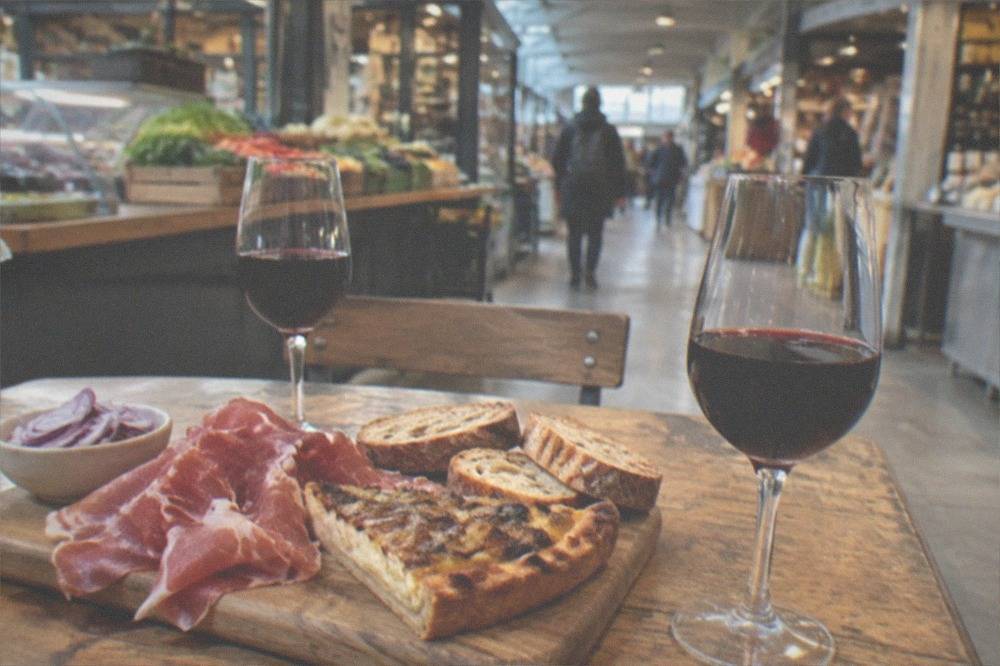
The classic Freiburg way to eat Black Forest ham is a late-afternoon Vesper: thin ham slices, buttered dark bread, onion tart and a dry Baden wine by the glass, ideally on a market square or a tavern terrace in the old town, and a wine hike or a tavern crawl in the evening turns the snack into a full day. The pairing logic is local and simple. Baden is riesling and spätburgunder country, and the region's pinot noir in particular stands up to the smoke: the fruit softens the salt, the salt sharpens the fruit. Weissherbst, the pale rosé pressed from red grapes, is the other traditional pour, lighter and better in warm weather. When in doubt, order what the tavern pours by the glass as its house Schoppen, because that is the wine the landlord thinks matches the board.
The sides are not decoration, they are the plate. Zwiebelkuchen, the onion tart, is the autumn partner, and it appears across the region from late summer through the wine-fest weeks; a guided tasting in the old town pairs four local wines with exactly this tart, from $31 for about an hour. Schwarzbrot or a fresh Brezel carries the ham. Add a little of the region's mustard or a spoon of the tangy local relishes and the board is complete. In wine country around the city, the wineries of the Kaiserstuhl and the Tuniberg, both covered in this site's Kaiserstuhl guide, run open cellar days and Hocks in late summer and autumn where ham boards are standard, and the Weinfest on Münsterplatz set a visitor record in July 2026 with roughly 110,000 guests over six days, with the 2027 edition announced for 1-6 July.
If you would rather have someone walk you through the pairing, the Veni, Vidi, Vino wine hike is the strongest option: about 2.5 hours from $79, rated 4.4 across 167 reviews, it walks out of the city into the surrounding vineyards with tastings along the way. The badische wine tradition it draws on is the same one the taverns pour, and after a morning spent sampling ham at the stalls, a hike through the vines with a glass in hand is the day's natural second half.
One honest note on scheduling: the two halves of this day, market ham in the morning and wine in the afternoon, sit better with a siesta in between than with a rushed itinerary. The Münstermarkt closes early afternoon, the taverns open their kitchens toward evening, and the gap between them is when Freiburg does its best people-watching from a café on a square. A two-hour wander or a self-guided scavenger route fills that gap well if sitting still is not your style.
Guided Tours That Fit Around A Ham Day
The tours that pair best with a Black Forest ham day are the Veni, Vidi, Vino wine hike at about 2.5 hours from $79, the Culinary Tour of Freiburg at about 2 hours from $61, and the Tasting of 4 Wines with Onion Tart at about 1 hour from $31, with the culinary walk carrying too few reviews so far for a star rating to mean anything. None of these is a ham tour as such, and no tour on the roster sells itself as one, so the honest framing is this: you use the market for the ham itself and a tour for everything around it, the wine, the history, the walk between neighborhoods. That division of labor works well because the stalls ask nothing of you but an appetite, while the guided options do the explaining.
The Red Light District City Tour is the left-field pick that suits a food day better than it sounds. It runs about two hours from $26, is rated 4.2 across 22 reviews, and covers the streets east of the old core in the evening hours when the taverns are filling, which makes it a workable bridge between a late Vesper and a nightcap. It is a history-and-city tour with an adult theme, not a food walk, so book it for the stories rather than for supper. The related-tour panel on this page points there for exactly that reason: after a full day of markets and wine, the city's night side is the natural third act, and this walk is one of the few evening options in English.
The Dramatized Tour of the Main Attractions, staged since 1998 and rated 4.7 across 78 reviews, from $17, is a theatrical alternative if the red-light theme is not for your group, and the Guided City Tours with Actors, rated 4.9 across 497 reviews, from $17, is the liveliest all-ages option in the same spirit. But for a day whose spine is the ham, the tasting and the hike remain the two best bookings, because both put local food or local wine in your hands while you walk.
| Tour | Length | Price From | Rating |
|---|---|---|---|
| Tasting of 4 Wines at Town Hall Square with Onion Tart | ~1 hour | $31 | No rating shown on the listing |
| Culinary Tour of Freiburg | ~2 hours | $61 | 2 reviews, too few for a star claim |
| Veni, Vidi, Vino Wine Hike and Tasting | ~2.5 hours | $79 | 4.4 across 167 reviews |
| Freiburg Food Tour, Full Meal and Drinks | ~3 hours | $126 | 7 reviews, too few for a star claim |
| Red Light District City Tour | ~2 hours | $26 | 4.2 across 22 reviews |
| Scavenger Hunt Self-Guided Tour | ~3 hours | $45 | 4.9 across 15 reviews |
For anyone who wants the full walking menu of the city rather than only the food-adjacent options, the comparison above is the practical shortlist. The tasting is the cheapest hour on it, the wine hike has the deepest review pool of the food-and-drink options, and the scavenger hunt is the only one you can start whenever you like without a fixed departure time. The Dramatized Tour and the actors' tours, both from $17, cover the city's stories at a lower price than any tasting, which is worth knowing if your group splits between eaters and walkers.
Bookings on this site are through the operator's live listing, and the standard pattern is free cancellation before the experience, but confirm the window on the specific tour's page when you book. Prices in the table are the operators' own from-prices in US dollars; anything you buy at a Freiburg stall or tavern is in euros. The culinary walk above is the one option built entirely around eating, so it earns its slot despite the thin review pool: it is the closest thing to a ham-and-everything-else walk on the roster.
Seasonal Timing: When The Ham Tastes Best
The best weeks for a ham-focused visit are late November to late December, when the Christmas market runs from 19 November to 23 December 2026 with hot plates in the open air, and early July, when the Weinfest fills Münsterplatz from 1 to 6 July 2027 with roughly 110,000 guests expected after the record 2026 edition; between those peaks, the Münstermarkt serves the ham every day but Sunday. The Christmas market deserves the emphasis because it is the one moment when the ham goes from cold cut to hot dish: stands across Rathausplatz, Kartoffelmarkt, Unterlindenplatz and Franziskanerstraße serve warm plates, and entry is free. The 2026 dates are confirmed, weekdays 10:00-20:30 and Sundays 11:30-19:30, with the market closed on 22 November and the final day, 23 December, running to 19:30. Over 120 stands trade across the locations.
Autumn is the sleeper season for the classic pairing. Zwiebelkuchen season starts as the grapes come in, and the wine taverns and open winery cellars of the surrounding hills do their best trade then; the KaiserHerbst tasting series around the Kaiserstuhl runs roughly early October into early November with open cellars and tastings. A ham board with onion tart and new wine in October is as local as the eating in Freiburg gets, and it needs no booking at all, just a tavern table.
Summer shifts the weight toward the evening. The Zelt-Musik-Festival ran its 42nd edition from 15 July to 2 August 2026, the city's spring fair held 14-25 May and the autumn fair 16-26 October 2026, and all of them put food stands in the streets, ham included. In every season, the constant is the same: the Münstermarkt in the morning, the tavern board in the evening, and the market closed on Sundays, so plan Sunday around a tavern or the Markthalle check-in rather than the square.
| Season | Event | Dates | Why It Matters For Ham |
|---|---|---|---|
| Christmas | Weihnachtsmarkt | 19 Nov-23 Dec 2026 | Hot ham plates, 120+ stands, free entry |
| Spring | Frühjahrsmess | 14-25 May 2026 | Fairground food stands |
| Summer | Weinfest, Münsterplatz | 1-6 Jul 2027 | Record edition of 2026 drew about 110,000 guests |
| Autumn | Herbstmess | 16-26 Oct 2026 | Fair stands, plus onion tart season |
| Autumn | KaiserHerbst, Kaiserstuhl | ~Oct-early Nov 2026 | Open winery cellars with ham boards |
Common Questions About Black Forest Ham
What Is Black Forest Ham Made From?
A boneless raw pork leg, dry-cured in salt and spices, air-dried and then cold-smoked over Black Forest conifer wood until the rind darkens. The name is protected under EU geographical-indication rules, which define the origin and the process.
Do You Need To Cook Black Forest Ham?
No. It is a raw cured product, ready to eat sliced thin and cold. Cooking is optional and used in some regional dishes, but the classic serving is cold slices on bread with butter or mustard, or on a Vesper board with cheese and wine.
Where Can I Buy Black Forest Ham In Freiburg?
At the Münstermarkt stalls (Monday to Friday 07:30-13:30, Saturday to about 14:00, closed Sundays), at delicatessen counters in the old town, and at the Markthalle. Stalls cut to order and vacuum-seal for travel if you ask.
Can I Take Black Forest Ham Home On A Plane?
Within Europe, a sealed pack travels normally in your luggage. For destinations outside the EU, check your home country's meat-import rules first: restrictions on personal meat imports are what usually stop a cured ham, not the journey itself.
What Wine Goes With Black Forest Ham?
Dry Baden wines: a local spätburgunder (pinot noir) or a weissherbst poured by the glass. Order the house Schoppen in a Badische tavern and you will almost always be served a local pour that the house has chosen to match its boards.
Is Black Forest Ham The Same As The Cake?
No, they are separate specialties sharing a name and a region. The ham is a cured and smoked meat; the cake is a dessert, covered separately in this site's Black Forest cake guide. Both originate in the same Black Forest tradition of using the region's name for its protected products.
The ham is the quieter of the two Black Forest classics, and in Freiburg it is the easier one to eat well. Sample it at the stalls in the morning, board it in a tavern with wine in the evening, seal a leg for the journey home on your last day, and let the market's closing hours, not a schedule, decide when you eat. For the wine side of the pairing, the Baden wine guide picks up where this page leaves off.