Rhine Falls Day Trip From Freiburg: How To Do It
Europe's largest plain waterfall sits just across the Swiss border from Freiburg, close enough for a comfortable day trip and far enough to feel like a proper change of country. This guide covers the practical decisions: the route, the tickets, the season, and what to pair with the falls.
Short answer
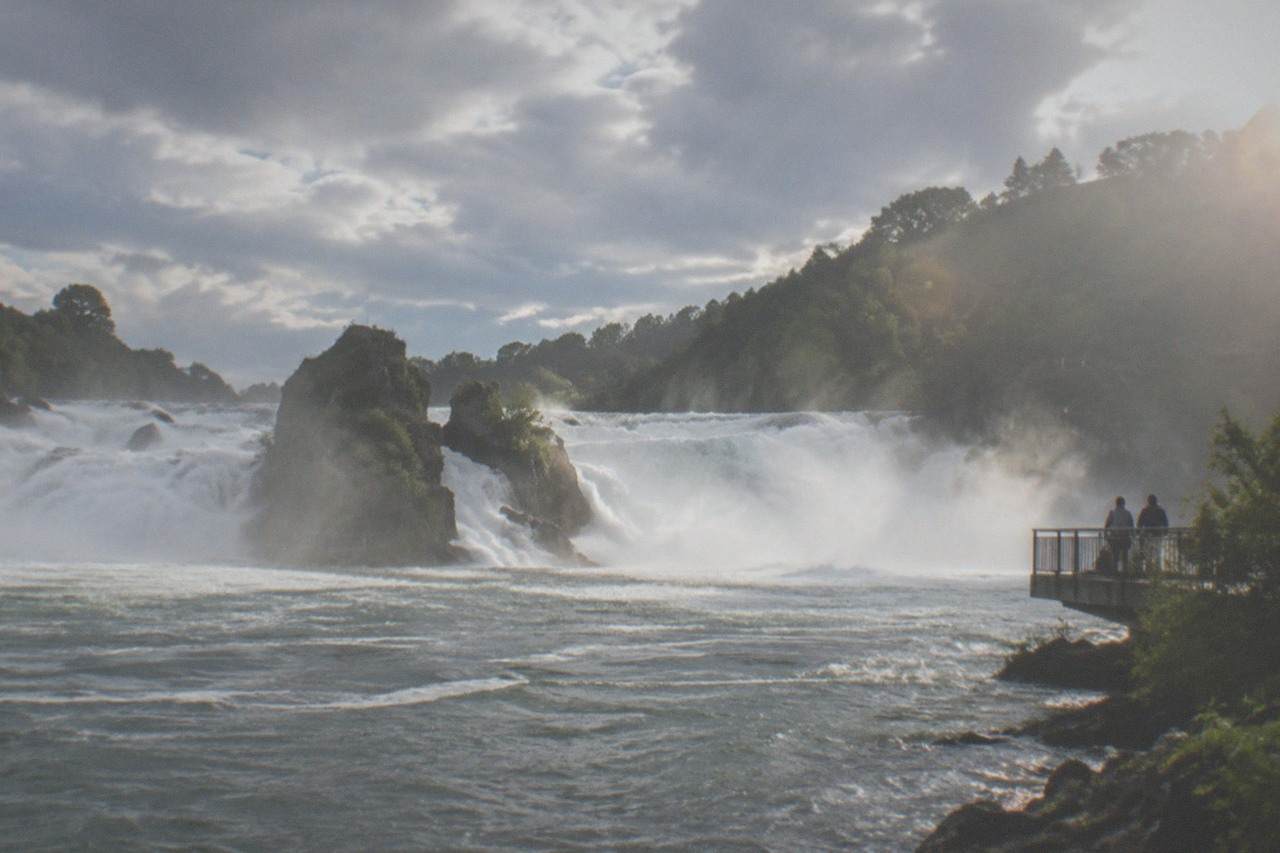
The Rhine Falls lie on the High Rhine near Schaffhausen, Switzerland, an easy cross-border day trip from Freiburg by train toward Basel with a connection onward. No Freiburg transport product covers the Swiss leg, so budget Swiss rail fare separately. Allow a full day, go between late spring and early summer for the highest water, and keep your ticket plans simple.
Why The Rhine Falls Belong On A Freiburg Itinerary
The falls are Europe's largest waterfall by water volume, sitting on the High Rhine just downstream of Schaffhausen, roughly an hour and a half to two hours from Freiburg depending on connections, and they give Freiburg visitors something the Black Forest cannot: raw, flat-country river power instead of mountains. They suit travelers who have already walked the Altstadt, want a second country stamped into the trip, and prefer a day that runs on trains rather than hiking boots.
Freiburg sits in one of the luckiest day-trip positions in Europe. The Black Forest starts at the city's southern tram stops, the Alsace wine route is across the river to the west, Basel waits at the end of the Rheintalbahn, and Switzerland's single most dramatic natural spectacle, the Rhine Falls, lies beyond Basel where the High Rhine narrows into a gorge. A visitor with a week in Freiburg can realistically see the Feldberg, a Kaiserstuhl wine village, a Colmar street and the falls without ever unpacking twice.
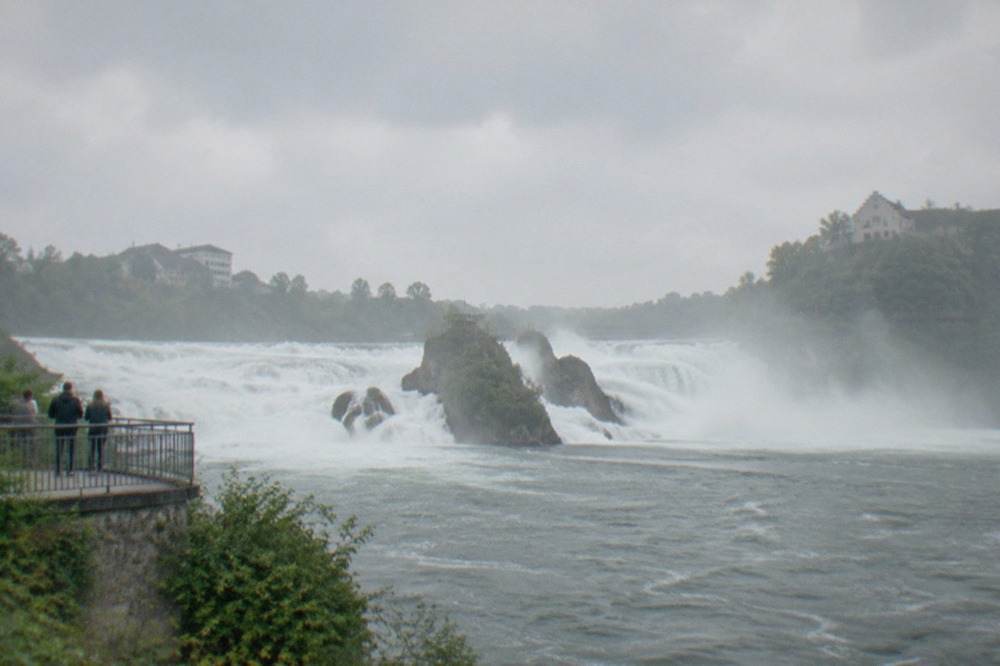
The falls work as a contrast piece. Freiburg is a city of slow pleasures: a market on the Münsterplatz until 13:30 on weekdays, brooks running beside the cobbles, wine taverns in Fischerau. The falls are the opposite register, a river the width of a town block dropping over a limestone lip with a noise you hear from the parking areas. Most people find the shift satisfying rather than jarring, and the Swiss side adds small differences, francs instead of euros, Swiss German announcements, a different rail operator, that make the day feel genuinely traveled rather than merely toured.
One honest caveat belongs up front. The falls are a half-day spectacle, not a full-day one. Two or three unhurried hours on the viewing paths, plus lunch, covers the core experience comfortably. That makes the planning question less "is it worth it" and more "what do you pair with it": Schaffhausen's old town, Basel on the way home, or a slower return through the Markgräflerland. The rest of this guide is built around that pairing decision.
How To Get From Freiburg To The Rhine Falls
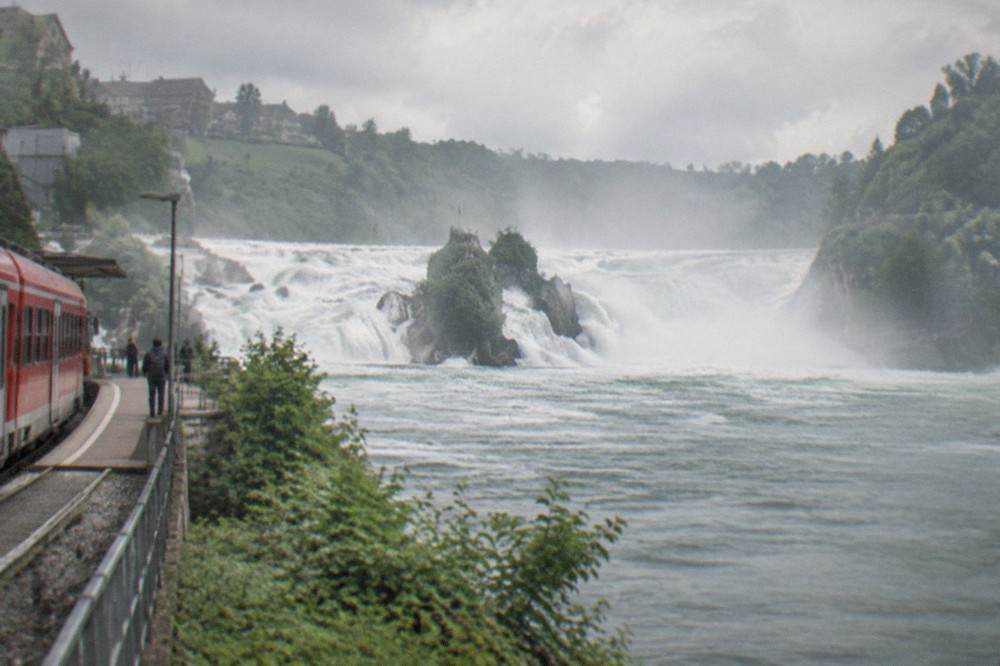
The standard route is a train from Freiburg Hauptbahnhof toward Basel, then a connection onward to Schaffhausen, from where local buses or a short walk link the falls; driving takes you the same way, south to Basel and then east along the High Rhine, and both options need a border crossing into Switzerland but no advance paperwork for most European travelers. The whole journey runs on established rail lines, so there is no single right answer, only a choice between simplicity and flexibility.
By rail, buy nothing complicated. A standard ticket from Freiburg toward Basel, then a separate Swiss leg, is the clean structure. The Freiburg side is covered by the regular German fare system; the Swiss side is not covered by any Freiburg product, so treat the two legs as separate purchases. Connections toward Basel run frequently through the day. Once across the border, Schaffhausen is the rail hub for the falls, and the falls are a local bus or taxi ride from the station.
By car, the route follows the motorway toward Basel and then swings east along the High Rhine toward Schaffhausen. Parking exists at the falls on both the north (Schaffhausen) and south (Neuhausen) sides. Driving wins if you want to bolt on a wine stop in the Markgräflerland or a detour through Staufen on the way home; it loses if anyone in the party would rather not face Swiss fuel prices and a border queue on a summer Sunday.
For tickets, one Freiburg-side option deserves a specific mention because it is often misunderstood. The RVF Welcomekarte, 3 days at €27.00 for adults, covers buses and trains across the regional network and even includes the Schauinslandbahn cable car, as the RVF fare page sets out. It is a Freiburg-region product. It does not carry you into Switzerland, so pair it with a separate Swiss ticket if you are using the Welcomekarte for other days of your stay. Our fuller rundown is in the Freiburg Travel Guide welcome card page coverage, and the dedicated Welcomekarte and transit guide explains the zones in detail.
A simpler frequent question: does the KONUS card help here? No, twice over. Freiburg city is not a KONUS municipality, so a Freiburg hotel stay does not issue one, and even a genuine KONUS card from a Black Forest member town such as Titisee-Neustadt or Staufen, while valid on Freiburg's trams, is a German-network product. The official KONUS page lists the participating towns, and Freiburg is not among them.
How To Plan The Day Around The Trains
A comfortable pattern is a mid-morning departure from Freiburg, arrival at the falls by early afternoon, two to three hours at the water, and a return that either stops in Schaffhausen for dinner or pushes straight back through Basel, landing in Freiburg in the evening; reversing it for a very early start buys you emptier viewing platforms and a long lunch. The falls are compact enough that the day is really shaped by the rail connections, not by the site itself.
Bookend the day honestly. German regional trains toward Basel are frequent, but engineering works on the Rheintalbahn have been producing weekend replacement buses through 2026, and a bus segment can quietly add an hour. Leave slack at the Basel end rather than planning a connection with four minutes to spare. On the return, the last thing most travelers want is a sprint through Basel SBB with a tired group, so aim one connection earlier than the latest sensible option.
If you want a Freiburg anchor on the same day, the city's two-hour guided walk is the natural fit. The Exciting City Tour with Sightseeing and History, about 2 hours, from $26, rated 4.4 across 118 reviews, runs a broader route than the standard Altstadt loop and pairs well with a morning departure or a rest-day morning before or after the falls trip. The listing's own description covers the exact route and meeting point, and the price shown here is the operator's from-price, so treat it as the floor rather than the expectation.
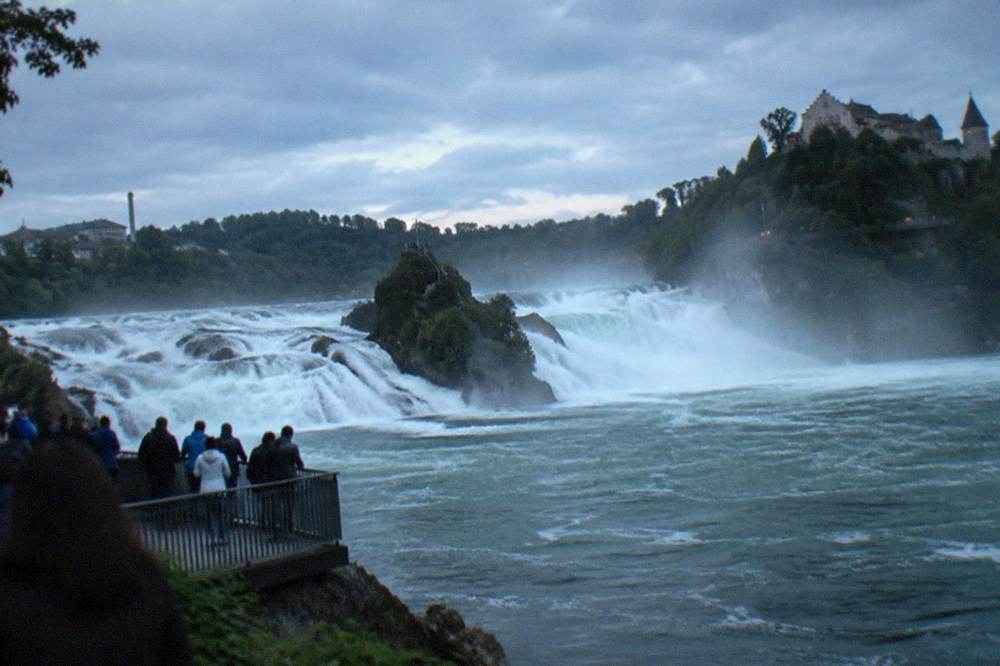
Families should note the platform-heavy nature of the falls site: stairs, railings and spray, all manageable but not pushchair-friendly at every corner. Anyone with limited mobility will find the upper viewing areas reachable and the lower basin paths harder work; the Swiss operator's own site maps the accessible routes honestly. If accessibility is central to your planning, read the falls' official pages directly rather than aggregator summaries, and consider a Check availability moment on the city side too, since a relaxed guided walk can substitute for a tiring falls descent if the group prefers.
What The Rhine Falls Trip Costs
Budget three cost blocks: the German rail leg from Freiburg to the border area, the Swiss leg plus any local bus, and the falls site itself, where viewing platforms, the boat trips to the rock in the middle of the river and the castle-side paths are individually priced by the Swiss operator; food in Switzerland is the wildcard that reliably surprises German-border visitors. There is no single combined ticket that covers all three blocks, so plan them separately and the arithmetic stays honest.
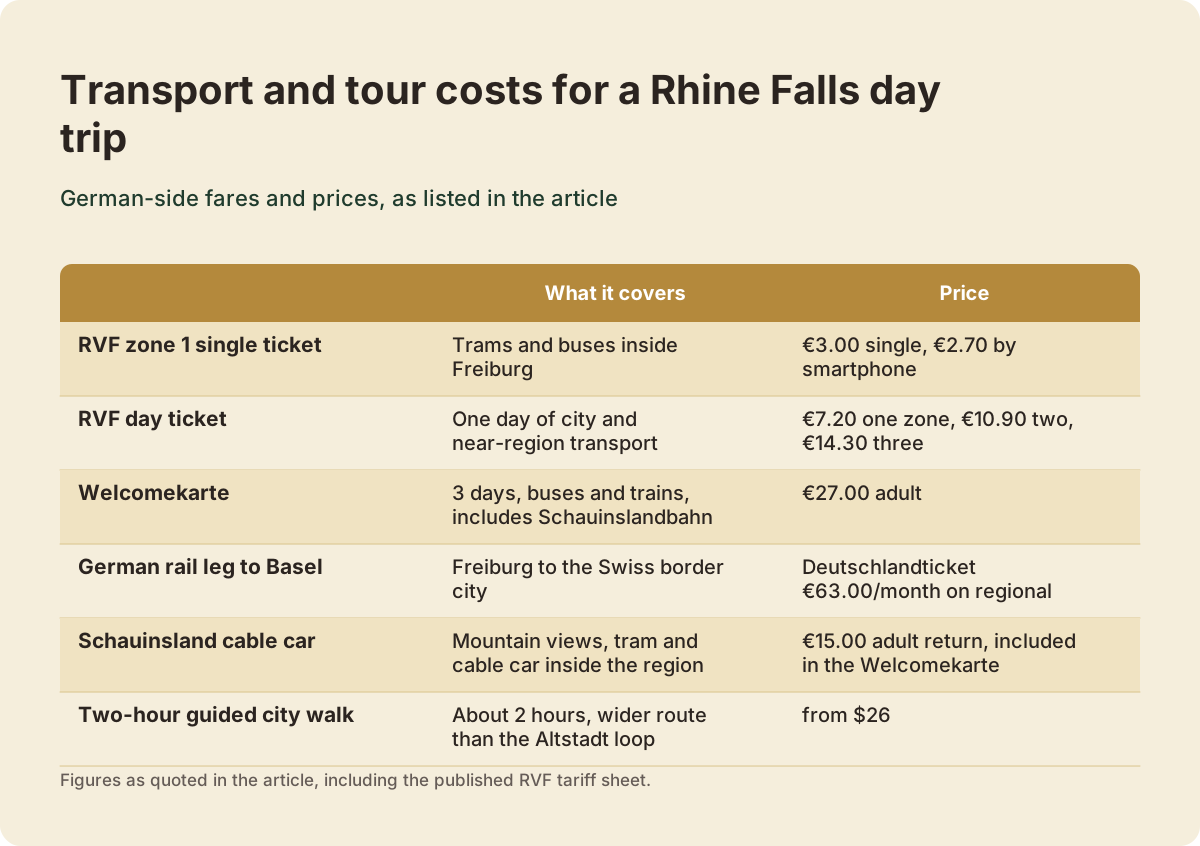
On the German side, the fare system is well documented. A single RVF zone 1 ticket is €3.00 (€2.70 on a smartphone), and day tickets run €7.20 for one zone, €10.90 for two and €14.30 for three, per the published RVF tariff sheet. Those cover Freiburg's own network. For the main-line run to Basel you are in long-distance or regional German fares, and the Deutschlandticket at €63.00 per month can make sense if you are in Germany long enough to use it several times, including on regional trains.
| Cost block | What it covers | Planning range or note |
|---|---|---|
| RVF city ticket, zone 1 | Trams and buses inside Freiburg | €3.00 single, €2.70 by smartphone |
| RVF day ticket | One day of city and near-region transport | €7.20 one zone, €10.90 two, €14.30 three |
| Welcomekarte | 3 days, buses and trains, includes Schauinslandbahn and a culture bonus | €27.00 adult |
| German rail leg to Basel | Freiburg to the Swiss border city | Regular German fare, Deutschlandticket €63.00/month valid on regional trains |
| Swiss leg to Schaffhausen and falls | Onward Swiss rail plus local bus | Priced in Swiss francs by the Swiss operator, buy separately |
The falls site itself prices its viewing decks, boats and castle access individually, and those figures sit on the operator's own listing rather than in any Freiburg-side source, so check them live before you commit a budget. The honest framing for food: Switzerland runs noticeably more expensive than the German side of the border, and many Freiburg day-trippers solve this by eating a substantial German-side breakfast, carrying picnic supplies for lunch, and reserving the Swiss franc spend for the boat and the platforms. Admission to walk the main viewing paths is modest; the boats cost extra; the castle viewing routes cost extra again. Decide in advance which of the three you actually want rather than buying everything by momentum.
If the budget arithmetic is nudging you toward trimming the German side of the week, the two-hour city walk referenced above is the cheapest anchor of the day at from $26, and its booking terms allow free cancellation, so a rest-day plan can be locked in early without risk. Check availability once your falls date is fixed and the rest of the week falls into place around it.
One comparison worth making before you commit: the same day-trip budget buys very different experiences in different directions from Freiburg. The table below stacks the falls against four alternatives, using only figures that hold still.
| Day trip from Freiburg | Character | Getting there | Cost anchor you can rely on |
|---|---|---|---|
| Rhine Falls | Raw river spectacle, Swiss border | Train via Basel, then Swiss leg; or drive via Basel | Swiss costs priced in francs; German rail separate |
| Schauinsland | Mountain views, cable car | Tram and cable car, inside the region | Cable car return €15.00 adult, included in the Welcomekarte |
| Titisee | Lake and Black Forest resort town | Direct regional train | German fares only; swim and boat costs modest |
| Basel | Swiss city, old town and museums | Train along the Rheintalbahn | Swiss franc prices for museums and food |
| Europa-Park | Full theme-park day | Train to Ringsheim/Europa-Park then bus | Day ticket about €59.50-76 online, varies by date, recent reporting and not a fixed figure |
That last row carries a caution worth spelling out: the Europa-Park figure is a variable, date-dependent range from recent reporting, not a verified fixed price, and the park applies an on-site surcharge. The falls' own costs are steadier, which paradoxically makes them easier to plan: fewer moving parts, fewer date traps.
When To See The Falls At Their Best
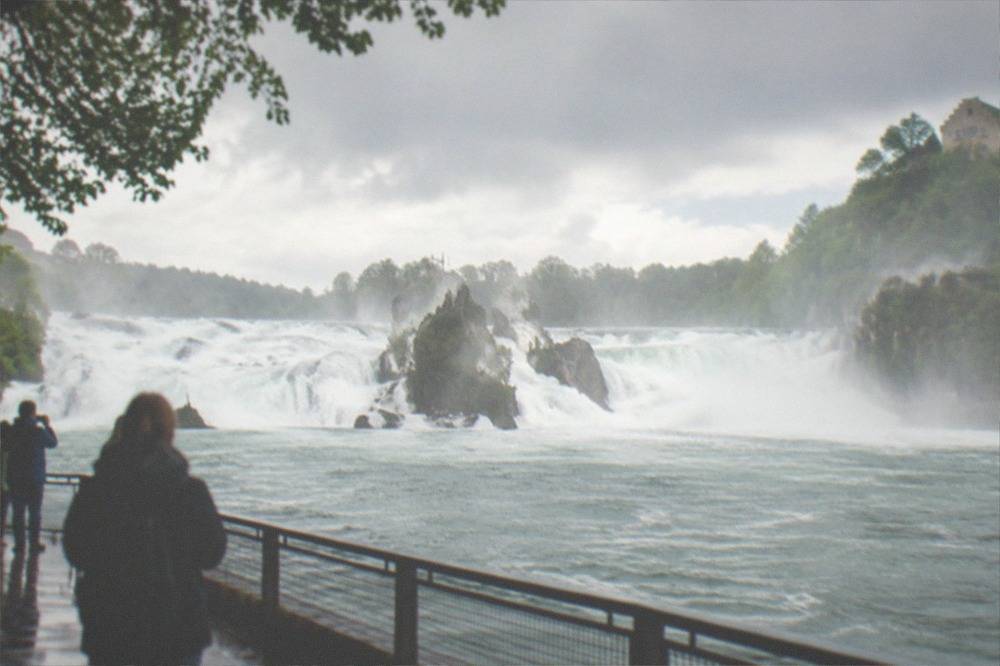
Late spring through early summer, May into June, delivers the most dramatic water as Alpine melt and rain push the Rhine to full volume, while July and August give the warmest, most crowded days; late summer and autumn drop the water level but clear the platforms, and winter keeps the site open in quieter, greyer form. The viewing experience is genuinely seasonal, so the month matters as much as the day.
Freiburg's own climate, verified against the official DWD 1991-2020 normals, is a workable proxy for the falls region since both sit on the Upper Rhine plain. May and June are the rainiest months locally, 103.4 mm and 89.8 mm respectively, and that same rain upstream is part of what feeds the falls. July is the sunniest at 252.2 hours and averages 20.1°C. September drops back to 77.4 mm of rain while holding 176.2 sunshine hours, which makes it a sleeper pick: lower water, but good odds of a dry, uncrowded platform.
| Month | Freiburg mean temp | Rain mm | Sunshine hours | What it means for the falls |
|---|---|---|---|---|
| March | 7.0°C | 54.3 | 146.8 | Low water, thin crowds, cold spray |
| May | 14.9°C | 103.4 | 206.8 | Peak-melt season, highest water, busy |
| June | 18.3°C | 89.8 | 232.7 | Strong water, warm, very busy |
| July | 20.1°C | 92.2 | 252.2 | Warmest crowds, moderate water |
| September | 15.4°C | 77.4 | 176.2 | Lower water, drier, comfortable |
| November | 6.1°C | 66.2 | 66.6 | Quiet, grey, short days |
Time of day deserves as much thought as month. Mid-morning through mid-afternoon is when tour coaches from Zurich and Basel land, so the platforms are loudest exactly when the light is flattest. Early arrivals get softer light and thinner railings; late-afternoon arrivals often get the site to themselves as the coaches pull away, at the cost of a later return to Freiburg. Weekend versus weekday moves the crowd needle more than any other single variable, and a Tuesday in June can feel like a different attraction from the Saturday before.
Which Freiburg Tours Pair Well With The Trip
Pair the falls with a city tour on the day before or the rest day after: the walk that fits best for most visitors is the two-hour Exciting City Tour with Sightseeing and History, from $26, because its wider route and relaxed pace suit a day when nobody has rushed a train connection, while theme walks slot into evenings when the falls day is spent. The pairing question is really about energy, not geography.
The city's tour roster splits into two useful groups for this purpose. The general walks cover gates, squares, the Münster's exterior and the Bächle; the themed walks, dramatized history, the National Socialism walking tour, the drag show walk, go deeper on one thread and reward a visitor who already has the geography in their head from a first walk. A falls day followed by a themed evening walk is a genuinely good Freiburg pattern, since the falls consume the middle of the day and leave the evening free.
The National Socialism walking tour, about 1 hour and from $17, is the sober option in that second group. It carries only 2 reviews on the live listing, too few for any star claim, so go in expecting a small, specialist walk rather than a crowd-pleaser. For visitors whose interest in German history runs deeper than the Altstadt postcard version, an hour on the city's dictatorship years lands differently the day after standing at a European border.
The lighter evening pairing is the Drag Queen Show Walk with Betty BBQ, about 1 hour 25 minutes, from $40, rated 4.6 across 699 reviews, a Freiburg institution that turns the evening into entertainment rather than lecture. The size of that review pool matters: it is one of the most-booked walks in the city, so on summer weekends it fills, and booking ahead for the evening after a falls day is the move rather than hoping for a spot on the night.
What Else To Do Around Schaffhausen
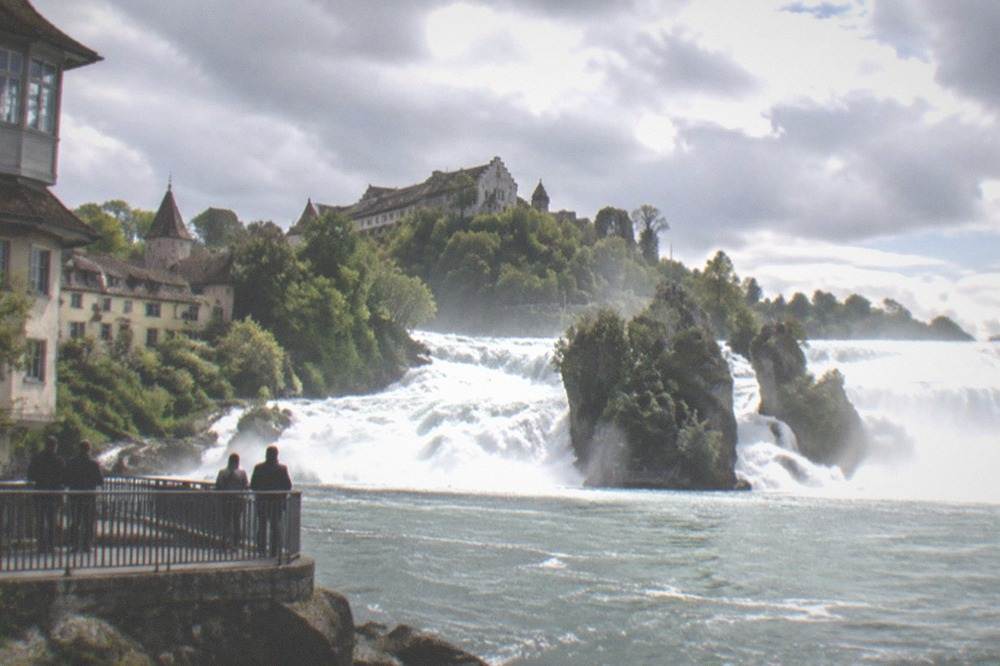
Schaffhausen's old town, with its oriel-windowed merchant houses and the Munot fortress on its hill, is the standard pairing and comfortably fills the hours around the falls; the lazier alternative is Basel on the way home, and the sharper one is a Markgräflerland or Staufen wine stop once you are back on the German side. Choose the pairing before you leave Freiburg and the day plans itself.
Schaffhausen rewards a slow wander. The town grew rich on Rhine trade, and the painted facades and bay windows that paid for it survive in a compact center that takes an hour to walk and an afternoon to enjoy. The fortress above it gives the best land view of the region, and the riverside path below links toward the falls for anyone who prefers walking to buses. Travelers who like their day trips to end with a sit-down meal rather than a train sprint will find Schaffhausen the most forgiving version of this trip.
Basel as a return stop works for museum people: the city holds serious collections, and the Swiss rail hub makes it a natural break point on the way home. The trade-off is cost and fatigue, since Basel prices are the same Swiss scale you spent the day escaping, and a museum needs two focused hours, not the dregs of a falls day. Most families do better saving Basel for its own trip, as our Basel day trip guide lays out, and using the Schaffhausen stop instead.
On the German side of the ledger, the Markgräflerland wine villages sit conveniently on the driving route home, and Staufen, a KONUS member town with a ruined castle above a wine village, makes a late-afternoon pause that costs far less than a Swiss dinner. If a wine-focus stop appeals, our Titisee and Black Forest planning pages cover the forest-side alternatives for days you would rather stay in Germany.
Crossing Into Switzerland: What Changes At The Border
Switzerland is in the Schengen area, so there are routine open borders and no passport control on most crossings, but three things genuinely change: the currency is Swiss francs rather than euros, your German or Freiburg transport tickets stop being valid, and prices for food and drink step up noticeably, so carry francs mentally even when cards work everywhere. None of this is difficult; all of it is worth knowing before the second coffee of the day.
Currency is the practical one. Cards are accepted almost universally in Switzerland, and contactless payment makes the franc question mostly academic for visitors, but small stalls at the falls site, parking machines and one or two kiosks still prefer cash, and the card a traveler uses at home may add a foreign-transaction fee that quietly rounds up a day of small purchases. Check your card's terms before the trip, not at the first Swiss till.
Transport validity is where money gets wasted. The common mistake is assuming a German rail ticket or a regional day pass carries into Switzerland; it does not, and the border is the hard line. Buy the Swiss leg as its own ticket, from the Swiss operator's machines, app or counters, and keep the German and Swiss tickets mentally separate all day. The reverse mistake, assuming you need a passport stamp or a visa change, is harmless: Schengen means the crossing itself is administrative fiction for most travelers, though carrying ID remains legally expected on both sides.
Money-saving patterns that work. Eat the big meal on German soil, before the border or after the return. Buy the falls' boat and platform tickets as deliberate choices, not a reflex. If the group is four or more and the day includes Basel, compare the cost of individual Swiss tickets against the group fares the Swiss operator lists; groups often trigger discounts that solo travelers never see. And if you are running a multi-day Freiburg stay with several regional outings, the Welcomekarte arithmetic on the German side can free budget for the Swiss splurge, since €27.00 covers three days of the home network including the Schauinslandbahn.
Common Questions About The Rhine Falls From Freiburg
How far are the Rhine Falls from Freiburg?
The falls sit just downstream of Schaffhausen, Switzerland, across the border from Freiburg, close enough for a comfortable day trip by train via Basel or by car. Travel times depend on connections, and current engineering works on the Rheintalbahn have been adding weekend replacement-bus segments, so check the live timetable rather than a cached figure.
Can I visit the Rhine Falls as a day trip from Freiburg?
Yes, and it is one of the more rewarding cross-border day trips from the city. The pattern that works is a mid-morning departure, two to three hours at the falls, and a return through Basel or with a Schaffhausen stop, landing back in Freiburg by evening.
Do I need a passport to visit the Rhine Falls from Freiburg?
Switzerland is in the Schengen area, so crossings are routinely open without passport control. Carry valid ID anyway, since it is legally expected in both countries and spot checks exist, and non-EU visitors should carry the passport tied to their Schengen entry.
Does the Freiburg Welcomekarte cover the trip to the falls?
No. The Welcomekarte, €27.00 for 3 days, covers buses and trains in the Freiburg region and includes the Schauinslandbahn, but it stops at the German network's edge. The Swiss leg to Schaffhausen is a separate Swiss ticket.
When is the best month to see the Rhine Falls?
May and June deliver the most dramatic water, fed by Alpine melt and spring rain, at the cost of the biggest crowds. September is the quieter compromise: lower water, drier platforms, comfortable temperatures, and sunshine hours still well above the winter floor.
Can I combine the falls with another stop in one day?
Yes, that is the intended shape of the trip. Schaffhausen's old town is the standard pairing, Basel works for museum visitors on the return, and drivers can pause in the Markgräflerland or Staufen on the way home for a cheaper German-side dinner.
The falls day is, in the end, a Swiss excursion with a Freiburg address: you leave a warm, walkable German university city, spend an afternoon at Europe's loudest river, and are back among the Bächle for a late glass of Baden wine. Plan the trains with slack, keep the two ticket systems separate, and pick your month for water or for quiet. The rest of the day takes care of itself.