Freiburg Weather: What To Expect Month By Month
Freiburg sits in one of Germany's warmest corners, but its weather still swings from summer thunderstorms to frosty December mornings. Here is what the data actually says, season by season, and how to plan around it.
Short answer
Freiburg averages 11.0°C across the year, with 1,815.1 hours of sunshine, making it one of Germany's warmest and sunniest cities but not the warmest. July and August average 20.1°C and 19.7°C, while May is the wettest month at 103.4 mm of rain. Expect about 18.5 days at or above 30°C per year and 64 frost days.
What Is The Weather Actually Like In Freiburg?
Freiburg records an annual mean temperature of 11.0°C and 1,815.1 hours of sunshine per year, based on the 1991-2020 climate normals for station 1443. That makes it one of Germany's warmest and sunniest cities, though not the single warmest: the same dataset ranks it 34th of 1,093 stations for temperature and 20th of 1,091 for sunshine. Rain totals 886.5 mm across the year, spread fairly evenly rather than concentrated in one season.
That plain statement matters because Freiburg's reputation has outgrown its data. Travel writing regularly calls it Germany's warmest or sunniest city, and the numbers do not support either superlative. What the data does support is a genuinely mild Rhine plain climate with warm summers, modest winters and no dry season, a pattern shaped by the city's position between the Black Forest escarpment and the Vosges. The same geography that funnels sunshine down the Rhine valley also funnels thunderstorms up it in summer.
The official normals come from the German Weather Service's open climate archive, which publishes 1991-2020 averages for every station in the country (DWD multi-annual mean values, 1991-2020). Station 1443 sits at 236.5 m above sea level on the edge of the city, which is worth remembering when you compare it with Feldberg, 30 km away and far higher, where winter is a completely different proposition.
| Month | Mean °C | Rain (mm) | Sun (hours) | Days ≥30°C | Frost days |
|---|---|---|---|---|---|
| January | 2.5 | 48.6 | 64.7 | 0 | 15.7 |
| February | 3.5 | 49.1 | 91.8 | 0 | 13.7 |
| March | 7.0 | 54.3 | 146.8 | 0 | 8.9 |
| April | 10.8 | 63.8 | 182.2 | 0 | 2.2 |
| May | 14.9 | 103.4 | 206.8 | 0.8 | 0.1 |
| June | 18.3 | 89.8 | 232.7 | 4 | 0 |
| July | 20.1 | 92.2 | 252.2 | 7.3 | 0 |
| August | 19.7 | 83.3 | 234.4 | 7 | 0 |
| September | 15.4 | 77.4 | 176.2 | 0.6 | 0 |
| October | 10.9 | 78.5 | 116.2 | 0 | 1.7 |
| November | 6.1 | 66.2 | 66.6 | 0 | 6.5 |
| December | 3.4 | 66.9 | 56.3 | 0 | 13.8 |
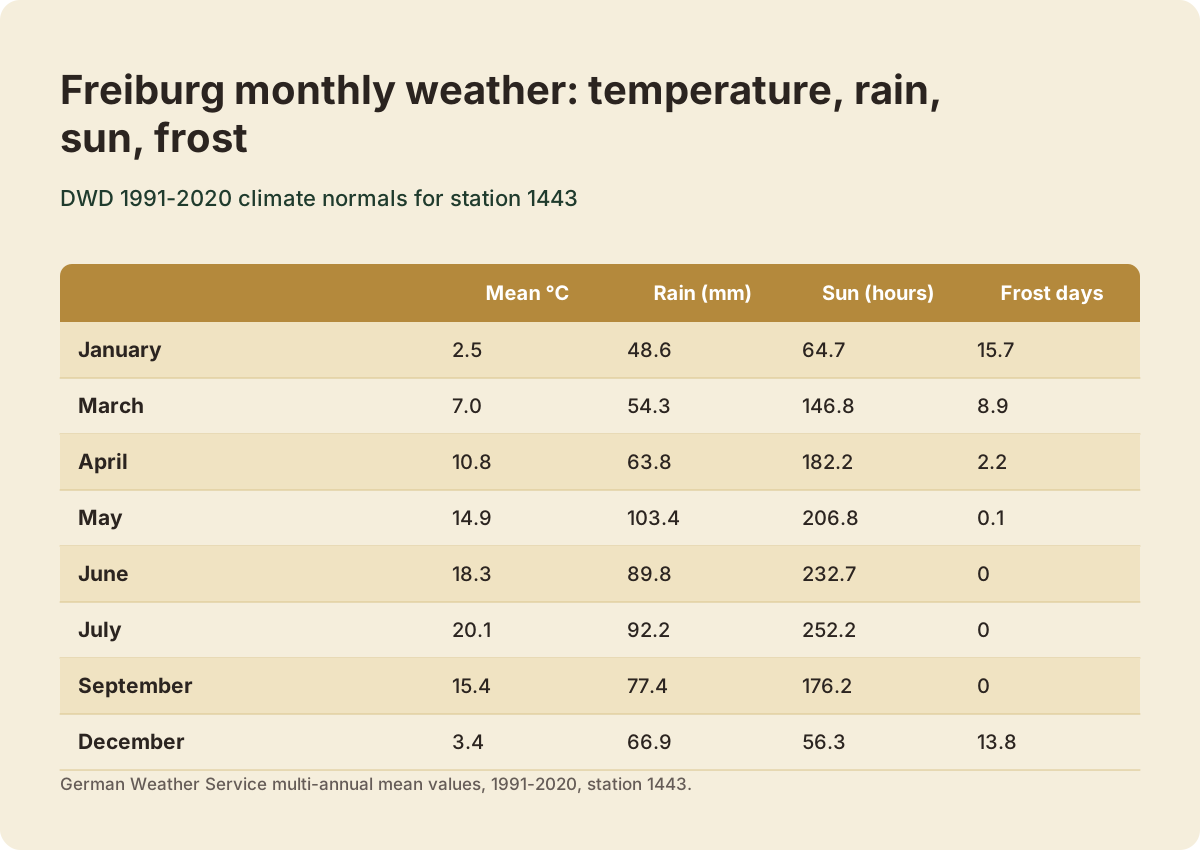
Read the table as a planning tool, not a forecast. The frost-day column is the most useful one for visitors: 15.7 frost days in January means a cold morning is likely but a hard all-day freeze is not, and by April frosts are nearly gone. The days at or above 30°C cluster almost entirely into July and August, with 7.3 and 7 such days respectively, and even June averages only 4.
How Freiburg Weather Changes Through The Seasons
Spring warms quickly from a 7.0°C March mean to 14.9°C in May, but May is also the wettest month at 103.4 mm. Summer is the sunniest period, with 232.7 to 252.2 hours of sunshine from June to August, alongside the bulk of the year's 18.5 hot days above 30°C. Autumn cools steadily from 15.4°C in September, and winter sits near freezing with 56 to 92 hours of monthly sunshine.
Each season has a distinct character, and knowing it changes what you book. Spring is the season of long mornings and sudden showers. The Black Forest hills flush green early here because the plain warms first, and April's 182.2 sunshine hours already rival what many German cities manage in June. The trade-off is instability: a warm front off the Rhine can produce an afternoon downpour in April, which averages 63.8 mm, and a warmer one still in May.
Summer is when Freiburg feels continental. July's mean of 20.1°C understates the experience, because means include cool nights; on a hot afternoon the old town's stone squares hold heat, and the Bächle, those little gutters running beside the pavements, become a game for children stepping in and out of the water. Thunderstorms are part of the package. When the Rhine valley heats up, air rises against the Black Forest and pops a storm, which is why summer rainfall stays high, 89.8 to 92.2 mm a month, even as sunshine peaks.
Autumn is the quiet sleeper. September averages 176.2 hours of sun, more than April, with a comfortable 15.4°C mean and only 0.6 days above 30°C. October stays mild at 10.9°C. This is the season the local wine growers count on: the harvest in the Kaiserstuhl and Tuniberg vineyards just west of the city runs into October, and wine festivals in the surrounding villages cluster in late summer and autumn. November is the flat month, 66.6 hours of sun and 6.5 frost days, when the city turns grey and the Christmas build-up begins.
Winter is mild for Germany but not warm in any absolute sense. December averages 3.4°C and 56.3 hours of sunshine, meaning roughly under two hours of sun a day. Snow does fall on the plain, but the reliable snow sits uphill: Feldberg, the highest summit in the Black Forest, holds a proper winter sports season while Freiburg's streets are usually bare.
| Season | Months | Mean °C | Character | Best for |
|---|---|---|---|---|
| Spring | Mar-May | 7.0 to 14.9 | Fast warming, showers, May wettest | Terrace cafés, blooms, fewer crowds |
| Summer | Jun-Aug | 18.3 to 20.1 | Sunniest, hottest, thunderstorms | River and lake days, long evenings |
| Autumn | Sep-Nov | 15.4 down to 6.1 | Stable September, grey November | Wine festivals, hiking, golden light |
| Winter | Dec-Feb | 2.5 to 3.5 | Cold mornings, little sun, rare snow | Christmas market, day trips uphill |
Because the weather shapes what a visit feels like, it also shapes what a guided walk can deliver, and that is a decision worth making early. A city tour in steady April rain is a different product from the same tour in July heat, and the private options on the roster handle that variance differently from the fixed-group ones.
When Is The Best Time To Visit Freiburg For Good Weather?
The best weather window in Freiburg runs from late June through September, combining the year's peak sunshine, 234.4 to 252.2 hours in the summer months, with September's lower storm risk at 15.4°C mean. For milder conditions with fewer crowds, aim for late April to early June, accepting May's 103.4 mm of rain. December offers the Christmas market rather than good weather, at 3.4°C and 56.3 sun hours.
If sunshine is the priority, the data is unambiguous: July leads the year at 252.2 hours, with August close behind at 234.4 and June at 232.7. But those months also carry the year's hottest days and its thunderstorms, so the practical sweet spot is often the shoulder of that range. The last week of June and the first half of September both sit inside the high-sunshine window while dodging the July peak heat.
The trade-off table below is the honest version of the decision. Peak weather coincides with peak visitor volume: Freiburg recorded 2,130,785 overnight stays in 2025 across all accommodation with at least 10 beds, and hotel occupancy ran at 55.2 percent, so summer weekends in the old town feel busy. September delivers most of summer's light with less of its heat and thinner crowds. May and June fill the gardens and the vineyard trails with green, at the cost of showers.
| Window | Typical mean | Main advantage | Main drawback |
|---|---|---|---|
| Late Mar-Apr | 7.0-10.8°C | Blossom, quiet old town | Cool nights, changeable days |
| May-Jun | 14.9-18.3°C | Long green days, festivals | Wettest month, rising heat |
| Jul-Aug | 19.7-20.1°C | Peak sun, swim weather | Heat, storms, crowds |
| Sep | 15.4°C | Sun with calm air | Wine-harvest traffic regionally |
| Dec | 3.4°C | Christmas market, cosiness | Grey, short days, little sun |
For a deeper look at how the year maps onto crowds, prices and events, our best time to visit Freiburg guide runs the full calendar, and the one day in Freiburg itinerary is built around the assumption of decent walking weather. If your dates are fixed and the forecast is not cooperating, read the rain section below before you rebook anything.
How Much Rain Does Freiburg Get And How Should You Pack?
Freiburg receives 886.5 mm of rain per year, with no dry season: the wettest month is May at 103.4 mm and the driest is January at 48.6 mm, a narrow spread. Rain falls roughly every third day in most months, often as showers or thunderstorms rather than all-day drizzle. Pack a compact rain layer and quick-drying shoes rather than heavy waterproof gear.
The distribution matters more than the total. Cities with Mediterranean patterns have a wet month and a dry month; Freiburg does not. Rainfall climbs from 48.6 mm in January through spring, peaks in May at 103.4 mm, then settles between 77.4 and 92.2 mm through summer and autumn. In practice this means rain is always possible and never dominant. The classic Freiburg summer day is a hot, sunny morning, a mid-afternoon storm, and a clear evening.
Packing for that pattern is simple. A light rain jacket or a compact umbrella covers most of what the year throws at you, and it doubles as a wind layer for the evenings, which cool off even in July. Footwear is the second decision: the old town's cobbles and the Bächle that run alongside them mean wet pavement after every storm, and leather-soled shoes suffer. Something with grip and a quick-drying upper earns its space.
The mountain exception deserves its own sentence. Everything above changes as you climb. Feldberg is the highest summit in the Black Forest, and Schauinsland, Freiburg's own cable-car mountain, is high enough that a clear warm afternoon in town can be ten degrees cooler and socked in cloud at the top. If a hike or a cable-car day is on your list, check the summit forecast, not the city one, and carry a real layer.
| Condition | Likely when | Pack this | Skip this |
|---|---|---|---|
| Afternoon thunderstorm | Jun-Aug afternoons | Compact umbrella, 30 min indoors plan | Full rain suit |
| Steady all-day rain | Any month, esp. May | Rain jacket, museum list | Open-top plans |
| Hot spell ≥30°C | Jul-Aug, about 7 days each | Hat, bottle, Bächle splashes | Midday long walks |
| Cold snap | Dec-Feb | Warm layers, gripped shoes | Thin city jacket |
One structural note for summer visitors: the Schauinslandbahn cable car closes for scheduled maintenance windows, including an autumn overhaul from 16 November to 4 December 2026 (Schauinslandbahn operating times). Stormy weather can also stop it on short notice, so treat any cable-car morning as weather-dependent.
How Hot Does Freiburg Get In Summer?
Freiburg averages 18.5 days per year at or above 30°C, almost all between June and August: July averages 7.3 such days and August 7, with June at 4. July's mean temperature of 20.1°C is the annual peak, and nights stay warm rather than cooling sharply. Heat on the Rhine plain is real but broken by thunderstorms rather than lasting for weeks.
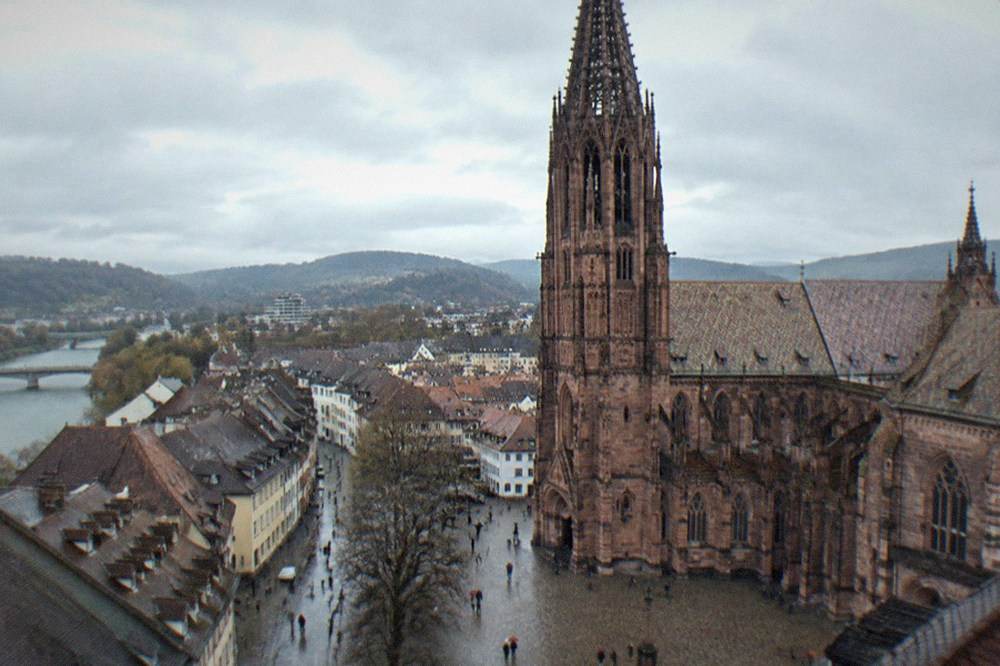
When a heat dome settles over southwest Germany, Freiburg feels it. The plain traps warm air, the stone of the Münsterplatz holds the afternoon sun, and the temperature can run well above 30°C for several days in a row. The relief valves are shade and altitude. The old town's lanes are narrow enough to keep one side in shadow most of the day, the Schlossberg lifts you into cooler air in minutes, and Seepark and the banks of the Dreisam are where the city goes to breathe.
Altitude is the cheat code, and it is close. A summer morning that starts hot in town can be ten degrees cooler on the Schauinsland summit, reachable by the 3,600 m cable car, which runs daily 09:00-17:00 (09:00-18:00 in the Baden-Württemberg summer holidays) with an adult return at €15.00. Up there the ridge catches the wind that the plain misses. Day-trippers with a car can go further: Feldberg, Titisee and the higher Black Forest valleys are the standard summer escapes.
For visitors who would rather have a local shape the day around the heat, there is a case for a private guide who can time the walk for the morning and shift the afternoon indoors. The Hello Freiburg private two-hour walk (from $141, with only a single review logged so far, so treat its track record as unproven) is exactly that kind of product: a set time, a small group, and an itinerary you can negotiate.
If heat is your main worry, plan the outdoor blocks for before 11:00 and after 17:00, keep the middle of the day for a museum, a cellar or a swim, and remember that July still gives you 252.2 hours of sun: the heat is the price of the light.
What Is Winter Weather Like In Freiburg?
Freiburg winters average 2.5°C in January and 3.4°C in December, with 64 frost days across the year and only 56.3 to 91.8 hours of sunshine per winter month. Snow falls on the plain but rarely settles for long, while the nearby Black Forest hills hold reliable snow. The Münster's tower gallery, normally €5 for adults, closes for the winter, and the Christmas market runs 19 November to 23 December 2026.
Winter in Freiburg is a tale of two altitudes. Down in the city, the season is grey more than white: about 14 frost days a month in January, patches of ice in the mornings, and a lot of low cloud off the plain. A snowfall that closes schools in flatter German cities is an ordinary Tuesday here. But 30 to 40 km uphill, Feldberg runs lifts, groomed slopes and a proper winter-sports economy on the same weather system. Locals treat the two as one toolkit: town for the museums and the market, the hills for the snow.
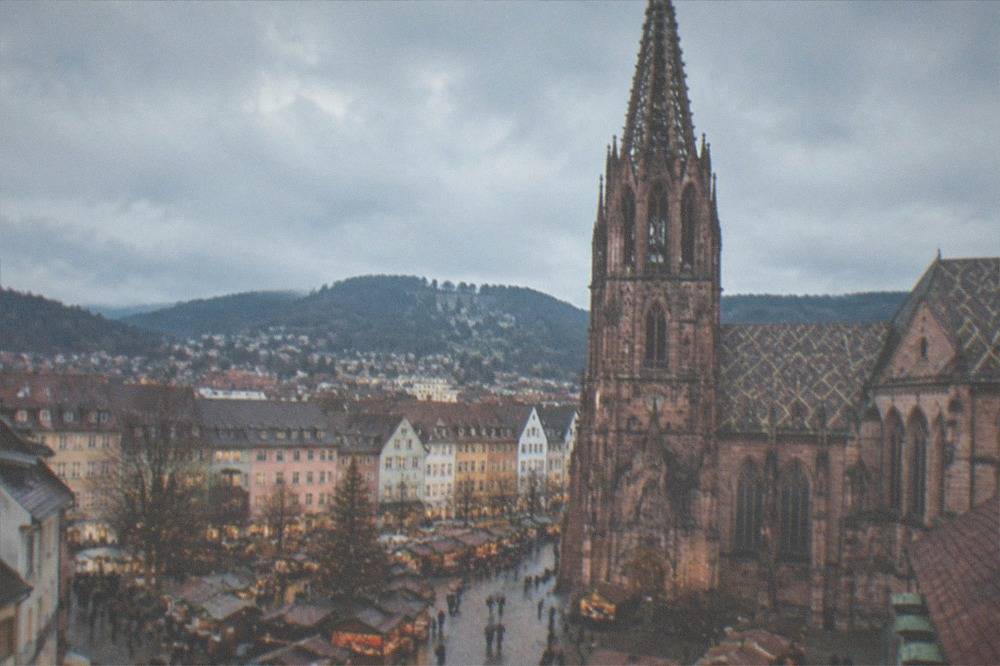
The Christmas market is the anchor of a December visit, running 19 November to 23 December 2026 across Rathausplatz, Kartoffelmarkt, Unterlindenplatz, Franziskerstraße and other old town squares. Its weather risk is not cold but rain: December averages 66.9 mm, and the market's charm survives a cold snap far better than a wet evening. Warm layers, waterproof shoes and a Glühwein strategy cover it.
Two weather-adjacent closures are worth planning around. The Münster tower climb, which normally runs Monday to Saturday 11:00-16:00 and Sunday 13:00-17:00 with adults at €5, shuts its top gallery in winter (official Münster tower page). And the Schauinslandbahn's autumn overhaul, 16 November to 4 December 2026, removes the cable car from the early-winter option list. Neither ruins a trip, but both surprise visitors who planned around them.
What To Do In Freiburg When The Weather Turns Bad
Freiburg's indoor options cover a full rainy day: the Augustinermuseum reopened fully on 28 February 2026 with admission at €12, reduced €8, valid for the other city museums, and every city museum is free for visitors under 27. The Museum Natur und Mensch's permanent exhibition is closed from 4 August 2026 until around the end of February 2027 for renovation, though special exhibitions continue. A single museum day ticket plus the Markthalle covers most of a wet afternoon.
Start with the Augustinermuseum, which came out of more than two decades of phased renovation as a genuinely large indoor attraction, with about 3,400 m² of exhibition space including the newly opened convent building and vaulted cellars. Its day ticket covers the other city museums, so a wet morning there can roll into the Museum für Neue Kunst at €7 (reduced €5) in the afternoon. The Colombischlössle archaeological museum at €5 (reduced €3) is small but atmospheric, and the Dokumentationszentrum Nationalsozialismus is free.
| Indoor option | Admission | Notes for a rainy day |
|---|---|---|
| Augustinermuseum | €12 / reduced €8 | Day ticket valid for all city museums; free under 27 |
| Museum für Neue Kunst | €7 / reduced €5 | Thursday hours extend to 19:00 |
| Colombischlössle museum | €5 / reduced €3 | Small, one to two hours |
| Museum Natur und Mensch | €5 / reduced €3 | Permanent exhibition closed to about Feb 2027 |
| Markthalle | Free entry | Covered market hall, ideal for a long rainy lunch |
The Markthalle deserves a specific mention because it solves the lunch problem on a wet day: a covered hall of stalls in the Grünwälderstraße, a few minutes from the Münster, where a bad forecast turns into a very good hour. Between the museums and the market hall, the practical floor for a rainy Freiburg day is high.
There is also an indoor-adjacent middle path: the self-guided audio tour of the city, from $9, moves at your own pace and lets you duck into shops and cafés as the rain dictates, and the Veni Vidi Vino wine hike (from $79, rated 4.4 across 167 reviews) pairs walking with cellar time, though it stays an outdoor product at heart.
Why Does Freiburg Have Its Own Microclimate?
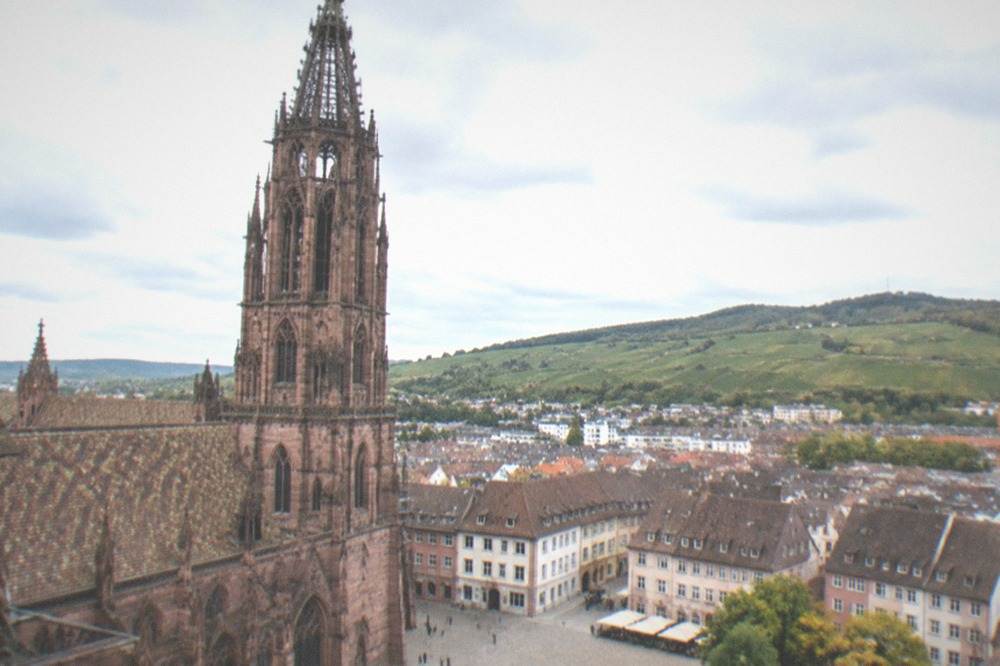
Freiburg's climate comes from its position in the Upper Rhine plain, sheltered between the Vosges to the west and the Black Forest to the east, with the city itself at 236.5 m on the warm floor of the valley. The same valley geometry that protects it from Atlantic weather funnels warm air north in summer and produces thunderstorms along the Black Forest edge. Its Green City policies amplify, rather than cause, that baseline.
The Vosges mountains in France take the Atlantic fronts first, and by the time the weather crosses the Rhine it has often dried out, which is why sunshine hours run so high for a German city at this latitude. The Black Forest escarpment, rising immediately east of town, then does two things: it blocks cold easterly air in winter, and it forces warm moist valley air upward on summer afternoons, which is the mechanical explanation for those July thunderstorms.
The city has spent decades working with that baseline rather than against it. Walking, cycling and public transport together rose from 67 percent of trips in 2017 to 76 percent in 2023, a shift the city's own monitoring reports document, and recent reporting puts the renewed Frelo bike-share fleet at about 1,200 bikes across 162 stations. None of this changes the weather, but it shapes how the city uses it: shaded streets, tree planting, and a culture of cycling that holds up in all four seasons.
For visitors, the microclimate has one practical consequence worth internalizing: the forecast for Freiburg city and the forecast for the Black Forest are different products. A day that reads "sunny, 27°C" downtown can be ten degrees cooler and misty at Schauinsland or on the Feldberg. That is covered in hiking near Freiburg, and the regional transport card question, including the RVF Welcomekarte at €27.00 for three days, which includes the Schauinslandbahn, is covered in the Freiburg Welcomekarte guide. This is also why our own Freiburg Travel Guide splits city advice from mountain advice rather than treating the region as one weather zone.
The same logic applies to arrival planning. If you are flying into EuroAirport and connecting by road, the Freiburger Reisedienst airport bus runs daily and takes about an hour, but weather rarely affects it: the closure windows that catch visitors out on this route are rail works, not storms, and the Rheintalbahn between Freiburg and Basel has scheduled replacement-bus periods around early October 2026. Storm disruption at the airport itself is rare in summer and mostly a winter-fog story.
If weather-driven planning sounds like a lot of work, a private walking product with a local guide absorbs most of it. The Walking and Strolling the Historic Center private tour (from $228, with 6 reviews so far) builds the whole old town route around your group, your pace and, on the day, whatever the sky is doing.
Common Questions About Freiburg Weather
Is Freiburg the warmest city in Germany?
No. Freiburg's annual mean of 11.0°C ranks it 34th among 1,093 German weather stations in the 1991-2020 normals, and its 1,815.1 sunshine hours rank 20th of 1,091. It is fair to call it one of Germany's warmest and sunniest cities, not the single warmest or sunniest.
What is the rainiest month in Freiburg?
May, with an average of 103.4 mm of rain. There is no pronounced dry season: monthly totals range from 48.6 mm in January, the driest month, to that May peak, and summer months still average 83.3 to 92.2 mm, mostly falling as showers and thunderstorms.
Does it snow in Freiburg in winter?
It snows, but snow rarely settles for long on the city floor at 236.5 m, where December averages 3.4°C and January 2.5°C. Reliable snow sits in the hills: Feldberg and the higher Black Forest run a winter sports season on the same weather, within an hour of the city.
How many hot days does Freiburg get?
The 1991-2020 normals show 18.5 days per year at or above 30°C, concentrated almost entirely in summer: July averages 7.3 such days, August 7 and June 4. May averages 0.8 and September 0.6, and the rest of the year effectively none.
When does the sun shine most in Freiburg?
July, with an average of 252.2 hours of sunshine, followed by August at 234.4 and June at 232.7. The winter floor is December at 56.3 hours and January at 64.7, which is why a sunny December walk through the Christmas market feels like a gift.
Is the Schauinslandbahn affected by weather?
It can be: storms and strong wind stop the cable car on short notice, and it closes annually for maintenance. The scheduled autumn overhaul runs 16 November to 4 December 2026, and a spring closure is planned for 22 February to 19 March 2027. Check the operating page on the day if the forecast looks unstable.