Why Is Black Forest So Famous?
The Black Forest is famous for cuckoo clocks, Black Forest cake, fairy-tale woods and spa towns. This guide explains where each strand of the fame comes from and how to see it from Freiburg.
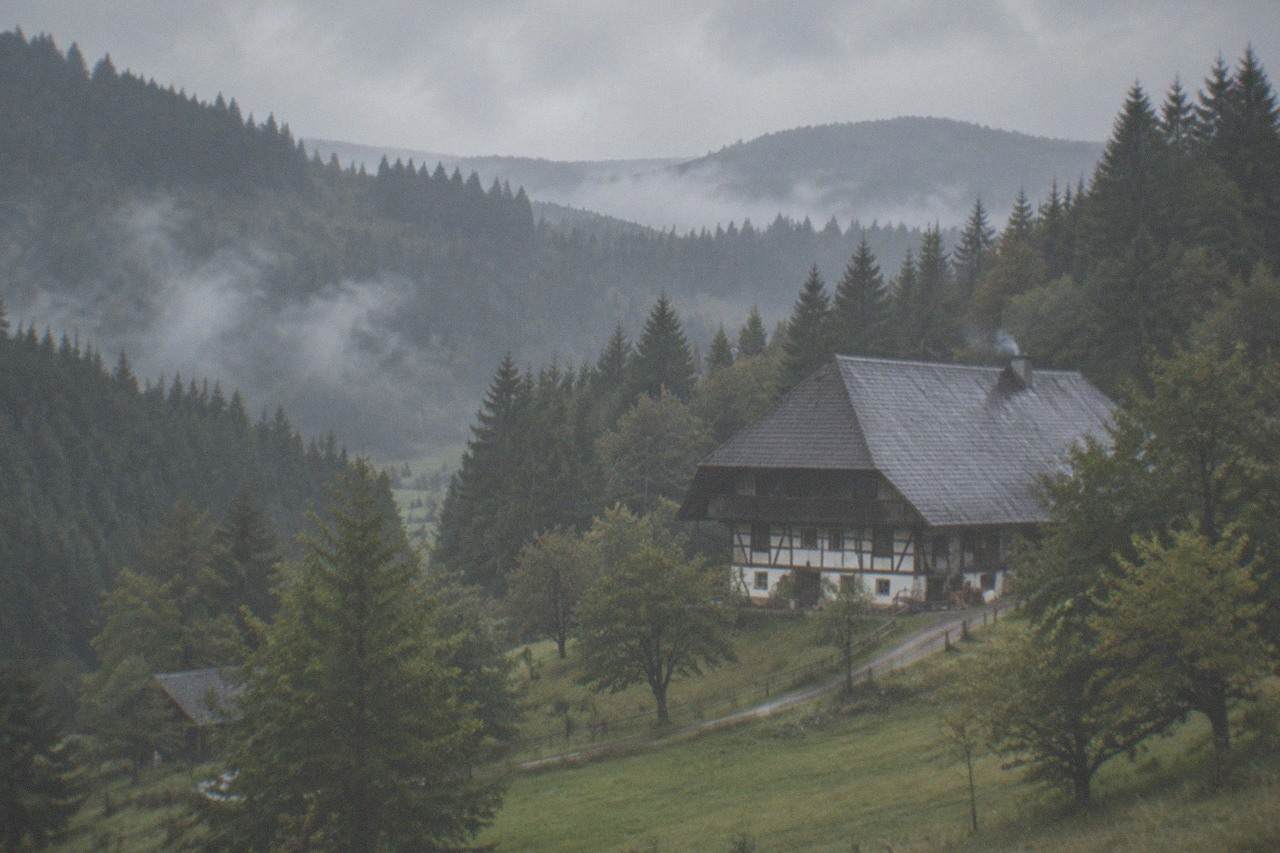
Why Is Black Forest So Famous?
The Black Forest is famous because it gave the world three things that carry its name in dozens of languages: the cuckoo clock, Black Forest cake and Black Forest ham, plus a darker inheritance of folklore and fairy-tale woods that shaped how people imagine Germany itself. Its spa towns and marked trails then turned that mythology into one of Europe's oldest tourist landscapes, with Freiburg as the busy gateway on the western edge.
The honest answer to the fame question has layers. A region does not become a household name on scenery alone. Plenty of hill ranges in central Europe are prettier on paper and nobody outside the country can name them. The Schwarzwald, as Germans call it, became famous because specific, exportable products came out of it, and because the romantic-era writers fixed an image of dark, storybook woods in the popular imagination. The clocks went into parlors from London to New York, the cake went onto menus worldwide, and the name attached itself to a mood as much as a place.
That mood matters more than most visitors expect. When people picture "Germany" as half-timbered villages, pine slopes and misty valleys, they are picturing an idea that was substantially manufactured here and in the marketing that followed. The region leans into it honestly: the tourism board, the towns, the clock makers and the bakers all tell the same story because the story is largely true and because it keeps roughly two million annual overnight guests coming through the nearby gateway cities.
The scale is easy to misjudge, too. This is not a national park with one entrance. It is a thickly settled mid-range region of small towns, working farms, vineyards on the western slopes and forest on the heights, running from Pforzheim in the north down to the Swiss border in the south. Freiburg sits at the southwestern corner, which is why so many Black Forest trips either start there or pass through.
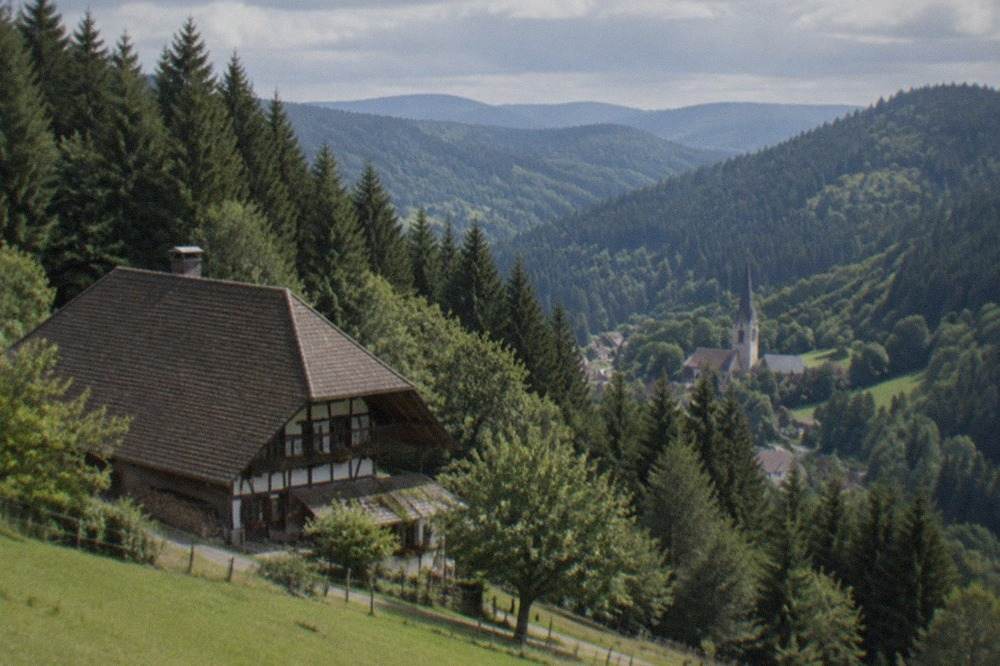
The table below pulls the strands apart so you can see which piece of the fame comes from where.
| Strand of the fame | Where it comes from | Where to see it now |
|---|---|---|
| Cuckoo clocks | Woodcarving and clockmaking villages of the central hills | Triberg and the clock-making workshops around it |
| Black Forest cake | Cream, chocolate and cherry gateau named for the region | Bakeries across the region; a slice with coffee is the ritual |
| Black Forest ham | Smoked dry-cured ham, a protected regional name | Butchers and inn kitchens throughout Baden |
| Folklore and fairy tales | Dense woods that fed the romantic writers and the Grimm-era tale collections | The deep forest stretches around Feldberg and the ravines |
| Spa culture | Historic bath towns on the western fringe | Baden-Baden and the smaller wellness villages |
Each of those strands deserves a closer look, because each one explains a different part of why the name travels so far.
How Cuckoo Clocks Made The Black Forest World-Famous
No single object did more for the region's fame than the cuckoo clock. Carved for generations in the farming villages of the central Schwarzwald, these clocks spread across the world carrying the region's name into ordinary homes, and they created a souvenir economy that still defines towns like Triberg today. The clocks are the reason many people first hear the words Black Forest at all.
The origin story is a craft-and-poverty story. Winters in the hills were long, farms were small, and farming families needed indoor work. Woodcarving filled the winters, clockmaking turned the carving into income, and the cuckoo mechanism gave the product a voice that no competitor had. Within a few generations the clock had gone from a farmhouse novelty to an export item, and Black Forest clocks were being shipped abroad in serious volume, a trade the region's own historical tour operators still recount on their dramatized walks, which they have run since 1998.
What is easy to miss is how completely the clock colonized the region's identity. The carved clock case, the carved chalet, the bird, the weights and the pine-cone pendulum became a shorthand for the entire Schwarzwald, and then for Germany generally. A visitor who has never been within a thousand kilometers of the place can sketch a cuckoo clock from memory. Very few regions anywhere have produced an object with that penetration, and the ones that have, think of Swiss watches or Murano glass, tend to be famous largely because of it.
Triberg is the practical destination for this strand. It is one of the region's best-known towns, it hosts the trade in historic and modern clocks, and it sits beside the waterfalls that give the town its other claim to fame. Our Triberg waterfalls and clock town guide covers what to expect there, and the deeper history of the craft itself is laid out in the Black Forest cuckoo clocks guide. Between them they explain how a winter cottage industry became a global brand.
A couple of honest caveats. First, the giant clock displays some towns advertise are modern stunts, not historic craft; the workshops are the real thing. Second, quality varies enormously, from genuine carved cases to factory souvenirs, and the price gap between them is wide. If you want a clock made here, buy from a workshop that will show you the movement, not from a rack of identical items aimed squarely at tour buses.
Black Forest Cake, Ham And The Region's Food Fame
The Black Forest is famous in kitchens worldwide because two protected food names carry it: Black Forest cake, the cream, chocolate and cherry gateau, and Black Forest ham, the smoked dry-cured meat. Both are real regional products with long local histories, and both put the region's name in front of people who will never hike a single one of its trails.
The cake is the more famous of the two, and also the more argued-over. Bakers disagree about nearly everything in its history, which means a careful writer says less rather than more: it is a chocolate layer cake, it involves cherries and cream, it is associated with the region, and its exact invention is contested. What is not contested is the name's power. Order a "Black Forest" anything, cake, cheesecake, hot chocolate, in almost any country and everyone knows the flavor profile being promised: chocolate, cherry, cream, often a whisper of spirit in the cherry layer. That is a level of name recognition most regions would pay heavily for.
The ham is the quieter, older fame. Cured and smoked over fir and spruce, it is a protected designation, meaning the name carries legal weight in the way Champagne or Parmesan do. In practice you meet it in its best form at inn kitchens and butcher counters across the southwestern corner of Germany, sliced thin with bread, or warming in the middle of a proper Baden farmer's breakfast.
The full food story goes well beyond those two names, and the surrounding countryside supplies it. This is wine country on the western fringe: Baden is one of Germany's significant wine regions, and visitors coming from Freiburg pass through the Kaiserstuhl vineyards and the Markgräflerland on the way into the hills. The Baden wine guide and the Freiburg food guide both dig into this, and the cake has a page of its own in the Black Forest cake guide.
| Food fame | What it is | The honest note for visitors |
|---|---|---|
| Black Forest cake | Chocolate and cherry cream gateau named for the region | Every bakery has a version; quality ranges from superb to fridge-cake |
| Black Forest ham | Smoked dry-cured ham with protected regional status | Best at butcher counters and inn kitchens, not airport shops |
| Baden wine | Regional wines from the western slopes | The Kaiserstuhl is the standout wine landscape near Freiburg |
| Inn cooking | Dumplings, trout, game and ham from the hills | The village inn is where the region's food fame actually lives |
If food is the reason you are coming, plan around the inn table rather than the gift shop. A slice of cake at a proper bakery in a small town, followed by a ham platter in the same square, tells you more about why this region is famous than any souvenir could.
Fairy Tales, Gothic Woods And The Name Itself
The Black Forest is famous partly for its name and the mood behind it: a dense, dark woodland that fed German folklore, romantic literature and a certain fairy-tale image of the country. The woods themselves, thick fir and spruce on the heights, gave the region both its German name and the gothic atmosphere that writers and later filmmakers kept returning to.
Start with the name, because it does real work. The German Schwarzwald is one of those rare region names that translates poetically rather than administratively. "Black Forest" sounds like something out of a storybook, and it is not a marketing invention, it is a description of what the canopy looks like: the conifer stands on the higher ground are so dense that from a distance, and on overcast days from inside, the woods read as dark, almost black. Compare that with neighbors named after rivers or districts, and you can see why this name stuck in the imagination while others did not.
The folklore grew out of that darkness. The Grimm brothers collected their tales across Germany, not only here, but the popular image of the tale-telling woods, the deep forest where things happen to travelers, attaches itself naturally to a region called the Black Forest, and generations of writers, composers and tourism boards let the association stand. The region's actual folk traditions, the Fasnet carnival figures, the carved masks, the winter customs, are real and living rather than literary inventions, and Freiburg's own Fasnet is one of the accessible places to see them.
There is also a physical truth under the mood. This is genuinely one of the more compact, genuinely forested uplands in central Europe. Walk ten minutes uphill from almost any valley village and you are under closed canopy, on soft needles, with the valley sounds gone. The ravines and gorge trails, the Ravenna gorge being a striking example, deliver that enclosed, storybook quality better than any open viewpoint, and the high moors around the peaks are a landscape most visitors do not expect from Germany.
The honest caveat is that the region is not an unbroken primeval forest. It is a working landscape: managed timber stands, farmland, meadows and villages woven through the woodland. Visitors expecting endless untouched wilderness are sometimes disappointed by the clear-fell patches and the ski infrastructure. Visitors who come for the mixture, woods, farms, gorges and small towns in quick succession, tend to leave understanding why the name carries such weight.
Lakes, Hills And The Landscape Behind The Fame
The Black Forest's fame also rests on physical geography: a compact range of rounded summits, deep-cut gorges and glacial lakes, with Feldberg as the highest point and Titisee as the best-known lake. It is a landscape built for walking, and the marked-trail network that covers it is one of the oldest and densest walking infrastructures in Europe.
The walking culture is the least flashy and most durable part of the fame. Long before the clocks and the cake were export items, the region's baths and hills were drawing visitors, and the network of footpaths that grew around them has been maintained continuously for generations. Today that inheritance shows up as a web of signed routes connecting villages, farms, ridge paths and railway stations, which is the quiet reason the region works so well for casual walkers: you can string together days on foot while your luggage travels by train.
The lakes anchor the picture. Titisee is the famous one, a glacial lake in a bowl of forested hills with a town along its shore, and the Titisee guide covers the practical side of visiting it, including the summer swimming. Schluchsee is the larger, quieter reservoir lake a short hop further on, with more of a locals' atmosphere and equally good water. Around both, the surrounding heights, Feldberg above all, give the region its roof and its winter identity.
Winter is the season the fame tends to skip. Feldberg is the biggest ski area in the range and one of the most accessible from Freiburg, and while it is a modest mountain by Alpine standards, for a region two hours from Frankfurt with its own folklore attached, a lift-served hill plus a lake plus a spa town plus a clock village inside one compact area is a genuinely unusual package. Cross-country skiing, snowshoe routes and the gorge trails in frost round out a season that runs deeper than the postcard summer.
The landscape also explains the region's weather personality. The western escarpment catches Atlantic fronts and turns them into rain, which is why the meadows are so green and the woods so thick, while the eastern side sits drier in the rain shadow. You do not need to plan around this in any technical way, but it explains a common visitor surprise: a gray, drizzling morning on the western slope can be a bright afternoon over the lakes. Pack a layer and do not cancel anything before noon.
For walkers arriving without a car, the geography is generous. The valleys are railway corridors, so most of the famous destinations, the lakes, Feldberg, Triberg, the spa towns, have stations, and a rail day pass covers the moving parts. The main thing to plan is not the walking but the timing: the last connections out of the smaller valleys run early, and a walk that overruns into dusk ends in a taxi reservation rather than a train ticket.
How Freiburg Serves As The Gateway To The Black Forest
Freiburg is famous as a city in its own right, one of Germany's warmest and sunniest, and it doubles as the natural gateway to the southern Black Forest. The Schauinsland cable car, the forest's local mountain, starts on the city's outskirts, and the lakes, gorges and clock towns all sit within easy reach by train or a short drive from its station.
The geography makes the arrangement almost comically convenient. Freiburg sits where the Rhine plain meets the Black Forest's western slope, so the city gives you a full urban base, cathedral, markets, restaurants, museums, with trailheads and cable cars beginning at the tram network's edge. The Schauinslandbahn runs from the valley station at the end of a bus or bike ride from the center, climbing 3,600 m of cable to the summit of the Schauinsland, and the adult return fare is €15.00 with singles at €12.00, per the operator's own fare page. Its hours run 09:00-17:00 year-round, with an extended schedule in the Baden-Württemberg summer holidays, and the whole operation closes for its autumn overhaul from 16 November to 4 December 2026, so time an early-winter visit around that. Current details are on the operator's fare page.
The wider region fans out from there. A direct regional train runs east toward the highland lakes, the Schauinsland area covers the mountain itself, and the famous clock town of Triberg sits on the same rail spine. The Black Forest guide collects the region-level planning in one place, and this Freiburg Travel Guide exists precisely because the city and the hills are best planned as one trip rather than two.
For visitors who want the gateway city interpreted rather than merely slept in, guided walks fill that gap. The Private Tour in Italian in Freiburg im Breisgau runs roughly 1 hour 10 minutes to 1 hour 30 minutes, costs from $52, and carries only six reviews so far, a pool too small to make any star claim on, but for Italian-speaking groups it is the natural way to get the old town's story in your own language before turning toward the hills.
The same logic applies in other languages and formats. The Old Town walk covering the medieval gates, the cathedral and the historic squares runs about two hours from $232 and also has only a handful of reviews so far, which is typical of the smaller private walks. These are products for a specific moment, the first evening in the city, the day before the hills, when orientation is worth paying for, and they are poor value if you would rather read a map and walk.
One practical note that surprises people: the region's transport economics reward staying put. A base in Freiburg with a regional day ticket beats two hotel changes, and the visitor product that covers buses and trains for three days, the Welcomekarte, even includes the Schauinslandbahn. The Freiburg Welcomekarte guide works through the arithmetic. Between the city's own weight and the hills at its back, the pairing is the single most common trip shape in this corner of Germany, and it deserves its popularity.
What Keeps The Black Forest Famous Today
The Black Forest stays famous today because the old signatures, clocks, cake, folklore and spa culture, have been reinforced by modern anchors: Europa-Park, one of Europe's most visited theme parks, sits on the region's western edge, while hiking, wellness and Christmas-market tourism keep the towns full year-round. The fame is no longer only inherited; it is actively renewed.
Europa-Park is the clearest example. It sits at Rust, a short distance from Freiburg, and it draws visitors on a scale that dwarfs anything the traditional sightseeing economy does. Its adult one-day ticket uses dynamic pricing, running from €59.50 at the lowest online price to €76.00 as the fixed voucher price, varying by date, with on-site purchase typically costing more; the official ticket shop shows the live figure for your date. Recent reporting noted a price rise of roughly four percent for the 2026 season, so treat any third-party number you see as stale until checked.
The Christmas economy renews the fame every winter, and it reaches beyond the big markets. Freiburg's own market runs 19 November to 23 December 2026 with free entry, details on the official market site, and the smaller towns in the hills run their own versions with more woodsmoke and fewer tour groups. The Freiburg Christmas market guide covers the city end of it.
Beyond the headline items, the quieter renewals matter: the spa and wellness tradition keeps evolving in the bath towns, the walking network keeps extending, and the wine festivals on the western fringe, the Kaiserstuhl tastings, the Markgräfler events, keep the region anchored in a food culture that visitors can taste rather than merely photograph. The fame that began with carved clocks and a dark name has become a self-sustaining loop: the region delivers enough substance, scenery, food, walking, that the story keeps being retold honestly.
For travelers, the practical takeaway is simple. The Black Forest rewards the shape of trip it has always rewarded: a base with good rail links, days out into the woods and villages, cake in the afternoon, an inn table in the evening. Freiburg handles the base role as well as anywhere, and the hills begin where the trams stop.
If you are planning around a specific season, a themed walk in the gateway city can slot into the evening or the arrival day. The Christmas Show Walk with Betty BBQ, a costumed, theatrical city walk, runs about 1 hour 10 minutes from $44 and has a small review pool of twelve, so read a couple of recent reviews rather than trusting a star rating. It is a seasonal product aimed squarely at the market weeks, and it pairs naturally with the Christmas-market plans above.
Between the clocks, the cake, the name, the lakes and the modern anchors, the region's fame looks overdetermined in retrospect. It is rare for one place to own an object, a dish, a mood and a landscape, all under one memorable name, and then to keep the whole thing functioning as a real, working, visited countryside. That is the actual answer to why the Black Forest is famous, and why the answer has not faded with time.
Common Questions About The Black Forest
Why is Black Forest so famous?
The Black Forest is famous for its cuckoo clocks, Black Forest cake and Black Forest ham, all named for the region and exported worldwide, plus its folklore-haunted fir woods, historic spa towns and dense walking network. The dark, evocative name did much of the work, and modern anchors like Europa-Park keep the region in the spotlight today.
Is the Black Forest a real forest or a region?
It is a region, a settled upland of towns, farms and managed woodland rather than one unbroken wilderness. The name describes the dense conifer stands on the heights, which look almost black from a distance, but meadows, vineyards on the western fringe, and villages are woven throughout.
What is the best-known town in the Black Forest?
Triberg is the best-known town for the classic fame, clocks and waterfalls together, while Titisee is the best-known lakeside town and Baden-Baden the best-known spa town. Freiburg, on the western edge, is the busiest gateway rather than a Black Forest town itself.
Can you visit the Black Forest without a car?
Yes, and it is one of the region's real strengths. The valleys are railway corridors, so the lakes, Feldberg, Triberg and the spa towns all have stations, and a regional day ticket or the three-day Welcomekarte covers the trains and buses, with the Schauinslandbahn cable car included in the Welcomekarte.
Is the Black Forest worth visiting in winter?
Yes. Feldberg offers the region's main skiing, the gorge trails and lakes take on a frost-bound character, the Christmas markets run through late December, and the spa tradition exists precisely for cold months. Just check the Schauinslandbahn's maintenance closures, which fall in late November and early December in 2026.
How many days do you need for the Black Forest?
Three to four days covers the classic loop from a Freiburg base: one day for the city and the Schauinsland, one for the lakes and Feldberg, one for Triberg and the clock country, and a spare for weather. A single well-chosen day trip from Freiburg is a perfectly good sampler.