Triberg Waterfalls: A Practical Day Trip From Freiburg
The Triberg waterfalls are the Black Forest's most famous cascade, and they sit close enough to Freiburg for a full day trip. Here is how the day works: the routing, the timing, the honest costs, and the stops worth adding on the way back.
Short answer
Triberg makes a comfortable full-day trip from Freiburg by rental car or by regional train with a change along the line. Plan on the falls themselves for a morning, the cuckoo clock town for lunch, and a forest walk in the afternoon. Confirmed anchor costs in the region include the RVF Welcomekarte at €27.00 for three days and guided Freiburg walks from $15 per person.
What Makes The Triberg Waterfalls Worth The Trip
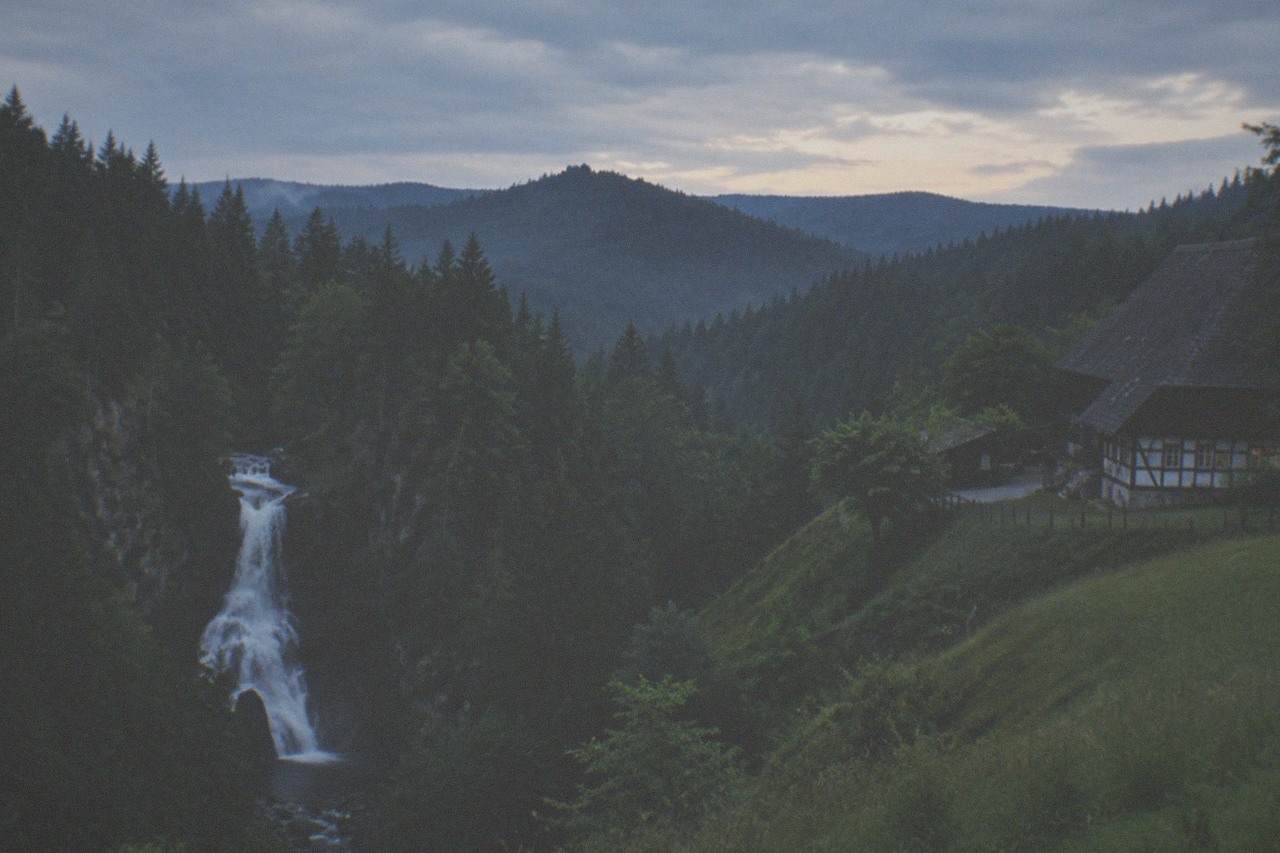
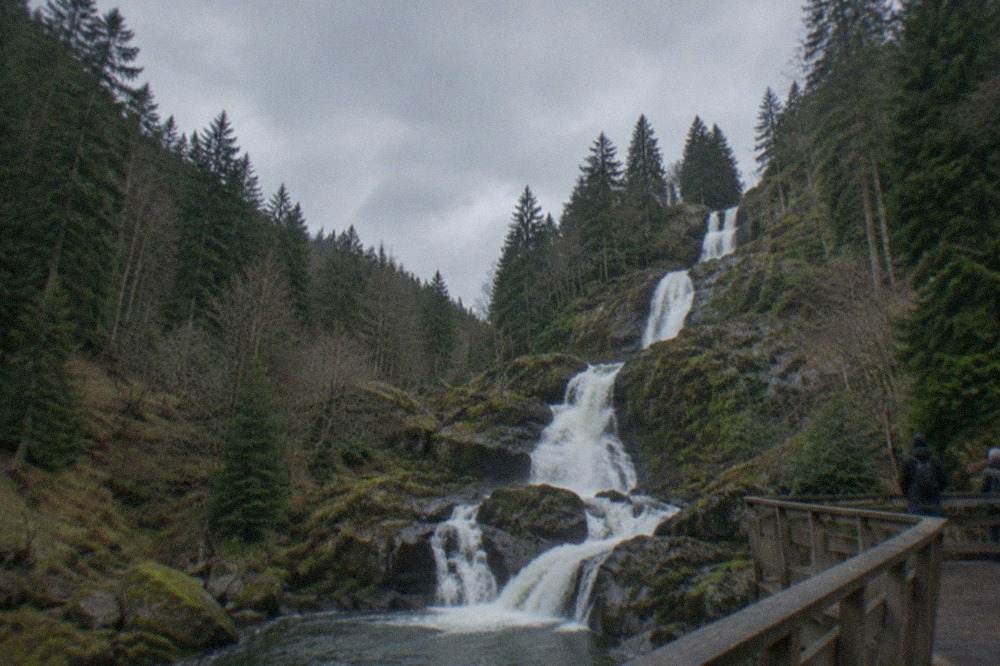
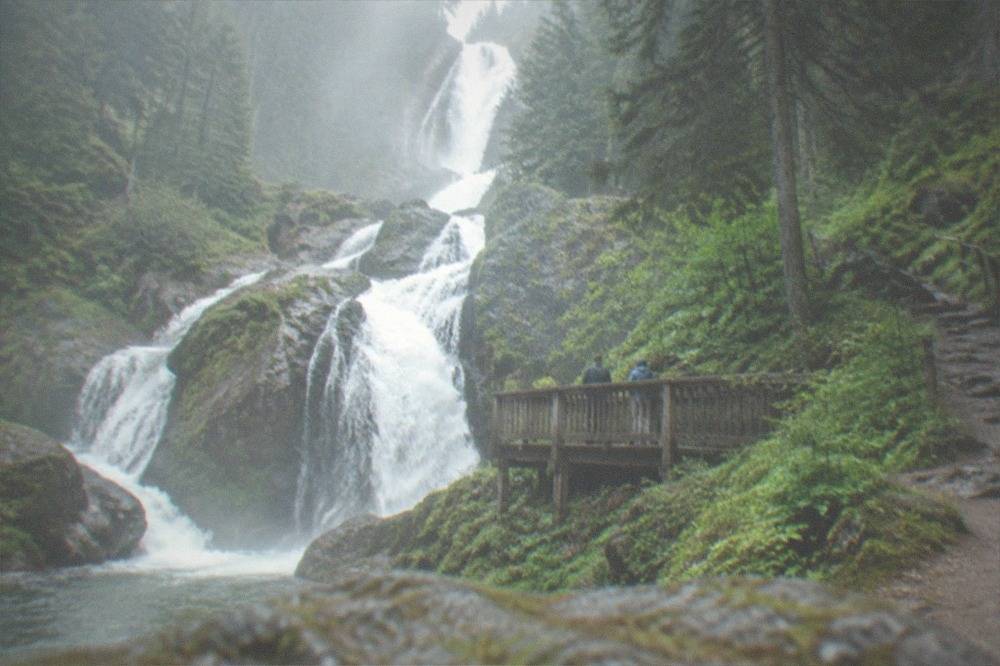
The Triberg waterfalls are the Black Forest's best-known cascade, a series of drops where the Gutach river works its way down through a steep, forested gorge in the middle of Germany's most famous woodland region. For a visitor based in Freiburg, they offer the classic Black Forest image, deep fir slopes, rushing water, and half-timbered houses, inside one reachable day, and the town around them adds cuckoo clock shops and Black Forest cake to the water itself.
Freiburg sits at the southern edge of the Black Forest, and much of what travelers picture when they hear the region's name, the waterfalls, the clock workshops, the deep woods, clusters in the area around Triberg and its neighboring valleys. That makes the town a natural target for a first or second excursion once the city itself has been walked through. The falls are the anchor, but a day here rarely ends up being only about the falls.
The trip also fits the rhythm of a Freiburg stay. Freiburg rewards slow mornings in the old town and long evenings over wine, and a day trip like this slots in between them without wrecking the pace. You leave after breakfast, you come back in time for dinner, and you have seen a version of the Black Forest that the city itself cannot offer, since Freiburg, for all its green credentials, is fundamentally an urban valley town.
For anyone weighing whether to base in the city or in the forest, this guide exists because the answer is usually both: sleep in Freiburg, where the restaurants and transport links are, and spend one or two of your days out in places like this. The Triberg waterfalls sit alongside Titisee and Feldberg on most visitors' shortlists, and the trio can be split across separate days or combined with care.
How To Get From Freiburg To Triberg
Triberg is reachable from Freiburg by rental car or by regional train, with the rail routing normally involving a change along the way, and the drive crossing the heart of the southern Black Forest on winding forest roads. Neither option is complicated, but both eat real time, so treat the journey as part of the day. Check live timetables before you travel, since the Black Forest rail lines run maintenance closures.
The car route is the flexible one. Roads through the region wind and climb, and this is not a place to promise precise journey minutes, but the scenery is the point: you pass through the sort of pine-covered hills the Black Forest is named for. If you have not booked a vehicle yet, the car hire picture in Freiburg covers the practical side, and note that parking in Triberg itself is closer and easier than in Freiburg's old town.
The train is the relaxing one. Regional services thread through the Black Forest valleys, and Triberg sits on one of the most scenic stretches of rail in the region, a line famous for its tunnels, viaducts and gradients. Do not plan the connection from memory: engineering works hit these lines periodically, and replacement buses do appear. That said, a traveler with a Germany-wide pass or a regional ticket can treat the ride as a sightseeing leg rather than a transfer, and many people rank the rail approach as highly as the falls themselves.
Before you leave Freiburg, one transport fact matters and is often got wrong: the city's own visitor card is the RVF Welcomekarte, three days at €27.00 for adults, covering buses and trains in the RVF network and including the Schauinslandbahn cable car plus a culture bonus, as the RVF's fare page lays out. Freiburg is not a KONUS municipality, so a hotel stay in the city does not hand you the free KONUS guest card; that card is issued by member towns elsewhere in the Black Forest, though one issued there does ride Freiburg's trams, per the official KONUS flyer. Whether either card covers your Triberg leg depends on the fare zones crossed, so check the zone map before assuming.
Planning Your Hours At The Falls
The Triberg waterfalls are an entrance-controlled site with maintained paths on both sides of the gorge, and the practical question is timing: crowds peak at midday and in the summer weeks, so arrive for opening or late afternoon, walk the falls loop first while your legs are fresh, then give the town the leftover hours. Allow two to three hours for the falls area at a normal pace.
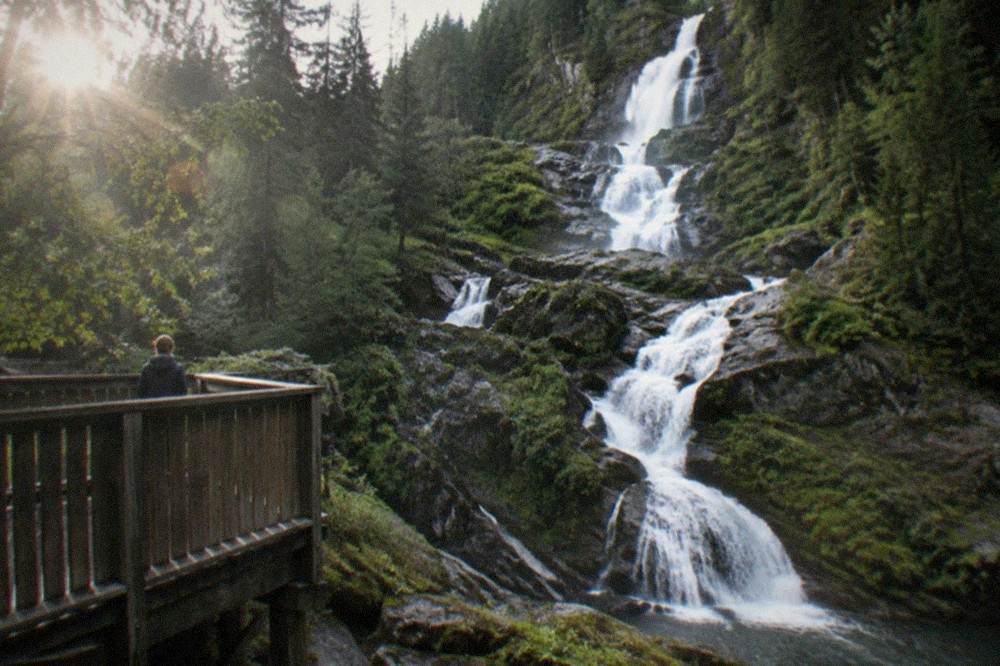
The site itself is built for ordinary shoes, not hiking boots. Paths, stairs and viewing platforms track the cascade up the gorge, and the walk can be as short or as long as you make it, since a lower section suits anyone with limited mobility or small children and the upper stretches add steepness and quiet. Rain swells the river and the falls in a way that genuinely changes the sight, so a gray day is not a wasted day here, though ice in winter can close sections.
Entry is charged at the gate, and the rate is posted at the entrance and on the official site, so check the current figure there rather than trusting a price quoted second-hand. That is deliberate advice: waterfall admission has changed over the years, and a stale number in a guide helps nobody. Budget roughly the price of a museum ticket per adult and you will be in the right zone psychologically, then confirm at the gate.
Pair the falls with lunch in town before or after. Triberg's cafés serve the Black Forest's two edible clichés, the cream-and-cherry cake and the smoked ham, and a slice after a climb up the gorge path is the classic order. The town is small and walkable, so nothing needs scheduling tightly. If your Freiburg base still has unsold days, the hiking around Freiburg is closer to home and gives a similar forest fix for less travel, which is worth knowing if the weather turns.
If you want a guide rather than a self-planned day, a private city walk in Freiburg pairs oddly well with a Triberg excursion: the walks are short enough to run on your return evening or on your departure morning, and they cover the old town ground you might otherwise rush. The Walking And Strolling The Historic Center tour runs about two hours from $228 and carries six reviews, a small pool, so treat it as an option to evaluate on its live listing rather than a crowd-tested hit.
The appeal of booking that walk around a falls day is that the two never compete. The gorge wants daylight and sturdy shoes; the old town wants a slower pace and works after dark in summer, when Freiburg's evenings stay light well past dinner. Anyone planning several excursions out of the city will find the same logic applies to lake days and wine days too: anchor the mornings far out, keep one short guided slot near the hotel for the evening, and nothing on the itinerary gets sacrificed to travel time. It is the single most useful habit this region rewards.
Beyond The Waterfalls: Cuckoo Clocks And Forest Trails
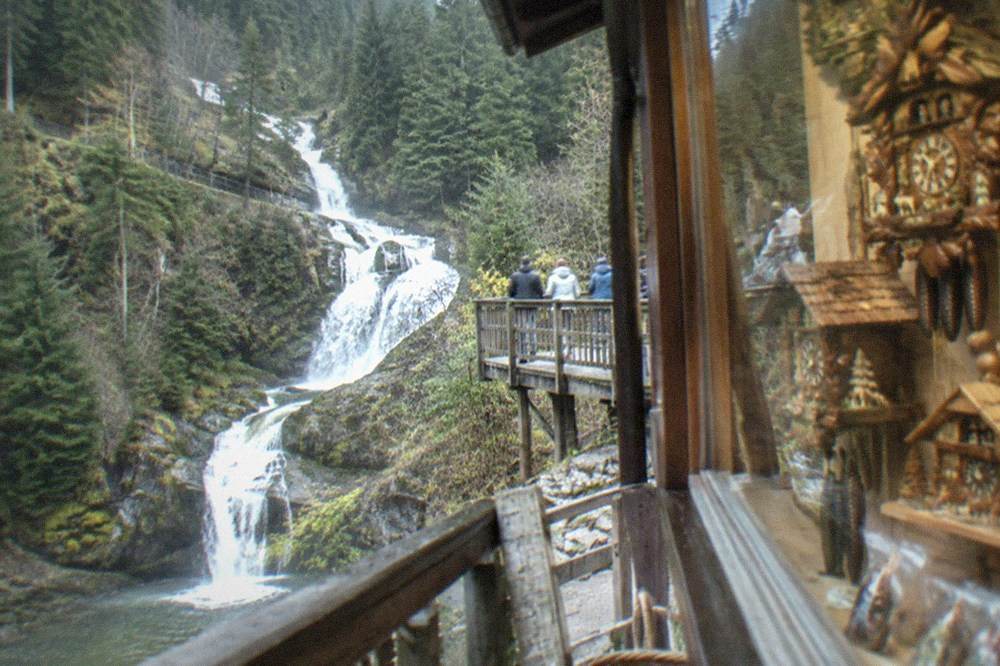
Triberg is the center of Germany's cuckoo clock trade, home to dedicated clock shops, a clock museum, and, in the surrounding villages, some of the largest working examples of the craft anywhere, and that industry gives the day a second act once the falls are done. Between the clocks and the gorge paths, a visitor can fill a full day here without repeating anything.
The clock connection is not decorative. This pocket of the Black Forest is where the cuckoo clock industry grew up, and the town's shops still sell and repair them at every price level, from souvenir-grade to serious mechanical pieces costing as much as a used car. Even travelers with no intention of buying tend to enjoy the museum side of it, since the craftsmanship story explains a lot about why this region, of all places, became the symbol it did. Our longer overview of Black Forest cuckoo clocks goes deep on the history and the shopping advice.
For Italian-speaking visitors, or anyone traveling with them, the Old Town Private Walking Tour in Italian runs about an hour and a half in Freiburg from $51 and has 11 reviews, a small pool that the listing itself will show you plainly. It is a reminder that the guided offer in Freiburg reaches beyond English, useful on a trip where one member of a group gets more out of a tour in their own language. As with any small-pool listing, judge it on the live page, not on a summary here.
The Best Time Of Year To Visit The Triberg Waterfalls
The falls run hardest in late spring and early summer, when snowmelt and the region's rainiest months swell the Gutach, while the most reliable weather sits in the June-to-September window, which is also when the crowds peak. The smart compromise is June or September: strong water, workable weather, and thinner midday queues than July and August. Winter strips the forest bare and can ice the paths, but the town's Christmas season has its own pull.
The climate record for Freiburg, from the German weather service's 1991-2020 normals, shows the pattern behind that advice: the wettest months cluster in May through August, with May the single rainiest at 103.4 mm, while July and August deliver the most sunshine at 252.2 and 234.4 hours respectively, and the mean temperature peaks at 20.1°C in July. Triberg sits higher and cooler than Freiburg, so shave a few degrees off anything below when you pack, and expect the gorge to hold damp and shade even on a bright afternoon in the city.
| Month | Mean temp in Freiburg | Sunshine hours | Rainfall | Days at 30°C or above |
|---|---|---|---|---|
| March | 7.0°C | 146.8 h | 54.3 mm | 0 |
| May | 14.9°C | 206.8 h | 103.4 mm | 0.8 |
| July | 20.1°C | 252.2 h | 92.2 mm | 7.3 |
| September | 15.4°C | 176.2 h | 77.4 mm | 0.6 |
| November | 6.1°C | 66.6 h | 66.2 mm | 0 |
Read the table as a planning tool for the whole region, not a promise for Triberg's summit-adjacent microclimate. The numbers say what long observation says: this corner of Germany is warm and green because it rains, and the best waterfall days often come with clouds. A rain shell belongs in the bag even in July, and it doubles as warmth on the shaded gorge paths.
Crowd timing matters as much as weather. The German school summer holidays and the August weekend rush put the heaviest foot traffic on the falls platforms, while May and June weekdays feel like a different attraction entirely. If your trip falls in the busy weeks, go early, walk the upper loop first while the lower entrance fills, and save the town for the afternoon when day-trippers start heading back toward the plains.
Pairing Triberg With Other Black Forest Stops
Triberg sits in the central Black Forest, close enough to other signature stops that a single day can stack two of them if you drive, and far enough from Freiburg that stacking three gets rushed. The classic pairing is the falls in the morning and a lake or high-moor stop on the way back, with Titisee the most common second stop and Schauinsland an alternative for travelers heading back toward Freiburg from the south.
The train traveler's version is simpler: pick one destination per day and let the rail lines do the pairing over multiple trips. Titisee, Feldberg, Hinterzarten and the higher valleys all sit on or near rail corridors from the Freiburg side, and Triberg belongs to the central corridor that is its own scenic ride. Trying to rail-hop between them inside one day eats the margin you will want at the falls themselves.
| Stop | What it offers | Best paired with Triberg if | Realistic as a day on its own |
|---|---|---|---|
| Titisee | Lake swimming, boat hire, lakeside promenade | You want water time after the falls | Yes, comfortably |
| Feldberg | The range's highest summit, views, summer trails | You prefer ridgelines to lake shores | Yes |
| Schauinsland | Cable car ascent, mining museum, summit views | You return to Freiburg from the south | Half day |
| Baden-Baden | Spa town elegance, thermal baths | You are looping northwest, not back to Freiburg | Yes, better overnight |
One caveat from the verified regional record: if your pairing plan leans on the Schauinslandbahn, its autumn overhaul closes the cable car and the mountain restaurant from 16 November to 4 December 2026, per the operator's operating-times page. The mountain is still walkable, but the lift-dependent version of that stop disappears for those weeks. Winter visitors should also remember that Freiburg's own Münster tower closes its top gallery in the colder months, so city-and-forest plans that assume climbing everything need seasonal checking.
For travelers whose trip ends with a flight out of the Basel airport rather than a return to a Freiburg hotel, the transport side can be turned inside out: a bus transfer between Freiburg and EuroAirport runs about 55 minutes, with its fare shown on the live listing. That service turns an awkward last morning into a simple one, and it is worth booking before your final day rather than negotiating it at a station.
What A Triberg Day Trip Costs
A Triberg day from Freiburg costs three things: transport, the falls entrance, and food. The falls entry is a posted at-the-gate figure, so plan a museum-ticket-sized line item per person. Transport depends on mode, with regional rail fares and fuel both mattering, and food in Triberg runs at normal Black Forest small-town prices. In Freiburg itself, confirmed anchor prices include the €27.00 three-day Welcomekarte and guided city walks from $17.
The honest way to budget this is to separate the fixed knowns from the variable unknowns. The fixed knowns come from verified fare pages: a single RVF zone 1 ticket is €3.00 (€2.70 by phone), a one-zone day ticket is €7.20, and the three-day Welcomekarte is €27.00 including the Schauinslandbahn. Those cover your Freiburg-side movement. The Triberg leg crosses into different fare territory, so price that rail journey on the live timetable at the moment you book, since zone maps, not mood, decide the number.
| Item | Figure | Where it comes from |
|---|---|---|
| RVF single, zone 1 | €3.00 | RVF fare overview |
| RVF day ticket, 1 zone | €7.20 | RVF fare overview |
| Welcomekarte, 3 days | €27.00, includes Schauinslandbahn | RVF Welcomekarte page |
| Deutschlandticket | €63.00 per month | RVF Deutschlandticket page |
| Schauinslandbahn adult return | €15.00 | Operator tariff page |
| Münster tower climb, adult | €5.00 | Official Münster site |
| Augustinermuseum, adult | €12.00, free under 27 | Museums Freiburg |
| Falls entrance at Triberg | Posted at the gate | Check the official site |
| Freiburg guided walks | From $17 (USD, per listing) | Tour listings on this site |
Note the currency split in that table, because it is the one that trips people up. Everything till-side in Germany, transit fares, museum entry, the Welcomekarte, the tower climb, is in euros. The guided tours and transfers bookable through this site are priced in US dollars on their listings, and the two never blend into a single figure. The walking-strolling private tour, for instance, shows from $228 on its listing, while the tower you might climb the same week charges €5.00 at the door.
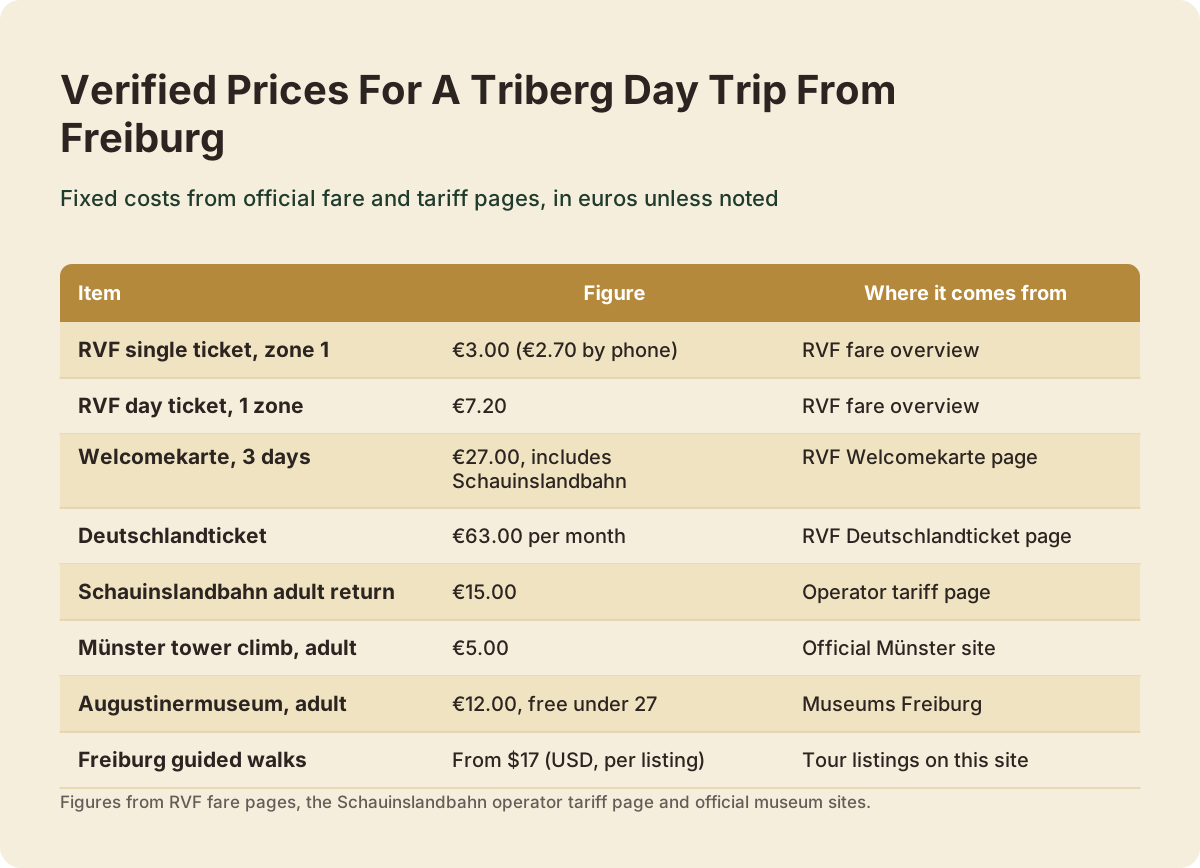
A note on the EUR side of the falls themselves: this guide deliberately does not print a Triberg entrance figure, because the verified facts pack behind this site does not carry one, and the site does not print numbers it cannot trace. The falls operator posts its rates at the gate and on its own pages, and that is where the current figure belongs. Everything else in the table above is traceable to a fare or tariff page, which is the standard this site holds itself to.
Making The Day Feel Effortless
The difference between a good Triberg day and a rushed one is sequencing, not spending: book nothing you cannot cancel, leave Freiburg early enough that the falls beat the midday buses, keep the return leg loose in case a stop catches you, and treat one guided element, at most, as the day's fixed point. Travelers who over-schedule a forest day always end up watching the clock instead of the water.
Practical closers worth acting on: carry cash or a contactless card for small-town cafés, since not every clock-shop counter takes cards; download any rail tickets before you lose signal in the valleys; and put the falls' own site in your phone before you leave the hotel so the entry rate and any path closures are one tap away. If you are traveling in a group with mixed languages or interests, splitting briefly, clocks for one half, gorge for the other, works easily in a town this size.
If the falls day leaves you hungry for the deeper Black Forest, our overview guide to the Black Forest region is the natural next read, and Freiburg Travel Guide covers the city base that makes days like this simple to run. A second day out toward the lakes or the high road completes the picture, and most travelers find two excursions plus two city days is the sweet spot for a first visit.
Common Questions About The Triberg Waterfalls
How do I get from Freiburg to the Triberg waterfalls?
By rental car across the southern Black Forest, or by regional train with a change along the scenic central line. Both take real time in each direction, so plan a full day. Check live timetables before you go, since the Black Forest rail lines run periodic maintenance closures with replacement buses.
How much does it cost to visit the Triberg waterfalls?
The falls charge admission at the gate, and the current rate is posted at the entrance and on the operator's own site. This guide does not print a figure it cannot trace to a verified source, so check the official page for the live price. Budget a museum-ticket-sized line item per adult as a mental anchor.
How long should I spend at the Triberg waterfalls?
Allow two to three hours for the falls area at a normal pace, covering the lower platforms and the upper loop. Add another hour or two for the town's clock shops and lunch, and the falls-plus-town core of the day runs four to five hours before travel time is counted.
Is the Triberg waterfalls trip doable by public transport from Freiburg?
Yes, though it is a longer day than by car. Regional trains reach Triberg on a scenic corridor famous for its viaducts and tunnels, normally with a change along the way. Confirm the connection and any engineering works on the live timetable before committing the day to rail.
What is the best time of year to see the Triberg waterfalls?
June and September balance strong water flow, workable weather and thinner crowds. The wettest months, May through August per the region's climate record, swell the falls most, but July and August also bring the peak visitors. Winter can ice the paths, so check conditions in cold months.
Can I combine the Triberg waterfalls with other Black Forest sights in one day?
Yes, if you drive and limit yourself to two stops. Titisee is the classic second stop, and Schauinsland works if you are returning to Freiburg from the south, though its cable car closes for its autumn overhaul from 16 November to 4 December 2026. Three stops in a day gets rushed.