Black Forest Cuckoo Clocks: A Practical Buying Guide From Freiburg
The valleys that produce the Black Forest cuckoo clock start just south of the Freiburg tram lines, which makes the city the most convenient base in Germany for buying one. This guide covers what to check before you pay, which villages are worth the train fare, and how the whole trip fits together.
Short answer
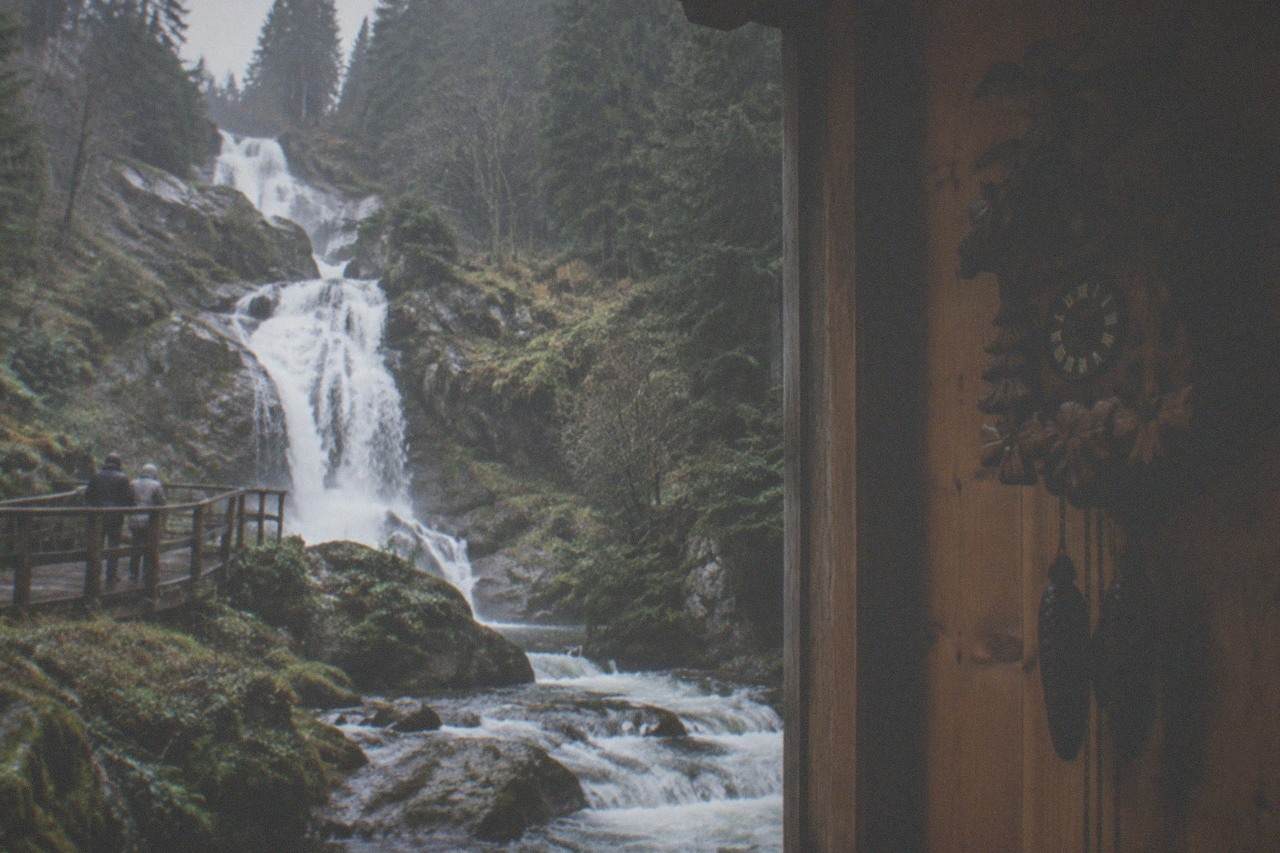
Black Forest cuckoo clocks are carved and assembled in workshops across the uplands south of Freiburg. Triberg and Titisee sit on direct regional trains from the city, and the RVF Welcomekarte costs €27.00 for 3 days and includes the Schauinslandbahn cable car. Freiburg's old town also stocks clocks, and the 2026 Christmas market runs 19 November to 23 December.
What Is A Black Forest Cuckoo Clock?
A Black Forest cuckoo clock is a weight-driven wall clock with a carved wooden case, made in the workshops of the Black Forest, the hill country that rises directly south of Freiburg. Two small bellows push air through twin pipes to make the bird call, and falling weights drive the movement. No batteries are involved in the traditional design.
The craft has been centered on these valleys for centuries, and it grew out of the same combination that shaped the whole region: long winters, plenty of soft wood, and farm families who needed work when the fields were under snow. Workshops passed their carving patterns and movement designs down through generations, and many of the family names on clock cases today are the same names that appear on pieces hanging in farmhouses across Baden. The classic cases show oak leaves, hunting scenes, birds and animals, all carved rather than applied.
What surprises many first-time buyers is how little of the region you have to cross to reach the craft. The Black Forest begins, quite literally, at the edge of town, and the tram lines that run south from the city center point straight at it. This Freiburg Travel Guide treats the city as the working base for exactly this kind of trip, and the broader region has its own coverage in the wider Black Forest region guide, from the high road to the lakes.
A cuckoo clock is also one of the few souvenirs that still functions as originally intended. A mechanical movement tick-tocks audibly, the bird emerges on the hour and the half hour, and the weights need winding by hand. That is the difference between an object and an ornament, and it is worth understanding before you spend money, because the market around the region sells both.

Where To Buy A Cuckoo Clock Around Freiburg
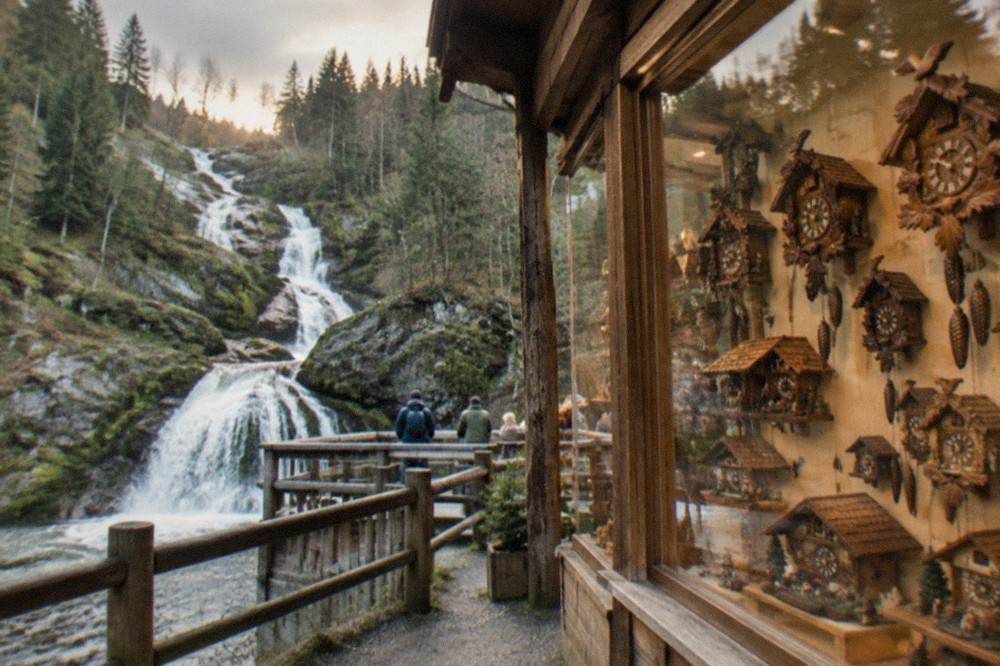
Around Freiburg you can buy in three settings: specialist shops in the old town that stock clocks from regional workshops, the workshops themselves in villages such as Triberg, and seasonal market stalls. The Christmas market on and around Rathausplatz runs 19 November to 23 December 2026 with free entry, and it is the easiest in-town place to compare carved cases side by side.
The old town option suits anyone with limited time. Shops within walking distance of the Münster keep a range of clocks, from small carved pieces to large hunting-scene cases, and most will arrange shipping. The advantage is comparison: several shops in a short walk means you can weigh carving quality against price in an afternoon, then decide whether to buy in the city or push on to a workshop where the clocks are actually made.
The workshop option is the deeper experience. In the villages, the person behind the counter is often the person who assembled the movement or carved the case, and many workshops will open the back of a clock to show you the mechanics. You pay for craft you can see being done. The trade-off is a full day of travel, which is a fair exchange if the clock is the point of your trip rather than one item on a long list.
The market option is seasonal and social. The Freiburg Christmas market spreads across Rathausplatz, Kartoffelmarkt, Unterlindenplatz, Franziskanerstraße and further Altstadt locations, with well over a hundred stands in total, and the official market site lists the current layout and hours. Craft stalls there lean toward smaller pieces, and prices reflect the convenience. If a stall trader cannot tell you where a clock was made or by whom, treat that as information.
Before you commit anywhere, it helps to have walked the city with someone who knows it, if only to understand what the old town itself contributes to the story the clocks come from. The trio below covers the established English-language city walks, all short, all centered on the lanes and gates you will pass on any shopping day.
How To Spot An Authentic Black Forest Cuckoo Clock
An authentic Black Forest cuckoo clock has a mechanical movement driven by weights and a pendulum, a case carved in wood rather than molded or printed, and a certificate naming the workshop or the Black Forest clockmakers' association. A quartz movement running on a battery is a replica of the style, not the craft, whatever the label on the box says.
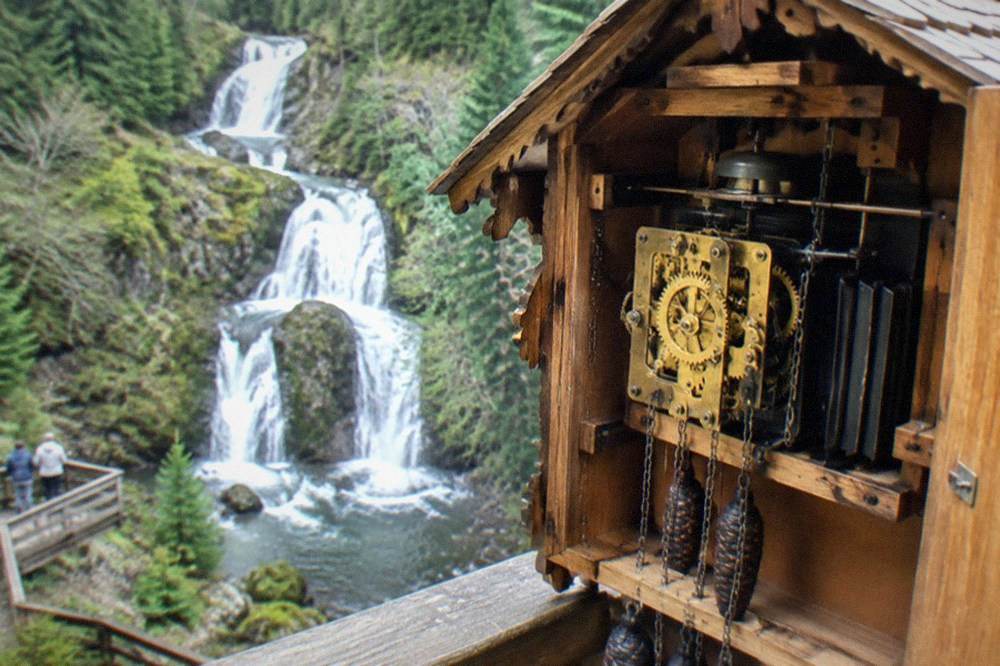
Start with the movement, because it is the part that defines everything else. Mechanical clocks come in two practical types, wound daily or wound weekly, and the difference shows up in the weights you will see hanging below the case. A quartz clock keeps time with a battery and plays its call through a speaker. Quartz pieces are cheaper, lighter and easier to live with, and there is nothing wrong with buying one knowingly. The problem is paying craft prices for a battery clock, which happens constantly in tourist areas.
Then look at the case. Hand-carved wood has tool marks, slight asymmetries and depth; machine-made cases are uniform, thinner in detail and often stained rather than carved through. Lift the clock if you can. Solid carved cases have real heft. Ask the seller to open the back: a workshop that stands behind its clocks will show you the movement, and the guts of a mechanical clock are visibly different from a battery compartment.
| What to check | What good looks like | Red flag |
|---|---|---|
| Movement | Weights, pendulum and bellows, mechanical winding | Battery compartment, plastic parts, digital sound |
| Case | Carved wood with depth and tool marks | Molded resin, glued-on trim, printed grain |
| Certificate | Names the workshop or the clockmakers' association | No paper, or a generic card with no maker |
| Sound | Air through wooden bellows, slightly imperfect | Speaker playback, identical every time |
| Seller | Can name the maker and open the back | Vague about origin, discourages inspection |
Buy where the seller invites inspection. A certificate from the maker, or from the association of Black Forest clockmakers, is the paper trail that matters, and honest shops mention it before you ask. Keep that certificate with the receipt, because it is what a future buyer or insurer will want to see if the clock ever changes hands.
Which Clock Towns Are Easy Day Trips From Freiburg?
Triberg is the classic destination, a small town packed with clock shops in the heart of the craft's home valleys, and Titisee pairs lake scenery with souvenir shopping on a direct regional train from Freiburg. Schauinsland, St. Peter and Staufen each put a different face on the same region. All sit within a comfortable day trip by rail and cable car.
Triberg is where the image of the Black Forest cuckoo clock was built. The town's shops range from serious workshops to pure souvenir stands, so the authenticity checklist above earns its keep there more than anywhere else. Triberg's shops and waterfall walks are covered in their own guide, including the town's famous falls and the dark woodland trails that made the region's name. Go expecting crowds in high summer and a genuinely impressive concentration of carving.
Titisee is the softer trip. The lake sits at the heart of the Hochschwarzwald, the shops around the promenade stock clocks alongside everything else, and you can break a shopping morning with a walk on the shore. The lake at Titisee guide covers swimming, boats and the surrounding trails. Between the two, Triberg is the specialist's town and Titisee the family's, and travelers with two spare days often do both.
| Town | What it offers a clock buyer | Best for |
|---|---|---|
| Triberg | Densest concentration of clock shops and workshops | The serious purchase |
| Titisee | Lakeside shopping with scenery and boat docks | A relaxed combined day |
| Schauinsland | Summit views by cable car, mining museum on the mountain | Pairing craft with panorama |
| St. Peter | Abbey village atmosphere on a high plateau | Quiet lanes, farm shops |
| Staufen | Old-town lanes in Markgräflerland wine country | Wine plus a smaller clock run |
The two smaller options round out the picture. St. Peter and nearby St. Märgen sit on quiet plateaus where the monastery history runs deeper than the souvenir trade, and Staufen, down in the wine country, mixes a handsome old town with the region's other famous export. Neither is a clock capital, and that is exactly the point: they show the region the clocks actually come from.
Before you spend your days on trains, it is worth giving Freiburg's own fabric an hour and a half. The Gässle, Bächle and More City Tour, rated 4.7 across 3,187 reviews and priced from $15, winds through the lanes, gutters and gates that most clock-buying visitors rush past on their way south, and it costs less than a return train ticket.
Timing holds the trip together. The most efficient pattern is a walking day in the city, one train day south for the workshops, and the final afternoon for packing or shipping, which keeps every leg short and lets you compare city prices against workshop prices before you commit. Anyone who would rather hand the logistics to a guide can pick a format below.
How Do You Get To The Clock Villages Without A Car?
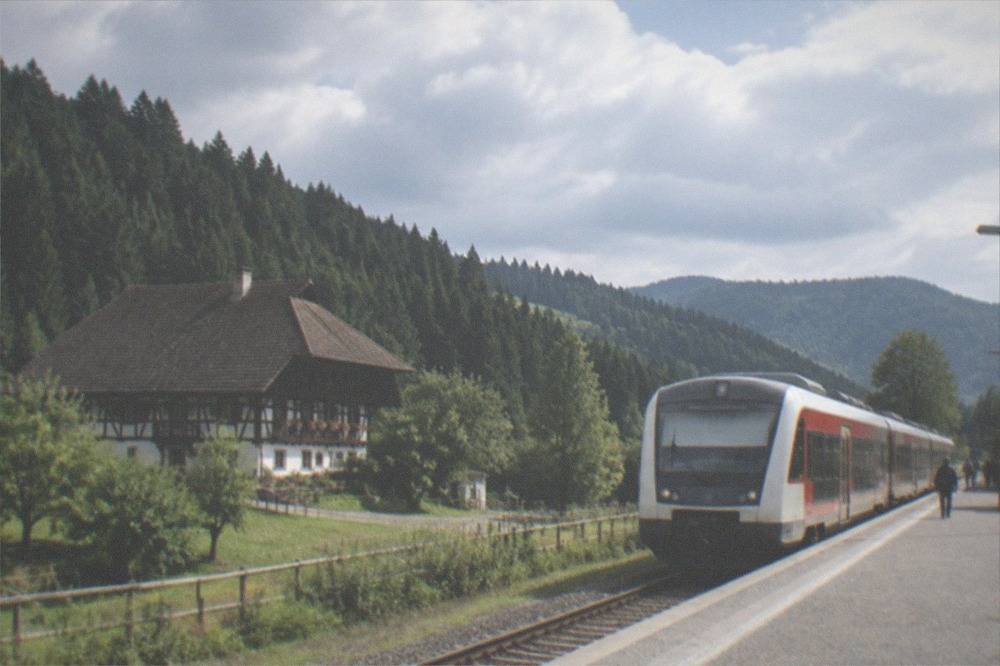
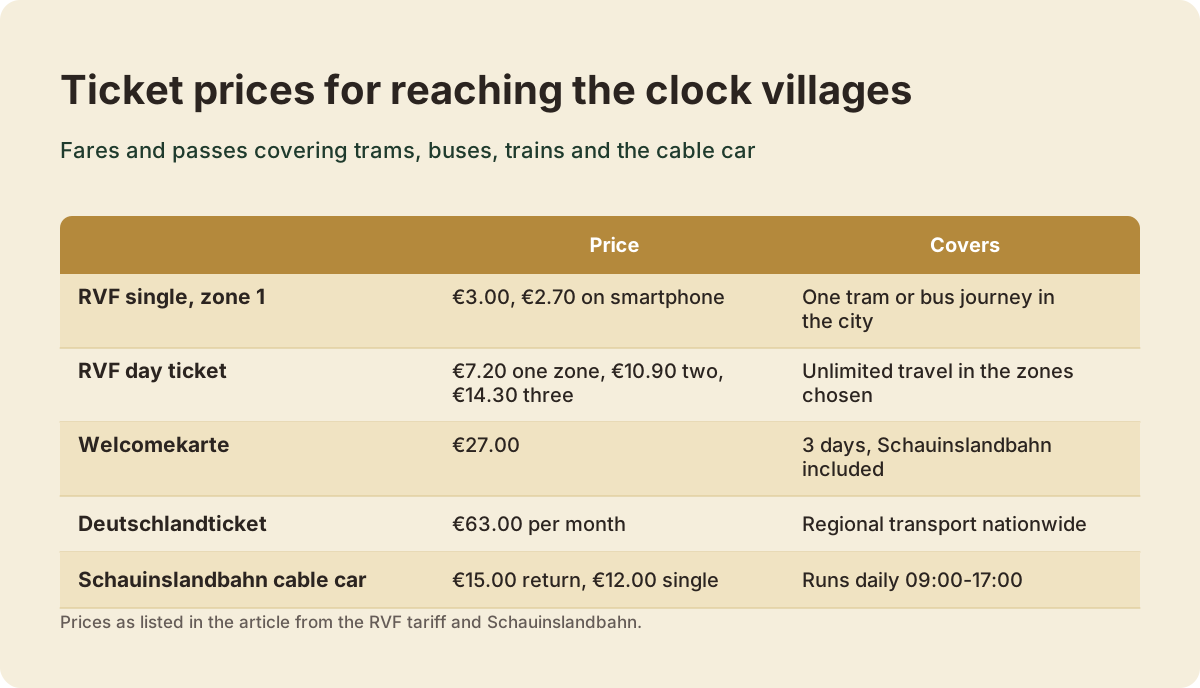
Regional trains from Freiburg Hauptbahnhof reach the southern Black Forest valleys directly, and the RVF network of trams and buses covers the city itself. A single zone 1 ticket costs €3.00, a one-zone day ticket €7.20, and the 3-day Welcomekarte costs €27.00 and includes a ride on the Schauinslandbahn cable car, whose normal adult return is €15.00.
The ticketing is simpler than it looks. Within the city, single tickets and day tickets from the RVF tariff cover every tram and bus. For a stay of a few days, the Welcomekarte is the visitor product to know: according to the RVF's Welcomekarte page, it covers three days of buses and trains in the network, includes a Schauinslandbahn ride and adds a Kulturbonus for culture venues. Longer stays or heavy regional travel can justify the Deutschlandticket at €63.00 per month, which is valid nationwide on regional transport.
One caution that trips up Black Forest visitors: Freiburg itself does not issue the KONUS guest card. The KONUS card comes from member towns in the region, places such as Titisee-Neustadt, Kirchzarten and Bad Krozingen, and a card issued there is valid on Freiburg's trams. But a hotel stay inside Freiburg does not hand you one. The Welcomekarte is the city's own product, and conflating the two is the single most common planning mistake in the region.
| Ticket | Price | What it covers |
|---|---|---|
| RVF single, zone 1 | €3.00, €2.70 on smartphone | One tram or bus journey in the city |
| RVF day ticket | €7.20 one zone, €10.90 two, €14.30 three | Unlimited travel in the zones chosen |
| Welcomekarte | €27.00 | 3 days of buses and trains, Schauinslandbahn included, Kulturbonus |
| Deutschlandticket | €63.00 per month | Regional transport nationwide |
Two works calendars are worth a glance before you lock in train days. Scheduled engineering works in early October 2026 are replacing some trains with buses between Freiburg and Basel for a long weekend, which ripples into connections toward the southern valleys, and the city's main station is in the middle of a barrier-free modernization that runs into 2028. Neither blocks travel, but both reward checking current connections the day before you ride.
The Schauinslandbahn makes a fine add-on on any southern day. The cable car runs daily 09:00-17:00, stretching to 18:00 in the Baden-Württemberg summer holidays, over a 3,600 m haul to the summit, with adult returns at €15.00 and singles at €12.00 per the official tariff page. Its autumn overhaul closes the cable car and the mountain restaurant from 16 November to 4 December 2026, so plan around that window. The Schauinsland cable car guide covers the summit, the tower and the mining museum.
What Else To See In Freiburg Between Village Trips?
The Münster tower climb costs €5 for adults and takes you to a gallery at 70 m, not the full 116 m of the tower, and the Augustinermuseum charges €12 with under-27s admitted free, so the in-town sightseeing between village trips costs very little. Museums, market squares and the Bächle-lined lanes fill a spare morning or a rainy afternoon.
The tower climb is the best five euros in the city. The west tower stands 116 m, and visitors climb 300-odd steps to a gallery at 70 m; the top gallery closes in winter. The Münster itself is free to enter, and the market at its feet runs Monday to Friday from 07:30 and Saturdays until early afternoon, with up to 130 stalls. It is the city at its most itself, and it sits two minutes from most of the clock shops.
| Museum | Admission | Notes |
|---|---|---|
| Augustinermuseum | €12, reduced €8 | Day ticket valid for the other city museums; free under 27 |
| Museum für Neue Kunst | €7, reduced €5 | Open late on Thursdays |
| Archäologisches Museum Colombischlössle | €5, reduced €3 | Small, central, quickly visited |
| Museum Natur und Mensch | €5, reduced €3 | Permanent exhibition closed to about end of February 2027 |
| Dokumentationszentrum Nationalsozialismus | Free | The city's difficult history, plainly told |
The Augustinermuseum fully reopened in February 2026 after more than two decades of phased renovation, and its new spaces in the former convent building make it the city's flagship again. Under-27s enter free across the city museums, as the official museums admissions page confirms, which quietly makes Freiburg one of the better-value culture stops in the region for families.
A guided walk turns the same material into a story. The Tour of the City with Cathedral Visit, rated 4.6 across 284 reviews and priced from $20, spends roughly 90 minutes on the old town and finishes at the Münster, which slots neatly into the morning before a southern train.

When Is The Best Time To Shop For Cuckoo Clocks?
Late spring through early autumn gives the best combination of long daylight, open workshops and rideable mountain weather, and Freiburg's own climate supports it: the city averages 1,815.1 hours of sunshine a year with a July mean of 20.1 °C. For atmosphere over convenience, the Christmas market window from 19 November to 23 December 2026 is unmatched.
The numbers behind that advice come from the German weather service's long-term averages for the Freiburg station. Summer days are warm without being extreme, spring is the driest sensible window, and autumn holds up well into October before the light shortens. May is the wettest month on the averages, at 103.4 mm, so a May trip should carry a rain plan.
| Period | Mean temperature | Sunshine hours | Rainfall |
|---|---|---|---|
| January | 2.5 °C | 64.7 h | 48.6 mm |
| April | 7.0 °C | 182.2 h | 63.8 mm |
| July | 20.1 °C | 252.2 h | 92.2 mm |
| October | 10.9 °C | 116.2 h | 78.5 mm |
| Year | 11.0 °C | 1,815.1 h | 886.5 mm |
Winter deserves a fair hearing, though. The Christmas market period is the most atmospheric time to buy a clock in the city, workshops run quietly in the valleys, and the tower's top gallery is the only thing that closes. The trade is cold streets, short days and the need to book rooms early, since the market draws its own crowd.
However you time it, one more walk is easy to fit on any final morning. Highlights of the Old Town, rated 4.6 across 236 reviews and priced from $17, compresses the gates, squares and lanes into about 90 minutes, a sensible last look before a train home with a carved case in your luggage.
How To Bring A Cuckoo Clock Home Safely
Workshops in the region ship internationally and pack the clock with the weights, chains and pendulum detached, which is how mechanical movements travel best. Keep the certificate and the winding instructions with the clock, and hang the finished piece on a wall stud or a solid hook, because the weights give a running clock real pull.
Ask about shipping at the point of sale, not afterward. Most established workshops ship routinely and will quote it on the spot, and a clock that travels in a purpose-packed crate arrives in better condition than one wedged into a suitcase. If you carry it yourself, the same principle applies at a smaller scale: detach the weights and the pendulum, wrap them separately, and keep the chains from tangling, which is the fiddliest part of any reassembly.
Once home, hang the clock on a wall that does not vibrate, level it so the pendulum swings evenly, and give the weights room to drop their full run. A clock wound daily will stop within a day of neglect; a weekly movement buys you more rope, so to speak. Let the movement settle for a few days before adjusting the pendulum, since transport can throw off even a well-packed clock.
Paperwork is part of the object. The certificate, the receipt and any maker's booklet should live with the clock, and photographs of the movement before you unpack it are cheap insurance if anything is damaged in transit. Within the European Union there is no import question to worry about; for other destinations, check your home country's rules on wooden items before you fly, and keep the commercial receipt for customs.
If the whole thing appeals but the trip still feels loose, the three walks below cover the city end of it, and the workshops do the rest.
Common Questions About Black Forest Cuckoo Clocks
Are Black Forest cuckoo clocks still made by hand?
Yes, in the traditional workshops of the region the cases are carved and the movements assembled by hand, though output is limited and machine assistance exists in the wider market. Ask any seller to open the back of a clock: a workshop piece shows its bellows, weights and mechanical movement plainly, and honest shops do this without being asked twice.
How much does a real Black Forest cuckoo clock cost?
Prices scale with size, carving depth and movement type, and the honest answer is that the workshop quotes them individually. A small hand-carved mechanical piece costs meaningfully more than a quartz replica, and large hunting-scene cases sit at the top of the range. Compare a city shop price against a workshop price before deciding, and treat any certificate-less bargain with suspicion.
Is Triberg worth a day trip from Freiburg?
For a clock buyer, yes: Triberg has the densest concentration of clock shops in the region and sits in the heart of the craft's home valleys, reachable on a regional train with a change or two. The town also has its famous waterfalls and dark woodland walks. In high summer it gets crowded, so an early start pays.
Do I need a car to visit the clock villages?
No. Regional trains from Freiburg Hauptbahnhof serve the southern valleys, and the RVF ticket family covers both the city network and regional rail within its zones. The 3-day Welcomekarte at €27.00 includes the Schauinslandbahn cable car. A car adds flexibility for tiny hamlets and workshop addresses off the rail lines, but the classic destinations work fine without one.
How often does a mechanical cuckoo clock need winding?
Mechanical movements are made in two practical types, wound daily or wound weekly, and the weights hanging below the case tell you which you have. Daily movements stop after a day without attention; weekly movements run on a longer drop of chain. Quartz replicas run on a battery and need no winding at all, which is one reason they cost less.