What Is The Most Beautiful Street In Freiburg?
An honest, researched answer to which street in Freiburg is the most beautiful, with the leading candidates, a half-day walking route, and what guided tours cost.
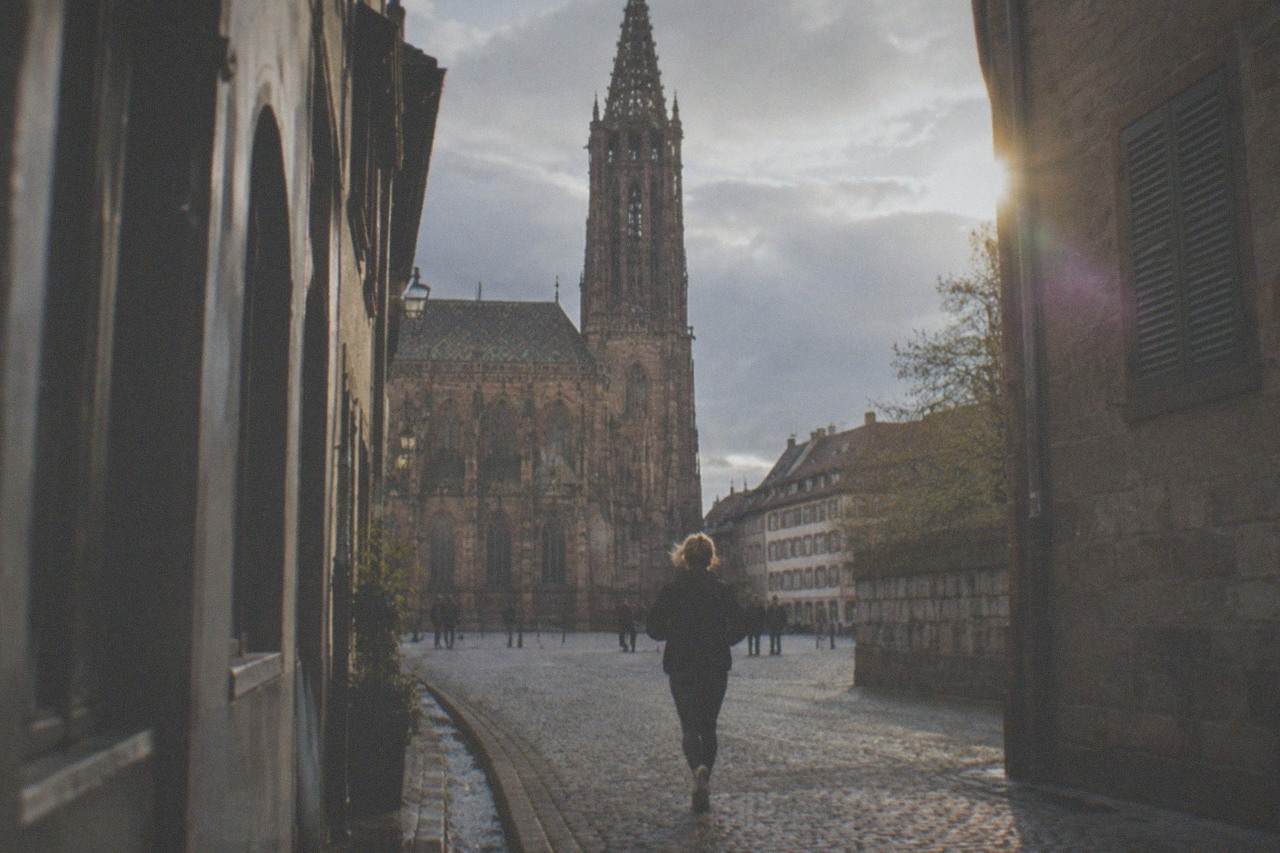
What Is The Most Beautiful Street In Freiburg?
There is no official title, and the city hands out no prize, but the honest answer is Gerberau: the narrow medieval lane that runs parallel to the Dreisam's former mill channel south of the Münster, where half-timbered houses lean over a small watercourse and the tourist crowds thin out within a hundred meters. Konviktstraße, the café lane just off the cathedral square, and Fischerau, Gerberau's quieter continuation, are the two other names that belong in any shortlist.
That answer deserves unpacking, because "most beautiful" is a judgment and the sources that hand it out are mostly listicles. What this page can do honestly is describe the candidates, explain what each one actually looks like when you are standing in it, and let the Münster's own shadow do the tie-breaking. Freiburg's old town is small enough that you can walk every street named here in a single afternoon, which is exactly why the question feels worth asking in the first place: with so much packed into a few blocks, one lane inevitably earns the title.
Gerberau wins on the criteria that most people mean when they say beautiful in a German old town. It is narrow. It carries water, in the form of the Gewerbekanal, a mill channel that runs openly along the cobbles, a cousin of the famous Bächle that gutter the rest of the center. It is lined with buildings that predate the era when streets were widened for cars, because it never needed to be widened. And it has the quality that a photograph cannot fake: it changes completely from end to end, starting near the busy Augustinerplatz and finishing in a quiet stretch where the lane bends and you can hear the water rather than the trams.
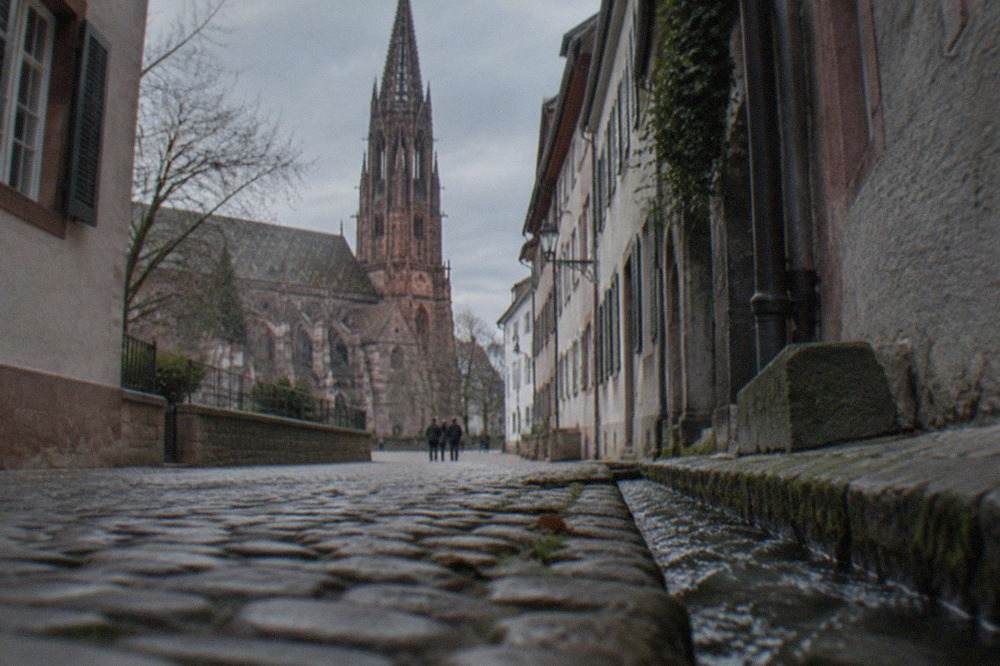
The editorial case matters here because no measurement exists. No city office rates its streets, no survey ranks them, and any page that states flatly that one lane is officially the most beautiful in Freiburg is dressing an opinion as a fact. What can be said with confidence is which streets come up, again and again, when the old town is described: the lanes immediately south and west of the Münster, the café stretch of Konviktstraße, and the pair of Gerberau and Fischerau. If you are planning the trip around one photograph, this site's companion piece on Freiburg's old town as a whole puts these lanes on the map in context.
Why Gerberau And Fischerau Top The Shortlist
Gerberau and Fischerau together form one continuous medieval passage through the old town's southwest corner, following the open mill channel that gives the lane its sound and its reflections, and they top the list because they deliver the complete package: water, timber framing, narrowness, low traffic, and a bend that hides the exit so the street seems to end in another century.
Start at the Augustinerplatz end, where the broad steps of the former Augustinian monastery church now serve as the city's favorite outdoor sitting spot. Gerberau leaves that square heading east, and within twenty meters it has narrowed to single-file width. The water runs along the right-hand side. The houses are close enough overhead that on a rainy day the lane stays mostly dry, which locals will tell you has been true for centuries. Halfway down, the lane crosses a tiny bridge where a side alley, the Fischerau, joins from the south, and together they finish the run toward the canal basin by the Schwabentor side of the center.
Fischerau is the quieter half, and many walkers who claim it is the more beautiful of the two are really saying they prefer a street without an audience. The lane is narrower still, dark for most of the afternoon, and it holds a handful of the small restaurants and wine taverns that make this corner of the old town the evening quarter rather than the daytime one. This site's dedicated guide to Gerberau and Fischerau walks the route in full detail if you want the stop-by-stop version, but the short version is this: walk it once at midday and once after dark, because the two visits feel like two different streets.
If you would rather have someone who knows the lanes put the route together for you, the two-hour private option below is built around exactly this part of the center.
Konviktstraße, Salzstraße And The Other Contenders
Konviktstraße is the strongest rival: a short, wide café lane running directly off the Münsterplatz, where chairs spill onto cobbles under the cathedral's tower, and it wins on atmosphere and convenience rather than on medieval fabric, since Salzstraße, the historic market street at the square's north side, is the busier but less photogenic counterweight.
The honest comparison looks like this:
| Street | Character | What To Look For | Best Time |
|---|---|---|---|
| Gerberau | Narrow medieval lane with open mill channel | Half-timbered facades, the water running beside the cobbles, the bend near the end | Mid-morning, low light |
| Fischerau | Quieter continuation, barely a lane wide | Dark timber framing, small tavern entrances, almost no traffic | Evening |
| Konviktstraße | Café lane directly off the cathedral square | Chairs on cobbles with the Münster tower above, the Bächle at the kerb | Late afternoon into evening |
| Salzstraße | Wide historic market street | The framed view toward the Münster's west front, the market traffic on weekdays | Morning market hours |
| Oberlinden | Small tree-shaded square with a tram line | The Lindebrunnen fountain, geranium-lined facades, quiet corners | Any dry afternoon |
Konviktstraße's argument is that beauty in a city street is partly about what towers over it. The lane is short, and on its own it would be a pleasant row of restaurants. But it sits in the Münster's shadow, literally: the cathedral's 116 m west tower rises at the end of the view, and in the late afternoon the light comes down the lane with the tower silhouetted behind the café umbrellas. It is the single most photographed stretch of ordinary street in the city for exactly that reason. The tower's own page lists the climbing hours and prices, and the view from the 70 m gallery is the one place where you can see how all these lanes fit together: the official Turmbesteigung page has the current times.
Salzstraße is the street that locals would name if you asked for the most important rather than the most beautiful. It has carried market traffic for centuries, it is the wide spine that connects the cathedral square to the Siegesdenkmal at the old town's edge, and its beauty is architectural rather than intimate: the framed view down the street toward the Münster's west front is one of the classic photographs of the city. Walk it, but photograph it from the cathedral end. The full index of guides sits on Freiburg Travel Guide.
Oberlinden, at the southern end of the old town, is the dark-horse candidate. It is technically a small square rather than a street, but the traveler who reaches it after the crowds of the Münsterplatz usually remembers it as the moment the city became quiet. The fountain, the tram line curving through, and the flower-covered facades make it a five-minute stop that belongs on any beautiful-streets list.
Still deciding whether a guide is worth it for streets you could easily walk alone? The two-hour historic center walk can be canceled free of charge, and the whole set of lanes above fits comfortably inside its route, so there is little risk in holding a slot while you finalize your plans.
A Half-Day Route That Covers All Of Them
The full set of candidate streets fits into a loop of about two hours on foot: start at Oberlinden, walk north through the old town to the Münsterplatz, take Konviktstraße west, drop down Augustinerstraße to Gerberau and Fischerau, finish at the Schwabentor, and return along the Dreisam, with the tower climb and the Münstermarkt both sitting inside the loop if you want them.
The route works because the old town is compact and flat. Trams reach every edge of it, and a single RVF zone 1 ticket, €3.00 for an adult, covers any tram ride inside the city, with a day ticket at €7.20 if you plan to hop on and off. The official tariff page carries all current prices: the RVF fare overview lists singles, day tickets and the Deutschlandticket at €63.00 per month.
The cost of the add-ons is modest and fixed:
| Item | Price | Notes |
|---|---|---|
| Münster tower climb, adult | €5.00 | Mon-Sat 11:00-16:00, Sun and holidays 13:00-17:00; gallery at 70 m, closed in winter |
| Münster tower climb, child or teen | €3.00 | Family ticket €13.00, under 7 free |
| RVF single ticket, zone 1 | €3.00 | €2.70 on a smartphone |
| RVF day ticket, 1 zone | €7.20 | Covers all trams and buses in the city zone |
| RVF Welcomekarte | €27.00 | 3 days, includes buses, trains and the Schauinslandbahn cable car |
Time the loop for the morning if you can. The Münstermarkt runs Monday to Friday from 07:30 to 13:30, with up to 130 stalls spread across the square on the cathedral's south side, and the combination of the market, the tower and the quiet lanes is the whole reason the old town earns its reputation. The market's official page has the current hours: visit.freiburg.de's Münstermarkt guide is the primary source. Walk the lanes before the market closes, then climb the tower, then do Gerberau and Fischerau in the early evening when the taverns open and the lane earns its second, quieter face.
What Guided Walks Of These Streets Cost
A guided walk of the streets described here runs from $3 for a self-guided scavenger hunt format up to about $239 for a private guide, with the popular small-group city tours clustered between $15 and $26 per person, and the choice matters less for the route than for the storytelling, since every operator walks substantially the same lanes.
The honest price picture, drawn from this site's own tour listings:
| Tour | Duration | Price From | Rating |
|---|---|---|---|
| Scavenger hunt self-guided tour | ~3 hours | $45 | 4.9 across 15 reviews |
| Gässle, Bächle and More City Tour | ~1.5 hours | $15 | 4.7 across 3,187 reviews |
| Highlights of the Old Town | ~1.5 hours | $17 | 4.6 across 236 reviews |
| Guided City Tours with Actors | ~1.5 hours | $17 | 4.9 across 497 reviews |
| Exciting City Tour with Sightseeing and History | ~2 hours | $26 | 4.4 across 118 reviews |
| Walking and Strolling the Historic Center | ~2 hours | $228 | 6 reviews, too few for a star claim |
The big-review tours are the safe mainstream choice: the Gässle and Bächle tour, at 4.7 across 3,187 reviews, is the volume leader, and its subject is precisely the small lanes and gutters this page is about. The actor-led tours, at 4.9 across 497 reviews, trade depth for theater and suit families with children whose patience for architectural detail runs short. The private options, including the two-hour historic center walk that is this page's related tour and the Italian-language private tour below, cost a multiple of the group price but buy the freedom to linger on Gerberau for as long as the light lasts.
For Italian-speaking visitors, that private option runs about an hour and a half from $51, with 11 reviews so far, too few to support a rating claim either way. Every price here is in US dollars as listed on this site's booking panels; the euro prices in the tables above are the local till prices for transit and the tower, and the two never mix.
When The Streets Look Their Best
The lanes look their best between late spring and early autumn, when the café chairs are out, the geraniums on the facades are in flower and the city's long daylight holds until evening, with July the warmest month at a mean of 20.1 °C and the shoulder months of May and September offering the same light with fewer visitors.
Freiburg's climate record, from the German weather service's 1991-2020 normals for its station in the city, gives the planning numbers plainly: an annual mean of 11.0 °C, about 1,815.1 hours of sunshine per year, and roughly 18 days a year at 30 °C or above, nearly all of them in July and August. That sunshine record is what earns the city its reputation as one of Germany's warmest and sunniest cities, a phrasing chosen carefully, because the station data does not support the stronger claim that it is the single warmest or sunniest place in the country.
For photography, the specifics matter more than the averages. Gerberau runs roughly east-west, so the mill channel catches light in the morning and goes into blue shadow by mid-afternoon, which is when its dark timber looks most dramatic. Konviktstraße faces the tower, so the classic shot wants the sun behind you, meaning late afternoon in summer when the light comes down the lane from the west. The Münster's sandstone goes golden in the last hour before sunset, and the market square empties after the stalls close at 13:30, leaving a short window in which the square is quiet and the light still strong.
Winter changes the answer rather than ending it. The tower's top gallery closes for the season, but the lanes keep their water and their framing, and from 19 November to 23 December the Christmas market fills the Rathausplatz end of the old town, an event this site covers separately in its guide to the Freiburg Christmas market. A cold, dry December evening on Gerberau, with the taverns lit and the market within two minutes' walk, is a genuine rival to any summer morning there.
Common Questions About Freiburg's Most Beautiful Streets
What is the most beautiful street in Freiburg?
There is no official title, but the honest shortlist is led by Gerberau, the medieval lane with the open mill channel south of the Münster, with Fischerau as its quieter continuation and Konviktstraße, the café lane in the cathedral's shadow, as the strongest rival. Salzstraße and Oberlinden complete the set.
Are the Bächle only on the beautiful streets?
No. The Bächle, the small gutters running beside the cobbles, run through most of the old town's streets, not just the prettiest ones. They are simply most noticeable and most photographed on the narrow lanes where the water and the timber framing share the same view.
Can you walk all these streets in one day?
Yes, easily. The candidate streets all sit within a loop of roughly two hours on foot, and the old town is flat and compact. Add the Münster tower climb, at €5 for an adult, and the morning market, and the full version still fits in half a day.
Do you need a guided tour to enjoy them?
No. The lanes are public, free to walk and short enough to explore alone with a map. A guided tour adds history and stories rather than access; this site's listings run from a $3 self-guided scavenger hunt to private walks from around $141.
Which street is best for photographs?
Konviktstraße for the cathedral tower framed above the café cobbles, best in late afternoon summer light. Gerberau for the water and timber, best in the morning. The framed view of the Münster down Salzstraße is the classic wide shot, taken from the cathedral end.