What Is The Main City In The Black Forest Germany?
Freiburg im Breisgau is the main city in the Black Forest region of Germany, and this answer explains why, with verified figures on population, tourism and transport.
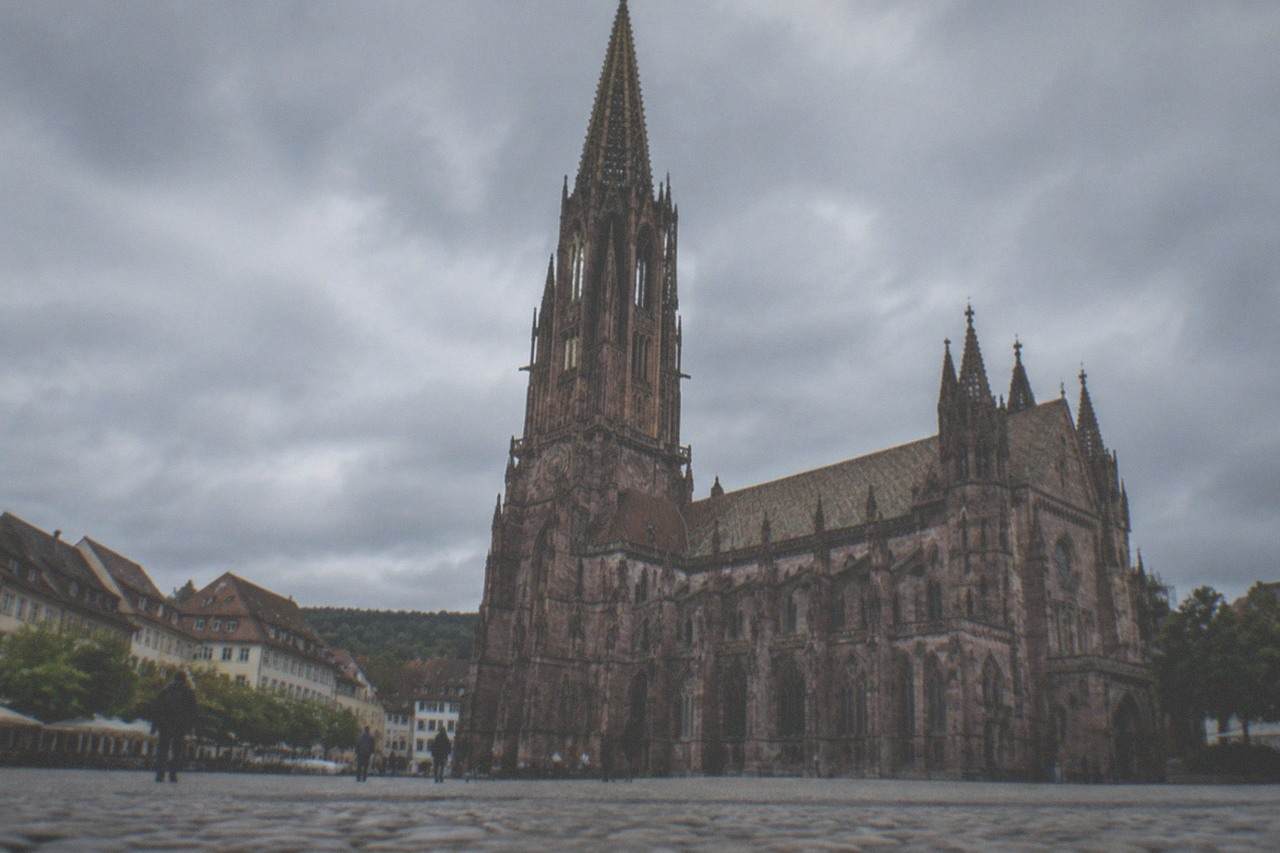
What Is The Main City In The Black Forest Germany?
Freiburg im Breisgau is the main city in the Black Forest region of Germany. With a population of 237,299 recorded in June 2025, it is by far the largest city on the forest's western rim, it sits at the junction of the routes into the southern and central Black Forest, and it is the transport hub where most visitors arrive before heading uphill. Freiburg recorded 1,010,708 arrivals and 2,130,785 overnight stays in 2025, more visitor traffic than any other place in the region.
What Is The Main City In The Black Forest Germany?
The main city of the Black Forest in Germany is Freiburg im Breisgau, a university city of 237,299 residents (June 2025 count). It sits at the southern edge of the forest in the south-western corner of Germany, making it the natural gateway for travellers heading into the region's valleys, spa towns, and hiking trails. It lies directly on the Black Forest's western edge, where the Dreisam valley opens toward the Upper Rhine plain, and everything from the region's highest mountain, the Feldberg, to the lakes at Titisee and Schluchsee is reachable from it by train in under an hour. The city's own tourism office markets it as the gateway to the Black Forest, and the rail and bus network is built around that role. No other city inside or beside the forest comes close in size or visitor volume.
The reason is partly geography and partly history. The Black Forest itself is a long, mountainous rectangle of spruce and fir that was historically a barrier rather than a heartland. Settlements inside it stayed small: places like Titisee-Neustadt, Triberg or Furtwangen are towns, not cities, and their economies were built on clockmaking, woodwork and farming. The big settlements grew on the rim, where trade routes ran, and the eastern rim belongs to Stuttgart's orbit while the western rim belongs to Freiburg's.
Freiburg has been the region's administrative, academic and ecclesiastical center for the better part of a millennium. Its university was chartered in 1457 by Albrecht VI of Austria and now enrolls 24,507 students in the winter semester, which keeps the city young and full even outside the summer travel season. The seat of the regional authority for the southern Upper Rhine area, it collects the functions a "main city" usually implies: courts, hospitals, the main rail junction, and the biggest concentration of hotels and restaurants between Basel and Offenburg.
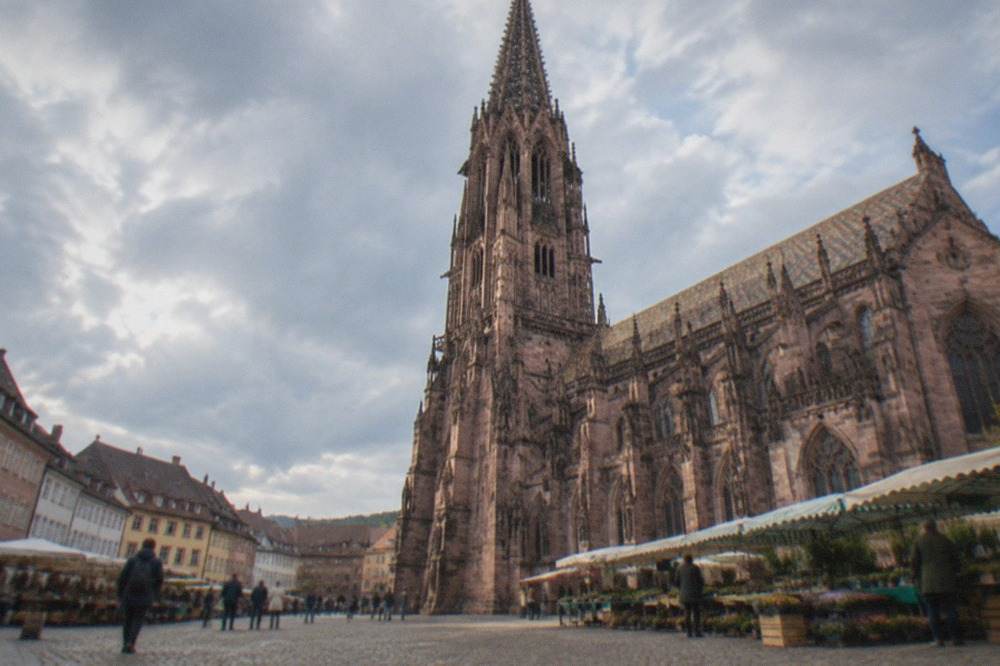
A fair objection is that Freiburg is not technically inside the forest. The city sits in the Rhine plain, with the mountains beginning a few tram stops to the east. But the Black Forest is a Naturpark and a tourism region defined by its natural boundary, not by municipal borders, and Freiburg is the largest city within that region's official marketing and transport association. The Schwarzwald Tourismus association, which runs the region's visitor information, lists Freiburg as a Black Forest destination, alongside smaller member towns. Freiburg does not issue the KONUS guest card; visitors there use the RVF Welcomekarte instead.
For a trip-planning view of the whole region, including the towns deeper in the hills, our Black Forest region guide lays out the main destinations by area, and our guide to where Freiburg actually sits covers the geography in more detail.
If you want a first taste of the main city before committing a full day to it, a short guided walk is the cheapest way to get oriented:
Why Freiburg Outranks The Region's Other Towns
No other settlement in the Black Forest matches Freiburg's size, transport links or visitor numbers, which together explain why it outranks every other town in the region. As the largest place in the area, it offers the strongest connections and draws more visitors than anywhere else nearby, leaving competing towns behind on all three measures. Those combined advantages make Freiburg the clear leader among the region's towns. Baden-Baden is the most famous name on the northern rim, but it is a spa town of a much smaller scale with a completely different character, quiet, luxurious and focused on its thermal baths rather than on being a hub. Offenburg and Villingen-Schwenningen are administrative towns. Titisee-Neustadt, the largest place actually inside the high forest, is a small town whose economy revolves around its lake and winter sports. Freiburg is the only genuine city among them.
The visitor numbers make the ranking concrete. Freiburg's 1,010,708 arrivals and 2,130,785 overnight stays in 2025, counted across all accommodation providers with at least ten beds, put it far ahead of any other destination in the region, and its 55.2 percent hotel bed occupancy in 2025 shows how steadily that capacity fills. The figures come from the city tourism authority's annual release and represent a slight normalization after several record years, but the gap below Freiburg remains wide. This site's own Freiburg Travel Guide coverage exists precisely because most Black Forest trips now begin here.
The clearest way to see the hierarchy is to compare what each place offers a visitor who wants to use it as a base:
| Place | Role in the Black Forest | Best used as |
|---|---|---|
| Freiburg im Breisgau | Main city, transport hub, 237,299 residents | Base for the whole region |
| Baden-Baden | Famous spa town on the northern rim | Short stay, thermal baths |
| Titisee-Neustadt | Largest town inside the high forest | Lake and winter sports trips |
| Triberg | Small town, waterfalls and cuckoo clocks | Day stop |
| Offenburg | Northern gateway, rail junction | Base for the north only |
Freiburg also wins on onward connections. Fast trains link it north to Offenburg, Karlsruhe and Frankfurt, south to Basel in Switzerland, and east into the hills on the Höllentalbahn, the scenic rack railway that climbs toward Titisee. The main station is currently being modernized with new lifts and platform roofs in a project running to December 2028, so expect some scaffolding there, but the connections themselves continue throughout the works.
One thing Freiburg does not offer is a KONUS guest card. The KONUS scheme, free local transport across the Black Forest's associations, is issued only by member municipalities, and Freiburg city is not one of them. Nearby member towns include Kirchzarten, Horben, Titisee-Neustadt, Bad Krozingen, Staufen and St. Peter, and a card issued there is valid on Freiburg's trams and buses, but a hotel stay in Freiburg itself does not include one. Visitors sleeping in Freiburg buy the RVF Welcomekarte instead, which covers three days of regional buses and trains for €27.00 and even includes the Schauinslandbahn cable car.
Which Cities And Towns Are Actually Inside The Forest?
The city or town most strictly located within the Black Forest's highlands is Titisee-Neustadt. Rather than a major city, it is a small town, and it stands as the largest settlement genuinely situated inside the forest's upland interior. The town is built around the lake of the same name, which gives it its identity and its setting deep in the forested highlands. Most of the region's population lives either on the rim or in the valleys, in places like Freudenstadt, Baiersbronn, Furtwangen, Donaueschingen and Löffingen. None of these is a city in the sense a traveler would recognize, and none tries to be. The forest's protected status, much of it is a Naturpark with steep, wooded terrain, has kept large-scale urban development out of the interior for centuries.
That absence is the point. People come to the Black Forest interior for hiking trails, waterfalls, gorges and quiet villages, and the towns inside it grew up as service centers for farming and clockmaking rather than as capitals. Triberg, Gengenbach, Schiltach and Alpirsbach are postcard towns with half-timbered facades, and their smallness is their product. A trip that only visits the interior misses the food, museum and university life that a real city supplies.
The practical split, then, is between rim cities and interior towns, and Freiburg is the strongest of the rim cities for anyone targeting the south. Baden-Baden and Offenburg do the same job for the north, and Basel, just across the Swiss border, functions as an international arrival point. Freiburg is the only one of these that combines a large historic old town, a working tram network and direct rail lines into the hills.
For the interior towns themselves, our guides to Triberg and its waterfalls and to Titisee cover what each one offers and how to reach it from Freiburg without a car.
How To Use The Main City As A Base
Freiburg works well as a base because its regional transport network reaches nearly every major Black Forest destination without a car, letting you take day trips by train or bus and return each evening. Stay in the city, pick a destination each morning, and use the same regional connections to explore the area over several days. A regular single ticket for the city's own fare zone costs €3.00 for adults, €2.70 on a smartphone, and day tickets for one, two or three zones cost €7.20, €10.90 and €14.30 respectively. The Welcomekarte, aimed squarely at visitors, costs €27.00 for three days, covers buses and trains across the regional network, includes a ride on the Schauinslandbahn cable car, and adds a small culture voucher usable at museums.
The tram network makes staying in Freiburg unusually easy. Lines fan out from the old town to the main station, the exhibition grounds and the suburbs, and the Line 3 tram even runs as far as Günterstal at the foot of the Schauinsland. For the hills beyond, regional trains and buses take over: the Höllentalbahn climbs east toward Titisee, and a direct regional line runs south toward Basel. One caveat for autumn 2026: engineering works on the Rheintalbahn between Freiburg and Basel replace some trains with buses on certain weekends, so check the live timetable before booking a day trip south.
A simple fare plan for a car-free stay looks like this:
| Ticket | Price | What it covers |
|---|---|---|
| Single, zone 1 | €3.00 (€2.70 by app) | One tram or bus trip in the city |
| Day ticket, 1 zone | €7.20 | Unlimited city trips for a day |
| Day ticket, 3 zones | €14.30 | Adds nearby towns such as Kirchzarten |
| Welcomekarte | €27.00 for 3 days | Regional buses and trains, Schauinslandbahn, culture voucher |
| Deutschlandticket | €63.00 per month | Nationwide local transport, monthly subscription |
Cycling is the other backbone. Grok's research indicates the Frelo bike-share system was fully renewed with roughly 1,200 new bikes, including 206 e-bikes, and expanded to 162 stations in 2026, though those fleet figures are not independently confirmed. The city's own monitoring report, which is verified, shows walking, cycling and public transport together rising from 67 percent of trips in 2017 to 76 percent in 2023, one of the highest shares in Germany. A visitor with a day ticket and a bike can cover the city and the nearest valleys without much planning.
Which Tours Show You The Main City Best?
For a first visit to Freiburg, the Gässle, Bächle and More City Tour is the strongest choice: it is the most-reviewed city walk available, runs about 1.5 hours, holds a 4.7 rating across 3,187 reviews, and costs from $15 per person. It covers the main city's signature lanes and waterways, making it the best single tour for seeing Freiburg's core sights. It is the natural first activity for anyone treating Freiburg as the Black Forest's main city, because it covers the two features the city is known for, the narrow Gässle lanes of the old town and the Bächle, the small open water channels running along many streets, plus the Münster and its square. After it, the rest of the region makes more sense, since the guides explain the geography of the city and the hills to the east.
Two other short walks compete for the same slot. The Tour of the City with Cathedral Visit, also about 1.5 hours, is rated 4.6 across 284 reviews and costs from $20, and its selling point is entry to the Münster with a guide who can put the 116-meter west tower in context. Note that visitors who climb the tower reach a gallery at 70 meters, not the top, and the gallery closes in winter; the climb costs €5 for adults at the door. The Highlights of the Old Town walk, rated 4.6 across 236 reviews from $17, is the more compact option.
For something with more color, the Guided City Tours with Actors puts costumed performers in the streets alongside the guide. It runs about 1.5 hours, costs from $17, and carries a 4.9 rating across 497 reviews, which makes it the best-rated of the theatrical options.
When Should You Base Yourself Somewhere Else?
Base yourself somewhere other than Baden-Baden if your trip is short and everything you want to see sits in the northern Black Forest, since staying closer to those sights saves travel time. You should also choose a different base if you are after a spa or wellness stay rather than a city break, as other towns in the region cater better to that kind of trip. Baden-Baden is the right base for the north's thermal baths and the Black Forest High Road, and it sits on a fast rail line if you still want a day in Freiburg. Titisee or Feldberg-area villages suit a hiking-focused week where you would rather wake up at altitude than commute uphill each day. And if your trip is really an Alsace trip with a forest day attached, Colmar or Freiburg both work, but the French base shortens the wine route legs.
For everything else, the main city wins. Freiburg concentrates the region's best restaurants, the Augustinermuseum, which fully reopened on 28 February 2026 after more than two decades of phased renovation, and the evening life that small forest towns simply do not have. Its climate helps too: DWD's 1991-2020 normals for the Freiburg station show an annual mean of 11.0 degrees Celsius and 1,815.1 hours of sunshine, which makes it one of Germany's warmest and sunniest cities, though not the single warmest, a title local pride often claims but the data does not support.
If you are weighing a split stay, a common pattern is three or four nights in Freiburg plus one or two in the hills, at Titisee, Feldberg or one of the KONUS towns where the guest card arrives with the room. That way you get the city's food and transport on one end and the quiet forest mornings on the other, without the daily climb.
Wherever you end up based, the three most-booked short walks in the main city are worth holding slots for early in the trip, since a morning orientation walk changes how you read every later destination in the region:
Common Questions About The Main City In The Black Forest
What is the main city in the Black Forest Germany?
Freiburg im Breisgau, with 237,299 residents (June 2025 count), is the main city of the Black Forest region. It sits on the forest's western edge and serves as the transport and tourism hub for the southern and central Black Forest.
Is Freiburg actually inside the Black Forest?
The city itself lies in the Rhine plain at the forest's edge, but it is counted as a Black Forest destination by the region's official tourism association and is the largest city within the region's transport and marketing network. The high forest begins a short tram ride east of the center.
What is the biggest town inside the Black Forest itself?
Titisee-Neustadt, around its lake in the high southern forest, is the largest settlement in the interior, and it is a small town rather than a city. Other interior towns include Triberg, Furtwangen and Freudenstadt, all of which grew around farming and clockmaking.
Do hotels in Freiburg give you a KONUS guest card?
No. Freiburg city is not a KONUS municipality. Visitors staying in Freiburg buy the RVF Welcomekarte instead, at €27.00 for three days, which covers regional buses and trains and includes the Schauinslandbahn cable car. A KONUS card issued in a nearby member town is valid on Freiburg's trams and buses.
Is Baden-Baden the main city of the Black Forest?
Baden-Baden is the best-known town on the northern rim and a major destination in its own right, but it is a spa town far smaller than Freiburg. Freiburg is larger, better connected for the southern and central forest, and records far more overnight stays.
Can you visit the Black Forest from Freiburg without a car?
Yes. Regional trains and buses reach Titisee, the Feldberg area, Triberg, Staufen and the Kaiserstuhl, and the Welcomekarte covers three days of that network. The Höllentalbahn line climbs from Freiburg directly into the hills.