What Does Titisee Mean In English?
The meaning of Titisee in English, the Titus story behind the name, and how the lake connects to Freiburg, the Höllentalbahn and the Black Forest.
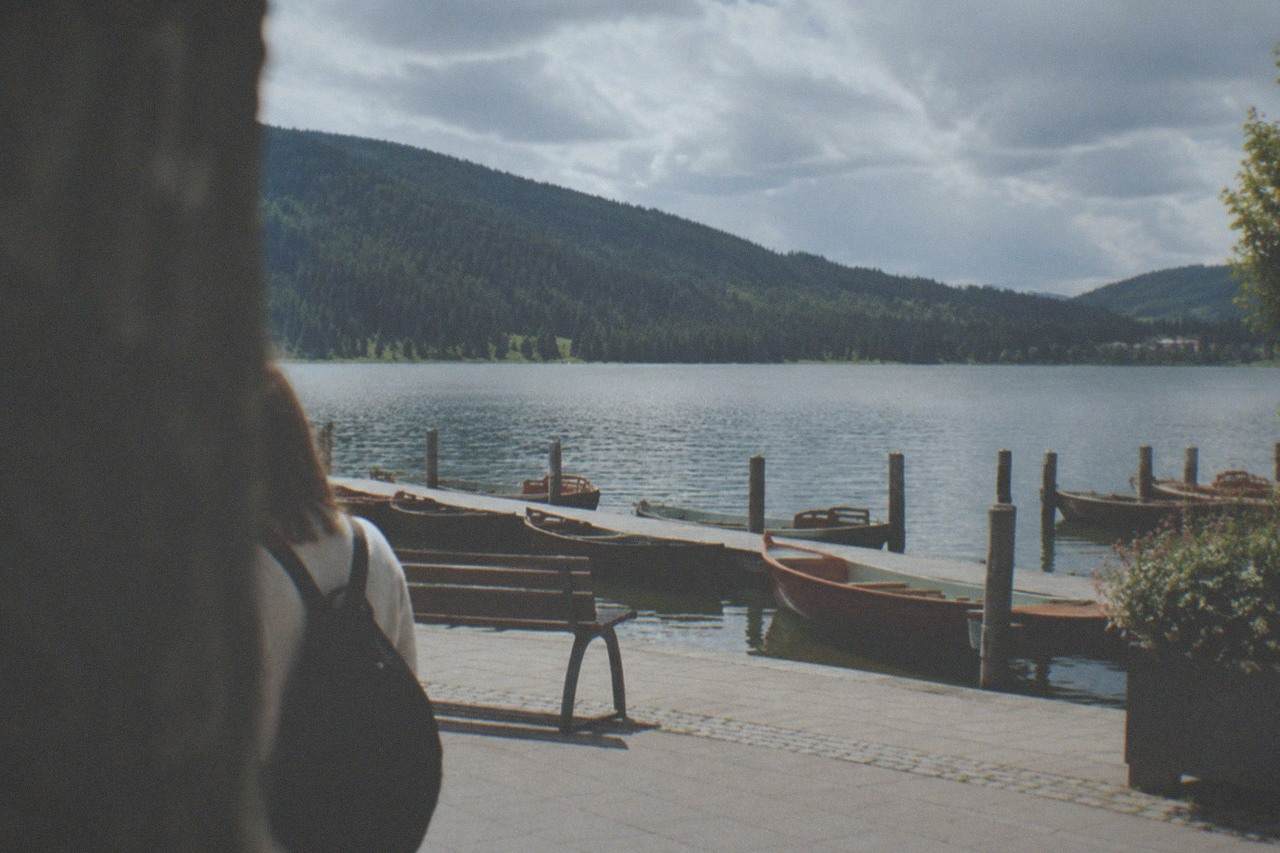
What Does Titisee Mean In English?
In English, Titisee means "Lake Titus," or more literally "Titus Lake": the first part, "Titi," is widely credited to the Roman commander Titus, and "See" is simply the German word for a lake. The derivation is the version told across the region, though the name's early documentation is thin, so treat the Titus story as local tradition rather than settled linguistics.
That is the honest short answer, and it is worth taking apart slowly, because a lot of Black Forest place names work the same way. German builds lake names backwards from English habits: the Bodensee is the Lake of Constance, the Schluchsee is the lake at Schluch, and the Titisee, on this account, is the lake that ended up carrying a Roman's name into the Upper Black Forest. The "See" half is certain, it is the everyday German word printed on every map of the country. The "Titi" half is where the folklore lives.
The version repeated in most regional accounts holds that a Roman commander named Titus passed through the area long before any surviving local record, was struck by the lake, and left his name behind. Roman presence in the Breisgau and the Hotzenwald is real and well documented, so a Roman name drifting into a remote valley is not absurd. What is missing is a clean paper trail: no surviving inscription ties this particular lake to this particular commander, and serious treatments of the name tend to describe the Titus derivation as plausible and popular rather than proven. A traveler should repeat the story the way the region does, as the accepted explanation, with one honest hedge.
Why does this matter to anyone standing on the shore? Because the name is the first thing the place tells you. English speakers arrive expecting "Titisee" to be exotic, and then discover it is really just "Titus's lake," a name as plain as Lake George. That plainness is the charm. The lake sits in a glacial basin of the Upper Black Forest, its town neighbor is Titisee-Neustadt, and the whole setting behaves exactly the way a Black Forest postcard promises: dark slopes, still water, and weather that can move through in an afternoon.
If the lake is on your itinerary from Freiburg, the practical planning pieces are covered in the site's Titisee destination guide, and the wider region, including Feldberg and the Hochschwarzwald, is mapped out in the Black Forest overview. This site, the Freiburg Travel Guide, treats the lake as a standard day trip from the city, which is exactly how most visitors use it.
The lake also photographs well enough that it has become one of the region's signature images, and plenty of travelers plan their whole route around photo stops. That instinct works in Freiburg too, and a guided version of it can save a lot of guesswork about where to point the camera.
How The Lake Got The Name Titisee
The name arrived in stages, and the settlement around it arrived later than the name. The lake carried a version of "Titisee" for a very long time before the town took it on, and the modern town of Titisee-Neustadt combines "Titisee" with "Neustadt," meaning "new town," which is why one name on the map holds two separate histories.
Start with the lake, because the lake came first. Alpine and upland lakes in German-speaking Europe are almost always named for the settlement, the valley, or the person associated with them, and the Titisee follows that pattern with the person option. The Titus credited in the story is usually identified with the commander who later became the emperor Titus, son of Vespasian, though the identification is another layer of tradition rather than documentation. Campaigns did move Roman forces along the Rhine and into the foothills, so the geography does not argue against it. The linguistics, meanwhile, argue neither way: "Titi" fits as a personal name and fits nothing else in the local Alemannic vocabulary with any confidence.
The town's half of the name is easier to pin down, because "Neustadt" is transparent German: a "new town," a label settlers and founders applied all over the German-speaking world. The combined name tells you the sequence without needing a single date: the lake was named, the shore was settled, and at some point a new town grew up close enough that administrators welded the two labels together. When you read "Titisee-Neustadt" on a departure board, you are reading both halves of the story in one line.
| Name element | Plain meaning in English | How solid is it |
|---|---|---|
| See | Lake | Certain, standard German |
| Titi- | "Of Titus," the Roman commander of local tradition | Popular regional account, not documented from surviving sources |
| Neustadt | New town | Certain, standard German |
| Titisee-Neustadt | Titus Lake plus New Town, the modern town name | Certain as a name, the merger date is town history |
One caution for the curious: the internet offers confident variants, including claims that the name comes from a local word for a bird, a spring, or a Celtic root. None of those has better backing than the Titus account, and several are simply invented. The honest framing stays the same: a Roman name, a German word, and a very long stretch of use that no surviving document narrates.
Where Titisee Sits In The Black Forest
Titisee sits in the Upper Black Forest, the Hochschwarzwald, at the heart of the region's most visited lake district, with Feldberg, the highest mountain in the Black Forest, as its near neighbor and the Schluchsee, the largest lake in the Black Forest, a short hop away. Freiburg lies to its west and is the natural base for visiting.
The geography explains the name's fame better than the etymology does. Freiburg is the region's gateway city, the lake is the region's classic excursion, and the rail line that connects them, the Höllentalbahn, is itself a well-known piece of engineering whose name means "Hell Valley Railway." Put a famous lake, a famous valley railway, and a famous gateway city in one chain, and the middle link stops needing an explanation: people simply say "Titisee" the way they say "Lucerne."
The area around the lake behaves like a small hub. Titisee-Neustadt is the town that handles the shops, lodging, and winter sports, while the lake itself and its shoreline promenade handle the postcard duty. Feldberg sits above the lake district and dominates the skyline, and the trail network around it, including the route past the Bismarck monument, was in the news recently for restoration work on the monument, which regional reporting says was completed around August 2025.
The town also matters to a practical question that trips up a lot of Freiburg visitors: guest cards. Titisee-Neustadt is a KONUS municipality, and Freiburg is not. The 2026 KONUS flyer from Schwarzwald Tourismus lists Titisee-Neustadt among member towns such as Kirchzarten, Horben, Bad Krozingen, Staufen, and St. Peter, while Freiburg city is absent from that list. A KONUS card issued in a member town is valid on Freiburg's trams and buses for the length of the stay, which is worth knowing before booking a lodging split between the city and the lakes. The city's own visitor product is the RVF Welcomekarte, 3 days at €27.00 for adults, covering buses and trains and including the Schauinslandbahn cable car.
For anyone whose trip centers on the views rather than the logistics, a guided photography walk is one way to shortcut the search for angles, in the city before the lake or on arrival.
Getting From Freiburg To Titisee
The standard route from Freiburg to Titisee is a direct regional train on the Höllentalbahn from Freiburg's main station to Titisee station, a line whose name means Hell Valley Railway and which climbs from the Rhine plain into the high Black Forest. A travel time is deliberately not quoted here, because the current timetable is affected by engineering works and should be checked live before any trip.
The Höllentalbahn deserves its own sentence in any answer about the lake, because for many visitors the ride is half the reason they went. The line threads out of Freiburg through the steep valley that gives it its name and serves the lake district from below. What a traveler needs to know right now is that temporary closures have been a recurring feature of the 2026 timetable: regional reporting documents maintenance and slope-securing work on the line in July 2026 and again from mid-September 2026, with replacement buses on affected dates, and the wider Rheintalbahn works near Freiburg have produced weekend replacement services between Freiburg and Basel. None of this is permanent, but it does mean that a timetable checked a month before travel can be wrong by travel day.
The ticket side is simpler. Within the RVF network that surrounds Freiburg, a single zone 1 ticket is €3.00 at the counter price, with a smartphone discount to €2.70, and day tickets for one, two, or three zones run €7.20, €10.90, and €14.30. The Deutschlandticket, valid nationwide on regional services, is €63.00 per month. For a short Freiburg-plus-lake visit, the Welcomekarte's €27.00 three-day coverage, with the Schauinslandbahn included, is usually the better fit, though the Schauinslandbahn itself has scheduled maintenance closures of its own, with the documented autumn overhaul falling in mid-November to early December.
| Ticket or pass | Price | What it covers |
|---|---|---|
| RVF single, zone 1 | €3.00, €2.70 by smartphone | One journey within the zone |
| RVF day ticket, 1 / 2 / 3 zones | €7.20 / €10.90 / €14.30 | Unlimited travel in the chosen zones for a day |
| Welcomekarte | €27.00, 3 days | Buses and trains, Schauinslandbahn included, plus a culture bonus |
| Deutschlandticket | €63.00 per month | Regional transport nationwide, including the connection to the lake |
Driving is the other common option, and it comes with a Freiburg-specific caveat: the B31 tunnels east of the city have been running a rolling program of night closures for inspections and equipment renewal, with a full renovation reported to begin in 2028. Anyone planning to drive out to the lake should expect works traffic on the eastern approaches and treat published times as estimates. The city's parking situation and car-hire options are covered in the site's parking in Freiburg guide.
What A Day At Titisee Actually Looks Like
A typical day at Titisee is built around the shoreline: a walk along the promenade, boat rental or a swim in the warmer months, coffee or cake in the town, and, for the energetic, a trail up toward Feldberg or around toward the Schluchsee. Winter flips the script, with the lake sometimes frozen at the edges and the Feldberg ski area carrying the season.
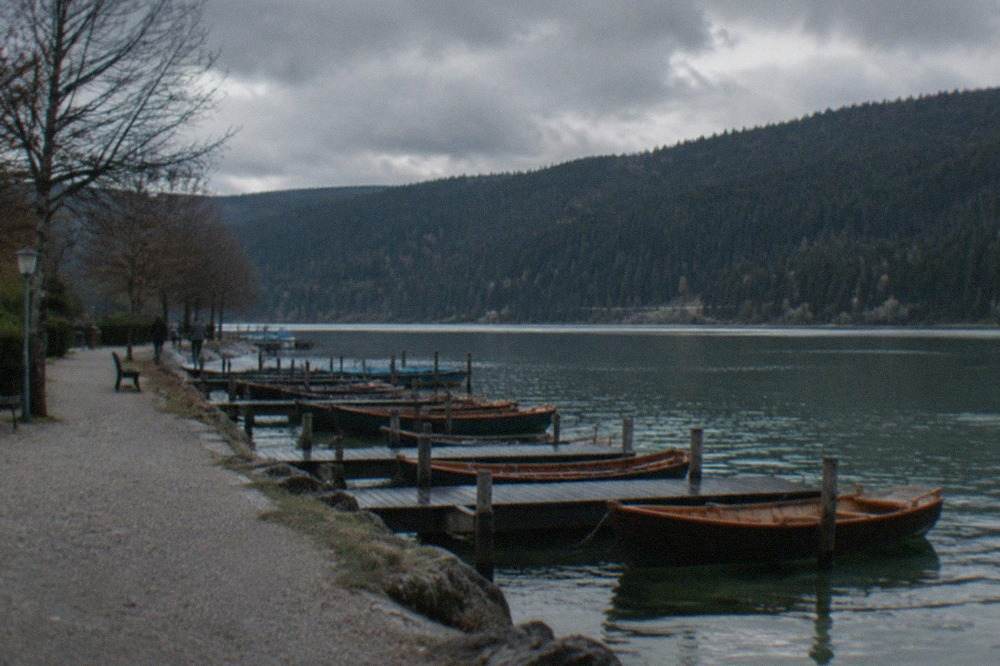
The lake's summer identity is water and light. Open-air swimming is a longstanding tradition here, and the question comes up often enough that the site carries a full answer on the swimming rules at Titisee. The shoreline promenade connects the town to the quieter northern shore, and the walk takes in the best of the lake's character without any serious climbing. On clear days the water reads green against the forest, and the rowing boats near the town end of the lake are usually the first thing travelers photograph.
The town end is also the eating end, and the Black Forest classics are all in evidence: ham, cake, and the region's long lunch culture. Travelers who want the same experience with a guide attached can book a full-meal food walk in Freiburg, which runs about three hours and costs from $126, with a small review pool that does not yet support a rating claim. A self-guided scavenger hunt format is another way visitors with children keep a city day structured, that one runs about two hours from $3 and carries a 4.4 rating across 43 reviews.
The photogenic-spots walk with a local, for its part, is priced from $92 in Freiburg and has not yet accumulated enough reviews for a fair rating, which this site states plainly rather than dressing up.
Winter is the lake's second act. The Feldberg ski area above the lake takes over the season, plans have been reported to rebuild the historic ski lift on Feldberg as a working attraction, and the frozen shoreline turns the promenade into a quiet, cold walk with the town's cafés as the reward. The lake does not close, in other words; it just changes costumes.
For structure on a city day before or after the lake, a self-guided hunt keeps a group moving between the old town's landmarks.
Common Questions About What Titisee Means In English
What does Titisee mean in English?
Titisee means "Lake Titus" or "Titus Lake." The "See" is the German word for lake, and the "Titi-" is credited by local tradition to the Roman commander Titus, though the derivation is tradition rather than documented linguistics.
Is the Titus story true?
It is the accepted regional explanation, repeated in most accounts of the lake, but it lacks documentation. Roman activity in the wider region is real; the specific naming of this lake for Titus is not attested in any surviving primary source.
How do you pronounce Titisee?
Roughly "TIT-ee-zay," with the stress on the first syllable and a sounded final vowel, the way German handles a word ending in a single e. English speakers often soften it to "titty-see," which locals will understand but will not imitate.
What does Titisee-Neustadt mean?
"Neustadt" is the German word for a new town, so the full town name pairs the lake's name with a label for the newer settlement beside it. One name, two histories: the Roman-rooted lake and the plainly descriptive town.
Can you swim in Titisee?
Yes, open-air swimming in the lake is a long-standing summer tradition, and the shoreline near the town is the popular access point. The site's dedicated page on swimming at Titisee covers the details for a summer visit.
Is Titisee in the same transport area as Freiburg?
The two are linked by the Höllentalbahn, and KONUS cards issued in Titisee-Neustadt are valid on Freiburg's trams and buses. Freiburg itself does not issue KONUS cards, so a lake-area stay and a city stay are treated differently by the guest-card scheme.
What does the Höllentalbahn mean?
"Hell Valley Railway," a name earned by the steep valley the line climbs out of the Rhine plain. It is the standard rail route from Freiburg toward the lake, subject to occasional engineering-related closures.