Can You Swim In Lake Titisee?
Yes, Lake Titisee is a swimming lake. A plain answer on where to swim, the short highland season, train access from Freiburg, and what a swim day actually costs.
Can You Swim In Lake Titisee?
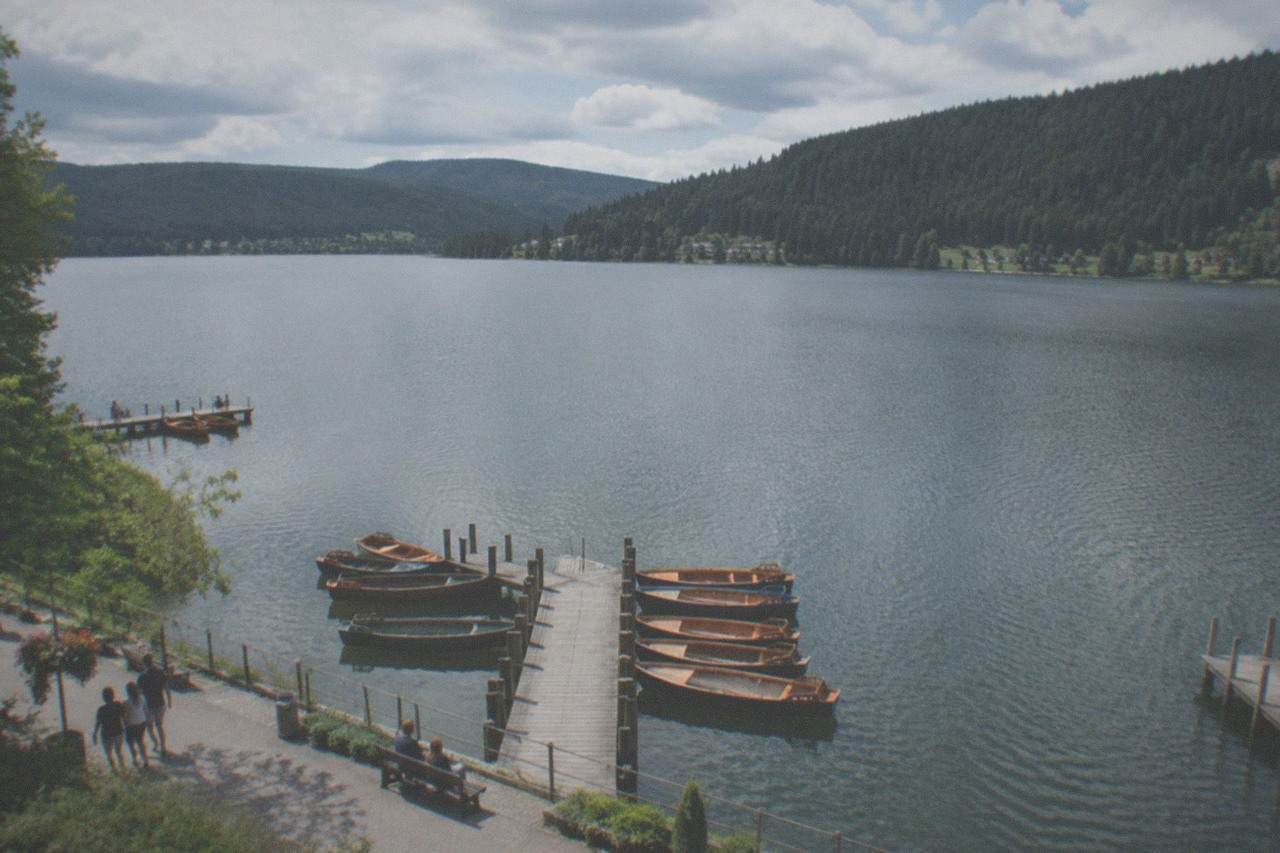
Yes. Lake Titisee is one of the Black Forest's most popular swimming lakes, with designated bathing areas and lidos along its shore, and warm months draw swimmers, sunbathers and paddle traffic alike. The season is short, because the lake sits in the highlands well above Freiburg, so July and August form the core swimming window.
The lake at Titisee-Neustadt is the swimming lake most people mean when they talk about bathing in the Black Forest. Its shore mixes managed lidos with lawned bathing areas, and on a fine July afternoon the water is busy with swimmers close to the marked zones while pedal boats and small sailing craft keep to the middle. It is a genuinely built-for-summer place: the town behind the shore exists largely because people come up from the Rhine plain to cool off.
That elevation is the whole story of swimming here. Freiburg, down in the valley, is one of Germany's warmest and sunniest cities, with July means of 20.1 °C and 252.2 hours of sunshine in DWD's 1991-2020 normals for station 1443. Titisee sits in the high Black Forest, noticeably higher and cooler, so the water warms late and gives up its heat early. Swimmers who know the lake treat it as a short, intense season rather than a long one.
The honest planning frame is therefore simple. Come in the height of summer for swimming, come in June or September for empty shorelines and bracing dips, and come the rest of the year for the walk around the lake, the boat rentals and the view. The sections below cover where to swim, when the season actually runs, how to get there from Freiburg by train, and how the ticket options compare.
Where To Swim At Titisee
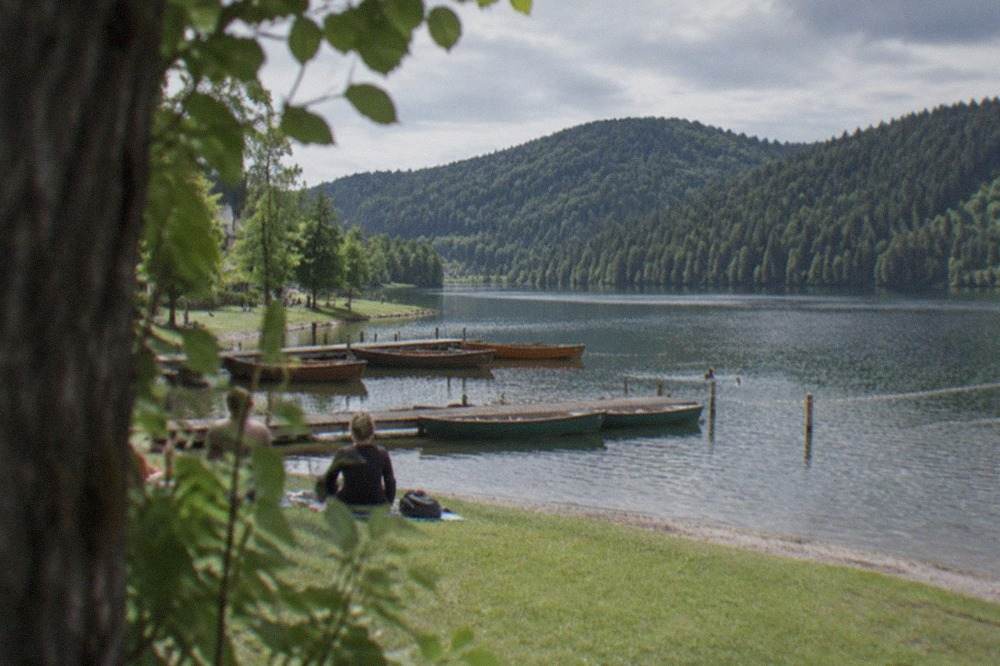
Most swimming happens at managed lidos and designated bathing zones along the shore, where lawns run down to the water. Some stretches are free public access, others are run as beach lidos with facilities. Boats and pedal craft share the lake, so swimmers are asked to stay inside the marked areas. Where a lido charges, the fee is posted at the gate rather than published citywide.
The southern and eastern shore carry most of the bathing infrastructure. Lawn beaches, shallow entries and playground-adjacent grass make them the family choice, and the walk from the Titisee train stop to the water is short enough that arriving by rail is a normal way to do a swim day. The promenade behind the shore holds the cafes, changing facilities and ice cream that a lake afternoon needs, so you rarely have to plan much beyond a towel.
A few practical notes from the way the lake is run. The designated zones exist because boat traffic, rental craft and swimmers all use the same water, and the separation is enforced in the busy weeks rather than being advisory. Early morning is the quiet window for proper swimming, before the pedal boats go out and before day trippers arrive on the mid-morning trains. And the water is a highland lake, not a heated pool: even in August it feels cold on entry, which is part of the appeal for the people who love it.
For anyone staying longer than an afternoon, the loop path around the lake is the second act of a Titisee visit. It takes in forest on the northern shore, quiet bays away from the lidos and the spa-town architecture of Titisee-Neustadt on the far side. Swimmers who want a full day often bathe in the morning, walk part of the loop at midday and swim again before the last train back.
What you should bring is correspondingly modest. A towel, swimwear and something warm for afterwards cover the essentials, because the air at the shore cools quickly once you are wet, even on a sunny day. Footwear that can manage grass and gravel is more useful than flip-flops at the lawn beaches, and a small amount of cash or a card covers ice cream and any posted lido fee. Sunscreen matters more than visitors expect: the highland air feels cool, but the summer sun at this latitude still burns on a two-hour swim afternoon.
When Is The Swim Season At Titisee?
The core window is July and August. Freiburg, in the Rhine plain, averages 20.1 °C in July against DWD's 1991-2020 normals, but Titisee sits in the cooler highlands and the lake warms slowly, so the comfortable season is short. June and early September suit hardy swimmers; the rest of the year is for scenery, not bathing.
The numbers below are the closest verified climate series to hand: DWD's 1991-2020 normals for Freiburg station 1443, at 236.5 m in the Rhine plain. Use them as the ceiling for the region, then subtract for the highlands. On a July day when Freiburg is at its monthly mean, Titisee will feel several degrees cooler at the shore, and the water colder still.
| Month | Mean temp (Freiburg) | Sunshine hours | Rain days context | Swim verdict at Titisee |
|---|---|---|---|---|
| June | 18.3 °C | 232.7 | 89.8 mm | Brisk; possible in a warm spell |
| July | 20.1 °C | 252.2 | 92.2 mm | Core season, warmest water |
| August | 19.7 °C | 234.4 | 83.3 mm | Core season, most crowded |
| September | 15.4 °C | 176.2 | 77.4 mm | Hardened swimmers only |
Two caveats keep this honest. First, those Freiburg figures come from DWD's 1991-2020 climate normals for the city station, and Titisee's own highland climate runs cooler than any number in the table. Second, rain matters more than the mean suggests: the high Black Forest takes around 90 mm in both June and July in a typical year, so a lake day benefits from a flexible window rather than a fixed plan.
Crowds follow the same curve as the temperature. August weekends are the busiest the shore gets, with families filling the lawns from late morning and pedal boat queues forming by early afternoon. If your dates are fixed to the school holidays, aim for mornings on weekdays. If your dates are flexible, late June gives you nearly the same water with far fewer people on the grass, and the first half of September can deliver calm, empty shorelines for swimmers who do not mind cold entry.
If your swim day is one block of a longer Freiburg trip, the pairing is straightforward: a morning in the city and a lake afternoon works with the train timings, and a guide can compress the Freiburg half for groups that want the old town explained quickly in another language.
How To Get From Freiburg To The Lake
A direct regional train, the Höllentalbahn, links Freiburg with Titisee without a change, and local buses serve the shore from Titisee-Neustadt. Do not bank on a fixed minutes figure: engineering works replaced trains with buses on parts of the line in 2026. A single within Freiburg's zone 1 costs €3.00, with a smartphone price of €2.70.
The Höllentalbahn is the scenic route into the high Black Forest, climbing out of the Rhine plain through the Höllental valley toward Titisee. The line is the reason a car-free Titisee day is realistic from Freiburg: seats on a regional train, a short walk from the Titisee stop to the shore, and the same route home. Buses connect onward from Titisee-Neustadt to the villages and trailheads around the lake, including Hinterzarten, which is also a rail stop in its own right.
For tickets, the options below are the verified regional fares. Which one fits depends on where you sleep: stay in Freiburg and the RVF products apply to your city travel, while a guest card from Titisee-Neustadt covers the lake end.
| Ticket | Price | What it covers |
|---|---|---|
| RVF single, zone 1 | €3.00 (smartphone €2.70) | One trip within the Freiburg city zone |
| RVF day ticket, 1 / 2 / 3 zones | €7.20 / €10.90 / €14.30 | A day of buses and trains within the chosen zones |
| RVF Welcomekarte | €27.00 | 3 days of buses and trains, the Schauinslandbahn and a Kulturbonus |
| Deutschlandticket | €63.00 per month | Unlimited second-class regional travel nationwide |
| KONUS guest card | Free for guests | Buses and trams across the Black Forest networks, from check-in to departure day |
The KONUS detail is the one that trips people up, and it is worth stating plainly. Freiburg is not a KONUS municipality, so a hotel in the city will not hand you the card. But Titisee-Neustadt is a member town, so a stay at the lake comes with the guest card, and a card issued there is valid on Freiburg's trams and buses on your transit days. The Black Forest tourism board's KONUS page lists the current member towns. For Freiburg-based visitors, RVF's Welcomekarte page gives the coverage of the three-day visitor product.
One last travel note: because the rail works of 2026 have been rolling and patched rather than continuous, the timetable you check on Monday may not match the one that applies by the weekend. Give yourself a buffer on the return leg if you have a fixed evening commitment back in Freiburg, since a replacement bus in the Höllental valley adds time to any journey, and the last thing a swim day needs is a sprint connection.
If Your Trip Starts In Freiburg First
The practical pattern is a Freiburg base with a lake day trip. Freiburg's old town, the Münster and the Bächle fill a morning, and the train handles the lake afternoon. Guided options in the old town include a private Italian-language walk from $52 and a medieval-gates tour from $232, each with only a handful of reviews so far, so judge them on the itinerary rather than the rating.
Freiburg earns its half of the day. The Münster's west tower is 116 m tall, with visitors climbing to a gallery at 70 m, and the Minster square market runs weekdays from 07:30. The Bächle, the little water channels along the old town streets, are free to see and everywhere underfoot. A first-time visitor can cover the core of this in a morning and still make an early afternoon train toward the lake; the Freiburg Travel Guide planning pages break the city down sight by sight for anyone building a fuller itinerary.
For groups that want the Freiburg half explained rather than just walked, two guided products on this site fit. The Private Tour in Italian in Freiburg im Breisgau runs about 1h10m to 1h30m and starts from $52, aimed squarely at Italian-speaking travelers who want the old town narrated in their own language. It carries 6 reviews so far, which is too small a pool to support any star-rating claim, but the format is exactly what an Italian-language family or couple would look for before a lake afternoon.
The second is Freiburg Old Town: Medieval Gates, Cathedral and Historic Squares, a roughly two-hour private walk from $232 that traces Martinstor, Schwabentor and the cathedral quarter. It also carries 6 reviews so far, so both private options should be weighed on route and guide fit rather than review volume. The group alternatives are cheaper: shared old town walks start from $15 with ratings in the mid-4s across hundreds of reviews, a level of pool the private tours have not reached yet.
Between the city morning and the train, leave room for lunch, because Freiburg's food is half the reason to linger. The Markthalle near the old town packs regional stalls under one roof, and the Münstermarkt's weekday morning run sells bread, cheese and fruit from the surrounding Black Forest farms. Either way you can eat before the train and still be at the lake with the afternoon in front of you, which is the shape of a well-planned swim day from this base.
Other Stops Around The Lake Worth Adding
Schluchsee, Hinterzarten and the Feldberg massif all sit within a short hop of Titisee, and each earns its stop. Schluchsee is a second, larger swimming and sailing lake; Hinterzarten is a quiet spa village framed by trails; Feldberg is the highest summit in the Black Forest. A car-free loop by train is realistic if you time the connections.
Schluchsee is the natural second swim. It is the larger of the two lakes, built around sailing and water sports as much as bathing, and it tends to draw fewer day trippers than Titisee's promenade. Swimmers who find Titisee busy on an August weekend often find Schluchsee's shore calmer, and the same rail corridor serves it. The Schluchsee guide covers its bathing spots and water-sports offer in detail, and the Titisee guide does the same for the lake this page is about.
Hinterzarten, one stop up the line, is the quiet alternative: a Black Forest spa village of guesthouses and trailheads, best known to hikers and cross-country skiers rather than swimmers. Between the two, the higher ground toward Feldberg gives the region its panorama. The Bismarck monument on the Feldberg completed its renovation in 2025, and the summit remains the roof of the Black Forest. The Hinterzarten guide and the Feldberg guide lay out the trails for anyone converting a swim day into a two-day highland loop.
If Freiburg is your base and the Black Forest is your appetite, the pairing that works is one city day, one lake day and one highland day, all on regional trains. The medieval-gates private walk mentioned above suits the city day for travelers who want depth over pace; the shared dramatized and highlights walks suit tighter budgets and shorter attention spans. Whichever you choose, book the swim day for the stretch of the trip with the best forecast, because in the highlands the forecast is the itinerary.
That is the whole picture. Titisee is a yes with an asterisk: the water is real, the lidos are real, the train is direct, and the season is brief. Plan for July or August, keep June and September in reserve, and treat the rest of the year as walking weather. Come with the right expectations and the lake rewards them: cold, clean, busy at the center of summer and beautifully empty at its edges.
Common Questions About Swimming In Lake Titisee
Can you swim in Lake Titisee?
Yes. Titisee is one of the Black Forest's main swimming lakes, with lidos and designated bathing zones along the shore. The comfortable season is July and August; June and September suit hardy swimmers.
Is swimming in Lake Titisee free?
Parts of the shore are free public access and parts are managed lidos. Where a lido charges, the fee is posted at the gate, so check the entrance on the day rather than assuming either way.
When is the best month to swim in Titisee?
July, followed closely by August. These are the warmest and sunniest months in the region, and the highland lake warms slowly, so the water is at its most swimmable at the height of summer.
How do you get from Freiburg to Titisee?
A direct regional train, the Höllentalbahn, runs from Freiburg toward Titisee, and buses connect the shore from Titisee-Neustadt. Works replaced trains with buses on parts of the line in 2026, so check the live timetable before you travel.
Can you stay overnight at Titisee?
Yes. Titisee-Neustadt is a KONUS member town, so overnight guests receive the free KONUS card, which is valid on the region's buses and trams, including Freiburg's. Freiburg itself does not issue the card.