Is Freiburg The Sunniest City In Germany?
No. Freiburg records 1,815.1 sunshine hours a year, ranking 20th of 1,091 German weather stations. Here is what the data actually says about sun, warmth and the best months to visit.
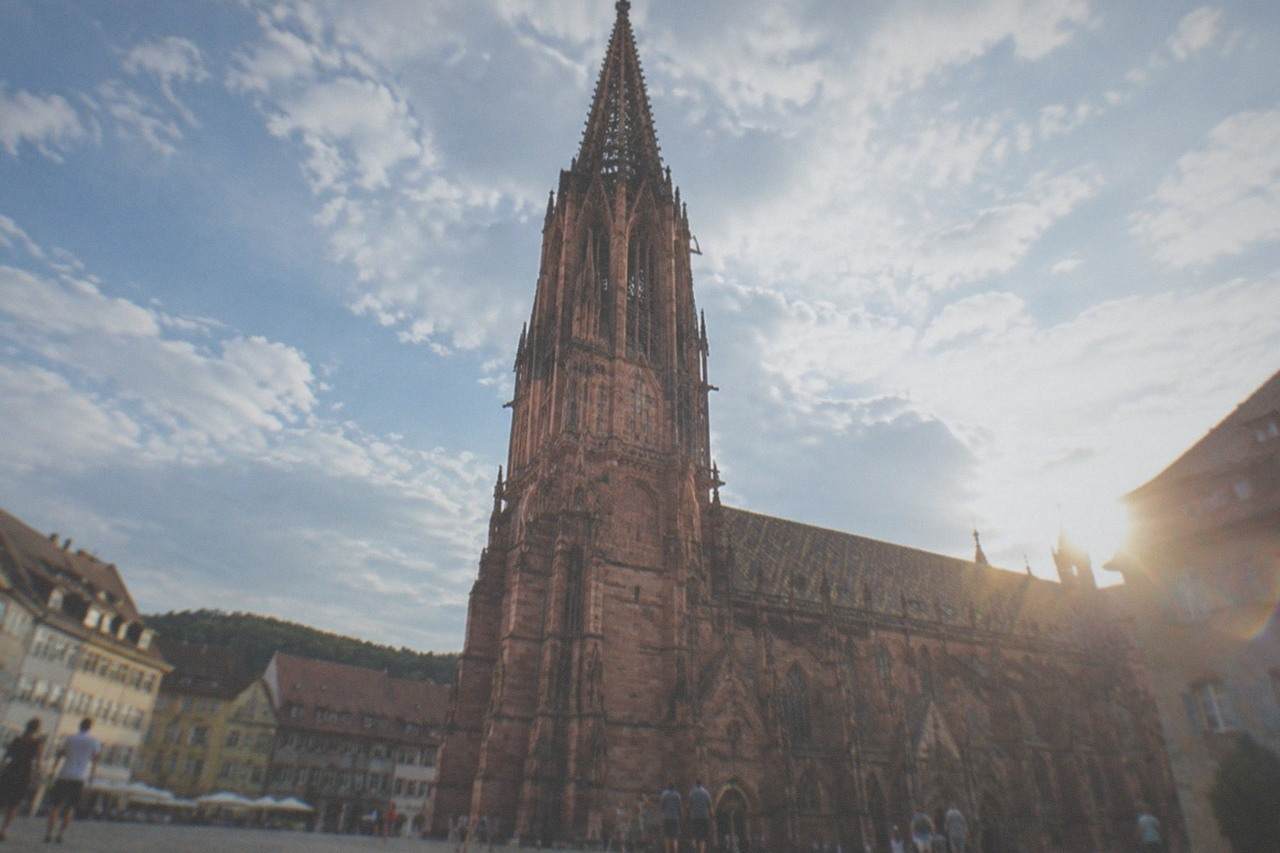
Is Freiburg The Sunniest City In Germany?
No, Freiburg is not the sunniest city in Germany, though it comes close enough that the claim refuses to die. Germany's official 1991-2020 climate normals give the Freiburg station 1,815.1 hours of sunshine per year, which ranks 20th out of 1,091 stations nationwide. Nineteen places in the country record more sun. Freiburg is genuinely one of Germany's warmest and sunniest cities, but it does not hold the number one spot.
The rumor is persistent, and it is easy to see why it survives. Freiburg sits in the sheltered Upper Rhine Plain, where the Vosges to the west and the Black Forest to the east block much of the incoming Atlantic moisture. The city markets itself around that climate: vineyards grow on its southern hills, the Münsterplatz cafés spill outdoors from April onward, and the local tourism board has leaned on the sunshine story for decades. A visitor who spends a week here in July, a month that averages 252.2 hours of sun, will go home convinced the superlative must be true.
The official record tells a more precise story. The Deutscher Wetterdienst, Germany's national weather service, publishes long-term climate normals for every station in its network, computed over the 30-year window from 1991 through 2020. For station 1443 in Freiburg, at 236.5 meters above sea level, the numbers are specific and checkable: 1,815.1 sunshine hours a year, 886.5 millimeters of rain, an annual mean temperature of 11.0 °C, and 64 frost days. You can pull the same dataset yourself from the DWD open data portal, which is where every figure in this article comes from.
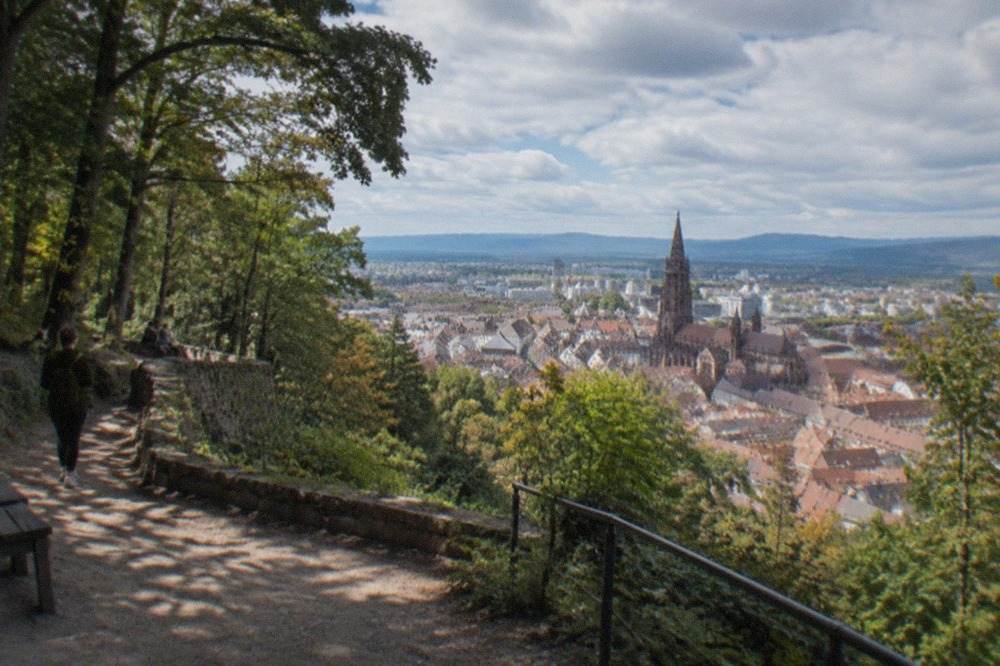
So where does that leave the proud local claim? In an honest place, actually. Being the 20th sunniest of more than a thousand recording stations puts Freiburg in the top two percent of the country for sunshine, and being the 34th warmest of 1,093 stations puts it in the top three percent for warmth. Very few German cities appear high in both columns at once. That combination, plus a cityscape built to enjoy it, is what makes the sunshine reputation feel earned rather than inflated.
Where Freiburg Actually Ranks Among German Stations
On sunshine, Freiburg records 1,815.1 hours per year and ranks 20th of 1,091 German weather stations, meaning 19 stations get more sun. On warmth, its annual mean of 11.0 °C ranks 34th of 1,093 stations, with 52 stations as warm or warmer. Both are strong top-two-percent showings, but neither is first place.
The rankings come from the same 1991-2020 normals dataset, compared across the full national network. Two things are worth understanding about how they work. First, the network is dense: over a thousand stations means many mid-sized towns compete, not just famous cities. Second, climate stations sit at specific elevations and exposures, so a station reading can differ modestly from what a suburb five kilometers away records. A ranking of cities is really a ranking of measuring points, and Freiburg's measuring point happens to sit in one of the warmest corners of the country.
The stations that rank ahead of Freiburg are not a mystery of hidden data. The sunniest corners of Germany cluster in two regions: the far southwest, where Freiburg itself sits alongside places in the Kaiserstuhl and Markgräflerland vineyard belt, and a band across the dry east-central lowlands around Berlin and Brandenburg. Cities and towns in both zones out-sun Freiburg, sometimes by a wide margin. What Freiburg can claim, and what the paired rankings actually show, is an unusually strong showing in both warmth and sunshine at the same time, which most of those sunnier-but-colder eastern stations cannot match.
| Measure | Freiburg figure | National rank | What it means |
|---|---|---|---|
| Annual sunshine hours | 1,815.1 h | 20th of 1,091 stations | 19 stations record more sun |
| Annual mean temperature | 11.0 °C | 34th of 1,093 stations | 52 stations are as warm or warmer |
| Annual days at or above 30 °C | 18.5 days | not ranked in our extract | Comparable to other Rhine plain stations |
| Annual frost days | 64 days | not ranked in our extract | Low by German standards |
The honest phrasing, the one this site uses everywhere, is "one of Germany's warmest and sunniest cities." That claim is fully supported by the DWD data. The absolute superlative, "the sunniest," is not, and a headline that says otherwise is marketing rather than meteorology.
The Numbers Behind Freiburg's Climate
Freiburg averages 11.0 °C across the year, with July the warmest month at 20.1 °C and January the coldest at 2.5 °C. The city gets 1,815.1 sunshine hours and 886.5 millimeters of rain annually, with May the wettest month at 103.4 millimeters and July the sunniest at 252.2 hours.
The monthly breakdown shows why visitors perceive Freiburg as a sun destination even though the annual total is merely excellent rather than record-breaking. Sunshine ramps hard in spring: 146.8 hours in March, 182.2 in April, 206.8 in May. By June and July the city is collecting 232.7 and 252.2 hours respectively, totals close to what far more southerly European cities record. Then the curve falls away through autumn, with November and December both under 70 hours, the gloomiest stretch of the year.
Rain follows a different rhythm. The peak is late spring rather than summer: May averages 103.4 millimeters, the wettest month, and June 89.8. July and August, the months visitors actually book, come in at 92.2 and 83.3 millimeters, much of it falling as short thunderstorms rather than all-day drizzle. Winter is drier than spring on paper, but with 64 frost days and barely 60 sunshine hours a month in December, the winter halves of those statistics land together.
| Month | Mean temp | Sunshine hours | Rain (mm) |
|---|---|---|---|
| Jan | 2.5 °C | 64.7 | 48.6 |
| Feb | 3.5 °C | 91.8 | 49.1 |
| Mar | 7.0 °C | 146.8 | 54.3 |
| Apr | 10.8 °C | 182.2 | 63.8 |
| May | 14.9 °C | 206.8 | 103.4 |
| Jun | 18.3 °C | 232.7 | 89.8 |
| Jul | 20.1 °C | 252.2 | 92.2 |
| Aug | 19.7 °C | 234.4 | 83.3 |
| Sep | 15.4 °C | 176.2 | 77.4 |
| Oct | 10.9 °C | 116.2 | 78.5 |
| Nov | 6.1 °C | 66.6 | 66.2 |
| Dec | 3.4 °C | 56.3 | 66.9 |
One number deserves its own sentence: Freiburg averages 18.5 days a year at or above 30 °C, with 7.3 of them in July and 7 in August. For a German city, that is a genuinely hot summer, and it explains both the vineyards on the city's slopes and the crowds at the Freiburg lakes in July. It also explains a quirk of the local calendar: the same city that markets itself on sunshine also builds fountains, shaded Bächle-side lanes and river swimming spots into everyday life, because a July afternoon here can feel closer to the Mediterranean than to the North Sea. For the full month-by-month picture, our Freiburg weather guide works through what each season actually feels like on the ground.
Why Freiburg Feels Sunnier Than The Statistics Suggest
Freiburg feels sunnier than its ranking because the sun it gets arrives in concentrated bursts between April and September, and because the city is physically built to catch it. Its sheltered Rhine valley location blocks much incoming rain, its hills carry working vineyards, and its streets, squares and water channels are designed for outdoor life. Perception follows design as much as data.
Geography first. The Upper Rhine Plain between the Vosges and the Black Forest is one of central Europe's warmest lowland zones, and Freiburg sits at its southern end where the valley narrows toward Basel. The surrounding hills do not just shelter the city from wind; they create the rain-shadow effects that let wine grapes ripen at this latitude. A city that can grow wine on its own slopes has a climate story that writes itself. More of these guides are collected on Freiburg Travel Guide.
Design second. Freiburg's old town is a dense grid of squares and lanes, the famous Bächle gutters run along the streets, and the Münsterplatz market fills the city's biggest open space six days a week. When the sun is out, the entire center becomes one continuous outdoor room: market stalls, café terraces, riverbank lawns along the Dreisam, and the Schlossberg hill rising straight from the edge of it. There is simply more sun-facing life per square meter than in a city built around indoor malls and car corridors. Our old town guide maps that grid square by square for anyone planning to walk it.
Third, the sunshine reputation has become a civic identity. The Green City branding, the solar settlement in Vauban, the solar research presence of Fraunhofer ISE, and a bike-first transport culture all reinforce the same image of a place that lives outdoors. The verified modal-split record puts walking, cycling and public transport at 76 percent of trips as of 2023, up from 67 percent in 2017, and a street-level culture at that scale keeps residents outside where the sun actually registers. A city where three quarters of daily movement happens in the open is a city that notices every clear hour.
Best Months To Visit For Sunshine In Freiburg
For maximum sun, visit Freiburg between June and September, when the city averages 176.2 to 252.2 sunshine hours per month and mean temperatures run from 15.4 °C to 20.1 °C. July is the sunniest month at 252.2 hours and 20.1 °C mean. April, May and September deliver the best balance of sun, warmth and thinner crowds.
The raw sunshine numbers point at July, but July also brings the heat. With 18.5 days at or above 30 °C spread across the summer, a July visit can mean genuinely hot afternoons, and the city's lakes and swimming spots fill accordingly. Visitors who want the sunshine experience without the peak temperatures should look at either side of the core summer.
September is arguably the sweet spot. It still averages 176.2 sunshine hours, the mean temperature is a comfortable 15.4 °C, the vineyards on the surrounding hills are heading toward harvest, and the summer crowds have gone. April and May work too, with one caveat: May is statistically the wettest month at 103.4 millimeters, so spring visitors should pack for the odd heavy shower between the bright spells. What to avoid is November through February if sunshine is the entire point of the trip. November averages 66.6 sunshine hours and December 56.3, both with over 13 frost days each. The Christmas market season brightens the streets socially, but meteorologically it is the gray end of the calendar. For a fuller planning view, our best time to visit Freiburg guide weighs sunshine against festivals, prices and crowds.
How The Sunshine Shapes What You Can Do In Freiburg
Sunshine defines Freiburg's activity calendar. The sunny months fill the Münstermarkt, open the Schauinslandbahn cable car season at full schedule, and make the surrounding Black Forest trails, vineyard paths and lake swimming accessible. Nearly every headline experience, from the tower climb to the wine hikes, is built around the months when the city collects most of its 1,815.1 annual sunshine hours.
The outdoor economy runs on the climate. The Münstermarkt, with up to 130 stalls, operates Monday through Saturday from 07:30, and on a bright morning it is the sunniest large square in the region. The Schauinslandbahn cable car runs daily from 09:00 to 17:00, longer in the Baden-Württemberg summer holidays, carrying visitors up the Schauinsland for views across the Rhine valley to the Vosges, and a return ticket for adults costs €15.00. The Schlossbergbahn funicular and the free Schlossberg hill put sunset views within ten minutes of the cathedral. Even the Münster tower climb, €5 for adults, keeps longer summer hours, and the top gallery closes in winter, a small schedule detail that mirrors the sunshine calendar almost exactly.
Evening is where the sunny-day city turns interesting, and one of the more unusual ways to spend a bright late afternoon is a guided walk through a part of town most visitors never map. The Red Light District City Tour, from $26, runs about two hours through Freiburg's historic brothel quarter with a guide covering the district's long history, and it carries a 4.2 rating across 22 reviews. It is a strange and genuinely memorable angle on a city that usually sells itself with gabled facades.
For a sun-focused day that covers more ground, the Veni, Vidi, Vino wine hike pairs a roughly 2.5-hour walk with a tasting, from $79, rated 4.4 across 167 reviews. And if you would rather set your own pace through the sunniest lanes of the old town, the self-guided scavenger hunt tour, from $45 and rated 4.9 across 15 reviews, turns the historic center into a three-hour puzzle. Whichever way you go, check the live listing for the operator's current schedule before committing a sunny afternoon.
Common Questions About Freiburg Sunshine
Is Freiburg the sunniest city in Germany?
No. The DWD 1991-2020 climate normals give Freiburg 1,815.1 sunshine hours a year, ranking 20th of 1,091 German weather stations, so 19 stations record more sun. Freiburg is accurately described as one of Germany's warmest and sunniest cities, not the single sunniest.
How many hours of sunshine does Freiburg get each year?
Freiburg records 1,815.1 hours of sunshine per year on the 1991-2020 normals from DWD station 1443. July is the sunniest month at 252.2 hours and December the dullest at 56.3 hours.
Is Freiburg the warmest city in Germany?
No. Freiburg's annual mean of 11.0 °C ranks 34th of 1,093 stations, and 52 stations are as warm or warmer. It does average 18.5 days a year at or above 30 °C, which makes its summers genuinely hot for Germany.
Which are the sunniest months to visit Freiburg?
June through September, with July sunniest at 252.2 sunshine hours and a 20.1 °C mean. September offers 176.2 sunshine hours at a milder 15.4 °C mean, often with fewer crowds than midsummer.
Why is Freiburg so warm compared with most of Germany?
It sits in the sheltered Upper Rhine Plain, where the Vosges and Black Forest block much of the Atlantic moisture, producing a rain-shadow effect warm enough to ripen wine grapes on the city's own hills.