How Long Does It Take To Hike Triberg Waterfalls?
A planning answer to how long the Triberg Waterfalls hike takes, with route time budgets, seasonal timing from regional climate data, and how to fit the falls into a Black Forest day from Freiburg.
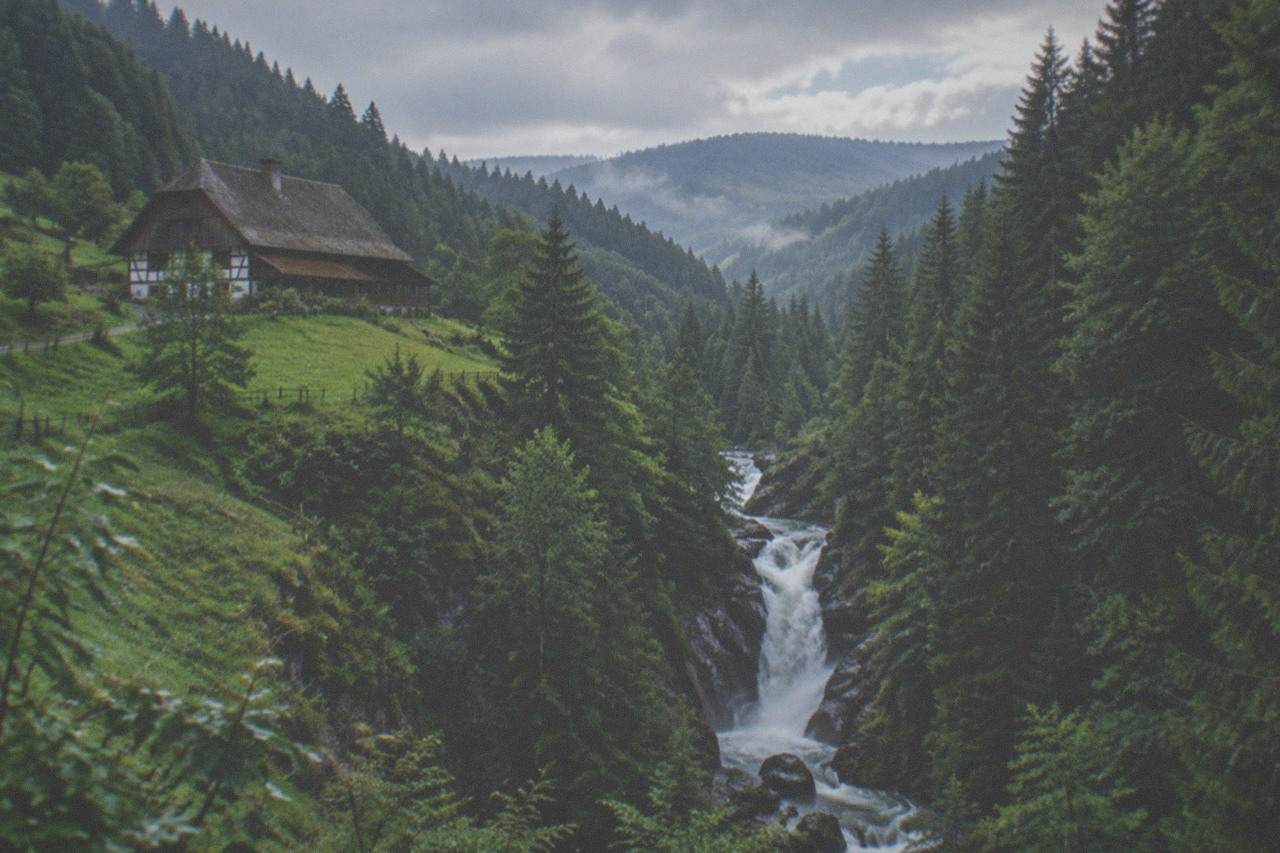
How Long Does It Take To Hike Triberg Waterfalls?
Most visitors spend between 45 minutes and 1.5 hours on the waterfall trails themselves, depending on which circuit they choose and how often they stop. The shortest viewpoint walk can be done in well under half an hour, while the full network of paths above and below the falls, taken slowly with photos, stretches toward two hours. Add the walk from the village entrance and most people should budget about half a day for the whole outing.
That is the honest core of it. Triberg is not a wilderness trek, and nobody should plan a full hiking day around the falls alone. The site is a developed, ticketed attraction in the middle of a Black Forest village, with gravel and stepped paths, railings, benches and signage, built so that visitors of nearly any fitness level can reach the main viewing platforms. The time question is really about route choice and pacing, not stamina.
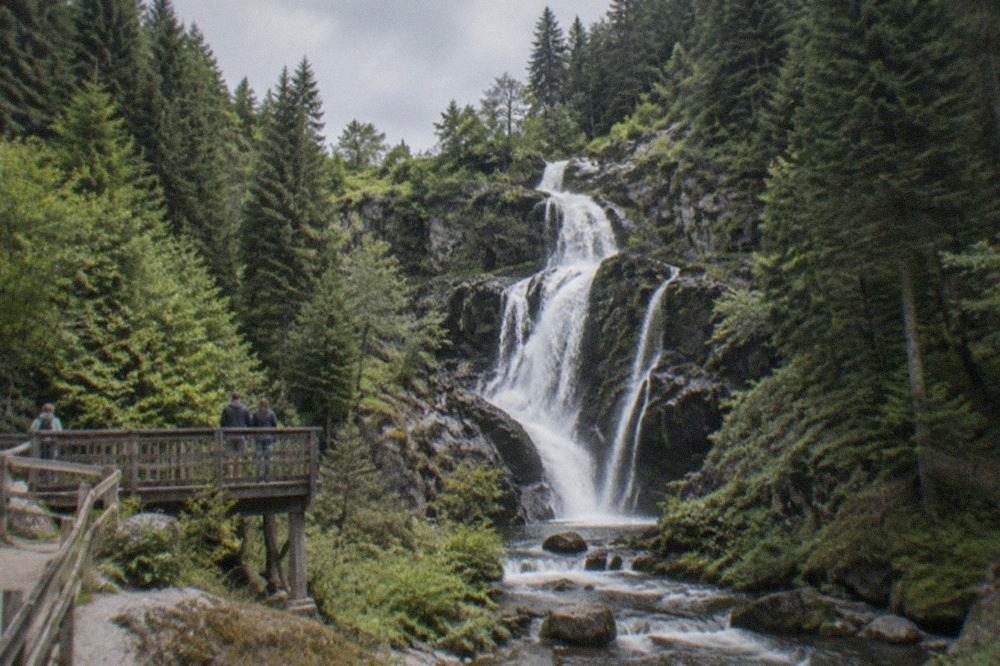
The falls sit inside Triberg im Schwarzwald, a small town in the central Black Forest that has built much of its visitor identity around water, clocks and cake. People usually arrive by car, by the Black Forest railway line, or as part of a loop from Freiburg, and the falls are a short walk from the town center. That proximity is the reason the time budget stays modest: the trail network starts close to the entrance and loops back to it.
Two things stretch the visit. First, the paths climb. The viewing points are stacked at different elevations along the gorge, so even short legs involve steady stairs. Second, the falls are a photo target, and in high season the platforms fill, which slows everyone down. A couple travelling light in low season can move through in half an hour; a family with children in August should plan for a far slower loop.
For anyone building the trip around Freiburg, the day usually looks like this: a morning departure toward Triberg, an hour or so at the falls, lunch in the village, and perhaps one more stop in the Black Forest on the way back. That shape works because the hike itself is compact. The mistake to avoid is treating Triberg as a destination that fills a day; it does not, and the surrounding region is where the remaining hours go.
Which Route Around The Falls Takes The Longest?
The upper and lower paths along the gorge are the time driver. A single lower viewpoint walk takes roughly 15 to 30 minutes, the classic full circuit of the main falls takes about 45 to 90 minutes at a normal pace, and walking the extended network of paths above and below the falls runs closer to 1.5 to 2 hours. These are planning ranges, not promises; closures and your own pace decide the real number.
The trail system is essentially a set of connected loops. Which one you pick changes the answer to the time question more than anything else, so it is worth deciding before you arrive rather than improvising at the ticket desk. The table below sets out how most visitors actually budget the paths.
| Route choice | What it covers | Time to budget | Best for |
|---|---|---|---|
| Single viewpoint walk | One platform, nearest the entrance | 15-30 minutes | Short visits, limited mobility |
| Main falls circuit | The primary loop past the key platforms | 45-90 minutes | First-time visitors |
| Extended gorge network | Upper and lower paths above and below the falls | 1.5-2 hours | Walkers, photographers |
| Falls plus village stops | Circuit plus clock shop and cake stop | Half day | Families, day-trippers |
Treat those numbers as planning ranges and check the posted routes on site, because parts of the network close periodically for maintenance, ice or storm damage, and a closed upper path quietly turns a 90-minute plan into a 40-minute one. The signage at the entrance states which loops are open on the day. In winter especially, the upper sections can be shut while the lower platforms stay accessible.
Pacing matters more than most guidebook summaries admit. The paths are stepped and can be slick with spray near the platforms, so downhill sections take longer than their distance suggests. Visitors with small children, or anyone who wants photographs without strangers in the frame, should add generous buffer time. A useful rule of thumb: whatever the posted walking time suggests, add a third.
There is also a pure honesty point worth making about the circuit itself. Because every loop starts and ends at the same entrance area, you can always bail out early without getting stranded halfway up a mountain. If the weather turns, if a child tires, or if the platforms are simply too crowded to enjoy, the shortest route back is always close. That flexibility is unusual for a waterfall hike, and it is the reason the time ranges above carry so little risk: you can always spend less than you planned, never more than you can handle.
How To Fit Triberg Waterfalls Into A Freiburg Day?
Triberg works as a half-day or three-quarter-day excursion from Freiburg, with the falls visit itself consuming only an hour or so of the total. The travel legs dominate the schedule, so the practical plan is an early start, a relaxed circuit of the falls, lunch in Triberg, and either a return to Freiburg or one additional Black Forest stop. Trying to compress it into a rushed two-hour outing usually fails.
Freiburg is the natural base for this trip for most readers of this site, and the pairing is a good one. The city handles the evenings and the food, while the Black Forest supplies the scenery. A typical structure leaves Freiburg in the morning, reaches Triberg mid to late morning, spends an hour or two at the falls, and returns by late afternoon. That leaves room for a slow dinner back in the city, which is where a compact old town pays off. This Freiburg Travel Guide pairing, city base plus forest excursion, is the shape most first-time visitors end up choosing.
Before or after the falls, a short city walk in Freiburg rounds the day out nicely. The Gässle, Bächle and More City Tour, rated 4.7 across 3,187 reviews and priced from $15, covers the old town's lanes, the famous gutters and the main squares in about 1.5 hours, which fits neatly into the evening after a Black Forest excursion. For readers who want a deeper cut, the village and waterfall context is covered in the Triberg village and falls guide, and the wider waterfall picture in the Black Forest waterfalls overview.
The same logic applies to the choice of guided versus independent. A guided city walk in Freiburg the evening before a Triberg day gives the trip a narrative anchor, and because the waterfall circuit needs no guide, the money goes where interpretation actually adds something. Travelers who prefer structure tend to book the city walk and leave the falls free-form, and that split works.
One honest planning note: Triberg's falls are spectacular but the visit is short. Travelers who expect an all-day hiking destination come away slightly underwhelmed, while those who frame it as one strong stop in a day that also includes a village, a cake stop and maybe a second sight come away satisfied. Set the expectation before you go and the day tends to land well.
When Is The Best Time Of Year For The Hike?
Late spring through early autumn gives the best balance of open paths, daylight and water volume, with May and June the strongest months for flow after snowmelt and rain. Winter hiking is possible on the lower paths but the upper sections often close, and icy steps make the circuit slower. Midsummer weekends bring the largest crowds and the most queue time at the platforms.
The regional climate drives this more than the calendar. The nearest long-term record with verified numbers is the German weather service's 1991-2020 station data for Freiburg, up the Rhine valley from Triberg, and while the Black Forest hills run a few degrees cooler, the seasonal shape is the same: a warm, bright summer, a mild shoulder season, and wet late autumn.
| Season | Mean temperature (Freiburg station) | Typical monthly rainfall | What it means for the hike |
|---|---|---|---|
| March-May | 7.0-14.9°C | 54.3-103.4 mm | Good water flow, fewer crowds |
| June-August | 18.3-20.1°C | 83.3-92.2 mm | Full access, busiest platforms |
| September-October | 10.9-15.4°C | 77.4-78.5 mm | Comfortable walking, quieter paths |
| November-February | 2.5-6.1°C | 48.6-66.9 mm | Possible upper-path closures, ice |
The two variables that actually change the experience are water and people. The falls are most dramatic after rain, and the spring months deliver that reliably, but the same rain makes the stepped paths wet. Midsummer delivers open paths and long daylight, roughly 232.7 sunshine hours per month at the Freiburg station in June, but it also delivers the tour-bus rhythm of midday. Early morning and late afternoon visits dodge the worst of it.
Footwear advice follows from the terrain rather than the season: shoes with grip, because the steps near the platforms stay damp from spray year-round. In winter, treat any stated timing as optimistic; ice on shaded stairs can double the effective time of the lower loop, and closed upper paths remove the long circuit entirely.
How Does The Triberg Hike Compare With Other Black Forest Walks?
Triberg is the shortest and most accessible of the headline Black Forest waterfall walks, and that is its point. Other walks in the region, such as the gorge trails around Feldberg or the longer forest paths near Hinterzarten, ask for half a day or more of actual walking. Triberg compresses the waterfall experience into an hour or two, which makes it the natural choice for families and for travelers fitting several sights into one day.
That comparison matters for planning because many visitors arrive with a single Black Forest day and a list of waterfall options. If the goal is a long walk through forest with a waterfall as the reward, Triberg will feel brief and busy. If the goal is maximum scenery per hour, especially with children or older relatives in the group, Triberg wins comfortably. The falls pack several dramatic drops and viewing platforms into a compact, well-built trail system, and the village infrastructure around the entrance, from cafés to the famous clock shops, absorbs the rest of a visit easily.
Guided options shift the balance too. A guided hike such as the Schlossberg walk above Freiburg, about 2.5 hours and from $28, shows what a longer, guided format feels like, while the hike to Germany's tallest tree, about 4 hours and from $44, is a genuine half-day commitment in the woods. Against those, Triberg is the light option: pay at the gate, walk a circuit, be done before lunch. Neither approach is better; they simply answer different questions about how much of a day a visitor wants to spend on foot.
The practical takeaway for a Freiburg-based trip: pair Triberg with something else nearby rather than expecting the falls to carry a day alone. The Black Forest high road, the clock-making towns, and the lake country around Titisee all sit within the same travel band, and each adds a different texture. The falls visit slots into the middle of that kind of day without crowding anything else out.
What Should You Budget Beyond The Hiking Time?
Budget the falls entrance separately from your time, carry euros for on-site costs, and check the posted ticket prices at the gate rather than trusting third-party summaries. Transport is the bigger line item: if you are staying in Freiburg, the RVF Welcomekarte at €27.00 for three days covers regional buses and trains and even includes the Schauinslandbahn cable car, though it does not cover every leg into the central Black Forest.
On transport and cards, a few verified specifics help. Visitors staying in Freiburg itself do not receive the Black Forest KONUS guest card, because Freiburg is not a KONUS member municipality; that card is issued by member towns such as Titisee-Neustadt and Bad Krozingen, and a card issued there is valid on transport including Freiburg's, as the regional transport authority's tourist page explains. For visitors based in Freiburg, the regional product is the Welcomekarte, detailed on the official Welcomekarte page. The KONUS scheme itself is summarized by Black Forest Tourism.
Ticketing at the falls is simple: pay at the entrance, keep the ticket for the paths, and expect that photos and food cost extra in the village. Prices are not reproduced here because the operator's own signage is the only reliable source on the day; check the board at the gate.
| Budget line | Rough approach | Notes |
|---|---|---|
| Falls entrance | Check price at the gate | Posted on site at the ticket desk |
| Travel from Freiburg | Regional train or car | Rail routing via the Black Forest line |
| Meal in Triberg | Village cafés and cake stops | The town's classic pairings |
| Buffer time | Add a third to any walking estimate | Steps, spray, crowds |
Time-wise, the single most common planning error is the return leg. The falls end early in the afternoon for most visitors, and the journey back to Freiburg lands in the late-afternoon window when everyone else is also heading down the valley. Build the day with slack in the return, and the excursion stays a pleasure instead of a race. Before leaving the city, a guided walk such as the cathedral-visit city tour, rated 4.6 across 284 reviews and from $20, gives the old town context in about 1.5 hours, and Check availability if that structure appeals.
For readers who want the opposite shape of day, more forest and less village, the falls can also anchor a loop with other Black Forest water and trail stops. The compact hike time is what makes that possible: because Triberg only claims an hour or so, it slots into almost any itinerary as the scenic anchor rather than the whole event. Whatever shape the day takes, the one-hour core figure is the number to plan around, and everything else, travel, lunch, the second sight, is the frame around it.
Common Questions About Hiking Triberg Waterfalls
How long does it take to hike Triberg Waterfalls?
The core circuit takes most visitors 45 to 90 minutes, the shortest viewpoint walk 15 to 30 minutes, and the extended upper and lower paths 1.5 to 2 hours at a relaxed pace. Budget about half a day for the full outing including arrival and a village stop.
Is the Triberg Waterfalls hike difficult?
No. The paths are developed, stepped and railed, suitable for most fitness levels. The only real effort is the stair climbing between viewing platforms, and wet or icy conditions in colder months, which slow the walk and can close upper sections.
When are the Triberg Waterfalls at their best?
Late spring through early summer, when snowmelt and rain push water volume up and the crowds have not yet peaked. Midsummer has full access and long daylight but the busiest platforms. Winter keeps the lower platforms open while upper paths often close.
Can you do Triberg Waterfalls as a day trip from Freiburg?
Yes. The falls visit itself takes an hour or two, and the travel legs dominate the day, so a half-day to three-quarter-day excursion with lunch in the village is the realistic shape. Early starts make the day comfortable.
Do you need tickets for the Triberg Waterfalls trails?
Yes, the falls are a paid attraction with an entrance at the trailhead. Prices are posted at the gate on the day, so check there rather than relying on third-party summaries, and carry euros for on-site costs.
What should you wear for the hike?
Shoes with grip, because the stepped paths near the platforms stay damp from spray year-round. In colder months add warm layers for the shaded gorge, and treat any timing estimate as optimistic when ice is possible.