Do They Speak English In Freiburg?
An honest, research-based answer to whether English works in Freiburg, where it is easiest, when German matters, and which English-language guided options exist.
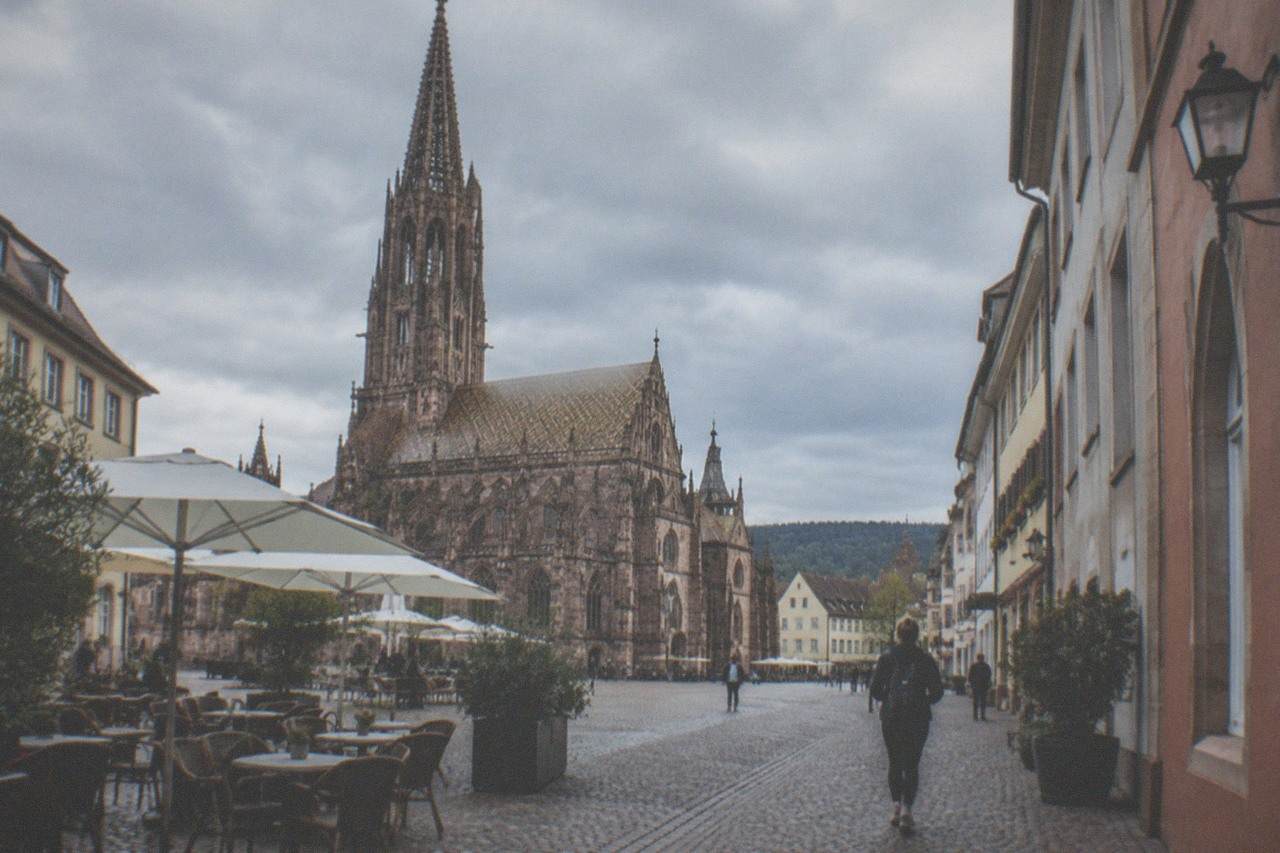
Do They Speak English In Freiburg?
Yes, broadly. Freiburg is a university city with 24,507 students enrolled in the winter semester of 2025/26, and that student population keeps English working across cafés, museums, ticket counters and most visitor-facing situations. Hotel and restaurant staff generally manage, and the city's own tourism infrastructure publishes in English. The honest caveat: outside the center, in neighborhood bakeries and on rural buses, German remains the working language, and a handful of phrases changes the tone of every interaction.
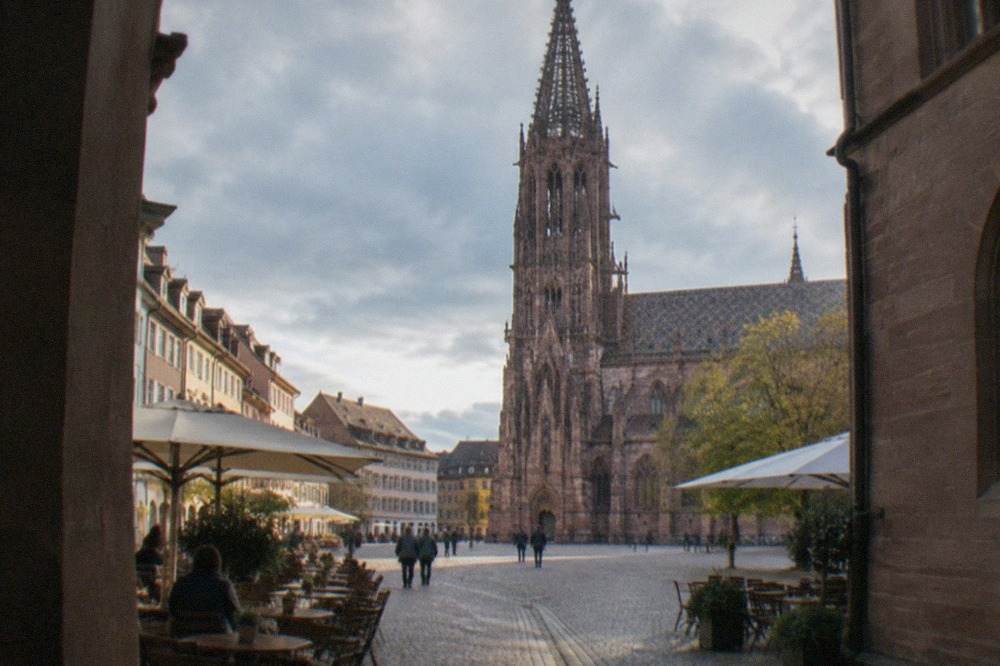
The question sounds simple, but the honest answer has layers. Freiburg sits in the southwest corner of Germany, a short hop from both France and Switzerland, and it hosts one of the country's oldest universities, founded in 1457. That combination produces a city where English is not just tolerated but actively used: in lecture halls, in research institutes, in the tourism office, and increasingly in the tours visitors book before they arrive.
Numbers back this up. The official statistics for 2025 recorded 310,346 international arrivals in Freiburg, up 2.7 percent on the previous year, according to the city's tourism partner portal. A city receiving that volume of foreign guests, and gaining rather than losing them, builds English into its visitor economy out of pure necessity. Restaurants in the old town print English menus in summer, and the main museums post bilingual signage.
What does change the experience is depth. A visitor staying two days in the center, moving between the Münster, the Augustinerplatz and a couple of dinners, can genuinely complete the trip in English. A visitor heading into the Black Forest villages, booking a farm stay, or trying to ask a stallholder at the Münstermarkt about a regional cheese will hit the edge of the English map within an hour of leaving the center.
For anyone who wants certainty rather than probability, English-language guided walks close the gap entirely. A private guide removes the language question from the day: you book in English, you ask questions in English, and the guide handles every interaction in between. For many first-time visitors that is the difference between seeing Freiburg and understanding it.
Where English Is Easiest To Find In Freiburg
English is most reliable in the old town core, the museums, the larger hotels and the tourism office, and least reliable in neighborhood shops, weekly-market stalls and small-town Baden surroundings. Museums post English information, the university district runs on English in its institutes, and bookable guided walks operate in English year-round. Expect the strongest English around the Münster, Bertoldsbrunnen and the station, and progressively less in residential quarters like Wiehre or Zähringen.
The pattern follows the tourist footprint. Around the Münsterplatz, the Historisches Kaufhaus and the Rathausplatz, staff deal with international guests daily and English flows without friction. The city's museums group is a good example: the Augustinermuseum, fully reopened on 28 February 2026 after more than two decades of phased renovation, now presents its collections with modern, interactive displays aimed partly at international audiences. Admission is €12, reduced €8, and free for anyone under 27, a pricing structure that itself tells you how central foreign students are to the museum's audience.
Guided walks deserve their own note, because they are the one corner of the visitor economy where English is guaranteed rather than likely. The bookable roster on this site runs the full price range, from a quick orientation walk to a full private half-day format, and every one of them can be booked and taken in English.
| English-language option | Length | Price | Rating on the listing |
|---|---|---|---|
| Hello Freiburg: Private 2-Hour City Walk with Local Guide | ~2 hours | from $141 | 1 review, too few for a star claim |
| Private Guided Walking Tour | ~1.5 hours | from $239 | 12 reviews, too few for a star claim |
| Express Walk with a Local in 60 Minutes | ~1 hour | from $90 | 12 reviews, too few for a star claim |
| Freiburg Self-Guided Audio Tour in English | self-paced | from $9 | not yet rated on the listing |
The Hello Freiburg private two-hour walk is the natural first pick for a language-anxious visitor. It is a one-to-one format with a local guide, it covers the old town's core, and because it is private, the pace and the depth follow your questions rather than a fixed script.
A private walk also pays off beyond language. Local guides are the fastest route to the things a first-time visitor cannot easily find: which Münstermarkt stall has the right length of bread, which Weinstube still feels Badisch rather than touristic, and how the Bächle, those small runnels alongside the streets, actually work. You are paying for an interpreter of the city as much as an interpreter of words.
For a two-day stay, the question of which walk to book interacts with how long you have in the city generally, and the companion piece on how many days to spend in Freiburg lays out that trade-off in detail.
Wondering whether to book before you arrive at all?
When German Is The Safer Bet
German is the safer bet in the outer residential districts, at the weekly market, in small village inns on day trips, and on local buses beyond the tram network. In these settings English often still works, but the person serving you may be switching languages with visible effort, and precision suffers. Simple transactions survive anywhere, but anything involving negotiation, dietary needs or detailed directions is worth carrying a few German phrases for.
The Münstermarkt is the classic case. It runs Monday to Saturday, 07:30 to 13:30 on weekdays, with up to 130 stalls, and while the stallholders of a market this size are used to tourists, a market conversation moves fast and is full of dialect. Pointing, holding up fingers and paying by card get you through almost everything. The moment you need to ask what is in a Wurst, or whether a tart contains nuts, a printed phrase does more work than a paragraph of hesitant English.
The same applies one town over. Day-trip destinations around Freiburg, from Staufen to St. Peter, are pretty villages with a fraction of the international traffic of the city center. Anyone planning those trips might reasonably decide that the booking-interface comfort of an English-language tour matters more there than in Freiburg itself.
| German phrase | English | Where it earns its keep |
|---|---|---|
| Einmal bitte | One please | Bakeries, market stalls, ticket counters |
| Sprechen Sie Englisch? | Do you speak English? | Opens any interaction politely |
| Die Rechnung bitte | The bill please | Busy inns where nobody passes by |
| Zahlen mit Karte | Paying by card | Small shops before ordering |
| Entschuldigung | Excuse me | Any crowded square or tram |
| Wo ist der Bahnhof? | Where is the station? | Outer districts and villages |
None of this is a wall, and framing it as one would be dishonest. It is a gradient. The center of Freiburg is closer to Amsterdam than to a rural backwater in its language comfort, and the gradient runs out slowly, over kilometers rather than blocks. The phrases above simply keep you comfortable at the far end of it.
How The University Shapes English In The City
The University of Freiburg, founded in 1457, enrolled 24,507 students in the winter semester of 2025/26, and that single institution does more for the city's English than tourism ever could. Its students staff the cafés, fill the apartment blocks and work the part-time jobs that visitors actually touch, and they are overwhelmingly comfortable in English. The university's own enrollment statistics put the figure beyond argument, and it shows in every service interaction near the center.
The numbers are public and checkable. The university's own enrollment statistics for the winter semester of 2025/26 record the 24,507 figure directly, and a substantial share of those students are international. English is the working language of German research, and Freiburg hosts major institutes, including one of Europe's largest solar research organizations. The practical effect for a visitor is simple: the person bringing your coffee is statistically likely to be either a student or a recent graduate, and the odds of fluent English in that interaction are high.
This is also why the city's tone differs from more purely touristic German destinations. In Heidelberg or Rothenburg, English exists for visitors. In Freiburg, English exists for residents, and visitors simply benefit from the overflow. That distinction matters on the ground: it means English is spoken without the faint resentment you sometimes sense in overrun tourist towns, and it means signage, apps and services are built with a bilingual reality in mind rather than a summer season.
For visitors who want the depth a private format gives, the Private Guided Walking Tour at from $239 runs about 1.5 hours, and its 12 reviews on the listing are too few for a dependable star rating, but the format itself is the point: a dedicated guide, an English conversation, and a route shaped around whatever you ask.
Practical Tips For English-Only Visitors
An English-only visit to Freiburg works with three habits: book anything structured in English in advance, let card payments remove negotiation-heavy transactions, and use the city's compact walkable center to keep most interactions in tourist-tuned settings. Transport is largely solvable in English through ticket machines and apps, museums post bilingual material, and the one place to prepare deliberately is food outside the center. Card acceptance and translation apps close most of the remaining gap.
The self-guided audio option deserves a mention here because it solves the language problem at the lowest possible cost. A self-guided audio tour of Freiburg in English runs from $9, needs no guide and no timetable, and turns a walk through the old town into a narrated one. It is a reasonable pairing with a first evening, before or instead of a live guide, and its low price makes it an easy fallback if your dates do not line up with a scheduled walk.
Beyond tours, a few habits carry an English-only visit:
Museums are the easiest win. The city's museum group prices most houses at €5 to €12, and under-27s enter free at all of them, so a rainy museum afternoon costs little and needs no German at all. The tower climb at the Münster is another transaction that survives any language: fixed hours, fixed prices, a ticket window and a staircase.
Transport needs one decision made in English, at home, before the trip. The RVF Welcomekarte covers three days of buses and trams for €27.00 and even includes the Schauinslandbahn cable car, which means most day-to-day transport questions are answered by a single card bought once. For everything else, the region's machines and apps handle English menus, and the companion overview of the Freiburg Welcomekarte explains the options in detail.
Dining is the one category to prepare. In the center, menus and servers manage. In a neighborhood Weinstube at 8 p.m., a translation app open on the table is normal and nobody minds. Reservations by email or booking tool, rather than by phone, also quietly remove the hardest English interaction of the trip.
Does Day-Trip Travel Change The Language Picture?
Not much, provided the day trip is a structured one. Trains and cable cars sell fixed products, so the transactions are simple, and the major destinations around Freiburg, from Titisee to Basel, see enough international traffic to keep English alive at stations, museums and sights. The change comes in the small towns between them, where shop and inn English thins out, and in anything improvised: a redirected bus, a closed trail, a farm-gate purchase.
The regional transport network helps more than visitors expect. Fixed fares, ticket machines with English menus and a dense rail web mean that getting to Titisee, Staufen or Basel rarely requires a conversation. The Schauinslandbahn, for instance, is a 3,600-meter cable car with posted hours of 09:00 to 17:00 and a fixed adult return fare of €15.00, and riding it asks nothing of your German.
The villages themselves are where the gradient from the city center completes. A town like St. Peter lives partly on Black Forest tourism and its guesthouses handle English, but a hamlet's bakery does not, and asking a farmer about a farm track is a German conversation. Visitors who plan to range widely beyond Freiburg may find the fuller context in how to visit the Black Forest from Freiburg useful, since that piece covers the practical spine of these trips.
A guided or self-guided format for day trips shifts the burden of the language onto materials written in English before you left home, which is exactly what an anxious speaker wants: the questions answered in advance, in a language you read fluently, rather than improvised at a rural bus stop.
In the end, the honest summary is that Freiburg is one of the easier German cities for an English-only visitor, thanks to a large student population and a busy international tourism economy, and that the same visitor should still pack ten words of German for the edges of the map. The guided options below make even that precaution optional. For everything else, the Freiburg Travel Guide site's wider coverage of the city and its surroundings fills in the planning gaps.
Common Questions About English In Freiburg
Do they speak English in Freiburg?
Yes, widely. Freiburg hosts 24,507 university students and recorded 310,346 international arrivals in 2025, so English works reliably in the center, in museums and in visitor-facing jobs. It thins out in outer neighborhoods and surrounding villages, where German remains the working language.
Is English enough for a first visit to Freiburg?
For a typical two-day stay centered on the old town, yes. Hotels, restaurants, museums and the tourism office all handle English. A few German phrases help at the weekly market and on local transport, but the trip itself does not depend on them.
Do Freiburg tours run in English?
Yes. The bookable roster includes private two-hour walks from $141, a 60-minute express walk from $90, a longer private guided walking tour from $239, and a self-guided audio tour in English from $9. Private formats let you ask questions at your own pace.
Can you get by in restaurants without German?
In the old town, almost always: menus and staff manage English. In neighborhood Weinstuben and rural inns, a translation app on the table is the normal solution, and printed phrases for allergies and dietary needs are worth having.
Is German required for day trips from Freiburg?
No, but it helps at the edges. Train and cable-car travel runs on fixed fares and English-menu ticket machines, and major sights like the Schauinslandbahn post prices and hours clearly. Small-town shops between the big sights are the main place German still matters.