How To Visit Black Forest From Freiburg?
A practical, honestly sourced answer to how to visit the Black Forest from Freiburg: destinations, tickets, transport, guided walks and a first itinerary.
How To Visit Black Forest From Freiburg?
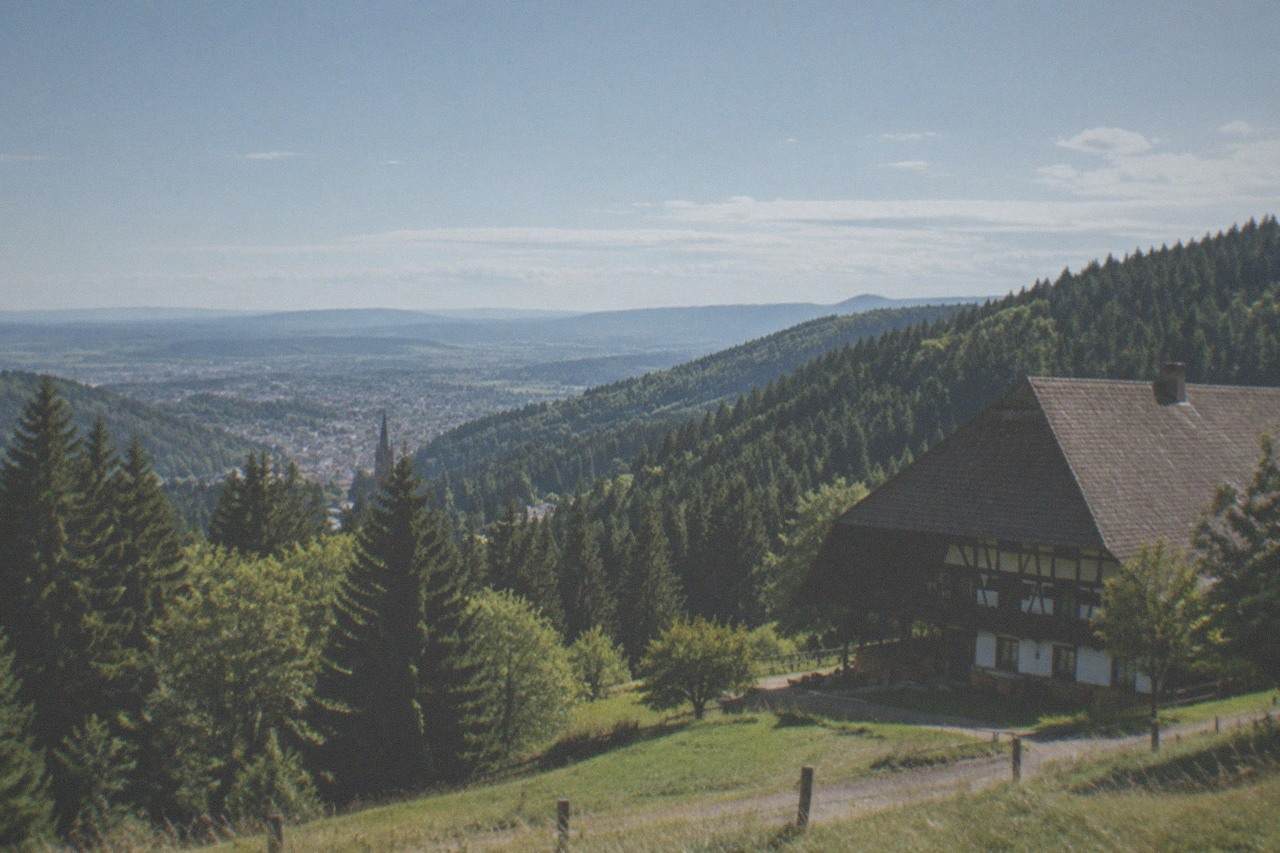
Freiburg sits directly on the Black Forest's western rim, so the forest begins at the edge of town rather than a long drive away. A cable car climbs to the Schauinsland summit, a direct regional train reaches Titisee, and buses thread the valleys. The practical recipe is simple: one summit day, one lake day, one village day, and a three-day RVF Welcomekarte at €27.00 that includes the cable car.
The city works as a base unusually well. Freiburg is one of Germany's warmest and sunniest cities, with 1,815.1 hours of sunshine in the 1991-2020 normals measured by the national weather service, which matters more than it sounds when your plan involves ridgelines and cable cars. The same data set puts the annual mean at 11.0 °C, mild for German latitudes, so the hiking window runs longer here than in the northern Black Forest.
Getting oriented costs an afternoon at most. The Altstadt holds the Münster, the Bächle gutters and two medieval gates, and once you have walked those, the whole geography of the trip is visible: the Schlossberg hill behind the old town is the first wooded rise, and beyond it the hills stack up toward the Feldberg, the range's highest summit. This Freiburg Travel Guide site covers each of those pieces in depth, from the Titisee day trip guide to tram fares and parking, so this page stays on the single question of how you get from the city into the forest itself.
A word on scope before the details. "The Black Forest" is a range roughly 160 km long, and nobody sees it from one base in one visit. What Freiburg gives you is the southern half, the half with the high summits, the bigger lakes and the steepest valleys, plus fast rail links to the Alsace plain and Basel on the far side. Plan around what is genuinely close, and resist the urge to chase every famous sight in one itinerary.
One timing fact decides a lot: the Schauinslandbahn cable car closes for its autumn overhaul from 16 November to 4 December 2026, cable car and mountain restaurant both, and its spring 2027 closure is scheduled for 22 February to 19 March. If your trip lands in those windows, flip your plans and take the forest days first, the city days second.
Which Black Forest Destinations Work Best From Freiburg?
Schauinsland is the easiest forest half-day, a 3,600 m cable car ride from the valley station south of the city, with the summit tower and mining museum at the top. Titisee and Feldberg make full days by direct regional train. Triberg and the northern waterfalls are the far options, honest but slow from this base.
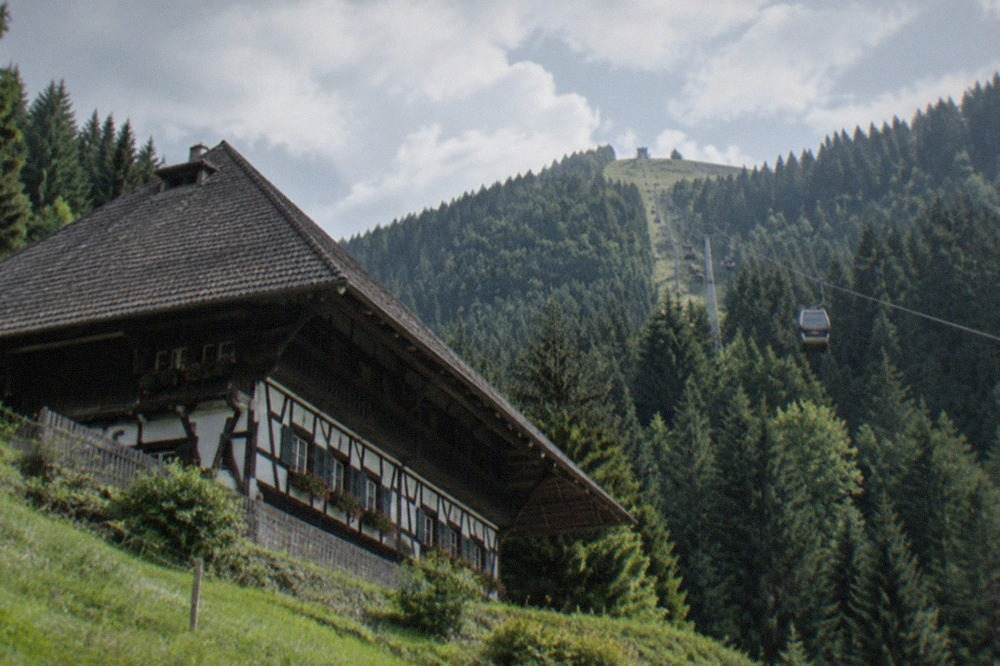
Schauinsland first, because it is the one you can almost see from your hotel room. The cable car is a long one at 3,600 m, climbing from the Talstation to a summit area where the Eugen-Keidel-Turm observation tower reopened in April 2025 according to recent reporting, after a closure for renovation work. The Museums-Bergwerk, a historic silver mine, runs guided tours on a seasonal schedule, in 2026 from 4 April to 1 November, with tours midweek at set times and daily departures in July and August. Regular operating hours for the cable car are 09:00-17:00, with the mountain restaurant keeping the same rhythm. A fuller Black Forest overview on this site places Schauinsland in the wider range if you want the big picture.
Titisee is the classic lake-and-valley day. A direct regional train covers the route through the Höllental, the "hell valley", whose gorge scenery is the reason the line is famous; we state no travel time for it here because the figure floating around is unverified against the operator's own timetable, and the valley is worth the ride regardless of the minutes. At the lake you get swimming beaches in summer, boat rental and a shoreline promenade, and from Titisee station onward connections run deeper into the southern Black Forest, toward Hinterzarten and the Feldberg area.
Feldberg itself is the high point of the range and, in winter, its main ski hill. A recent renovation of the Bismarck monument on the summit was completed around August 2025, so the top is clear of works again. In the snow-free months the Feldberg area is a walking hub with waymarked loop trails; there is a dedicated hiking routes near Freiburg guide on this site that breaks down the trail options by difficulty and trailhead access.
Beyond those three, distance starts to argue with you. Triberg's waterfalls and the cuckoo-clock country around Schonach and Furtwangen sit toward the middle of the range, reachable but eating most of a day in transit each way. Europa-Park in Rust, the country's biggest theme park, is served by train to Ringsheim/Europa-Park station followed by a short bus ride on line 7231, and a combined transport-and-entry product runs from $127. Ticket pricing for the park itself varies by date, so read the operator's own listing rather than any secondhand figure.
| Destination | Best route from Freiburg | Time needed | Known for |
|---|---|---|---|
| Schauinsland | Cable car from the valley station south of the city | Half day | Summit views, observation tower, mine museum |
| Titisee | Direct regional train through the Höllental | Full day | Lake, beaches, boat rental, valley scenery |
| Feldberg | Train toward Titisee, then onward connection | Full day | Highest summit, loop trails, winter skiing |
| Triberg | Regional trains with changes | Long day | Waterfalls, cuckoo clocks |
| Europa-Park (Rust) | Train to Ringsheim/Europa-Park, then bus 7231 | Full day | Theme park; combined entry product from $127 |
Do You Need A Car, Or Does Public Transport Reach The Forest?
No, you do not need a car. Freiburg's trams and buses, the regional rail network and the Schauinslandbahn together cover every destination in the table above. Around 76% of all trips in the city are already made on foot, by bike or by public transport, and the visitor-facing piece of that network is the RVF Welcomekarte, three days for €27.00.
The numbers behind that modal split come from the city's own monitoring: walking, cycling and public transport together rose from 67% of trips in 2017 to 76% in 2023. Freiburg is a place where the car-free default genuinely works, and visitors inherit it. Trams run from the Altstadt to the edge districts, buses and regional trains continue from there into the forest valleys, and the Schauinslandbahn cable car is included in the visitor card, which is the single detail that turns a summit visit from a special outing into a spontaneous one.
Two ticket products matter to a visitor, and one misreading trips people up constantly. The first is the RVF Welcomekarte, sold to visitors staying in the region: three days, €27.00 for adults, covering buses and trains across the fare network and including a ride on the Schauinslandbahn plus a small culture bonus. The second is the Deutschlandticket, the nationwide monthly rail-and-bus pass, at €63.00 per month; if your trip is a week or more, the arithmetic can favor it.
The misreading is KONUS. KONUS is a genuine guest card that gives free local transport across the Black Forest's transport associations, and a card issued by a member town is valid on Freiburg's trams and buses. But Freiburg city itself is not a KONUS municipality, so a hotel stay in Freiburg does not hand you one. The KONUS guest card details are on the official Black Forest tourism site if you are basing yourself in a member town such as Titisee-Neustadt, Kirchzarten or Staufen instead.
Practical notes for the car-free plan: the cable car has its own ticket window at the valley station, an adult return is €15.00 and a single €12.00, and a digital ticketing system now lets you buy online and scan from a phone. Two maintenance closures bracket the season, the autumn overhaul from 16 November to 4 December 2026 and a spring revision scheduled for 22 February to 19 March 2027, so check the Schauinslandbahn operating times page before committing a summit day. Rail works also bite occasionally: the Rheintalbahn between Freiburg and Basel has bundled engineering closures in autumn 2026, with replacement buses on affected weekends, which matters mainly if a Basel or Alsace side trip is on your list.
How Much Do Tickets And Transfers Cost?
Budget transport first: an RVF single ticket in zone 1 is €3.00, a one-zone day ticket is €7.20, and the three-day Welcomekarte is €27.00 including the cable car. Admission on top is mostly free or small: the Schlossberg hill costs nothing, the Schauinslandbahn return is €15.00, and forest trails are open access.
The point of bundling these numbers in one table is that the forest itself charges nothing. What you are buying is motion: city transit, regional trains, one cable car. A three-day car-free visit built on the Welcomekarte plus one separately ticketed mine tour or boat rental typically lands well under what a rental car plus parking plus fuel would cost, and Freiburg's old town parking is scarce enough that many drivers regret the car anyway.
| Product | Price | What it covers |
|---|---|---|
| RVF single ticket, zone 1 | €3.00 (smartphone €2.70) | One journey within zone 1 |
| RVF day ticket, 1 / 2 / 3 zones | €7.20 / €10.90 / €14.30 | Unlimited rides in the chosen zone band |
| RVF Welcomekarte | €27.00, 3 days | Buses and trains, Schauinslandbahn included, culture bonus |
| Deutschlandticket | €63.00 per month | Nationwide local and regional transport, 2nd class |
| Schauinslandbahn return | €15.00 adults, single €12.00 | Cable car to the summit and back |
One habit saves both money and friction: buy transit tickets before you board, on a phone or at a platform machine. The city's new electric buses, two-thirds of the fleet since late 2025, carry cashless machines only and sell nothing at the driver's window, so an unprepared passenger on one of those vehicles has to sort out a ticket mid-journey or risk a fine.
Should You Start With A Guided Walk In Freiburg Itself?
Yes, on day one, and here the honest picture helps: the private walking options run from $90 to $239, and their review pools are small, between 1 and 12 reviews each, too few for star claims. Read the listings on their own terms, book the format that matches your style, and treat the walk as orientation rather than entertainment.
The argument for a guided walk is purely logistical. A local guide in two hours gives you the geography you would otherwise assemble by trial over two days: which bridge leads to the Schlossberg paths, where the tram to the cable car valley station leaves, which gate faces which valley. Freiburg's old core is compact, but it is also layered, with the university quarter, the market streets and the newer districts each pointing toward a different corner of the forest.
The roster here offers three formats. Hello Freiburg: Private 2-Hour City Walk with a Local Guide runs about two hours from $141, a private format with a single review on file so far, too few to characterize. The Private Guided Walking Tour, about 1.5 hours from $239, has 12 reviews. Express Walk with a Local in 60 Minutes, from $90 and also 12 reviews, is the compressed version for travelers who land late and start early. All three are city walks, not forest walks; the forest days you build yourself with the tickets above.
If a private guide at those prices is not your format, the city's own tourism office has run guided walks for decades, and the shared group tours listed on this site run cheaper, from $15 for the large Gässle and Bächle tour, which carries a 4.7 rating across 3,187 reviews, an unusually deep pool for a city this size. Either way, spend the first morning on foot in town and the afternoon on the Schlossberg, and you will already have walked a corner of the forest without a ticket.
What Does A Sensible First Itinerary Look Like?
Two days covers the essentials: day one, a morning city walk plus the Schlossberg paths, then the cable car to Schauinsland for summit views; day two, the train through the Höllental to Titisee with a lake afternoon, returning by early evening. Add a third day for Feldberg trails or Europa-Park if the schedule allows.
Day one keeps everything south of the city. Morning: the guided or self-guided old town loop, the Münster, and the market square. Midday: walk or take the funicular up the Schlossberg, whose hillside park is free and whose tower is reached on foot. Afternoon: tram and bus to the Schauinslandbahn valley station, cable car to the summit, and an hour at the top between the observation tower and the mine-museum tour if timings line up. The tower reopened in April 2025 according to recent reporting, and the mine runs guided tours only, on fixed days.
Day two points east into the high valley. The regional train to Titisee is the scenic centerpiece, gorges and forest walls most of the way, and the lake at the end handles the rest of the day: promenade walking, boat rental in season, swimming in summer at the designated beaches. From Titisee, onward connections in a few minutes reach Hinterzarten and the Feldberg trailheads, so a fit group can convert the lake afternoon into a ridge walk with a lake swim at the finish.
A three-day version swaps one lake morning for Feldberg, or sends the third day west to Rust for Europa-Park, using the combined transport-and-entry product from $127 rather than assembling train, bus and gate tickets separately. In winter the same shape holds with different content: skiing on the Feldberg replaces the ridge walks, and the Christmas market, 19 November to 23 December 2026, fills the dark afternoons.
One honest word on self-guided alternatives. A scavenger-hunt walking tour of the city runs from $3 self-guided and carries a 4.4 rating across 43 reviews, and a self-guided audio tour in English costs from $9. Those formats suit travelers who want structure without a schedule, and both are listed on this site. For the forest legs, printed waymarking is dense and well maintained, so a paper map plus the transit table above is genuinely enough.
Day three or a second week opens the wider ring: Staufen and the Markgräfler vineyards to the south, the Kaiserstuhl volcano hills to the west across the Rhine plain, Basel and Colmar in opposite directions on fast trains. But that is the Freiburg-and-surrounds planning problem, not the Black Forest question, and the region guides on this site take it from there.
Common Questions About Visiting The Black Forest From Freiburg
How to visit Black Forest from Freiburg?
Use Freiburg as a rail and cable-car base: the Schauinslandbahn lifts you to the nearest summit, a direct regional train runs through the Höllental to Titisee, and onward connections reach Feldberg and the high valleys. A three-day RVF Welcomekarte at €27.00 covers the region's buses and trains and includes the cable car, so a car is optional rather than necessary.
Can you visit the Black Forest without a car from Freiburg?
Yes. Every destination covered here, Schauinsland, Titisee, Feldberg, Triberg and Europa-Park, is reachable by tram, bus, train or cable car, and around 76% of trips within Freiburg are already made on foot, by bike or by public transport. The Welcomekarte is built precisely for this kind of car-free visit.
How much does the Welcomekarte cost?
The RVF Welcomekarte costs €27.00 for adults and is valid for three days, covering buses and trains across the fare region, a ride on the Schauinslandbahn cable car, and a small culture bonus. It is the right product for a visitor staying in Freiburg itself. Note that Freiburg is not a KONUS municipality, so a KONUS guest card is only issued if you stay in a participating member town.
Is the Schauinslandbahn open year-round?
Almost. It operates daily 09:00-17:00 through the year, but it closes for scheduled maintenance: the autumn overhaul runs 16 November to 4 December 2026 and a spring revision is set for 22 February to 19 March 2027. Check the operator's operating-times page before planning a summit day inside those windows.
How many days do you need for the Black Forest from Freiburg?
Two days covers the essentials: one summit-and-city day built around Schauinsland, and one lake day by train to Titisee. A third day adds the Feldberg trails or Europa-Park at Rust. Fewer than two days and the forest becomes a single viewpoint; more than five and you should widen the trip to the Alsace or Basel rather than the same hills.