Are The Trams In Freiburg Free?
No, Freiburg's trams are not free. Here is what a ride actually costs, which passes pay off, and why so many visitors arrive believing the network is free.
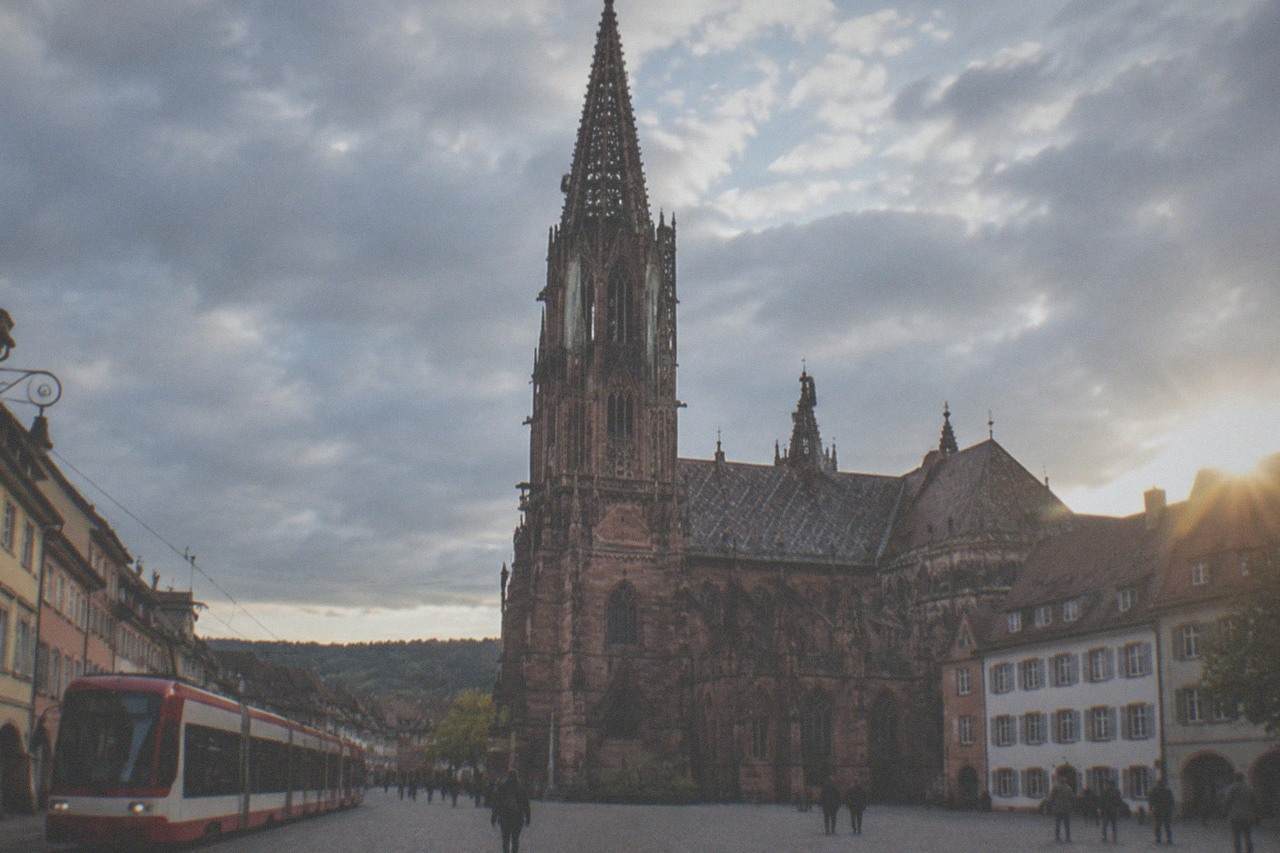
Are The Trams In Freiburg Free?
No. Freiburg's trams are part of the paid RVF network, and a single ticket for one zone costs €3.00 at the machine or €2.70 on a smartphone. Nothing about the network is free for visitors, though a KONUS card issued in a neighboring Black Forest town does ride Freiburg's trams at no extra charge.
The tram is the workhorse of this city, and the workhorse expects to be paid. Freiburg's network of eight tram lines and a bus fleet that is now roughly two thirds electric is run by VAG, the city transport operator, and ticketed through the RVF, the regional fare association for the whole Breisgau area. That means one fare system covers the tram at Bertoldsbrunnen, the bus out to the Mundenhof, and the regional train to neighboring towns. The system is cheap by big-city standards, simple to use, and entirely not free.
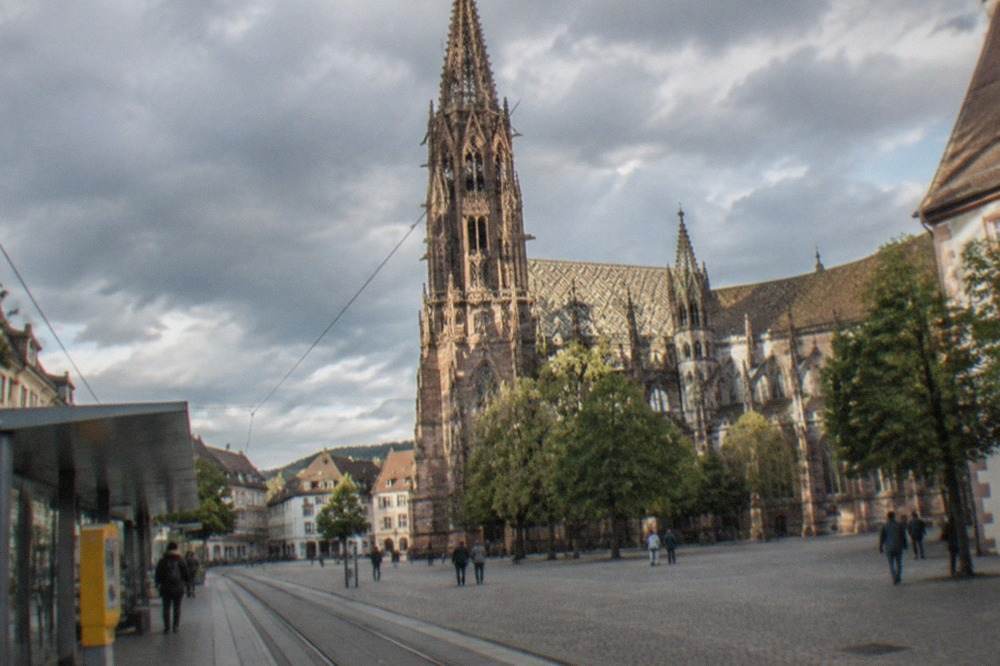
Where does the free-tram idea come from? Mostly from the KONUS guest card, a genuinely free transit product that circulates widely in Black Forest tourism marketing. The card is real, and it is valid on Freiburg's trams and buses. But it is only issued by participating Black Forest municipalities, and Freiburg city is not one of them. A guest sleeping in Kirchzarten, Titisee-Neustadt, Bad Krozingen, Staufen, St. Peter or Horben can ride into Freiburg for free on a KONUS card. A guest sleeping in Freiburg cannot get one, full stop. The other source of the myth is simpler: Freiburg markets itself hard as a green city where walking and cycling beat the car, and that reputation slides, in travelers' minds, into "the transit must be free too."
For most visitors this is good news rather than bad. The fares are low, the network is dense, and the old center is so compact that a lot of trips end up on foot anyway. Once the transit question is settled, the evenings are better spent on a guided walk than on a tram platform, and Freiburg has some genuinely memorable ones: the Christmas Drag Show Walk with Betty BBQ, the Culinary Tour of Freiburg, and a Guided Pub Crawl with Drinks that covers the Stühlinger and Altstadt bar scene in one long night.
What A Tram Ride Actually Costs In Freiburg
A one-zone single costs €3.00 for an adult, €1.80 for a child, and €2.70 when bought on a smartphone. Day tickets run €7.20 for one zone, €10.90 for two zones and €14.30 for three. Fares were raised in August 2025, so older print guidebooks may quote numbers that no longer apply.
The city center sits almost entirely inside fare zone 1, which is why most short visitors never need to think about zones at all. A ride from the Hauptbahnhof to the Schwabentor, or from the Augustinerplatz to the Seepark, is a zone 1 journey at the zone 1 price. The full current price list is published in the RVF fare overview, which is the document to trust over any secondhand summary.
Here is the core price list as it stands under the fare structure introduced in August 2025:
| Ticket | Adult | Child | Notes |
|---|---|---|---|
| Single, 1 zone | €3.00 | €1.80 | €2.70 when bought on a smartphone |
| Day ticket, 1 zone | €7.20 | n/a | Unlimited rides within zone 1 for one day |
| Day ticket, 2 zones | €10.90 | n/a | Reaches outlying towns such as the Kaiserstuhl edge |
| Day ticket, 3 zones | €14.30 | n/a | Covers the wider Breisgau region |
One practical wrinkle deserves a sentence of its own: the newer electric buses on the network carry cashless ticket machines only, with no cash accepted and no tickets sold by the driver on those vehicles. The trams themselves still take coins in their platform machines, but anyone planning to hop on a bus with a pocketful of change should buy on a phone instead.
The day ticket math is straightforward. Three or more separate tram rides in one day inside zone 1 and the €7.20 day ticket has already beaten €3.00 singles. Two rides, and singles win. A typical sightseeing day that strings together the Münster, the Augustinermuseum, the Schlossberg and the Seepark will comfortably cross that line.
Which Passes Make Riding The Tram Cheaper
Three passes matter. The RVF Welcomekarte covers three days of buses and trams for €27.00 and includes the Schauinslandbahn cable car. The Deutschlandticket costs €63.00 per month for unlimited regional transit. The KONUS guest card is free, but it is only issued by Black Forest member towns, and Freiburg itself is not one of them.
The Welcomekarte is the visitor product built precisely for the person asking this question. Three days, €27.00 for an adult, buses and trains included, and, unusually, the Schauinslandbahn cable car up to the 1,284-meter Schauinsland summit is bundled in. A return ticket on that cable car alone would cost €15.00 if bought separately, so a single planned mountain trip turns the Welcomekarte into a bargain before the trams are even counted. There is also a small Kulturbonus, a culture credit, attached. The details are on the official Welcomekarte page.
The Deutschlandticket, at €63.00 per month, only makes sense for a stay approaching a month, but it is worth knowing the number because it anchors the whole German transit price ladder. Anyone arriving with a Deutschlandticket bought elsewhere in Germany can simply board, since it is valid on Freiburg's trams like any other second-class local service.
| Pass | Price | What it covers | Who should buy it |
|---|---|---|---|
| RVF Welcomekarte | €27.00, 3 days | Trams, buses, trains plus the Schauinslandbahn and a culture credit | Visitors planning a cable-car or wider regional day |
| Deutschlandticket | €63.00 per month | Unlimited second-class local and regional transit | Long stays of several weeks |
| KONUS guest card | Free | Local transport across nine networks, including Freiburg trams | Only guests of Black Forest member towns, not Freiburg city |
The KONUS row is where honesty matters most. The card is free, it is real, and it is valid on Freiburg's trams. But Freiburg does not issue it, and a hotel receipt from Freiburg does not unlock it. The regional tourist body explains the mechanics on its visitor ticketing page, and the distinction between the KONUS scheme and Freiburg's own Welcomekarte is exactly the kind of detail that separates a planned trip from an confused one. This site covers the full mechanics in the Freiburg Welcomekarte explained guide, and the broader transit picture in getting around Freiburg.
Why People Believe The Trams Are Free
The confusion has three honest sources. Freiburg's car-reduced reputation makes the tram network feel like a public amenity. The KONUS card genuinely delivers free trams, but only to guests of member towns outside the city. And the Bächle, the famous open gutters running beside the streets, are free to look at, which somehow blurs into tram folklore.
Start with the green-city story, because Freiburg has earned it. Walking, cycling and public transport together rose from 67% of all trips in 2017 to 76% in 2023, a shift the city itself measures and publishes. Districts like Vauban were built deliberately car-reduced, and the Rieselfeld quarter followed the same philosophy. When a city spends decades telling the world that the car is the least useful way to move around it, visitors arrive primed to believe the alternatives are treated as public goods. They are not. They are simply better used, and still paid for. The full index of guides sits on Freiburg Travel Guide.
Then there is the KONUS effect described above. Search results for "free transport Black Forest" return the KONUS card, its marketing is excellent, and Freiburg is the region's biggest city. The mental leap from "free transport in the Black Forest" to "free transport in Freiburg" is small and wrong. The card's own coverage map quietly makes the point: the member municipalities ring the city without including it.
Finally, pure proximity does its work. The trams glide through pedestrian-dense streets at walking pace, unsigned barriers or gates rarely interrupt a boarding, and in cities where that pattern comes with proof-of-payment indifference, riders assume leniency. It is not indifference here; it is inspections that simply are not always visible. Buy before boarding, every time.
Getting Around Freiburg Without A Ticket At All
The Altstadt is compact enough that most visitors walk nearly everything. Walking, cycling and public transport together account for 76% of all trips in the city as of 2023. For distances beyond the center, the Frelo bike-share system and the tram cover the rest, and the Schlossberg is a walk, not a ride.
Honest geography first. The distance from the Martinstor to the Schwabentor, the two surviving medieval gates that bracket the old center, is a few minutes on foot at an unhurried pace. The Münster, the Augustinerplatz, the Historisches Kaufhaus, the Rathausplatz and the Markthalle all sit inside that envelope. A visitor with a full day and good shoes can see the entire core without a single ticket, and this is the single most useful thing to know about transport in Freiburg. The planning question is less "what does the tram cost" and more "which two or three peripheral sights justify riding today."
For those peripheral sights, two wheels beat a fare box. The Frelo bike-share system is woven through the city, and recent reporting puts its fleet at roughly 1,200 bikes, including 206 e-bikes, spread across about 162 stations, 100 of them in Freiburg itself. Cycling is not free either, but it is cheap, and the city's bike infrastructure is a genuine destination in its own right.
| Way of moving | Typical cost | Where it shines |
|---|---|---|
| Walking the Altstadt | €0.00 | Everything inside the two gates |
| Tram, single, zone 1 | €3.00 | Seepark, Stühlinger, Wiehre, the Hauptbahnhof loop |
| Welcomekarte day (averaged) | €9.00 per day of three | Mixing trams with the Schauinslandbahn |
| Schauinslandbahn return | €15.00 | The summit, though the Welcomekarte already includes it |
| Schlossbergbahn, up and down | €6.50 | The hill behind the city, or walk up free in about 20 minutes |
Note the last row. The Schlossberg, the wooded hill with the viewing tower directly above the old town, is a public park with free access on foot. Only the inclined funicular costs money, and the path beside it costs nothing but breath. Even the paid options in this city keep drifting back toward free ones, which may be the deepest reason the myth survives. Food is the other thing best explored on foot, and a two-hour Culinary Tour of Freiburg, from $61, walks the old center through its Badische specialties; with only 2 reviews so far it is a young listing, and the tour speaks for itself on the operator's live page.
When A Guided Walk Beats Another Tram Ride
A guided walk costs about what a day of transit does and delivers context no tram ride offers. The Christmas Drag Show Walk with Betty BBQ runs from $43, the Culinary Tour of Freiburg from $61, and the Guided Pub Crawl with Drinks from $51. All three stay on foot in the old center.
Betty BBQ is a Freiburg institution, a drag performer whose city walks have become one of the most distinctive nights out in the southwest of Germany. For anyone in Freiburg during the Christmas market window from 19 November to 23 December 2026, it is a way to see the market's lights with a guide who is herself part of the city's entertainment furniture. The full details and dates are on the Christmas drag show walk page.
The Guided Pub Crawl with Drinks, from $51 and rated 4.4 across 107 reviews, runs about four hours and stitches together the bars of the old center and Stühlinger, a neighborhood that has spent the last few years consciously rebranding its Kirchplatz from a problem spot into a community square with a events kiosk hosting more than ninety gatherings. That is the Freiburg that a tram window flashes past at walking pace, and it takes an evening, and a guide, to actually enter it. All three of these experiences share one logistical virtue: none of them requires a ticket from the machine that started this whole question. You can read more about how the pieces fit in this site's overview, which exists precisely to keep the fare, card and pass mechanics straight.
Common Questions About Trams In Freiburg
Are the trams in Freiburg free?
No. Every tram ride in Freiburg needs a valid RVF ticket. A single journey in zone 1 costs €3.00, or €2.70 bought on a smartphone.
Do I need to buy a ticket before boarding?
Yes. Tickets come from platform machines, the RVF app or a smartphone ticket, and newer electric buses accept no cash at all. Inspections are not always visible, so a valid ticket should be bought before every ride.
Is the KONUS card valid on Freiburg's trams?
Yes, a KONUS card issued by a participating Black Forest municipality is valid on Freiburg's trams and buses. But Freiburg city is not a KONUS member, so a stay in a Freiburg hotel does not come with one.
Which card should a visitor staying in Freiburg buy?
The RVF Welcomekarte, at €27.00 for three days, is the visitor product. It covers trams, buses and regional trains and includes the Schauinslandbahn cable car, which would otherwise cost €15.00 for a return trip.
Can I just walk everywhere instead?
Largely, yes. The old center between the Martinstor and Schwabentor takes minutes to cross on foot, and most core sights cluster there. Trams mainly earn their fare for the Seepark, Stühlinger, Wiehre and the railway station loop.