Zurich To Freiburg: How To Make The Trip In 2026
The Zurich to Freiburg run is one of the easiest cross-border trips in this corner of Europe: a train ride of about two and a half hours via Basel, no mountain passes, and a city at the end that repays the transfer many times over.
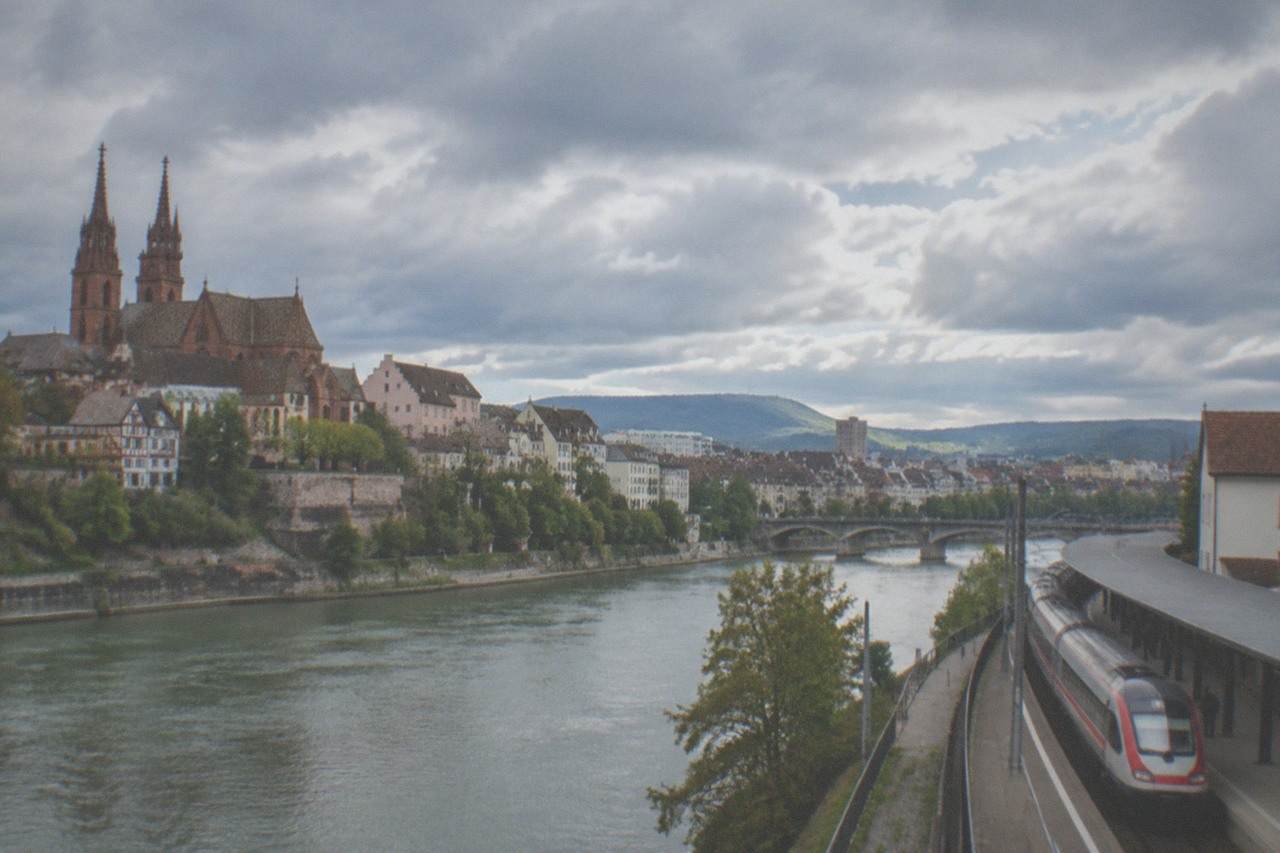
Short answer
The standard way from Zurich to Freiburg is the train via Basel SBB, taking about 2.5 hours end to end. Buses run but save nothing over rail. Freiburg itself is compact and tram-served, so most visitors arrive by rail, buy an RVF Welcomekarte at EUR 27.00 for three days, and never touch a car again.
Switzerland's largest city sits barely 130 kilometers from a German university town most Zurich visitors have never considered, and the connection between them is so direct that the hardest part of the trip is deciding what to do first. The standard routing runs by rail through Basel, crossing the border twice in a single afternoon, and lands you a five-minute walk from Freiburg's tram hub. This Freiburg Travel Guide lays out the transfer, the tickets, the alternatives, and what to do once the Black Forest skyline appears outside the window.
How Do You Get From Zurich To Freiburg?
The train is the answer for almost everyone. The standard routing goes Zurich to Basel SBB, then Basel to Freiburg on German regional and long-distance services, with the whole journey taking about two and a half hours door to door. Buses exist on parts of the corridor but save neither time nor money, and driving only makes sense if the Black Forest is the real destination rather than the city.
The rail journey splits neatly into a Swiss half and a German half. Trains leave Zurich Hauptbahnhof for Basel frequently through the day, and the change at Basel SBB is a short walk across the same station. From Basel the German leg crosses the Rhine at Weil am Rhein or runs down the Rheintalbahn corridor through Müllheim, and recent reporting puts that Basel-Freiburg section at roughly 35 to 50 minutes depending on the service. There is no reservation requirement on the regional trains, and the border is open under Schengen rules, so the crossing is usually a non-event: officers ride through occasionally and rarely stop anyone.
One thing worth knowing before you commit to a date: the Rheintalbahn, the four-track expansion corridor between Karlsruhe and Basel, periodically closes whole sections for bundled engineering works. Reporting from late September 2026 flags a closure of the Freiburg to Basel section in early October 2026, with regional and some long-distance trains replaced by buses between Freiburg and Basel, and similar weekend closures ran through August and September 2026. These are temporary construction blocks, not a permanent change, but a traveler with a fixed arrival time should check the live timetable in the week before travel.
| Option | Typical journey | Best for | Watch out for |
|---|---|---|---|
| Train via Basel SBB | About 2.5 hours, one easy change | Almost everyone | Rheintalbahn engineering closures on some weekends |
| Bus combinations | Longer than rail, multiple operators | Very tight budgets only | Requires booking, little luggage space |
| Rental car | Around two hours of driving on a clear run | Black Forest itineraries, heavy luggage | Swiss motorway rules, parking in Freiburg |
| Fly Zurich, then transfer | Not practical; no Freiburg airport | Nobody, honestly | Pointless given the rail link |
The Swiss timetable is described as stable for 2026 following the major 2025 overhaul, so connections that work in the published schedules should hold through the year. On the German side, one structural piece of news matters to arriving visitors: Freiburg Hauptbahnhof began a barrier-free modernization on 14 September 2026 that will run until around December 2028. The works bring five new lifts to the northern underpass, renewed platforms 3 to 5, new platform roofs and lighting, at a total cost of about EUR 36.7 million shared between DB, the federal government, Baden-Württemberg and the city. The station stays open throughout, but the northern underpass is initially fully closed, so follow the signed detours when you arrive with luggage.
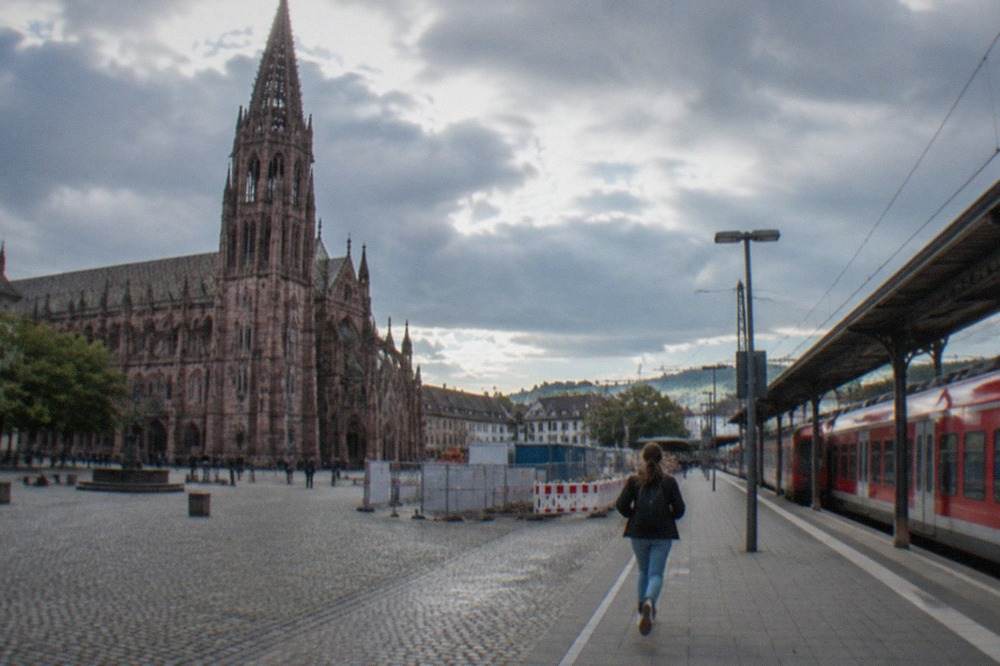
Train From Zurich To Freiburg: Tickets, Changes And Timing
Buy your Zurich-to-Basel and Basel-to-Freiburg legs with the change in mind, and expect about 2.5 hours total. Swiss domestic tickets cover the first half, German fares or a Deutschlandticket cover the second, and buying them separately is usually cheaper than a single through-fare. There is no border control to plan around.
The ticket question is where most Zurich-to-Freiburg travelers overpay. A through international fare exists, but splitting the journey at Basel SBB is the classic money-saving move on this corridor: a Swiss ticket to Basel, then a German regional fare or a point-to-point ticket for the short final leg into Freiburg. For anyone planning wider German travel from Freiburg, the Deutschlandticket at EUR 63.00 per month covers regional trains across Germany, though it cannot be used on the Swiss portion. For a single round trip it rarely pays off, but for a week of day trips from Freiburg it can.
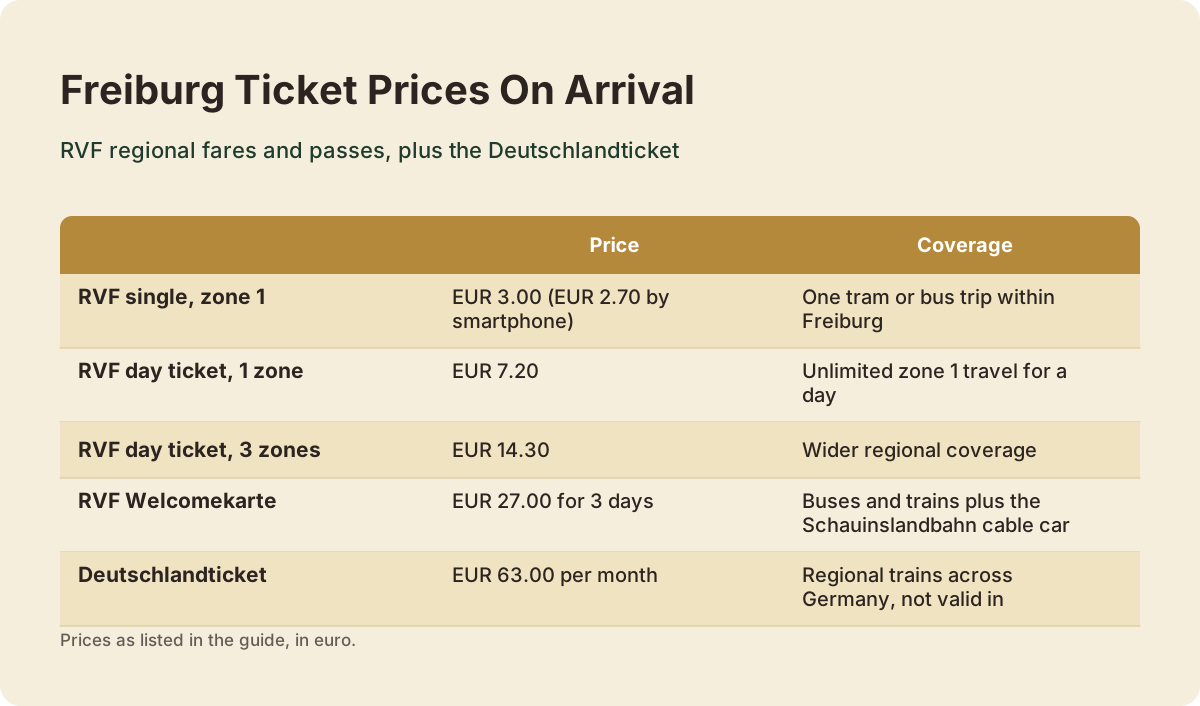
On the Freiburg end, the fare structure that matters is the RVF network, the regional tariff that covers Freiburg's trams and buses plus the surrounding towns. A single zone 1 ticket costs EUR 3.00, or EUR 2.70 if bought in the app, and a one-zone day ticket is EUR 7.20. These are the prices at the machine, in euro, and they are the ones you will actually touch on arrival day.
| Ticket | Price | Coverage |
|---|---|---|
| RVF single, zone 1 | EUR 3.00 (EUR 2.70 by smartphone) | One tram or bus trip within Freiburg |
| RVF day ticket, 1 zone | EUR 7.20 | Unlimited zone 1 travel for a day |
| RVF day ticket, 3 zones | EUR 14.30 | Wider regional coverage |
| RVF Welcomekarte | EUR 27.00 for 3 days | Buses and trains plus the Schauinslandbahn cable car and a culture bonus |
| Deutschlandticket | EUR 63.00 per month | Regional trains across Germany, not valid in Switzerland |
The Welcomekarte deserves a special mention for Zurich arrivers, because it quietly includes one of the region's most expensive single attractions: the Schauinslandbahn cable car, where an adult return ticket alone is normally EUR 15.00. Three days of transport plus the cable car for EUR 27.00 is close to self-financing for anyone who wants to ride up the Schauinsland, and the card's culture bonus discounts museums and other sights around the city.
Timing-wise, frequency is generous in both directions. Trains run through the morning and afternoon at regular intervals, and the journey is short enough that a late breakfast in Zurich still puts you in Freiburg for lunch. Evening returns are thinner than daytime departures, so if you are doing the trip as a long day out from a Zurich base, plan to be on a train out of Freiburg by early evening rather than trusting to a late connection.
Driving From Zurich To Freiburg: When The Car Wins
Driving from Zurich to Freiburg takes roughly two hours on a clear run, and the car only earns its keep if your real itinerary is the Black Forest, Alsace or a stack of small towns that trains serve badly. For a city-focused visit, the train wins, and Freiburg's parking and tram network makes a rental car a burden once you have checked in.
The case for the car is luggage and latitude. A Zurich arrival with ski bags, a family, or a Black Forest road trip in mind will save a half-day of dragging suitcases through Basel SBB. The route runs north from Zurich toward Basel and crosses into Germany in the same corridor the trains use, so there is no mountain driving involved; this is Rhine-plain motoring, flat and fast. The Swiss side requires the standard Swiss motorway arrangements, so sort that before the border rather than after.
On the German side, parking is the thing to plan, not the driving. Freiburg's old town is effectively car-free, and the city pushes park-and-ride hard for good reason: the trams are frequent, cheap with any RVF ticket, and faster than a car hunting for a space in the center. Our parking guide for Freiburg covers the garages and park-and-ride lots in detail, and the short version is that a garage at the edge of the tram network beats a center garage on both price and sanity.
If you are renting on the Zurich side, one-way cross-border drop-offs can carry painful fees, and a cheaper pattern is often to train into Freiburg first and pick up a German-registered car there for the German and Alsatian legs of the trip. Our car hire in Freiburg overview goes through the practicalities, including which cross-border routes are worth driving and which are not.
The reason a car is rarely the right call for a pure city visit is simple arithmetic. The train takes about 2.5 hours, the station sits on the edge of the old town, and every one of Freiburg's headline sights is within a 20-minute walk or a short tram ride of the station. A car adds a border fee, a parking fee and a walk from whichever garage you find. Keep the car idea for the day trips and let the train handle the arrival.
Buses, Airport Transfers And Other Ways In
Direct dedicated buses from Zurich city to Freiburg city are not the standard product on this corridor; the rail line does the work. Where buses genuinely matter is the airport angle: Basel EuroAirport sits between the two cities, and the Freiburger Reisedienst Airportbus runs to Freiburg in about 55 minutes, with the fare shown on the operator's site.
The Basel EuroAirport option deserves more attention from Zurich-side planners than it usually gets. If your Swiss itinerary ends with a flight out of Zurich, or you are combining the trip with a Basel visit, the airport sits on the French-Swiss border and connects to Freiburg by the Freiburger Reisedienst Airportbus, a daily direct service taking about an hour. The fare is not published in a form we can verify, so check the live listing rather than trusting an aggregator estimate, but the schedule and routing are well established. EuroAirport itself has had a busy year: its summer 2026 schedule added eight new direct destinations including Warsaw, Stockholm and Podgorica, and the main runway was fully closed for refurbishment from 15 April to 20 May 2026, with limited operations on the secondary runway. That closure is finished, but it is a reminder that this airport changes quickly and the live timetable is the only source worth trusting.
Long-distance buses on the Zurich-Freiburg corridor exist on booking platforms, but with the train at about 2.5 hours and no motorway toll or fuel cost to recover, they fill a niche rather than a need. The one bus product genuinely worth bookmarking for this route is the airport transfer, because it solves the specific problem of getting from the airport side of the border into the German city without a train change at Basel Badischer Bahnhof.
For travelers landing at EuroAirport, the Basel airport to Freiburg guide covers the transfer in full, including how the airport's split French-Swiss layout affects where you board. And if you are weighing whether Zurich or Basel is the better Swiss gateway for a Freiburg trip, the Zurich to Freiburg alternatives page compares all the realistic entry points, with Basel consistently the closest and Zurich the one with the widest flight network.
Where To Stay In Freiburg After The Ride
Stay inside or just outside the old town for a short visit, and expect the 5% overnight tax to be included in your bill rather than sprung on you at check-out. Freiburg recorded just over 2.1 million overnight stays in 2025, and hotel occupancy ran at 55.2%, which in practice means weekends book up but weekdays rarely do.
The overnight tax is an Übernachtungsteuer, 5% of the net room price, not a Kurtaxe and not a per-person nightly fee like the ones in German spa towns. Private stays have been taxed since 2014, business stays since July 2023, and guests under 18 are exempt. It is normally folded into the room rate, but it is worth knowing the name and the rate so a line on your bill does not read as a surprise.
One thing Freiburg does not hand out is a KONUS card. Freiburg city is not a KONUS municipality; the free regional transport card comes from Black Forest member towns such as Titisee-Neustadt, Staufen and St. Peter, and a card issued there is valid on Freiburg's trams and buses. If your base is Freiburg itself, the card that actually applies is the RVF Welcomekarte described above. Our where to stay in Freiburg guide maps the neighborhoods, and the KONUS guest card explainer untangles who qualifies for what.
The hotel scene has been churning, which matters if you are booking by brand. The Novotel am Konzerthaus opposite the main station was sold in September 2026 and will be renovated and rebranded as a Scandic by autumn 2027, though it keeps operating as a Novotel until then. The IntercityHotel near the station was taken over by Leonardo Hotels in December 2025 with a rebrand targeted for mid-2026. The former Vienna House is becoming a Dormero, and the Panoramahotel above Herdern has been closed since a June 2024 fire. None of this changes much for a visitor, except that a booking made far in advance should be re-checked against the current name.
Your First Day In Freiburg Off The Train
Walk out of the station, through the old town to the Münster in under 20 minutes, and spend the afternoon on the Schlossberg for the view. The Münster nave is free, the tower climb costs EUR 5 for adults to a 70-meter gallery, and a guided city tour at about two hours gives the place its structure if you would rather not read a guidebook.
The geometry of Freiburg rewards walkers. The station sits at the northwest corner of the center; the old town stretches southeast toward the Münster; and the whole spine can be covered on foot in an afternoon, past the Bächle gutters that line the streets, through the Martinstor and Schwabentor gates, and out onto the Münsterplatz market. The Münster itself is the anchor: free to enter, with a 116-meter west tower whose climb takes visitors to a gallery at 70 meters, adults EUR 5, children and teens EUR 3, family EUR 13, under-7s free. The top gallery closes in winter, so check the season before promising the view to children.
For structure, a guided walk is the efficient choice, and the roster here runs from a budget two-hour city tour at from $26, rated 4.4 across 118 reviews, down to a free-cancellation self-guided audio tour at from $9. The Exciting City Tour with Sightseeing and History covers the old town, the cathedral and the historical layer at about two hours, which pairs well with a jet-lagged first afternoon when reading signs feels like work.
The Schlossberg closes the day. The hill above the old town is free to access, the Schlossbergturm viewpoint is a short climb on foot, and the Schlossbergbahn funicular charges EUR 3.70 one way or EUR 6.50 up and down for an adult if the legs object. From the top, the whole route you traveled becomes visible: the Rhine plain, the Vosges on clear days, and the Black Forest ridge line running south. Our Schlossberg guide covers the paths, and the one day in Freiburg itinerary sequences everything if your visit is tight.
| First-day stop | Cost | Time needed |
|---|---|---|
| Walk from station through old town | Free | 20-30 minutes |
| Münster nave | Free entry | 20-30 minutes |
| Münster tower climb | EUR 5 adults, EUR 3 children, EUR 13 family | 30-45 minutes |
| Münstermarkt (Mon-Sat until 13:30, Sat to 14:00) | Free to browse | 30-60 minutes |
| Schlossberg and tower | Free on foot; funicular EUR 6.50 return | 1-2 hours |
| Guided city tour, about 2 hours | From $26, rated 4.4 across 118 reviews | 2 hours |
Day Trips That Justify The Longer Stay
The strongest day trips from Freiburg are the Schauinsland cable car, Titisee and the High Black Forest, the Kaiserstuhl wine country, and Basel itself in the opposite direction. The Schauinslandbahn is included in the EUR 27.00 Welcomekarte, Titisee is reached by a direct regional train, and Basel puts you back in Switzerland within an hour of rail travel, which closes the loop on a Zurich-to-Freiburg-to-Zurich itinerary.
The Schauinsland is the easiest sell. The cable car runs 3,600 meters up the mountain, adults EUR 15.00 return, operating 09:00-17:00 and until 18:00 in the Baden-Württemberg school summer holidays, and the whole ride is covered by the Welcomekarte. Note the maintenance calendar: the autumn overhaul closes the cable car and the mountain restaurant from 16 November to 4 December 2026, and a spring closure is planned for 22 February to 19 March 2027. The summit's Eugen-Keidel tower reopened in April 2025 after years of closure, so the view from the top is whole again.
Titisee and Feldberg push the trip deeper into the High Black Forest. The Höllentalbahn serves the corridor, but treat published journey times cautiously: engineering works closed parts of the line in July and September 2026 for slope stabilization, with replacement buses, and exact minutes vary by service. Our Titisee guide and Feldberg guide cover both, and the Black Forest overview is the hub for the rest.
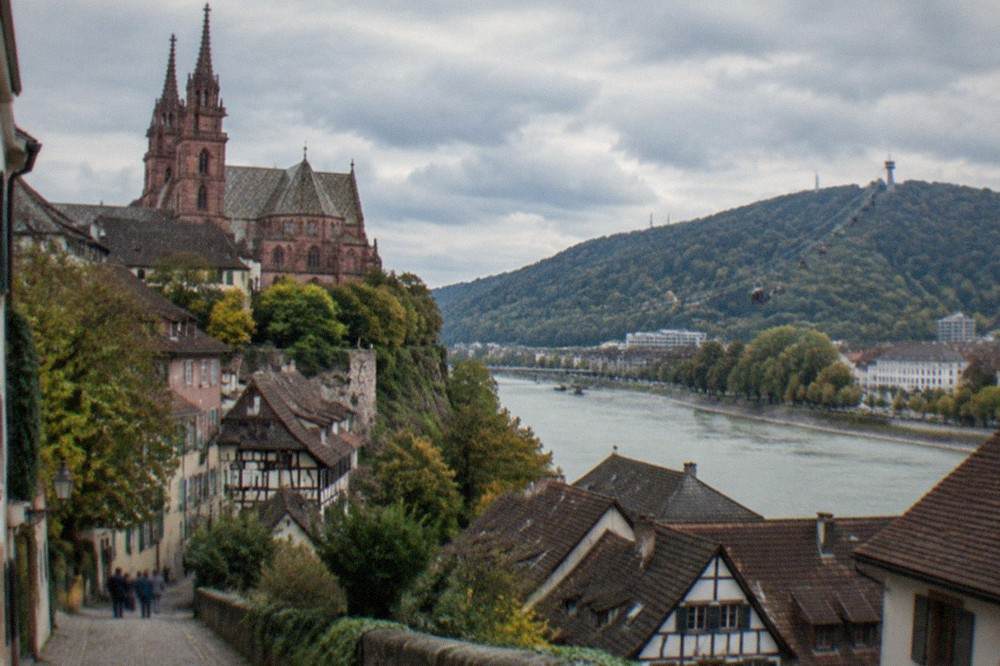
The Kaiserstuhl, the extinct volcano wine region west of the city, is the local favorite that out-of-towners miss. Wine taverns and open winemaker cellars dot the hills, and the tasting culture is casual: the city's own wine festival on the Münsterplatz drew a record of roughly 110,000 guests over six days in July 2026, and the 2027 dates are already set for 1 to 6 July. Our Baden wine guide and Kaiserstuhl page explain the region's Burgundy fixation better than any tasting room will.
For travelers who want a tour to do the organizing, the Veni, Vidi, Vino wine hike and tasting at from $79, rated 4.4 across 167 reviews, walks the vineyard paths above the city with tastings built in, while a shorter tasting of four wines with onion tart at the Town Hall square runs from $31. The onion tart is the region's classic pairing, and you will meet it again in every wine tavern between here and the Kaiserstuhl.
History travelers have a specific option worth flagging: a one-hour guided walking tour on National Socialism, the world wars and dictatorship, from $17. It carries only 2 reviews so far, too few to claim any star rating honestly, but the subject matter, Freiburg's wartime destruction and the university's entanglement with the Nazi regime, is covered almost nowhere else in the standard tourist offer. For context on what the old town's rebuilt facades hide, it is the right door to knock on, and our Freiburg history guide gives the background.
When To Make The Zurich To Freiburg Trip
May through September is the sweet spot, with July the warmest month at a 20.1°C average and the busiest for festivals, while the Christmas market period from 19 November to 23 December 2026 turns the city into a wholly different trip. Freiburg is one of Germany's warmest and sunniest cities, but not the single warmest, so pack for variable weather any season.
The climate record supports the folk reputation without inflating it. The long-term averages for the city show a July mean of 20.1°C, against a January mean of 2.5°C, and the year as a whole averages 1,815.1 sunshine hours, which is genuinely generous by German standards. Rain falls in every month, with May the wettest at 103.4 mm on average, so a summer visit still wants a light rain layer. But the claim to be Germany's warmest or sunniest city does not hold: the climate data puts Freiburg 34th of 1,093 stations on annual mean temperature and 20th of 1,091 on sunshine hours. "One of the warmest and sunniest" is the honest phrase, and it is still a good pitch.
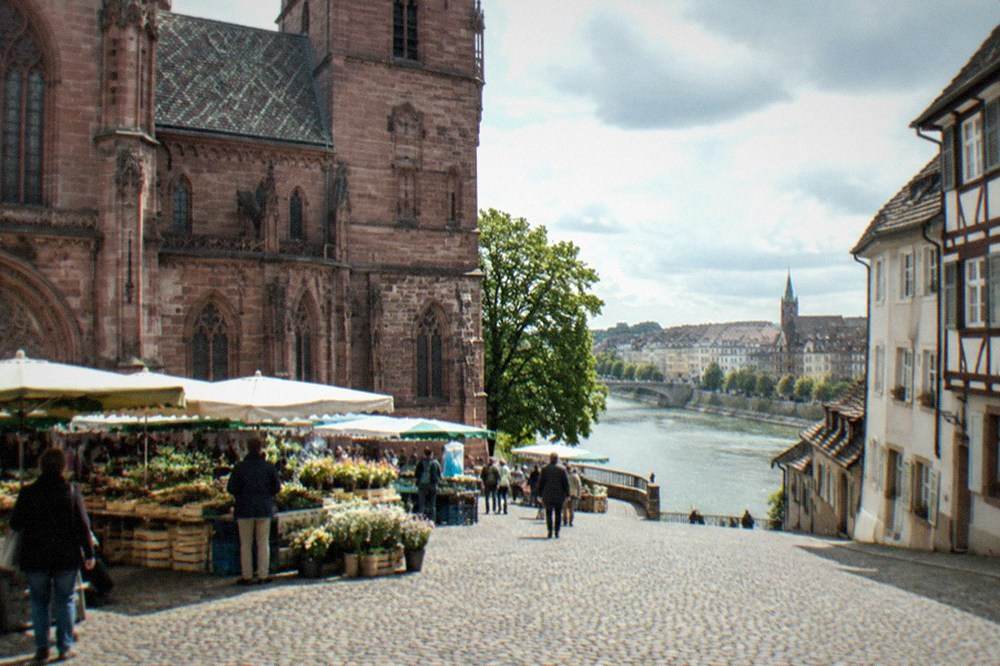
Season by season, the calendar shapes the trip more than the thermometer. Spring brings the Frühjahrsmess, the spring fair, on 14 to 25 May 2026. July stacks the wine festival, the Zelt-Musik-Festival from 15 July to 2 August and the Sea You festival at the Tunisee on 17 to 19 July 2026. Autumn has the Herbstmess from 16 to 26 October and the wine harvest events across the Kaiserstuhl through October and November. Winter is the Christmas market, 19 November to 23 December 2026, over 120 stands across the old town squares, free entry, closed on Totensonntag, 22 November. Our Freiburg events guide and best time to visit guide do this calendar in full.
One seasonal note for the mountain trips: the Schauinslandbahn and the Münster tower's top gallery both reduce winter operations, with the tower's upper level closed in the cold months, so a December arrival trades the summit views for the market glow. If the cable car is a priority, go before mid-November or after the spring maintenance window.
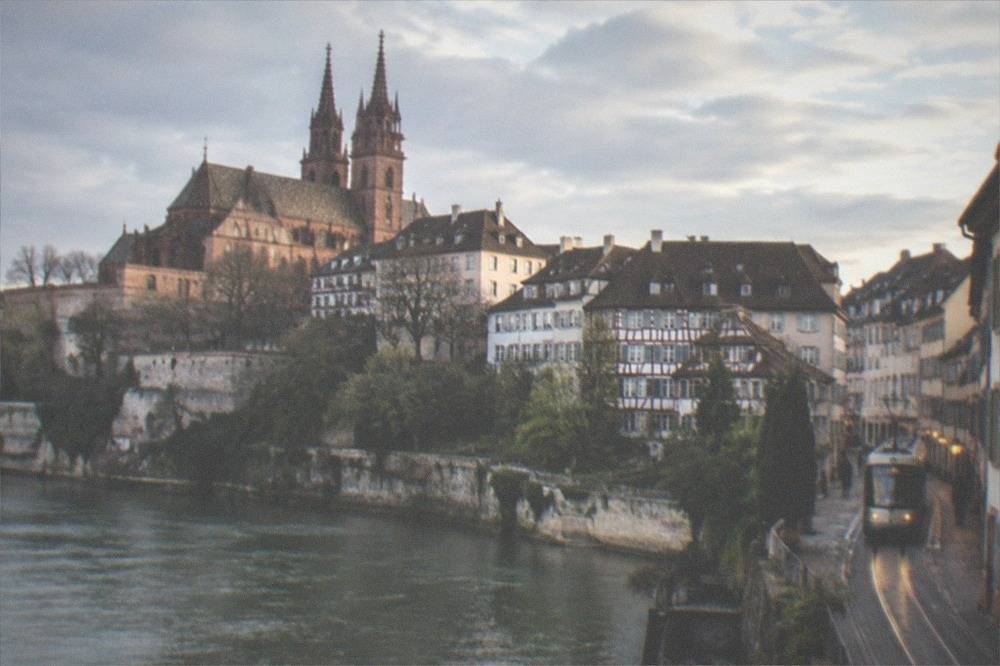
Evening Freiburg: Where The Day Ends
The evening options run from a drag show walk with Betty BBQ, from $40 and rated 4.6 across 699 reviews, to a guided pub crawl with drinks from $51, to a simple beer garden near the Augustinerplatz. The old town's bars are walkable from anywhere in the center, and the last trams run late enough that a hotel outside the center is no obstacle.
Freiburg's nightlife is smaller than Zurich's and easier to navigate, which is the point. The Augustinerplatz, ringed by bars around a wide stone stair, is the default warm-evening hangout, and the Augustinerplatz guide explains the square's role in city life. The Freiburg beer gardens guide covers the brewing side, from the long-established local breweries to the Bavarian-style Augustiner am Platz that opened in October 2025 as Munich's oldest brewery's first Baden-Württemberg outlet.
For something genuinely local and unrepeatable, Betty BBQ's travesty and drag walks are a Freiburg institution. The Drag Queen Show Walk runs about an hour and a quarter, from $40, rated 4.6 across 699 reviews, and a second travesty city tour, the Hey Hallöchen format, runs from $41 with a 4.9 rating across 140 reviews. Christmas gets its own show walk version. These are city tours wearing sequins: real history and real jokes, delivered by a performer whose review counts dwarf most of the conventional walking tours in town.
If organized revelry is not the mood, the Freiburg nightlife guide sorts the districts, and the Freiburg food guide handles dinner, from Badische classics to the newer arrivals. Wine drinkers should note the small bars around the Fischerau and Gerberau streets, where the region's Gutedel and Spätburgundy pour by the glass at tavern prices; the Baden wine guide names the styles worth ordering by name.
A Realistic Two-Stop Itinerary: Zurich, Then Freiburg
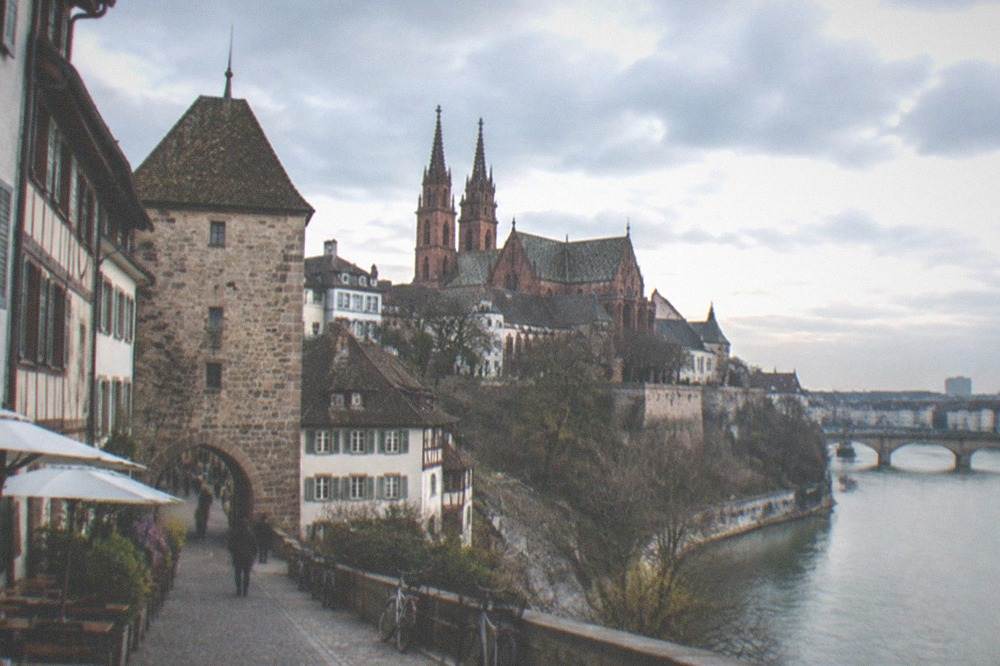
Split a five-day trip as two days in Zurich and three in Freiburg, arriving by rail on day three. In Freiburg, give day one to the old town and Münster, day two to the Schauinsland on the Welcomekarte, and day three to Titisee or the Kaiserstuhl before returning to Switzerland through Basel, which keeps the whole trip on trains and one transport card.
The symmetry is what makes this pairing work. Zurich gives you the lake, the Bahnhofstrasse and Swiss urban polish; Freiburg gives you the medieval core, the Black Forest at the tram's edge, and prices noticeably kinder to a wallet calibrated in francs. Because the cities sit about 2.5 hours apart on a single rail corridor, the second half of the trip never costs you a travel day, and you can even base in one city and day trip to the other if you prefer a single hotel.
| Day | Base | Plan | Key cost |
|---|---|---|---|
| 1 | Zurich | Lake, old town, museums | Local fares |
| 2 | Zurich | Uetliberg, shopping, evening | Local fares |
| 3 | Freiburg | Train over in the morning; old town walk, Münster, tower climb | Rail fare; tower EUR 5 |
| 4 | Freiburg | Schauinsland cable car, summit, evening at Augustinerplatz | Welcomekarte EUR 27.00 covers both days 4-5 transport |
| 5 | Freiburg | Titisee or Kaiserstuhl day trip, return via Basel | Welcomekarte or rail ticket |
The one structural caveat for 2026-2027 travelers is the Freiburg Hauptbahnhof modernization running until about December 2028, paired with the periodic Rheintalbahn weekend closures on the Basel corridor. Neither blocks the trip; both reward a timetable check 48 hours out. If a weekend closure hits your chosen day, the replacement buses are well organized, but they add time and swallow luggage space, so travel on a weekday where the schedule allows it.
For anyone extending past five days, the natural next moves are the three days in Freiburg itinerary, the Freiburg and Black Forest five days plan, or the cross-border Freiburg, Alsace and Basel triangle, which turns the whole Zurich-Freiburg axis into a loop through three countries.
Common Questions About Traveling From Zurich To Freiburg
How long does the train from Zurich to Freiburg take?
About 2.5 hours end to end via Basel SBB, with one straightforward change. The Basel-Freiburg leg alone takes roughly 35 to 50 minutes on most services. Check the live timetable close to your travel date, because weekend engineering works on the Rheintalbahn corridor occasionally replace trains with buses between Freiburg and Basel.
Is there a direct train from Zurich to Freiburg?
The standard routing involves a change at Basel SBB, which is a short walk within the same station. Treat any timetable showing a single-seat journey as a bonus rather than the plan, and book the connection with at least 15 to 20 minutes of change time if you are carrying luggage.
What is the cheapest way to get from Zurich to Freiburg?
Split the ticket at Basel: a Swiss fare to Basel plus a German regional fare for the final leg is usually cheaper than a through international ticket. Long-distance buses exist but save nothing on a corridor this short, and the rail journey is faster.
Do I need my passport to travel from Zurich to Freiburg?
Both countries are in the Schengen area, so there are no routine border controls on the train. Carry a passport or ID card anyway, because officers can and occasionally do ride through and check, and you are crossing an international border in the legal sense.
Should I fly from Zurich to visit Freiburg?
No. Freiburg has no airport of its own, and the train covers the distance in about 2.5 hours, which is faster than any flight once airport time is counted. If a flight is already bringing you into the region, Basel EuroAirport is the closest major airport, with a direct bus to Freiburg taking about 55 minutes.
How many days should I spend in Freiburg after arriving from Zurich?
Two days covers the old town, the Münster and the Schlossberg comfortably; three lets you add the Schauinsland cable car and one day trip. If the Black Forest, the Kaiserstuhl wine country or Alsace are on the list, plan four or five and use Freiburg as the base, since every major destination in the region is reachable by train or tram-linked transfer.