Munich To Freiburg: A Practical Route And Arrival Guide
The jump from Munich to Freiburg swaps a big-state capital for a small university city on the edge of the Black Forest, and the practical details of that move are what this guide covers: tickets, arrival, the first evening, and the sights worth booking time for.
Short answer
The trip from Munich to Freiburg is a long-distance rail journey into the upper Rhine plain, and a Deutschlandticket at €63.00 per month covers regional trains across the whole network. Once in Freiburg, a three-day RVF Welcomekarte at €27.00 covers city trams and buses and includes the Schauinslandbahn cable car.
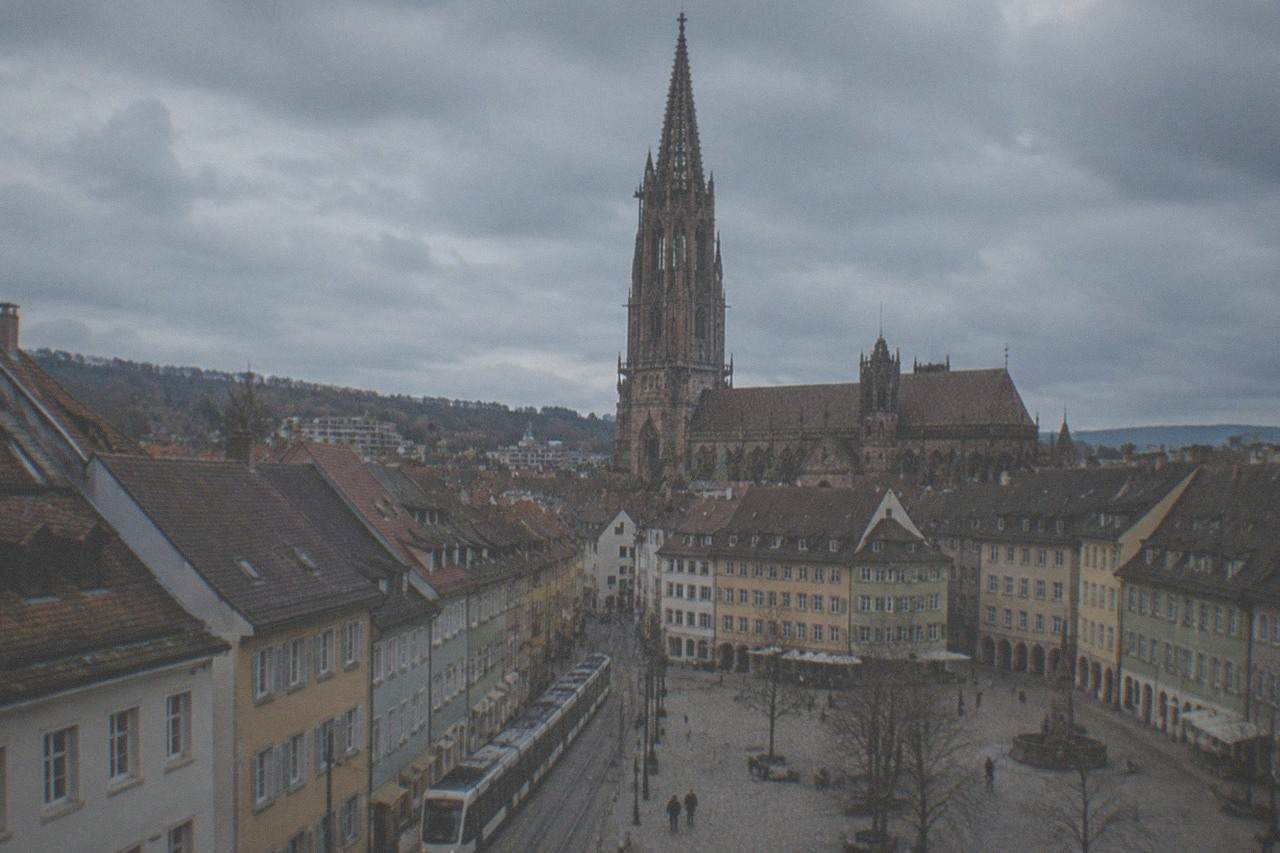
Freiburg sits in the upper Rhine plain where the Black Forest rises abruptly on its eastern side, and it is a very different proposition from Munich: a university city of 237,299 people rather than a state capital measured in millions. The university was founded in 1457, and its 24,507 students in the winter semester of 2025/26 keep the old town lively through terms and vacations alike. Anyone planning the Munich to Freiburg leg is really planning an arrival, not a marathon of transit, and the sections below treat it that way: the ticket question first, then where the two cities genuinely differ, then the first evening, the city transport you will actually use, the core sights, and the half-day trips that make Freiburg a better base than its size suggests.
How To Get From Munich To Freiburg
The Munich to Freiburg leg is a southbound-to-westbound rail journey across Baden-Württemberg into the Rhine plain, served by long-distance and regional services. For a single flat price, the Deutschlandticket at €63.00 per month covers unlimited regional travel nationwide, so it frequently beats point-to-point fares for visitors making more than one trip in a month.
Long-distance services run into Freiburg's main station from across southern Germany, and regional trains fill the gaps on the same corridors. We do not print a Munich to Freiburg journey time on this page: the figure varies by service type, routing and connection, and the operator's own timetable is the only source that stays correct. Check current times there rather than relying on a number quoted anywhere else, including in search snippets, which age badly whenever a schedule changes.
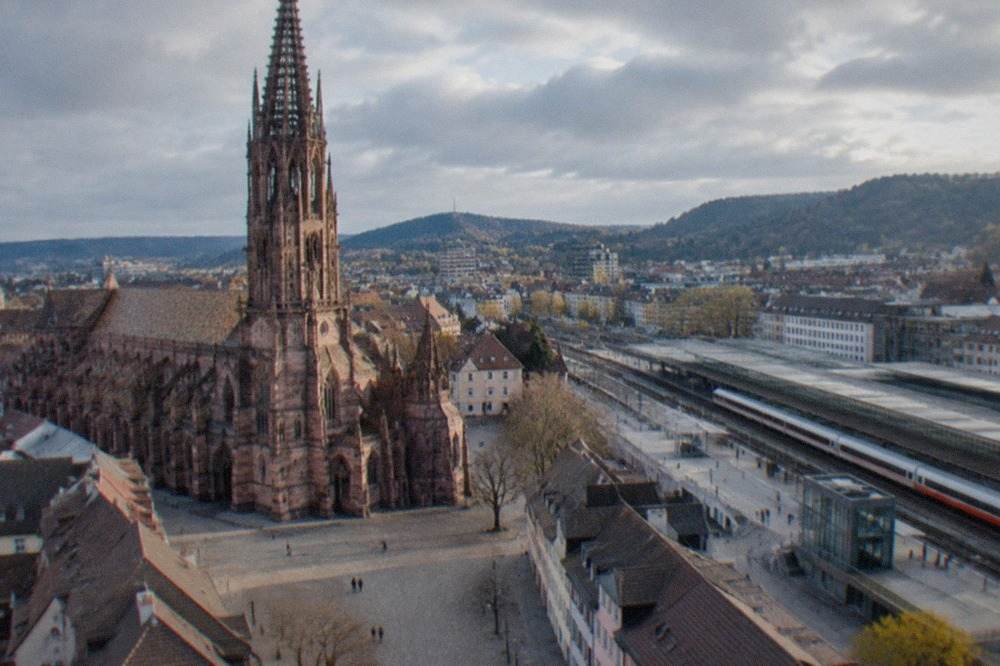
The station itself deserves a note before you arrive. Freiburg Hauptbahnhof began a barrier-free modernization program on 14 September 2026 that will run until around December 2028: five new lifts are being installed in the northern passenger underpass, which is initially fully closed, platforms 3 to 5 are being renewed with adjusted heights, and new platform roofs, lighting and a guidance system for blind travelers are coming. The total investment is about €36.7 million shared between Deutsche Bahn, the federal government, the state of Baden-Württemberg, the regional transport body and the city. In practice that means arrival involves some detour signage, so allow a few extra minutes when you step off, and expect the underpass route to change during the works. Our Freiburg Train Station guide covers the station layout in detail if you want to plan the arrival before you travel.
There is a second thing worth knowing about the corridor itself. The Rheintalbahn between Freiburg and Basel is being four-tracked in a long-running expansion, and 2026 has seen a pattern of bundled weekend and full-section closures with replacement buses, including a block around early October 2026 affecting regional and some long-distance trains between Freiburg and Basel. None of this touches the Munich side of your journey, but if your plans continue south or west from Freiburg, check the works calendar before committing to tight connections. A general rule for this whole corridor: treat any printed rail time you find anywhere outside the operator's timetable as provisional, because engineering works reshuffle these timings several times a year.
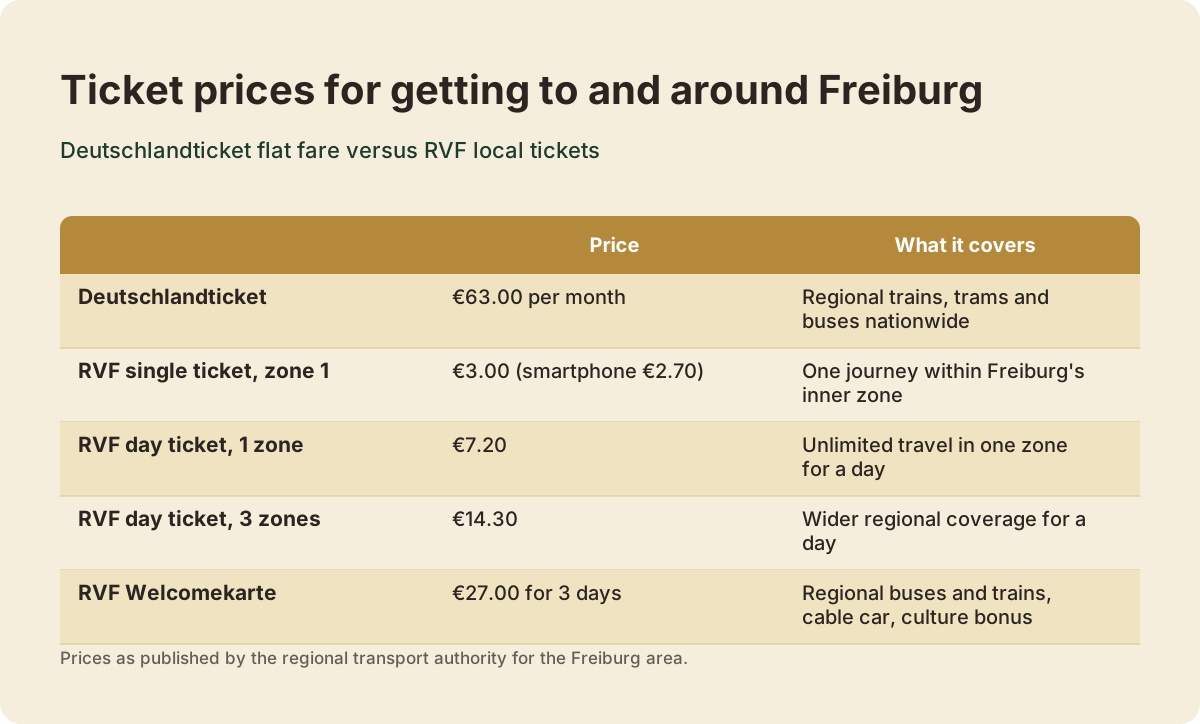
For ticket strategy, the national flat fare is the standout option. The Deutschlandticket is a monthly product, valid on regional trains, trams and buses everywhere in Germany including Freiburg's own city network, at €63.00 per month from 1 January 2026. The regional transport authority for the Freiburg area publishes the details on its Deutschlandticket page. If you are making one round trip inside a month and nothing else, point-to-point long-distance fares may be cheaper; the moment your itinerary includes local trams, a day trip and a return, the math usually tips the other way.
| Ticket | Price | What it covers |
|---|---|---|
| Deutschlandticket | €63.00 per month | Regional trains, trams and buses nationwide, including all Freiburg city transport |
| RVF single ticket, zone 1 | €3.00 (smartphone €2.70) | One journey within Freiburg's inner zone |
| RVF day ticket, 1 zone | €7.20 | Unlimited travel in one zone for a day |
| RVF day ticket, 3 zones | €14.30 | Wider regional coverage for a day |
| RVF Welcomekarte | €27.00 for 3 days | Buses and trains in the region, the Schauinslandbahn cable car, and a culture bonus |
One warning about arrival logistics: do not assume a car is the simpler option. Freiburg's old town is largely pedestrianized, parking is deliberately scarce and priced to discourage it, and the city's walking, cycling and public transport share of trips rose from 67 percent in 2017 to 76 percent in 2023, which tells you where the planning priorities lie. If you are weighing driving against rail for the Munich leg, our Car Hire In Freiburg guide and the parking guide cover the trade-offs honestly.
Why Freiburg Makes A Different Base Than Munich
Freiburg trades Munich's scale for proximity: from a city of 237,299 people you reach the Black Forest, the Kaiserstuhl wine hills, the Alsace and Basel in well under a day trip each. Its climate is one of Germany's warmest and sunniest, with 1,815.1 hours of sunshine per year, and 2,130,785 overnight stays in 2025 keep the visitor infrastructure running without big-city crowds.
The difference that matters for a traveler is not the postcard comparison but the geometry. Munich anchors the southeast; Freiburg anchors a triangle where Germany, France and Switzerland meet. Day trips from Freiburg reach Basel, Colmar, the Alsace wine route and the whole southern Black Forest, which is why many visitors split a southern-German trip between the two cities rather than substituting one for the other. Our Freiburg Vs Heidelberg comparison and the Freiburg Alsace Basel Triangle guide lay out those routing arguments in detail.
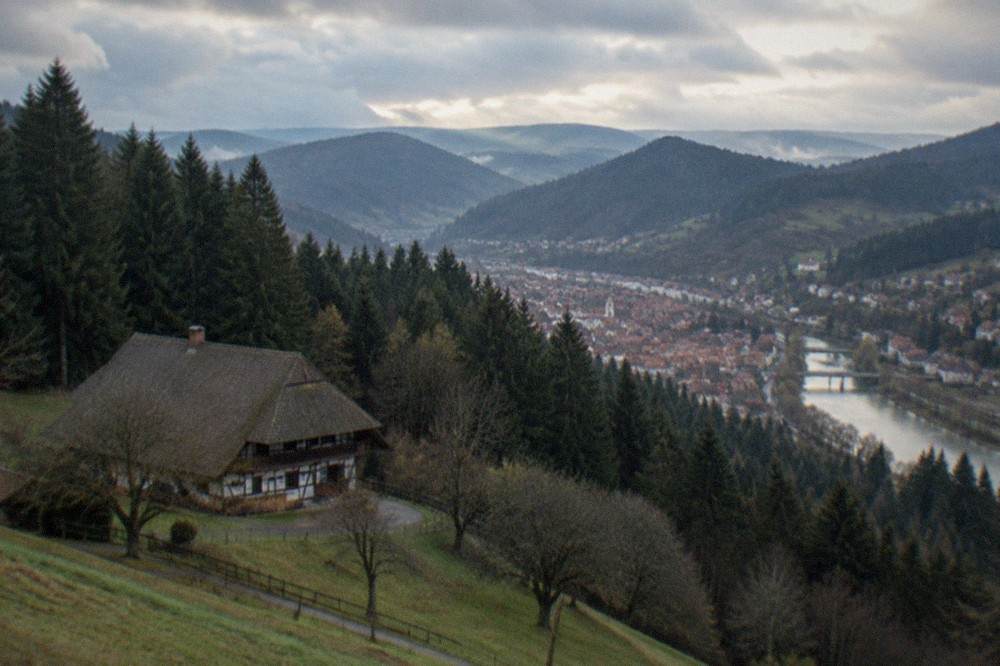
The tourism numbers back the claim that this is a genuinely visited small city rather than a stopover. In 2025, Freiburg recorded 1,010,708 arrivals and 2,130,785 overnight stays across establishments with at least ten beds, about two percent below 2024, and hotel bed occupancy actually rose to 55.2 percent, up 1.2 percentage points. The international segment grew: 310,346 arrivals, up 2.7 percent. What that means for a visitor is that the city has full hotel, restaurant and tour infrastructure year-round, but July and the Christmas market weeks compress availability, so book rooms early for those windows.
A word on the hotel landscape, because it shifted during 2025 and 2026. The Novotel Freiburg am Konzerthaus opposite the main station was sold in September 2026 and will be renovated and rebranded as a Scandic property by autumn 2027. The IntercityHotel near the station moved under the Leonardo brand during 2026 with renovations continuing. The Vienna House by the exhibition grounds became a Dormero, and the Panoramahotel on Herdern has been closed since a June 2024 fire, with new owners planning a full renovation as a wellness hotel. None of this changes where you should stay, but it explains why a booking search may return unfamiliar names for buildings you read about in older trip reports.
| Freiburg at a glance | Figure |
|---|---|
| Population | 237,299 (30 June 2025) |
| University founded | 1457 |
| Students, winter semester 2025/26 | 24,507 |
| Overnight stays, 2025 | 2,130,785 |
| Sunshine hours per year | 1,815.1 |
| Annual mean temperature | 11.0 °C |
The climate line deserves precision, because sloppy versions of it circulate widely. Freiburg is not Germany's warmest or sunniest city; the 1991-2020 normals from the national weather service put it 34th of 1,093 stations on annual mean temperature and 20th of 1,091 on sunshine hours. What is true, and what you can plan around, is that it sits firmly in the warm, sunny tier of German cities: 252.2 hours of sun in July, mean July temperatures of 20.1 °C, and a growing season that makes the surrounding hills genuinely wine country. July and August average 7.3 and 7.0 days at or above 30 °C respectively, so summer packing is straightforward.
For anyone converting a Munich trip into a Freiburg stay, the practical summary is this: the city rewards slower pacing, the surrounding region rewards day trips, and the balance between the two is the whole appeal. A themed guided walk is one of the more efficient ways to compress the old town's history into a first evening or morning, and the selection below shows the formats available.
What To Do On Your First Evening In Freiburg
An arrival evening in Freiburg is best spent in the old town around the Rathausplatz and Augustinerplatz squares, where the taverns, beer gardens and wine bars sit within a ten-minute walk of almost any hotel. The city reported a six percent drop in crime in 2025, and the center stays busy and well-lit late into the night, so a post-dinner wander is a normal part of local life rather than a tourist ritual.
Start with food rather than sights, because the evening kitchen hours matter more than the daylight ones. The traditional Badense options are long: the Lange Rote, a long red sausage served in a crusty roll, is the classic market-square snack, and the surrounding region's onion tart and Badense wine by the glass anchor the autumn menus. Our Freiburg Food guide covers the dishes worth ordering and where to find them, and the Freiburg Beer Gardens And Breweries guide maps the outdoor drinking culture, which runs from March terrace openings through the late-summer months.
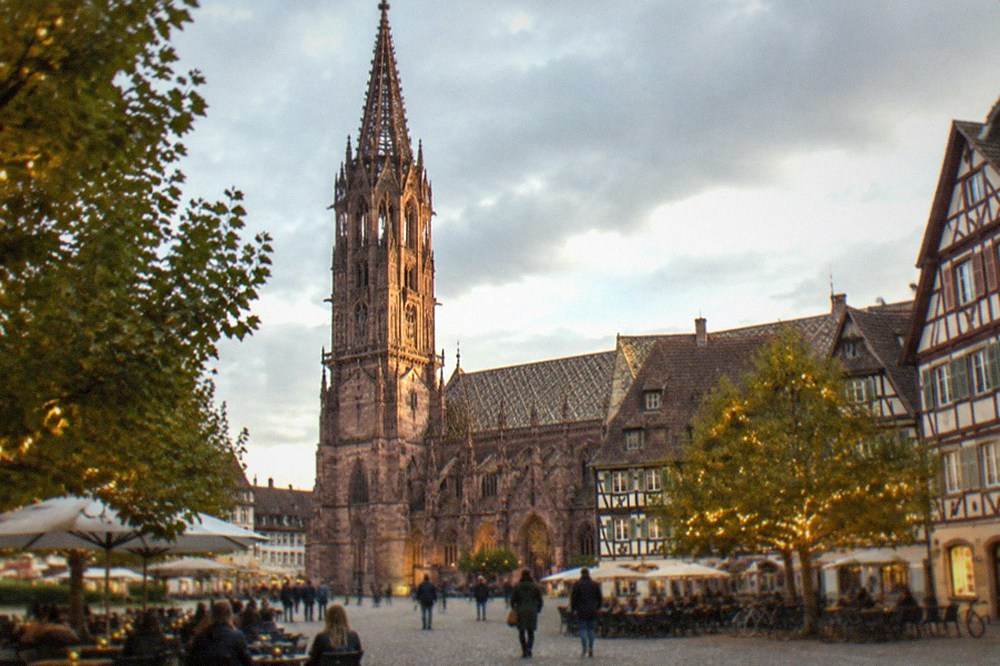
Augustinerplatz is the evening heart of the old town: a wide staircase under chestnut trees where students and visitors share the same steps, with the Augustiner monastery brewery beside it. Further south, the Gerberau and Fischerau lanes along the old city stream hold a dense strip of small taverns and candlelit bars, and the banking of the stream itself, the Bächle, gives the lanes their sound and their look. The wine scene has added a layer recently: the region's first standing wine tavern, Ludvigs, opened in 2026 after a renovation, an Augustiner-branded tavern opened at Augustinerplatz in October 2025 as the brewery's first house in Baden-Württemberg, and a wine bar called Trotte opened in Fischerau in August 2026 with around 400 wines on its list and a focus on German and Burgundian rarities. Three openings inside twelve months is a real shift in a city this size.
For a structured first evening, guided options run the range from tame to rowdy. The drag show walk with Betty BBQ is the loudest institution in that list, rated 4.6 across 699 reviews at from $40, running about an hour and a quarter of comedy city tour. A guided pub crawl with drinks, rated 4.4 across 107 reviews at from $51, covers roughly four hours. The quieter end is a historical red light district tour, rated 4.2 across 22 reviews at from $26, a two-hour walk through the brothel and bathhouse history of the old lanes with an adult edge but no theatrics.
| Evening tour | Length | Rating and reviews | Price |
|---|---|---|---|
| Drag Queen Show Walk with Betty BBQ | ~1h 25m | 4.6 from 699 reviews | from $40 |
| Guided Pub Crawl with Drinks | ~4 hours | 4.4 from 107 reviews | from $51 |
| Red Light District City Tour | ~2 hours | 4.2 from 22 reviews | from $26 |
| BlablaComedy stand-up comedy show | ~2.5 hours | new listing, no rating yet | from $27 |
The red light district tour deserves a specific word because it is the one most first-evening visitors underestimate. It is a history walk first: Freiburg's old town preserved its medieval street plan almost intact, and the tour uses it to explain how prostitution, public baths and disease control actually worked in a walled city. The reviews are few but consistent, and the format suits travelers who want the city explained rather than performed. If an evening arrival leaves you with energy but not much planning time, it is the kind of slot you can book the same afternoon.
If you would rather ease in with an audio format you control, there is also a self-guided audio tour in English from $9, which works well for a first-evening stroll that you interrupt for dinner. And if the evening lands on a Thursday, note that the Museum für Neue Kunst stays open until 19:00, one of the few late cultural openings in the city.
Getting Around Freiburg Once You Arrive
City transport in Freiburg is the tram network above all: eight-plus lines radiating from the old town, with a single zone 1 ticket at €3.00, a day ticket at €7.20, and the three-day Welcomekarte at €27.00 that also includes the Schauinslandbahn cable car. The fleet went about two-thirds electric after 22 new battery buses arrived in October 2025, and trams run frequently enough that most visitors never wait a timetable.
The ticketing is genuinely simple, which is not true everywhere in Germany. A zone 1 single costs €3.00 at a machine or €2.70 on a phone, a child single is €1.80, and day tickets for one, two and three zones cost €7.20, €10.90 and €14.30. The Welcomekarte is the visitor product: three days, €27.00 for an adult, covering buses and trains across the regional network, including the Schauinslandbahn cable car up Freiburg's local mountain and a culture bonus that discounts museum entries. If your stay is three days or more and includes the cable car, the Welcomekarte usually pays for itself on the cable car alone, since a cable car return costs €15.00 at the normal tariff. Everything else covered here is indexed on Freiburg Travel Guide.
Two practical cautions from 2026. First, the new electric buses carry cashless ticket machines only: no coins, no driver sales on those vehicles, so buy before boarding or use a phone. Second, construction is disrupting several lines this year: tram line 3 has a partial replacement service from May to mid-October 2026 for track works in Zähringen, lines 2, 3 and 15 are affected by sewer and track works into late October 2026, and Haslacher Straße works reroute services into December 2026. Replacement buses are well signed but slower, so pad your timing on any tram-dependent morning departure.
Cycling is the other genuinely local way to move, and the numbers are striking. The Frelo bike-share system was fully renewed from January 2026 with about 1,200 new bikes including 206 e-bikes, and from March 2026 the network spans 162 stations, 100 in Freiburg and 62 in the surrounding region. Classic bike prices were unchanged in that renewal. With 66 new covered parking spots added at the main station in December 2025 and a dedicated bike expressway under construction from November 2025, this is a city built around two wheels, and flat terrain makes it comfortable for casual riders. Our Cycling In Freiburg guide covers routes and rentals.
| Transport product | Price | Notes |
|---|---|---|
| Single, zone 1 | €3.00 / €2.70 on phone | Child €1.80 |
| Day ticket, 1 zone | €7.20 | Unlimited inner-city travel |
| Day ticket, 3 zones | €14.30 | Covers regional day trips |
| Welcomekarte | €27.00, 3 days | Includes Schauinslandbahn and culture bonus |
| Deutschlandticket | €63.00 per month | Valid on city trams and buses too |
| Schauinslandbahn return | €15.00 | Single €12.00; 09:00-17:00 daily |
One correction worth internalizing, because it trips up many Black Forest itineraries: Freiburg is not a KONUS municipality. KONUS is the Black Forest guest card that member towns issue free with a hotel stay, and it is valid on Freiburg's trams and buses when issued elsewhere, but a hotel in Freiburg itself does not hand you one. Nearby member towns include Kirchzarten, Horben, Titisee-Neustadt, Bad Krozingen, Staufen and St. Peter. If your trip mixes Freiburg with a stay in one of those towns, read our KONUS Guest Card guide before assuming what each night's stay includes. And note that Freiburg's own visitor levy is a separate thing entirely, an overnight tax of five percent of the net room price, applied to private stays since 2014 and business stays since July 2023, with under-18s exempt. The city's overnight tax page states the current rules.
The Minster, The Bachle And The Old Town
The core of a first Freiburg day is the Münster and its square: the nave is free to enter, the 116 m west tower can be climbed to a gallery at 70 m for €5, and the market in front of it runs Monday to Saturday with up to 130 stalls. The old town around it is compact enough that everything else, the gates, the Bächle streams, the Augustinerplatz, sits within a fifteen-minute walk.
Get the tower details right, because the correction matters. The west tower is 116 m tall, but visitors climb to a gallery at 70 m, not the top, and the top gallery closes in winter. Climbing hours are Monday to Saturday 11:00-16:00 and Sundays and holidays 13:00-17:00, with the last ascent about fifteen minutes before closing. Adults pay €5, children and teenagers €3, a family ticket is €13, and under-7s are free, with tickets sold in the Türmerstube at the tower base. The official tower climb page carries the current schedule. The view from 70 m takes in the whole Rhine plain, the Vosges on clear days, and the Black Forest escarpment immediately east, which is the single best orientation exercise the city offers.
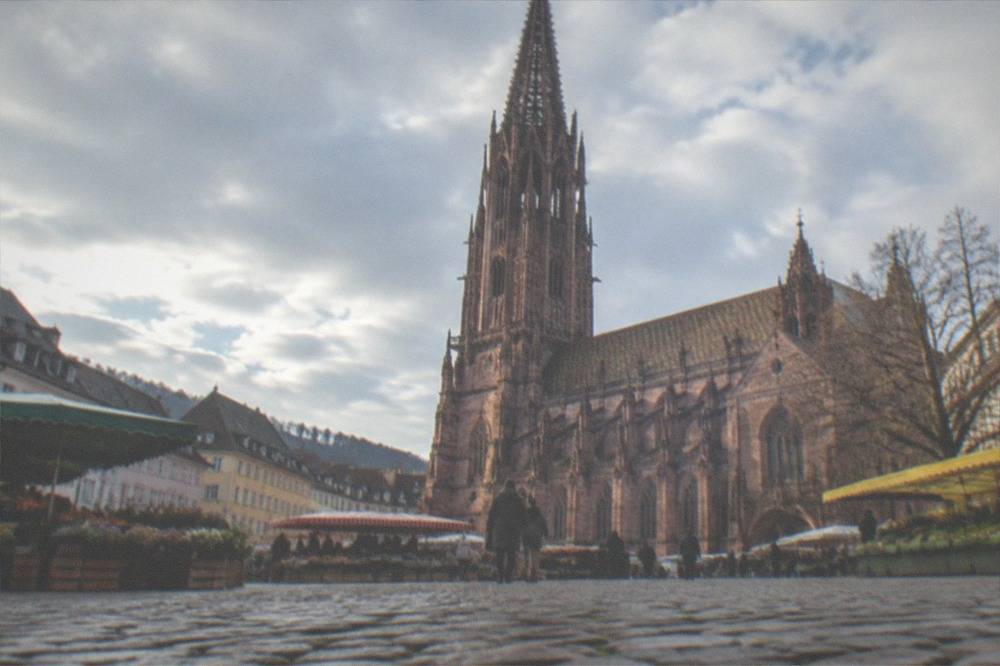
The Münstermarkt in front is the working heart of the city, not a tourist market. Stalls run Monday to Friday from 07:30 to 13:30 and Saturday to 14:00, closed Sundays, holidays and 15 August, with up to 130 stands selling flowers, produce, bread and the region's specialties. One temporary note: a flower stand was relocated to the south side of Münsterplatz near the Fischbrunnen from March 2026 for the duration of construction on Münzgasse, so the exact stall layout may differ from older maps. The Münster itself is in a long restoration cycle: work in 2025 and 2026 touched the southern choir, the northern nave and side chapels, and plans for the tower octagon call for restoration to begin around 2027 at an estimated cost above €18 million, using sectional scaffolding rather than a full enclosure, under a new Münsterbaumeister appointed from October 2026. None of this closes the church or the tower; some partial scaffolding will simply be part of the view for years to come.
| Old town sight | Admission | Notes |
|---|---|---|
| Münster nave | Free | Open daily |
| Münster tower gallery | €5 adult, €3 child, €13 family | Climb to 70 m; top gallery closed in winter |
| Augustinermuseum | €12, reduced €8 | Day ticket covers other city museums; free under 27 |
| Museum für Neue Kunst | €7, reduced €5 | Open Thursdays until 19:00 |
| Archäologisches Museum Colombischlössle | €5, reduced €3 | Free under 27 |
| Schlossberg and Schlossbergturm | Free | Tower reached on foot |
The museum headline for 2026 is the Augustinermuseum, which fully reopened on 28 February 2026 after more than twenty years of phased renovation, adding about 1,600 square meters of exhibition space in the former convent building and vaulted cellars to reach roughly 3,400 square meters in total. Admission is €12, reduced €8, and the day ticket is valid across the other city museums; under-27s enter free, which applied to all city museums even before the reopening. Anyone who read that this museum was partly closed is working from an outdated guidebook: it is open, and it is the single best rainy-hour option in the city. One caveat for natural history fans: the Museum Natur und Mensch closed its permanent exhibition on 4 August 2026 until roughly the end of February 2027 for renovation, while staying open for special exhibitions, the mineral vault and workshops.
The old town's signature details deserve a slow walk rather than a checklist. The Bächle, the narrow gutters running along most old-town streets, once served as water supply and drainage and now cool the pavements in summer; local custom says stepping in one means marrying a Freiburger. The two surviving gates, the Martinstor and the Schwabentor, frame the north-south old axis, and the Schlossberg behind the Schwabentor lifts you above the rooftops within a quarter hour's walk, with the funicular up costing €3.70 one way or €6.50 return. A full loop of these details, and where each one appears in the street plan, is in our Old Town guide.
If you prefer a structure over a self-directed wander, the dramatized tours are a local peculiarity worth knowing about: costumed actor tours have run since 1998, rated 4.7 across 78 reviews, and the main actor-led city tour carries 4.9 across 497 reviews at from $17, the strongest rating in the whole roster for a standard city walk. For a first-day format that lets you set the pace instead, a scavenger hunt style self-guided tour routes you past the main sights as a puzzle trail, rated 4.9 across 15 reviews at from $45.
Wine, Hills And Half-Day Trips From Freiburg
The half-day radius around Freiburg splits cleanly into wine country to the west and the Black Forest to the east: the Kaiserstuhl vineyards and Baden's Spätburgunder heartland sit in the upper Rhine plain, while the Schauinsland cable car lifts you along a 3,600 m line up the local mountain for €15.00 return. Both work on the Welcomekarte, and both are reachable without a car.
Start with the wine, because it is the trip Munich cannot offer. Baden is Germany's Spätburgunder, Pinot Noir, heartland, and Freiburg is its hub. The Veni Vidi Vino wine hike and tasting, rated 4.4 across 167 reviews at from $79, walks about two and a half hours through vineyard terrain with tastings along the way, and a shorter town-hall-square tasting of four wines with onion tart runs an hour from $31. The city's own Weinfest set a record in 2026 with about 110,000 guests across six days on the Münsterplatz, and the 2027 dates are already announced for 1 to 6 July, so wine travelers should check whether their dates collide. Our Baden Wine guide and the Kaiserstuhl guide cover the wine landscape and the tasting culture in depth.
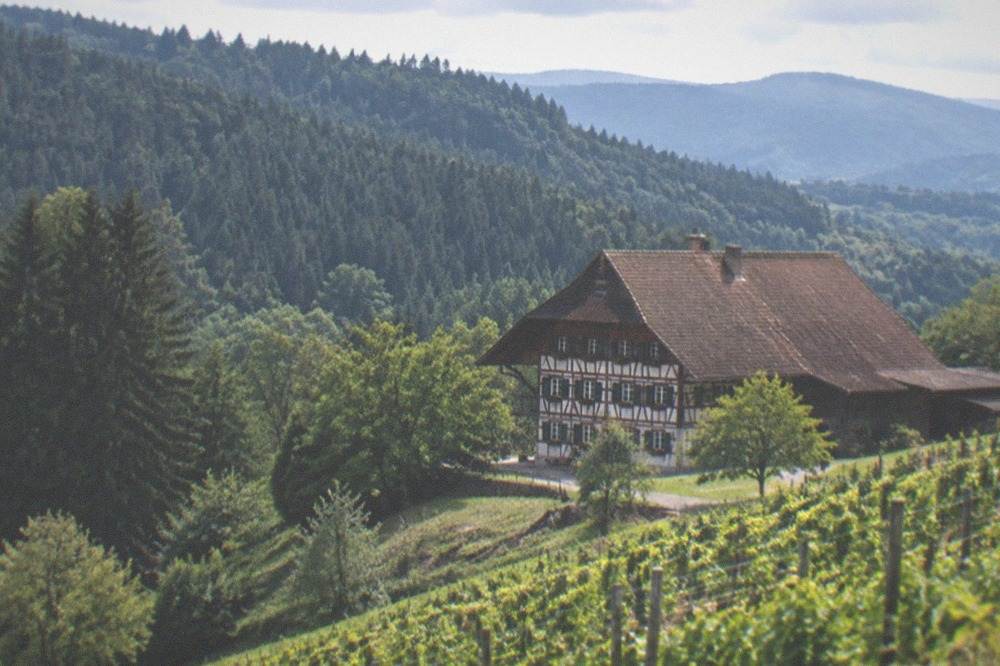
East of the city the terrain flips. The Schauinslandbahn, Germany's longest circulating cable car at 3,600 m, runs daily from 09:00 to 17:00, extended to 18:00 in the Baden-Württemberg summer holidays, with an adult return at €15.00 and a single at €12.00, per the operator's tariff page. Two maintenance closures matter for planning: the cable car and its mountain restaurant close for the autumn overhaul from 16 November to 4 December 2026, and a spring closure from 22 February to 19 March 2027 is scheduled. At the summit, the Eugen-Keidel tower reopened in April 2025 after being closed since about 2022, and the mining museum on the mountain runs guided tours from April to early November, Wednesday to Sunday plus holidays, daily in July and August.
| Half-day trip | Direction | Cost anchor | Notes |
|---|---|---|---|
| Schauinsland cable car and summit | East | €15.00 return | Included in Welcomekarte; closed 16 Nov-4 Dec 2026 |
| Kaiserstuhl wine villages | West | Wine tastings vary, check each cellar | Direct regional trains |
| Schlossberg and tower | City center | Free on foot | Funicular €6.50 return if you skip the walk |
| Titisee and the Höllentalbahn | Southeast | Train fare within RVF zones | Cable railway over the Black Forest climb |
| Basel or Colmar | Southwest and west | Cross-border rail fares apply | Passport needed for the border |
A note on rail trips into the hills: the Höllentalbahn between Freiburg and Titisee is one of Germany's most scenic mountain railways, but we do not print a journey time for it here, because the figure circulating in aggregator content is flagged as suspect against the operator's own timetable and the line sees recurring temporary closures for slope stabilization, including week-long blocks in July and September 2026 with replacement buses. Phrase your plans around departure times, not durations, and check the operator's timetable the week you travel. The Titisee and Hinterzarten guides cover what to do when you arrive.
The scenic contrast of all this is the point. Within one Welcomekarte's reach you can be in a vineyard cellar, on a Black Forest summit, or at a Rhine-side market town, which is precisely the density of options Munich's own surroundings do not offer at the same distances. For visitors splitting a trip, that argues for the Munich nights first and the Freiburg nights second, so the relaxation and the wine come after the big-city sightseeing rather than competing with it. Our Three Days In Freiburg itinerary sequences exactly that kind of stay.
Common Questions About Traveling From Munich To Freiburg
How do I get from Munich to Freiburg without a car?
The rail route is the practical answer, with long-distance and regional services into Freiburg Hauptbahnhof. The Deutschlandticket at €63.00 per month covers unlimited regional travel nationwide plus all of Freiburg's trams and buses, which suits anyone whose trip continues beyond a single journey. Check current journey times on the operator's own timetable, since engineering works change them several times a year.
Is the Deutschlandticket valid in Freiburg?
Yes. The €63.00 monthly ticket is valid on regional trains nationwide and on Freiburg's city trams and buses. It does not cover long-distance ICE or IC services, so if you use those for the Munich leg you need a separate fare for that journey only.
Where should a first-time visitor stay in Freiburg?
The old town and the streets just south and west of the main station put everything within walking distance. Note the 2025-2026 hotel changes: the former Novotel am Konzerthaus is due to become a Scandic by autumn 2027, the IntercityHotel moved to the Leonardo brand in 2026, and the Panoramahotel has been closed since a June 2024 fire. A five percent overnight tax on the net room price applies, with under-18s exempt.
Do hotels in Freiburg give guests a KONUS card?
No. Freiburg is not a KONUS municipality, so a hotel stay in the city does not include the Black Forest guest card. The visitor product issued for Freiburg itself is the RVF Welcomekarte, €27.00 for three days, which covers regional transport and includes the Schauinslandbahn. A KONUS card issued by a member town elsewhere in the Black Forest is valid on Freiburg's trams and buses.
How many days are enough in Freiburg?
Two days cover the old town, the Münster tower, a museum and an evening; three days add a half-day wine or summit trip comfortably. Our one-day, two-day and three-day itineraries break the options down, and the answer scales up if you plan day trips to Basel, Colmar or the southern Black Forest from the city.
What should I book in advance for a Freiburg stay?
Rooms for July and the Christmas market weeks, which run 19 November to 23 December 2026, compress earliest. Guided tours with small group sizes, such as the themed evening walks, also fill on weekends. The Münster tower, museums and cable car all sell tickets on the day, so those rarely need advance planning.
The Munich to Freiburg move rewards exactly one kind of preparation: locking the ticket logic and the first evening, and leaving the rest loose. The city's own scale does the rest of the work for you, and the options below cover the three formats most first-time visitors settle on.