Is Freiburg Safe? An Honest Look For 2026 Visitors
Freiburg is one of Germany's calmer mid-size cities for visitors, but safety here has specifics worth knowing: which squares get rowdy at night, where the city has been actively intervening, and how the numbers actually read.
Short answer
Yes, Freiburg is broadly safe for visitors. Reported crime fell 6% in 2025 and the city lost its unwanted spot as Baden-Württemberg's highest crime-rate municipality to Mannheim. Normal city caution applies after dark around the station and on busy nightlife streets, and a knife ban zone has applied in Stühlinger since August 2025.
Is Freiburg Safe To Visit?
Yes, Freiburg is a safe city by the standards visitors usually apply to German mid-size cities, and recent data points in the right direction. Reported crime in Freiburg fell 6% in 2025, and the city is no longer the highest crime-rate municipality in Baden-Württemberg, a label Mannheim now holds. The risks a tourist actually faces here are pickpocketing, late-night drunkenness and bicycle traffic, not violent crime.
That headline answer needs unpacking, because "safe" is a word that hides a dozen different questions. A family visiting the Christmas market worries about different things than a solo traveler walking back to a guesthouse at midnight, and a cyclist crossing the Schwabentor has concerns a tram passenger does not. This guide takes the question seriously rather than repeating the reflexive "it's Germany, of course it's fine" that most travel content settles for.
The framing matters for honesty. Freiburg recorded 1,010,708 arrivals and 2,130,785 overnight stays in 2025 across establishments with at least ten beds, a small decline on 2024 but still an enormous flow of strangers moving through a compact old town. With numbers like that, incidents happen somewhere in the city most weeks. What distinguishes a safe destination is not the absence of every incident but the pattern, the scale and the response, and on all three Freiburg reads well.
The city also invests visibly in the things that make public space feel safe. The Stühlinger Kirchplatz, which we will come to below, has been the subject of a deliberate multi-year turnaround: hedges removed for visibility, new lighting, a knife ban zone and a cultural pavilion that now hosts dozens of events a month. That is the signature of a city administration that treats safety as an ongoing project, and visitors benefit from it whether or not they ever read about it. For the wider picture of what this city offers, start with the Freiburg Travel Guide homepage and work outward.
What The Crime Numbers Actually Say
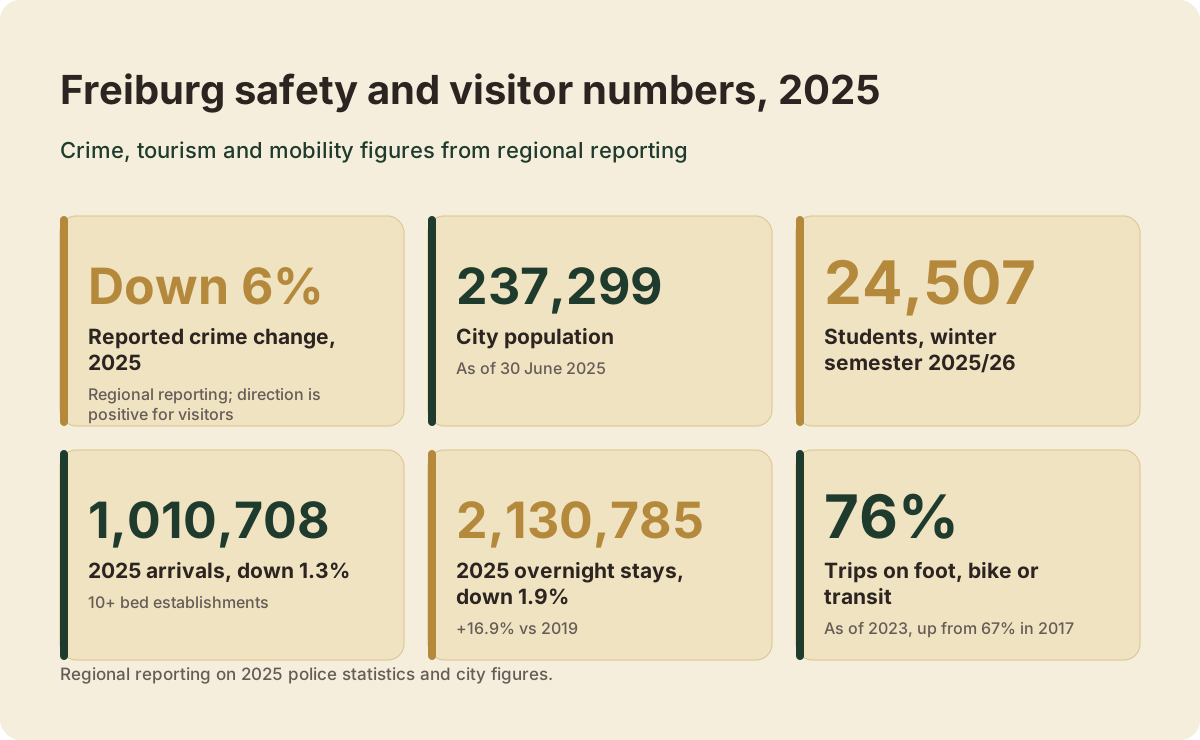
Freiburg's 2025 crime statistics, as reported by regional media, show a 6% drop in recorded offences and the loss of its former standing as the most crime-affected city per capita in Baden-Württemberg, a position Mannheim has taken over. Reported tourism also eased slightly, with arrivals down 1.3% and overnights down 1.9%. No credible source describes Freiburg as a high-risk destination for visitors.
The 6% figure comes from regional reporting on the 2025 police statistics, and it deserves the plain framing rather than a bold assertion: this site has not independently re-read the underlying police tables. What is unambiguous is the narrative that accompanied it in local coverage, which is that Freiburg slipped from the top of the Baden-Württemberg crime-rate ranking. For a city of 237,299 residents plus a university population of 24,507 students, that ranking shift is meaningful context for anyone who read an older forum thread calling Freiburg "Germany's most criminal city" and never saw the correction.
| Indicator | Figure | Reading it honestly |
|---|---|---|
| Reported crime change, 2025 | Down 6% | Regional reporting; direction is positive for visitors |
| Baden-Württemberg crime-rate rank | No longer first; Mannheim now leads | Freiburg had topped earlier rankings |
| City population | 237,299 (as of 30 June 2025) | Mid-size German university city |
| Students, winter semester 2025/26 | 24,507 | Large young population, active nightlife |
| 2025 arrivals (10+ bed establishments) | 1,010,708, down 1.3% | Slightly fewer visitors than 2024 |
| 2025 overnight stays | 2,130,785, down 1.9% | Still far above pre-2019 levels, +16.9% vs 2019 |
Two honest caveats belong next to that table. First, crime-rate rankings of German cities are notoriously sensitive to how counting rules and reporting behavior shift year to year; a drop from first place is good news, not a certification. Second, most recorded offences in a city like this are property crime, bicycle theft above all, which barely touches a visitor who takes normal care. The coverage of the 2025 figures can be read in the regional report at SWR's summary of Freiburg's crime statistics.
One more number helps the safety picture more than any police statistic: 76% of all trips in Freiburg were made on foot, by bike or by public transport as of 2023, up from 67% in 2017. A city where three quarters of daily movement is human-scaled is a city with more eyes on the street, and that shows up in how the old town feels at eight in the evening far more than a percentage point of recorded theft does.
If you want the safest possible introduction to the streets themselves, a guided walk is a good first move. The actor-led dramatized city tour is rated 4.9 across 497 reviews and runs about 1.5 hours from $17, and a guide who walks these lanes daily will point out anything worth knowing in real time.
Which Areas Of Freiburg Deserve Extra Care
Most of Freiburg needs no special caution, but three zones earn it: the streets around the Hauptbahnhof late at night, the Stühlinger Kirchplatz just across the tracks, which the city has been actively reworking since 2025, and the nightlife stretch around the Rathausplatz and Augustinerplatz when the bars empty out. None of these is a no-go area, and two of them are perfectly pleasant by day.
Stühlinger Kirchplatz is the case study worth understanding, because it shows both the problem and the response. The square just west of the main station had acquired a reputation for open drug dealing and low-level disorder. The city's answer, documented on its own pages, has been a program rather than a crackdown: the hedges that blocked sightlines came out in January 2025, new seating and play elements including table tennis tables went in, the weekly market was relocated there, lighting was upgraded, and a weapons and knife ban zone has applied in the area since August 2025. A Kulturkiosk opened around March 2026 and had hosted more than 90 events within half a year.
| Area | Daytime read | After-dark read | Practical takeaway |
|---|---|---|---|
| Old town (Altstadt) around the Münster | Relaxed, busy with shoppers and tourists | Generally fine; empties after shops close | Normal city care near closing bars |
| Augustinerplatz | Popular square cafe scene | Crowded, alcohol-centered nightlife | Fine in groups; louder than risky |
| Stühlinger Kirchplatz (west of station) | Improving, market days active | The city's focus area since 2025 | Use main lit streets at night |
| Hauptbahnhof surroundings | Busy, normal station traffic | The usual station caution anywhere | Keep bags closed, order licensed taxis |
| Schwabentor / Oberlinden | Quiet, residential charm | Very quiet | Nothing to note beyond routine care |
| Rathausplatz / nightlife lanes | Pleasant, historic | Rowdy on weekends in the small hours | Leave before the 2 a.m. peak or with company |
The honest summary of that table: there is no part of Freiburg where a visitor should feel afraid, and there are a few blocks where late-night street-smart habits earn their keep. If a lane near a nightlife square feels loud and uncomfortable at 1 a.m., that discomfort is the correct signal, walk a block over to a main street and it resolves. The city's own documentation of the Kirchplatz program is readable at the municipal Kirchplatz revival project page.
For travelers who prefer to see these districts with someone who knows which corner is which, the dramatized Historix tour of the main attractions, running since 1998 and rated 4.7 across 78 reviews from $17, keeps you in company while covering the old town's gates and squares.
The actor-led walk deserves its solo mention here rather than buried in a list, because it is the rare budget tour with a genuinely deep review pool: 4.9 across 497 reviews, about 1.5 hours, from $17. If your instinct on arrival in an unfamiliar city is to get oriented before exploring alone at night, this is the efficient way to do it, and the live listing carries free cancellation.
Is Freiburg Safe At Night
Night safety in Freiburg is mostly a question of alcohol and bicycles rather than violence. The old town's squares fill with a young crowd on weekends, the station district stays semi-awake, and the rest of the city goes quiet by 22:00 or earlier. Violent crime against visitors is rare; the realistic night risks are drink-fueled arguments, losing your bearings in the lanes and stepping into a tram line or bike lane in the dark.
Nightlife concentrates around Augustinerplatz and the lanes off Rathausplatz, where the pub crawl and bar-hopping economy runs until the small hours. Crowds there skew young, beer is cheap by big-city standards and the atmosphere is festival-like rather than edgy. The trouble spots are predictable: closing time, the walk back toward the station, and cash machine queues. None of this is Freiburg-specific, it is the same pattern in Heidelberg or Tübingen, and the countermeasures are the same everywhere. Leave with the people you came with, keep your phone out of back pockets, and take the lit main streets rather than the shortcut through a dark lane.
The bicycle point is more genuinely local. Freiburg moves an enormous share of its traffic on two wheels, and bike-share reporting suggests roughly 1,200 shared bikes across some 162 stations as of 2026, figures from recent industry coverage rather than our own count. Cyclists ride confidently, trams run in mixed pedestrian zones, and the Bächle, those little water channels along the old town's gutters, have tripped more unwary visitors than any pickpocket ever has. After dark, with a drink taken, all three hazards compound. Look up from the phone at intersections, is the blunt advice.
One night-specific note for women travelers: the city's nightlife core is busy and mixed-company enough that walking alone there at a reasonable hour draws no attention, and the tram network runs late enough that most guesthouse districts are reachable without a long solitary walk.
Everyday Risks: Pickpockets, Scams And Bicycle Theft
The crimes a Freiburg visitor realistically encounters are petty: pickpocketing at the Münstermarkt and on trams, opportunistic bag grabs in cafes, and bicycle theft, which is the city's signature offence thanks to its enormous cycling population. Violent or confrontational crime against tourists is unusual enough that it makes local news when it happens. Ticket inspection is a more probable encounter than any criminal.
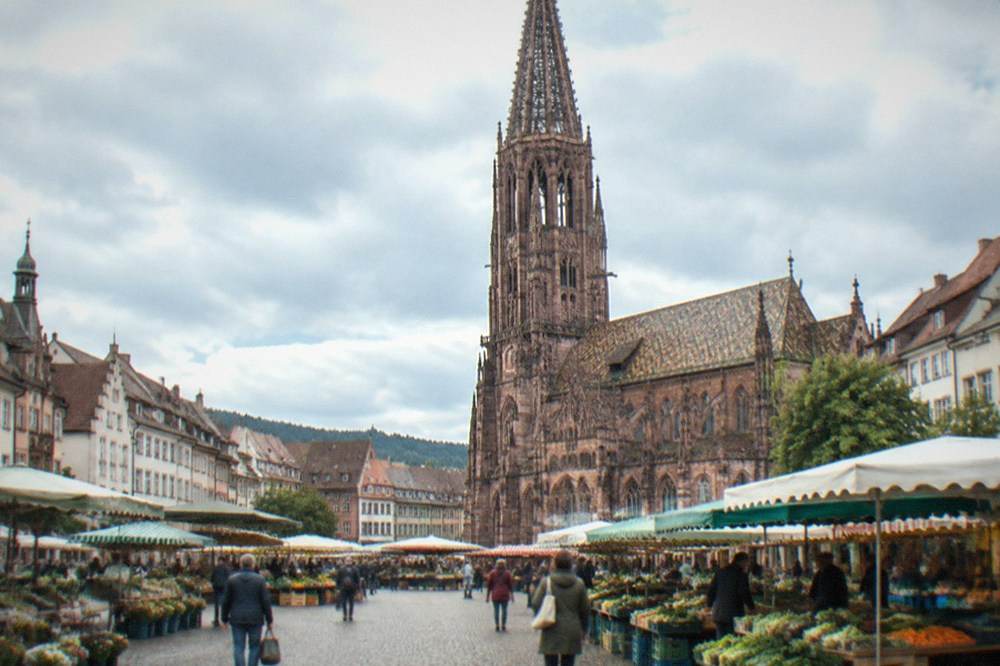
The Münstermarkt, with up to 130 stalls on weekdays from 07:30, is the densest crowd the city produces, and dense crowds are where pickpockets work in every European city. The market is not dangerous, it is delightful, but a zipped cross-body bag rather than an open tote is the right equipment. The same logic applies on the trams around Bertoldsbrunnen at rush hour and in the crush at the Christmas market, which in 2026 runs from 19 November to 23 December across Rathausplatz, Kartoffelmarkt, Unterlindenplatz and Franziskanerstraße.
| Risk | Where and when | Realistic level | Countermeasure |
|---|---|---|---|
| Pickpocketing | Münstermarkt, trams, Christmas market | Low but nonzero | Zipped bag worn front, no phone in back pocket |
| Bicycle theft | Anywhere a bike is parked | High for cyclists, irrelevant for visitors | Rent bike-share, not a personal bike |
| Tram ticket inspection | All lines, any time | Common; fines are the issue | Buy before boarding, €3.00 zone 1 single |
| Bag grab in cafes | Terrace tables on busy squares | Rare | Keep bags on your lap or looped to the chair |
| Scam approaches | Station forecourt | Occasional, low-stakes | Decline petitions and petitions-with-clipboards politely |
| The Bächle | Every old town gutter | Zero crime, real ankle risk | Watch your step, seriously |
On tickets, the numbers are worth knowing because an inspection fine is the single most likely way a visitor loses money to the authorities here. A single zone 1 ticket is €3.00 at the machine, €2.70 by smartphone, and the inspectors board in plain clothes without ceremony. If you are riding several days, the RVF Welcomekarte at €27.00 for three days covers buses and trains region-wide and even includes the Schauinslandbahn cable car, which makes the inspection question moot for the whole stay. The official RVF Welcomekarte page lists current conditions.
The Bächle row in that table is only half a joke. These medieval gutters run alongside nearly every old town lane, they are full of fast-moving water, and first-time visitors genuinely do step into them while photographing the minster. The local legend says touching the water means you will marry a Freiburger; the ankle is a more reliable outcome.
Getting Around Safely: Trams, Taxis And The Works
Freiburg's public transport is safe, frequent and currently mid-renewal, with 45 electric buses in service since the December 2025 schedule change and cashless-only machines on the newer buses. The realistic transport hazards are temporary construction reroutes and late-night platform waits, not crime. Licensed taxis and the airport bus fill the gaps at hours the trams thin out.
The transport story of 2025-2026 is modernization rather than anything travelers should fear. The VAG added 22 electric buses in October 2025, bringing the electric fleet to 45, roughly two-thirds of the total, and deployed them across all lines with the December 2025 schedule change. Note for the unprepared: the new E-buses carry cashless ticket machines only, no cash and no driver sales, so a contactless card or the smartphone app is the ticket-buying tool on those vehicles. The December change also brought a new school bus service, an extra early Line 3 trip and extra weekend trips on Line 14 toward the Uniklinikum.
Construction is the honest nuisance of 2026. Line 3 has run partial replacement service from May into mid-October 2026 for the Zähringen track works, September brought canal and track works affecting Lines 2, 3 and 15 with replacement buses until mid or late October, and Haslacher Straße works continue into December. If your research thread predates this, the routes may have moved. The current disruption notices sit on the transport operator's own pages, and checking them the evening before a planned tram day is the single most useful habit.
| Situation | What is happening | Impact on visitors |
|---|---|---|
| E-bus rollout | 45 electric buses across all lines since Dec 2025 | Cashless machines on those buses; carry a card |
| Line 3 works | Replacement buses May to mid-Oct 2026 (Zähringen) | Slower trips to the north; allow margin |
| Lines 2/3/15 works | Replacement buses from Sept into late Oct 2026 | Check the operator's disruption page that week |
| Haslacher Straße | Works Aug to Dec 2026, reroutes | Allow extra time to southern districts |
| Hauptbahnhof modernization | Began 14 Sept 2026, running to about end of 2028, about €36.7m | Northern underpass initially fully closed; follow signage |
| Station lifts and platforms | Five new lifts, platforms 3-5 renewed | Temporary detours inside the station |
The main station modernization is the long-running item: it started on 14 September 2026, will run until roughly the end of 2028, and begins with the northern passenger underpass fully closed while five new lifts go in. That means arriving travelers will walk detours with luggage during the first phase. It is an accessibility upgrade, roughly €36.7 million of works, and it will make the station better, but in the short term it is the least pleasant walk in the city with a suitcase. Late at night, the taxi rank outside the main hall is the relaxed option; ask for the meter or a quoted price before setting off, as anywhere.
The other night transport note is the airport. The Freiburger Reisedienst Airportbus runs daily to EuroAirport Basel-Mulhouse-Freiburg in about 55 minutes, and the transfer product on our roster, with its fare shown on the live listing, is a sensible pre-book if your flight lands outside tram hours.
Is Freiburg Safe For Solo Travelers, Women And Families?
Yes, with the ordinary adjustments. Solo travelers report comfortable exploration at reasonable hours, the city's family infrastructure, from the car-free old town core to the Mundenhof animal park, is genuinely low-risk, and the crime pattern contains nothing that targets these groups specifically. The knife ban zone in Stühlinger is the one policy a night owl staying near the station should simply know about.
For families, the practical safety wins are structural rather than statistical. The old town's core squares fill with families until early evening, the Münstermarkt gives children something to look at all morning, and Mundenhof, the city's animal park, has been smoke-free indoors and out since 1 June 2026 under state law, with designated smoking zones, which quietly improves the family atmosphere. It drew more than 570,000 visitors in 2025, a record. The climate helps too: Freiburg averages just 18.5 days a year at or above 30°C, so summer overheating days are rarer than in the southern cities, though shade and water are still worth planning on a July afternoon.
For solo travelers of every description, the same few habits that work in Basel or Strasbourg work here. The dramatized evening tours are actually a good solo strategy, not because the streets are scary, but because a booked group at 19:00 gives the evening structure and company. The "Witches, Torture, Stakes" dramatized evening walk, rated 4.7 across 97 reviews from $17, is exactly this format: a costumed guide, a route through the old lanes, and a crowd to walk with.
The Historix dramatized tour earns the middle-of-article spotlight for the same reason as its actor-led sibling: it is an evening-structured activity at a daytime price, from $17 for roughly 1 hour 45 minutes, and the operator has been running it since 1998, which in the walking-tour business is a credential of its own. The review pool of 78 is modest, and this site prints counts rather than adjectives, so: 4.7 across 78 reviews, enough to trust the format.
For women traveling alone, the honest answer is that Freiburg's night economy is centered on squares and main lanes rather than dark side streets, the tram network covers the residential districts where most guesthouses sit, and the city's own interventions, lighting upgrades and the Stühlinger program chief among them, were explicitly designed around making women feel safe using public space after dark. Take the ordinary precautions about drinks and strangers that apply in any city with a big student population, and the practical risk here is small.
Emergencies, Health And Numbers Worth Saving
The European emergency number for fire and ambulance works anywhere in Freiburg, the separate German police emergency line is 110, and the nearest emergency room for visitors is at the Uniklinikum, the university hospital served directly by tram lines including the extra weekend Line 14 trips added in December 2025. Pharmacies display an after-hours rota, and the EU emergency number works from any phone, locked or not.
Save these before you need them, not after. The non-emergency police line handles reports that are not urgent, and for lost property the lost-and-found process runs through the city rather than the police for items lost on trams. The tram operator's lost property office is the right first call for anything left on a Line 2 or Line 4 vehicle; the station's own lost property desk covers the railway side.
| Need | Where to turn | Note |
|---|---|---|
| Fire and ambulance | EU-wide emergency number | Works from locked phones across Europe |
| Police emergency | 110 | Use for crimes in progress and urgent reports |
| Non-emergency police advice | Regional non-urgent police line | For reports that can wait a day |
| Emergency room | Uniklinikum Freiburg | University hospital, tram-served |
| After-hours pharmacy | Rotating duty, displayed at any pharmacy | Standard German system |
| Tram lost property | VAG operator's lost property desk | For items left on buses and trams |
| Tourist information | Central old town location | Practical first stop for on-the-ground help |
Two health-adjacent notes that are easy to miss. First, if you are arriving from another Schengen country with a European Health Insurance Card, it covers state-system care; travelers from outside the EU should carry proof of travel insurance, because German billing for uninsured treatment is efficient and unsentimental. Second, the overnight tax question that trips people up at check-in is simple here: Freiburg levies an Übernachtungsteuer, an overnight tax of 5% of the net room price, not a Kurtaxe, private stays have been taxed since 2014, business stays since July 2023, and guests under 18 are exempt. The city's own overnight tax explainer is the authoritative read.
If a medical situation is minor but the pharmacy rota and your German both fail, the tourist information desk in the old town will place the call with you. It is the kind of small-city convenience that is genuinely easier here than in a metropolis.
The Bottom Line On Safety In Freiburg
Freiburg is a safe destination by any reasonable visitor's standard, with crime trending down, an active municipal safety program in its one historically troublesome square, and a risk profile dominated by pickpockets, tram fines and wet ankles rather than violence. Bring normal city caution, a zipped bag and a valid tram ticket, and the statistics suggest an uneventful stay.
The city that a visitor actually meets is one where the police story of the year was a 6% decline, the urban renewal story was a problem square turned into an event venue with more than 90 programs in six months, and the biggest thing that happened at the minster was a fire-service training exercise, not a fire. Frame your plans with that reality. A dramatized evening walk through the darker chapters of the old town, the "Witches, Torture, Stakes" tour, is about as edgy as the city's nighttime offer gets, and it ends with everyone safely back at a well-lit square, from $17.
That final solo pick is deliberate: the 4.7-across-97-reviews evening walk is the closest thing Freiburg has to a "dark side" tour, and its biggest safety risk for a guest is that the dramatized history is more startling than anything on the streets outside it. Pair it with the actor-led daytime walk earlier in your stay and you will have covered both halves of the old town with locals who know every lane.
For the fuller planning picture, the guides on what to do with one day in Freiburg and how to get around the city by tram and bike cover the parts of the trip where preparation, not courage, is what keeps things smooth.
Common Questions About Safety In Freiburg
Is Freiburg safe at night for tourists?
Yes, in the parts of the city tourists visit. The old town squares stay populated into the late evening, violent crime against visitors is rare, and the realistic night hazards are alcohol-fueled crowds around Augustinerplatz and Rathausplatz at closing time, dark lane shortcuts and the tram and bike traffic in mixed zones. Stick to lit main streets after midnight and the walk back to most guesthouses is unremarkable.
Is Freiburg dangerous around the main station?
The Hauptbahnhof district is the part of the city that needs ordinary station caution rather than fear. The nearby Stühlinger Kirchplatz was a documented problem area, and the city has responded with a visible program: hedges removed in January 2025, better lighting, new social uses, and a weapons and knife ban zone in force since August 2025. By day it is entirely normal; at night use the main lit streets. The station itself is mid-modernization until about the end of 2028, so follow the detour signage rather than reading anything into closed corridors.
What is the most common crime affecting visitors in Freiburg?
Petty theft, principally pickpocketing in dense crowds such as the Münstermarkt, packed trams and the Christmas market, plus opportunistic bag grabs from cafe terraces. The city's single biggest crime category overall is bicycle theft, which matters to residents with bikes but rarely to visitors. A zipped front-worn bag removes most of the practical risk.
Is Freiburg safe for solo female travelers?
Yes, with the standard precautions that apply in any German university city. Freiburg's nightlife is concentrated on busy, well-trafficked squares and main lanes rather than isolated streets, the tram network runs late to the residential districts where most accommodation sits, and the city's recent public-space safety investments were explicitly aimed at making women comfortable in public after dark. The review record of the major evening tours, written largely by solo participants, describes the city as comfortable.
What emergency numbers work in Freiburg?
The EU-wide emergency number reaches fire and ambulance and works from any phone, including locked ones, anywhere in Europe including Freiburg. The separate German police emergency line is 110. The university hospital, Uniklinikum, provides the emergency room and is served directly by tram. Pharmacies post a rotating after-hours rota in their windows, and the old town tourist information desk will help place a non-urgent call if language is a barrier.
Do I need to worry about the Stühlinger knife ban zone?
Only as a rule to know, not a place to avoid. The Waffen- und Messerverbotszone, a weapons and knife ban zone around Stühlinger Kirchplatz, has applied since August 2025 as part of the city's turnaround of that square. For an ordinary visitor carrying nothing sharper than a corkscrew it changes nothing; the practical takeaway is that the square has been the subject of sustained, documented improvement since early 2025.