Historisches Kaufhaus Freiburg: A Practical Guide To The Old Trade Hall
The Historisches Kaufhaus is the deep-red anchor of Münsterplatz, the square where Freiburg has traded for centuries. This guide covers what the building is, how to see it, and everything worth doing around it.
Short answer
The Historisches Kaufhaus is Freiburg's grand former trade hall, the red building with the open arcade beside the Minster. The facade costs nothing to see and never closes. The Münstermarkt in front runs to 13:30 on weekdays and 14:00 on Saturdays with up to 130 stalls, and the Minster tower climb costs €5.
What Is The Historisches Kaufhaus In Freiburg?
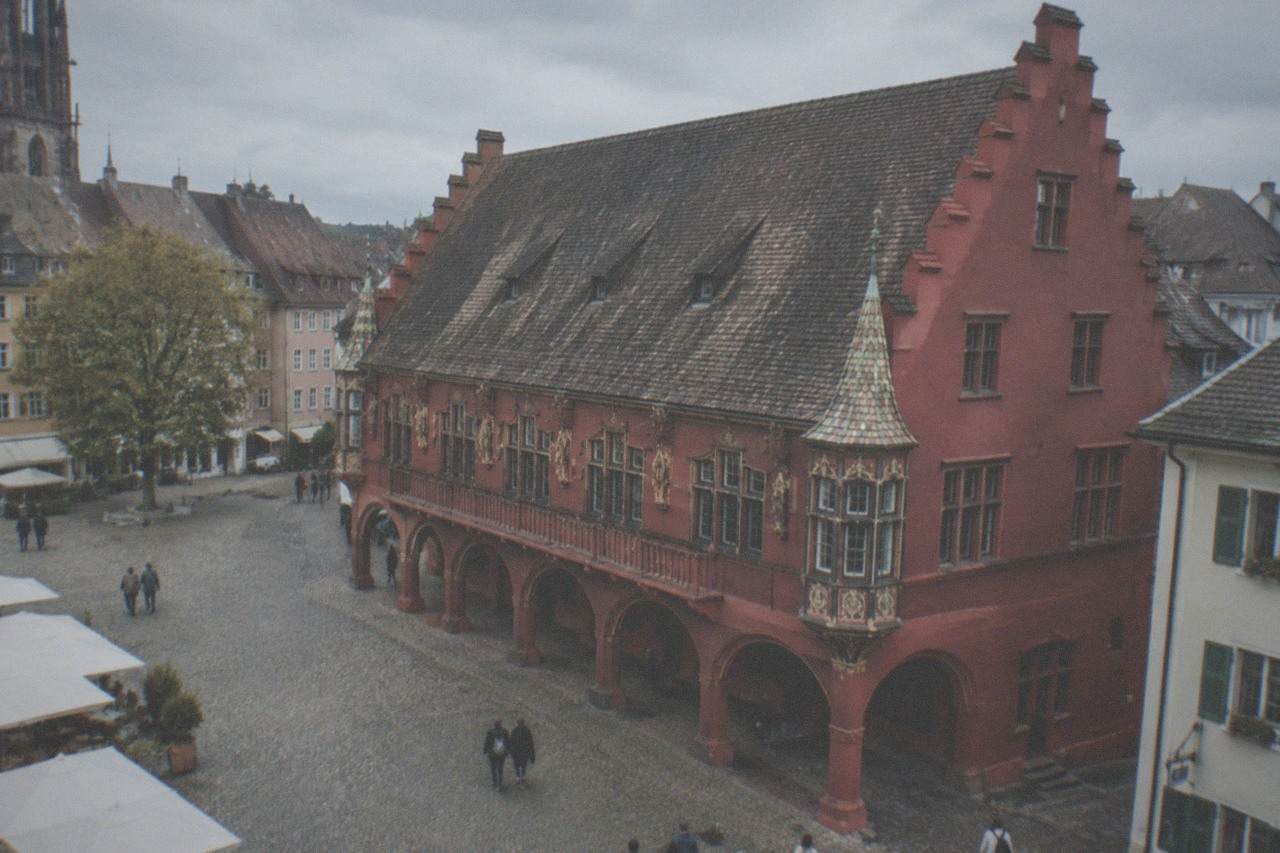
The Historisches Kaufhaus is Freiburg's grand former trade hall, the deep-red building with the open arcade that anchors Münsterplatz a few steps from the Minster. Today it works mainly as a ceremonial and event venue, so a visit means the facade, the square in front of it, and the courtyard whenever an event opens it.
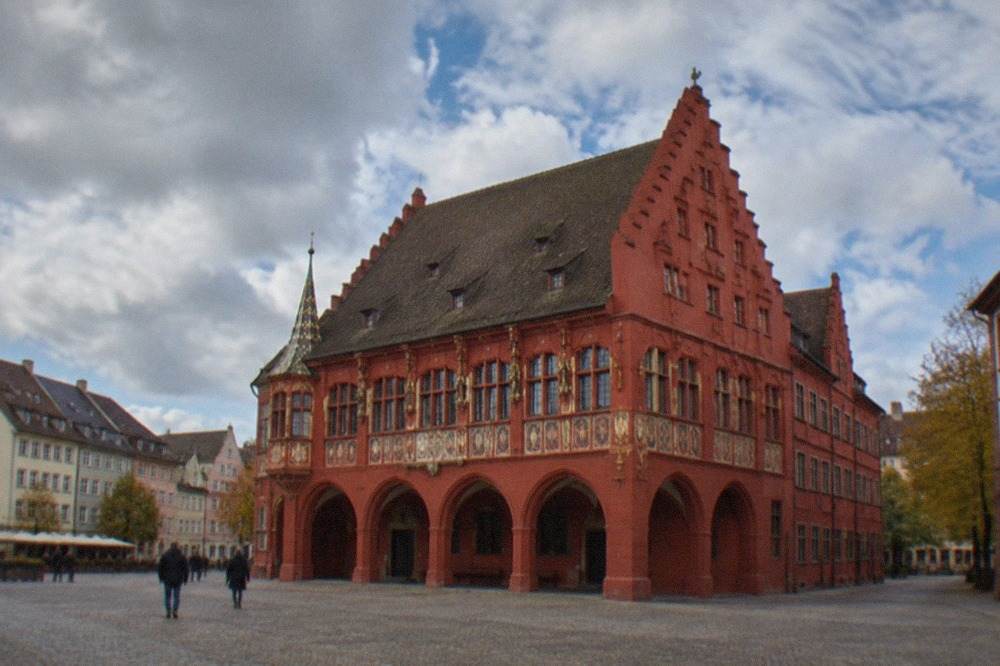
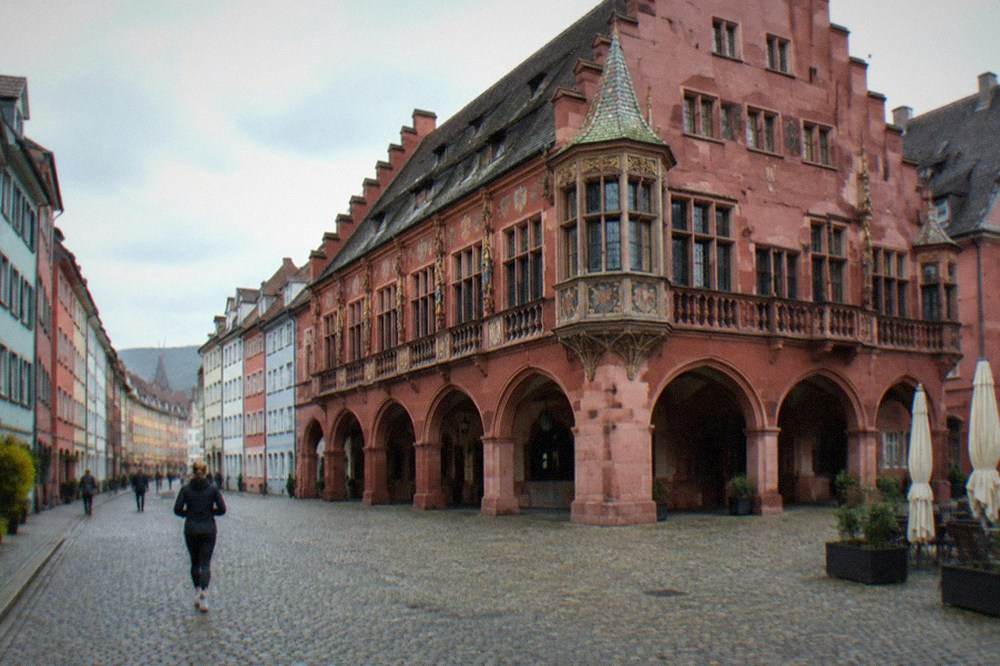
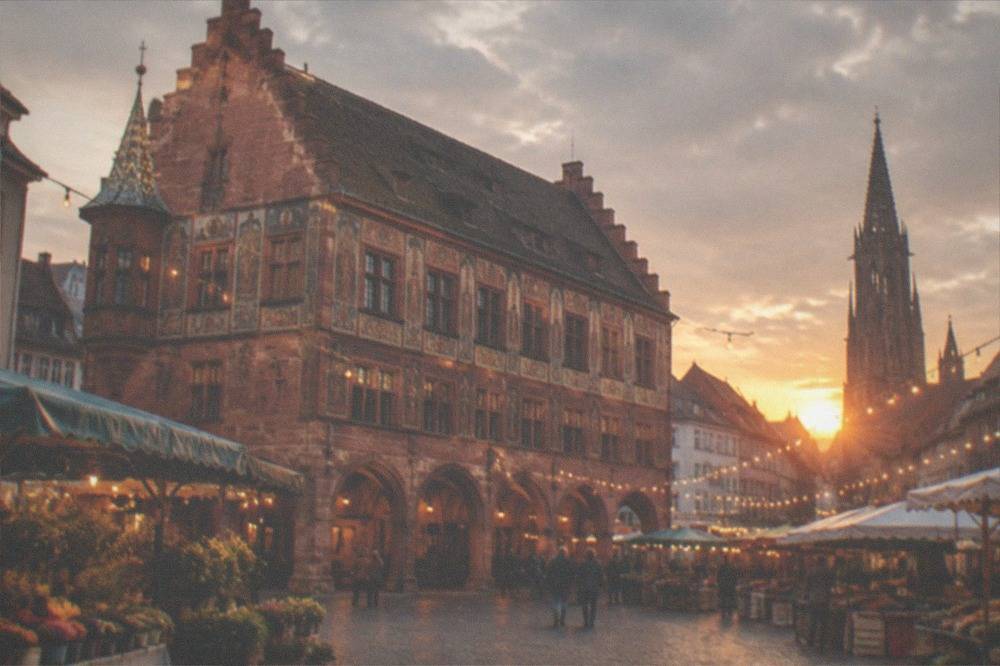
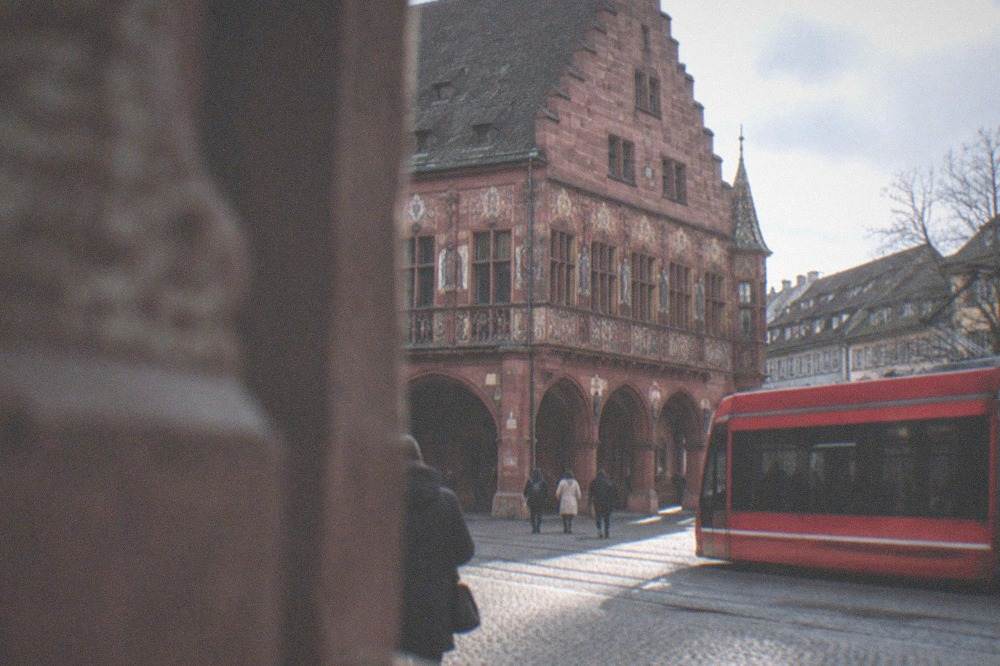
Every visitor to Freiburg ends up on Münsterplatz sooner or later, and almost every photo taken there includes the same two buildings. One is the Minster, the Gothic church with the 116 m tower. The other is the Kaufhaus, smaller, secular and, in its way, just as loud. The red painted facade, the row of arches open to the square and the ornate corner bay make it the most striking piece of civic architecture on the square, and it reads immediately as what it was: the building where the city did business. Trade made Freiburg rich in the centuries when the Upper Rhine and the passes through the Black Forest carried silver, salt, cloth and wine, and a city confident enough to build like this wanted the world to know it.
That trading function is long gone, and this matters for planning. The Kaufhaus is not a museum with a ticket desk and fixed hours. It belongs to the city and serves chiefly as a venue for receptions, official functions and public events, which is why the honest answer to "can we go inside" is: usually not, unless something is happening. What you get at any hour of any day is the exterior, and the exterior is genuinely the show. The arches frame the market stalls in front of it, the facade changes character with the light, and the building sits at the exact point where the Minster, the market and the old civic core meet. That triangle is the reason a square that is otherwise just a square became the postcard view of the city.
This Freiburg Travel Guide treats the Kaufhaus the way the city itself does, as the fixed point around which everything else on Münsterplatz is arranged. The practical visit is really three visits stacked on top of each other: the building itself, which costs nothing; the Münstermarkt spread in front of it, held daily on Münsterplatz; and the ring of sights within five minutes' walk, from the Minster tower to a cluster of city museums. Done properly, that stack fills a half day easily, and the sections below walk through each layer, the hours and prices that are actually published, and the guided and self-guided tours that connect the Kaufhaus to the rest of the old town.
Where Is The Kaufhaus And When Should You Visit?
You find it on Münsterplatz, in the heart of the Altstadt and a few steps from the Minster. The square is public at all hours, so the facade costs nothing and never closes. The Münstermarkt in front runs 07:30-13:30 on weekdays and to 14:00 on Saturdays, and it is closed on Sundays, holidays and 15 August. Mid-morning on a weekday is the calmest time to look at the building.
Münsterplatz is the center of the old town in the most literal sense. The Minster occupies one side, the Kaufhaus holds another, and the market fills the space between them, so any walk through the Altstadt, any tram ride into the center and any photo tour passes through or beside it. You do not need directions so much as a willingness to drift: from the tram stops at the edge of the pedestrian zone the square announces itself, and the red building is visible from most approaches. Anyone coming from further out should also know that Freiburg's main station is on the same tram spine as the old town, so the door-to-square journey is a matter of a few minutes once a tram arrives.
Timing decides what kind of square you get. Early, from 07:30, the market is setting up and the light comes in low across the stalls; by 10:00 the square is at full volume, with up to 130 stalls trading, and the arcade becomes a shaded corridor through the crowd. After 13:30 on weekdays the stalls fold away and the square exhales, which is the moment for photographs of the facade without a market in front of it, though honestly the market is half of what makes the view worth taking. Saturday runs a little later, to 14:00, and Sunday is quiet by design: no market, closed stalls, and the buildings doing the talking. The city's own visitor listing of the market, the official Münstermarkt page, carries the current hours and is the right place to double-check before an early start.
| What | Detail |
|---|---|
| Location | Münsterplatz, Altstadt, beside the Freiburg Minster |
| Facade access | Public square, free, at all hours |
| Weekday market | 07:30-13:30, Monday to Friday |
| Saturday market | 07:30-14:00 |
| Market closures | Sundays, public holidays, 15 August |
| Market scale | Up to 130 stalls |
| Interior access | Event use only, no regular daily public opening listed |
Two timing notes are worth more than they look. First, the market is a morning institution, so an afternoon visitor who wants the full Münsterplatz experience has effectively missed it until the next day; plan the square into a morning, not a late-afternoon slot. Second, the quietest workable window for seeing the architecture is the hour after the stalls close, when the square empties but daylight still hits the facade. Weekend festival days reverse all of this: the square fills with event structures and crowds, the facade is partly hidden, and the trade-off is atmosphere instead of a clean view. Neither is wrong, but they are different visits, and knowing which one you are walking into is the difference between a good hour and a wasted one.
If you want someone else to arrange the context, a guided option is the natural upgrade, and the three below are the ones that fit the Kaufhaus and its surroundings best, from a photographer's walk to a self-guided game and a full food experience.
What To See Around The Kaufhaus On Münsterplatz
The headline neighbors are the Minster, whose nave is free to enter, and the Münstermarkt with its up to 130 stalls. The tower climb costs €5 for adults and €3 for children and teens, runs Monday to Saturday 11:00-16:00 and Sunday afternoons, and ends at a 70 m gallery, not the 116 m top. The Augustinermuseum, fully reopened on 28 February 2026, charges €12 with under-27s free.
Start with the Minster, because it sets the scale for everything else. The nave is free, open to all, and worth a slow circuit for the stained glass alone. The tower is the paid attraction, and the figures are simple: adults €5, children and teens €3, a family ticket €13, children under 7 free, tickets bought in the Türmerstube, Monday to Saturday 11:00-16:00 and Sundays plus holidays 13:00-17:00, with the last ascent about 15 minutes before closing. One detail the official tower climb page is firm about: the tower stands 116 m tall, but visitors climb to a gallery at 70 m, and the top gallery closes in winter. From that gallery the red Kaufhaus and the full spread of the market appear in one glance, which is the single best justification for the stairs.
The square itself rewards a slower look than most visitors give it. The Fischbrunnen, the historic fish fountain, anchors one corner and, in a detail most guidebooks miss, has lately been doing extra duty: since about March 2026 the Rosen Bär flower stand has been relocated to the south side of Münsterplatz near the fountain while Münzgasse undergoes construction, so the corner carries a burst of flowers it did not carry before. Around the square the old civic buildings line up: the merchants' house, the pharmacies, the patrician facades with their painted stories, and behind the Kaufhaus the lanes drop toward the Bächle, the little water channels that run along the old town's streets. For the full picture of the square's daily rhythm, our Münsterplatz market guide breaks down stall types and how to work the market like a local.
Museums are the third layer. The Augustinermuseum, the city's great art and cultural history collection, completed more than two decades of phased renovation and fully reopened on 28 February 2026, so anyone carrying an older memory of scaffolding and partial closures should drop it: the house is whole, with new exhibition spaces in the former convent building and the historic cellars. Admission is €12, reduced €8, and the day ticket covers the other city museums; under-27s enter free, a policy that holds across the city museums. Hours are Tuesday to Sunday 10:00-17:00 with a late Friday to 19:00. The Museum für Neue Kunst charges €7 and €5, and the Archäologisches Museum Colombischlössle €5 and €3. One honest caveat: the Museum Natur und Mensch has its permanent exhibition closed from 4 August 2026 until roughly the end of February 2027 for renovation, though its special exhibitions, mineral vault and workshops continue. Details on the Minster's own story, from tower to restoration, are in climbing the Freiburg Minster tower.
| Sight | Admission | Notes |
|---|---|---|
| Münster nave | Free | Open to visitors daily |
| Münster tower | €5 adults, €3 children/teens, €13 family, under 7 free | Mon-Sat 11:00-16:00, Sun and holidays 13:00-17:00, gallery at 70 m, top gallery closed in winter |
| Augustinermuseum | €12, reduced €8, free under 27 | Fully reopened 28 February 2026, day ticket covers city museums |
| Museum für Neue Kunst | €7, reduced €5, free under 27 | Thursday hours extended to 19:00 |
| Archäologisches Museum Colombischlössle | €5, reduced €3 | Current listed admission |
| Museum Natur und Mensch | €5, reduced €3 | Permanent exhibition closed to about end of February 2027 |
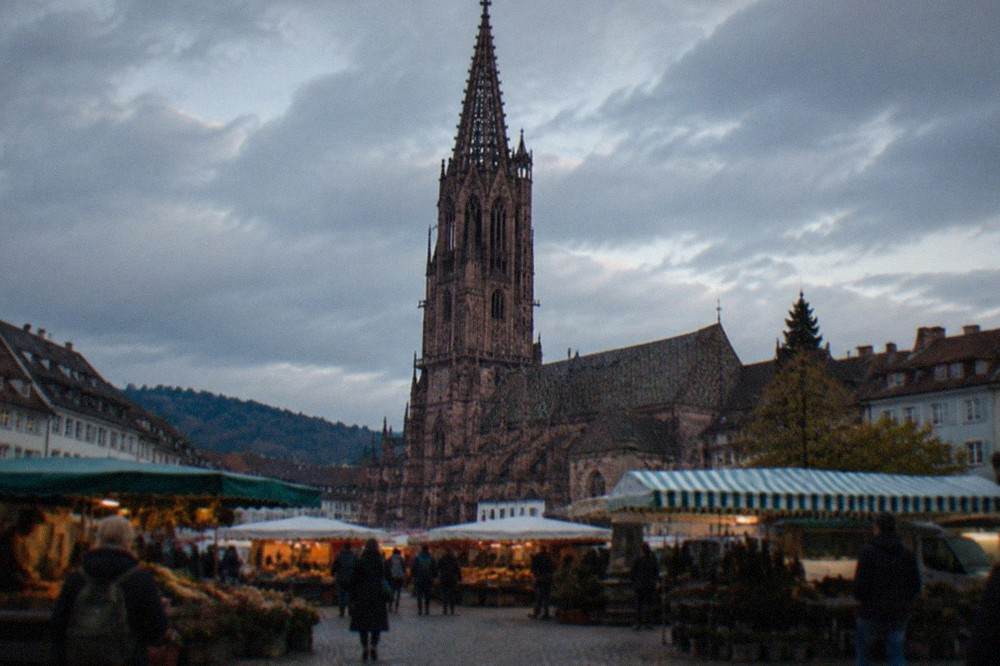
String the layers together and the walk practically writes itself: out of the arcade, into the nave, up the tower, back down through the market stalls, and then a decision about whether the morning ends at a museum or at a coffee stand. There is no ticket that bundles all of it, and none is needed. The only genuinely time-sensitive pieces are the tower's fixed hours and the market's 13:30 cutoff, which together argue for a start before 10:00 on any day you want everything.
The Best Tours For The Kaufhaus And The Old Town
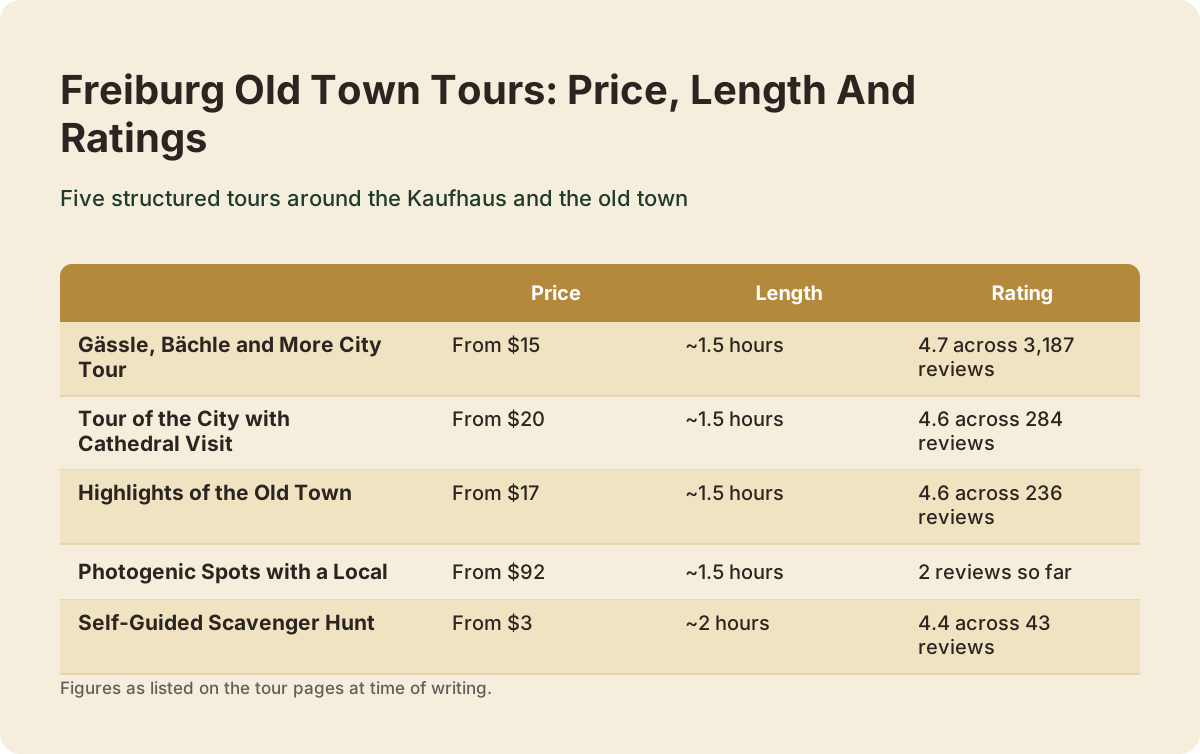
For photographers, the best fit is the photogenic-spots walk with a local, about 1.5 hours and from $92. The cheapest structured option is the self-guided scavenger hunt, from $3 and rated 4.4 across 43 reviews. The classic city walk, the Gässle and Bächle tour, costs from $15 and carries a 4.7 rating across 3,187 reviews, the deepest review pool of any walk in the city's current lineup.
Not everyone wants to self-direct, and around the Kaufhaus the tour question is really a format question. The building's story sits inside the wider story of the old town, so the tours worth considering are the ones that work Münsterplatz, the Bächle and the lanes into a single route, each in a different style. The table below lays out the five options that connect most directly to the square, with the roster's own figures for price, length and reviews. One honest note on ratings: a couple of these listings are new enough that their review pools are tiny, and the figures are printed exactly as the roster carries them, including the small counts, because a rating from two reviews is not the same claim as a rating from three thousand.
| Tour | Length | Price | Rating and reviews |
|---|---|---|---|
| Gässle, Bächle and More City Tour | ~1.5 hours | From $15 | 4.7 across 3,187 reviews |
| Tour of the City with Cathedral Visit | ~1.5 hours | From $20 | 4.6 across 284 reviews |
| Highlights of the Old Town | ~1.5 hours | From $17 | 4.6 across 236 reviews |
| Photogenic Spots with a Local | ~1.5 hours | From $92 | 2 reviews so far, too few for a star claim |
| Self-Guided Scavenger Hunt | ~2 hours | From $3 | 4.4 across 43 reviews |
The photogenic-spots walk is the one that treats the Kaufhaus the way most visitors actually want to: as a picture first. A local leads roughly ninety minutes through the old town's most photogenic corners, and Münsterplatz, with the red facade and the Minster tower sharing one frame, is the natural climax of any such route. At about 1.5 hours and from $92 it is a premium-price, short-commitment option, and its listing is new enough that only two reviews exist so far, which is worth knowing rather than hiding. For anyone whose trip has a camera-shaped hole in it, it is the cleanest way to be walked to the right angles at the right hour, and our guide to Freiburg's photography spots covers more of the frames worth chasing around the square and beyond.
The traditional alternative is the city walk that generations of Freiburg visitors have taken. The Gässle and Bächle tour is the volume seller of the local lineup, about 1.5 hours, from $15, rated 4.7 across 3,187 reviews, and its route is exactly the old-town greatest-hits circuit that the Kaufhaus anchors. If the phrase "city walking tour" conjures a bored recitation of dates, this is the counterexample: the review pool is the largest in the city's roster, the price is the lowest of any guided walk here, and the format is loose enough to leave room for the square, the channels and the gates. The details, meeting points and current availability are on the Gässle and Bächle city tour page, and you can Check availability without committing to a date.
For solo travelers, families and anyone who would rather not join a group at all, the self-guided scavenger hunt is the sleeper pick. It costs from $3, which is less than a coffee at the market, runs about two hours, and turns the old town into a puzzle solved on foot, with Münsterplatz among the stations the route passes. It is rated 4.4 across 43 reviews, a real pool rather than a token one, and because it is self-guided it starts whenever you do; the live listing explains the mechanics and the current price before you book. Beyond these three, the format spreads further: a full-meal food tour runs about three hours from $126 for visitors who want the Kaufhaus's market world translated into plates, and a small family of dramatized history walks, covered in the next section, handles the darker and stranger chapters of the same streets.
Whatever you choose, book around the market clock rather than the tour company's convenience. A morning walk catches the square full and the light coming across the stalls; a midday one works too but spends its best thirty minutes fighting crowds. And if the question is simply whether a guided hour adds enough over wandering alone, the honest answer is that the old town is compact and legible, but its stories are not self-evident, and the red building on the square is precisely the kind of thing a guide turns from a backdrop into a tale.
Markets, Fests And The Square Through The Year
The square peaks four times a year. The Weinfest drew about 110,000 guests across six days in July 2026, with regional wineries on Münsterplatz and free entry. The September Marktfest runs 16:00-21:00 and uses the Kaufhaus courtyard itself. The Christmas market fills the old town from 19 November to 23 December 2026, free to enter, and the Herbstmess fairground follows in October.
The daily market is the square's heartbeat, but the annual calendar is where Münsterplatz turns theatrical. The biggest of them is the Freiburg Weinfest, staged on Münsterplatz with the Kaufhaus as its backdrop: six days in early July, free entry, organized with the region's wineries, and in 2026 it set a visitor record with about 110,000 guests. The 2027 dates are already announced for 1-6 July. For a building that spent its working life around trade goods, a wine festival in its front yard is less an event than a homecoming, and it is the one week when the square's whole history collapses into the present tense.
September brings the quieter, more local moment. The Marktfest, held in 2026 on 19 September from 16:00 to 21:00, is the market's own party: food, music and activities on the south side of the square and, in the courtyard of the Historisches Kaufhaus itself, with free entry. This is one of the few regular occasions when the building opens to the public at all, and anyone whose heart is set on getting past the facade should look at the September calendar first. The event is modest by festival standards, which is exactly its charm, and it ends by nine in the evening.
Winter transforms the whole neighborhood. The Weihnachtsmarkt runs 19 November to 23 December 2026, opening on 19 November at 14:00, trading 10:00-20:30 on weekdays and 11:30-19:30 on Sundays, closing early on 22 November for Totensonntag and running its final day to 19:30, all with free entry and well over a hundred stands spread across Rathausplatz, Kartoffelmarkt, Unterlindenplatz, Franziskanerstraße and other old town locations. The Kaufhaus stands inside that circuit rather than at its center, so the building's red facade ends up framed by lights and crowd noise for five weeks. Current dates and stand maps live on the market's official site, and our guide to the Freiburg Christmas market covers the full layout. Beyond Christmas, the twice-yearly Mess fairs, the Frühjahrsmess in May and the Herbstmess from 16-26 October 2026, take over other parts of the city with rides, food and a fireworks finale, pulling some evening energy away from the square and toward the fairground.
| Event | When | Notes |
|---|---|---|
| Freiburg Weinfest | Early July (2027: 1-6 July) | Münsterplatz, free entry, regional wineries, about 110,000 guests in 2026 |
| Marktfest | September, 16:00-21:00 | South side of Münsterplatz plus the Kaufhaus courtyard, free entry |
| Weihnachtsmarkt | 19 November - 23 December 2026 | Free entry, closed 22 November, stands across the old town |
| Herbstmess | 16-26 October 2026 | Fairground with rides, food and fireworks finale |
| Frühjahrsmess | Spring (2026: 14-25 May) | Spring fair in the same format |
For visitors who land outside festival season, the drama is absent but the logistics are easier, and the market's daily theater is always on. The only genuinely poor timing is a Sunday, when the square is empty and much of the old town sleeps; everything else is a matter of taste. One option worth flagging for the evenings that festivals don't fill: the city's dramatized history walks, of which the best-established is the actors-led tour, from $17, about 1.5 hours, rated 4.9 across 497 reviews, the strongest rating of any large-pool tour in the city's lineup. A family of themed variants covers the darker chapters of the same streets, and all of them use the old town's public spaces, including the square, as their stage.
Planning Your Visit: Costs, Tickets And Timing
Getting there is cheap. An RVF single in zone 1 costs €3.00, or €2.70 on a smartphone, with children at €1.80; day tickets run €7.20, €10.90 and €14.30 for one, two and three zones. The three-day Welcomekarte at €27.00 covers buses and trains and includes the Schauinslandbahn. Budget half a day for the square, the market and the tower, more with a museum or a tour.
Freiburg's transit network is the quiet hero of any old town visit, because the pedestrian zone keeps cars out and trams deliver you to its edge. The Regional Transport Association (RVF) sets the fares, and the current published figures are simple: a zone 1 single costs €3.00 for adults, €2.70 when bought on a smartphone, and €1.80 for a child. Day tickets cost €7.20, €10.90 and €14.30 for one, two and three zones respectively. For a visitor staying several days who wants to range beyond the city, the Deutschlandticket, the nationwide monthly local-transport pass, runs €63.00 per month. The most tourist-friendly product of all is the RVF Welcomekarte: three days, €27.00 for adults, valid on buses and trains across the region, and it includes a ride on the Schauinslandbahn cable car plus a Kulturbonus for culture venues, which pairs naturally with a museum afternoon.
Two warnings that save real confusion. First, ignore anything you may have read about a free KONUS card with a Freiburg hotel stay: Freiburg city is not a KONUS municipality, and the visitor transport product for a stay in the city is the Welcomekarte. A KONUS card issued by a member town elsewhere in the Black Forest does stay valid on Freiburg's trams and buses, but no hotel in Freiburg itself hands one out. Second, the city's overnight visitor levy is an Übernachtungsteuer, 5% of the net room price, not a Kurtaxe and not a flat nightly fee; it appears on the hotel bill rather than at any attraction, and under-18s are exempt. Neither of these touches the Kaufhaus directly, but both show up in the same planning conversation, and getting them right is the difference between a smooth arrival and a surprised one.
| Ticket | Price | Coverage |
|---|---|---|
| RVF single, zone 1 | €3.00 adults, €2.70 on smartphone, €1.80 child | One trip |
| RVF day ticket | €7.20 / €10.90 / €14.30 for 1 / 2 / 3 zones | Unlimited travel in the zone range, one day |
| Welcomekarte | €27.00, 3 days | Buses and trains plus the Schauinslandbahn and a Kulturbonus |
| Deutschlandticket | €63.00 per month | Nationwide local and regional transport |
| Münster tower climb | €5 adults, €3 children and teens, €13 family | Tower gallery at 70 m, top gallery closed in winter |
Budget the visit in halves. The square, the market and the facade need an unhurried hour; the tower adds another forty minutes including the queue; a museum adds ninety more. A family of four pays €13 for the tower and nothing for the nave, the square, the market browsing or the facade, which makes the Kaufhaus-centered morning one of the cheapest half-days a visitor to this city can assemble. Food from the market stalls is bought by the item, cash and card both common, and the surrounding old town lanes hold enough bakeries, wine taverns and beer spots that lunch never requires a plan. The details on where to eat, from long sausage stands to the Badische wine tavern scene, are gathered in our food coverage of the city, and the Christmas-period visitor should read the market guide linked above instead of this table, since hours shift during festival weeks.
How To Fit The Kaufhaus Into One Day In Freiburg
Start between 08:00 and 09:00 on a weekday with coffee and something warm from the stalls in front of the Kaufhaus, then walk the arcade while the morning light is still on the facade. Climb the Minster tower before noon, spend an hour in the Augustinermuseum, and finish with lunch from the market before it closes at 13:30, leaving the afternoon for the lanes, the Bächle and a longer tour.
The sequence above works because it follows the square's own clock rather than fighting it. Early arrival means you see the market at build-up, buy breakfast at street price, and get the arcade nearly to yourself. By 10:00 the tower is open, the light has moved off the facade onto the Minster, and the crowd thickens, which is the right moment to switch from outside to inside: the nave first, then the climb, with the 70 m gallery delivering the overview of the red roof and the market stalls that no street-level photo manages. Back down by 11:30, the Augustinermuseum sits within a short walk, and its €12 day ticket quietly covers the other city museums if the day stretches. Lunch from the market before 13:30 is the non-negotiable deadline of the whole plan, and the one that visitors most often miss by sleeping in.
The afternoon branches by interest. The self-directed version spends it in the lanes: down toward the Bächle, through Augustinerplatz with its terrace trees, out to the Schwabentor and Martinstor, the two old gates that bracket the old town, and back along the stream. The guided version hands the same ground to a professional: the classic walk in the morning slot, the scavenger hunt for families, the photogenic tour in the golden hour before dinner, or one of the dramatized evening walks when the history on offer is the strange kind. None of these require advance knowledge, all of them start within walking distance of the square, and the prices, lengths and review counts for every option are listed in the tables above, so the choice comes down to pace and temperament rather than research.
For anyone matching this against a longer stay, the square-based day scales cleanly. Two days splits it into the market-and-tower morning and a museum-plus-food afternoon; three or more starts folding in the Black Forest edge, from the Schauinsland cable car, which the Welcomekarte already includes, to the lake country at Titisee and the wine hills of the Kaiserstuhl. The Kaufhaus stays the fixed point in all of these, the landmark that orients the whole visit, and the one piece of the city that every itinerary, however ambitious or however lazy, ends up crossing at least once.
The three options below are the ones this guide would hand to a friend: the photographer's walk, the bargain scavenger hunt and the full-meal food tour, each a different way of turning the same square into a story.
Common Questions About The Historisches Kaufhaus
Can you go inside the Historisches Kaufhaus?
Usually not on an ordinary day. The building works mainly as a ceremonial and event venue, and no regular daily public opening is listed on the city's visitor pages. The courtyard does open to the public for events such as the September Marktfest, which used it with free entry in 2026, and guided city walks cover the building's exterior and history.
Is there an entrance fee for the Historisches Kaufhaus?
No. The building sits on a public square, so the facade, the arcade and the market in front cost nothing at any hour. Only the occasional courtyard event involves access, and events such as the Marktfest have been free to enter. The nearby paid attractions are the Minster tower at €5 for adults and the city museums.
When is the Münstermarkt open?
The market runs Monday to Friday from 07:30 to 13:30 and on Saturdays from 07:30 to 14:00, with up to 130 stalls. It is closed on Sundays, on public holidays and on 15 August. Arriving before 10:00 gives you the fullest stalls and the calmest square.
Which tour should I book to see the Kaufhaus?
It depends on style. The Gässle and Bächle city tour, from $15, is the classic guided walk, rated 4.7 across 3,187 reviews. The self-guided scavenger hunt, from $3, is rated 4.4 across 43 reviews and suits families. The photogenic-spots walk with a local, from $92, is the pick for photographers and is still building its review pool. Check availability on each live listing before you plan around one.
How do I get to Münsterplatz by tram?
The old town is a pedestrian zone with tram stops a few minutes' walk from the square on the lines that cross the city center. A zone 1 single costs €3.00, €2.70 on a smartphone, and a day ticket costs €7.20. Visitors staying several days should compare those against the three-day Welcomekarte at €27.00, which also includes the Schauinslandbahn cable car.