Haus Zum Walfisch Freiburg: A Practical Visitor Guide To The Whale House
The Haus zum Walfisch is one of the Old Town's most striking secular buildings, a late Gothic merchant house a short walk from the Minster. This guide covers what it is, how to find it, what a visit costs in time and money, and how to fold it into a day in the Altstadt.
Short answer
The Haus zum Walfisch is a late Gothic burgher house in Freiburg's Old Town, a few minutes on foot from the Minster and Münsterplatz. You see it from the street in about ten to fifteen minutes. There is no separate admission to the building's exterior, and the practical costs are the sights and tours around it: the Minster tower climb is €5 for adults, and a two-hour private walk starts from $141.
What Is The Haus Zum Walfisch In Freiburg?
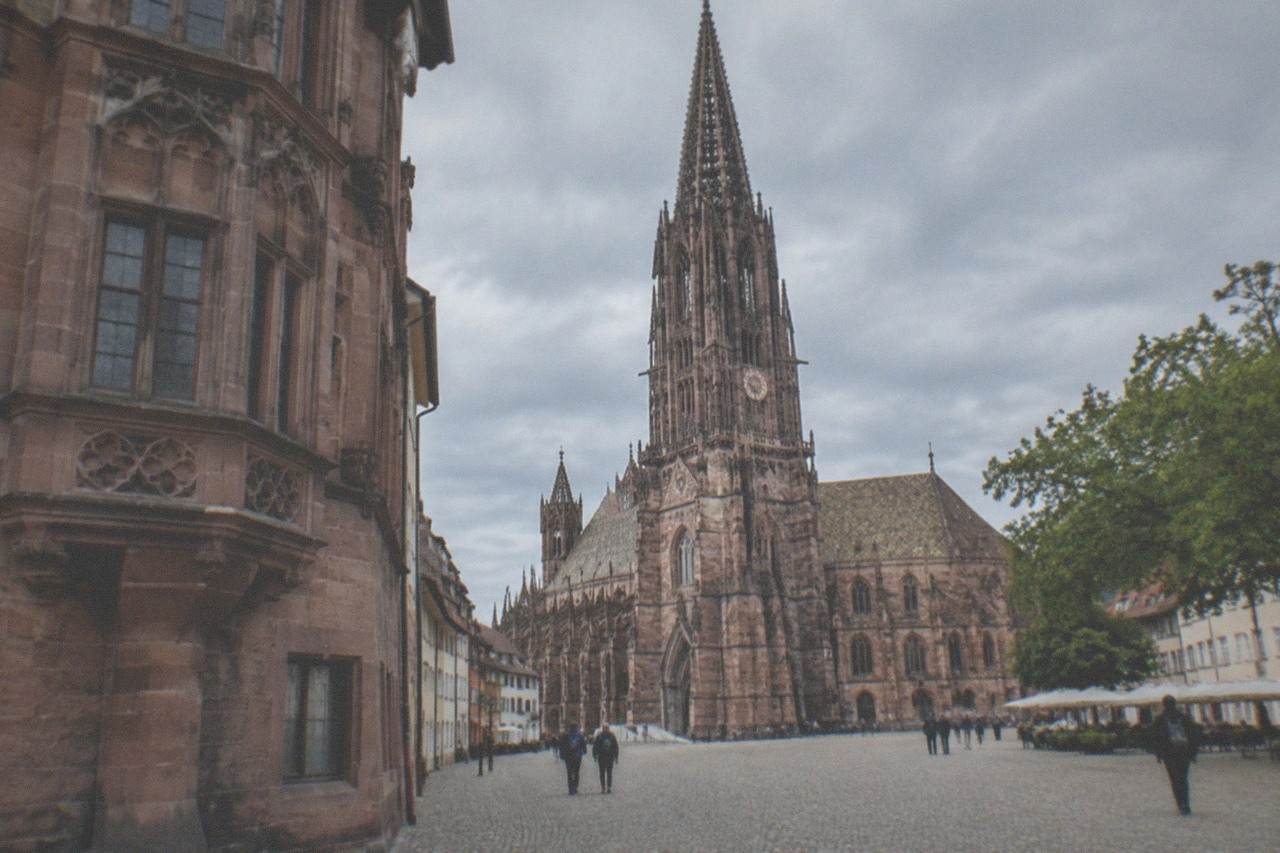
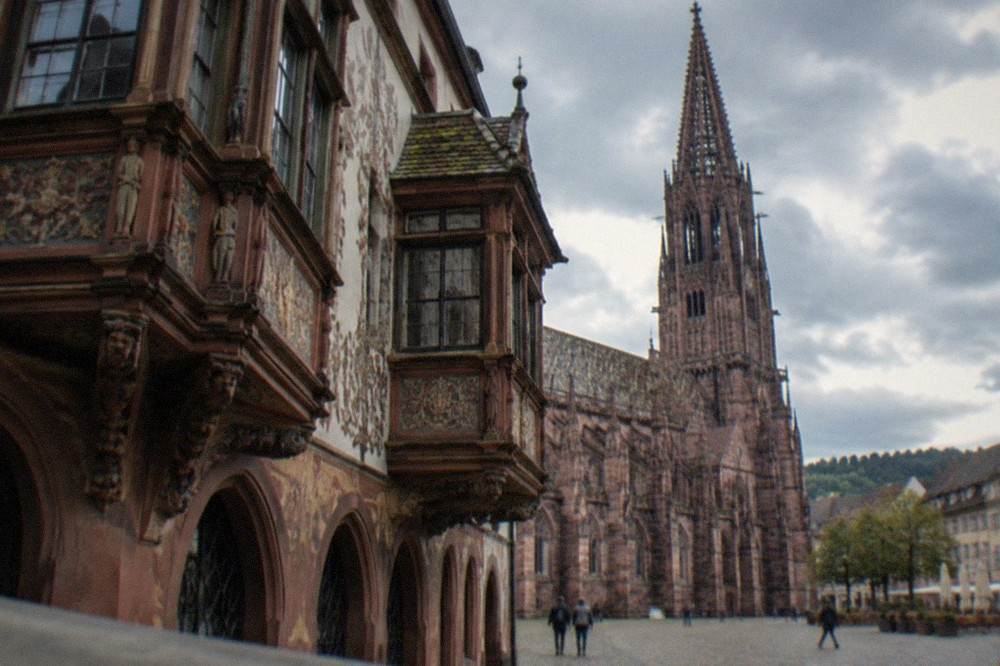
The Haus zum Walfisch, meaning "House of the Whale," is a late Gothic burgher house in Freiburg's Old Town and one of the most photographed secular buildings in the Altstadt. Seen from the street in about ten to fifteen minutes, it charges no separate admission for its facade. It is famous for its carved oriels and painted detailing.
For most visitors the Whale House works as a highlight inside a wider walk rather than a destination on its own. It sits in the heart of the Altstadt, close to the lanes that run between the Minster and the former city walls, which means you will pass it naturally on almost any Old Town route. Its red-toned facade and rich window detailing make it an easy landmark to describe to anyone you are traveling with.
The Whale House is the building many people come away remembering, and it features on plenty of Freiburg postcards and guided walk itineraries. Later sections of this guide cover exactly where to stand to see the facade, what the surrounding streets offer, and how the building fits into a half-day plan that takes in the Minster, the market square and the Bächle, the little water channels that run along many Old Town gutters.
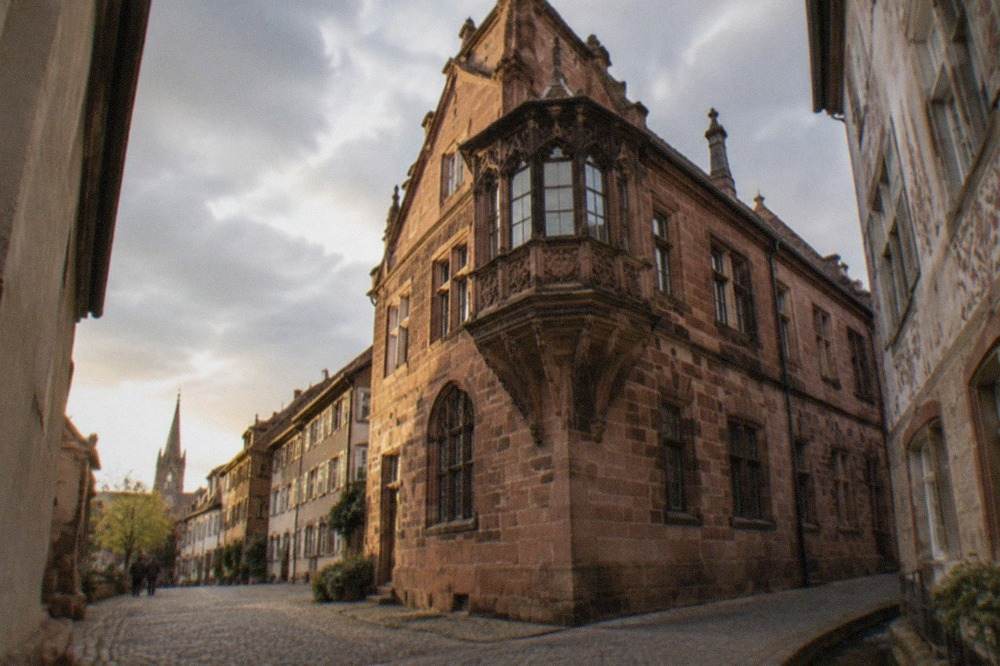
Because the house is a private building rather than a museum, the honest answer to "what can you do there" is: look at it, photograph it, and use it as an anchor for the surrounding block. Travelers who expect an interior tour will be disappointed, so this guide treats it as a waypoint with real atmosphere, and points you to the museums, viewpoints and guided walks nearby that do open their doors.
Where Is The Haus Zum Walfisch And How Do You Recognize It?
The Whale House stands in the Old Town core between the Minster quarter and the Augustinerplatz area, roughly a five-minute walk from Münsterplatz. You recognize it by its late Gothic facade with projecting oriels, historical painting and the whale emblem that gives it its name. There is no signage barrier or ticket line; you simply walk up, look up, and move on, which makes it an easy add-on to any Altstadt loop.
The most practical approach is to treat the Minster as your compass. The Minster's west tower is 116 meters tall, though visitors climb only to a gallery at 70 meters, and it is visible from most Old Town street corners. From Münsterplatz, where the daily Münstermarkt runs, you wander east and south into the web of lanes and let the painted facades guide you. The Whale House sits in this network, and local guides on the dramatized and classic Old Town walks routinely stop at it while telling stories about merchants, scholars and the city's guild past.
If you prefer structure to wandering, a guided walk solves the finding problem entirely. The classic options are inexpensive and well reviewed: the Gässle, Bächle and More City Tour runs about 1.5 hours, is rated 4.7 across 3,187 reviews and starts from $15, while the Tour of the City with Cathedral Visit, rated 4.6 across 284 reviews, starts from $20 and pairs the Old Town lanes with the Minster itself. These walks do not charge extra for the Whale House stop; it is simply one of the buildings the route passes.
For photographers, early morning is the friendliest window. The lanes around the house are narrow, and midday tour groups fill them quickly. A morning arrival also lines you up with the Münstermarkt, which runs Monday to Friday from 07:30 to 13:30 and on Saturdays to 14:00, with up to 130 stalls on the square, so you can combine the market, the Minster facade and the Whale House in one quiet loop before the crowds build.
How Much Time And Money Should You Budget For A Visit?
Budget ten to fifteen minutes at the Whale House itself, free to view from outside. The Minster nave is free, the tower climb is €5 for adults and €3 for children, and the Augustinermuseum costs €12 on a day ticket valid across the city museums.
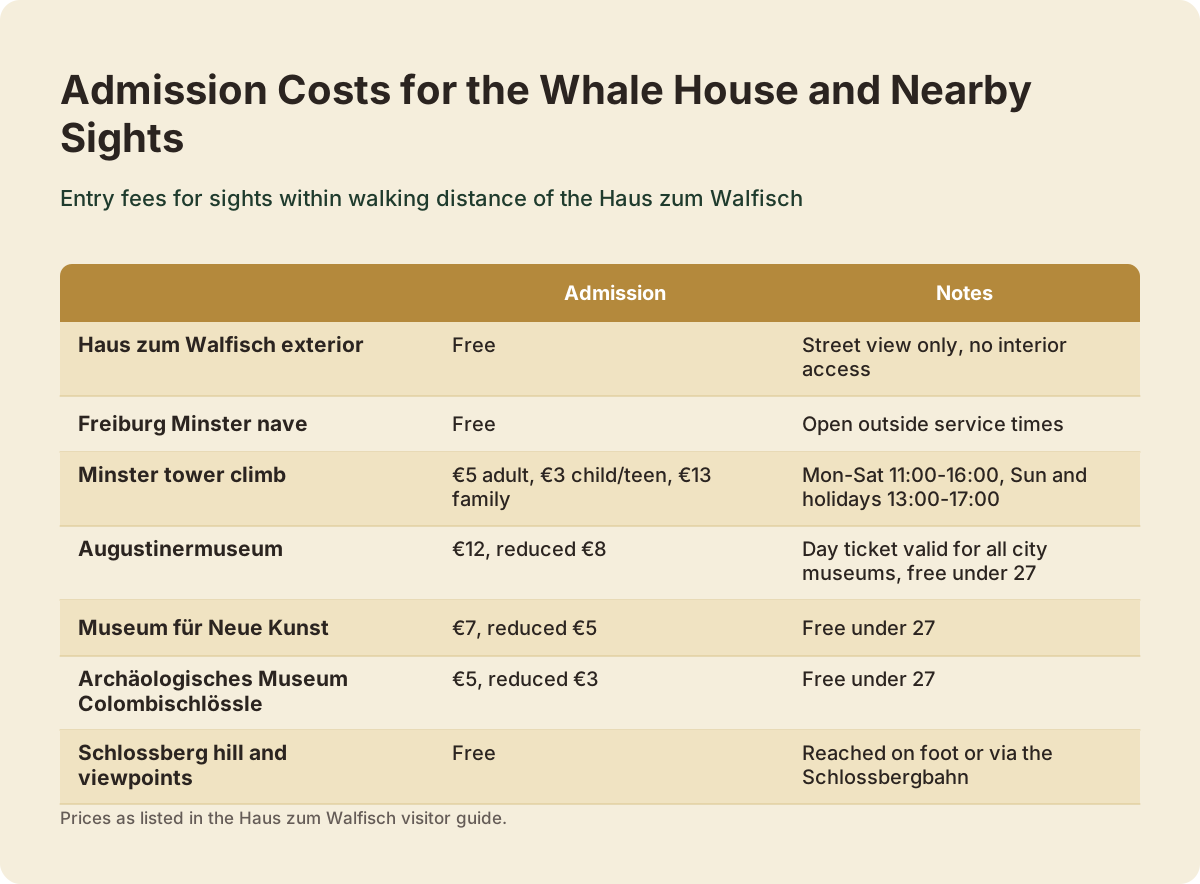
The table below pulls together the verified entry figures for everything within walking range of the Whale House, so you can build a budget before you set out. All of these are local till prices in euros, charged at the door or on the official operator pages.
| Sight or activity | Admission | Notes |
|---|---|---|
| Haus zum Walfisch exterior | Free | Street view only, no interior access |
| Freiburg Minster nave | Free | Open to visitors outside service times |
| Minster tower climb | €5 adult, €3 child/teen, €13 family | Mon-Sat 11:00-16:00, Sun and holidays 13:00-17:00, top gallery closed in winter |
| Augustinermuseum | €12, reduced €8 | Day ticket valid for all city museums, free under 27 |
| Museum für Neue Kunst | €7, reduced €5 | Free under 27 |
| Archäologisches Museum Colombischlössle | €5, reduced €3 | Free under 27 |
| Schlossberg hill and viewpoints | Free | Reached on foot or via the Schlossbergbahn |
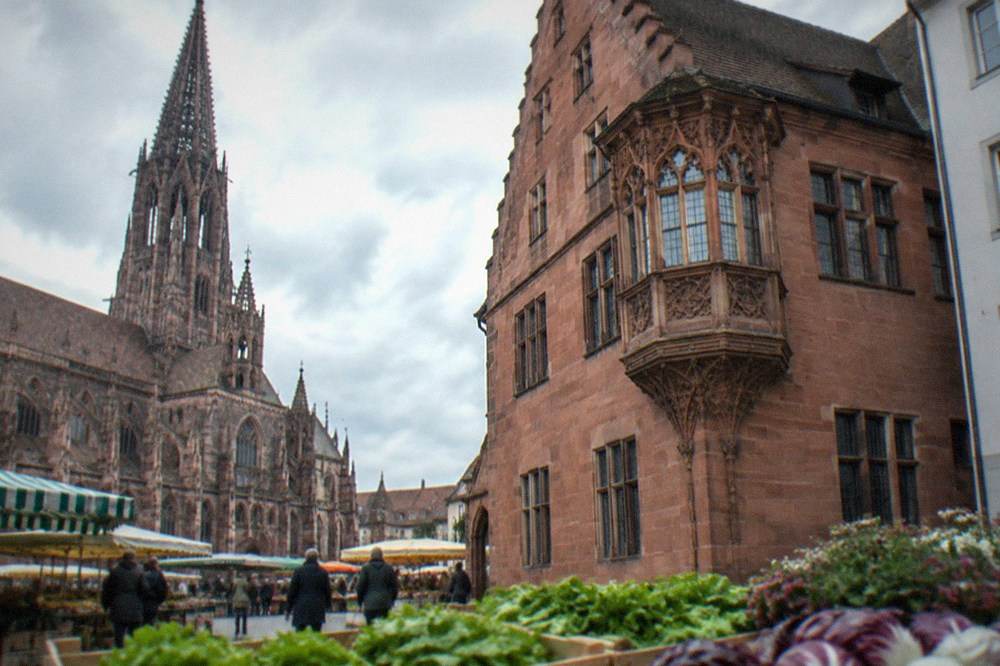
Time-wise, most travelers give the whole Minster quarter two to three hours, and the Whale House is a five-minute chapter inside that. If you add the tower climb, allow for queues in peak season, since the last ascent is about fifteen minutes before the closing times listed on the official tower page. Families with children tend to move faster through the lanes but slower up the tower, so plan around whichever member sets the pace.
The one budget item travelers consistently underestimate is the guided walk, and it is the one worth paying for here. A walk that explains the Whale House, the guild lanes and the Bächle costs less than a main course and transforms a pretty street into a story. If you would rather have the route to yourself, the private options in the last section of this guide cover the same ground at your own pace.
Why Is It Called The House Of The Whale?
The House of the Whale takes its name from a painted whale emblem displayed on its facade, a merchant's sign from an era when successful traders advertised through facade decoration rather than shop signage. The whale itself reads as a symbol of trade and fortune rather than a literal reference, and it survives today alongside the house's carved oriels as some of the richest secular ornament in Freiburg's Old Town.
Freiburg's Old Town fabric is unusual in Germany because so much of it is genuinely medieval in plan even where facades were rebuilt. The streets around the Whale House follow layouts that predate the modern city, and the Bächle, the open water channels running along the gutters, are a survival of that same period. When you stand in front of the house you are looking at a merchant class that drew its wealth from trade routes linking the Upper Rhine plain with the Black Forest hinterland, and the decoration on buildings like this one is the stone and paint record of that wealth. The full index of guides sits on Freiburg Travel Guide.
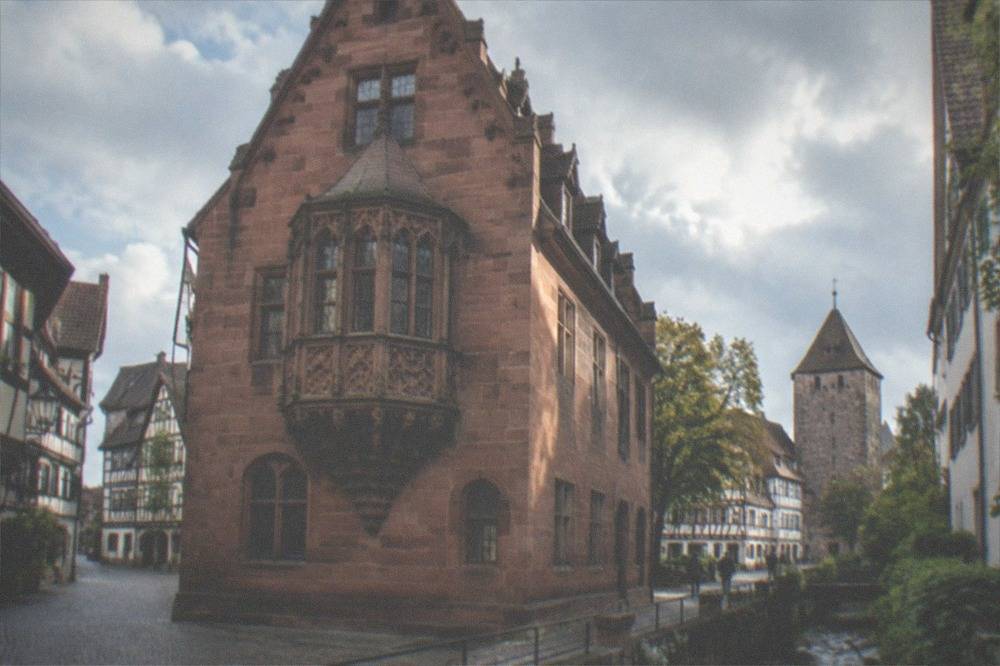
The Erasmus association is the second layer of fame. The humanist scholar Erasmus of Rotterdam is traditionally said to have lodged in the house during the period of his religious disputes, when he moved between Basel and other Rhine cities. Guides tell this story at the stop, and it is the kind of detail that elevates the building from "attractive facade" to "a node in European intellectual history." Treat the anecdote as the traditional account it is: the building predates and outlived its famous guest, and the architecture is the primary reason to seek it out.
What you should not expect is interior interpretation. Unlike the Augustinermuseum, which reopened fully on 28 February 2026 after more than two decades of phased renovation and now spreads roughly 3,400 square meters of exhibition through a former convent complex, the Whale House is not a visitor attraction with rooms to tour. The contrast is useful for planning: give the house ten minutes of exterior attention, and give the museums your indoor hours.
When Is The Best Time To See The Building And The Square?
The best viewing window is a weekday morning between 08:00 and 11:00, when the Münstermarkt is running, the lanes are still quiet and the light falls across the facades rather than straight down them. July and August are the warmest months with a July mean of 20.1°C, but they carry the biggest crowds; May, June and September offer the best balance of warmth, sunshine and walkable lanes without peak-season congestion.
Freiburg's climate is a genuine planning asset. The city records an annual mean of 11.0°C and 1,815.1 hours of sunshine per year, which makes it one of Germany's warmest and sunniest cities, though not the single warmest as popular claims sometimes have it. For street-level sightseeing like the Whale House, what matters more is the rain distribution: the summer half-year carries the heavier totals, with May the wettest month at 103.4 mm, so a light layer and a covered-market lunch stop are sensible from spring through early autumn.
The shoulder seasons deserve their reputation. May, June and September combine monthly means between 14.9°C and 18.3°C with sunshine totals that stay high, and hotel demand softens outside the festival and market peaks. Winter has its own case: the Christmas market runs from 19 November to 23 December 2026 across Rathausplatz and the surrounding Old Town squares, free to enter, and the Whale House gains a seasonal backdrop, though the Minster tower's top gallery closes in winter and the days are short at 64.7 hours of sunshine in January.
How Do You Get To The Haus Zum Walfisch By Tram Or On Foot?
The Haus zum Walfisch sits inside Freiburg's pedestrian Old Town, so the practical route is a tram to the edge of the Altstadt followed by a short walk of about five minutes. A single ticket for one RVF zone costs €3.00 at the machine or €2.70 on a smartphone, a one-zone day ticket is €7.20, and longer-staying visitors can consider the RVF Welcomekarte at €27.00 for three days.
Freiburg's tram network is the backbone of city movement, and every line that matters to tourists touches the Old Town perimeter. From the Hauptbahnhof, the main station, you are two or three stops from stops like Bertoldsbrunnen or the Stadttheater, both of which drop you at the Altstadt edge. Note that the station itself entered a modernization phase in September 2026, with platform and lift work running into 2028, so allow a little extra time when transferring there, and check current construction notices before relying on a tight connection.
| Ticket | Price | Best for |
|---|---|---|
| Single, 1 zone | €3.00 (€2.70 by smartphone) | One tram hop into the Old Town |
| Day ticket, 1 / 2 / 3 zones | €7.20 / €10.90 / €14.30 | A day of hopping between sights |
| RVF Welcomekarte | €27.00, 3 days | Visitors wanting the Schauinslandbahn included |
| Deutschlandticket | €63.00 per month | Longer stays with regional travel |
One correction worth making because it confuses many visitors: Freiburg city is not a KONUS municipality, so a hotel stay in Freiburg itself does not come with the Black Forest KONUS guest card. The city's own visitor product is the RVF Welcomekarte, and a KONUS card issued in a nearby member town such as Kirchzarten or Staufen does remain valid on Freiburg's trams and buses. The RVF fare pages carry the current details.
On foot, the whole point of the Whale House is that walking is the experience. The building sits inside a network where the Bächle run along the gutters, the Martinstor and Schwabentor gates frame the old street axes, and every lane doubles back toward the Minster. Walking from the station to the house takes about fifteen minutes at a relaxed pace, and once you are inside the Altstadt ring you rarely need a vehicle again until you head for the hills.
Which Tours And Sights Pair Best With The Whale House?
The best pairings are a guided Old Town walk plus the Minster, the Augustinermuseum and the Schlossberg viewpoint, all within fifteen minutes of the house. For a guided experience at your own pace, the Hello Freiburg private two-hour walk with a local guide starts from $141, a private guided walking tour starts from $239, and the Express Walk with a Local in 60 minutes starts from $90, so price maps onto depth rather than quality.
Private walks make sense when the standard group format does not fit: families with young children, travelers with limited mobility, or anyone who wants to ask questions for two hours straight. The Hello Freiburg option runs about two hours and gives a local guide room to route through the lanes around the Whale House, the market square and the gates. Its review pool is small, only one review so far, so judge it on format and price rather than ratings.
The formats differ enough that the choice is mostly about time and budget, and the table below lays the three private options side by side alongside the most-reviewed group walk for comparison.
| Tour format | Duration | Price from | Reviews |
|---|---|---|---|
| Hello Freiburg: Private 2-Hour City Walk with a Local | ~2 hours | $141 | 1 review, too few for a star claim |
| Private Guided Walking Tour | ~1.5 hours | $239 | 12 reviews, too few for a star claim |
| Express Walk with a Local in 60 Minutes | ~1 hour | $90 | 12 reviews, too few for a star claim |
| Gässle, Bächle and More City Tour (group) | ~1.5 hours | $15 | 4.7 across 3,187 reviews |
The same logic applies to the Express Walk with a Local, a roughly one-hour format from $90 that suits a tight layover or a first-evening orientation, and the longer Private Guided Walking Tour from $239 for travelers treating the city as the main event of the day. None of these private options carries a large review pool yet, which the listings state plainly; the heavily reviewed walks in Freiburg are the group formats such as the Gässle, Bächle and More tour at 4.7 across 3,187 reviews from $15.
After the walk, the natural circuit is Minster first, museum second, hill third. The Augustinermuseum, covered earlier in this guide, is the indoor anchor and its day ticket sweeps in the other city museums. The Schlossberg hill behind the Old Town is free to climb on foot, with the Schlossbergbahn funicular as a paid shortcut at €3.70 one way or €6.50 up and down for adults, and the view from the top takes in the entire Altstadt roofscape you have just walked through. For readers planning more of the region, our guides to the Old Town walking layout, the Münster and its tower and the wider list of things to do in Freiburg carry the detail this page only sketches.
For a full-day plan, start at the market, take a group walk that stops at the Whale House, climb the tower after the queues thin in the afternoon, and end on the Schlossberg at golden hour. That day costs roughly the entry fees tabled earlier plus one tour, and it uses the building the way it works best: as a beautiful hinge in the middle of a walkable city.
Common Questions About The Haus Zum Walfisch
What is the Haus zum Walfisch in Freiburg?
A late Gothic burgher house in Freiburg's Old Town, named for the painted whale emblem on its facade. It is one of the city's most photographed secular buildings and is traditionally associated with the scholar Erasmus of Rotterdam, said to have lodged there during his years moving between Rhine cities.
Can you go inside the Haus zum Walfisch?
No. It is a private building with no public interior tour, so you view and photograph the facade from the street. Plan ten to fifteen minutes for the exterior and spend your indoor time at the Augustinermuseum or the Minster instead.
How much does it cost to visit the Haus zum Walfisch?
Nothing for the exterior, as there is no admission charge or ticket. The costs that matter are around it: the Minster tower climb is €5 for adults, and guided Old Town walks that stop at the house start from $15 in group formats or $141 for a private two-hour walk.
Where is the Haus zum Walfisch located?
In the Old Town core, roughly a five-minute walk from Münsterplatz and inside the pedestrian zone, surrounded by the lanes that link the Minster quarter with Augustinerplatz. The nearest tram stops sit at the Altstadt edge, a few minutes on foot from the house.
How long should I spend at the Whale House?
Ten to fifteen minutes for the facade and photographs, longer if a guided walk is telling the building's story at the stop. Most travelers absorb it as one highlight within a two-to-three-hour Old Town circuit that includes the Minster and the market square.