Herdern Freiburg: A Practical Guide To The Hillside Quarter
Herdern is the quarter where Freiburg starts climbing. Above the old town's north-eastern edge, the streets tilt, the views open out over the Münster, and the city's hotel history is currently being rewritten.
Short answer
Herdern is Freiburg's hillside district above the north-eastern edge of the old town, best reached on foot or by the nearby Schlossbergbahn (adult one way EUR 3.70). It is a quiet villa quarter of views and walks rather than sights, known most recently for the closed Panoramahotel and its planned rebirth as a 62-room wellness hotel.
Where Is Herdern In Freiburg?
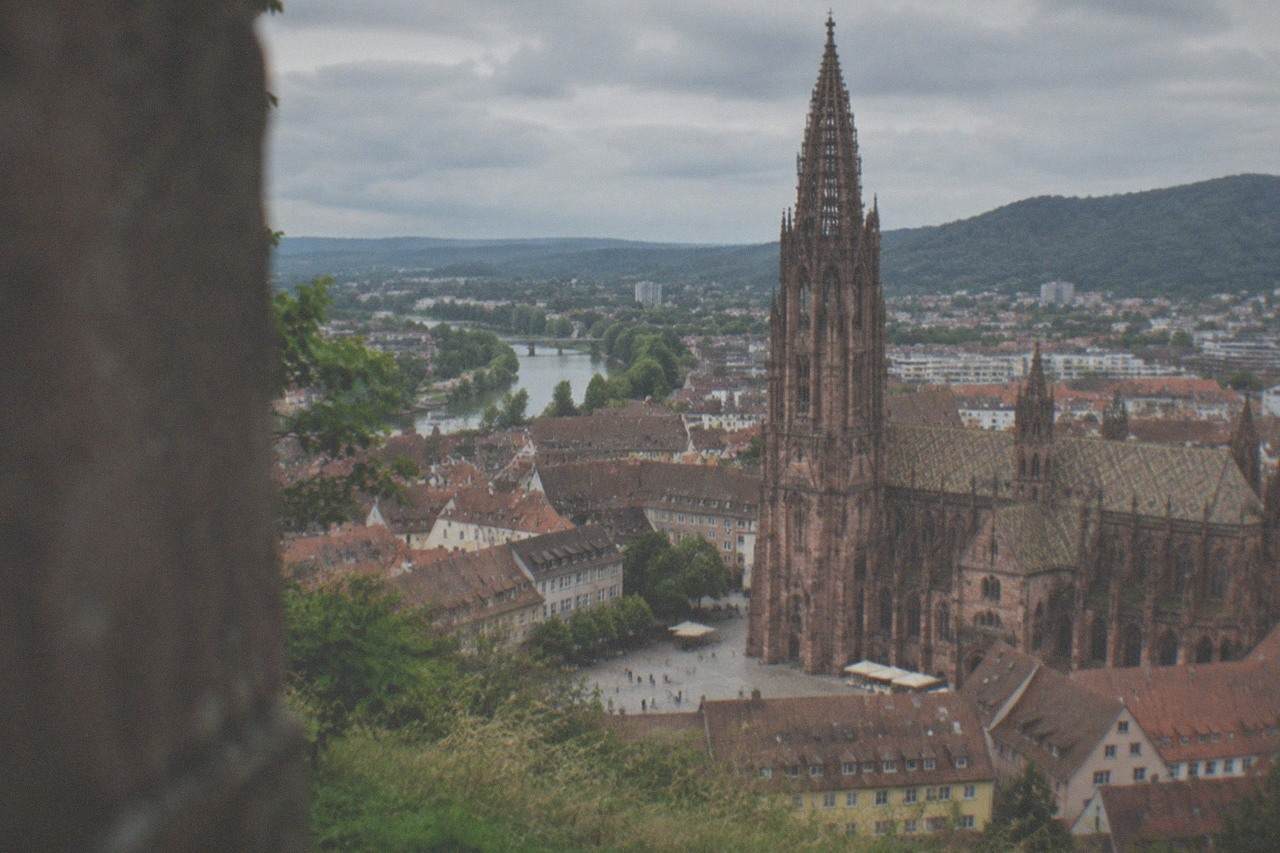
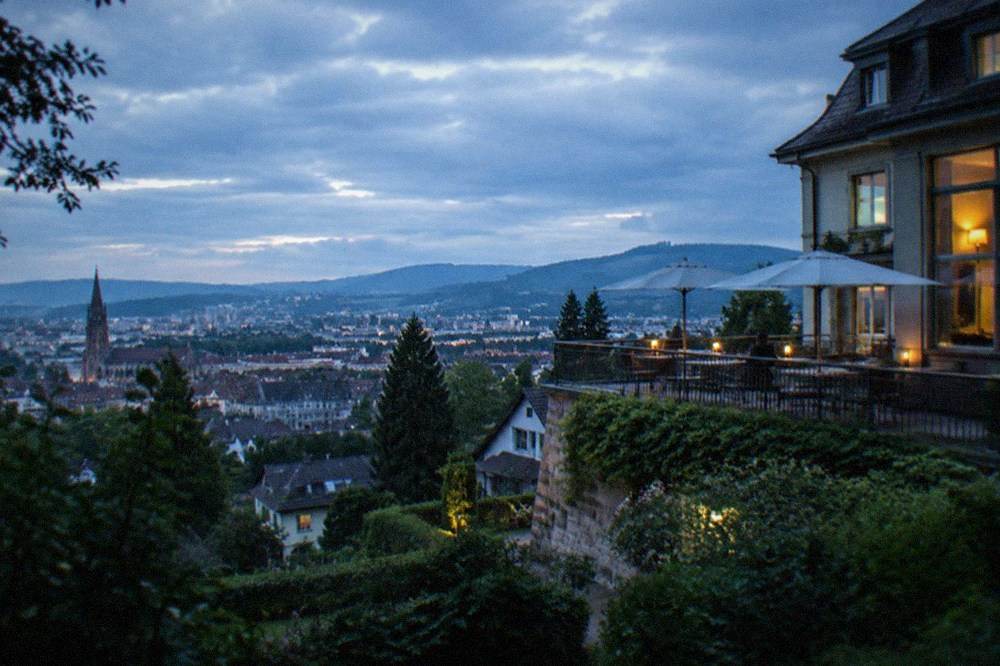
Herdern is the quiet hillside district on the slope above the north-eastern edge of Freiburg's old town, the quarter where the flat Altstadt gives way to climbing streets, garden walls, and long views over the Münster's spire. It is not a sightseeing district in the museum sense: its attractions are altitude, quiet, and proximity, which puts it about ten minutes' uphill walking from the Rathausplatz and directly beside the Schlossberg, the wooded hill that anchors the city's eastern skyline.
Most visitors encounter Herdern without ever learning its name. They walk up from the old town toward the views, pass through the district's sloping streets, and end up on the Schlossberg without realizing they have crossed a boundary. That is a fair way to treat it: Herdern works as a passage and a viewpoint rather than a destination with a ticket office. The district's character comes from what it sits above. From its upper streets, the whole red-roofed bowl of the old town lies below, and the 116 m west tower of the Münster dominates the view from almost every angle.
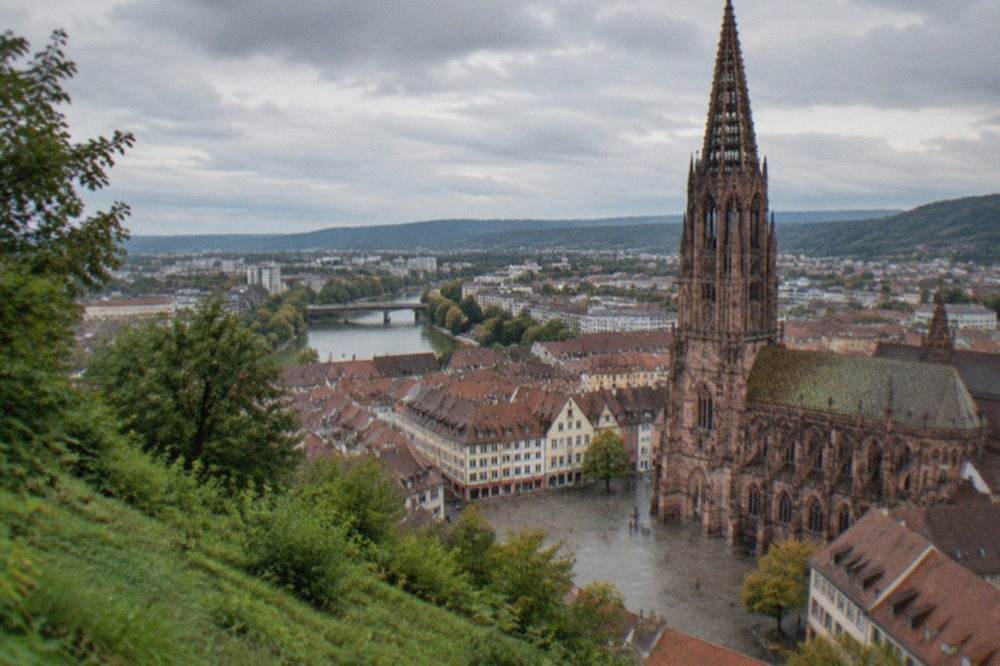
The practical reason to understand where Herdern sits is planning. If your hotel or apartment is here, your daily routine starts with a downhill walk into the old town and ends with an uphill walk home, and that shapes which shoes you pack and how you use the trams. The old town itself is flat and compact, so the vertical difference is concentrated almost entirely in this western slope. On a warm evening the climb is a pleasure; in January, when the DWD climate normals for Freiburg show a mean of 2.5°C, it is a different proposition.
Freiburg as a whole counted 237,299 residents at the end of June 2025, and districts like Herdern carry a small share of that number in streets that feel more like a hill village than a city of nearly a quarter million people. The tourism figures tell you something about the pressure on the city more broadly: 2025 brought 1,010,708 arrivals and 2,130,785 overnight stays across accommodation providers with at least ten beds, a slight dip of about two percent against 2024 after several strong years. Herdern has stayed on the quiet side of that demand.
How To Get Up To Herdern
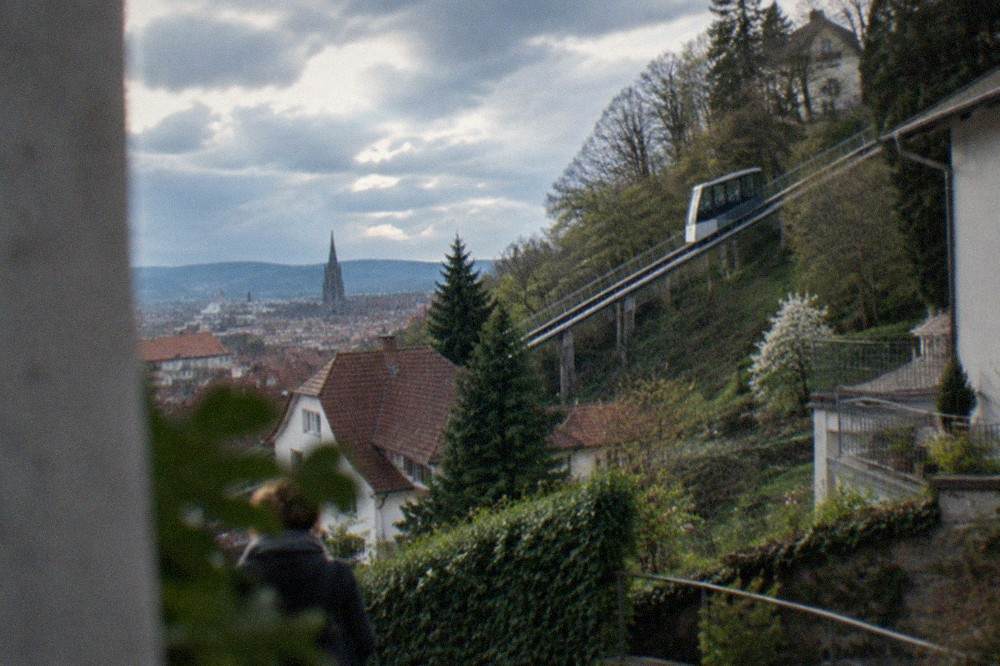
You reach Herdern on foot from the old town in roughly ten to fifteen minutes of uphill walking, or you use the Schlossbergbahn, the inclined lift that runs to the Dattler restaurant area, where an adult one-way ticket costs EUR 3.70 and an up-and-down ticket EUR 6.50. There is no tram that serves the upper district directly, because the slope is the point: the trams run in the valley, and Herdern is above them.
The Schlossbergbahn is the mechanical option, and it recently got a refresh. It went through a full modernization with new control and drive components, hydraulics and sensors, and passed its TÜV acceptance on 6 March 2025 before being handed back to regular operations. Children from 6 to 14 pay EUR 2.80 one way or EUR 4.60 for the round trip. If you are building a day around the hill, the lift drops you at the top of the Schlossberg rather than in Herdern's residential streets proper, so decide first whether your destination is the viewpoint or the address.
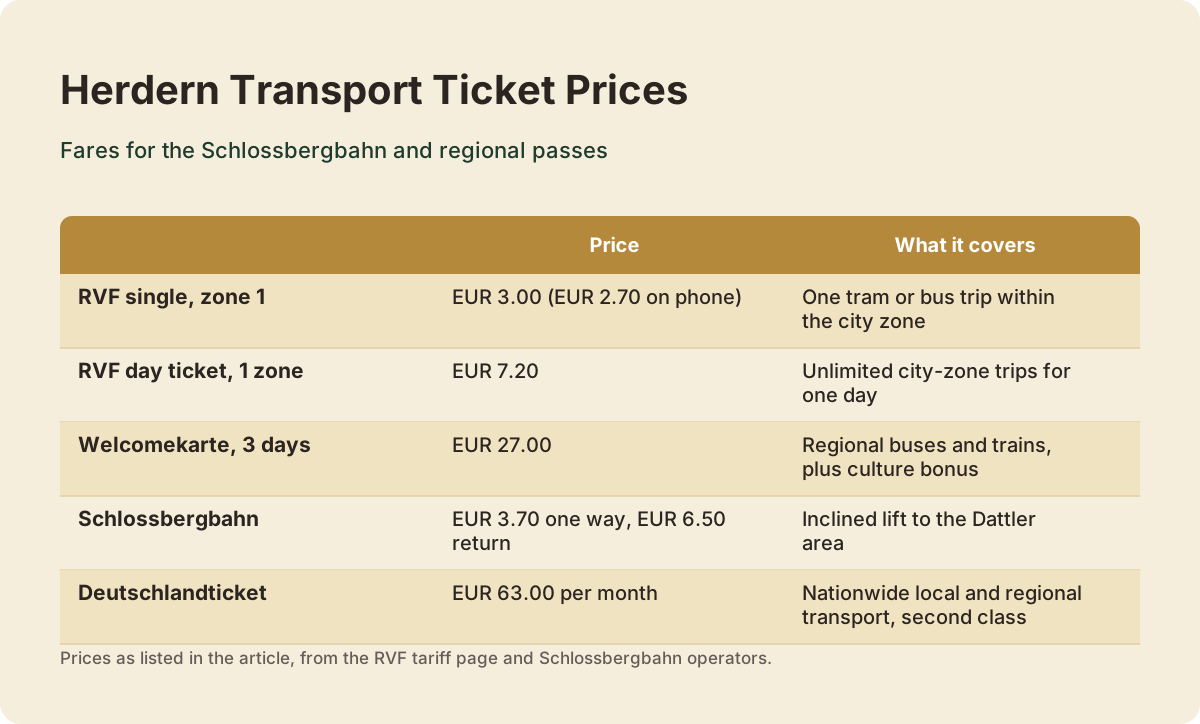
If you are staying in the city for a few days and moving around a lot, the ticket that matters is not the single funicular fare but the regional pass structure. The RVF network's own tariff page gives the numbers plainly. A single zone 1 ticket costs EUR 3.00 at a machine or EUR 2.70 on a smartphone, and day tickets for one, two or three zones cost EUR 7.20, EUR 10.90 and EUR 14.30. The visitor product is the Welcomekarte, three days at EUR 27.00 for an adult, which covers buses and trains across the region and includes the Schauinslandbahn cable car plus a culture bonus. Freiburg's own official Welcomekarte page lists the full terms.
| Ticket | Price | What it covers |
|---|---|---|
| RVF single, zone 1 | EUR 3.00 (EUR 2.70 on phone) | One tram or bus trip within the city zone |
| RVF day ticket, 1 zone | EUR 7.20 | Unlimited city-zone trips for one day |
| Welcomekarte, 3 days | EUR 27.00 | Regional buses and trains, Schauinslandbahn, culture bonus |
| Schlossbergbahn | EUR 3.70 one way, EUR 6.50 return | Inclined lift to the Dattler area |
| Deutschlandticket | EUR 63.00 per month | Nationwide local and regional transport, second class |
One thing worth knowing before you budget: whatever you pay for a room here, the city adds an overnight tax. Freiburg's levy is an Übernachtungsteuer of 5 percent of the net room price, applied to private stays since 2014 and to business stays since 1 July 2023, with guests under 18 exempt. It is not a Kurtaxe and it is not a flat nightly fee, so expect it as a percentage on your bill rather than a fixed per-person amount.
Walking down, by the way, is the underrated direction. The route from Herdern into the old town drops you into the network of lanes around the Augustinerplatz and the Bächle-lined streets, and the descent takes half the time of the climb. On the way down you pass the point where the hillside's villas give way to the medieval gates, and the whole story of the city's geography, a walled town in a bowl with a vineyard slope above it, reads itself in about five minutes of walking.
Herdern Hotels And The Panoramahotel Situation
The biggest Herdern story of the past two years is the Panoramahotel, closed since a June 2024 fire, whose new owners announced plans in early 2026 for a full core renovation and a rebirth as a wellness and spa hotel with the room count reduced from 86 to 62, with a possible additional floor for 15 more rooms. Until that reopens, Herdern is effectively a small-scale, apartment-and-guesthouse district rather than a hotel district.
The fire and the closure are firm facts; the wellness plans are reported plans, not completed works, so treat the reopening date as unknown. The reported ownership detail is that Virtus Holding took the property over and announced the repositioning in February and March 2026. A hotel shrinking its room count to add spa space is a statement about the market: the city's 2025 hotel bed occupancy was 55.2 percent, up 1.2 percentage points on 2024's 54.0 percent, and the international segment grew while overall arrivals dipped slightly, which suggests demand is tilting toward visitors who spend more per night rather than more nights.
For practical planning, this means Herdern's accommodation is thin and the alternatives are elsewhere. The where to stay in Freiburg guide breaks the city down neighborhood by neighborhood, and the station district has been the most active hotel story of late: the Novotel am Konzerthaus was sold in September 2026 with a long-term lease to a new operator and a renovation planned ahead of a rebrand in autumn 2027, and the IntercityHotel has been moving to a new brand with renovations during ongoing operation. None of that is in Herdern, which is exactly the point: the hillside is quiet precisely because the room inventory is small.
If your heart is set on waking up above the rooftops, the honest advice is to book early and expect a short list, or to look at the streets just below Herdern on the old-town side of the slope, where you keep much of the view with an easier climb to the trams.
What To Do On An Evening Near Herdern
Herdern quiets down after dark, so evenings here are usually evenings spent walking: down into the old town for dinner, up to the Schlossberg for the night view, or along the hillside lanes where the city lights spread out below. The one genuinely distinctive Freiburg night out is the Christmas Drag Show Walk with Betty BBQ, a Christmas-season show walk rated 4.6 across 55 reviews, from $43, which turns the old town into a stage.
The drag show walk is the item worth planning around, because it is seasonal and because it is unlike anything else on the city's evening menu. If your trip falls inside the Christmas market window, 19 November to 23 December in 2026, it slots naturally into a market evening. The live listing carries the exact dates and the meeting point.
Booking is simple and the terms are on the listing, but the honest planning note is this: Christmas-season walks in small-group format sell out on peak weekends, and the closer you are to the market's opening weekend, the earlier you want to lock a date. You can cancel most bookings up to 24 hours ahead, but check your specific ticket's terms before you count on it.
Outside the Christmas window, the hillside's own evening is quieter and cheaper. The Schlossberg is free to walk at any hour, and on clear nights the view over the city's lights from the upper paths is the best free attraction in Freiburg. Bring a layer even in summer: the DWD normals show July nights can still feel cool once the sun drops behind the ridge, and the mean evening comfort on a hillside is never the same as in the sheltered old town.
The Best Views And Walks Around Herdern
The viewpoint system around Herdern is free and mostly on foot: the Schlossberg itself costs nothing, the 33.27 m Schlossbergturm on its summit is reached by walking and charges no admission, and the classic half-loop is to walk up through Herdern's lanes, cross the hill, and come down past the Dattler restaurant. The one paid view in the district, the Schlossbergbahn, costs EUR 3.70 one way and saves your knees on the way up.
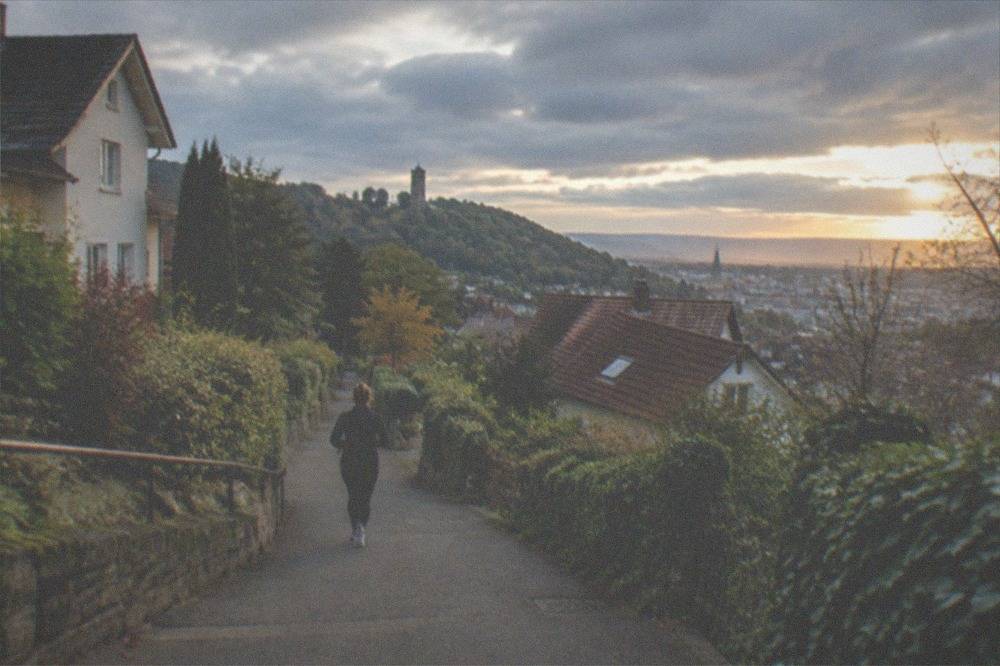
The full description of the hill, its paths and the funicular belongs to the dedicated Schlossberg guide, but the Herdern-specific route is worth spelling out because it is the district's main attraction. Start at the bottom of the slope near the old town, climb the garden-walled lanes of Herdern, and follow the signs toward the tower. The walk takes most people the better part of an hour at sightseeing pace. From the top you look across the whole city: the Münster tower, the roofscape, the Black Forest ridge behind you.
Comparing the viewpoints is a real decision for visitors with limited time, and the numbers make the comparison easier. The Münster's west tower stands 116 m tall, but visitors climb to a gallery at 70 m, not to the top, and the climb costs EUR 5 for adults, EUR 3 for children and teens, EUR 13 for a family, with under-7s free. The tower page on the Münster's own site lists the hours: Monday to Saturday 11:00 to 16:00, Sundays and holidays 13:00 to 17:00, with the top gallery closed in winter. The Schlossbergturm, by contrast, is free, and you look at the Münster's spire instead of standing in it.
| Viewpoint | Height you reach | Cost | Notes |
|---|---|---|---|
| Münster tower gallery | 70 m (of a 116 m tower) | EUR 5 adult, EUR 3 child, family EUR 13 | Winter closure of the top gallery; tickets in the Türmerstube |
| Schlossbergturm | 33.27 m tower on the hill | Free | Reached on foot only |
| Schlossberg paths | Varying | Free | Open around the clock |
| Schlossbergbahn | Lift to the Dattler area | EUR 3.70 one way | Fully modernized, TÜV acceptance March 2025 |
The honest trade-off: the Münster gallery gives you the view WITH the Münster in the city below you, while the Schlossberg and Herdern upper streets give you the view WITH the Münster in it, which for most photographers is the picture they actually came for. If you only do one, do the hillside, and do it in the late afternoon when the low sun lights the western face of the tower. The official tower page carries the current terms if you decide to do both.
One more practical note for walkers: the paths are well made but steep in sections, and in winter the upper hillside can hold frost, since the climate normals show an average of 64 frost days a year in Freiburg. Ordinary shoes manage it dry; after a freeze, the lift starts looking like the better plan.
Where To Eat And Drink Starting From Herdern
Herdern itself is a residential quarter, so the eating and drinking happens on the walk down: the old town's Baden taverns and wine stands, the Markthalle's stalls, and the square around the Augustinerplatz, all within fifteen downhill minutes. The two guided options are the Culinary Tour of Freiburg, about two hours and from $61, and for drinks rather than food the Guided Pub Crawl with Drinks, about four hours, rated 4.4 across 107 reviews, from $51.
The culinary tour is a small-operation product with only two reviews on the listing so far, too few to support a star claim, so judge it on its itinerary rather than its rating: a roughly two-hour eating walk through the center built around regional dishes. At from $61 it is priced against the cost of a restaurant dinner anyway, which is the honest way to decide whether a food walk is worth it on your budget. The live listing carries the current stops and start times.
For evenings built around drinks, the pub crawl is the better fit, and it is the item that pairs most naturally with a Herdern base: you walk down once, the guide moves you between bars for about four hours, and the climb home at the end is the price of the view you woke up to. The tour runs at from $51 with drinks included, holds a 4.4 rating across 107 reviews, and is booked through the guided pub crawl page.
If you would rather eat without a guide, the pattern that works from Herdern is simple: pick a square in the old town, eat there, and walk back up while the city empties. The Baden wine tradition is the thing to order, and a glass of local Gutedel or Spätburgunder on a square like the Rathausplatz costs a fraction of what the same wine would run in a capital city. The market at the Münster, up to 130 stalls on weekdays from 07:30 to 13:30, is the morning version of the same idea, and it is on your walking route anyway.
The Best Time Of Year To Visit Herdern
The best months for a Herdern visit are May through September, when the DWD climate normals for Freiburg show monthly means from 14.9°C to 20.1°C, sunshine from 206.8 to 252.2 hours a month, and the hillside paths at their greenest; December is the specialist alternative, cold at 3.4°C mean but built around the Christmas market from 19 November to 23 December 2026.
Freiburg's climate is one of its quiet selling points, with an annual mean of 11.0°C and 1,815.1 hours of sunshine, figures that put it among Germany's warmest and sunniest cities, though not at the very top of either ranking. The hillside concentrates that advantage in summer: the slope catches the afternoon sun, and the walk up through Herdern in July, with a monthly mean of 20.1°C and 252.2 hours of sunshine, is one of the city's simple pleasures.
| Month | Mean temp | Sunshine hours | Rainfall | Hillside verdict |
|---|---|---|---|---|
| March | 7.0°C | 146.8 h | 54.3 mm | Good, paths drying out |
| May | 14.9°C | 206.8 h | 103.4 mm | Best green season, wettest spring month |
| July | 20.1°C | 252.2 h | 92.2 mm | Warmest, sunniest, busy |
| September | 15.4°C | 176.2 h | 77.4 mm | Arguably the best balance |
| December | 3.4°C | 56.3 h | 66.9 mm | Cold, dark, but Christmas market season |
The rainfall column deserves a caveat: May is both the sunniest spring month and the wettest month of the year at 103.4 mm, which in practice means green hillsides punctuated by heavy showers rather than washed-out days. September is the connoisseur's pick, warmer than it has any right to be, past the peak crowds, and still dry enough for the hill walks. December rewards a specific kind of visitor, one whose plan is the market, the drag show walk and a Glühwein rather than the viewpoints, which in winter weather are best sampled briefly.
How Herdern Fits Into A Freiburg Trip
Herdern fits a Freiburg trip as a half-day hillside loop or as a place to sleep, not as a standalone day: the realistic pattern is one morning or afternoon walking up through the district to the Schlossberg, or two to three nights based here if you have booked one of the few rooms, with the rest of your time in the flat old town and on day trips.
The decision that shapes everything else is how many days you have. The city's core sights, the Münster, the market, the old town lanes and the Augustinermuseum, which reopened fully on 28 February 2026 after more than twenty years of phased renovation and now charges EUR 12 admission, EUR 8 reduced, free for under-27s, sit close together in the flat center. The hillside is the counterweight to all of that.
| Trip length | How Herdern fits | Realistic plan |
|---|---|---|
| One day | A two-hour loop | Old town morning, Herdern and Schlossberg afternoon, viewpoints at sunset |
| Two to three days | Evening viewpoint plus a base option | Sleep on the hillside if a room is available, walk down daily |
| Five days or more | A quiet evening ritual plus day trips | Titisee, the Kaiserstuhl wine country or Basel from the main station |
Day trips run from the main station in the valley below, and the station itself is in the middle of a multi-year modernization that began on 14 September 2026 and is scheduled to run until around December 2028, with lifts, platforms and roofing renewed at a reported cost of about €36.7 million. None of that closes the station, but it changes the layout while it happens, so allow a few extra minutes on departure days. The Freiburg train station guide tracks what the works mean for travelers.
Put plainly: Herdern is where you go in Freiburg when you want the city laid out below you and no queue in front of it. On the Freiburg Travel Guide site, the headline sights get their own pages and the crowds get their own hours; the hillside asks for neither, which is the whole argument for it.
Common Questions About Herdern In Freiburg
Where is Herdern in Freiburg?
Herdern is the hillside district above the western edge of Freiburg's old town, on the slope that rises toward the Schlossberg. It is roughly ten to fifteen minutes uphill on foot from the Rathausplatz.
How do I get up to Herdern without a car?
Walk up from the old town, or take the Schlossbergbahn inclined lift, which costs EUR 3.70 one way or EUR 6.50 up and down for an adult. No tram serves the upper district; the trams run in the valley below.
Can you stay in Herdern?
Accommodation in the district is limited, and its best-known hotel, the Panoramahotel, has been closed since a June 2024 fire, with reported plans for a wellness repositioning under new owners. Most visitors stay in the old town or station districts instead.
What is the best view around Herdern?
The Schlossberg and its 33.27 m tower are free to reach on foot and look across the whole city with the Münster's 116 m tower in the frame. The Münster's own gallery, at 70 m, is the paid alternative at EUR 5 for adults.
When is the best time to visit Herdern?
May through September offers the warmest, sunniest walking weather, with September the best balance of temperature and crowds. December suits visitors whose plan centers on the Christmas market, which runs 19 November to 23 December in 2026.
Is Herdern worth visiting on a short trip?
Yes, as a two-hour hillside loop rather than a full day. The climb, the lanes and the free viewpoints over the old town are the district's whole offer, and they pair naturally with an afternoon in the flat center below.