What Food Is Black Forest Known For?
The honest answer to what the Black Forest actually eats: Black Forest ham, the cherry gateau, Baden wine, the Lange Rote and the markets that tie it all together.
What Food Is Black Forest Known For?
The Black Forest is known for four foods above all others: Black Forest ham, a cold smoked ham cured in the region; the Black Forest gateau, a chocolate, cherry and cream cake bound together with Kirschwasser, the local cherry spirit; Baden wine, grown on the sunny western edge around Freiburg; and the Lange Rote, a long grilled sausage sold at Freiburg's Münsterplatz. Around them sits a market and tavern culture of onion tart, fresh breads and seasonal festival food.
That short list is what locals will name first, and it is what the region's own marketing leans on. None of it is a tourist invention. The ham and the cherry spirit are farmhouse traditions that predate mass travel by centuries, the cake became famous through cafés in the wider Baden region, and the sausage is a Freiburg street snack that has been sold in the same square for generations.
The honest framing matters, though. Much of what the world calls "Black Forest food" is really Baden food, and Freiburg sits at the center of Baden's table. The city is the region's natural food capital: it holds the market, the wine festivals, the starred kitchens and the biggest concentration of taverns pouring local wine. A visitor basing themselves in Freiburg, following the recommendations on this Freiburg Travel Guide, can eat their way through the whole list without a car.
There is a second layer worth knowing about before the first restaurant is chosen. The Black Forest proper, the high hills and the deep valleys south and east of the city, is a farming and dairying landscape, and its traditional cooking ran to simple, filling fare: cured and smoked meats because winter storage demanded them, dumplings and potatoes as the base of most meals, river fish in the valleys, and cake and spirit in the orchard villages. The fancy end of the regional table, the starred kitchens and the dressed-up taverns, sits mostly along the western rim where the wine grows, in and around Freiburg, the Kaiserstuhl and the Markgräflerland. Both halves belong to the answer, and a good trip touches both.
Tasting your way around is easier with a guide who knows the ground. The options below range from a dramatized city walk to a vineyard hike with tastings to a self-guided scavenger hunt that strings the food stops together.
The Three Foods To Order Before Anything Else
Start with three orders: a plate of Black Forest ham with dark bread, a slice of Black Forest gateau with a glass of Kirschwasser, and a Lange Rote eaten standing at the Münsterplatz. Ham, cake and sausage are the trio that defines the region, each tied to a specific place and a specific way of eating, and every one of them is available within a few minutes' walk of Freiburg cathedral.
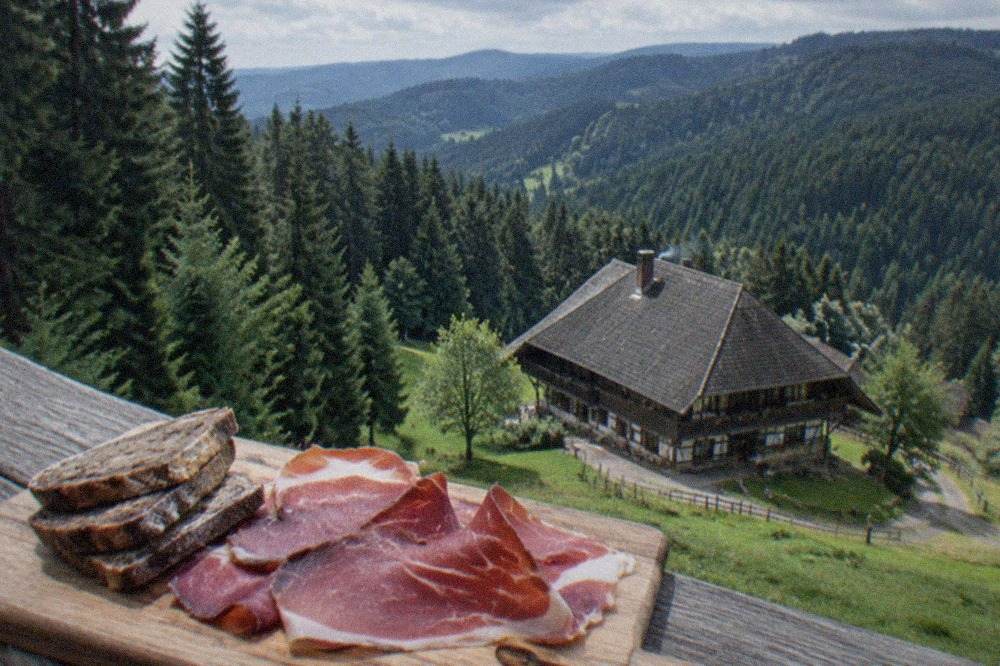
The ham is the serious one. It is a boneless, dry-cured ham, traditionally smoked over coniferous wood, which is where the dark rind and the deep, resinous flavor come from. It is served cold, cut paper thin, with bread and nothing much else. Curing was a necessity in the hills long before it was a delicacy: a family pig slaughtered in autumn had to feed a household through a winter of snowed-in valleys, and smoke and salt were the only preservation available. The result of that necessity is now the region's most protected food name. Our full Black Forest ham guide covers how it is made and where the best plates in the region are found.
The gateau is the famous one. Layers of chocolate sponge, morello cherries, whipped cream and a firm splash of Kirschwasser, the cherry spirit distilled in the hills. A proper slice is less sweet than the imitations sold abroad, because the Kirschwasser does real work in it, cutting the cream and lifting the chocolate rather than hiding behind them. The Black Forest cake guide goes deeper into its history and where to find an honest slice in Freiburg. Order it where the kitchen makes it fresh rather than where it sits under glass, and ask whether the Kirschwasser is real: the difference between a genuine slice and a sweet imitation is the first thing a local will tell you about.
The Lange Rote is the humble one: a long, thin, grilled red sausage, served with or without skin, eaten standing up at a market stall. Nobody sits down for one, nobody plates one, and asking for ketchup instead of mustard is a quiet regional crime. The Lange Rote guide explains the local etiquette, including the with-skin question that divides the city.
| Food | What it is | How locals eat it |
|---|---|---|
| Black Forest ham | Cold smoked, dry-cured ham, dark rind, cut thin | On a board with dark bread and pickles |
| Black Forest gateau | Chocolate sponge, cherries, cream, Kirschwasser | Mid-afternoon in a café, coffee alongside |
| Kirschwasser | Clear cherry spirit, the cake's binding flavor | As a small pour after a meal |
| Lange Rote | Long grilled sausage from a market stall | Standing at Münsterplatz, mustard optional |
One thing worth saying plainly: none of these is a sit-down restaurant dish. They are café, market and tavern foods. That is the region's food culture in its honest form, and it is why the markets matter as much as the kitchens, which the wider Freiburg food guide lays out in full. A visitor who only books restaurant tables will miss half of it, because the ham board, the sausage and the afternoon cake all live in the spaces between meals, in the squares and the bakery counters and the standing-room taverns that a restaurant meal never touches.
Evening is when the food day turns into something else, and the old town's rougher corners have a story of their own.
Where Baden Wine Fits On The Black Forest Table
Baden wine is the quiet fifth food group of the region. The vineyards sit on the western and southern rim of the Black Forest, above Freiburg, and the local taverns serve them alongside onion tart, breads and cured meats. The wine is dry, the taverns are informal, and the festivals that celebrate it are among the biggest food events of the year.
The tavern tradition is called the Besenwirtschaft or Straussi: a winemaker opens their own parlor for a season, pours their own wine, and serves simple food to go with it. The broom or wreath hung at the door is the signal that the parlor is open, and the menu never stretches far beyond what the kitchen can make from the farm. It is the most direct way to drink the region's wine, because the person pouring it grew the grapes. In Freiburg itself, the scene has grown recently. The Trotte wine bar opened in Fischerau with a reported cellar of around 400 wines, twelve of them by the glass. Ludvigs reopened the former Café Légère site as the region's first Stehausschank, a standing wine room. Augustiner am Platz, the first Augustiner Wirtshaus in Baden-Württemberg, opened in October 2025 and pours Bavarian beer alongside regional wines.
The scale of the wine culture surprises people. Local reporting put Freiburg's 2026 Weinfest at around 110,000 guests over six days on the Münsterplatz, with free entry and regional wineries pouring in the open air. The 2027 dates are already announced for 1 to 6 July. Outside the city, the calendar runs from the Markgräfler Weinfest in Staufen in late July to the Breisach festival at the end of August, then the KaiserHerbst tasting series deep into autumn, alongside the recurring local Hocks and Zwiebelkuchenfeste that the wine festival calendar tracks each year. What that adds up to is a region where, for roughly half the year, some village somewhere is celebrating its wine on a weekend, and most of those celebrations cost nothing to walk into.
The best way to connect the wine to the landscape it comes from is to walk out among the vines. The Veni, Vidi, Vino wine hike is a guided walk through vineyard country with tastings along the way: about two and a half hours, from $79, rated 4.4 across 167 reviews. Check availability if a guided version appeals, or read on for the self-guided route.
For something shorter and cheaper in the city itself, there is a tasting of four regional wines served with onion tart right at the town hall square, about an hour, from $31. It is a good first lesson in what Baden grape varieties actually taste like before you commit to a hike, and the onion tart that comes with it is itself a regional classic: a savory, cream-and-egg tart over soft stewed onions, served warm and traditionally paired with the new young wine of the season.
Market And Festival Foods Worth Planning Around
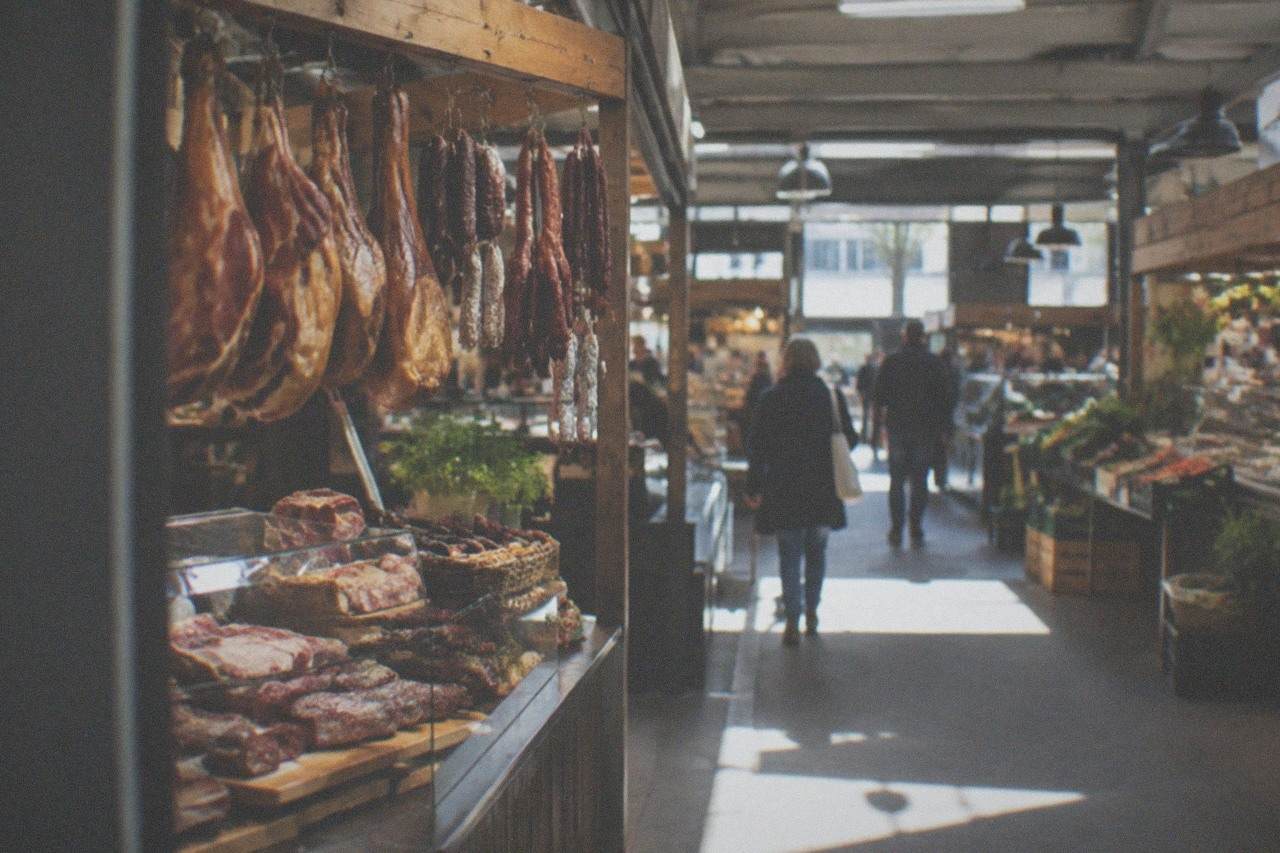
The market is where the region's food identity is most visible. Freiburg's Münstermarkt runs Monday to Saturday in the shadow of the cathedral with up to 130 stalls selling sausage, bread, cheese, flowers and fruit, and the festival calendar around it adds roast goose, gingerbread, onion tart and fairground food through the year. Time a visit to the market and you will eat half the region's canon before lunch.
The Münsterplatz market hours run from 07:30, closing early afternoon on weekdays and around 14:00 on Saturdays per the current listings, and the market pauses on Sundays, public holidays and 15 August. The full stall-by-stall detail, including which stands sell what, is in our Münsterplatz market guide. The city's own visitor pages document the market's scale and schedule, and it remains the single best place to assemble a picnic of Black Forest ham, Baden cheese and fresh bread. Go early: the best bread is gone by mid-morning on a Saturday, and the market's rhythm, vendors setting out crates at dawn and packing up shortly after noon, is a large part of what a visitor should see, not just eat.
Autumn is onion tart season, the Zwiebelkuchen that appears wherever new wine is being poured, and the Hocks and winemaker-open-cellar days that fill the villages between Freiburg and the Kaiserstuhl. Winter shifts everything indoors and toward the Christmas market, which runs 19 November to 23 December 2026 across several old town squares with, per the official market pages, well over a hundred stands and free entry. The food there is gingerbread, roast everything, glühwein made from Baden reds, and bratwurst under steam. Spring brings the Frühjahrsmess and the first asparagus of the Baden season; summer belongs to the wine festivals and the long tables set out in the open air.
| Event | 2026 or 2027 dates | Food focus |
|---|---|---|
| Freiburg Weinfest | 1 to 6 July 2027 | Regional wines, free entry, Münsterplatz |
| Markgräfler Weinfest, Staufen | 31 July to 3 Aug 2026 | Markgräflerland wines and tavern food |
| Weinfest Breisach | 28 to 31 Aug 2026 | Kaiserstuhl and Tuniberg wines |
| KaiserHerbst series | Around 10 Oct to 8 Nov 2026 | Tastings across Kaiserstuhl winemakers |
| Freiburg Herbstmess | 16 to 26 Oct 2026 | Fairground food and rides |
| Christmas market | 19 Nov to 23 Dec 2026 | Gingerbread, glühwein, sausages |
How To Build A Food Day Around Freiburg
A realistic food day starts at the Münstermarkt before 10:00 for a Lange Rote and market browsing, climbs the cathedral tower to work up an appetite, moves to a café for gateau in the afternoon, and ends either at a wine tavern in the old town or on a guided walk through the neighborhoods behind it. Everything on the list sits inside one square kilometer of city center, so the day costs almost nothing in transport.
The tower climb is worth building into the day for a reason that has nothing to do with food: it is the best way to see the food geography of the region. From the gallery at 70 meters, the vineyards of the Tuniberg and the Kaiserstuhl are visible to the west, the Black Forest hills rise to the east, and the market stalls sit directly below. The tower's own page lists adults at €5, with the climb open Monday to Saturday from 11:00 and Sundays from 13:00. That view, wine on one side and forest on the other, is the entire answer to the food question in a single glance, and it explains why the region's cooking splits between smoke-cured mountain fare and sun-ripened wine valley produce.
For structure, a guided or self-guided format helps. The Freiburg scavenger hunt is a self-guided walking tour built as a puzzle route through the old town, about three hours, from $45, rated 4.9 across 15 reviews, and it can be paused at every bakery and tavern on the way, which is exactly how a food day should work. There is also a full culinary tour of the city, about two hours and from $61, though it currently carries too few reviews on the live listing to quote a rating.
| Option | Length | From | Rating on the listing |
|---|---|---|---|
| Scavenger hunt self-guided tour | About 3 hours | $45 | 4.9 across 15 reviews |
| Culinary tour of Freiburg | About 2 hours | $61 | Too few reviews to quote |
| Tasting of 4 wines at town hall square | About 1 hour | $31 | Not yet rated on the listing |
| Veni, Vidi, Vino wine hike | About 2.5 hours | $79 | 4.4 across 167 reviews |
| Guided pub crawl with drinks | About 4 hours | $51 | 4.4 across 107 reviews |
Evenings split two ways. A quiet version is a glass at Trotte or Ludvigs, then dinner near Augustinerplatz, where the tables under the plane trees fill up as the sun drops behind the west wall. A livelier version is the guided pub crawl with drinks, about four hours and from $51, rated 4.4 across 107 reviews. And for the food-curious who also want the city's story, the Red Light District city tour is a roughly two hour guided walk through Freiburg's shadier past, from $26, rated 4.2 across 22 reviews on the live listing. It is not a food tour, but it is the most atmospheric way to close out a day that began at a market stall, and it walks the same streets the market vendors have been crossing for generations.
However the day ends, the canon is the same. Ham, gateau, Kirschwasser, sausage, wine, onion tart when the season allows. Everything else the region serves is a variation on those six things, and Freiburg is the place where all six are within walking distance of one another.
Common Questions About Black Forest Food
What food is Black Forest known for?
Black Forest ham, the Black Forest gateau made with Kirschwasser, the cherry spirit itself, Baden wine from the vineyards around the region's western rim, and the Lange Rote sausage sold at Freiburg's Münsterplatz, plus onion tart and the wider market and tavern culture that surrounds them.
Is Black Forest cake really from the Black Forest?
The cake is a Baden tradition, and the region's claim rests on the Kirschwasser that defines it, a cherry spirit long distilled in the Black Forest hills. Freiburg, as the region's largest city and café capital, is a perfectly good place to eat an authentic slice.
What is a Lange Rote?
A long, thin, grilled red sausage sold from market stalls around Freiburg's Münsterplatz, eaten standing up, with or without its skin depending on how you order it. It is the city's default street snack.
Where can I taste Baden wine near the Black Forest?
Freiburg is the easiest base: the Münsterplatz hosts the Weinfest each July, with the 2027 dates set for 1 to 6 July, and wine taverns including the Trotte and Ludvigs pour regional wines year round. Villages around the Kaiserstuhl hold open cellar days through autumn.
Can you tour the Black Forest food scene without a car?
Yes. Freiburg's market, cafés and taverns are walkable, a direct regional train network reaches the wine villages, and guided options such as a wine hike or a self-guided scavenger hunt cover the ground on foot. The city itself is famously easy to explore without driving.