What Do Germans Call The Black Forest?
Germans call the Black Forest the Schwarzwald, literally the black forest, a name that shapes everything from road signs to wine labels in the region around Freiburg.
What Do Germans Call The Black Forest?
Germans call the Black Forest the Schwarzwald, and the name is completely literal: Schwarzwald means "black forest." The word breaks into schwarz, black, and Wald, forest, and it refers to the dense wall of fir and pine that canopies the hills of southwest Germany. You will see it on road signs, wine bottles, cake boxes and hotel entrances everywhere in the region, which sits in the state of Baden-Württemberg with Freiburg as its main gateway city.
There is no nickname, no older poetic substitute and no regional rival to the word. When a German speaker in Freiburg, Offenburg or Baden-Baden talks about heading into the hills for a weekend, the sentence contains Schwarzwald and nothing else. The English name is simply the German one, translated word for word and carried into English as travelers began describing the region to readers back home.
The practical value of knowing this is bigger than it sounds. A traveler who recognizes the word Schwarzwald can read a destination board at Freiburg's station, a motorway exit sign, a bakery shelf label on a Black Forest ham, or the name of a long-distance hiking trail without any translation at all. The German tourist industry barely translates the name in its own materials either, because it does not need to: the region's official tourism body brands itself around the word, as the Schwarzwald tourism site's own planning pages show. English text about the region in Germany typically keeps Schwarzwald in the original and appends "Black Forest" only when clarity demands it.
For Freiburg travelers the word has a second function: it marks direction. The city sits on the western edge of the range, and anything labeled Schwarzwald-bahn, Schwarzwaldstraße or Schwarzwaldkirch points uphill and east, away from the Rhine plain. Anything pointing west is, generally, Alsace.
Why The Name Schwarzwald Fits The Landscape
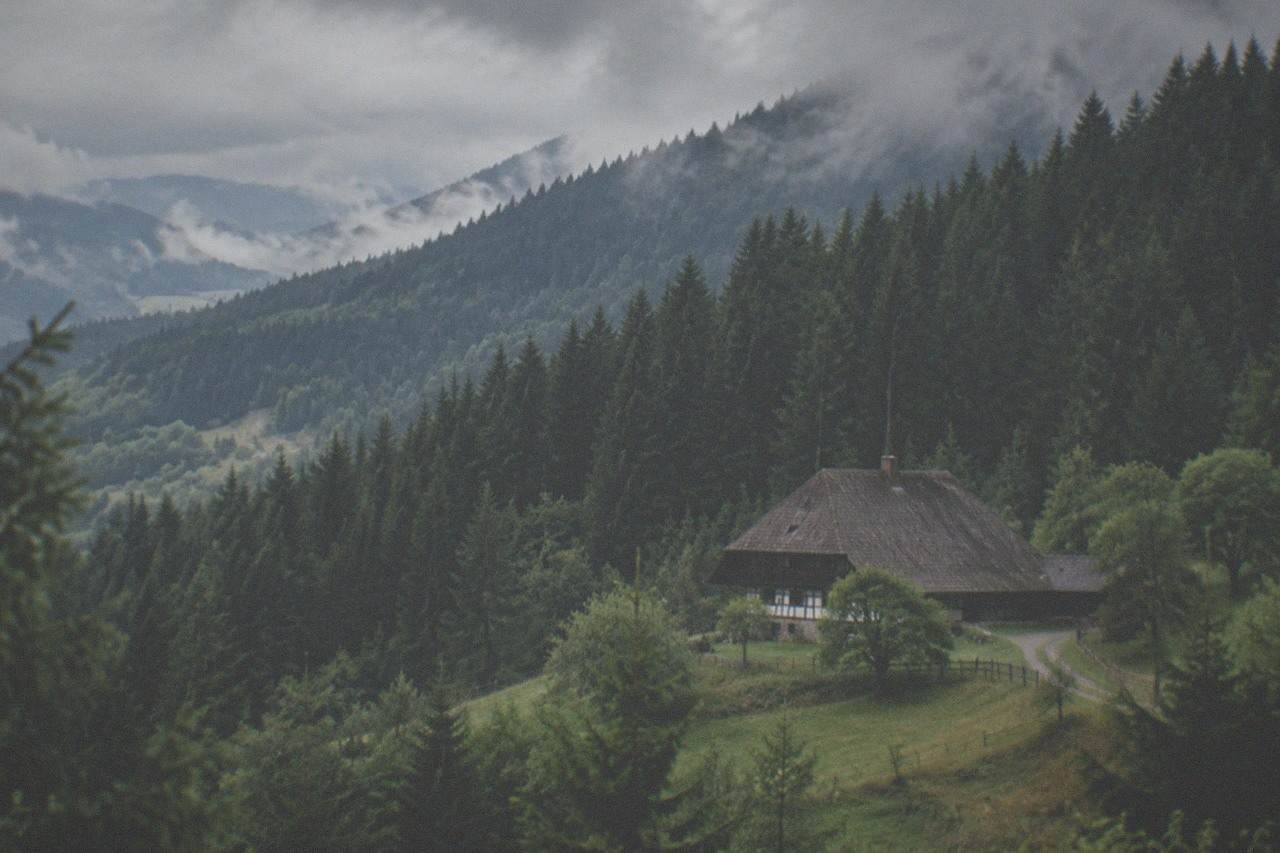
The Schwarzwald earned its name from its canopy. The range is thickly planted with Norway spruce and silver fir, and from a distance, from the Rhine valley or the Vosges mountains across the border in France, the forest reads as one dark, unbroken mass. Under a heavy sky or in winter shadow the hills look genuinely black rather than green. Early descriptions lean on that impression, and the modern traveler standing in the Rhine plain can still see it plainly.
The effect is strongest from the west, which is precisely where most historical observers came from. The Rhine runs along the range's entire western edge, and for centuries the river was the region's main freight and passenger corridor. Merchants, monks and mapmakers approached from the water, saw a wall of dark conifers rising from the plain, and passed the description along. The forest cover has changed over the centuries, with clearing for pasture in the high valleys and replanting after both world wars, but the impression that gave the region its name survives.
What the name does not tell you is how varied the range actually is once you are inside it. The Schwarzwald is not one uniform forest but a chain of landscapes: the north around Baden-Baden and the Schwarzwaldhochstraße, the scenic high road that carries the forest's name in its own title, the middle valleys around Triberg and its waterfalls, and the south around Feldberg, Titisee and Hinterzarten, where the terrain opens into high moorland, lakes and ski slopes. A traveler who expects nothing but dark trees is usually surprised by the farmland, the vine-covered foothills of the Markgräflerland on the southern and western edge, and the lake resorts.
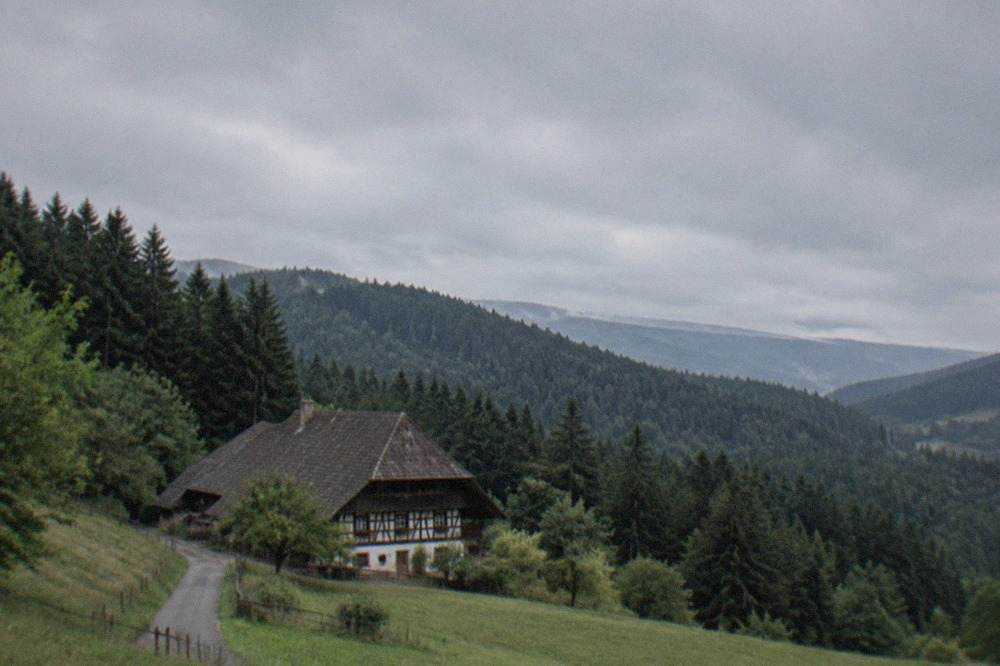
This variety is why the name works so well as a planning tool. On this site, the overview of the Black Forest as a destination groups the range by area rather than by scenery, because the differences between north, middle and south shape what a visitor actually does. The northern section is built around spa towns and driving routes, the middle around waterfalls and clock-making villages, and the south around lakes, hiking and winter sports.
For a first trip based in Freiburg, the southern Schwarzwald is the natural territory, and a guided introduction to the city itself is a sensible first outing. A private walk such as Walking and Strolling the Historic Center covers roughly two hours and from $228 per booking; it carries only a small handful of reviews so far, so read the listing's own description rather than relying on a rating, and it suits travelers who want the German names of Freiburg's streets and squares explained in context rather than translated on the fly.
Where You Will See The Word Schwarzwald Around Freiburg
Around Freiburg the word Schwarzwald appears on transport, food labels and official signage far more often than any English wording. You will find it in train names, on the Schwarzwaldhochstraße road signs, on hotel names throughout the foothill villages, and on protected food names such as Schwarzwälder Schinken, Black Forest ham. Freiburg markets itself as the Schwarzwald's capital, and the local tourism economy uses the German word in both languages.
The clearest place to watch this happen is food. Two of the region's most famous exports carry the name in adjective form, Schwarzwälder, and both are on every menu in Freiburg: Schwarzwälder Kirschtorte, the Black Forest gateau with its kirsch-soaked chocolate layers, and Schwarzwälder Schinken, the smoked raw ham that is a protected regional product. Ordering either in German requires nothing more than the word Schwarzwälder plus the noun. The cake and the ham between them explain most of what a bakery counter or a Wirtshaus menu in the region will put in front of you, and both trace their naming straight back to the forest's German title. Other pages covering the same trip are gathered on Freiburg Travel Guide.
Transport is the second place the word does constant work. The Höllentalbahn, the "hell valley railway," climbs from Freiburg into the high southern forest toward Titisee, and its full branding leans on Schwarzwald imagery at every station. The Schwarzwaldhochstraße, the high road in the north, is another named route carrying the forest's title. Even the region's long-distance hiking network, the Westweg and its siblings, is marketed under the Schwarzwald name first and any English translation second. A traveler who can spot the word can usually work out whether a train, bus or trail serves the forest or the plain before checking a map.
The third place is business names. Hotels, thermal baths, bakeries and sightseeing operators throughout the foothills prefix themselves with Schwarzwald, and the word functions as a shorthand for location, ambiance and product all at once. It is a dense little piece of language: one adjective that tells you the ham came from here, the hotel sits under firs, and the bus is heading uphill.
If the goal is to hear the name spoken rather than just read it, a guided walk is the easiest way. Freiburg's old town sits right at the forest's threshold, and the city's own tourism figures, published by the FWTM partner portal's 2025 release, record 1,010,708 arrivals and 2,130,785 overnight stays for the city in 2025, with the international segment growing even as domestic numbers dipped slightly. Plenty of those visitors arrive through the airport corridor too, and the direct Freiburger Reisedienst Airportbus that runs between Freiburg and the EuroAirport near Basel, about 55 minutes, is the transfer most of them use; its fare is shown on the operator's live listing rather than quoted here.
German Place Names In The Black Forest And What They Mean
Most Schwarzwald place names are transparent German compounds that unlock themselves once you know a handful of common nouns: Berg is mountain, Tal is valley, See is lake, and Bach is stream. Feldberg, the range's highest peak, is simply "field mountain," while Titisee pairs a debated first element with the plain word for lake. Knowing these building blocks turns a map of the region from a wall of foreign words into a readable directory of terrain.
The table below covers the names a Freiburg-based traveler meets most often, together with what the German parts literally say.
| German name | Literal meaning | Where you meet it |
|---|---|---|
| Schwarzwald | Black forest | The region itself, on every sign |
| Feldberg | Field mountain | The highest peak, the ski and hiking hub |
| Titisee | Debated first element plus "lake" | The southern lake resort |
| Schwarzwälder | "Of the black forest" | Ham, cake and hotel names |
| Schwarzwaldhochstraße | Black Forest high road | The scenic route through the northern hills |
| Höllentalbahn | Hell valley railway | The rail line from Freiburg toward Titisee |
| Freiburg im Breisgau | Free castle in the Breisgau region | The city's full official name |
Two of these names deserve a pause. Titisee is the one whose first element genuinely puzzles people, and its origin is debated enough that it has its own explanation; the discussion of what Titisee actually means in English covers the competing theories. And Freiburg im Breisgau matters because there is more than one Freiburg in the German-speaking world, and the full name is how Germans tell their Freiburg apart from the Swiss one; the article on the two Freiburgs and where each sits unpicks that confusion, which regularly catches travelers booking trains.
The same decoding works for the smaller names that litter a Black Forest map. Triberg, Todtnau, Hinterzarten, St. Peter and St. Märgen all sit in valleys whose names predate modern German in some cases, but the road signs around them still use the standard building blocks. A traveler who learns perhaps ten nouns, Wald, Berg, Tal, See, Bach, Straße, Bahnhof, Kirche, Brücke, and Brunnen, will find that signage across Baden-Württemberg stops being opaque almost immediately.
That decoding habit extends to Freiburg's own street furniture. The Bächle, the little water channels running along the old town's gutters, are just the local word for small brooks, plural. The Martinstor and the Schwabentor are St. Martin's gate and the Swabians' gate. The old town explains itself in German compound nouns, and hearing those explained aloud sticks far better than reading them on a plaque, which is exactly what a guided walk of the historic center is built to do.
The same principle applies in other languages too, and the region draws plenty of visitors who are not English speakers. Italian travelers in particular arrive in steady numbers, and for them the region's German names are just as foreign; there is a private old town tour run in Italian from $51, with a handful of reviews on its listing, for exactly that audience.
The Name On Tickets, Cards And Travel Plans
In practical travel terms, the Schwarzwald name is most useful on tickets and guest cards, where it marks the boundary of regional schemes. The KONUS guest card covers local transport across the wider forest region, but Freiburg itself is not a KONUS municipality, so a Freiburg hotel stay does not issue one. Visitors sleeping in Freiburg buy the RVF Welcomekarte instead, at €27.00 for three days, which includes buses, trains and the Schauinslandbahn cable car.
That distinction trips up a remarkable number of visitors, and it is worth slowing down on. The KONUS scheme, described on the official Schwarzwald tourism pages, issues a free transport card through participating municipalities across the wider forest region, valid from arrival to departure day. Nearby towns such as Kirchzarten, Titisee-Neustadt, Staufen, St. Peter, Bad Krozingen and Horben do participate, so a guest sleeping in one of those villages rides free into Freiburg on a KONUS card. A guest sleeping in Freiburg does not, because the city stands outside the scheme, and the card a Freiburg hotel hands over is the RVF Welcomekarte. Mixing the two up produces either a surprise fare or an unused card.
The other numbers worth knowing around the region's transport are simple: a single RVF ticket inside Freiburg's core zone is €3.00, a one-zone day ticket is €7.20, and the Germany-wide Deutschlandticket monthly pass is €63.00. None of these carry the Schwarzwald name, but all of them carry you into it, because the same regional network that serves Freiburg's trams also runs the buses and branch lines up into the forest valleys.
Beyond transport, the Schwarzwald name sells. It is the reason a bottle of wine from the volcanic Kaiserstuhl hills at the forest's southwestern edge markets itself as a Black Forest product, and the reason the cuckoo clocks of Triberg, where the clock-making tradition is still centered, carry the region's name onto shelves far outside Germany. Even a plain cake in a supermarket freezer case anywhere in Europe becomes "Schwarzwälder" the moment the bakery wants to signal tradition. That commercial reach is the last stage of a name's life: first it described a view, then it named a region, and now it brands a cuisine.
For travelers who want the full arc of that story, walking Freiburg's old town with a guide is the most efficient first step, since the city's gates, market square and water channels all sit within a few hundred meters of each other and carry the region's German naming habits in miniature.
The name Schwarzwald, in the end, is the single most useful German word a Black Forest traveler can learn, ahead of even please and thank you. It appears more often than any other noun on the region's signs, it unlocks the labels on the food, it names the transport schemes, and it is the word a local will use in the first sentence of any directions they give you. Learning it takes ten seconds. Recognizing it everywhere afterwards takes no effort at all.
If a trip is being assembled around Freiburg, these are the three bookings that pair most naturally with the themes above, all bookable through their live listings.
Common Questions About The Black Forest's German Name
What do Germans call the Black Forest?
Germans call it the Schwarzwald, which literally translates to "black forest." The name comes from schwarz, meaning black, and Wald, meaning forest, referring to the dark canopy of fir and pine trees that cover the hills of southwest Germany.
Is Schwarzwald the same place as the Black Forest?
Yes, they are exactly the same place. The Black Forest is simply the English translation of Schwarzwald, the German name. Both names describe the same range of hills in the state of Baden-Württemberg, with Freiburg serving as the main gateway city on its western edge.
What does Schwarzwälder mean on a menu?
Schwarzwälder is the adjective form of Schwarzwald, meaning "of the Black Forest" or "Black Forest style." On menus it most often appears in Schwarzwälder Kirschtorte, the famous Black Forest cherry cake, and Schwarzwälder Schinken, the region's protected smoked ham.
Do people in the Black Forest speak English?
In Freiburg and the main tourist towns, many people in hotels, restaurants and tourist offices speak good English. In smaller villages deeper in the forest, English becomes less common, and knowing a few German words like Schwarzwald, Bahnhof for station, and See for lake makes a real difference.
Why is it called the Black Forest if it is green?
The name describes the view from a distance, not the ground-level experience. From the Rhine plain to the west, the dense stands of spruce and fir read as one dark, nearly black mass, especially under cloud or in winter shadow. Up close the forest is green, and much of the range is farmland, lakes and open high moor.
What German state is the Black Forest in?
The Schwarzwald lies almost entirely in Baden-Württemberg, in Germany's southwest corner, bordering both France and Switzerland. Freiburg im Breisgau is the region's largest city and its main transport hub, with the range stretching north from the Swiss border toward Baden-Baden and Karlsruhe.